
Steel Wire Rope Compliance Matrix: GB/T, EN, GOST & DIN by Industry Application
Steel Wire Rope Compliance Matrix: GB/T, EN, GOST & DIN by Industry Application
A steel wire rope compliance matrix is a purchasing control that links the nominated execution standard, the application duty and the acceptance evidence required before shipment. It is not a certificate and it is not a substitute for project engineering approval. It is a practical way for decision-stage buyers to check whether a supplier is qualified to manufacture to GB/T, EN, GOST or DIN requirements, and whether the purchase order contains enough detail to verify that qualification.
This matters because steel wire rope is rarely bought as a generic commodity at the final decision stage. Buyers in elevators, cable cars, mining, ports, offshore and marine, oil and gas, construction, agriculture, logging and forestry, fishing, power, micro applications and heavy-duty operations face different acceptance risks. The same diameter and construction can be quoted against different standard families, different editions and different test expectations. A compliance matrix reduces that ambiguity.
Why a compliance matrix belongs in the purchase order
The core procurement problem is not the absence of standards. It is the absence of a clear link between the standard named in a project document and the evidence a supplier can provide for the actual order. ISO 2408:2017, for example, specifies minimum requirements for the manufacture and testing of steel wire ropes for general purposes, including lifting and rigging. That is a useful baseline, but it does not remove the need to state the applicable market standard, construction, diameter, tensile grade and acceptance documents in the purchase order.
A compliance matrix forces five questions into the open before price comparison becomes meaningful:
- Which standard family is nominated for the project: GB/T, EN, GOST, DIN or another specification?
- Which edition or revision applies, and is it stated in the inquiry?
- Which rope construction and diameter range are being offered against that standard?
- Which certificate scope, test report and traceability document will be accepted?
- Which application-specific limits remain outside the standard and must be managed by engineering and operations?
Without those answers, a low quotation may simply be a quotation against a different evidence set. That is why compliance should be evaluated before commercial ranking, not after delivery.
What GB/T, EN, GOST and DIN mean in a wire rope inquiry
GB/T, EN, GOST and DIN are standard families that buyers may encounter in different markets and project specifications. They are not interchangeable labels. A supplier that can manufacture to one family should still be asked to confirm the exact product standard, edition, material grade, construction, testing regime and marking requirement for the order.
In procurement language, the standard family is the execution reference. The purchase order is the commercial instruction. The acceptance certificate and test report are the evidence. A supplier may manufacture according to API, ISO, EN, ASTM, GB and JIS systems, but the buyer still needs to confirm which of those references applies to the specific rope being purchased.
This distinction is especially important when a project uses more than one approval route. A port or offshore buyer may require a market standard alongside a classification society certificate. An oil and gas buyer may require an API-related approval route alongside a general manufacture standard. An elevator or cable car buyer may require a product standard plus project approval. The matrix should record all of them rather than treating one certificate as a universal pass.
Application matrix: standard family and evidence to confirm
The following matrix is a decision-stage checklist. It identifies the standard family or families a buyer should confirm, the additional evidence to request and the order variables that should be written into the purchase terms. It does not assert that one standard family automatically governs every project in that application. The nominated project specification always controls.
| Application | Standard family to confirm | Additional evidence to request | Order variables to write into the purchase terms |
|---|---|---|---|
| Elevator wire rope | GB/T, EN, GOST or DIN as nominated | Certificate scope, product test report, diameter tolerance, elongation and lay data, traceability | Construction, diameter, core, lay, coating, length, tensile grade, marking and packaging |
| Cable car wire rope | GB/T, EN, GOST or DIN as nominated | Project approval evidence, fatigue and breaking load test documents, traceability records | Construction, diameter, tensile grade, test method, certificate package and rejection criteria |
| Mining wire rope | GB/T, EN, GOST or DIN as nominated | Compacted strand capability, impact and fatigue evidence, certificate scope, inspection records | Construction, diameter, core, coating, tensile grade, test reports and service documentation |
| Port wire rope | GB/T, EN, GOST or DIN as nominated | High-cycle hoisting evidence, corrosion protection data, classification certificates where held | Construction, diameter, lay, coating, length, test reports and marking |
| Offshore and marine wire rope | GB/T, EN, GOST, DIN, ISO or API as nominated | LR, ABS or CCS certification where held, corrosion protection evidence, order-specific test documents | Galvanized, stainless or coated option, construction, diameter, core, test method and traceability |
| Oil and gas wire rope | API, ISO, EN, GB/T, GOST or DIN as nominated | API certificate scope where applicable, test reports, load and fatigue documentation | Construction, diameter, tensile grade, certification package, marking and document set |
| Construction wire rope | GB/T, EN, GOST or DIN as nominated | Breaking load evidence, fatigue data, certificate scope, production range confirmation | Construction, diameter, core, lay, coating, length, test reports and packaging |
| Agricultural wire rope | GB/T, EN, GOST or DIN as nominated | Abrasion and corrosion protection evidence, length control, packaging suitability | Diameter, construction, coating, length, tensile grade and marking |
| Logging forestry wire rope | GB/T, EN, GOST or DIN as nominated | Abrasion resistance, impact performance, corrosion protection and inspection guidance | Construction, diameter, coating, length, test documents and packaging |
| Fishing wire rope | GB/T, EN, GOST or DIN as nominated | Corrosion protection evidence for galvanized or stainless options, test reports, traceability | Construction, diameter, coating, length, tensile grade and marking |
| Power wire rope | GB/T, EN, GOST or DIN as nominated | Project-specific test documents, certificate scope, traceability and inspection records | Construction, diameter, core, lay, coating, tensile grade and acceptance documents |
| Micro wire rope | GB/T, EN, GOST or DIN as nominated | Small-diameter quality control evidence, diameter verification, construction consistency | Diameter, construction, core, coating, length, tensile grade and inspection method |
| Heavy-duty wire rope | GB/T, EN, GOST or DIN as nominated | Compacted or locked coil capability, fatigue evidence, breaking load test reports and traceability | Construction, diameter, core, lay, coating, tensile grade, test method and rejection criteria |
Note: the matrix is a verification template, not a statement that one standard family is universally accepted for an application. The project specification, market regulation and buyer approval route determine the applicable standard.
How buyers confirm a supplier is qualified to manufacture to a standard
Supplier qualification should be treated as an evidence stack. The first document is rarely enough. A decision-stage buyer should check certificate scope, manufacturing range, construction capability, test reports and traceability for the actual order. This is where a compliance matrix becomes more useful than a brochure claim.
Certificate scope, not certificate logo
Ask for the certificate and read the scope. A certificate that covers a management system is not the same as a certificate that covers a product, a standard family or a specific manufacturing site. Confirm the standard name, edition, product category, site and validity. If the project requires GOST, DIN, EN or GB/T evidence, confirm that the certificate or approval document actually refers to the relevant scope.
Jiangsu Juli Steel Wire Rope Co.,LTD (Juli Steel Rope) states that it manufactures according to API, ISO, EN, ASTM, GB and JIS systems and holds certifications including API, LR, ABS, CCS, ISO9001, CE, GOST, EPD, SIRIM, SNI and MA. Those references are useful starting points for a supplier review. They still need to be matched to the product being quoted, the standard edition in the project and the acceptance documents required by the buyer.
Production range and construction capability
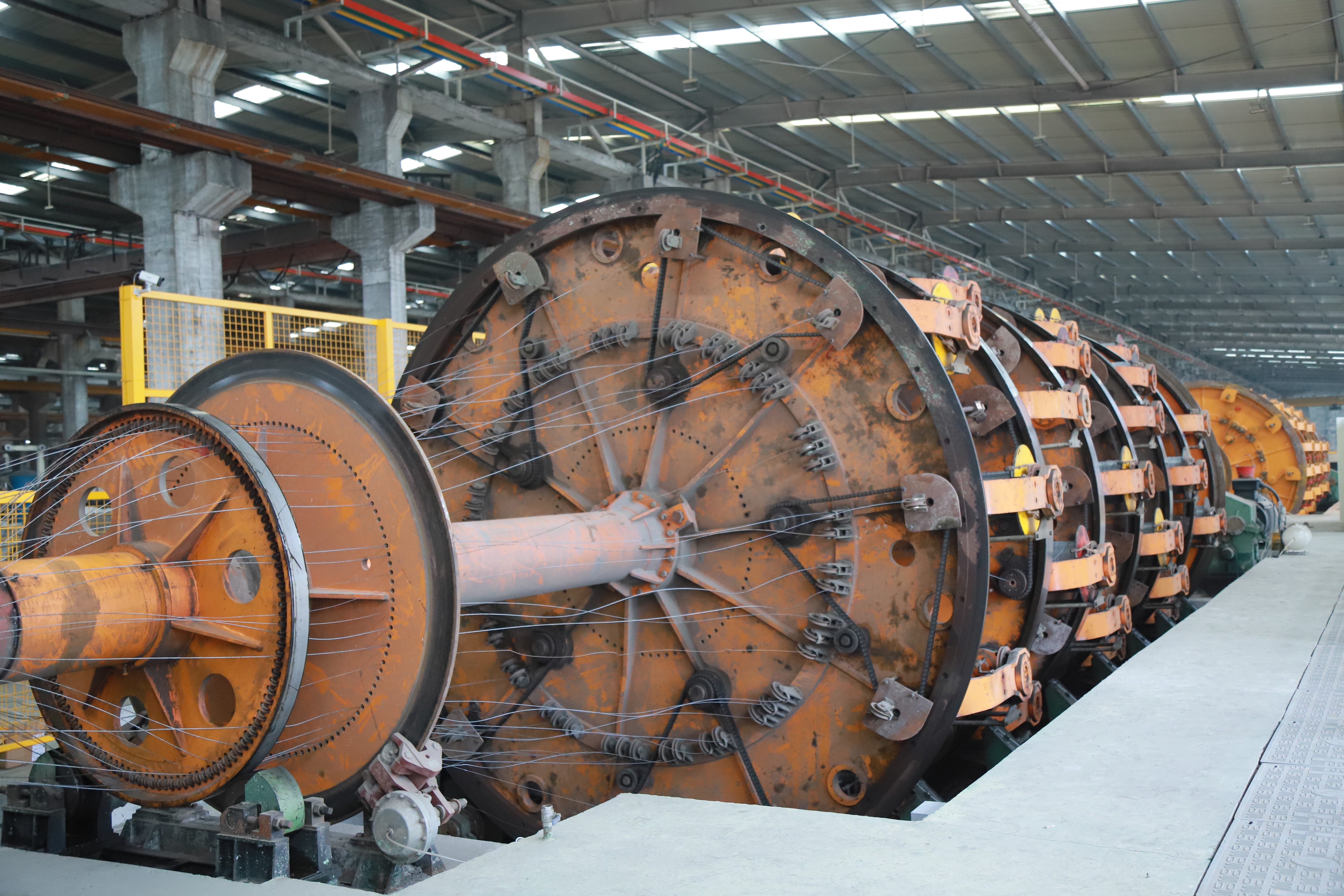
A supplier's stated product range is evidence of capability, but it must be read against the order. Juli's product range includes un-galvanized, electro-galvanized, hot-dip galvanized, stainless and plastic-coated wire ropes. The stated constructions include bundling ropes, cross laid wire rope, parallel laid wire rope, anti-rotation wire rope, compacted strand ropes, shaped strand wire rope and locked coil ropes. Product specifications are stated as 0.5 mm to 120 mm.
For a compliance review, that range should be converted into questions: can the supplier produce the nominated construction in the required diameter, coating and core combination? Can it test the product to the nominated standard? Can it supply the required marking and documents? A broad catalogue does not automatically answer those questions, but it gives the buyer a clear basis for a capability conversation.
Order-specific test and traceability evidence
The buyer should specify which test report, certificate, inspection record and marking will be accepted. The report should identify the product, construction, diameter, standard reference and test result. Traceability should allow the delivered rope to be connected to the production batch and inspection record. Without that link, the buyer may hold a general certificate but still lack order-level proof.
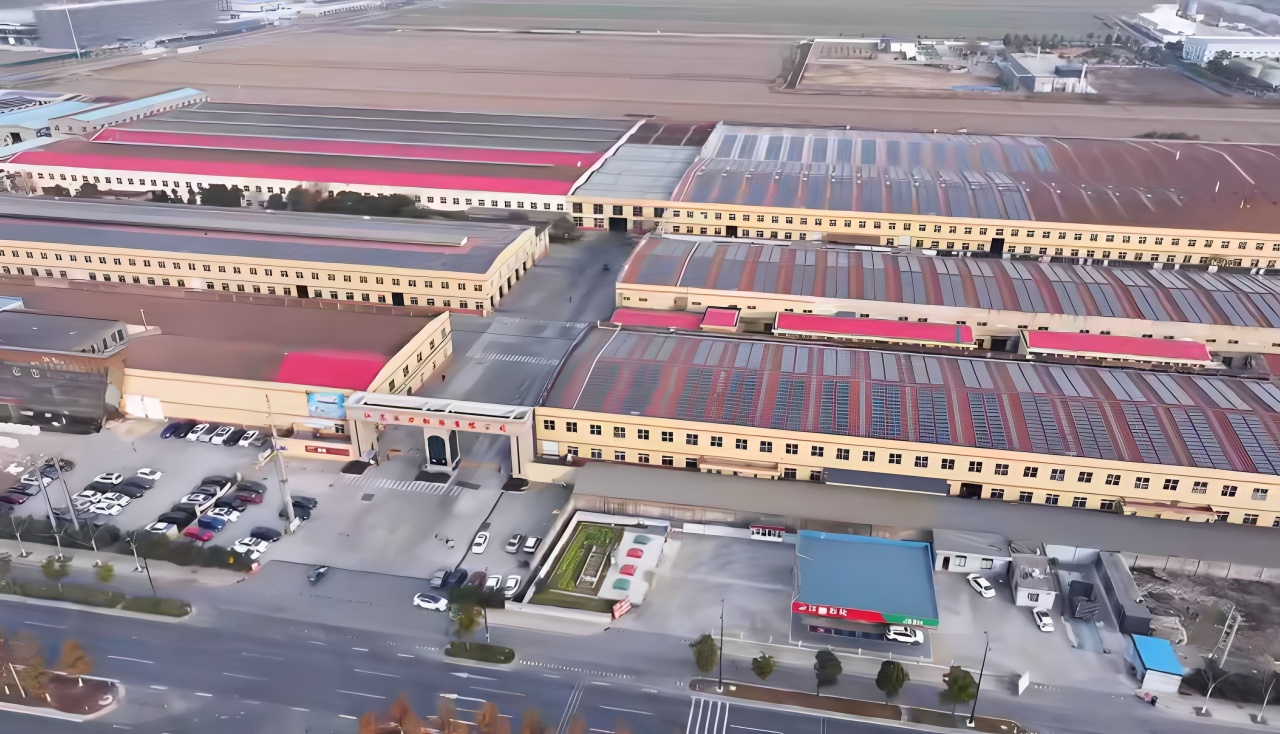
Juli's company profile states three production bases: Nantong and Jiyuan in China and Bekasi in Indonesia. It also reports 42 distribution centers in major Chinese cities and offices in more than 30 countries and regions. For an international buyer, those details are relevant to supply continuity and document handling, but they do not replace the need to confirm which site will produce the order and which certificate scope applies to that site.
Turning the standard into purchasing terms and acceptance criteria
The purchase order should convert the standard into unambiguous commercial language. A statement such as 'complies with EN' or 'GOST approved' is not an acceptance criterion. The buyer needs the standard family, edition, product construction, diameter, core, lay, coating, length, tensile grade, test method, marking, packaging and document set.
A practical acceptance schedule should include:
- Standard reference: the nominated family and edition, with any project-specific amendment.
- Product identity: construction, diameter, core, lay direction, coating and length.
- Performance variables: tensile grade, breaking load requirement and any elongation or fatigue requirement.
- Test evidence: the test method, sample basis, report format and acceptance limits.
- Traceability: batch identification, marking and link to inspection records.
- Packaging and delivery: reel or coil type, protection, marking and shipping documents.
- Rejection rules: what happens if diameter, construction, test result or documentation does not match the order.
The tensile grade is a mandatory order variable, not a catalogue assumption. The actual value should be stated against the nominated standard and verified in the supplier's test documents. The same applies to construction and model designation: the buyer should use the exact designation required by the project rather than a generic description.
Where a compliance matrix meets its limits
A standards matrix improves procurement control, but it has a clear boundary. It can verify that a supplier has a route to manufacture and test to a nominated standard. It cannot guarantee that a rope will achieve a specific service life in every duty cycle, nor can it replace inspection, load control and operating discipline.
Fatigue damage is a useful example. A manufacturer may standardize equipment operation to avoid repeated bending and high-intensity lifting, establish service life accounts, increase detection frequency for frequently used ropes and use professional testing equipment to detect invisible internal fatigue cracks. Those controls support quality assurance, but they do not make fatigue irrelevant after delivery. The buyer and operator still need to manage service life and inspection.
Corrosion is another limit. Protective isolation for outdoor, humid and corrosive scenarios, regular special inspection of galvanized and stainless steel wire ropes, and lubrication and anti-corrosion maintenance can delay corrosion and aging. They do not remove the need to select the right coating or stainless option for the environment. The same logic applies to broken wire and sudden fracture risks, mechanical squeezing and cutting risks, and high-altitude falling object risks. Standards and certificates sit inside a wider safety system.
Compliance-matrix purchasing versus traditional price-led buying
Traditional price-led buying often starts with diameter and price, then asks for a certificate after the supplier is selected. Compliance-matrix purchasing starts with the application, the standard family and the acceptance evidence, then compares price on a like-for-like basis. The difference is not administrative decoration. It changes what the buyer can verify before shipment.
| Decision dimension | Traditional price-led buying | Compliance-matrix buying |
|---|---|---|
| Starting point | Diameter, construction and price | Application duty, standard family, edition and acceptance criteria |
| Supplier qualification | General catalogue claim or certificate logo | Certificate scope, production range, construction capability and site relevance |
| Order documents | Basic commercial description | Standard reference, test method, traceability, marking, packaging and rejection rules |
| Price comparison | Different evidence sets may be compared as if equal | Quotes are normalized against the same standard and document package |
| Main limitation | Hidden mismatch risk at import, installation or audit | More administration, longer RFQ preparation and a potentially narrower supplier pool |
| Best fit | Low-risk, generic or non-critical use | Elevator, cable car, mining, port, offshore, oil and gas, power and heavy-duty duty |
Juli's comparison data states a 10% longer service life and a 10% higher breaking load efficiency compared with traditional ordinary grade steel wire rope products, with moderate initial procurement cost, less maintenance, a longer inspection cycle and fewer replacements in heavy-load cyclic operation. Those are supplier-provided comparison claims. They should be tested against the buyer's own acceptance criteria, duty cycle and inspection regime rather than accepted as a substitute for compliance evidence.
Market signals behind the documentation burden
Several verifiable market signals explain why buyers are asking for more structured compliance evidence. MarketsandMarkets projects the global steel wire rope market to reach USD 13.88 billion by 2030, growing from USD 10.49 billion in 2025 at a CAGR of 5.8%. Growth alone does not create compliance risk, but it broadens the number of applications, suppliers and import routes that buyers must compare.
The World Integrated Trade Solution reports that China was the top exporter of stranded wire, ropes and cables of iron or steel in 2024, with an export value of approximately USD 2.60 billion. For international buyers, that scale makes supplier qualification and document consistency more important, not less. A certificate or standard reference should be read together with the shipping documents, test reports and order specification.
Application mix also matters. Dataintelo and Business Research Insights data indicate that galvanized steel wire ropes accounted for 41.3% to 46% of total product demand globally in 2025, driven by corrosion resistance needs in marine and mining environments. Grand View Research and industry research data place construction as the largest end-user of steel wire ropes, at approximately 27% to 40.7% of total market share in 2024-2025. Business Research Insights also reports that mining operations adopted compacted strand ropes in approximately 57% of heavy-duty hauling systems globally in 2025.
These figures point to a practical procurement trend: the more applications depend on corrosion protection, fatigue performance and heavy-duty construction, the more buyers need to connect the standard family to the specific product and acceptance evidence. A generic certificate is a weak answer to that requirement.
Future outlook
The next phase of steel wire rope procurement is likely to be less about adding more certificate logos and more about aligning documents with application decisions. Buyers will continue to ask for GB/T, EN, GOST and DIN compliance where their markets or projects require it, but the stronger differentiator will be whether the supplier can show the exact scope, test evidence and traceability behind the quotation.
For suppliers, that means keeping standard references, product range, certificate scope and order documents consistent across sales, production and quality teams. For buyers, it means treating the compliance matrix as a living document that starts with the application and ends with acceptance. The matrix does not replace engineering judgement, but it makes the commercial decision more defensible.
FAQ
Which standard family should be named in a steel wire rope RFQ?
The RFQ should name the standard family and edition required by the project or target market. If the project does not fix one, the buyer should ask suppliers to quote against a nominated family such as GB/T, EN, GOST or DIN and state any alternative clearly. A generic statement that the rope meets a standard is not enough for acceptance.
How can a buyer confirm a supplier is qualified to manufacture to GB/T, EN, GOST or DIN?
The buyer should request certificate scope, the applicable standard and edition, the production site, the diameter and construction range, order-specific test reports and traceability records. A supplier may hold relevant certifications and manufacture according to several systems, but the evidence must match the product and standard being purchased.
What acceptance criteria should be written into the purchase order?
The purchase order should define the standard family and edition, construction, diameter, core, lay, coating, length, tensile grade, test method, marking, packaging, document set and rejection rules. It should also identify the traceability link between the delivered rope and the inspection record.
Does compliance with a standard prove suitability for elevator, mining, port or offshore duty?
No. A standard defines minimum manufacture and testing requirements for its scope. It does not by itself prove suitability for every duty cycle, environment or load profile. Elevator, cable car, mining, port, offshore, oil and gas and heavy-duty buyers still need project approval, correct selection and operational controls.
How should buyers compare a compliance-matrix supplier with a low-price supplier?
Compare the same evidence set: standard fit and edition, certificate scope, production range, construction capability, test reports, traceability, packaging and acceptance terms. A low price may reflect a narrower document package or a different standard assumption, so the comparison should be normalized before commercial ranking.
What is the main limitation of a standards matrix?
The main limitation is that it organizes verification but cannot eliminate fatigue, corrosion, wear or operational risk. It supports procurement decisions and acceptance checks, but it does not replace inspection, load control, maintenance and service-life management.
This article is an independent procurement reference. It does not replace project engineering approval, market regulation or the buyer's own acceptance inspection.
Reference document for product scope: Juli Steel Wire Rope product brochure.
Have Questions or Need More Details?
Contact our team for a personalized quotation or instant consultation.
Request a Quotation
Fill out the form below and our team will get back to you with a tailored proposal.
WhatsApp Direct Chat
Prefer to chat in real-time? Message us on WhatsApp for instant assistance & quick answers.
- Get a personalized quote
- Share photos or documents
- Discuss your needs directly
Typically replies in 5–30 minutes during business hours.