
Steel Wire Rope Supplier Capability: What Breadth and Standards Show
Product breadth is one of the few supplier claims a steel wire rope buyer can audit before a purchase order exists. A catalogue that runs from micro ropes and elevator ropes through cable car, power line, fishing, logging and forestry, agricultural, oil and gas, offshore and marine, port, mining, heavy-duty and construction ropes is not simply a long list. It is a compound statement: that one material specification, one set of execution standards and one quality system hold simultaneously across contents from 1 mm to 120 mm.
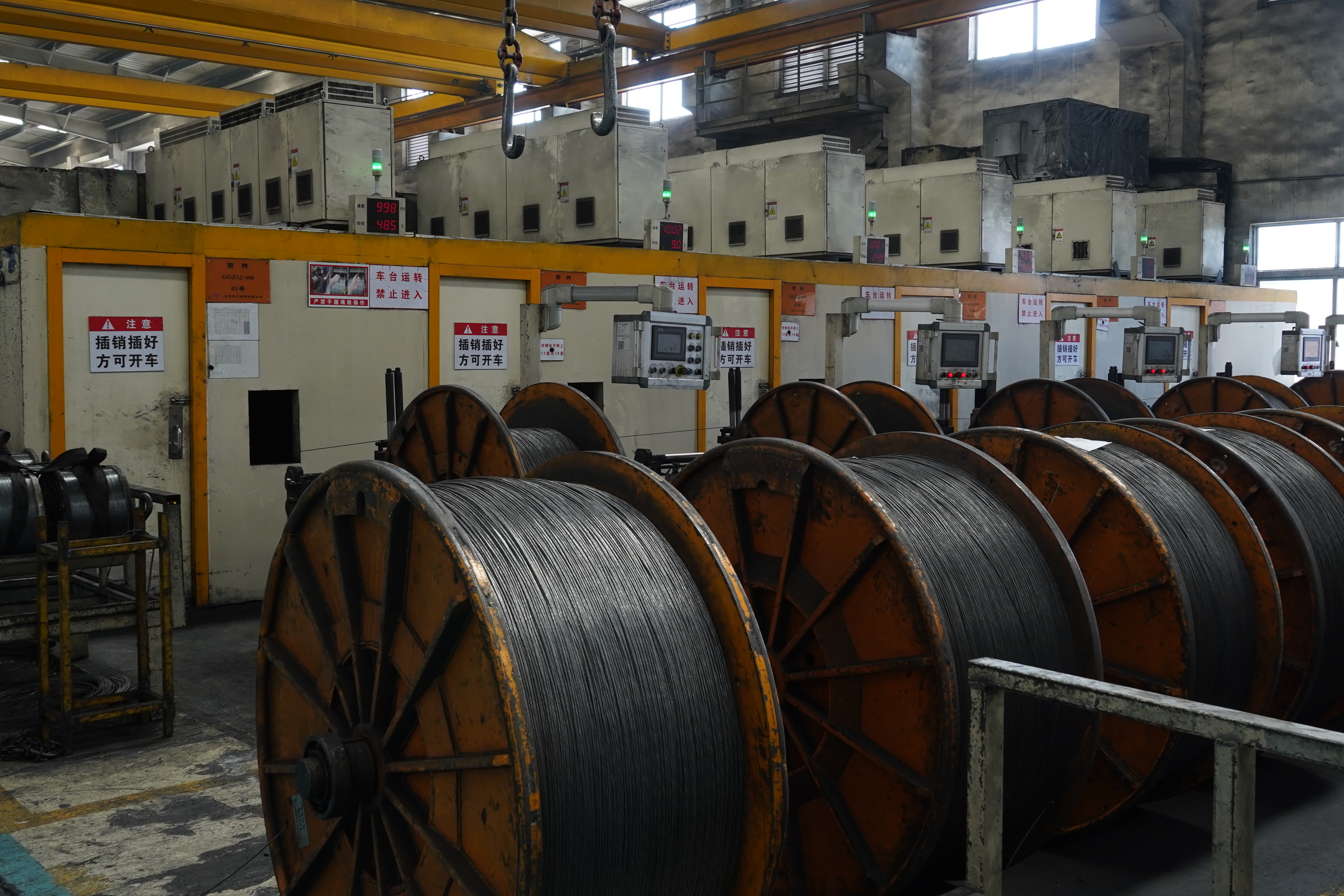
This reference sets out a method for reading breadth as capability evidence rather than marketing copy. Jiangsu Juli Steel Wire Rope Co., LTD is used as the worked example because its published scope is specific enough to be tested: high carbon steel as base material, a 1–120 mm diameter range, tensile options from 1570 to 2160 MPa, model designations including 6x19S, 6x36WS, 8x29Fi and 35WxK7, and execution to GB/T, EN, GOST and DIN standards.
Why Product Breadth Became a Procurement Question
Consolidation of industrial supply chains has changed what buyers ask a rope supplier to prove. Supplier reduction programmes mean one vendor is now frequently expected to cover hoisting, lifting, tensioning and anchoring duties across several sites and several industries, instead of one rope type on one production line.
The market data reflects that shift in scale. MarketsandMarkets projects the global steel wire rope market at USD 10.49 billion in 2025, rising to USD 13.88 billion by 2030 at a compound annual growth rate of 5.8%. Growth of that order rarely comes from single-application accounts. It comes from suppliers who can serve construction, mining, ports, marine and energy customers from one qualification base.
Breadth therefore functions as a first-stage filter in supplier evaluation. The problem is that breadth is also the easiest claim to copy into a brochure. Everything that follows is about converting that claim back into evidence a buyer can check.
Four Tests That Turn a Catalogue Into Evidence
A product catalogue becomes capability evidence when each stated scope can be traced to something bounded — a material, a construction family, a testing regime or a certificate scope. Four tests do most of the work.
| Test | What the buyer reads | What it establishes |
|---|---|---|
| 1. Material continuity | Stated base material across all categories | Whether one metallurgy and one wire-drawing discipline underpins the whole range, rather than several outsourced product lines |
| 2. Construction vocabulary | Model designations documented per category | Whether the supplier works in the strand architectures the application actually needs |
| 3. Diameter and tensile continuity | 1–120 mm and 1570–2160 MPa | Whether the stated range is a manufacturing range or a sales range |
| 4. Standard and acceptance evidence | Execution standards, certificate scopes, test regime | Whether the claim is bounded, auditable and shippable |
Test One: The Breadth of Application Categories
Thirteen application categories in one catalogue means thirteen different duty profiles have been designed for, not one duty profile sold thirteen ways. The table below maps documented categories to representative constructions.
| Application category | Representative documented constructions |
|---|---|
| Micro steel wire rope | 6x7, 6x19S, 6x36WS, 18x7, 35Wx7 |
| Elevator wire rope | 8x19S, 8x19W, 6x19S, 6x19W |
| Cable car wire rope | 6x19S, 6x36WS, 6x37S |
| Power wire rope | 1x7, 1x19, 6x7, 6x19M, 6x37M |
| Fishing wire rope | 6x7, 6x19S, 6x24S, 6x36WS, 6x26WS, 3x31WS |
| Logging forestry wire rope | 6x19S, 6x19M, 6x26WS, K6x26WS, K6x36WS |
| Agricultural wire rope | 1x7, 1x19, 6x7, 7x7, 6x19M, 6x12-7FC, 6x15-7FC, 6x24MFC |
| Oil & gas wire rope | 6x19S, 6x36WS, 6x37S, 6x41WS, 6x55SWS, 6x84WSNS, 6xK26WS, 6xK36WS, 8xK26WS, 8xK36WS, 35WxK7 |
| Offshore & marine wire rope | 6x36WS, 6x29Fi, 6x41WS, 6x49SWS, 6x55SWS, 6x84WSNS, 6x127SWSNS, 8x55SWS, 8x127SWSNS, 18x7, 35Wx7, 35WxK7, 4Vx39S SWAGE, 4Vx48S SWAGE |
| Port wire rope | 6x26WS, 6x31WS, 6x36WS, 6x41WS, 8x26WS, 8x31WS, 8x36WS, 8x41WS, 35Wx7 |
| Mining wire rope | 6x19S, 6x19W, 6x19M, 6x36WS, 6x37S, 8xK26WS-EPIWC, 35WxK7 |
| Heavy-duty wire rope | 6x19S, 6x19W, 6x26WS, 6x36WS, 6x31WS, 8xK26WS, 6x19M, 6x37M |
| Construction & engineer wire rope | 6x19S, 6x19W, 6x29Fi, 6x36WS, 8x29Fi, 6xK36WS, 18x7, 35Wx7, 35WxK7, 4Vx39S, 8x19S, 4x26WS, 4x31WS, 6x19M, 6x37M, 6x12-7FC, 6x15-7FC |
The diagnostic value here is not the quantity of model numbers. It is where designations repeat. 6x19S appears in the micro, elevator, cable car, fishing, logging, mining, heavy-duty and construction scopes; 35Wx7 and 35WxK7 appear in offshore, port, oil and gas, mining and construction. Repetition across duty profiles indicates that one construction has been qualified against several operating environments rather than one.
Test Two: What the Model Designations Actually Reveal
Wire rope designations are compressed engineering statements. In general industry usage, 6x19S describes six strands with nineteen wires per strand in a Seale construction, where the outer layer of each strand uses wires of differing diameter for a balance of wear resistance and flexibility. 6x36WS describes six strands of thirty-six wires in a Warrington-Seale arrangement, where additional, finer wires are included within the strand. 8x29Fi describes eight strands of twenty-nine wires in a Filler construction, where small filler wires sit in the interstices between the main strand layers. 35WxK7 describes a multi-strand family of thirty-five outer strands of seven wires, with the K marking compaction.
A supplier able to quote all four designations is working across distinct architectural families: single-layer stranded ropes, multi-strand ropes, and compacted variants. These are not interchangeable on a production line. Compaction changes the drawing and stranding route. Multi-strand closing changes the assembly operation. Both change the inspection plan, because wire counts, lay lengths and post-forming diameters all require different sampling.
For a buyer, the practical test is simple. Identify the construction your application requires, then check how many other categories in the same catalogue use it. If a construction appears only inside the one category you asked about, the breadth is thinner than the cover page suggests.
Test Three: Diameter and Tensile Continuity
A stated range of 1–120 mm with tensile grades of 1570, 1670, 1770, 1870, 1960 and 2160 MPa is a strong claim, because a 120 mm rope and a 6 mm rope do not share a production problem. At the small end, wire diameter, stranding precision and surface treatment dominate. At the large end, closing capacity and breaking-load testing capacity become the constraint — a rope at the top of the range cannot be verified without equipment sized for it.
Material choice is part of the same statement. High carbon steel as the base material across the range means the same metallurgical discipline applies to a 6 mm elevator rope and a large-diameter hoisting rope, rather than different materials selected to hit different price points.
This is where buyers should stop reading and start asking. A continuous range should be matched against documented testing: raw material incoming inspection, semi-finished product spot checks, finished product testing, breaking load testing and fatigue testing. Range plus test regime is capability evidence. Range without test regime is a price list.
Test Four: Standards and Certification Scope
Execution standards are where breadth becomes auditable. GB/T, EN, GOST and DIN are not decorative letters; they represent separate tolerance structures, separate test requirements and separate acceptance conventions. A supplier listing all four is claiming to run four execution routes rather than one route with four labels.
Certificates matter for a different reason: they bound the claim. The useful information is in the scope paragraph and the validity dates, not in the logo. Worked examples from the documented portfolio show how to read them.
- CE certificate ICR/VC/HS240422, issued by ICR against EN 12385-1:2002+A1:2008 and valid from 4 August 2024 to 4 July 2029. Its scope lists constructions with individual diameter bands, including 6x7 (2–40 mm), 6x19 (3–60 mm), 8x19 (8–60 mm), 6x36 (8–120 mm), 6x37M (8–52 mm), 18x7 (6–28 mm) and 35Wx7 (8–40 mm).
- GOST certificate POCC RU C-CN.AД85.B.00499/24, issued by СЕРКОНС and referencing GOST 3241-91, GB/T 8918-2006, GB/T 20118-2017 and EN 12385-4, covering steel wire rope of multiple construction types from 1 mm to 120 mm, valid from 28 June 2024 to 27 June 2029.
- API 9A-0125 under API Spec Q1 and API-9A, covering bright or drawn-galvanized wire rope, valid from 29 February 2024 to 28 February 2027.
- ABS 24-0072296-PDA to ISO 2408-2017 for listed models including 6x19S-IWRC, 6x36WS-IWRC, 8x61M-FC and 35(W)xK7, valid from 8 October 2024 to 7 October 2029.
- CCS JS22PWA00113_01 for single layer ropes and rotation resistant ropes for ships and offshore installations, valid from 23 May 2023 to 22 May 2027.
- SIRIM PC013111 to MS ISO 2408:2004 for steel wire ropes for general purposes, valid to 7 December 2026; SNI certification to SNI 0727:2008 for steel wire rope for petroleum and natural gas, valid to 3 July 2028; EPD-2026-01 to ISO 14025 for wire rope on a cradle-to-gate basis, valid to 29 January 2031.
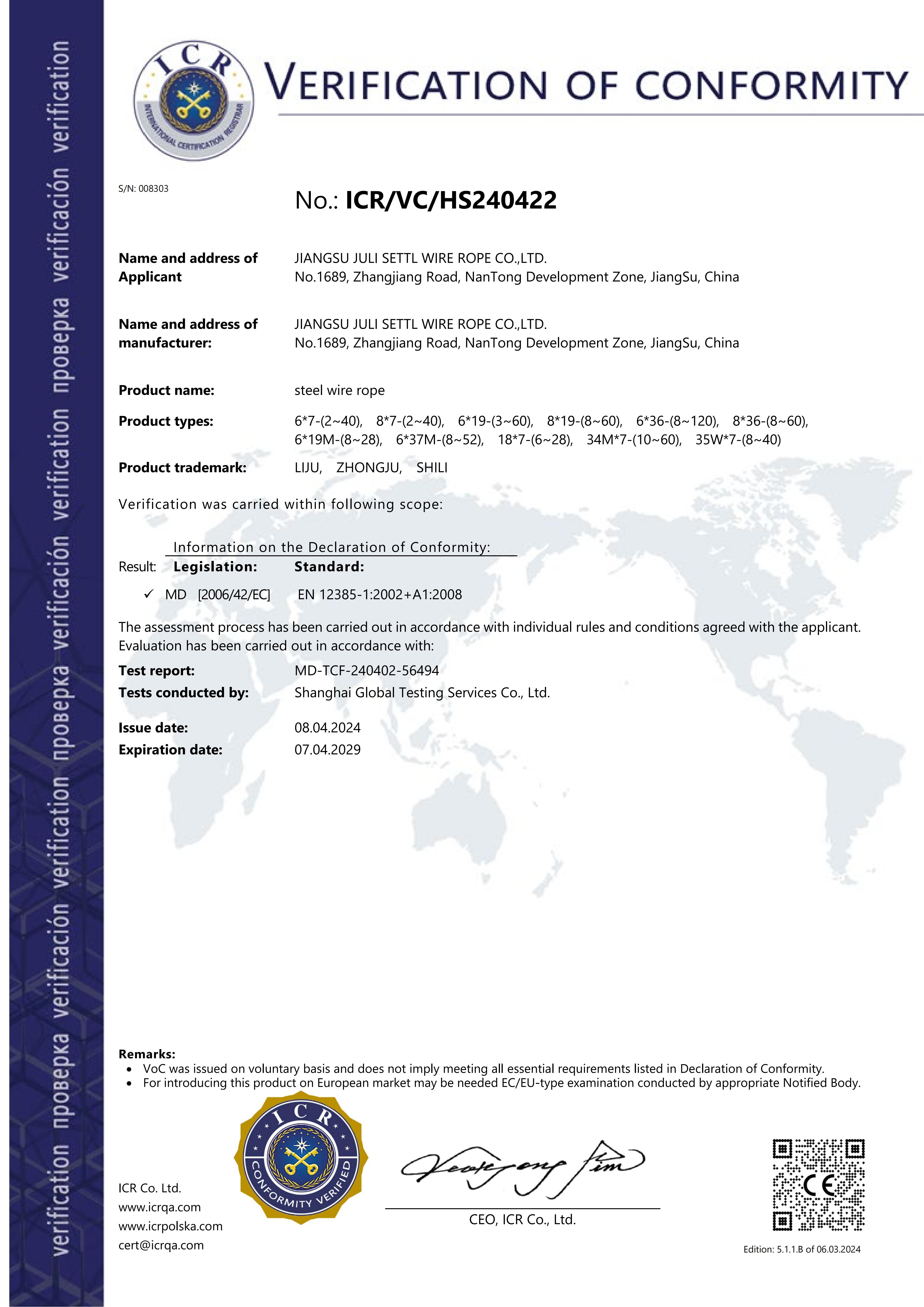
The lesson generalises to any supplier. The CE scope above does not place every construction across the full 120 mm span — 6x36 reaches 8–120 mm while 35Wx7 stops at 8–40 mm. A buyer specifying a 50 mm 35Wx7 cannot treat that certificate as blanket coverage. The correct procurement question is narrow and answerable: is this exact construction and diameter combination inside the listed band, and is the certificate still valid on the shipment date?
What Jiangsu Juli Steel Wire Rope Co., LTD Documents
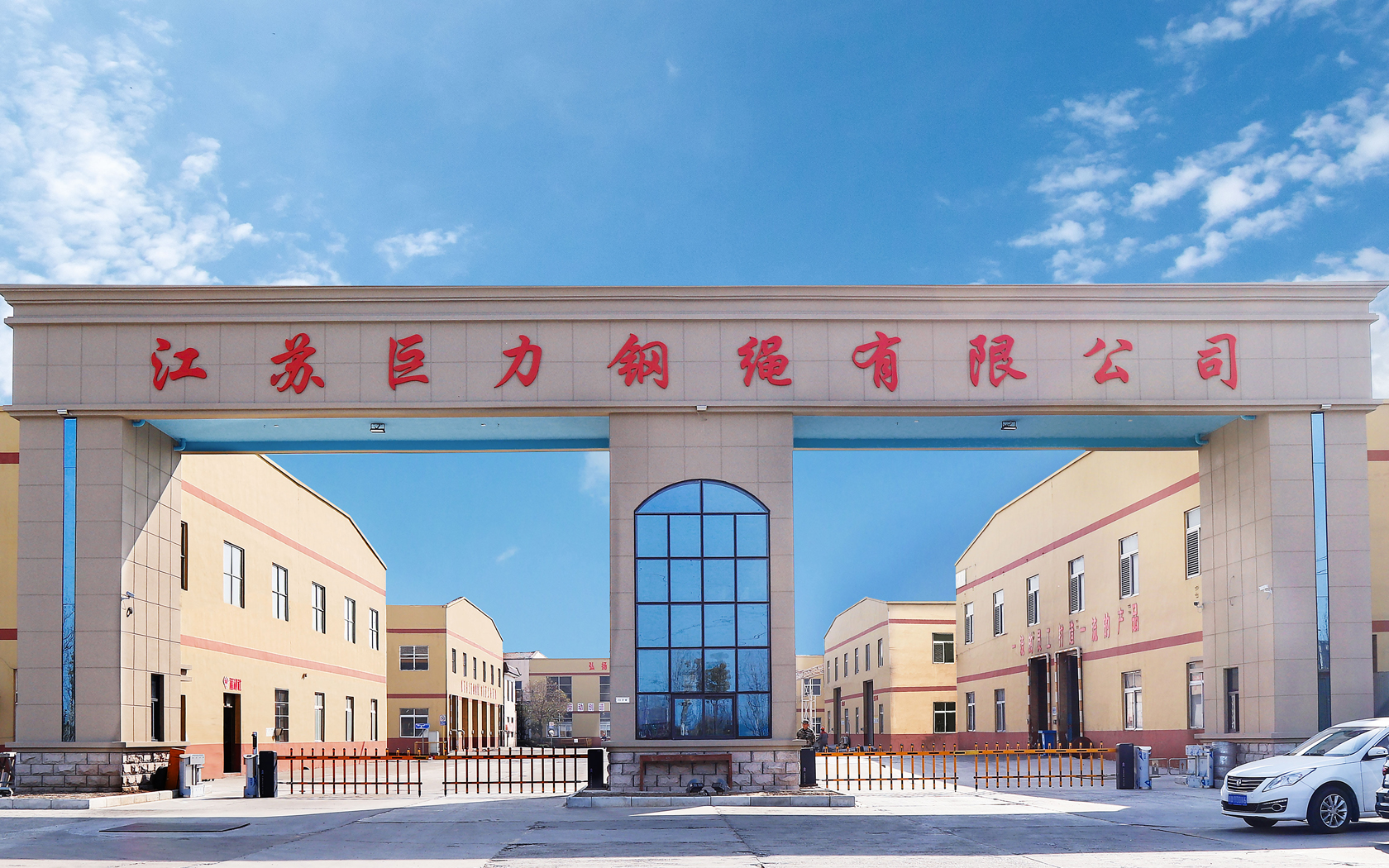
Jiangsu Juli Steel Wire Rope Co., LTD is a steel wire rope and lifting accessory manufacturer with production bases in Nantong and Jiyuan in China and Bekasi in Indonesia, part of Juli Wire Rope Group, whose origins date back to 1958.
The documented product scope matches the four tests. Base material is high carbon steel. Diameter spans 1–120 mm. Tensile strength options are 1570, 1670, 1770, 1870, 1960 and 2160 MPa. Model designations include 6x19S, 6x36WS, 8x29Fi and 35WxK7 across the application categories listed earlier. Applicable execution standards are GB/T, EN, GOST and DIN, while the company-level standards list extends to API, ISO, ASTM, GB and JIS, with certifications including API, LR, ABS, CCS, ISO 9001, CE, GOST, EPD, SIRIM, SNI and MA.
Breadth becomes operational through production and commercial facts rather than catalogue pages. Monthly capacity is 3,000 tons, lead time is 25 days and the minimum order quantity is 1,000 meters. Export share is approximately 30% of output, supported by 42 distribution centers in major Chinese cities and offices in more than 30 countries and regions.
The quality regime attached to that range is explicit: raw material incoming inspection, semi-finished product spot checks, finished product testing, breaking load testing, fatigue testing, and a 100% full machine running test before delivery. Customization covers construction, diameter, length, tensile strength, surface treatment, applicable standard and packing, delivered through OEM, ODM and independent factory R&D and manufacturing. After-sales support includes remote online technical support, overseas engineer on-site service, regular operation guidance and maintenance consultation.
Matching Breadth to Application: Where the Scope Actually Lands
Category breadth is only useful if each category carries the constructions that duty profile demands. Reading the documented scope by application shows where the catalogue is genuinely deep.
In vertical transport, elevator scope covers 8x19S, 8x19W, 6x19S and 6x19W, and cable car scope covers 6x19S, 6x36WS and 6x37S. In both cases the buyer is selecting for consistent diameter control and predictable behaviour over many cycles rather than maximum breaking load alone.
In mining, the scope extends from 6x19S and 6x19W through 6x36WS and 6x37S to 8xK26WS-EPIWC and 35WxK7, which is the compacted and multi-strand territory where heavy-duty hauling increasingly sits. A documented mining reference covers 100 tons supplied for hoisting, mine shaft lifting and underground traction, with two years of service reported as stable hoisting, reduced downtime and improved site-work safety under high wear and impact conditions.
In port and marine work the split is visible in the designations: port scope runs 6x26WS to 8x41WS plus 35Wx7, while offshore and marine scope reaches 6x49SWS, 6x55SWS, 6x84WSNS and 8x127SWSNS, plus swaged 4Vx39S and 4Vx48S. Oil and gas scope concentrates on compacted and multi-strand models such as 6xK26WS, 8xK36WS and 35WxK7, which aligns with the API 9A-0125 and SNI petroleum and natural gas certifications held.
Where Breadth Stops Being Evidence
A breadth-and-scope audit is a different evaluation route from the traditional sample-and-price approach, and it answers different questions. The comparison is worth stating plainly.
| Evaluation route | What it answers well | Where it fails |
|---|---|---|
| Traditional sample-and-price | Unit cost of one SKU; short-term availability of a single construction | Says nothing about whether the supplier can sustain that construction across a mixed, multi-site order book |
| Breadth-and-scope audit | Whether one quality system, material and standard set covers the full duty range; whether certificates actually bound the claim | Says nothing about fatigue life under a specific sheave geometry, load spectrum or fleet duty cycle |
The boundary is real and should be stated without hedging. Breadth does not prove duty-cycle performance. A catalogue can show that 6x36WS and 35WxK7 are both produced; it cannot show that either will reach a particular service interval on a particular crane. That requires test evidence against the buyer's own acceptance criteria — a pre-shipment full performance test at the factory, with test reports provided for customer confirmation before shipment, which is the documented acceptance route.
Two further limits are commercial rather than technical. First, a specialist producer with a narrow catalogue may hold deeper application-specific data for one duty profile than a broad-line supplier holds for the same duty; breadth is a filter, not a ranking. Second, minimum order quantity of 1,000 meters and a 25-day lead time mean that a mixed trial order across many constructions carries real cost — buyers testing breadth should expect to consolidate specifications rather than sample every category. Payment terms follow the same discipline: 30% deposit, 70% balance before shipment, with FOB, CIF or DDP delivery arrangements agreed in advance.
Market Signals That Favour Breadth — With Caveats
Several published indicators explain why buyers now weight surface-treatment and construction breadth more heavily than they did a decade ago. Galvanized steel wire ropes accounted for roughly 41.3% to 46% of total global product demand in 2025, according to Dataintelo and Business Research Insights, driven by corrosion resistance requirements in marine and mining environments. A supplier's ability to cover un-galvanized, electro-galvanized, hot-dip galvanized, stainless and plastic-coated variants therefore maps directly onto demand concentration.
Construction remains the largest end-user segment, estimated at approximately 27% to 40.7% of total market share in 2024–2025 by Grand View Research and other industry research. On the heavy side, Business Research Insights reports compacted strand ropes in approximately 57% of heavy-duty hauling systems in mining globally in 2025 — which is why K-designations such as 6xK26WS, 6xK36WS, 8xK26WS and 35WxK7 carry disproportionate weight in a mining supplier assessment.
Trade data adds context. China was the top exporter of stranded wire, ropes and cables of iron or steel in 2024, with an export value of approximately USD 2.60 billion according to the World Integrated Trade Solution. At the top of the global supplier table, Bekaert and WireCo WorldGroup hold the highest market share, with Bekaert exceeding 1.5 million tons of annual capacity according to industry research — a scale reference point, not a capability verdict, since tonnage and product breadth answer different questions.
Caveat on the numbers: published 2025 baseline estimates for the global steel wire rope market differ materially between research houses. Treat segment percentages as directional indicators of demand structure rather than as precise measurements.
What to Expect Next
Three shifts are likely to change how breadth evidence is assessed. Verification is moving from the brochure to the document set: buyers increasingly request certificate scopes, validity dates and pre-shipment test reports as standard attachments rather than as follow-up requests. Environmental documentation is entering the same folder, which is why an ISO 14025 environmental product declaration now sits alongside CE and GOST certificates in supplier assessments rather than in a separate sustainability track. And demand is concentrating in construction families — compacted strands, multi-strand rotation-resistant assemblies and coated variants — which rewards suppliers whose breadth is depth in the categories that carry volume, not depth in categories that no longer order.
Frequently Asked Questions
What does a 1–120 mm diameter range indicate about a steel wire rope supplier?
It indicates that the supplier states a continuous manufacturing range from micro rope through small-diameter elevator and cable car rope to large-diameter hoisting rope, rather than a single band of sizes. The range should be read together with the tensile grades offered, from 1570 to 2160 MPa in this case, and with the construction families documented, because diameter alone does not confirm that the specific construction required is produced at the specific size required.
Why do designations such as 6x19S, 6x36WS, 8x29Fi and 35WxK7 matter in supplier evaluation?
Each designation describes a different strand architecture: six strands of nineteen wires in Seale construction, six strands of thirty-six wires in Warrington-Seale, eight strands of twenty-nine wires in Filler construction, and a thirty-five-strand multi-strand family with compaction indicated by the K marking. Producing across these families requires different drawing, stranding and closing operations, so a supplier listing all four is describing production breadth rather than a marketing range.
Which execution standards should a buyer request for steel wire rope procurement?
GB/T, EN, GOST and DIN are the commonly cited execution standards in international steel wire rope sourcing, and ISO 2408:2017 sets out minimum requirements for the manufacture and testing of steel wire rope for general purposes, including lifting and rigging. Buyers should confirm which standard governs the specific order and check that any certificate held covers that construction and diameter combination within its scope and validity dates.
Does a broad product catalogue prove that a supplier can meet a specific fatigue or duty-cycle requirement?
No. Catalogue breadth establishes that a construction family and size range exist inside the supplier's manufacturing scope. It does not establish service life under a specific load spectrum, sheave geometry or fleet duty cycle. That has to be verified through test evidence against the buyer's acceptance criteria, such as a pre-shipment full performance test at the factory with breaking load and fatigue test reports provided for confirmation before shipment.
How should a buyer read the scope paragraph of a wire rope certificate?
Check three things in this order: whether the construction and diameter band in the certificate match the product being ordered, whether the issuing authority and referenced standard are appropriate for the destination market, and whether the validity dates cover the planned shipment date. A CE scope under EN 12385-1, for example, may list 6x36 from 8 mm to 120 mm while listing 35Wx7 only from 8 mm to 40 mm, so a larger 35Wx7 specification falls outside that specific scope.
What commercial terms should be confirmed alongside capability evidence?
Minimum order quantity, lead time, delivery terms and payment structure belong in the same evaluation as technical scope, because they determine whether breadth is usable in practice. In this documented case the stated terms are a minimum order quantity of 1,000 meters, a lead time of 25 days, delivery on FOB, CIF or DDP terms, and payment of a 30% deposit with the 70% balance before shipment, with shipment arranged after full payment is received.
For buyers who want the full product and certification overview in one document, the company brochure is available as a PDF download: Juli Steel Rope company brochure. Company information is also published at juli-rope.com.
Have Questions or Need More Details?
Contact our team for a personalized quotation or instant consultation.
Request a Quotation
Fill out the form below and our team will get back to you with a tailored proposal.
WhatsApp Direct Chat
Prefer to chat in real-time? Message us on WhatsApp for instant assistance & quick answers.
- Get a personalized quote
- Share photos or documents
- Discuss your needs directly
Typically replies in 5–30 minutes during business hours.