
Steel, Wood & Acrylic Display Fixture Color Consistency
Steel, Wood & Acrylic Display Fixture Color Consistency
Steel, Wood & Acrylic Display Fixture Color Consistency
Color consistency across steel, wood and acrylic display fixtures is a purchasing decision because the buyer is not choosing one paint code. The buyer is choosing an approval process that must survive three substrates, several finishing lines, lighting changes, packing and installation. In a steel dining table program that also includes wood display elements or acrylic risers, the steel component can be correct in isolation and still fail the visual package if gloss level, primer system and master-sample control are not managed together.
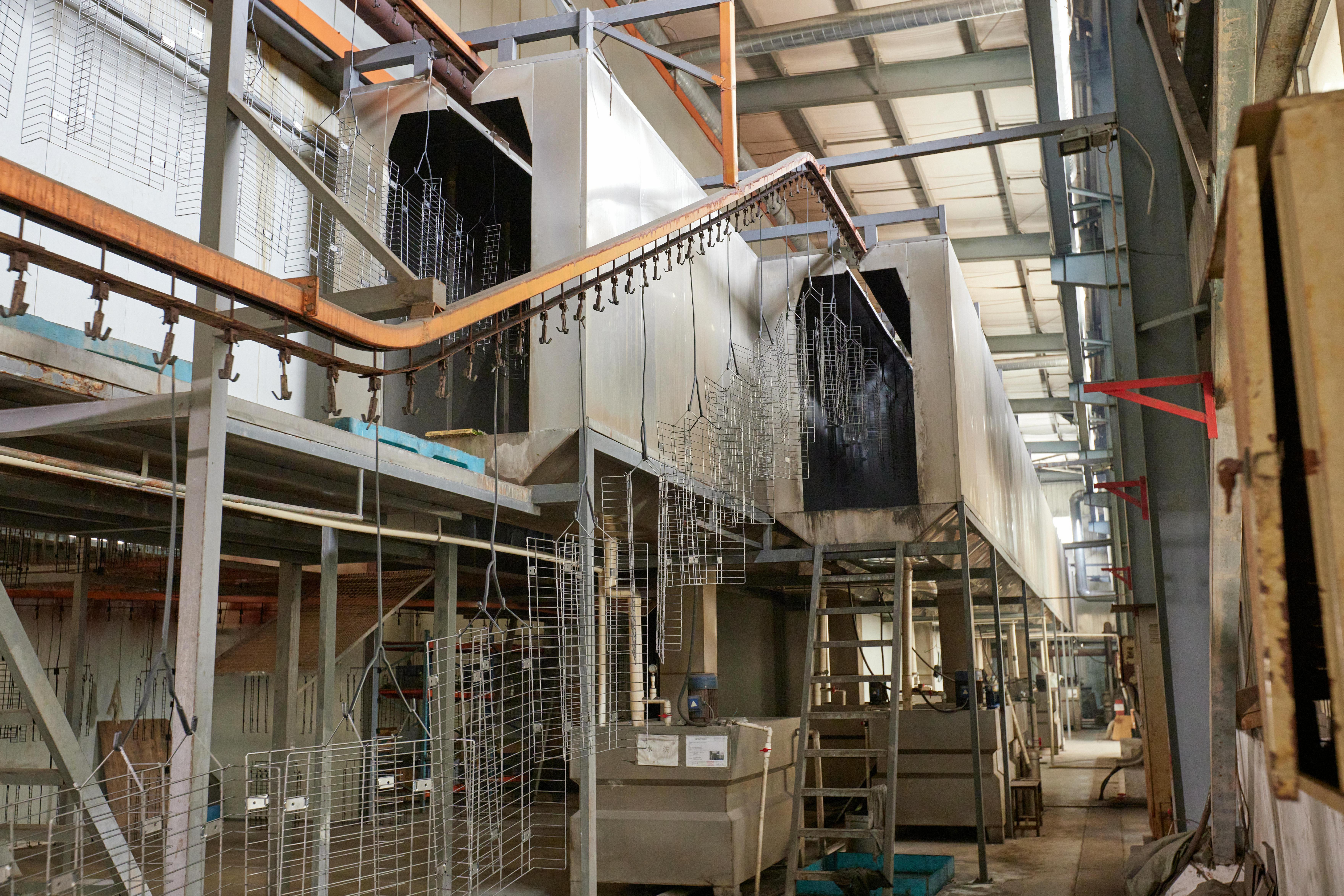
The procurement problem: three materials, one appearance target
For a buyer at the decision stage, the relevant question is not whether steel, wood or acrylic is generally superior. The question is whether the selected supplier can make three different material routes resolve into one approved appearance under the lighting conditions where the fixture will be used. Powder-coated steel, lacquered woodwork and acrylic components do not absorb, reflect or hold coating in the same way. High-gloss surfaces make those differences easier to see, while matte or semi-matte finishes reduce the risk of visible mismatch.
The supplied Qunyi process guidance recommends a shared color-management route rather than three separate approvals: confirm the target Pantone color number, require color-matched primer formulas for metal, wood and acrylic substrates, unify the gloss standard, approve a common master sample under multiple lighting conditions, and complete a 100% color comparison against that master before assembly. This is a practical buyer safeguard because a Pantone number alone does not define substrate preparation, film build, gloss level or inspection lighting.
That distinction becomes visible when the fixture package combines a steel dining table with wood display plinths and acrylic presentation pieces. The steel frame may be the strongest visual anchor, but the buyer is still approving a set. If the steel is approved in one factory, the wood in another and the acrylic in a third without one shared master sample, the project can pass individual inspections and still look inconsistent after installation.
Decision comparison: steel, wood and acrylic in one fixture program
The comparison below is not a ranking of materials. It is a buyer-side comparison of what changes when the same color target is applied to three substrates. Each row should be converted into a written requirement in the purchase order or drawing approval.
| Decision area | Powder-coated steel | Lacquered woodwork | Acrylic component | Buyer verification |
|---|---|---|---|---|
| Base finish route | Pretreatment plus powder coating; finish performance depends on cleaning, conversion coating and spray control. | Lacquered woodwork with a color-matched primer and agreed topcoat system. | Acrylic component prepared and coated or matched through an approved sample route. | Ask for the finish route for each substrate in writing; avoid one generic finish note for all three. |
| Color control | Target Pantone plus substrate-specific primer and coating approval. | Target Pantone plus wood-specific primer and lacquer approval. | Target Pantone plus acrylic-specific primer or sample approval. | Require one shared master sample; do not approve three separate color chips in isolation. |
| Gloss control | Full-matte or semi-matte is easier to align with other materials than high gloss. | The same gloss standard should be written for lacquered wood. | The same gloss standard should be written for acrylic. | Unify the gloss standard across all components; high gloss magnifies small differences. |
| Inspection basis | Coating defects checked under natural light; orange peel and missed spray are visible failure modes. | Color comparison against the approved master sample. | Color comparison against the approved master sample under multiple lighting conditions. | Record the light source, distance and acceptance criteria before mass production. |
| Main risk | Invisible pretreatment faults can cause blistering or flaking later, especially in humid or coastal conditions. | Different paint absorption can shift the apparent color if primer and gloss are not controlled. | Separate approval can drift from the steel and wood master if the same sample is not used. | Place the highest-risk substrate under the same approval loop as the most visible substrate. |
| Suitable fit | Matte powder coating suits functional, high-traffic environments where fingerprints and minor surface marks are a concern. | Lacquered wood can serve decorative and warm visual roles where the approved finish is maintained. | Acrylic can serve visual display roles within the same color program when its primer and sample are approved. | Choose the finish by use condition and maintenance expectation, not by color alone. |
Matte vs high-gloss powder coating: the finish choice that changes perceived color consistency
On steel furniture in functional environments, matte powder coating is generally more suitable where hiding surface imperfections and resisting fingerprints are priorities. High-gloss powder coating is better suited to decorative applications requiring vibrant color and a premium visual effect. The difference is not only aesthetic. High-gloss baked enamel is prone to showing dust, fingerprints and minor scratches, while matte powder coating provides an understated texture, greater scratch resistance and easier maintenance in high-traffic commercial spaces.
Qunyi's finish comparison notes that high-gloss paint surfaces require repeated manual sanding and polishing, making them approximately 30%-40% more costly than standard spraying. Under intense shopping-mall lighting, surface imperfections on high-gloss finishes can be magnified by up to 90%. For a buyer comparing quotations, these points should be separated from the base fixture price. A lower-cost high-gloss offer may create higher touch-up and rejection costs if the project cannot tolerate visible fingerprints or minor scratches.
This does not mean matte is universally correct. A decorative display may require a high-gloss look, and the buyer may accept the maintenance consequence. The decision rule is to match the gloss level to the use condition and then apply the same gloss standard to steel, wood and acrylic. If one component is specified as full matte and another as semi-gloss, the apparent color can shift even when both use the same Pantone reference.
Pretreatment: the invisible step behind steel color and corrosion performance
For powder-coated steel, color consistency begins before the coating is applied. The recommended pretreatment sequence is full degreasing and rust removal on the iron surface, verification of surface cleanliness with the 30-second continuous water film test, ceramic conversion treatment according to process parameters to form a dense and uniform conversion film, and inspection of pretreatment quality before the workpiece moves to powder spraying.
This step is easy to omit in a quotation because the buyer cannot see it after coating. The technical consequence is visible later. In a humid coastal area, residual grease or microscopic rust can cause the powder coating to blister and flake. Proper pretreatment creates a dense conversion film on the metal surface and supports long-term corrosion protection. A buyer comparing steel fixture suppliers should therefore ask how the supplier controls degreasing, rust removal and conversion coating, not only which powder brand is used.
The same logic applies to a steel dining table frame or base that will be used near entrances, windows or food-service areas. Powder coating alone is not a substitute for correct substrate preparation. If the table is part of a mixed-material display installation, a pretreatment failure on the steel can force replacement of a component after the wood and acrylic parts have already been approved and packed.
Welding, grinding and the limit of 'seamless' high-gloss surfaces
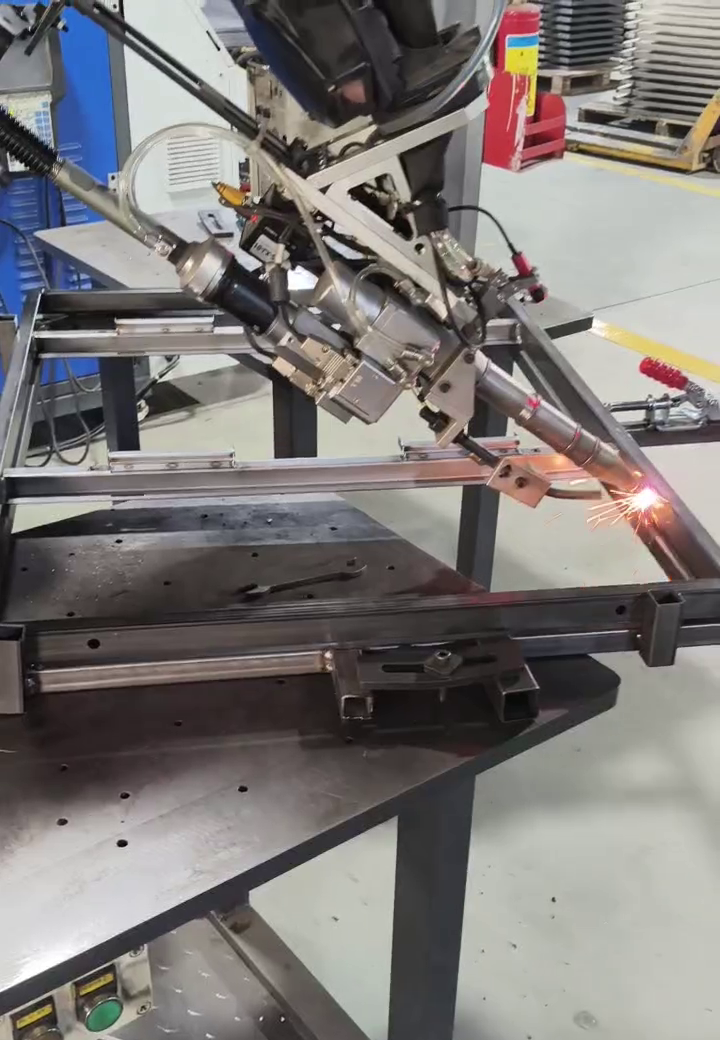
Color consistency is also affected by joint finishing. For high-end display-rack splicing joints, the full-weld-and-ground process is used to create a smooth joint surface and maintain structural strength: remove oxide, dirt and coating from the welding surface; fix the workpiece; perform continuous full-penetration arc welding; grind the weld area flush with the base material; check flatness and strength; and apply anti-rust treatment to the welded and ground area.
Buyers should be precise when they ask for a perfectly seamless high-gloss finish. Absolute zero gap is physically impossible because of the bend radius inherent in metal forming and thermal expansion and contraction at joints of different materials. A practical specification uses a reveal joint to accommodate tolerance, or a matte powder coating to reduce the visual prominence of seams. Surface roughness and flatness tolerance should be controlled, and the visual acceptance standard should be confirmed in writing before production to avoid disputes.
Wood and acrylic: the approval loop must be shared, not parallel
The main cause of multi-material mismatch is not usually a wrong color number. It is a fragmented approval process. The recommended steps for powder-coated metal, lacquered woodwork and acrylic components are specific: confirm the target Pantone color number and require suppliers to develop color-matched primer formulas for metal, wood and acrylic substrates; adopt full-matte or semi-matte finish for all components and unify the gloss standard; require a unified color-matching master sample; verify color consistency under multiple lighting conditions; and conduct 100% color comparison against the approved master sample before assembly.
Different materials have different paint absorption rates, which is why high-gloss surfaces are particularly prone to visible color discrepancy. A full-matte or semi-matte finish reduces that risk, but it does not eliminate the need for a master sample. Acrylic should not be treated as an automatic match to painted steel or lacquered wood simply because the color code is the same. Its preparation and sample approval should be part of the same record, not a side conversation between the buyer and a separate acrylic vendor.
Inspection, packaging and the cost of a finish defect
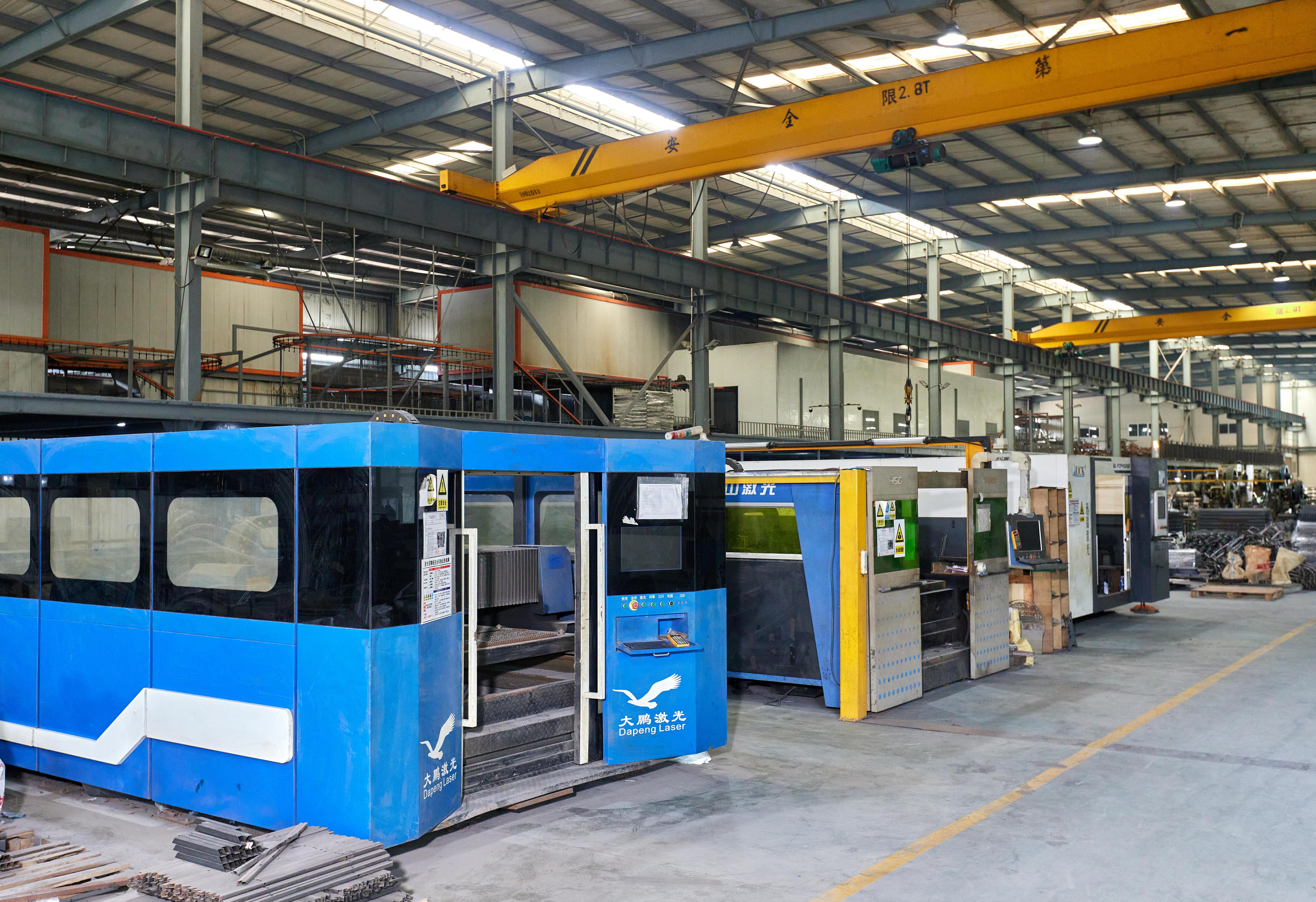
Coating inspection should be planned before the first production run. Orange peel is caused by excessive coating viscosity or improper spraying pressure, while missed spray results from uncovered dead angles. Troubleshooting should check spraying parameters, coating leveling performance, workpiece pretreatment status and spraying coverage path. Visual inspection typically requires that no obvious defects be visible to the naked eye at a distance of 1 meter under natural light. Inspection results should be recorded, unqualified products marked, and defect causes fed back to the spraying team for process adjustment.
Packaging is part of color consistency because a damaged finish is a color failure at the point of installation. Full-coverage packaging is intended to eliminate paint-surface abrasion in high-humidity sea freight, while partial protection is cost-effective but more susceptible to edge and corner damage during rough handling. Qunyi's packaging comparison states that full-coverage packaging reduces the damage rate in cross-border shipping such as FedEx direct delivery from 8% to below 0.5%. Full wrapping is more suitable for high-gloss or matte painted parts, high-value display props and drop-shippable items that must withstand multiple transshipments.
Cost comparison should be handled carefully. A meaningful comparison between packaging or shelf-material options requires quotations based on the same size and quantity. The same principle applies to finish upgrades. A buyer should not compare a high-gloss quotation from one supplier with a matte quotation from another unless the substrate, gloss level, inspection standard and packaging scope are aligned.
Steel dining table application: where the comparison matters
A steel dining table is one example of how the same color-control problem appears in furniture procurement. In a conditional retail or hospitality setting, a steel dining table may sit beside wood display fixtures, acrylic risers or coated metal shelving. If the buyer approves each item separately, the table can be right on its own and still look wrong in the finished space. The practical approach is to approve the steel finish, wood finish and acrylic components against one master sample under the actual lighting condition, and to require a 100% color comparison before assembly.
For a stand-alone steel dining table with no adjacent multi-material components, the same discipline still helps repeat orders. A first production batch establishes the reference; later batches should be compared back to that approved sample rather than to a new visual impression. This is not a claim that every steel dining table requires the full three-material protocol. It is a decision rule: the more visible and the more mixed the material package, the more the buyer needs one documented color standard.
Supplier evaluation: what a buyer should verify
Qunyi Fixture, the display-fixture business associated with Xiamen Qunyi Hardware Co., Ltd., is a China-based manufacturer specializing in the design, manufacturing and commerce of storage racks, store fixtures and other retail furniture. The company reports a 300,000-square-foot production footprint, 200 employees, 5 R&D engineers, an export ratio of 80%, and main markets in the USA, Australasia and the EU. It states certification to ISO, BSCI and FSC, and an integrated capability across metal, wood, glass and acrylic fixtures.
Those facts are relevant to a multi-material color program because they indicate that metal, wood and acrylic work can be coordinated within one supplier relationship. They are not, by themselves, a certificate of color consistency on a given order. A buyer should still require the supplier to name the substrate-specific primer systems, the approved master sample, the gloss standard, the inspection lighting, the 100% color-comparison record and the packaging specification. The supplier's public website is Qunyi Fixture.
Useful evaluation questions include: which facility applies the powder coating, wood lacquer and acrylic preparation; how are color-matched primers controlled for each substrate; how is the master sample stored and referenced for repeat orders; what visual acceptance standard is written into the order; and how are painted parts protected during export packing. These questions are more decision-useful than a general claim that a supplier can match any color.
Market context: metal furniture growth does not remove the color risk
Mordor Intelligence estimates the global metal furniture market at USD 193.83 billion in 2026, rising to USD 243.63 billion by 2031 at a 4.68% CAGR. This is a metal furniture estimate, not a steel-furniture-specific market size, and it includes aluminum and other metals. The same source places Asia-Pacific at approximately 48% of the metal furniture market in 2026. China's exports of HS Code 940320, other metal furniture, reached USD 11.1 billion in 2025 according to GACC/ChinaData trade data.
These figures provide category-level context for sourcing discussions, but they do not establish finish quality, color consistency or supplier capability for a specific steel, wood and acrylic fixture program. A buyer still has to verify the process. The growth context may increase the number of available offers, which makes a documented approval protocol more important rather than less.
Future outlook: more multi-material approval, not less
As buyers continue to combine steel frames with wood and acrylic in retail, hospitality and contract furniture projects, the purchasing advantage will favor suppliers that can document the approval loop rather than simply quote a color code. This is an inference from the supported process requirements, not a forecast of market share. The practical direction is clear: substrate-specific primers, a shared master sample, a unified gloss standard, lighting-based verification and 100% comparison before assembly are the controls that make color consistency inspectable.
A buyer's decision rule for steel, wood and acrylic color consistency
- Approve one physical master sample for steel, wood and acrylic together, not three separate color chips.
- Write the gloss standard into the order and apply it to every substrate.
- Require substrate-specific primer formulas and identify who applies each finish.
- Confirm inspection lighting, viewing distance and acceptance criteria before mass production.
- Require 100% color comparison against the approved master sample before assembly.
- Protect the approved finish with packaging that matches the shipping route and touch risk.
For buyers who need a broader capability overview, Qunyi's public brochure is available here: Qunyi brochure.
FAQ: neutral buyer questions
The brand owner is extremely strict about Pantone color accuracy. Our display racks combine powder-coated metal, lacquered woodwork and acrylic components. How should we select and manage the manufacturing processes to ensure color consistency across all three materials?
Use one shared color-management process rather than three independent approvals. Confirm the target Pantone color number and require color-matched primer formulas for metal, wood and acrylic substrates. Adopt full-matte or semi-matte finishes for all components and unify the gloss standard. Require a unified color-matching master sample and verify it under multiple lighting conditions. Before assembly, conduct a 100% color comparison against the approved master sample. This reduces the risk caused by different paint absorption rates across substrates.
How are the defects known as orange peel and missed spray caused, and what are the inspection criteria?
Orange peel is caused by excessive coating viscosity or improper spraying pressure. Missed spray results from uncovered dead angles. Troubleshooting should check spraying parameters, coating leveling performance, workpiece pretreatment status and spraying coverage path. Visual inspection typically requires that no obvious defects be visible to the naked eye at a distance of 1 meter under natural light. Inspection results should be recorded and fed back to the spraying team for process adjustment.
A flagship store is in an extremely humid coastal area. Apart from powder coating, why is pretreatment such as ceramic conversion important for iron parts?
Pretreatment is the core determinant of coating adhesion and anti-rust longevity. If grease and microscopic rust remain on the iron surface, the powder coating can blister and flake quickly in humid air. Proper pretreatment includes degreasing, rust removal, verification with the 30-second continuous water film test, ceramic conversion to form a dense conversion film, and inspection before powder spraying. This supports long-term corrosion protection in coastal conditions.
We require a perfectly seamless high-gloss finish on a display stand. Is absolute flatness at joints and bends technically feasible?
Absolute zero gap is physically impossible because of the bend radius inherent in metal forming and thermal expansion and contraction at joints of different materials. Professional practice uses a reveal joint to accommodate tolerance, or a matte powder coating to reduce the visibility of seams. Surface roughness and flatness tolerance should be controlled, and the visual acceptance standard should be confirmed in writing before production.
How should painted or electroplated display fixtures be cleaned and maintained in daily store use?
Daily cleaning should use a soft, damp cloth or a neutral cleaner. Strong acids, strong alkalis, high-concentration alcohol and abrasive pads should not be used, because they can cause the paint film to peel or the electroplated layer to oxidize. After wiping, surface moisture should be dried promptly, especially at hardware connections. For metal parts, a thin layer of anti-rust oil may be applied as part of maintenance.
The decision-stage conclusion is straightforward: steel, wood and acrylic can share one color target only when they share one approval system. Buyers comparing suppliers should ask for the master sample, the substrate-specific primer schedule, the gloss standard, the inspection record and the packaging specification. Those documents turn color consistency from a visual promise into a verifiable purchasing requirement.
Have Questions or Need More Details?
Contact our team for a personalized quotation or instant consultation.
Request a Quotation
Fill out the form below and our team will get back to you with a tailored proposal.
WhatsApp Direct Chat
Prefer to chat in real-time? Message us on WhatsApp for instant assistance & quick answers.
- Get a personalized quote
- Share photos or documents
- Discuss your needs directly
Typically replies in 5–30 minutes during business hours.