
Steel vs Aluminum Concrete Formwork: Buyer's Framework
Steel vs Aluminum Concrete Formwork: Buyer's Framework
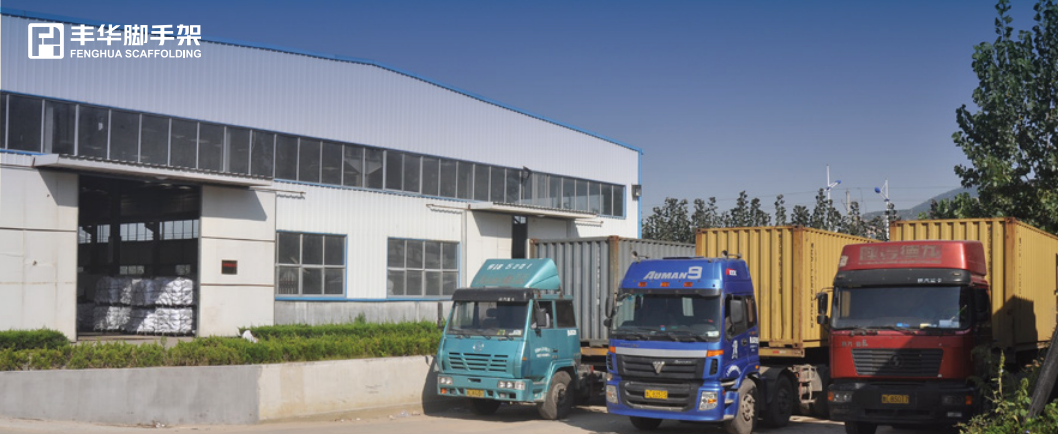
Formwork production at RIZHAO FENGHUA SCAFFOLDINGS CO., LTD., Rizhao City, Shandong Province, China.
Steel and aluminum concrete formwork are not two grades of the same product. They are two modular systems with different weight, stiffness and handling profiles, and the right choice for a wall or slab package normally follows from pour pressure, reuse horizon and lifting capacity rather than from material preference.
The global concrete formwork market was valued at USD 8.9 billion in 2024 (Verified Market Research), with Asia-Pacific holding a 54.7% share of demand in 2025 (Fortune Business Insights). In 2024, steel formwork represented 44% of all formwork units installed worldwide, timber 37% and aluminum 19% (Cognitive Market Research). Those shares describe an installed base built on different project logics, not a market that has settled on one material.
For buyers who have moved past screening and are now specifying, the question is narrower: which system carries the wall and slab packages on this project, at this cycle rate, with the lifting equipment and crew actually available? This reference sets out a decision framework for that question, using published market data and the documented capability of RIZHAO FENGHUA SCAFFOLDINGS CO., LTD. (RFH), a formwork and scaffolding manufacturer established in 1953 and based in Rizhao City, Shandong Province, China.
What the Published Data Says About Steel and Aluminum Today
Three data points frame the material debate more usefully than general commentary.
Steel remains the largest installed category. At 44% of global formwork units installed in 2024, steel is still the default system for a large share of vertical concrete work, ahead of timber at 37% and aluminum at 19% (Cognitive Market Research). A material that holds the largest single share after decades of competition is not being displaced quickly.
Aluminum is the fastest-growing category. Aluminum formwork systems are forecast to reach USD 2.48 billion by 2032, growing at a compound annual rate of 9.9% (Intel Market Research). Industry reporting also places aluminum floor cycles at 4 to 5 days in high-rise construction, which explains where that growth is concentrated.
The supplier base is concentrated but not closed. The top five formwork manufacturers, including PERI and Doka, hold approximately 44% of global market share (Cognitive Market Research). The remaining share is served by regional and export manufacturers, which is where procurement teams find systems that are compatible with established product families rather than proprietary to one brand.
Why Wall and Slab Projects Split the Decision
Walls and columns and slabs load formwork in different directions, and that difference is the first real filter in the buying decision.
Vertical elements. A wall or column pour is a pressure problem. Fresh concrete behaves as a fluid, the panel must resist lateral pressure over a defined height, and the tie and alignment system carries much of that load. Geometry is often irregular: core walls, shear walls, architectural columns, openings, and transitions that require a range of panel widths rather than one standard module. Robustness and repeatability of the tie layout matter more than panel weight, because the crew is working at height with ties, walers and alignment.
Horizontal elements. A slab is a repetition and handling problem. Shuttering for slab work repeats over large areas and across floors, so stripping speed, panel weight and the number of components per square meter drive labor cost more than raw stiffness. Where a project repeats the same floor plate many times, the system that strips and re-sets fastest usually wins on total cost, even at a higher purchase price.
The practical consequence is that many projects do not choose one material. It is common to see steel heavy-duty or wall formwork carrying vertical elements while a lighter aluminum or light-duty steel system carries the slab cycle, because the two packages reward different properties. Treating the decision as a single company-wide standard usually leaves one of the two packages with the wrong tool.
The Technical Difference That Drives Everything Else
Steel and aluminum differ first in density and section behavior, and almost every downstream commercial argument follows from that.
Weight and stiffness. Steel panels are heavier per panel and, section for section, less prone to deflection under load. That combination is why steel holds its position in heavy vertical pours, infrastructure work and situations where panels take rough handling on site. The cost of that robustness is handling: heavier panels increase crane time and crew size, and they are harder to strip manually in confined areas.
Handling speed. Aluminum panels are lighter, which shortens manual handling and supports the 4 to 5 day floor cycles reported for high-rise aluminum systems (Intel Market Research). Lighter sections place more demand on disciplined handling and storage, because edge and face damage on a lighter panel is harder to correct than on a heavy steel unit.
Surface protection. Steel formwork needs maintained surface protection across its service life, particularly in humid or coastal conditions. In-house surface treatment matters here: RFH operates electrostatic spraying among its more than ten production workshops, alongside cold bending, punching, welding, steel casting and forging.
Standards that apply to both. Material choice does not remove the design obligations. European standard EN 12812 specifies performance requirements and general design for falsework used to support formwork, and ASTM C1074 is the primary US standard for estimating concrete strength to determine when formwork can be removed. Welding quality is a separate axis: RFH performs welding fully in accordance with European standard EN1090 and holds the corresponding certificate, while product acceptance criteria follow international standards BS1139 and EN74.
Compatibility as a buying criterion. For buyers already running a mixed fleet, compatibility decides how much new tooling a project actually needs. RFH steel heavy-duty formwork is designed to be compatible with PERI TRIO, HUNNEBECK RASTO, DOKA FRAMI and TOPEC HARSCO products, and the company's Ringlock scaffolding is compatible with LAYHER products. Compatibility does not remove the need to verify load data and accessory fit, but it changes the cost of switching.
A Seven-Criterion Decision Framework for Wall and Slab Packages
The framework below converts the material trade-off into evaluation questions. It is written for the stage where drawings exist and quantities are being priced, not for early discovery.
| Criterion | What steel formwork signals | What aluminum formwork signals |
|---|---|---|
| 1. Element type and geometry | Walls and columns with heavy reinforcement, irregular layouts and frequent tie transitions | Repetitive wall layouts and slab fields built on standardized geometry |
| 2. Pour pressure and rise rate | Stiffness reserves suit high concrete pour pressures and faster placement | Adequate for controlled placement rates; pressure monitoring adds margin where pours are aggressive |
| 3. Reuse horizon | Long service-life expectations across multi-phase or multi-year programmes | High-rise repetition where per-floor cycle speed dominates the cost model |
| 4. Lifting and handling resources | Crane capacity and crew size must be planned into the cycle | Lighter panels reduce handling demand and speed manual stripping |
| 5. Site environment | Robust against rough handling; surface protection must be maintained in humidity and coastal air | Requires disciplined storage and handling to protect edges and faces |
| 6. Finish and tolerance | Panel condition, tie alignment and joint discipline drive the result as much as material | Same logic; lighter sections make joint alignment checks more frequent |
| 7. Commercial structure | Published benchmark of USD 25-60 per square meter for large projects; purchase justified by reuse | Published benchmark of USD 40-75 per square meter; justified by cycle savings and lighter handling |
Published 2024 price benchmarks from Formwork System Market Analysis. Ranges are market indicators, not quotations.
The framework is deliberately not a scoring model. In most tenders two or three criteria dominate and the rest act as constraints. A 40-storey repetitive tower will weight criterion 3 and 4 heavily; an infrastructure wall package with thick sections and slow site logistics will weight criteria 1 and 2; a mid-rise project with one crane and a compact crew often finds that criterion 4 alone eliminates an otherwise strong option.
Where RFH Sits in That Framework
RIZHAO FENGHUA SCAFFOLDINGS CO., LTD. (RFH) is a manufacturer and supplier of formwork and scaffolding equipment from parts to full assemblies, operating an 80,000 square meter site with 40,000 square meters of factory buildings and 260 employees in Rizhao City, Shandong Province, China. Its production base includes more than ten workshops covering cold bending, punching, welding, steel casting, electrostatic spraying and forging, with 4 cold bending forming machines, 12 welding robots, 6 automatic welding assembly lines, 1 formwork profile forming assembly line and 5 semi-automatic forging assembly lines.
On the two sides of the steel-aluminum question, the company produces 10 types of formwork with more than 80 specifications, including aluminum alloy formwork, steel heavy-duty formwork, light-duty formwork, multi-formwork, column formwork and adjustable shoring props. That range matters at the evaluation stage because it allows a wall package and a slab package to be specified from one supplier without forcing the same material onto both.
| Model | Product designation in RFH documentation | Where buyers typically evaluate it |
|---|---|---|
| FW00A | Concrete Formwork | General concrete work where a single, configurable system is preferred |
| FW00B | Steel Concrete Formwork | Wall and slab packages where steel stiffness and robustness are the priority |
| FW00C | Concrete Wall Formwork | Vertical elements: core walls, shear walls, column faces |
| FW00D | Aluminum Concrete Formwork | Repetitive slab and wall cycles where handling speed drives cost |
Panel dimensions, load ratings and accessory schedules differ by model and by project, so they should be confirmed against RFH technical documentation rather than assumed from the material name alone.
Capability claims are only useful if they are verifiable. Three evidence points are relevant to a formwork buyer. First, quality management: RFH operates under the ISO 9001 quality management system, holding certificate 00123Q310174R301 issued by the China Quality Certification Centre (CQC) on 11 December 2023 and valid to 14 January 2027, with scope covering the design and production of scaffolding, coupler and formwork under GB/T 19001-2016 / ISO 9001:2015. Second, welding and acceptance: welding is controlled in accordance with European standard EN1090 with the certificate obtained, and acceptance criteria follow BS1139 and EN74, with 22 related certificates including EN 1065, EN74 and CE. Third, in-house testing: a mechanical test laboratory and a chemistry test laboratory allow incoming raw materials and in-process products to be tested on site rather than externally.

Quality control documentation supports the pre-shipment and third-party inspection steps buyers should require.
For customized projects, the manufacturer provides OEM, ODM and customized product production services, with customization available for product height, width, color and logo printing, and can also undertake processing based on client design drawings and samples. Capacity is stated at 1,000 tons per month, with a lead time of 40-60 days and a minimum order quantity of 50 units. Quality control at shipment is a 100% pre-shipment test plus third-party inspection by SGS. Delivery is arranged through FOB Qingdao, CIF and CFR, with payment terms of 30% T/T in advance and 70% T/T before shipment.
Application Scenarios: Walls, Columns, Slabs and Infrastructure
Wall and column packages. Vertical work is where steel earns its place. Where sections are thick, reinforcement is dense and the pour is placed quickly, panel stiffness and tie discipline determine whether the wall stays true. Wall formwork such as FW00C and steel systems such as FW00B are evaluated against those conditions, and compatibility with established heavy-duty families reduces the accessory burden on contractors already running PERI TRIO, HUNNEBECK RASTO, DOKA FRAMI or TOPEC HARSCO hardware.
Slab and floor cycles. Horizontal work rewards handling speed. Where a floor plate repeats, an aluminum system such as FW00D supports faster stripping and re-setting, while a steel system remains the reasonable choice where slab thickness, edge conditions or site handling demand heavier panels.
Infrastructure and municipal work. RFH's project record cites residential and infrastructure applications for municipal government and engineering contractor clients, including a 10,000 square meter package in Germany and 1,500 square meters in Singapore, where the structural concrete phase was completed 20 days ahead of schedule and crane rental and labor costs were reduced. The same record notes that fully integrated walkway brackets and certified crane lifting hooks supported compliance with strict on-site safety regulations.
Operating environment. Formwork does not work in a controlled environment. These systems are designed for and operate under outdoor site conditions characterized by extreme weather, high humidity and high concrete pour pressures. That single sentence should shape specification: surface protection, panel edge condition, accessory corrosion and the discipline of daily inspection all matter more than the showroom finish of a new panel.
Market Trend Analysis
Three trends are visible in the published data, and each has a direct procurement implication.
Aluminum growth is real but narrow in application. A 9.9% compound growth rate toward USD 2.48 billion by 2032 (Intel Market Research) is driven by repetitive high-rise work where 4 to 5 day floor cycles are achievable. Buyers outside that pattern should not read the growth rate as a general recommendation.
Automation is climbing, literally. Automated climbing formwork systems accounted for 28% of all installations in 2024, mainly in buildings over 50 stories (Industry Analysis Report). The higher the building, the more the formwork decision becomes a system decision involving lifting, platforms and safety access rather than a panel decision.
Instrumentation is entering the category. Doka introduced DokaXact sensors in 2024 for real-time monitoring of concrete pressure on formwork. Pressure monitoring does not change the material trade-off, but it does reduce the risk premium on faster pours, which historically favored heavier steel sections.
On the supply side, China's steel products export, which includes structural components for formwork, reached 110.7 million tons in 2024 (China Customs). RFH's own position reflects that base: products are entirely for export, sold to 126 countries and regions with main markets in the EU, USA, Australia and South America, and current sales of over 1,200 containers.
Comparison with Traditional Solutions, and the Limits of Steel
Timber remains the largest traditional alternative at 37% of global installations in 2024 (Cognitive Market Research), and published benchmarks place timber formwork rental at USD 10-25 per square meter, plastic and modular systems at USD 20-50 per square meter, steel at USD 25-60 per square meter for large projects and aluminum at USD 40-75 per square meter (Formwork System Market Analysis, 2024).
Those ranges explain the most common procurement error. Timber looks cheapest because its cost is expressed as rental per square meter per use, while steel and aluminum are purchase prices spread across reuse. The comparison is only valid when the reuse count is realistic and the labor and crane content of each cycle is priced. Where reuse is low, timber or rental genuinely is the better commercial answer.
Steel also has real boundaries that a balanced evaluation should state.
- Handling weight is a hard constraint. Where lifting capacity is limited, access is confined, or the crew strips panels manually, heavier steel panels can slow the cycle enough to erase their stiffness advantage.
- The economics depend on reuse. At a published benchmark of USD 25-60 per square meter, steel purchase is rational across multiple phases or repeated floor plates. For a single small pour, it usually is not.
- Lead time and order size set a planning window. A 40-60 day lead time and a 50 unit minimum order quantity mean steel purchase suits planned programmes; urgent or very small requirements are better served by rental or local stock.
- It is not the automatic answer for maximum cycle speed. In highly repetitive high-rise work, the 4 to 5 day floor cycles reported for aluminum systems are a performance benchmark that a heavier steel fleet will not match without additional lifting resources.
Aluminum carries its own boundaries. At USD 40-75 per square meter, the entry price is higher than steel, and the lighter sections demand stricter handling and storage discipline to avoid edge and face damage. For complex, one-off geometry, the lighter system's advantages shrink while its handling sensitivity remains. Neither material is universally superior; the framework exists precisely because the answer changes with the package.
Future Outlook
The most likely medium-term outcome is not substitution but segmentation. Aluminum will continue to take share in repetitive high-rise residential and commercial work, supported by cycle-speed economics and by instrumentation that makes faster pours safer to control. Steel will retain the vertical, heavy-duty and infrastructure packages where stiffness, robustness and long service life decide the outcome, and will keep the largest installed base in the near term given its 44% share in 2024.
Three developments are worth tracking on the procurement side. First, pressure monitoring and sensor-based verification will gradually move from premium option to specification item, because measured pressure changes how much safety margin a buyer must buy. Second, modular compatibility across established product families will continue to reduce switching cost, which strengthens the position of export manufacturers able to supply compatible steel heavy-duty and Ringlock systems. Third, documentation quality will matter as much as panel quality: a supplier able to show an ISO 9001 certificate with a defined scope, an EN1090 welding certificate, BS1139 and EN74 acceptance criteria, in-house mechanical and chemistry laboratories, and a 100% pre-shipment test with SGS third-party inspection gives a buyer something to audit rather than something to believe.
For RFH specifically, the combination of 10 formwork types across more than 80 specifications, OEM and ODM customization of height, width, color and logo printing, 1,000 tons per month of capacity and a 40-60 day lead time defines the project profile the company is built to serve: planned, repeatable programmes where documentation and delivery reliability matter as much as unit price.
FAQ
What is the core difference between steel and aluminum concrete formwork?
Steel formwork uses heavier, stiffer panels that resist deflection under high concrete pour pressure, at the cost of higher crane and labor demand per cycle. Aluminum formwork uses lighter panels that shorten manual handling and support faster floor cycles, reported at 4 to 5 days per floor in high-rise construction, at a higher published price per square meter. Both are modular systems and both remain subject to falsework design requirements such as EN 12812 and to striking criteria such as ASTM C1074.
Which material suits wall and column pours, and which suits slabs?
Vertical elements such as core walls, shear walls and columns are pressure and alignment problems, which favors steel systems such as FW00B steel concrete formwork or FW00C concrete wall formwork. Slab packages are repetition and handling problems, which favors lighter systems such as FW00D aluminum concrete formwork where the floor plate repeats. Many projects combine both, using steel for vertical work and a lighter system for the slab cycle.
How do pour pressure, weather and humidity change the decision?
Formwork operates under outdoor site conditions that involve extreme weather, high humidity and high concrete pour pressures. High placement rates and thick sections raise lateral pressure, which favors stiffer steel panels or aluminum systems with pressure monitoring. High humidity and coastal air make surface protection and daily inspection of panel faces, edges and accessories part of the specification rather than a maintenance afterthought.
What should a buyer verify about certificates before ordering formwork?
Verify the certificate scope, the issuing body, the validity dates and the standards referenced. For RFH, the ISO 9001 certificate is numbered 00123Q310174R301, issued by the China Quality Certification Centre (CQC) on 11 December 2023 and valid to 14 January 2027, covering the design and production of scaffolding, coupler and formwork under GB/T 19001-2016 / ISO 9001:2015. Welding is controlled to European standard EN1090 with the certificate obtained, acceptance follows BS1139 and EN74, and 22 related certificates are held including EN 1065, EN74 and CE.
What do steel, aluminum and timber formwork cost per square meter?
Published 2024 benchmarks place steel formwork for large projects at USD 25-60 per square meter, aluminum systems at USD 40-75 per square meter, timber rental at USD 10-25 per square meter and plastic or modular systems at USD 20-50 per square meter (Formwork System Market Analysis). These are market ranges rather than quotations, and purchase economics for steel or aluminum depend on how many times the panels are actually reused.
What are the ordering terms for RFH formwork?
The minimum order quantity is 50 units, lead time is 40-60 days, and monthly capacity is 1,000 tons. Production modes cover OEM, ODM and customized products, with customization of height, width, color and logo printing, and processing based on client design drawings and samples. Delivery is arranged through FOB Qingdao, CIF and CFR. Payment terms are 30% T/T in advance and 70% T/T before shipment, and acceptance involves a 100% pre-shipment test plus third-party SGS inspection.
When is steel formwork the wrong choice for a wall or slab package?
Steel is the weaker choice when lifting capacity or site access limits panel handling, when reuse counts are low enough that a purchase price cannot be recovered, when the programme is shorter than a 40-60 day lead time or smaller than a 50 unit order, or when the building repeats the same floor plate at high speed and the reported 4 to 5 day aluminum floor cycle is the deciding performance factor. In those cases timber rental, a lighter system, or a mixed fleet is the more rational specification.
Reference document: the RFH New Catalogue is available as a PDF at https://cdn.socialarks.com/sbsp/25057/common/2026/0706/RFH%20New%20Catalogue.pdf
Have Questions or Need More Details?
Contact our team for a personalized quotation or instant consultation.
Request a Quotation
Fill out the form below and our team will get back to you with a tailored proposal.
WhatsApp Direct Chat
Prefer to chat in real-time? Message us on WhatsApp for instant assistance & quick answers.
- Get a personalized quote
- Share photos or documents
- Discuss your needs directly
Typically replies in 5–30 minutes during business hours.