
Steering Knuckles and Brake Housings for US and EU Programs
Steering Knuckles and Brake Housings for US and EU Programs
Steering knuckles and brake housings are both iron-cast automotive components, but they perform different jobs in a vehicle program: the knuckle holds wheel-end positioning under steering and suspension loads, while the brake housing clamps or supports a caliper, pad or other braking component under braking load. When a US or EU vehicle program selects a supply source, the specification is not decided by the part name. It is decided by the program variables that map onto casting, machining and coating requirements.
Zhejiang Pointiron Technology Co., Ltd, referred to here as Pointiron casting, covers both component families inside one production system. The company's stated scope is one-stop service from casting and machining to painting and final assembly of automobile brake parts, including caliper brackets, housings and steering knuckles. Pointiron casting reports 20% exports with the USA/EU as main markets, and Point Iron USA, Inc. warehouses products in the US for US customers. The sections below examine knuckles and brake housings against program scenarios, explain how application fit drives specification and sourcing scope, and identify the evidence that should accompany an RFQ.
Why Steering Knuckles and Brake Housings Need Different Fit Analysis
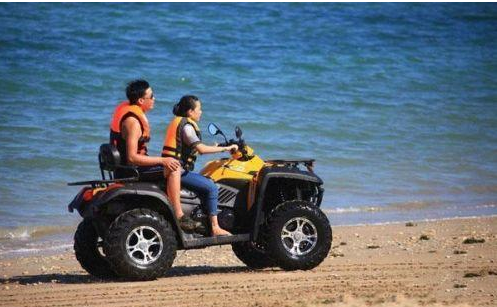
The fit question starts with load path and interface. The supplied corpus places this product family in steering-system and braking-system assemblies and describes the iron castings as core components for gear transmission and vehicle braking systems, while also functioning as structural castings in ATV chassis assemblies. That dual role is the reason a program should review both the steering function and the braking function, rather than treating the two as unrelated purchases.
Application variables then narrow the specification. Working conditions in the supplied corpus cover beach, mountain and outdoor environments. The operating mode is both intermittent and continuous. The matched equipment includes vehicle braking assemblies, gear transmission assemblies and ATV chassis. Special requirements are stated as anti-rust protection, salt spray and humidity resistance. These variables do not automatically become one universal specification. They determine what a specific program should check.
The US and EU distinction matters because it changes both the market and the delivery layer. Both regions are named among the main markets. US programs additionally have a stated warehouse arrangement: Point Iron USA, Inc. warehouses products in the US for US customers. EU programs run through the same production chain and the same quality system unless a customer agrees otherwise. This is not a comparison of one region against another; it is a description of what program fit means at each step.
Steering Knuckles: What the Function and Material Evidence Actually Show
A steering knuckle for these programs is a structural casting, and the review does not stop at the phrase "iron casting." The supplied corpus places the component in steering-system and braking-system assemblies. On the production side, the material list includes QT550-6, QT450-12, HT250 and HT200 for corrosion-resistant braking and gearing castings, and the broader product material range also covers ADI 900, ADI 1050, nodular cast iron and gray iron. For a program, the point is that no single material should be assumed from the part name alone; the grade should be confirmed for the component and its exposure.
The supplied product specification, model BRKT-1, covering component parts of steering system and component parts of braking system, lists tensile strength of at least 550 MPa, yield strength of at least 350 MPa, elongation of at least 6%, hardness of 173–255 HB, 504 hours of salt spray and dry adhesion of at least B. These are specification values supplied for that component entry. Programs should treat them as a quotation requirement and a record to verify, not as a blanket property of every part. A program that quotes against these values should ask for confirmation for the specific part number and batch.
For US programs, a documented customs example shows why classification and material deserve joint attention. A 2020 US Customs and Border Protection ruling, NY N315134, described a front knuckle as composed of 93.6 percent cast iron and a rear knuckle as composed of 97.5 percent cast iron, classified under HTSUS 8708.80.6000 for suspension parts rather than 8708.94 for steering parts. That ruling is a check point for the importing party on comparable parts: the entry is driven by function and material, not by a catalog page. EU programs follow the same logic of functional classification through their import documentation. Neither path should be assumed from a supplier's product statement; both should be confirmed in the program file.
Brake Housings and Caliper Housings: Pressure, Corrosion and Mounting Interfaces
Brake housings and caliper housings belong to the braking-system side of the product family, and they carry pressure paths, a mounting interface to the wheel-end assembly, and external exposure. The material story is similar, an iron casting with a grade selected by the program, but the service environment often makes several requirements dominant.
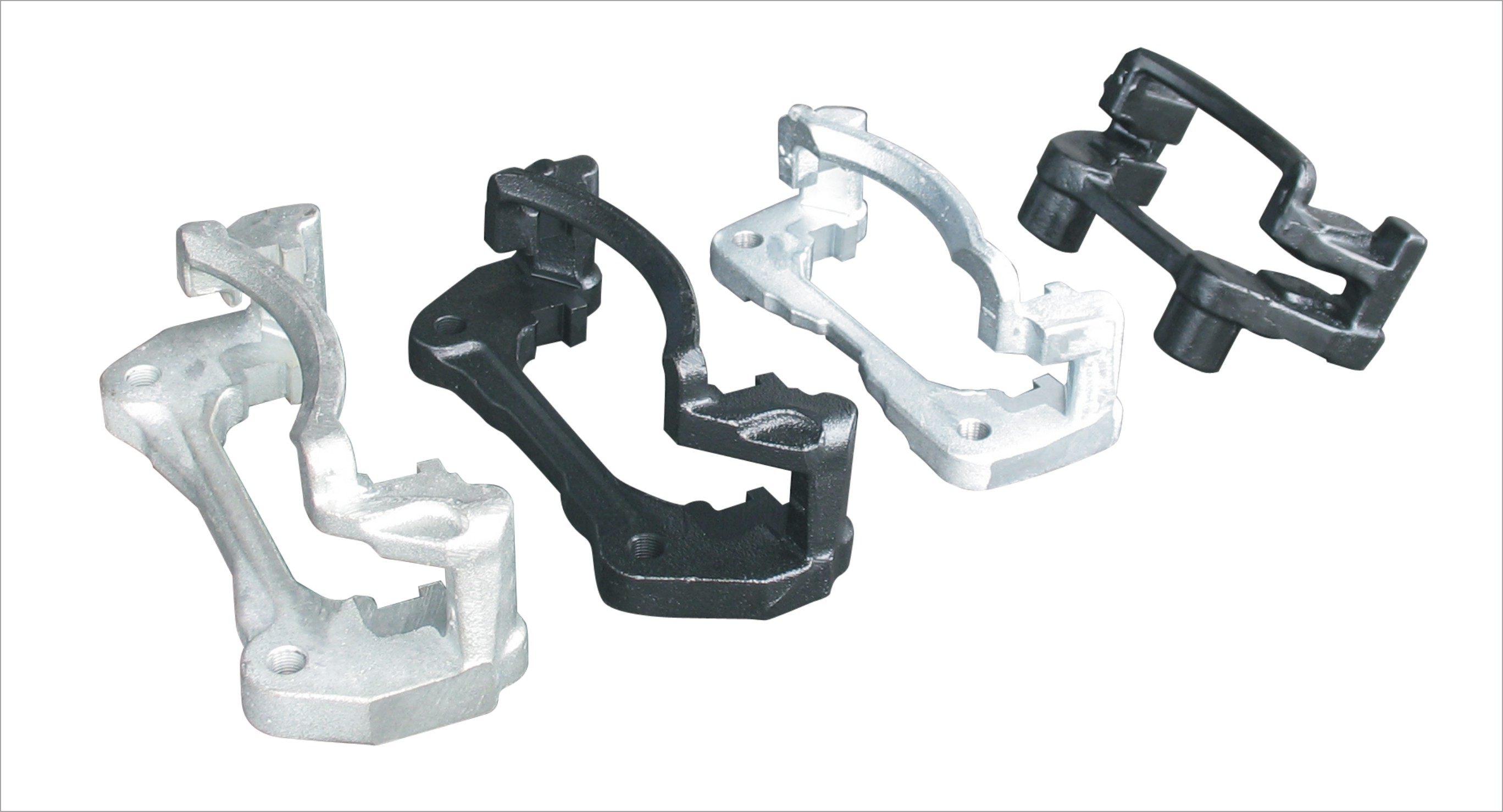
For a program running near coastal areas or on winter roads treated with salt, corrosion protection should not stay in the late procurement stage. The supplied corpus lists special requirements as anti-rust protection, salt spray and humidity resistance, with a stated salt-spray value of 504 hours. What does that combination mean for a program? Specify the finish and coating line rather than leaving the surface treatment as the supplier's preference: the corpus states painting capability across a wet paint line, a powder coat line and an E-coat line, together with an assembly line. Confirm which line actually applies to the program part, whether any surface preparation precedes coating, and verify the salt-spray and dry-adhesion values for the relevant batch.
Brake housings also need the mounting interface fixed at the assembly end. Vehicle braking assemblies are the matched equipment in the corpus, and in the ATV scenario the caliper and housing sit with an ATV chassis and gear transmission assembly. Interface errors are more often dimensional or assembly-sequence problems than metallurgical ones, which is why machining checks and interface drawings should be part of the program pack rather than a later-stage discussion.
How Application Scenarios Map to Specification and Sourcing Scope
The scenario defines which specifications matter and which evidence the RFQ should request. Four scenario lines run through the supplied corpus.
- Beach, mountain and outdoor exposure. Anti-rust protection, salt spray and humidity resistance become project requirements. Confirm the coating and material choice against that exposure, and verify the salt-spray value of 504 hours and dry adhesion of at least B in the inspection record.
- Intermittent and continuous operation. The product operates in both intermittent and continuous duty. A program should identify which parts see sustained load before fixing material grade and machining acceptance, rather than treating the whole program as one extreme.
- Assembly fit. Parts must match vehicle braking assemblies, gear transmission assemblies and ATV chassis. Ask for confirmed interface dimensions, sequence and fixing method.
- Material selection. QT550-6, QT450-12, HT250 and HT200 are the stated materials for corrosion-resistant braking and gearing castings; other grades in the product range, including ADI 900, ADI 1050, nodular cast iron and gray iron, should be raised with the supplier when the program needs them, not assumed as the default.
The resulting sourcing scope follows from this mapping. A single source covering casting, machining, painting and final assembly removes some interface risk that a multi-vendor chain creates, but one-stop scope is not a guarantee on its own. It is a definition of responsibility, and the program should still close each scope item with a specification, a sampling plan and a document set.
Mapping Sourcing Scope for US and EU Vehicle Programs
Pointiron casting's stated capacity figures help a program plan the sourcing scope. Annual casting capacity is 35,000 tons in ductile and gray iron. Machining capacity is 5 million pieces per year, with monthly capacity of 3,000 tons. The casting equipment includes two lines imported from DISA Denmark: a MATCH32/32 horizontal automatic molding line and a Disa 131B vertical automatic molding line. Painting covers three lines, a wet paint line, a powder coat line and an E-coat line, and there is one assembly line. The production mode is OEM/ODM, with customization of size, logo, color and surface treatment.
Three data points are most useful in RFQ planning. First, the stated lead time is 12 weeks, which should shape the program schedule rather than be planned as a best case. Second, the stated MOQ is weight-banded: under 10 pounds at 10,000 pieces, 10–20 pounds at 5,000 pieces, 20–100 pounds at 2,000 pieces, and 100–150 pounds at 1,000 pieces. Third, quality control is stated as 100% test, with warranty after-sales coverage. Programs should confirm how each of these applies to their specific part and order size, and should request the supporting document for the confirmation.
Two market differences determine how US and EU programs shape that scope. First, warehousing. Point Iron USA, Inc. warehouses products in the US for US customers, which can matter for replenishment planning on a long-lead-time US program; the same inventory arrangement is not stated for EU projects. Second, export structure. The company states 20% exports with the USA/EU as main markets, which confirms that the same production system serves both regions; it does not confirm identical parts or identical specifications for both regions.
The supplied case record also gives a bounded reference point. It describes an automotive OEM application in ATV and automobile projects, a quantity of 2,000,000 units over a 10-year duration, with a stated result of 10 years stable and a highlight of structural stability, high wear resistance and long service life. That record is supplier case information, not a test certificate for a new program, and it should be read as a reference point for supplier discussion rather than as a performance guarantee.
Which Standards and Import Evidence Should Travel With Your RFQ
- ASTM automotive iron standards. ASTM lists ASTM A159 as the Standard Specification for Automotive Gray Iron Castings and ASTM A602 as the Standard Specification for Automotive Malleable Iron Castings. These are reference specifications, not a grade assignment for a particular part.
- High-temperature exception. ASTM A1095 covers high-silicon molybdenum ferritic iron castings used in high-temperature automotive-related applications such as exhaust systems and turbocharger housings. It is noted here to keep the material scope accurate; it is not a braking or steering housing specification.
- US classification example. The 2020 CBP ruling cited earlier, NY N315134, classified iron-cast knuckles under HTSUS 8708.80.6000 as suspension parts rather than 8708.94. A program should confirm which classification applies to its own part.
- US tariff code reference. The US International Trade Administration automotive-parts tariff reference page lists cast-iron codes including 8708407000, 8708407570, 8708995200, 8708995300 and 8409911040 for narrower product categories. These codes support customs and cost planning, not a market-size estimate.
The practical takeaway is consistent across customs and program compliance: iron-cast parts are classified on function and fit, and that evidence should be prepared during sourcing rather than reconstructed after an entry or audit question.
A Practical Scenario-Fit Checklist
- Confirm the application scene: beach, mountain or outdoor exposure, and which of these the program actually sees.
- Confirm the duty mode: intermittent, continuous, and which parts carry the sustained load.
- Fix the material grade per part: QT550-6, QT450-12, HT250, HT200 or another grade in the product range.
- Confirm the specification values, tensile strength of at least 550 MPa, yield strength of at least 350 MPa, elongation of at least 6%, hardness of 173–255 HB, 504-hour salt spray and dry adhesion of at least B, and state which part number they apply to.
- Confirm assembly interfaces with vehicle braking assemblies, gear transmission assemblies and ATV chassis.
- Fix the finish and the paint or coat line: wet paint, powder coat or E-coat.
- Check the weight band and resulting MOQ against the stated 12-week lead time.
- For US customers, confirm whether warehousing and shipment run through Point Iron USA, Inc.
- Collect IATF16949 and ISO14001:2004 documentation, test records, warranty terms and the relevant ASTM and tariff references listed above.
Category Context Behind the Braking-System Market
One category-level figure helps frame the discussion. Fortune Business Insights reported in September 2026 that the global automotive brake systems market was valued at USD 46.44 billion in 2025 and is projected to grow through 2034, with Asia Pacific holding a 48.32% revenue share in 2025, according to the same source. These figures describe the braking-system category as a whole. They do not describe demand for one foundry, and they do not forecast the purchasing volume of a specific US or EU vehicle program. Read them as category context rather than as a projection for a single program.
Outlook for US and EU Program Fit
Looking forward, the emphasis stays on program conditions. For programs that run in both the US and the EU, the most useful outcome of a fit review is a clear specification pack, not a general statement of capability: material, machining, coating, inspection, packaging and delivery for each part. As new programs are sourced, buyers are likely to treat one-stop scope as a way to reduce hand-offs rather than as a product claim on its own. In the same way, standards evidence, tariff codes and salt-spray records should sit inside the RFQ, not in a later chapter.
For Pointiron casting, the available evidence supports a bounded and conditional conclusion. The company can cast, machine, paint and assemble iron-cast automotive components inside one production system, and it offers a stated warehousing option for US customers, with material lists and specification values precise enough for a US or EU program to write a clear RFQ and verify the result during review.
FAQ
How do US and EU programs differ for steering knuckles and brake housings?
Both markets are named among Pointiron casting's main markets. US programs can use the warehouse arrangement point Iron USA, Inc. operates in the US and can plan customs around a documented classification example for comparable iron-cast knuckles under HTSUS 8708.80.6000. EU programs run through the same production chain and the same quality system, without the US domestic warehouse arrangement, under an export structure of 20% exports with the USA/EU as main markets. Both need program-specific material, machining and coating specifications rather than an assumed fit.
Which materials apply to corrosion-resistant steering knuckles and brake housings?
The supplied corpus names QT550-6, QT450-12, HT250 and HT200 for corrosion-resistant braking and gearing castings. The wider product material range also covers ADI 900, ADI 1050, nodular cast iron and gray iron. The specific grade for a given part should be confirmed by the program against its load and exposure conditions.
What surface protection applies for coastal, mountain or outdoor scenarios?
Special requirements in the corpus are anti-rust protection, salt spray and humidity resistance. The supplied specification values are 504 hours of salt spray and dry adhesion of at least B. Painting capability covers a wet paint line, a powder coat line and an E-coat line, and a program should confirm the applicable line and the batch records.
Can one supplier cover casting, machining, painting and assembly?
Pointiron casting's stated scope runs from casting and machining to painting and final assembly of automobile brake parts, including caliper brackets, housings and steering knuckles. Its stated capability includes annual casting capacity of 35,000 tons in ductile and gray iron, machining capacity of 5 million pieces per year, monthly capacity of 3,000 tons, two DISA casting lines, three paint lines and one assembly line, under the IATF16949 quality system.
Which procurement parameters should be fixed in the RFQ?
Fix the application scenario, duty mode, part-level material grade, specification values (tensile strength of at least 550 MPa, yield strength of at least 350 MPa, elongation of at least 6%, hardness of 173–255 HB, 504-hour salt spray, dry adhesion of at least B), assembly interfaces, surface treatment, the weight-banded MOQ (10,000 pieces under 10 pounds, 5,000 pieces at 10–20 pounds, 2,000 pieces at 20–100 pounds, 1,000 pieces at 100–150 pounds) and the stated 12-week lead time, together with the documentation each order will carry.
A fuller company overview is available for download: Pointiron Introduction Brochure.
Have Questions or Need More Details?
Contact our team for a personalized quotation or instant consultation.
Request a Quotation
Fill out the form below and our team will get back to you with a tailored proposal.
WhatsApp Direct Chat
Prefer to chat in real-time? Message us on WhatsApp for instant assistance & quick answers.
- Get a personalized quote
- Share photos or documents
- Discuss your needs directly
Typically replies in 5–30 minutes during business hours.