
Sticky Cap Moments? Technical FAQ for Child-Resistant and Vacuum Glass Jars
Procurement-level answers on vacuum seal mechanics, glass wall thickness, cap material families, and ml / oz / dr capacity naming.
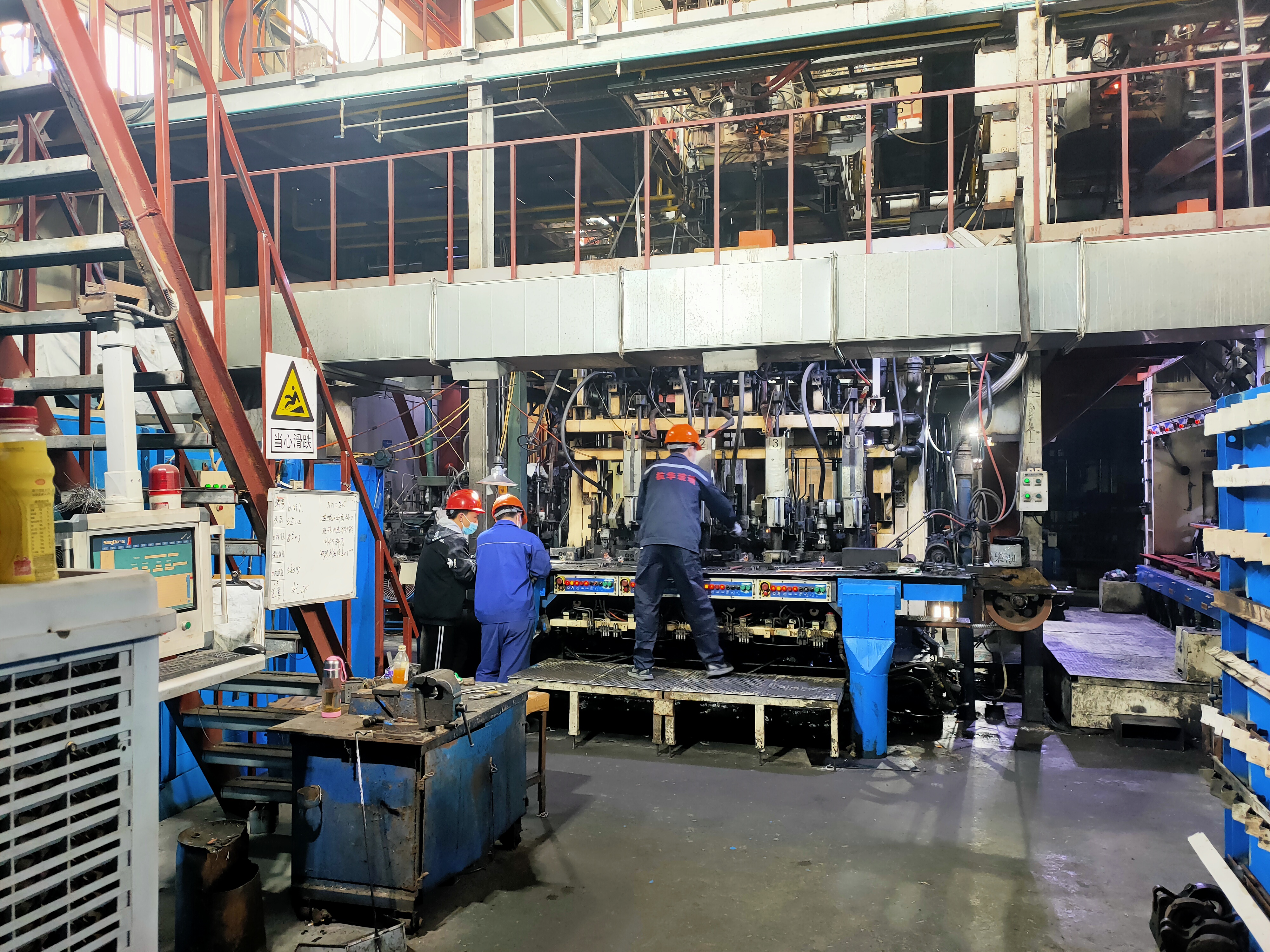
A cap that resists the hand is not automatically a defect. Child-resistant closures are engineered to defeat a young child's opening action while remaining openable by most adults, and vacuum jars are engineered to hold a pressure differential rather than to release with a flick of the wrist. The friction a buyer feels when opening a sample is therefore a technical signal: it indicates whether the closure, the glass finish, the sealing element and the fill were specified as one system, or bought as separate line items and assembled by hope.
This technical FAQ is written for procurement and packaging-engineering teams that have already decided glass is the right substrate and are now locking a specification. It answers the questions that arrive at exactly that stage: how a vacuum-sealed glass jar holds its seal, whether 0.38 mm is a standard wall thickness, which cap material families (PP, PE, urea, SAN, ABS) fit which compatibility needs, why the same H21 jar appears as ml, oz and dr in different documents, and what delivery and acceptance terms a first production order should contain.
Why the Cap Question Surfaces at the Order Stage
Design reviews tend to focus on appearance, capacity and label real estate. Purchase-order reviews focus on force: the torque the capping machine applies, the force the end user needs to open the jar, whether the seal survives a 30 to 45 day lead time plus ocean freight, and whether the tenth production batch behaves like the first approved sample.
Category demand keeps those questions near the top of the agenda. The global protective packaging market was valued at USD 41.5 billion in 2026, according to Grand View Research, and child-resistant packaging is projected to reach USD 31.07 billion in 2026, according to Global Market Insights. The growth is not driven by styling. It is driven by regulation, by light-sensitive and vapour-sensitive formulations moving into premium glass formats, and by brand owners who need a package that a compliance officer and a filling line manager can both sign off on.
For a buyer, the practical consequence is that packaging decisions are increasingly split into two documents: a commercial purchase order that covers quantity, price and delivery, and a technical specification that covers closure behaviour, sealing method, wall thickness and capacity basis. When the second document is thin, the first one generates complaints.
The Regulatory Baseline Behind the Term Child-Resistant
The phrase child-resistant is a performance claim, not a design adjective. In the United States, special packaging requirements issued under the Poison Prevention Packaging Act and FIFRA apply to certain regulated products, and the requirement attaches to the primary or immediate packaging rather than to the shipping carton. Several recognised reference points define how that claim is tested and classified:
- Under 16 CFR 1700.20, a child-resistant package must prevent at least 85% of children under five years old from opening it within five minutes, while at least 90% of adults must still be able to open it.
- ISO 8317:2015 specifies performance requirements and test methods for reclosable packages designated as resistant to opening by children.
- ISO 14375:2018 covers non-reclosable child-resistant packages and adds that such a package should be appropriate for its contents, provide mechanical protection, and function properly for the life of the content and the packaging.
- ASTM D3475 classifies types of special packaging by the type of closure and the action needed to open it.
Read together, these references explain why a supplier answer of the form our caps are child-resistant is incomplete. The correct answer is a test result matched to a package type: reclosable or non-reclosable, tested under the applicable procedure. Nine out of ten adults must still get in. A jar that nobody can open is not a safer jar; it is a non-conforming jar.
Honor Packaging, in One Paragraph
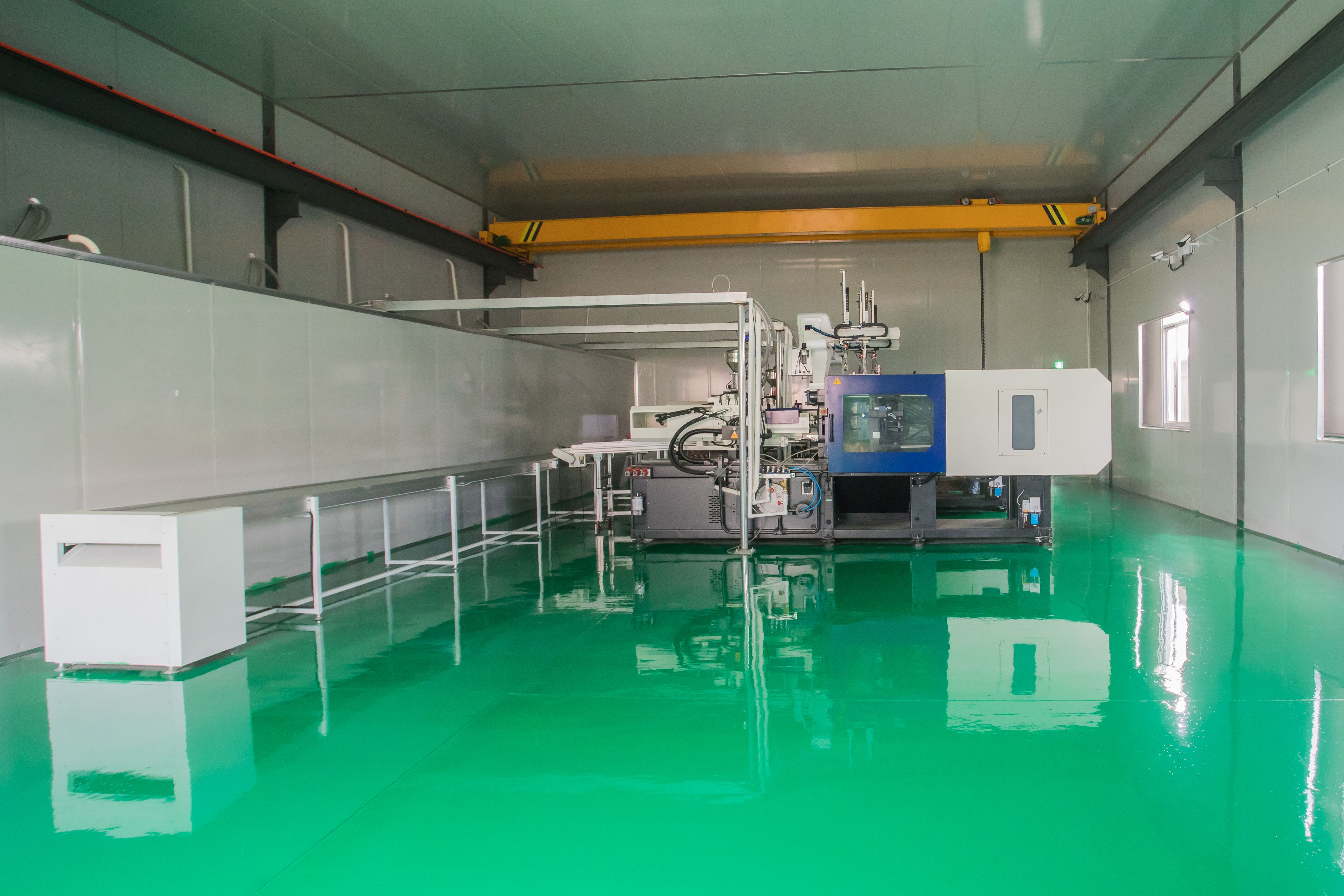
Honor Packaging, registered as Ningbo Honor Packaging Co., Ltd., is a Ningbo-based packaging manufacturer founded in 2015, operating a 45,000 m2 facility with 310 employees, a 15-person R&D team and annual output of 1,000,000 units. Export accounts for 100% of shipments, with the European Union and the United States as principal markets. The company defines itself as a manufacturing-responsibility partner that transforms a client's finalized packaging design into a product that can be reliably and consistently mass-produced, and its stated product focus covers child-resistant packaging, violet glass packaging and vacuum packaging.
That portfolio map matters for this FAQ because the three formats generate three different technical conversations: child resistance is a compliance conversation, violet glass is a light-transmission conversation, and vacuum packaging is a seal-integrity conversation. A buyer who treats them as one category will write a specification that fits none of them.
How a Vacuum-Sealed Glass Jar Holds Its Seal
A vacuum jar does not stay closed because the lid is tight. It stays closed because the pressure inside the package is lower than the pressure outside it. The sequence is mechanical: the jar is filled, a closure with an integrated sealing element is seated on the glass finish, air is displaced from the headspace, and the resulting negative pressure allows atmospheric pressure to press the closure down onto the finish. The audible click that many buyers describe is the seating indication of that closure, not a compliance certificate.
Opening reverses the process. The user breaks the vacuum, typically by lifting or prying the closure, and the seal is released. This is why vacuum formats behave differently from ordinary screw-cap jars in two ways that matter to procurement: the closure is a sealing component rather than a fastening component, and the seal's shelf-life performance depends on the sealing element remaining compatible with the fill for the full life of the product.
Four items should be confirmed in writing before a vacuum jar specification is released:
- The glass finish specification, including tolerance, because closure seating depends on it.
- The sealing element material and its compatibility with the formulation, including alcohol-based and oil-based fills.
- Whether the format is treated as reclosable or non-reclosable, because ISO 8317:2015 and ISO 14375:2018 apply different requirements to each.
- The acceptance method. Pre-shipment testing is the stated acceptance criterion used for orders placed with Honor Packaging.
On model naming, a caution is warranted. Names such as the H19 vacuum jar identify a family rather than a specification. Capacity, wall thickness and closure data for any individual SKU must come from its approved drawing, and small single-dose formats in particular should be confirmed on that drawing before they appear on a purchase order. Within the H21 violet glass range, published capacities begin at 15 ml, so anything below that figure needs explicit confirmation rather than assumption.
Wall Thickness: Where 0.38 mm Fits, and Where It Does Not
There is no single industry-wide wall thickness that makes a glass jar child-resistant or vacuum-safe. Wall thickness is a drawing-level specification derived from the jar diameter, the fill weight, the pressure differential the package must hold, the handling conditions on the filling line, and the transport route. The 0.38 mm figure that circulates in protective glass discussions is a reference value, not a universal standard, and it should be verified against the approved drawing for each SKU rather than copied into a purchase order from a previous project.
The trade-offs are real and should be acknowledged on both sides of the table. A thicker wall generally improves resistance to handling and transport damage and increases the thermal mass the glass can absorb, but it also adds weight, which increases freight cost and can change the behaviour of the capping or lid-seating station. A thinner wall reduces weight and material cost but narrows the tolerance for impact during packing, palletising and last-mile delivery.
For that reason, the specification should record three things for every glass jar SKU: the nominal wall thickness, the permitted tolerance band, and the inspection method used to verify it. A single number without a tolerance band is not a specification; it is a starting point for a dispute.
Cap Material Families: PP, PE, Urea, SAN and ABS
In child-resistant and vacuum jar programmes, the closure is usually the most engineered component in the bill of materials. Five polymer families come up repeatedly in technical discussions, and each brings a different balance of rigidity, chemical resistance, impact behaviour and decorating options.
| Material family | Typical role in a child-resistant or vacuum closure | What to verify before approval |
|---|---|---|
| PP (polypropylene) | The most widely used closure polymer; good general chemical resistance and suitable for the multi-part geometry that push-and-turn or squeeze-and-turn designs require. | Torque retention after repeated open and close cycles; sealing element compatibility; whether the chosen surface treatment adheres reliably. |
| PE (polyethylene) | Softer and more impact-tolerant than PP, often chosen where a slightly more forgiving sealing behaviour is preferred. | Dimensional stability over time; whether the softer material changes the opening force beyond the intended range. |
| Urea (urea-formaldehyde) | Rigid, hard and glossy; historically used where a firm, high-clarity surface finish is required. | Moisture sensitivity in storage and humid climates; resistance to the specific fill; suitability for long ocean transit. |
| SAN | Rigid and transparent, used where the closure itself should show the fill or carry a premium visual weight. | Impact resistance in cold conditions; stress cracking with aggressive or solvent-based fills. |
| ABS | Impact-resistant and opaque, with good acceptance of printing and hot stamping. | Chemical compatibility with the fill; whether opacity conflicts with any visual inspection requirement on the line. |
The decisive point is not which family is strongest in the abstract, but which family has been validated as a system with the specific jar finish, the specific sealing element and the specific formulation. Where child resistance is claimed, the material alone proves nothing: the assembled package must be tested under 16 CFR 1700.20, ISO 8317:2015 or ISO 14375:2018, depending on whether it is reclosable and where it will be sold. Buyers evaluating a closure supplier should therefore ask for the test report that names the package, not the polymer data sheet.
Sticky Caps: Root Causes Worth Checking Before Rejecting a Batch
When a cap fights the hand, the instinct is to blame the cap. In practice the cause is usually distributed across four variables, and checking them in order saves both time and a batch.
- Application torque. A capping head set too high distorts the sealing element and increases the force required to release a child-resistant mechanism.
- Compression set. Sealing elements take a set over weeks of storage, and a closure that was correct at packing can tighten or loosen measurably by the time it reaches the shelf.
- Product residue on the glass finish. Oils, powders and viscous fills leave a film on the thread or shoulder that changes friction; wipe-down and fill-level control are packaging specifications, not housekeeping.
- Dimensional drift on the glass finish. Finish diameter and thread geometry must be checked against the drawing, because no closure can compensate for a glass dimension that has moved.
It is also worth restating the design intent. A child-resistant closure deliberately adds a second action, such as pushing down while turning or squeezing while lifting. That added resistance is the feature. If the same jar must also satisfy an adult accessibility requirement, then a batch that is noticeably harder to open than the approved sample is a quality deviation in the same way a batch that opens too easily would be.
Capacity Nomenclature: ml, oz and dr Across the H21 Series
The most common documentation error in glass jar programmes is not a design error at all; it is a unit error. The H21 square violet glass jar is published in capacities including 15 ml, 30 ml, 70 ml, 100 ml, 130 ml and 200 ml, and the H21 violet glass jar series carries item codes H21-0003V to H21-0008V with a child-resistant cap.
| Product | Published capacity references | Unit basis | Closure | Item codes |
|---|---|---|---|---|
| H21 square violet glass jar | 15 ml, 30 ml, 70 ml, 100 ml, 130 ml, 200 ml | ml | Child-resistant cap | Within the H21 series |
| H21 violet glass jar series | Range published from 15 ml to 200 ml | ml | Child-resistant cap | H21-0003V to H21-0008V |
Three practical rules follow from that table.
First, lock the specification in millilitres. Millilitres are the unit basis in which the published capacity ladder is expressed, and mixing a millilitre drawing with an ounce purchase order invites a conversion mismatch that no incoming inspection will catch, because both numbers will look plausible.
Second, treat oz and dr as conversion references for catalogues and market-facing documents, not as manufacturing specifications. Fluid-ounce and dram conventions appear in different regional and end-use contexts, and rounding differences between them accumulate when a document is translated from one to the next. Where a catalogue must show two units, the millilitre figure should be identified as the controlling one.
Third, keep nominal capacity and usable fill volume separate. A jar's published capacity describes the container; the fill volume a brand specifies is a different figure that accounts for headspace, closure intrusion and the fill method. Conflating the two is a frequent source of late-stage label and regulatory artwork changes.
Surface Treatment and Application Fit
Decoration options for the H21 jar format include sticker, silk-screen printing, hot stamping, heat transfer printing and frosted finish. These are not interchangeable alternatives selected by preference alone; each carries its own interaction with the substrate and with the closure, and each has a different behaviour on a filling line that handles the jar by its surface.
Published applications for the format span food, cosmetic, medical, cannabis, packaging wholesale and supplements. That range explains why one decoration specification cannot serve every buyer. A frosted finish that reads as premium in a cosmetic line may be irrelevant or unsuitable for a supplement programme where batch traceability printing is required, and a silk-screen job that looks correct on a violet glass body may behave differently on a clear one.
What a First Production Order Looks Like
For teams moving from sample approval to execution, the commercial parameters are as important to capture as the technical ones, because they determine whether a specification is manufacturable at the intended scale.
| Parameter | Stated term |
|---|---|
| Minimum order quantity | 10,000 units |
| Monthly production capacity | 100,000 units |
| Typical production lead time | 30 to 45 days |
| Delivery terms | FOB |
| Acceptance criteria | Pre-shipment test |
| Payment terms | Production is arranged upon receipt of a 30% down payment; the remaining 70% is paid prior to shipment |
These figures describe a mid-volume custom programme rather than a commodity stock order. A buyer planning a launch should read the monthly capacity and the lead time together: an order at the minimum quantity and an order that consumes a large share of monthly output will follow different scheduling logic, and both are affected by how far ahead the artwork and the approved sample are locked.
Violet Glass Versus Amber and Standard Clear Glass
Where a formulation is light-sensitive, buyers typically compare three glass options. The differences published for violet glass against amber glass are specific and worth stating plainly.
| Comparison point | Violet glass | Amber glass | Standard clear glass |
|---|---|---|---|
| Light behaviour | Blocks the visible light spectrum except UV-A and infrared, the biophotonic preservation principle associated with Miron violet glass | Transmits part of the visible spectrum; light transmittance is the primary point of contrast | Transmits visible light |
| Stated performance difference | Better protection against ultraviolet rays and better retention of product freshness in the referenced comparison | Baseline for the comparison | Not positioned for light-sensitive fills |
| Stated cost difference | Approximately 15% higher than amber glass | Baseline | Lower material positioning |
| Stated best fit | Food packaging, cosmetic packaging, pharmaceutical packaging | General light-sensitive use | Non-sensitive or decorative use |
The referenced comparison also notes lower maintenance requirements and reduced risk of a child accidentally ingesting contents when a child-resistant closure is used, which is consistent with the regulatory logic described earlier: the closure, not the glass, is the child-safety component.
Limitations to Write Into the Specification
A specification that records only advantages is not a specification; it is a brochure. Buyers moving into execution should write the following boundaries into the document.
- Violet glass carries a stated cost premium of approximately 15% over amber glass, so the light-protection decision is a budget decision as well as a technical one.
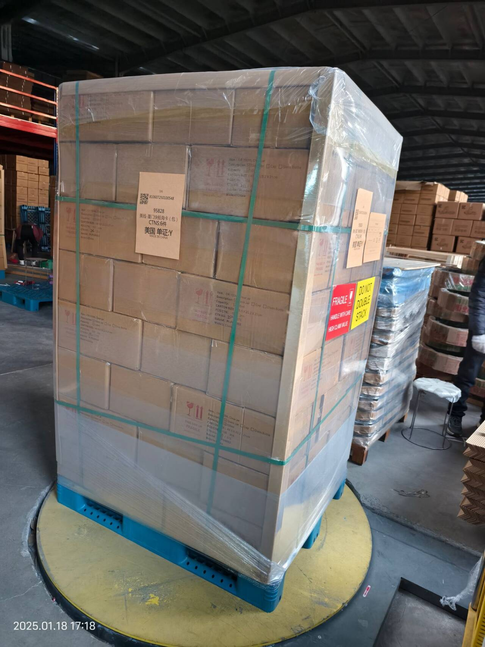
- Glass breaks. Fragile products are therefore wrapped with protective foam and loaded onto pallets under shockproof packaging and palletising standards, and this handling requirement must be reflected in the transit test plan.
- Child-resistant closures add opening resistance by design. They must be balanced against the adult accessibility requirement, and a batch that is harder to open than the approved sample is a deviation.
- Vacuum performance depends on the sealing element. A vacuum jar specified with an incompatible sealing element will lose its seal, and the failure will appear in the market rather than on the line.
- Public technical standards are far more developed for child resistance than for light-blocking glass. Buyers specifying UV-blocking or violet glass should expect to rely on supplier test data rather than a universally recognised jar-specific standard.
Market Trends Shaping Child-Resistant and Vacuum Jar Demand
Three published data points frame the demand environment for this category. The global protective packaging market was valued at USD 41.5 billion in 2026 (Grand View Research, 2026). Child-resistant packaging is projected to reach USD 31.07 billion in 2026 (Global Market Insights, 2024), a share that reflects regulatory pressure rather than discretionary spending. Separately, the smell proof bag market in the United States is estimated at USD 133.7 million in 2026 with a CAGR of 7.9% until 2033 (Grand View Research, 2026), which indicates sustained commercial interest in barrier formats that limit odour and vapour movement.
Two interpretations are useful for buyers. First, compliance-driven demand is less cyclical than discretionary packaging demand, so capacity for child-resistant closure work is likely to stay tight where suppliers hold the relevant testing. Second, barrier formats are converging: a brand that once chose a pouch for odour control may now evaluate a vacuum glass jar for the same function with a better premium presentation, and that shift brings vacuum sealing into categories that previously ignored it.
Future Outlook
The near-term direction of this category is toward more explicit specifications rather than more decorative ones. Buyers are already asking for test reports matched to package type, for sealing element identification, for wall thickness with a tolerance band, and for a single controlling unit of measure. Suppliers who can answer those four questions from documentation will spend less time resolving disputes and more time scheduling production.
A second development to watch is the documentation gap around light-blocking glass. Child resistance has ISO and ASTM references, national regulation and a defined test procedure. Light transmission performance in violet glass formats is supported primarily by supplier and category data, which means buyers should build their own verification step into the qualification process rather than assuming a common standard exists.
Frequently Asked Questions
How does a vacuum-sealed glass jar hold its seal?
Air is displaced from the headspace after filling, creating a pressure differential in which external atmospheric pressure presses the closure against the glass finish. The seal is maintained by that negative pressure, not by thread tightness, and opening requires breaking the vacuum. Because the closure functions as a sealing component, its sealing element must remain compatible with the fill for the life of the product.
How does a small-format vacuum jar differ from a standard screw-cap jar?
A standard screw-cap jar holds its contents by mechanical fastening; a vacuum jar additionally holds a pressure differential. That changes what has to be validated: finish tolerance, sealing element compatibility, vacuum retention, and whether the format is treated as reclosable or non-reclosable for testing purposes. Published capacities in the H21 violet glass range begin at 15 ml, so smaller single-dose formats should be confirmed on the approved drawing before being written into an order.
Is 0.38 mm the standard glass wall thickness for child-resistant or vacuum jars?
No single wall thickness is universal for this category. Wall thickness is a drawing-level specification determined by jar diameter, fill weight, the pressure the package holds, filling-line handling and transport conditions. The 0.38 mm figure appears in protective glass discussions as a reference value and should be verified against the approved drawing for each SKU. A complete specification records the nominal thickness, the tolerance band and the inspection method.
Which cap material should be chosen from PP, PE, urea, SAN and ABS?
The choice depends on the fill, the required opening force and the decoration method. PP is the most widely used closure polymer; PE offers more impact tolerance; urea provides a rigid, hard, glossy surface; SAN is rigid and transparent; ABS is impact-resistant, opaque and prints well. None of these can be approved on material properties alone, because child resistance is a performance of the assembled package, tested under 16 CFR 1700.20, ISO 8317:2015 or ISO 14375:2018 depending on the package type and market.
Why do H21 jar capacities appear in ml, oz and dr?
The published capacity ladder for the H21 square violet glass jar is expressed in millilitres: 15 ml, 30 ml, 70 ml, 100 ml, 130 ml and 200 ml. Ounces and drams are conversion references used in regional catalogues and specific end-use contexts. The practical rule is to keep one controlling unit, millilitres, on the drawing and the purchase order, and to treat any other unit as a reference value subject to rounding.
What are the purchasing terms and acceptance criteria?
Stated terms are a minimum order quantity of 10,000 units, FOB delivery terms, and pre-shipment testing as the acceptance criterion. Production is arranged upon receipt of a 30% down payment, with the remaining 70% paid prior to shipment. Monthly production capacity is stated at 100,000 units, with a typical production lead time of 30 to 45 days.
What prevents glass jars from breaking in transit?
Breakage is treated as a controlled risk: when fragile products are ready for shipment they are wrapped with protective foam and loaded onto pallets under defined shockproof packaging and palletising standards. Buyers should confirm that the transit specification for their order references those handling requirements rather than relying on standard carton packing.
Do child-resistant and vacuum formats require the same validation?
No. Child resistance is validated against opening-performance requirements, with ISO 8317:2015 applying to reclosable packages and ISO 14375:2018 to non-reclosable ones, and 16 CFR 1700.20 setting the United States performance expectation of 85% child resistance with 90% adult accessibility. Vacuum formats are validated primarily on seal integrity and retention over shelf life. A programme using both formats needs two separate validation lines in the specification.
Honor Packaging publishes its full product and capability overview, including the H21 violet glass jar series and closure options, in the Honor Packaging brochure. Buyers can also review the company profile at www.honorcrpkg.com before releasing a technical specification.
Have Questions or Need More Details?
Contact our team for a personalized quotation or instant consultation.
Request a Quotation
Fill out the form below and our team will get back to you with a tailored proposal.
WhatsApp Direct Chat
Prefer to chat in real-time? Message us on WhatsApp for instant assistance & quick answers.
- Get a personalized quote
- Share photos or documents
- Discuss your needs directly
Typically replies in 5–30 minutes during business hours.