
Stone Crushing Line FAQ: PX, PC, PCX, 2PG-Y, YK, XS and FG
Stone Crushing Line FAQ: PX, PC, PCX, 2PG-Y, YK, XS and FG
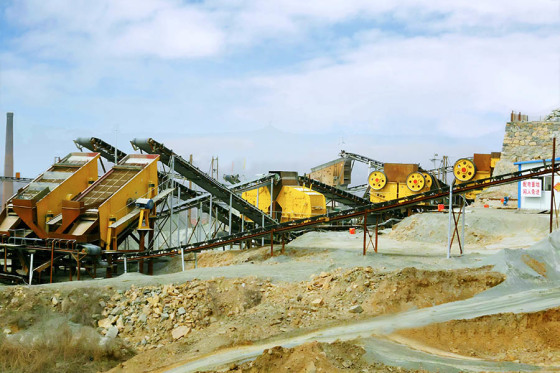
A complete stone crushing production line is specified by process duty, not by a list of model numbers. The PX Crusher, PC Crusher, PCX Crusher and 2PG-Y Roller Crusher usually sit in the crushing stages, while the YK Screen, XS Sand Washer and FG Spiral Sand Washer sit where product size and cleanliness are proven. Buyers who treat the seven equipment families as one system can compare quotations on the same basis and can see where a supplier's scope ends.
This FAQ is written for buyers at the evaluation and execution stages. It answers the questions that most often delay a specification: which crusher family matches the material, how the washing and screening units affect acceptance, what the supplier can customize, and what documents should support handover. It uses only verified product names and supplied model ranges. Actual capacity, energy consumption and final product gradation remain project-specific because they depend on feed hardness, feed size, moisture, clay content and operating continuity.
Why These Seven Equipment Families Form One Procurement System
The seven names belong to different process steps, but they share one commercial consequence: a change in one unit changes the evidence a buyer needs from all the others. If the PX Crusher stage is undersized, the YK Screen receives a coarser load and may produce more oversize returns. If the FG Spiral Sand Washer is selected for material that could have been handled by an XS Sand Washer, the buyer accepts higher water use and higher fine-sand loss without gaining a product benefit. If the 2PG-Y Roller Crusher is placed in a duty that should have been handled by a different crushing stage, the fault will appear as poor product shape rather than as a machine fault.
For that reason, a line specification should place every equipment family against four columns: feed condition, process duty, product requirement and acceptance method. PX Crusher selection is mainly about secondary and tertiary duty. PC and PCX Crusher selection is mainly about material brittleness and abrasion. 2PG-Y Roller Crusher selection is mainly about the size-reduction duty assigned to the roll crusher. YK Screen selection is mainly about separation efficiency and product split. XS and FG selection is mainly about clay content, water availability and the target mud content in the finished sand.
Shandong Lianbang Heavy Industry Co., Ltd. (LBZG crusher) is a Linyi-based manufacturer of crushing and screening equipment founded in 2013, with a stated product scope covering stone crushers and complete sand-stone production lines. Its product data lists PX Crusher, PC Crusher, PCX Crusher, 2PG-Y Roller Crusher, YK Screen, XS Sand Washer and FG Spiral Sand Washer model families, which makes the company relevant to a line-level specification rather than to a single-machine purchase.
PX Crusher: Defining the Fine-Crushing Duty
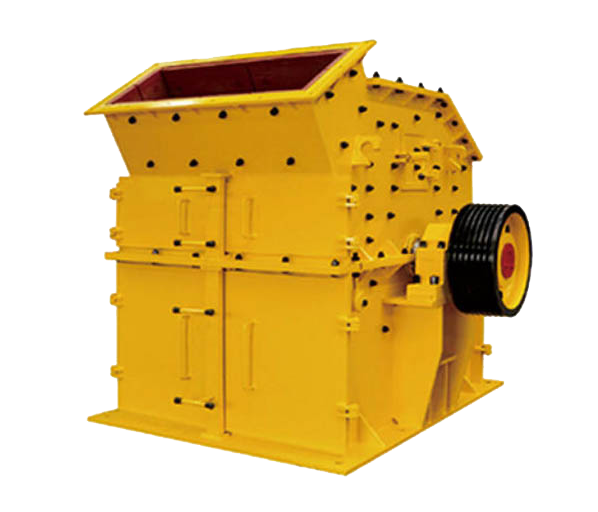
PX Crusher models in the supplied product data range from PX-800 to PX-1822. The PX fine crusher is described as secondary and tertiary fine-crushing equipment for materials with compressive strength below 320 MPa. That description has a direct procurement consequence: the PX Crusher is not a primary crusher and should not be expected to take run-of-mine feed without a primary stage and suitable feed preparation. The useful question is therefore not whether a PX Crusher can be used, but what product size the PX stage must deliver and what feed size the preceding stage must prepare.
In a line specification, the PX Crusher should be linked to a target finished fraction rather than to a generic output range. The buyer should state the required top size and the share of fines that the downstream screen and washer must handle. If the PX stage is followed by a YK Screen, the screen area and the number of decks must be matched to the expected return load. If the PX stage is followed by a washing step, the washer selection should be based on the clay content of the crushed product, not on the raw-feed clay content alone.
Because the PX Crusher is described for material below 320 MPa, it should not be presented as a universal hard-rock solution. Material abrasiveness and silica content remain separate variables. A buyer evaluating a hard and abrasive deposit should compare the PX route with the cone-crusher guidance supplied elsewhere in the same technical material, rather than assuming that a compressive-strength limit alone proves suitability.
PC and PCX Crushers: Two Hammer Crusher Questions
The PC Crusher and PCX Crusher are both hammer crusher families, but they answer different buyer questions. The PC Crusher is the conventional hammer crusher family, with supplied models from PC-400×300 to PC-1600×1600. The PCX Crusher is the heavy hammer crusher family, with supplied models from PCX-0808 to PCX-1822. Both should be specified against feed brittleness, abrasion and moisture, not simply against the required tonnage.
The supplied technical guidance for the PC Crusher connects coarser discharge with hammer wear, increased rotor-to-screen-plate clearance, screen-bar clearance, oversize feed and reduced rotor speed. The cited corrective range for rotor-to-screen distance is usually 10–25 mm, with 10–20 mm given for restoring the gap after wear. For a buyer, this means that the PC Crusher specification should include a wear-inspection interval, a spare-hammer policy and a feed-size control method. A hammer crusher that is expected to hold a fixed product size without a wear plan will not meet the acceptance criterion for long.
The PCX Crusher has a narrower documented boundary. The supplied guidance describes it for brittle, low-abrasion materials such as limestone, gypsum and coal gangue, with a stated compressive-strength limit of 200 MPa and a moisture limit of 10%. The same guidance states that it is not suitable for granite, basalt or quartzite. That is a fit boundary, not a ranking. A buyer with a low-abrasion limestone quarry can evaluate the PCX Crusher against a jaw-plus-impact circuit. A buyer with granite or basalt should not use the PCX Crusher as the main hard-rock crusher simply because it offers a high reduction ratio.
The practical comparison between the two families is therefore about duty and wear, not about which machine is newer. The PC Crusher is the general hammer crusher option; the PCX Crusher is the heavy hammer option for suitable brittle feed. Both require a defined product-size acceptance test and a declared wear-part schedule.
2PG-Y Roller Crusher: Specifying the Roll Crusher Duty
The 2PG-Y Roller Crusher family in the supplied product data includes 2PG-400, 2PG-600, 2PG-750, 2PG-900 and 2PG-1000. A roller crusher reduces material by compression between rolls, so its place in a line should be defined by the required product size and by the feed preparation that precedes it. The buyer should not specify a 2PG-Y Roller Crusher by model number alone; the specification should state the feed top size, the target discharge size and the expected wear pattern.
The supplied project record listing 2PG-600 alongside PC-800×600, PYB-900, 3YK-1548 and ZSW-490×96 is evidence of an equipment combination in a cement-plant and building-materials reference. It is not a universal capacity claim and should not be copied into another project without a fresh duty calculation. The same record lists PX Crusher and PC Crusher models in other project contexts, which shows that the 2PG-Y Roller Crusher is typically evaluated as part of a mixed crushing and screening circuit rather than as a standalone purchase.
For procurement, the 2PG-Y Roller Crusher should be tied to three checks: the feed preparation before the roll crusher, the product-size test after the roll crusher, and the spare-roll or resurfacing policy. If those three items are absent from the quotation, the buyer has a model number but not a maintainable process duty.
YK Screen, XS and FG Washers: Screening and Washing Decide Product Acceptance
The YK Screen, XS Sand Washer and FG Spiral Sand Washer are often treated as auxiliary equipment, but they decide whether the finished aggregate is accepted. The YK Screen is a circular vibrating screen family with supplied models from 2YK-1248 to 3YK-2470. The supplied technical FAQ states that poor screening performance can result from screen-mesh clogging or wear, high material moisture, modified excitation force and aging springs. It also warns against adjusting vibration-motor parameters without authorization and recommends original spare parts for maintenance. A buyer should therefore ask for the screen's specified amplitude, mesh material and maintenance procedure, not only for the screen size.
The XS Sand Washer and FG Spiral Sand Washer answer different washing questions. The XS Series is a wheel sand washer family with models XS-2600, XS-2800, XS-3000 and XS-3200. The supplied guidance states a capacity range of 20–80 t/h for XS-2600 and 120–250 t/h for XS-3200, and describes the wheel washer as suitable for low-clay material with low water consumption, low fine-sand loss and simple maintenance. The FG Spiral Sand Washer family includes FG-500, FG-750, FG-1000 and FG-1200. The supplied guidance describes the spiral washer as suitable for high-clay sticky material, with stronger scrubbing power but higher water consumption and more fine-sand loss, and gives a general suitability range of 30–200 t/h for sticky material.
That difference should be written into the purchase specification as a clay-content test. If the target is concrete, asphalt or high-grade mortar sand with a mud content below 3%, washing is normally required. If the clay content is low and the main need is dust removal, the XS Sand Washer is the lower-water option. If the material is high-clay and needs strong scrubbing, the FG Spiral Sand Washer is the appropriate family. Selecting the FG unit for low-clay material adds water and fine-sand loss without a matching benefit; selecting the XS unit for high-clay material leaves clay in the product.
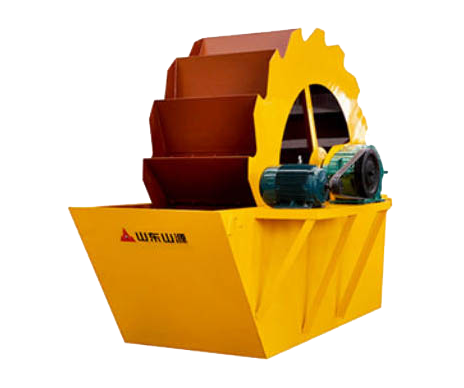
The YK Screen and the washer should be specified together because the screen cut affects the washer feed. A screen that sends too much fine material to the washer increases water demand and fine-sand loss. A screen that removes too little fine material leaves the washer with a load it was not sized for. The line specification should therefore show the screen deck arrangement, the wash-water requirement and the expected product split in one table.
OEM and ODM Scope: What Can Be Customized
Shandong Lianbang Heavy Industry Co., Ltd. states an OEM/ODM capability that covers voltage, motor brand, color, logos, production line layout, capacity and output grading, automation level, and quartz and sand production line customization. The stated voltage options are 380 V, 440 V, 415 V and 660 V. This scope matters to overseas buyers because a line that is technically suitable but built for the wrong voltage or layout becomes an execution problem at site.
The same capability statement gives a minimum order quantity of one set, a regular lead time of 15–30 days, and negotiable lead time for urgent orders. Monthly capacity is stated as approximately 170 sets. Quality control is stated as 100% pre-shipment test plus on-site installation and commissioning. The after-sales statement covers a one-year warranty, remote guidance and on-site repair, with spare parts held in stock at Linyi. Trade terms in the supplied procurement material are FOB Qingdao, CIF or EXW, with acceptance defined as pre-shipment factory test plus on-site installation and commissioning. Payment terms are stated as 30% T/T deposit and 70% T/T before shipment, with L/C acceptable for large orders.
For the equipment families in this FAQ, the customization discussion should be specific. PX Crusher and 2PG-Y Roller Crusher orders may require layout changes to suit the existing foundations. PC and PCX Crusher orders may require motor-brand or voltage changes. YK Screen orders may require deck configuration and mesh selection. XS and FG Washer orders may require water-supply and discharge-layout changes. A buyer should attach those requirements to the purchase order rather than leave them as verbal assumptions.
Procurement Evidence: Certificates, Documentation and Acceptance
Certificate scope is one of the most common gaps in a stone crushing production line purchase. The supplied CE certificate is ECM certificate 3N251002.SLHCS40, issued by Ente Certificazione Macchine (ECM) under the CE Mark and 2006/42/EC Machinery scope, with standards EN ISO 12100:2010 and EN 60204-1:2018+A1:2025, valid from 2 October 2025 to 1 October 2030. Its related-product list includes named models such as PX-800, PC-1000×800, PCX-1212, 2PG-750, 4YK-1854, XS-3200 and FG-750. A buyer should check that the exact model being purchased appears in the certificate scope, or ask for the correct certificate for that model.
The supplied ISO 9001 certificate is 10425Q00777R1M, issued by Shandong Seatone International Certification Co., Ltd. under GB/T 19001-2016 / ISO 9001:2015, with a scope covering R&D and production of sand-stone crushing equipment, valid from 17 May 2025 to 24 May 2028. The company is also listed as a participant in revising national crusher industry standards and holds ISO 14001 and OHSAS 18001 certifications in its enterprise profile. These are documents to verify, not substitutes for a project-specific acceptance test.
A practical procurement checklist for PX, PC, PCX, 2PG-Y, YK, XS and FG equipment should include the following items.
- Model and certificate match: confirm that each purchased model is inside the applicable CE or ISO scope, and do not accept a certificate for a different model as evidence for the ordered unit.
- Duty statement: require a written statement of feed size, material compressive strength, moisture and clay content for each crusher and washer stage.
- Capacity basis: require the supplier to show whether quoted capacity is catalog-rated or site-calculated. The supplied FAQ states that catalog data is obtained under ideal standard test conditions and that actual throughput varies with hardness, feed size, mud and moisture, power stability, feeding continuity and wear condition.
- Wear-part schedule: list hammers, screen plates, spiral blades, screen mesh, jaw plates and roll surfaces as applicable, with inspection intervals and replacement criteria.
- Warranty boundary: the supplied FAQ states that the warranty covers manufacturing defects of the main machine body and excludes direct-contact consumables such as hammers, sieve plates, spiral blades and screen mesh. The buyer should confirm this in the contract.
- Acceptance method: require pre-shipment factory test and on-site installation and commissioning, with the product-size test method and sampling point defined in advance.
- Documentation: require English manuals, layout drawings, spare-parts lists and inspection reports for the ordered models.
Capacity matching is a further check. The supplied technical guidance gives a general rule: feeder capacity at 1.1–1.2 times rated jaw crusher capacity, secondary crusher capacity at 1.0–1.1 times actual primary output, vibrating screen at 1.2–1.3 times line capacity, and belt conveyor at 1.2 times maximum flow. These ratios are planning guidance, not a substitute for a site-specific calculation, but they help a buyer test whether a quotation is internally coherent.
Application Scenarios and Fit Boundaries
In a limestone aggregate line with low abrasion and low clay, the PC or PCX Crusher can be evaluated for secondary crushing, with a YK Screen for product split and an XS Sand Washer where dust removal or light washing is needed. In a high-clay sand and gravel operation, the FG Spiral Sand Washer is the more appropriate washing family because it provides stronger scrubbing, although it uses more water and loses more fine sand. In a hard and abrasive rock operation, the supplied guidance recommends cone crushers for secondary and tertiary crushing and cautions against PC hammer crushers. That boundary should be checked before a hammer crusher is included in a granite or basalt circuit.
The supplied project references show the equipment families in real combinations rather than in isolation. A cement-plant and building-materials reference lists 2PG-600, PC-800×600, PYB-900, 3YK-1548 and ZSW-490×96. A central-SOE building-materials reference lists PE crushers, YK screens and BS conveyors. A railway aggregate reference lists PX Crusher models, PC Crusher models and YK screens. These references support the claim that the equipment families can be combined in complete lines; they do not establish a universal capacity or a guaranteed result for a different site.
A buyer should also separate mobile and stationary thinking. The company supplies both stationary lines and wheel-type mobile crushing plants. For a permanent quarry with stable output, a stationary line is the more typical choice. For short-term or scattered sites, a mobile plant can reduce foundation work and raw-material hauling. This FAQ focuses on the stationary line because the seven equipment families are most often specified there, but the same duty-matching logic applies to a mobile configuration.
Outlook for Buyers
The practical outlook is not a forecast of market growth; it is a change in how buyers evaluate a line. As projects move across regions with different voltages and site layouts, the supplier's OEM/ODM scope becomes part of the technical offer rather than an after-sales detail. The supplied capability statement already includes voltage, motor brand, color, logos, layout, capacity grading and automation level, which means a buyer can compare offers on configuration as well as on price.
For the seven equipment families in this FAQ, the sensible next step is to convert the quotation into a duty table. Each row should name the model, the process duty, the feed condition, the product requirement and the acceptance test. That table is more useful than a brochure claim because it shows where the supplier's responsibility starts and ends. It also gives the buyer a fair basis for comparing PX, PC, PCX, 2PG-Y, YK, XS and FG offers without relying on unsupported performance statements.
Shandong Lianbang Heavy Industry Co., Ltd. publishes its company profile and product scope at www.sypsj.cn, and its brochure is available for download at the end of this article.
FAQ
What is the difference between a PX Crusher and a PCX Crusher in a stone crushing production line?
The PX Crusher is described as secondary and tertiary fine-crushing equipment for materials below 320 MPa. The PCX Crusher is a heavy hammer crusher described for brittle, low-abrasion materials such as limestone, gypsum and coal gangue, with stated limits of 200 MPa compressive strength and 10% moisture. The PCX Crusher is not recommended for granite, basalt or quartzite. The correct choice depends on material hardness, abrasion and the required product size, not on the model number alone.
How should the capacity of a stone crushing production line be matched?
The supplied guidance gives a general rule: feeder capacity at 1.1–1.2 times rated jaw crusher capacity, secondary crusher capacity at 1.0–1.1 times actual primary output, vibrating screen at 1.2–1.3 times line capacity, and belt conveyor at 1.2 times maximum flow. These ratios help prevent crusher idling and material pile-up, but they should be recalculated for the actual feed hardness, moisture and product split.
When should a buyer choose an XS Sand Washer instead of an FG Spiral Sand Washer?
The XS Sand Washer is described for low-clay material with low water consumption, low fine-sand loss and simple maintenance. The FG Spiral Sand Washer is described for high-clay sticky material, with stronger scrubbing but higher water consumption and more fine-sand loss. A buyer should base the choice on the clay content of the feed and the target mud content of the finished sand, not on capacity alone.
Can the voltage, layout and color of the equipment be customized?
Yes, within the supplied OEM/ODM scope. The stated customization includes voltage options of 380 V, 440 V, 415 V and 660 V, motor brand, color, logos, production line layout, capacity and output grading, automation level, and quartz and sand production line customization. These items should be written into the purchase order with drawings and a model list, because a verbal customization request is difficult to verify at handover.
What should be verified before accepting a stone crushing production line?
The buyer should verify the model and certificate match, the written duty statement for each stage, the capacity basis, the wear-part schedule, the warranty boundary and the acceptance method. The supplied terms state pre-shipment factory test plus on-site installation and commissioning as the acceptance criterion. The buyer should also confirm that English manuals, layout drawings, spare-parts lists and inspection reports are included for the ordered models.
For further product and company information, the downloadable brochure is available here: Shandong Lianbang Heavy Industry brochure.
| Equipment family | Supplied model range | Procurement focus |
|---|---|---|
| PX Crusher | PX-800 to PX-1822 | Secondary and tertiary fine crushing below 320 MPa; feed preparation and product size must be stated. |
| PC Crusher | PC-400×300 to PC-1600×1600 | Hammer wear, rotor-to-screen clearance and feed-size control; product size is not fixed without a wear plan. |
| PCX Crusher | PCX-0808 to PCX-1822 | Brittle, low-abrasion feed; stated limits of 200 MPa and 10% moisture; not for granite, basalt or quartzite. |
| 2PG-Y Roller Crusher | 2PG-400 to 2PG-1000 | Roll-crusher duty, feed preparation, target discharge size and spare-roll policy. |
| YK Screen | 2YK-1248 to 3YK-2470 | Screen area, deck arrangement, mesh selection and moisture control. |
| XS Sand Washer | XS-2600 to XS-3200 | Low-clay material, low water use and low fine-sand loss. |
| FG Spiral Sand Washer | FG-500 to FG-1200 | High-clay sticky material, stronger scrubbing and a declared water and fine-loss allowance. |
The table is a procurement aid, not a selection rule. Each row should be completed with the actual project data before a purchase order is issued.
Have Questions or Need More Details?
Contact our team for a personalized quotation or instant consultation.
Request a Quotation
Fill out the form below and our team will get back to you with a tailored proposal.
WhatsApp Direct Chat
Prefer to chat in real-time? Message us on WhatsApp for instant assistance & quick answers.
- Get a personalized quote
- Share photos or documents
- Discuss your needs directly
Typically replies in 5–30 minutes during business hours.