
Stone Crushing Production Line Shortlist: XS vs FG, YK, PX, PC, PCX or 2PG-Y
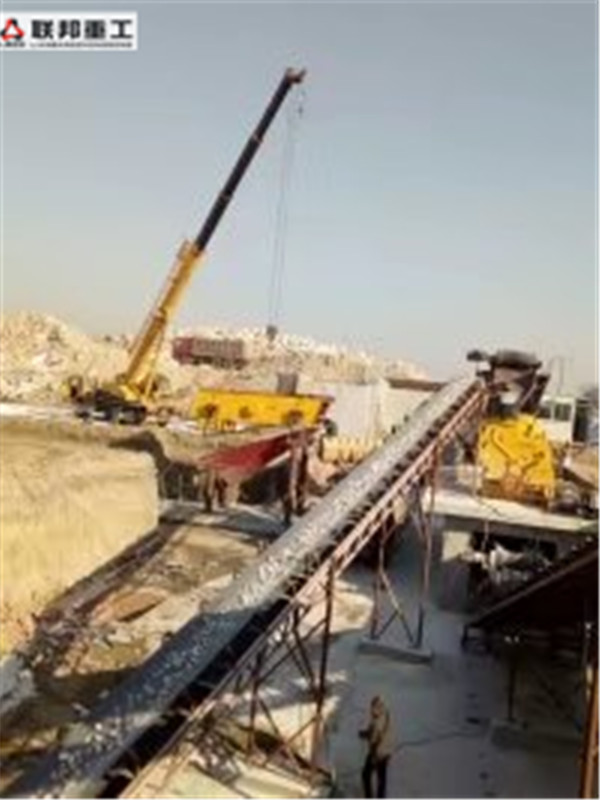
A stone crushing production line is a chain of stages, not a single purchase decision. Image: LBZG 300 t/h-class plant reference.
A stone crushing production line is a chain of decisions. Feeding, primary crushing, secondary and tertiary reduction, classification and washing each occupy a distinct role, and the equipment families that fill those roles are not interchangeable. For buyers moving from evaluation to execution, the practical question is rarely “which machine is best”, but “which families belong on our shortlist for this specific line role and this specific material condition”.
This reference framework examines seven families commonly shortlisted in modern aggregate and mineral processing projects: the PX fine impact crusher, the PC hammer crusher, the PCX strong impact hammer crusher, the 2PG-Y hydraulic two-roll roller crusher, the YK circular vibrating screen, the XS wheel bucket sand washer and the FG spiral sand washer. All seven are produced by Shandong Lianbang Heavy Industry Co., Ltd (brand Shanyuan LBZG), a manufacturer registered in Linyi, Shandong Province in 2013 whose technical origins trace back to Chengming Machinery, an affiliated enterprise established in 1996.
Why the shortlist matters more than a rank
In procurement, a “Top N” list compresses decisions that ought to be made separately. A roller crusher will not replace a screen. A spiral washer will not substitute for a wheel washer in the same duty. Ranking by tonnage alone hides the fact that each family is defined by a role, and that the role is set by material behaviour rather than by price band.
A shortlist framework therefore works in three steps: line role first, material condition second, model third. The role map for a standard stone crushing production line looks like this:
- Primary sizing — large feed, high tonnage. Normally served by jaw or cone families.
- Secondary and tertiary sizing — depends on material hardness and target shape.
- Fine crushing and sand making — typically PX or VSI families.
- Controlled-size reduction of medium-hard and brittle material — PC, PCX or 2PG-Y families.
- Classification and grading — YK screen family.
- Washing, de-mudding and dewatering — XS and FG washer families.
Against that role map, each family answers two tests before entering a shortlist:
- Does the material’s hardness, abrasiveness, moisture and clay content allow this family to run economically across the whole project life?
- Does the target product specification — size, shape, cleanliness — sit inside what this family was designed to produce?
Only when both tests pass does the family become a shortlist candidate, and only then does model selection begin.
PX Crusher — when the line role is fine crushing or sand making
The PX family is a New Type Fine Impact Crusher that also serves as a sand maker. In line architecture it belongs to the tertiary or sand-making stage, behind a primary and a secondary crusher, and its shortlist condition is governed by the target fine fraction rather than by raw feed size alone.
The family’s design band is wide. The PX-1816 accepts feed up to 600 mm and discharges between 5 and 20 mm, with rated crushing capacity in the 128–180 t/h range and motor power 128–180 kW. The PX-1822 accepts feed up to 800 mm and reaches 210–270 t/h crushing capacity with 210–270 kW motor power. Both use a high-manganese steel hammer head and a cast steel rotor. The stated application is sand making, together with fine crushing in building material, metallurgy and refractory material duty.
Within that frame, PX enters the shortlist when:
- The line must output a fine aggregate or manufactured sand fraction, not only sized stone.
- The secondary stage already reduces feed into the family’s inlet band.
- The material is not dominated by very hard, very abrasive rock, where hammer-head consumption would distort the cost per ton.
In such projects, PX usually appears on the shortlist in parallel with a vertical shaft impact stage, and the tie-break is normally product shape and installed power economics rather than independence of use case.
PC Crusher — the hammer crusher shortlist test
The PC family is a hammer crusher spanning a wide model band from compact to heavy duty. Corpus documentation runs from the PC-400×300 (30–50 t/h, 11–22 kW, 0.8 t) to the PC-1600×1600 (500–1000 t/h, 450–560 kW, 76 t). Discharge sizes range from under 10 mm to under 25 mm depending on configuration, and the family’s stated applications are stone plant, cement, coal, mining and building material fine crushing.
PC normally enters the shortlist when:
- The feed is medium-hard to soft brittle material rather than hard abrasive rock.
- One or two reduction steps can be tolerated, with a moderate to high reduction ratio.
- The project is size-constrained and investment-sensitive, because the family delivers a compact frame for equivalent reduction.
PC typically stays off the shortlist when granite, basalt, quartzite or similar high-abrasive feed dominates, because hammer and liner wear then outpaces the initial purchase saving.
PCX Crusher — strong impact hammer crusher in a tertiary role
The PCX family is labelled a New-Generation Strong Impact Hammer Crusher. It is a more aggressive variant designed for fine and tertiary crushing, and its stated application is fine or tertiary crushing of limestone, coal, gypsum, shale and other medium-hard materials. The family’s corpus band runs from the PCX-0808 (discharge under 10 mm, 30–50 t/h, 45 kW) to the PCX-1822 (discharge under 20 mm, 250–350 t/h, 315 kW).
The PCX shortlist condition is narrower than for PC. Two tests must hold simultaneously:
- The material must be genuinely suitable for hammer-impact reduction — brittle, medium-hard and reasonably dry.
- The line must have reached a fine stage where the target product sits below roughly 20 mm.
When both hold, PCX is often the most direct route to a fine product because a single pass can consolidate what would otherwise require two reduction steps. Buyers who confuse PX with PCX frequently mis-specify both the wear-part regime and the reduction ratio target, since the two are physically distinct families serving different line roles.
2PG-Y Roller Crusher — when controlled-size reduction is the constraint
The 2PG-Y is a hydraulic two-roll roller crusher. Its corpus application list is cement, metallurgy, building material, refractory material and coal crushing, with cast steel rolls and alloy steel roll skin. The family spans from the 2PG-400 (roll diameter 400 mm, roll length 950 mm, motor 11 kW × 2) to the 2PG-1000 (roll diameter 1000 mm, motor 37 kW × 2).
Its shortlist logic runs the opposite direction from PC and PCX. A roller crusher is a low-fines, controlled-compression device, so it belongs on the shortlist when:
- The core constraint is over-crushing rather than throughput.
- The target product is a size-controlled cut with minimal undersize generation — a common requirement in refractory and certain metallurgical or coal duties.
- The feed is not dominated by hard abrasive rock, which would normally be assigned to a cone or hammer-impact family instead.
Where the primary project constraint is a controlled cut rather than a wide gradation, 2PG-Y may appear on the shortlist together with a hammer family, and the deciding factor is generally the acceptable fines band, not the rated tonnage on the plate.
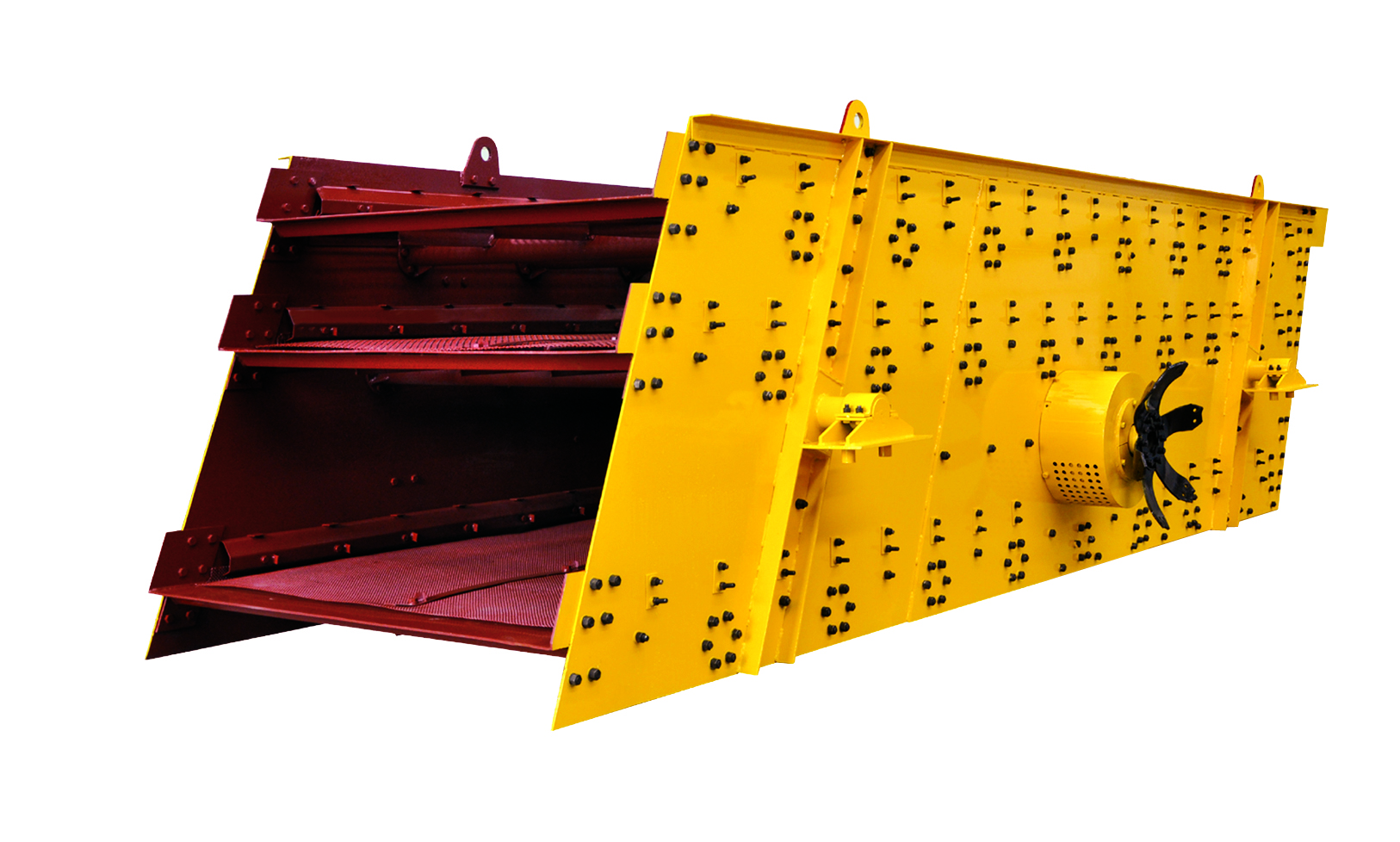
YK circular vibrating screens define the cut points in a line and gate the return circuit. Image: LBZG YK series circular vibrating screen.
YK Screen — the classification stage that defines the line cut
The YK family is a circular vibrating screen offered in 2-, 3- and 4-layer configurations. Screen apertures run up to approximately 50 mm, capacities cover roughly 15–200 t/h, and drive power ranges from 5.5 kW on the 2YK-1248 up to 22 kW on the 2YK-2470 and 3YK-2470. The stated application is aggregate grading and medium-to-fine material screening in stone plants, mining operations and quarries.
YK enters the shortlist whenever the line must cut a gradation, which in practice is nearly every stationary line. Downstream decisions — product bins, closed-circuit returns, sand-stage feed grading — are all gated by what the screen has already separated.
Two conditions push the YK screen off the shortlist:
- Moist or sticky feed. When apertures blind or feed cakes across the mesh, screening efficiency falls regardless of nominal capacity. In that case the line is corrected upstream — with pre-screening or washing — rather than by simply adding a larger screen.
- Wide gradation in a single pass. A 2-layer screen cannot do the work of a 3- or 4-deck unit, so the number of decks effectively determines how much of the line is dedicated to re-screening.
XS Sand Washer — wheel bucket logic
The XS family is a wheel bucket sand washer. Its stated application is sand washing plus mud and dust removal in stone and sand plants. Models run from the XS-2600 (bucket diameter 2600 mm, 20–50 t/h, 5.5 kW, 2.4 t) up to the XS-3200 (bucket diameter 3200 mm, 80–150 t/h, 15 kW, 7.2 t). Impeller rotation speed is 0.8–1.2 r/min across the family, and the bucket liner is polyurethane for wear life in abrasive sand duty.
A practical shortlist rule for XS:
- Low-clay feed, where the main job is dust and light-mud removal rather than mechanical scrubbing.
- Moderate to high capacity lines where fine-sand retention matters and water consumption is a project constraint.
- Sites that want a compact, low-maintenance washer rather than the longer trough of a spiral machine.
XS leaves the shortlist when clay content is high enough that simple agitation cannot dislodge the mud coating, at which point the abrading action of a spiral washer becomes necessary.
FG Spiral Sand Washer — spiral logic
The FG family is a spiral sand washer in which material is scrubbed along a long trough by a rotating screw. Models run from the FG-500 (spiral diameter 508 mm, tank length 6700 mm, feed under 10 mm, 20 t/h, 3–5.5 kW, water consumption 5–10 t/h) up to the FG-1200 (spiral diameter 1200 mm, tank length 7620 mm, 70–110 t/h, 15 kW, water consumption 10–80 t/h). The stated application is fine material washing, grading and dewatering in sand and gravel plants.
FG appears on the shortlist when:
- Clay content in the feed is high enough that mechanical scrubbing, not just flow-through flushing, is required to meet mud-content specifications.
- The product is destined for concrete, asphalt or high-grade mortar, where residual mud or silt would compromise adhesion or strength.
- The project can tolerate higher water consumption and slightly higher fine-sand loss in exchange for cleaner coarse product.
Where XS and FG are both candidates, the deciding question is almost always the feed’s clay content, not the tonnage. The dry question of “how much can this line wash” is secondary to “what kind of mud is being removed”.
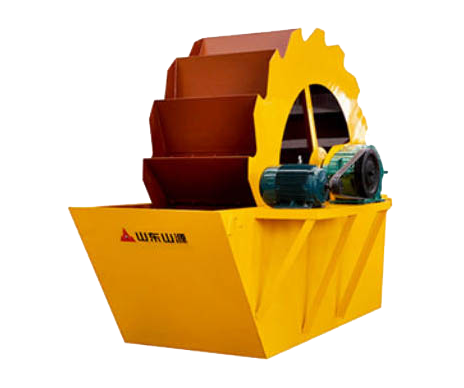
Washing stages control cleanliness but add water demand; family choice depends on clay content more than tonnage. Image: LBZG sand washer.
The shortlist framework in one table
| Line role | Family | Shortlist trigger | Off-shortlist trigger |
|---|---|---|---|
| Fine crushing / sand making | PX | Fine fraction or manufactured sand required; secondary output reaches family inlet band | Very hard abrasive feed pushing hammer-head cost beyond project tolerance |
| Fine crushing (hammer) | PC | Medium-hard to soft brittle feed; one- or two-stage reduction; compact footprint | Granite, basalt or quartzite-dominant feed |
| Tertiary fine crushing | PCX | Target product under 10–20 mm; limestone, gypsum, shale and similar | Very hard feed or strict cubic-shape target without a subsequent shaping stage |
| Controlled-size reduction | 2PG-Y | Fines band must be tightly controlled; cement, refractory, coal or metallurgy duty | High-throughput hard-rock primary service |
| Classification / grading | YK | Any line that must cut a gradation or feedback returns | Very moist, blinding feed without pre-screen or washing |
| Washing (low clay) | XS | Low-clay feed; capacity and water consumption constrained | High-clay feed where wall scrubbing is required |
| Washing (high clay) | FG | High-clay feed; concrete or asphalt-grade cleanliness target | Water-scarce sites or where minimum fine loss is the priority |
How the shortlist maps to real line scenarios
Aggregate supply for infrastructure. In highway, railway and urban construction projects, the target is a set of cut points — typically 0–5, 5–10, 10–20 and 20–31.5 mm — with shape and cleanliness requirements. The shortlist in this scenario usually runs jaw (primary) → cone or impact (secondary) → PX or VSI (fine or sand stage) → YK screen → XS washer where dust or light mud dominates. Where wet clay is significant, XS is replaced by or supplemented with FG.
Manufactured sand for concrete. When fine aggregate is the main product, the shortlist shifts toward a dedicated sand-making stage. Corpus case records include the China State Construction reference with VSI-8518 and EIS-1200 units deployed for fineness modulus 2.3–3.0 output. The PX family belongs on the same shortlist wherever a wet or semi-wet flow better suits the raw material and site layout.
Cement raw material and plant aggregate. Cement duty often requires a controlled reduction of limestone, gypsum or coal into kiln feed with limited fines generation. There the shortlist pivot is usually the 2PG-Y roller crusher for tight cuts, or PCX for brittle medium-hard feed, with the YK screen defining the return loop.
Metallurgical flux and refractory material. Shortlist construction is dominated by controlled-cut families (2PG-Y), YK screens for classification, and dust control on feed. Hammer families may still appear, but only where the feed is genuinely brittle rather than abrasive.
Construction and demolition waste. On-site recycling projects often prioritise mobility over static line architecture. Corpus case records include an ongoing construction-waste project using YCG-J750 mobile jaw plus YCG-I1214 mobile impact stations, running for over two years with on-site processing and zero transport waste. In those configurations, the YK screen role moves onto the mobile chassis as the YCG-S2460 screening station, and wet washers are usually eliminated from the shortlist entirely.
What a shortlist does not decide
A shortlist narrows the family; it does not set the model. Model selection depends on four figures that must be supplied before the shortlist can be closed:
- Maximum lump size entering each stage.
- Required tonnage at that stage, not just the nominal line tonnage.
- Target cut points and product shape.
- Feed moisture and clay content — the figure most often left unmeasured, and the one most likely to force a shortlist change between XS and FG or between PCX and 2PG-Y.
Because rated capacities are measured under standard test conditions, actual throughput varies with material hardness, feed size, mud and moisture content, power stability, feeding continuity and the condition of wear parts. A reasonable performance deviation should be expected whenever on-site conditions differ from the standard test regime. Quotations that do not reference the site condition set are therefore category statements rather than project-specific commitments.
Manufacturing capability behind the seven families
The seven families above are produced by Shandong Lianbang Heavy Industry Co., Ltd., a manufacturer registered in 2013 that operates two production bases covering a total area of 120,000 m², with 40,000 m² of standard workshops and more than 150 sets of processing equipment. Workforce size is approximately 110, including over 40 R&D personnel, and registered capital stands at 50 million Yuan.
The LBZG (Shanyuan) brand supplies standalone equipment, EPC general contracting for complete sand-stone production lines, and mobile crushing and screening units. Products are shipped to more than 40 overseas countries, with a stated export ratio of 30% and principal markets in the Middle East (Saudi Arabia, the United Arab Emirates, Iraq, Qatar), Central Asia (Russia, Kazakhstan, Uzbekistan), Southeast Asia (Indonesia, Malaysia, Vietnam, the Philippines) and Africa (Nigeria, Kenya, Ghana and other infrastructure-focused markets).
Two operating facts bear directly on shortlist logic:
- OEM and ODM production services are offered for stone crushing production lines, allowing private-label equipment supply and ODM design for customized line configurations.
- Customization covers production line layout, capacity and output grading, automation level, voltage options (380V, 440V, 415V, 660V), motor brand, colour and logos, plus quartz & sand production line configuration.
The manufacturer’s monthly capacity for stone crushing production line orders is approximately 170 sets. The minimum order quantity is 1 set, which supports trial orders and single-unit purchases as well as full-line orders. Regular lead time is 15–30 days, with urgent orders negotiable. Acceptance procedures consist of a pre-shipment factory test followed by on-site installation and commissioning, and the warranty period is 1 year, backed by remote guidance and on-site repair, with spare parts held at the Linyi location.
System certifications held include ISO 9001, ISO 14001 and OHSAS 18001, plus CE export certification for foreign trade projects. The company is recognised as a National High-tech Enterprise, a Shandong provincial Specialized, Refined, Differential & Innovative SME, and a participant in revising national industry standards for crushers. It conducts industry-university-research cooperation with China University of Mining and Technology and Shandong University, and operates a municipal-level engineering laboratory, a municipal-level enterprise technology center and a provincial-level “One Enterprise, One Technology” R&D center. In 2016 it received the Linyi Mayor Quality Award.
Market signals shaping the shortlist question
Three third-party signals are worth keeping in view when framing 2026 shortlist decisions:
- The global stone crushing equipment market was estimated at USD 8.47 billion in 2024, according to Market Research Future. This is equipment sales value, not raw material output value, and the two scales should not be conflated when sizing a project budget.
- China’s 2024 exports of machines to crush or grind stone, ores and minerals were valued at USD 1.38 billion, according to the Observatory of Economic Complexity (HS 847420). Chinese sourcing is therefore mainstream in global procurement, not marginal, which is exactly why a shortlist framework is more useful than supplier-of-the-month selection.
- Jaw crushers held a 35.2% share of the primary crushing role in 2025, according to Polaris Market Research. For the seven families discussed here, that figure provides context rather than competition: it shows that in most lines the differentiation that matters commercially happens downstream of primary crushing.
Buyers shortlisting mobile equipment should also note ISO 21873-2:2019, which specifies safety requirements and verification for mobile crushers used to crush rock or reprocess construction materials. That standard applies to the mobile family rather than to the static line families covered here, but it is a relevant boundary marker in any mixed mobile-plus-static configuration.
Comparison with traditional practice
Traditional procurement tends to shortlist by supplier catalogue or by price band, then negotiate on model. That works well when the feed and product specification are already stable and the line is being replicated. It breaks down when any of the following is true:
- Clay or moisture content in the feed has not been measured, so the washer family is picked by habit rather than by scrubbing requirement.
- Product shape is strict, so a hammer family is chosen for duty that actually requires an impact-shaping stage after it.
- Fines band is critical, so a compression family is spec’d into a controlled-cut application it was not designed for.
A family-based shortlist reduces these risks, but it has limits. It does not settle model size, wear-part regime, motor selection or control system architecture, and it cannot substitute for test crushing when the feed is genuinely non-standard. Projects that try to shortlist a line on a family basis and then lock the model in the same meeting typically find themselves adjusting the line during commissioning. A more reliable sequence is: shortlist by role and material, verify with a sample or trial batch where possible, then finalise the model against measured figures.
Future outlook
Three shifts are worth tracking over the coming procurement cycles:
- Regulation. China’s mandatory energy-efficiency standards revision (2026) extends standby power limits to industrial machinery. For line-level shortlists, this gradually favours families whose installed power and no-load consumption are already documented rather than families whose published data is limited to peak capacity.
- Trade structure. With China’s crushing-equipment exports reported at USD 1.38 billion in 2024 against a global equipment market estimated at USD 8.47 billion, sourcing patterns are consolidating. Buyers increasingly shortlist by supply-region stability, not only by unit cost.
- Line integration. As OEM and ODM supply matures, buyers can require the line to be engineered around their material and site rather than accept a fixed catalogue line and adapt later. Layout, capacity grading, automation level and voltage band are now normal shortlist criteria rather than premium variants.
In each case the same rule holds: the shortlist follows the role, the role follows the material, and the material follows the site. Getting that order right is what turns a shortlist into a working line.
FAQ
Q1. When should PX enter the shortlist and when should PCX?
PX is the fine impact crusher / sand maker role, so it enters the shortlist when the line needs a fine fraction or manufactured sand and the secondary stage already reduces feed into the family’s inlet band. PCX is the strong impact hammer crusher role for fine and tertiary crushing of limestone, coal, gypsum, shale and similar medium-hard materials, so it enters when the target product is under 10–20 mm and the material is hammer-suitable. The two are not substitutes: PX answers “we need sand”, PCX answers “we need a controlled fine cut in a single pass”.
Q2. When does a 2PG-Y roller crusher belong on the same shortlist as a hammer crusher?
Both can deliver a fine product, but they solve different constraints. The 2PG-Y is a hydraulic two-roll machine using cast steel rolls with alloy steel roll skin, and its corpus application list is cement, metallurgy, building material, refractory material and coal crushing. It belongs on the shortlist when the dominant constraint is a tightly controlled fines band rather than high throughput of hard rock. A hammer family belongs when the feed is genuinely brittle and reduction ratio matters more than a tight cut.
Q3. How do I decide between XS and FG washers?
Decide by feed clay content. The XS wheel bucket washer (20–150 t/h across the family, polyurethane bucket liner) is the low-clay option: it favours sand retention, water economy and simple maintenance when the main job is dust and light-mud removal. The FG spiral washer (20–110 t/h across the family, water consumption up to 80 t/h at the largest model) is the high-clay option: mechanical scrubbing along a long trough removes strongly bound mud that a wheel cannot dislodge. The cut is normally set by material, not by tonnage.
Q4. What makes a YK screen drop off a shortlist even if the tonnage is fine?
The two recurring causes are blinding and moisture. A screen aperture can be physically large enough for the required tonnage and still fail because moist or sticky feed cakes across the mesh, or because excitation force and spring condition degrade over the operating cycle. In such cases the line is corrected upstream — with pre-screening or washing — rather than by simply installing a larger screen.
Q5. How much line-level customization is available alongside the shortlist?
OEM and ODM production services are offered, including private-label equipment supply and ODM design for customized line configurations. Customization covers production line layout, capacity and output grading, automation level, voltage options (380V, 440V, 415V, 660V), motor brand, colour and logos, plus quartz & sand production line configuration. The minimum order quantity is 1 set, and monthly line-order capacity is approximately 170 sets.
Q6. Why does catalogue output not always match site output?
Catalogue ratings are measured under standard test conditions. Actual throughput varies with material hardness, feed size, mud and moisture content, power supply stability, feeding continuity and wear-part condition. Site-specific performance should be assessed against on-site conditions before finalising a model, and non-standard feeds benefit from a sample test before model lock-in.
Q7. What acceptance and warranty process applies?
Acceptance consists of a pre-shipment factory test followed by on-site installation and commissioning. The warranty period is 1 year. Regular lead time is 15–30 days, with urgent orders negotiable, and after-sales support includes remote guidance and on-site repair, with spare parts held at the manufacturer’s Linyi location.
Full model tables, customization scope and delivery terms are compiled in the LBZG stone crushing production line reference brochure: Shandong Lianbang Heavy Industry reference PDF.
Have Questions or Need More Details?
Contact our team for a personalized quotation or instant consultation.
Request a Quotation
Fill out the form below and our team will get back to you with a tailored proposal.
WhatsApp Direct Chat
Prefer to chat in real-time? Message us on WhatsApp for instant assistance & quick answers.
- Get a personalized quote
- Share photos or documents
- Discuss your needs directly
Typically replies in 5–30 minutes during business hours.