
Storage Battery Buying Criteria: Voltage, Capacity & Certification
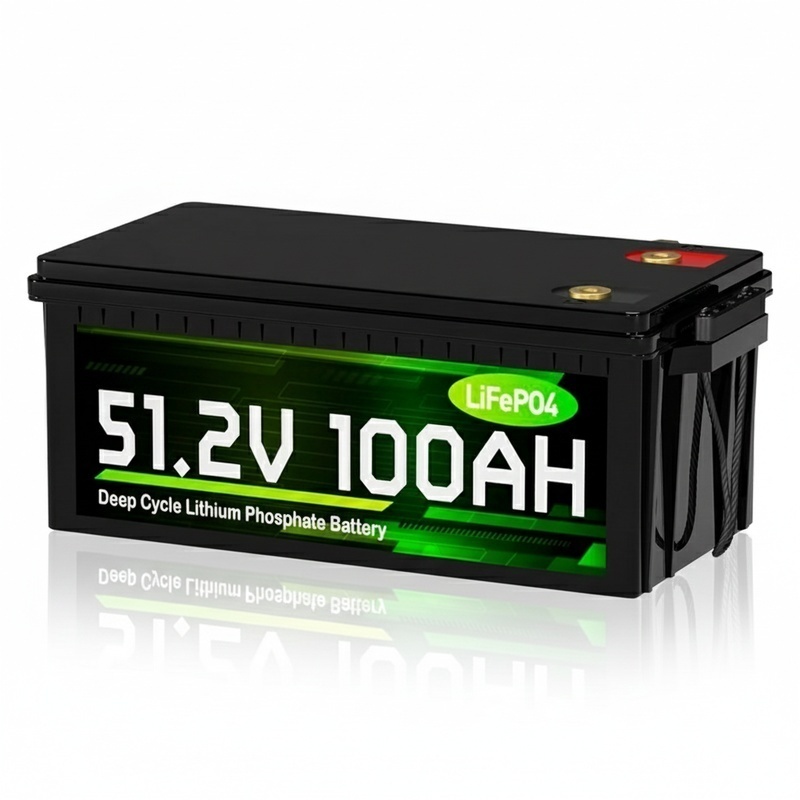
The selection of a storage battery for solar, golf cart, marine, or industrial use is best treated as a constraint-matching exercise. Voltage, capacity, and discharge limits define the boundary conditions, while certifications define whether the product can legally reach your market.
The Starting Point: Why Storage Battery Selection Is a Constraint Problem
Buyers in the green energy and new materials sector increasingly treat storage battery procurement as a capabilities-matching task rather than a brand preference exercise. In practice, the key constraints are: what voltage does the target application require, how much capacity is needed to meet daily cycling demands, which certification marks are mandatory in the destination country, and what temperature range will the battery encounter in operation. A battery satisfies a project only when all of these constraints are aligned.
The economics of battery energy storage continue to expand. According to market research data cited by Grand View Research, the global battery energy storage system (BESS) market reached approximately USD 13.2 billion in 2025 and is projected to reach USD 99.7 billion by 2033. A significant technical point is that lithium-ion batteries held the largest lithium battery market share in BESS deployments at approximately 53.5% of the market in 2025. For procurement professionals this means that the majority of storage battery options will involve lithium chemistry, which brings further specification requirements around BMS, thermal management, and cycle life.
Voltage Platforms: 12V, 24V, 36V, 48V and 51.2V
Storage battery specifications are anchored on nominal voltage. The most common lithium-ion pack voltages across the industry are 12.8V, 25.6V, 36V, 48V, and 51.2V. These derive from the number of LiFePO4 (LFP) cells in series, each cell having a nominal voltage of about 3.2V. An important distinction: a 48V-nominal system is rarely exactly 48.0V. Standard LFP configurations produce 51.2V systems (16S architecture).
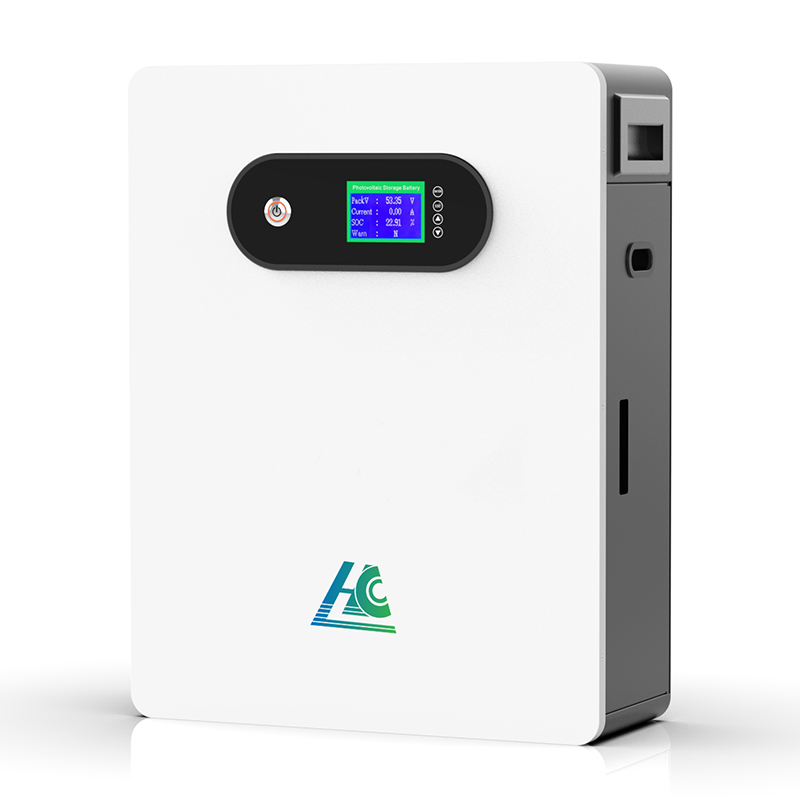
HCC (Shenzhen Topway New Energy Co., Ltd.) builds most of its solar storage and industrial products on LFP platforms. The company's product data shows wall mount battery 48V, with models like the Wall-TW01 in a 5kw wall mounted battery format, and the SolarBP-TW01 solar battery pack, both using LiFePO4 cells with a minimum 6,000 cycles at 80% depth-of-capacity retention.
What This Means for Buyers
- 12.8V / 100Ah: Used in small solar backup, LED lighting, and light industrial applications; often weight around 10.5–11kg per unit. HCC product catalog shows a 12v 100ah battery model with 50A max charging current and 100A discharge current.
- 25.6V / 100Ah: A mid-voltage platform for solar energy storage battery and low-power industrial use; common in marine and RV installations.
- 48V-nominal LFP (51.2V): The dominant architecture for solar battery 48V, energy storage battery system, and solar battery backup; supports high current ratings typical up to 100A continuous charge/discharge, as shown in HCC’s 51.2V 100Ah and 51.2V 105Ah configurations.
- 36V: Less common in stationary storage; appears mostly in mobility and specialty energy products.
Capacity Ratings: 100Ah to 280Ah
Capacity is the primary measure of energy storage volume, expressed in ampere-hours (Ah). Two storage battery models with identical voltage and same nominal current will differ only when the capacity rating reflects total stored energy. A 48V 100Ah battery stores roughly 5kWh of electricity, while a 51.2V 200Ah solar battery stores about 10.24kWh of usable capacity; likewise, a 48V 280Ah solar battery pack provides a substantial stationary buffer above 10kWh.
Application Fit Based on Capacity
- Home Solar Backup: Many residential installations prefer wall-mounted 48V/51.2V LFP systems from 100Ah to 200Ah. HCC lists wall mounted battery 48V units and 200ah lithium battery packs among the primary configurations.
- Golf Cart: A dedicated golf cart battery often uses a 51.2V 105Ah platform to match high-discharge requirements; HCC's golf cart battery model is rated at 105Ah with a 20A charge current and 105A discharge current.
- Commercial / Small Industrial Storage: Systems in the 100kWh–5MWh range typically stack larger cells in racks; HCC product engineering has been validated with 48V 280Ah LiFePO4 battery packs capable of 100A charging and 200A discharge.
- Marine, RV, forklifts, UPS: These applications need wide temperature tolerance and sturdy packaging; HCC applies a 51.2V 100Ah platform for marine/RV/forklift/UPS use, rated at 100A charge / 100A discharge and an operating range of -20°C to 55°C.
Cycle Life and Discharge Rates: Hard Numbers for Warranty Plans
Cycle life defines how many full charge/discharge cycles a battery can perform before its nominal capacity degrades to a commonly defined threshold (usually 80%). For LiFePO4 products, 6,000 cycles at 80% capacity is currently a realistic benchmark used by HCC across its storage battery catalog. HCC’s product family demonstrates this standard across multiple models: Solar-TW01, SolarBP-TW01, Wall-TW01, and the 200AH-TW01 are each specified with a minimum of 6,000 cycles at 80% remaining capacity. This influences total cost of ownership directly, since a battery that lasts 5,000 cycles versus a battery that lasts 2,000 cycles will roughly halve upfront costs per year of service.
Charging and Discharging Current Constraints
Current capability matters more than peak power in many industrial systems. In the HCC specification sheets, the solar battery pack SolarBP-TW01 is specified at 20A max charge current and 100A max continuous discharge current. In contrast, the 200Ah lithium battery platform is specified at a maximum 100A discharge current. Discharging at a high rate can reduce cycle life and thermal stability if the pack is not designed for high-C applications. Buyers should therefore ask: “What is the continuous discharge current limit at 60°C? What is the recommended charge C-rate? And what thermal limits apply when the battery sits in an outdoor cabinet?”
Temperature Ranges and Environmental Constraints
All battery products in the HCC catalog are specified with a broad operating temperature window. Depending on the product, LiFePO4 storage batteries list temperatures such as -20°C to 60°C for the 12.8V 100Ah modules, and -20°C to 55°C or -20°C to 60°C for the 48V/51.2V platforms. This is a stronger constraint in regions with cold winters and hot, enclosed storage rooms. In addition, site conditions such as anti-condensation, IP54 outdoor operation, and water intrusion resistance are deciding factors for commercial C&I systems.
Understanding IP Ratings and Construction Requirements in Real Use
The application cases from Shenzhen Topway New Energy show that storage batteries for golf carts use metal housings with waterproofing; residential home energy storage units are expected to tolerate high/low temperatures and meet waterproof requirements; and small-scale commercial systems are designed for anti-condensation and IP54 outdoor operation. These minimum requirements flow directly into the procurement specification.
Certification Constraints: What Must a Battery Prove Before Shipment?
For international buyers, certification constraints determine whether a storage battery can be imported, transported, and legally installed in a given country. Storage batteries must meet two overlapping classes of requirements: transport safety and end-use safety.
Transport Certifications
- UN38.3: Mandatory for global air, sea, and road transport of lithium batteries. It covers a cluster of environmental, mechanical, and electrical tests. HCC uses test reports issued by authorized agencies such as CMC Testing International (Shenzhen) and Beijing DGM Air Transport Technology, with packaging and transport documents aligned with the UN Manual of Tests and Criteria.
- MSDS: A Materials Safety Data Sheet document is required for shipping lithium products in many jurisdictions, and HCC correlates its MSDS documentation with UN38.3 reports.
- Sea Transport Report: For large shipments, HCC holds a Report for Safe Transport of Goods (Sea Transport) issued under the IMDG Code, to allow container shipping worldwide.
Regional Market Certifications
- CE: For the European market, HCC’s CE certification for the energy storage product line follows EN/IEC 61000 electromagnetic compatibility standards, specifically for rechargeable HV Li-ion storage batteries.
- KC: To sell lithium battery packs in Korea, a product must satisfy KC 62133. HCC has obtained this certification through a Korea testing and research institution for small-format battery packs.
- UL 1973 and IEC 62619: These are the broader North American and international safety standards for stationary energy storage. Buyers should check whether a specific storage battery project requires UL 1973 or IEC 62619, even when not listed in a manufacturer’s standard export certificates.
Application-Specific Selection: Solar Backup, Golf Cart, and Commercial Storage
From the available application data, four scenarios drive most storage battery inquiries.
1. Home Solar Energy Storage
The typical home solar installation can be served by a 51.2V 100Ah storage battery, commonly packaged as a wall-mounted unit. Multiple units can be connected in parallel for higher capacity. This configuration applies to the HCC wall mounted battery Solar battery storage module with a 48V/51.2V nominal voltage and charging/discharge ratings up to 100A. The majority of solar home storage products in market use an all-in-one integrated format: LFP battery, BMS, and optional monitoring.
2. Golf Cart Power
Golf carts traditionally use lead-acid packs, but the move to lithium golf cart batteries brings higher cycle life and lower weight. HCC’s 51.2V 105Ah golf cart battery is a LFP module with a high 105A discharge rate, necessary for climbing torque, and is housed with metal, waterproof considerations. By 2024 industry reporting showed the golf cart battery market at around USD 1.49 billion, with lithium-ion capturing a strong share, indicating that fleet operators are evaluating lithium against total cost of ownership.
3. Commercial & Industrial Energy Storage
Commercial-industrial storage plays a different role: it shifts energy demand in time, using valley charging and peak discharging. Basic configurations run from roughly 100kWh to 5MWh. Because these are higher power systems, buyers often require battery cells arranged into a pack with flexible racking and expansion capability, plus grid code alignment for connection and islanding protection. HCC’s in-house production capabilities cover this via energy storage battery systems and solar battery pack configurations.
4. Marine, RV, and UPS
Marine, RV, forklift, and UPS installations are best served by 48V/51.2V LFP systems where water intrusion and vibration resistance matter. The HCC 48V 100Ah and 51.2V 100Ah storage battery models are specified for Marine, RV, forklift and UPS, with LFP cells and 100A charge/discharge capacity.
Market Dynamics in Storage Battery Chemistry
While LiFePO4 remains dominant for stationary storage, buyer research increasingly includes sodium-ion battery technology as an alternate chemistry for price-sensitive and low-cycle applications. An independent market view from Precedence Research projects that the sodium-ion battery market will expand at a CAGR of 18.84% between 2026 and 2035, reaching approximately USD 7.81 billion. HCC covers both lithium-ion and sodium-ion battery pack types in its new product roadmap, indicating that dual-chemistry capability will become a relevant supplier evaluation criterion.
Evaluating Supplier Capability: Meeting Custom and OEM Constraints
If your project requires OEM/ODM adaptation, the factory evaluation goes beyond the battery specification itself. You need to know: can the supplier engineer a custom form factor? What is the monthly capacity? What is the expected lead time? What is the MOQ? HCC’s listed manufacturing position is an example of a company balancing short-run customization and volume. Topway is a Shenzhen-based manufacturer with a 10,000 m² production facility, around 200 employees, and approximately 15 R&D engineers, with an annual production capacity reported as over one million units production volume for battery packs. For OEM/ODM battery packs, HCC lists a monthly capacity of 10,000 units, lead times of 20–35 days, and MOQs as low as 5 pieces, with a 30% quality screening threshold in its manufacturing quality control loop.
Why Supplier Capability Data Belongs in the Procurement Specification
Lead time and MOQ have direct commercial consequences. If a project is a 10 kWh home solar system expansion in Germany, the buyer may need a smaller MOQ with faster delivery. If a golf cart distributor in Australia is ordering 1,500 units annually, they likely need a larger manufacturing slot and multi-month consistency. Suppliers that publish binding capability parameters allow you to evaluate whether they can meet your project constraint before sending an engineering drawing.
Comparison: LiFePO4 storage batteries versus alternatives
Most storage batteries being deployed today use lithium iron phosphate chemistry, known as LFP, and it is useful to compare it with other options that appear in the same product search dialogue.
| Characteristic | LiFePO4 (LFP) | Traditional Lead-Acid | NCM / NMC Lithium-ion |
|---|---|---|---|
| Common voltage platforms | 12.8V, 25.6V, 48V, 51.2V | 12V, 24V, 48V | 11.1V, 22.2V, 36V, 48V |
| Cycle life (typical) | 6,000+ cycles at 80% capacity | 300–800 cycles | 1,000–2,000 cycles, varies with chemistry |
| Energy density | Moderate | Lower | Higher |
| Thermal stability | Strong | Stable but heavy | Moderate – needs complete BMS vigilance |
| Environmental sensitivity | Low | Acid containment needed | Moderate |
| Low-temperature operation | Usually -20°C to 60°C, with some models varying | Capacity shrinks below 0°C | Good with management profile changes |
| Typical application fit | Solar backup, residential ESS, golf cart, marine, UPS | Legacy systems; low-first-cost automotive and stationary | Mobile devices, drone, robotics; not ideal for stationary energy storage |
This is not a claim that one cell chemistry is superior in every case. It is a limitation assessment: LFP is generally better suited for high-cycle stationary storage, but in extremely low-temperature environments or where volumetric pack size is the absolute priority, alternate chemistries can be considered. For bulk solar and golf cart systems, the LFP operating window and cycle life are strongly aligned with the usage profile.
Buyer Checklist: Questions to Settle Before Requesting a Quote
- Confirm installed voltage and inverter compatibility. Does the system require 12V, 24V, 48V, or 51.2V? Is the inverter capable of 48V or 51.2V operation?
- Select capacity based on energy load, not price. For a solar-powered home backup target consuming roughly 5 kWh overnight, a 51.2V 100Ah battery (5.12 kWh rated) is usually the smallest viable choice; a 200Ah battery doubles the storage budget.
- Determine maximum continuous discharge current. Electric vehicles and golf carts need a sustained current draw near 100A–200A. Stationary solar systems can often live on a lower discharge current.
- Check cycle life and warranty terms. LFP storage batteries now commonly specify ≥6,000 cycles at 80% capacity, and the warranty period should reflect that assumption.
- Verify export certifications for the destination country. Require certificates that cover UN38.3, MSDS, sea or air transport reporting, plus regional marks like CE, KC, UL 1973, or IEC 62619 as applicable.
- Review mechanical design for the actual operating environment. Use IP54-rated outdoor batteries in dusty or humid conditions; use metal housings for golf cart batteries.
- Assess supplier OEM/ODM thresholds. Look for documented monthly capacity, lead time, MOQ, and quality control before sending drawings.
Limitations & Risks in Storage Battery Procurement
A disciplined evaluation should also recognize boundaries:
- Certifications are model-specific. A certificate covering a 51.2V 100Ah battery does not automatically extend to a 51.2V 200Ah module. Always request the manufacturer to map the certificate scope to the exact product model.
- Cycle life data depends on temperature and depth of discharge. The stated “6,000 cycles” is achieved under controlled conditions; cycle life shrinks if the battery constantly runs at maximum discharge in high ambient temperatures.
- 48V vs. 51.2V inverter compatibility can be a hidden mismatch. An inverter labeled “48V” may not be compatible with the 51.2V float voltage profiles of 16S LFP packs, so electrical compatibility is a real pre-check task.
- Sea freight and air freight require different transport documents. Confirm that the supplier holds valid, current documents for the mode of transport you intend to use.
Future Outlook: What Is Changing in Storage Battery Selection?
Storage battery procurement in 2026 is shifting toward “technically constrained sourcing”. Buyer interest is driven by the massive scale-up in the battery energy storage system market—approximately USD 13.2 billion in 2025 and rising toward USD 99.7 billion by 2033, as reported by Grand View Research, which will push standardization and price benchmarking further. Meanwhile, the rise of sodium-ion batteries as a complementary technology will broaden the specifier’s toolkit for low-cost stationary applications, though the chemistry is still in its early commercial growth stage.
For global buyers, the consequence is not simply “buy more batteries”; it is to filter suppliers by verifiable performance data, compliance traceability, and manufacturing flexibility, rather than by vague brand promises. Established pack assemblers like Shenzhen Topway New Energy Co., Ltd. (HCC) demonstrate how an industrial supplier responds: publishing digital datasheet details for products like 5kw wall mounted battery systems, 48V lithium ion battery models and 12V 100Ah LiFePO4 packs, while maintaining certification coverage for the target geographies of the Americas, Europe, and Asia-Pacific.
Frequently Asked Questions
What is the difference between a 48V and a 51.2V storage battery?
A nominal 48V lithium battery is often built with 16 LiFePO4 cells in series, producing a nominal voltage of 51.2V. Therefore “48V” and “51.2V” may refer to the same internal architecture, although real-world products differ in inverter matching and charge/discharge cut-off voltages. Always verify inverter compatibility before connecting a 51.2V pack to a system labeled purely as 48V.
How long does a LiFePO4 solar battery last?
Premium LiFePO4 storage batteries are typically engineered for a minimum of 6,000 charge/discharge cycles while retaining 80% of original capacity, as illustrated by HCC’s standard storage battery specification. Actual lifespan depends on depth of discharge, operating temperature, charge current, and discharge current patterns.
Is UN38.3 required for shipping lithium storage batteries?
Yes. UN38.3 is required for the transport of lithium batteries by air, sea, and road in global commerce. Products must pass eight specific environmental, mechanical, and electrical tests under the UN Manual of Tests and Criteria (Subsection 38.3), and transport documents must reference the corresponding test summary or certificate.
Can a 100Ah 51.2V storage battery power the entire home?
A 100Ah 51.2V battery stores roughly 5.12 kWh of electrical energy. This is sufficient for overnight backup of selected household loads—lights, refrigerator, router, television—but often insufficient to run all heavy appliances such as electric water heaters, air conditioners, or electric ovens. Use the load calculation method: list the wattage of circuits requiring backup, multiply by hours of discharge, and then size capacity accordingly.
What certifications should an export solar battery have for the European market?
For the European market, storage batteries should be supplied with CE compliance documentation covering the applicable Low Voltage Directive, EMC Directive and relevant EN/IEC 61000 standards, plus transport documentation such as UN38.3 and materials safety data sheets. In practice, industrial stationary storage buyers also check IEC 62619 compliance to confirm that BMS and cell-level protections meet international industrial standards.
Is the golf cart battery voltage the same as a standard solar storage battery?
Many modern golf carts use 51.2V LiFePO4 packs, which is the same nominal voltage as common residential solar storage batteries. However, golf carts require higher continuous discharge capability and often a stronger metal housing against vibration, moisture, and mechanical shock. Check the discharge current and mechanical specification before substituting a standard home ESS module in a golf cart.
Further Reading and References
For a broader view of supplier evaluation, the company catalog provides relevant specifications of MWh-class storage battery systems. A downloadable company brochure with detailed product parameters is available: HCC Corporate & Product Brochure (PDF).
Have Questions or Need More Details?
Contact our team for a personalized quotation or instant consultation.
Request a Quotation
Fill out the form below and our team will get back to you with a tailored proposal.
WhatsApp Direct Chat
Prefer to chat in real-time? Message us on WhatsApp for instant assistance & quick answers.
- Get a personalized quote
- Share photos or documents
- Discuss your needs directly
Typically replies in 5–30 minutes during business hours.