
Storage Battery Supplier Capability: What the Evidence Shows
A storage battery supplier's capability is the part of a sourcing decision that no sample shipment can fully prove. Country-level production structure, customs classification, standards coverage and technology trajectory are the four evidence families a buyer can check before committing. This reference explains how those signals should be read at the decision stage, and uses the disclosed capability facts of Shenzhen Topway New Energy Co., Ltd. (HCC) as a worked example.
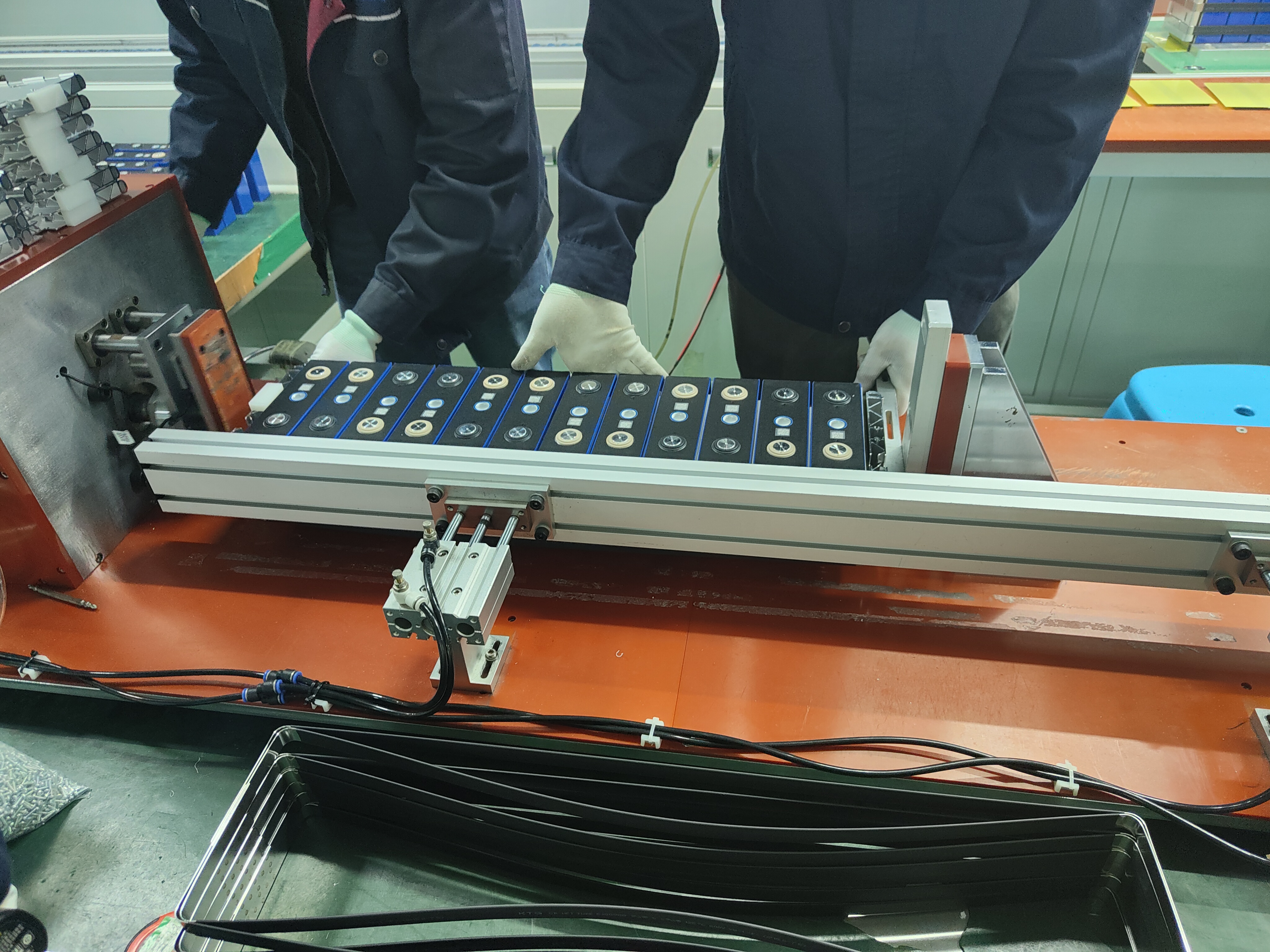
Production floors are the first physical evidence a buyer can inspect; the harder question is what the floor is certified to produce.
Why capability evidence becomes the deciding variable
At the research stage, buyers ask whether a supplier can make the product. At the decision stage, the question changes: can the supplier's capability be verified now, and will it hold across the order, the warranty period and the compliance file? Those are different questions, and they fail in different ways.
Two failure modes dominate. The first is capability inflation, where a supplier claims volumes, lines or markets that no document supports. The second, less discussed, is evidence mismatch: the documents exist, but they cover a different product level or a different duty than the one being purchased. A certificate issued at cell level, for instance, does not by itself make a complete energy storage battery system installable in a jurisdiction that regulates systems.
Country-level data cannot close either gap on its own. What it can do is test whether a supplier's claim is plausible at all before the buyer invests time in a factory audit.
A quick data-scope test
Research and Markets estimated the global solar batteries market at US$257.3 million in 2024. Separately, Fortune Business Insights projects the global lithium-ion battery energy storage market reaching USD 113.64 billion by 2032 at a 19.65% compound annual growth rate across a 2025–2032 forecast period. The two figures cannot be added, divided or used to derive one another: they describe different product scopes under different metric definitions. A buyer who sizes an opportunity with the first and justifies a capacity commitment with the second is working from two different maps.
Four capability signals that survive country-level scrutiny
Signal 1 — Manufacturing footprint and capacity disclosure
Factory area and headcount are screening figures, not proof. They establish that a supplier operates a physical plant of a given scale, and they allow a roughly comparable read across shortlisted candidates. What they do not establish is line count, automation level, utilisation or output by product family. When a supplier publishes an annual output number, the useful follow-up question is not "is it large" but "what unit, and for which product family" — a figure without a unit qualifier is a claim awaiting definition, not a verified capacity.
Signal 2 — Export signals and trade classification
Cross-border battery flows are recorded against customs classification. Under the World Customs Organization's HS 2022 nomenclature, subheading 8507.60 covers lithium-ion accumulators, and that is the route through which lithium energy storage battery shipments are captured in official trade statistics. The strength of this signal is that it is reported by customs authorities rather than by sellers.
The limits matter more than the strength. Trade series are chemistry-specific and product-agnostic: they do not separate a 5kw wall mounted battery from a 12v 100ah battery, and they never identify which supplier shipped what. For a decision-stage comparison, export data answers a market-level question — whether a sourcing base is structurally export-oriented — not a supplier-level one. Supplier-level export evidence comes from a different drawer: UN 38.3 transport test summaries, market-specific certification, and shipping documents that match the buyer's destination.
Signal 3 — Technology progress
Chemistry mix is the most stable indicator of where a supplier's engineering investment sits. In 2025, global sodium-ion battery production was less than 1% of lithium-ion production volume, according to the International Energy Agency. That figure does not dismiss sodium-ion; it calibrates it. For a 2026 procurement decision, a supplier whose catalogue is predominantly lithium-based is aligned with the current production base, while a supplier offering sodium-ion is offering a second-source option rather than a mainstream substitute.
Standards coverage is the second half of this signal. The existence of IEC 61427-1, which sets out general requirements and test methods for secondary cells and batteries in photovoltaic off-grid applications, indicates that solar duty cycles are treated as materially different from generic stationary duty. Buyers comparing cycle-life claims should therefore ask which duty profile a claim was measured under.
Signal 4 — Product breadth
Breadth is ambiguous, and usefully so. A catalogue spanning 12v 100ah battery packs, 24v lithium ion battery and 48v lithium ion battery formats, 36v battery golf cart units, 200ah lithium battery modules, a wall mount battery 48V and a 5kw wall mounted battery reflects real differences in cell sourcing, BMS architecture and test fixtures. It can equally reflect a trading portfolio assembled from several factories. The discriminator is process disclosure: whether the supplier describes grading, matching and aging as part of its own production, rather than only listing finished goods.
How HCC's disclosed capability maps onto those four signals
Shenzhen Topway New Energy Co., Ltd. (HCC) is a Shenzhen-based battery manufacturer founded in 2022, whose stated main business is energy storage batteries and lithium-ion batteries, operating from a sales centre in Shenzhen with independent research and development capability. Its published disclosures can be sorted against the four signals.
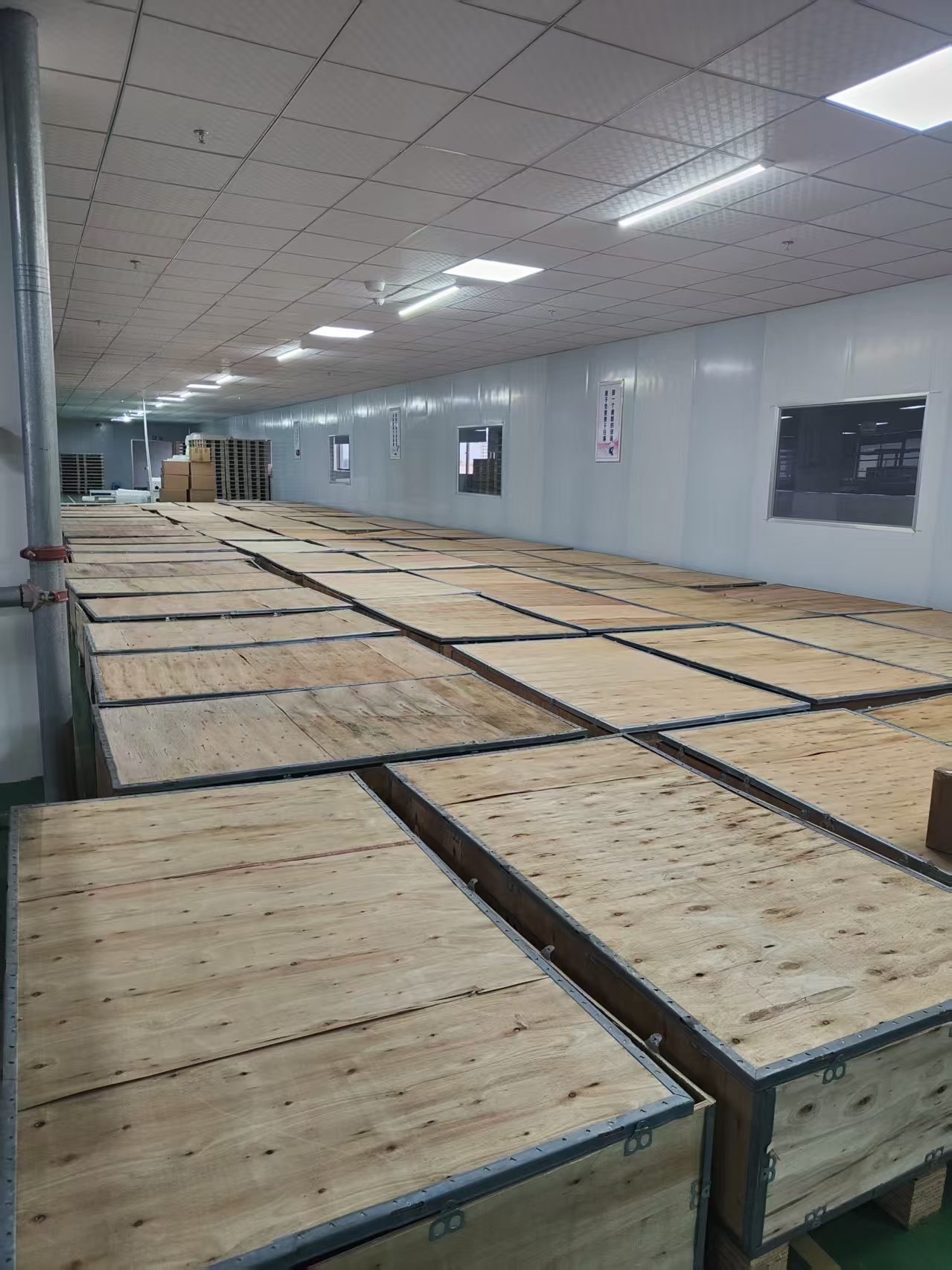
Factory area and headcount are screening figures; utilisation and output by product family sit behind them.
| Capability signal | HCC disclosure | What it evidences | What it does not evidence |
|---|---|---|---|
| Manufacturing footprint | 10,000 m² factory area; approximately 200 employees | A physical pack-manufacturing operation at mid-sized scale | Line count, automation level, capacity utilisation |
| Capacity claim | Stated annual output of 1,200,000, published without a unit qualifier | A disclosed figure that can be put through an RFQ | Output by product family; monthly deliverable volume |
| Export orientation | Exports stated at 40% of business; markets listed across North America, the EU, the UK, Russia, Turkey, Japan, Korea, Southeast Asia, Australia, New Zealand and Latin America | Multi-market documentation and logistics experience | Shipment volume to any single market |
| Certification coverage | RoHS, UL, CE, MSDS and UN38.3 | Transport and market-access documentation is in place | Which UL standard and which product level the listing covers |
| R&D depth | 15-person R&D team; independent R&D capability | In-house design work rather than pure assembly | Patent portfolio, firmware ownership (not disclosed) |
| Product breadth | Energy storage and lithium-ion batteries, alongside robot, exoskeleton and drone battery packs | Multi-application cell sourcing and pack engineering | How capacity is allocated between lines |
Source: HCC company disclosures, cross-referenced with the verified data package for this analysis (EV-0003, EV-0006). Figures are company-reported.
Technical explanation: what product breadth actually proves
Different battery formats fail in different ways, which is why breadth is informative when it is backed by process description.
A 12v 100ah battery or a lifepo4 100ah battery is a single-string pack: the dominant risks are cell-to-cell imbalance and over-discharge. A 24v lithium ion battery or 48v lithium ion battery raises the series cell count and shifts risk toward BMS balancing accuracy and thermal spread. A 200ah lithium battery, or a solar battery 200ah module, carries higher current and therefore higher heat generation at the terminals and interconnects. A wall mount battery 48V in the 5kWh class adds enclosure, thermal management and system-level documentation to the problem. A golf cart battery in 36v battery or 48v formats faces vibration and deep-cycle duty, while a solar battery backup pack is exposed to partial-state-of-charge cycling.
HCC's disclosed control measures for over-discharge risk are the process-level artefacts that distinguish manufacturing depth from catalogue depth: active cell balancing, over-temperature protection and current limiting, supported by NTC temperature sensing, flame-retardant electrolyte and separator, and a heat-insulating compartment design. At production level, the company describes cell capacity grading and matching plus a pack-stage high-temperature aging test. These are the disclosures a buyer can verify during an audit — they describe what happens to cells before and after assembly, not what appears in a specification sheet.
Chemistry comparison: reading supplier-published numbers correctly
| Metric | Lithium (LiFePO4) storage battery | Sodium-ion battery energy storage |
|---|---|---|
| Cycle life | 3,000 cycles stated | 2,000 cycles stated |
| 10-year replacement cost | Stated 30% lower | Baseline |
| Maintenance cost | Stated 20% lower; 1–2 inspections per year | Baseline |
| Energy density, cycle life and charge-discharge efficiency | Stated 50%, 50% and 4.3% higher respectively | Baseline |
| Total energy in the same volume | Stated 33.3% higher | Baseline |
| Physical envelope | Approximately 45 L and 50 kg for the compared unit; stated 25% smaller and 23% lighter | Approximately 60 L and 65 kg |
| Load example | 100Ah capacity stated to sustain a 5kW load for one hour | Stated 30% weaker endurance |
Source: HCC published chemistry comparison. Figures are supplier-reported; test conditions and measurement protocols are not stated in the disclosure and should be requested before these values are used in a tender or warranty comparison.
Use cases: matching evidence to the application
Residential solar battery backup with a 5kw wall mounted battery. The gating evidence here is system-level, not cell-level. In North America, UL 1973 covers batteries for stationary applications while ANSI/CAN/UL 9540 applies to complete energy storage systems and equipment, with UL 9540A used as the thermal-runaway test method referenced in installation permitting, and NFPA 855 governing installation where adopted. In the EU, Regulation (EU) 2023/1542 requires conformity assessment and CE marking before a battery is placed on the market. A wall-mount unit that is only cell-tested is not the same commercial object as a system-listed one.
Off-grid solar battery pack and solar energy storage battery. Here IEC 61427-1 is the most directly applicable test framework, because it addresses photovoltaic off-grid duty rather than laboratory constant-current cycling. Buyers comparing a solar battery 48V or solar battery pack against alternatives should ask for the duty profile behind any cycle-life claim.
Golf cart battery and light electric vehicle packs. 36v battery and 48v formats in this category are dominated by vibration tolerance and deep-cycle abuse rather than system certification; UN 38.3 transport documentation and cell grading discipline carry proportionally more weight.
Industrial energy storage battery system builds. IEC 62619 covers safety requirements for industrial lithium cells and batteries, and IEC 63056 addresses lithium cells and batteries for electrical energy storage systems. Together with UN 38.3, these form a low-regret minimum documentation request regardless of destination market.
Market trend analysis
Regional structure. Asia-Pacific accounted for 35.8% of the global solar batteries market in 2024, according to Research and Markets. That concentration explains why country-level sourcing analysis keeps returning to the same production base, and why supplier-level differentiation has to come from documentation rather than geography.
Scale of the storage segment. The lithium-ion battery energy storage market is projected to reach USD 113.64 billion by 2032 at a 19.65% CAGR over 2025–2032, per Fortune Business Insights. Growth of that order moves supplier evaluation away from availability questions toward continuity and documentation questions.
Chemistry transition. Sodium-ion production remained below 1% of lithium-ion volume in 2025 according to the IEA. Because HS 8507.60 is defined around lithium-ion accumulators, sodium-ion volumes are not directly tracked through the same trade series, which structurally limits market visibility for sodium-ion programmes even as they scale.
Compliance as a continuous obligation. Regulation (EU) 2023/1542 converts compliance from a one-off certificate into an ongoing documentation relationship with the supplier. That shifts the weight of capability evidence from the sales brochure to the technical file.
Comparison with traditional solutions — and where the evidence model breaks down
| Supplier type | Strongest available evidence | Country-level signal that supports it | Decision risk |
|---|---|---|---|
| Integrated manufacturer (pack and process disclosure) | Grading and matching records, pack-stage aging test data, certification scope | Footprint and headcount consistency; export market breadth | Capacity figures remain self-reported until audited |
| Pack assembler / integrator | BMS configuration, thermal design, system-level listing | Product breadth across voltage classes and enclosure formats | Dependence on third-party cell supply and cell consistency |
| Export or trading house | Documentation completeness, UN 38.3 summaries, logistics record | HS 8507.60 handling experience; multi-market shipping | No control over manufacturing variance; audit access limited |
Evidence grades and what each one proves
| Grade | Evidence type | Proves |
|---|---|---|
| A | Certificates, test reports, customs records | The product or shipment met a named requirement |
| B | Factory audit, quality-system documentation | A process exists and is followed at the time of audit |
| C | Self-reported capacity, headcount, market list | The supplier is willing to commit to a figure in writing |
| D | Catalogue and marketing material | Only that the product is offered for sale |
The model has real boundaries, and buyers should treat them as part of the assessment rather than as a footnote.
- Operating history. HCC was founded in 2022. Buyers who weight a decade-scale field record heavily will find limited track record to evaluate, and should substitute process evidence and warranty terms for history.
- Unit ambiguity. The stated annual output of 1,200,000 carries no unit qualifier in the published disclosure. Treated as a verified capacity, it would be misused; treated as a screening figure pending clarification, it is legitimate.
- Certification level. The published certification list (RoHS, UL, CE, MSDS, UN38.3) does not specify which UL standard or which product level applies. This matters commercially, because UL 1973 addresses batteries and ANSI/CAN/UL 9540 addresses complete systems, and a buyer assuming one level when the other is held can lose months in permitting.
- Supplier-level data gap. No independently verified capacity or export-volume figures for HCC were available for this analysis. Country-level data describes markets, not individual suppliers, and the absence of verified regional figures is a data gap rather than evidence of absence.
- Supplier-reported comparisons. Cycle-life and cost comparisons between lithium and sodium-ion technologies originate with the supplier and do not state test conditions.
Future outlook
Three shifts are likely to change how capability is evidenced between 2026 and 2030.
First, compliance is becoming a data relationship rather than a document gate. Under Regulation (EU) 2023/1542, conformity assessment and CE marking are preconditions for market access, and the information obligations attach to the product rather than to the shipment. Suppliers that can supply composition and performance data on request will be structurally easier to keep in a European supply base.
Second, system-level certification is likely to remain the deciding item in North America. The distinction between UL 1973 and ANSI/CAN/UL 9540, with UL 9540A data used in permitting and NFPA 855 governing installation in adopting jurisdictions, means a supplier's listing level determines project timelines more than its catalogue does.
Third, product architecture is consolidating around the wall-mount 48V and 5kWh class for residential storage, while 12V, 24V and 36V formats persist as service categories in golf cart and light electric vehicle use. Suppliers with disclosed transitions from pack assembly toward in-house production lines — the path HCC states it is taking — are positioning for order complexity rather than order volume alone.
Reference material. HCC publishes a company and product brochure for buyers who want the underlying product documentation: download the HCC brochure (PDF).
Company-reported product and capability information should be verified against test reports and certificates during supplier qualification.
FAQ
How can a buyer distinguish a storage battery manufacturer from a trading company?
The clearest distinguishing evidence is process disclosure. A manufacturer can describe what happens to cells before and after assembly — cell capacity grading and matching, pack-stage high-temperature aging testing, thermal and electrical protection design — and can show a factory address consistent with its legal registration. HCC, for example, discloses a 10,000 m² factory area, approximately 200 employees and a 15-person R&D team alongside those process steps. A trading company typically presents a multi-brand catalogue without process-level detail. The practical test is a request for aging-test records and a factory audit slot.
What does a stated annual output figure actually prove?
It proves the supplier is willing to publish a capacity commitment in writing, which is a screening signal rather than a verification. HCC's disclosed annual output of 1,200,000 is published without a unit qualifier, so its meaning depends on clarification. Buyers should convert the claim into a deliverable schedule: output by product family, monthly capacity available to the specific order, and the buffer that remains for existing customers. That conversion is what turns a marketing number into a contractual one.
Which export data can confirm that a supplier actually ships to my region?
Trade statistics classified under HS 8507.60 record country-level flows of lithium-ion accumulators and are reported by customs authorities, but they do not identify individual suppliers or separate product formats. Supplier-level confirmation therefore comes from transport and market-access documentation: a UN 38.3 test summary for the specific product, certification aligned to the destination market — CE marking and conformity assessment for the EU under Regulation (EU) 2023/1542, or UL 1973 and ANSI/CAN/UL 9540 at the appropriate level for North America — plus shipment records showing the destination. HCC states that exports account for 40% of its business and lists markets across North America, Europe, Asia-Pacific and Latin America.
Does a broad product range indicate stronger supplier capability?
It indicates breadth of cell sourcing, BMS configuration and test capability, but not manufacturing depth by itself. A range covering a 12v 100ah battery, a 24v lithium ion battery, a 36v battery for golf cart duty, a 48v lithium ion battery, a 200ah lithium battery and a wall mount battery 48V proves the supplier can handle multiple electrical architectures and enclosure formats. What separates breadth from depth is whether the supplier discloses process controls — grading, matching, aging, over-discharge and thermal protection — and at which level its certification applies.
Lithium-ion or sodium-ion for a storage battery project in 2026?
Sodium-ion global production in 2025 was less than 1% of lithium-ion technology production, according to the International Energy Agency, so lithium remains the mainstream production base. HCC's published comparison reports advantages for LiFePO4 in cycle life (3,000 versus 2,000 cycles), a 10-year replacement cost stated 30% lower, and maintenance cost stated 20% lower; those figures are supplier-reported and do not state test conditions. A reasonable decision rule for 2026 is to specify lithium for the primary volume and treat sodium-ion as a monitored second source with pilot-scale validation rather than as a drop-in substitute.
Have Questions or Need More Details?
Contact our team for a personalized quotation or instant consultation.
Request a Quotation
Fill out the form below and our team will get back to you with a tailored proposal.
WhatsApp Direct Chat
Prefer to chat in real-time? Message us on WhatsApp for instant assistance & quick answers.
- Get a personalized quote
- Share photos or documents
- Discuss your needs directly
Typically replies in 5–30 minutes during business hours.