
Storage Cabinet Supplier Claims vs. Factory Facts
Storage Cabinet Supplier Claims vs. Factory Facts
Independent buyer reference | Furniture sourcing
For furniture importers, a storage cabinet supplier’s most useful claims are the ones that can be checked against a specific product, production process, document, or contract term. A supplier may describe itself as a factory, offer OEM/ODM, cite certifications, or state a monthly container capacity. Those statements are starting points for qualification—not substitutes for evidence. This buyer comparison outlines what to verify, using the supplied product and company information for YUXIN SMART LIVING as reference points rather than treating supplier statements as independently audited findings.
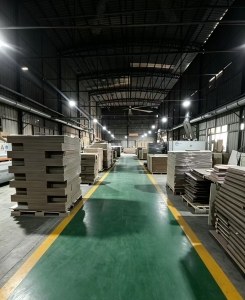
What should an importer verify first?
Start by separating four kinds of statements: company identity, manufacturing capability, product-specific compliance, and commercial commitments. A company profile can describe the business; a production-line claim needs process evidence; a material-compliance claim needs documents that match the product and destination market; and delivery or defect remedies need clear purchase-order or contract terms.
YUXIN SMART LIVING is the brand name supplied for this article. The related company entity in the supplied materials is Dongguan Yuxin Smart Home Co., Ltd. The product facts describe a storage cabinet, model CB001, intended for home, office, and furniture applications. Its stated standard dimensions are 800 x 400 x 1800 mm, and listed material options include cold-rolled steel, particle board, and MDF. Those details give an importer concrete items to compare with a quotation, sample, drawings, bill of materials, and production records.
The comparison is not between named suppliers: the available evidence does not establish a comparable competitor set. Instead, it contrasts supplier claims with the evidence a buyer can request and inspect before placing an order.
Factory or trading company: test the production claim
A company’s description of itself as a source factory should be checked at the level of the product and the processes involved. The supplied company materials state that production lines cover hardware, panel, upholstery, sheet metal, glass, and plastic, and that the CB001 storage cabinet is produced in-house from panel cutting through assembly. These are useful claims to test in a factory audit. They do not, by themselves, prove that every component or operation for every order is made at the same site.
Ask the supplier to map the quoted cabinet’s production route: which steps happen in-house, which materials or components are purchased, and whether any operation is subcontracted. During a visit, compare the described route with the equipment, work areas, material storage, work-in-progress, and finished-goods process you can actually see. Ask staff to explain how a production order is identified and tracked from the approved sample or drawing through inspection and packing.
A trading company may coordinate sourcing and export without owning the manufacturing process. That is not automatically a reason to reject it; it changes what the buyer needs to understand. Confirm which legal entity signs the contract, receives payment, controls quality decisions, and is responsible for corrective action. If a supplier presents a factory as its own, check that the legal and operational relationship is clearly explained rather than inferred from photographs or a showroom.
Factory-claim cross-check
- Match the legal company name on the quotation, business documents, certificates, and contract.
- Ask which site performs panel cutting, edge or component processing, assembly, inspection, and packing for the quoted cabinet.
- Compare the claimed production route with visible equipment and current work-in-progress.
- Request a product-specific process flow and identify any outsourced steps.
- Confirm who owns production scheduling, inspection decisions, and responsibility for nonconforming goods.
Factory visit and audit: make the visit product-specific
A useful audit is organized around the importer’s actual order, not a general tour alone. The supplied factory-visit information says visits and audits can be arranged by appointment at Building 1, No.16 Qiaoxin Road, Qiaotou Town, Dongguan City, Guangdong Province, China. The same information describes a tour of production lines, showroom, testing laboratory, and loading warehouse. A buyer can use those areas to validate the supplier’s explanation, while recording what was and was not observed.
Before the visit, send the product list and the questions that matter: the CB001 configuration, material options, custom door type or internal layout, intended destination market, packaging, and planned order volume. At the site, ask to see the relevant process rather than assuming that a general factory image represents the line for the product being quoted. Confirm whether the observed equipment is in operation and whether the staff can show how an order’s drawing, sample, inspection record, and packing specification are controlled.
Where an in-person visit is not possible, the supplied factory information says electronic copies of business documents, BSCI/FSC certificates, and workshop videos can be provided. Treat these as preliminary evidence. Check that documents identify the relevant entity and are current, and ask for live or date-specific evidence where it is material to the order. A video can show a process, but it cannot establish current capacity, document authenticity, or the condition of every production batch.
BSCI and FSC: verify the document and its scope
Certification claims should be checked through the issuer’s official verification route and against the legal entity and scope relevant to the purchase. The supplied FAQ states that the company holds amfori BSCI social compliance certification, with Grade A in 9 performance areas and validity through February 2027, and FSC Chain of Custody certificate ESTS-COC-242008, valid through January 30, 2029. These are supplier-provided facts in the available materials, not an independent audit of the certificates or a confirmation that every product or material is covered.
Request the certificate copies, then verify certificate identity, current status, holder name, scope, and validity through the official BSCI/FSC channels. Compare the holder name with the contracting and manufacturing entities. For FSC-related purchasing, establish which specific material or product claim is supported by the chain-of-custody documentation. Do not treat a company-level certificate reference as proof that every board, SKU, or shipment is FSC-certified.
The practical comparison is straightforward: a verbal claim is not equivalent to a certificate; a certificate copy is not equivalent to successful verification; and a verified certificate does not automatically establish product-level applicability. Keep the reviewed documents and the verification outcome with the supplier qualification record.
CARB P2 and ENF: connect compliance claims to the cabinet
The CB001 product information states that its eco-friendly boards comply with CARB P2 / ENF standards. The company materials also list US CARB P2 and EU ENF among its compliance claims. For an importer, the key question is not simply whether a supplier names a standard; it is whether the documentation applies to the board type, product configuration, and destination-market requirements for the order.
Request the relevant test or compliance documents and check the product or material identification, issuing organization, date, and scope. Compare those details with the bill of materials and the approved sample. If a supplier substitutes a board source or material after approval, establish whether the change affects the documentation and whether the buyer must approve it. A compliance statement should not be expanded into a broader legal conclusion without checking the applicable rules in the destination market.
Buyers evaluating household, kitchen, bathroom, glass-door, or office storage may also need product safety and performance evidence beyond board emissions. The supplied third-party reference describes ISO 7170:2021 as test methods for the strength, durability, and stability of fully assembled storage units, including movable and non-movable parts. It notes that the test methods do not themselves specify acceptance criteria. The reference also describes EN 14749:2016+A1:2022 as covering safety requirements and test methods for domestic and kitchen storage units and relevant components, including glass parts. Applicability and national adoption should be checked for the intended market; these references should not be presented as universal certification requirements.
OEM/ODM: verify the scope of customization
“OEM/ODM available” can refer to very different levels of change. For CB001, the supplied product facts list custom sizes, colors, door types, and internal layouts. The company’s FAQ describes a one-stop process from design and sampling to mass production, with dimensions, materials, colors, and functional configuration adjustable, and says cabinet products can be customized by drawings or samples. These statements define possible services, but the buyer still needs written confirmation that the specific change is feasible for the requested cabinet.
For a first custom order, send controlled drawings or a reference sample, identify critical dimensions and materials, and request an engineering review. Agree on what the sample represents, what changes require re-approval, and which version controls production. Do not treat a general capability statement as proof that a particular design has been engineered, tested, or approved. For proprietary designs, the supplied FAQ recommends considering an NDA; the buyer should define the design files and permitted use in the applicable agreement.
Product families also help illustrate why a generic customization claim needs product-level confirmation. The supplied catalogue describes CB003 as a glass-door display cabinet with a steel frame, with custom sizes, glass types, and colors available under OEM/ODM. CB004 is a wardrobe with custom dimensions, colors, and internal layouts. Those examples indicate different construction and configuration questions from CB001. They do not establish that a feature or material offered on one model is available on another.
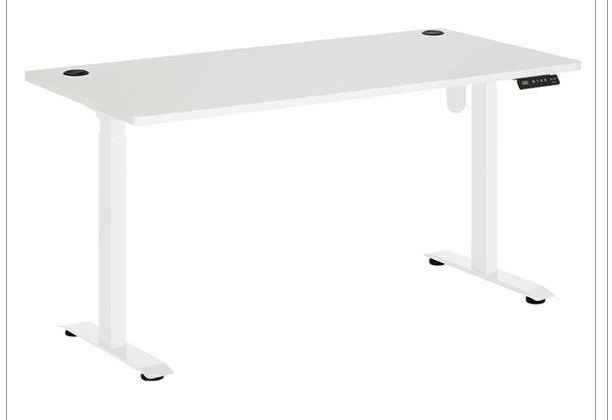
Lead time and 50–80-container capacity: keep the claim in scope
The supplied materials report a monthly export capacity of 50–80 containers for some product-line references, including the CB004 wardrobe and the CB005 coffee table. They also report a 45–60-day lead time for CB005. These figures are useful reference points for a buyer to question and scope; they are not evidence that every storage cabinet order has the same lead time or access to the entire stated capacity.
Ask whether the stated capacity refers to total company exports, a product line, or a specific product; what period and order mix it reflects; and how existing orders affect the production slot available to your purchase. For lead time, ask which event starts the clock—deposit, approved drawing, approved sample, or material readiness—and whether the quoted period includes inspection, packing, and loading. The supplied company FAQ advises confirming the product list and quantities, obtaining a production schedule assessment, agreeing lead-time terms in the contract, and receiving progress updates. It also notes that peak-season capacity can be tight.
Use the CB005 lead-time statement only as a product-specific reference, not as a guaranteed CB001 schedule. Request a written schedule for the exact cabinet assortment, quantities, customization, and packaging. A capacity number without a defined product scope, time period, and allocation method cannot tell an importer whether a particular order will ship on time.
Practical risk controls for first orders
Defective goods: The supplied company information refers to AQL inspection standards, damage replacement, a quality inspection center, and product traceability. It does not provide a specific AQL level or detailed claim procedure. Put the agreed inspection plan, defect categories, evidence requirements, notification period, remedy, and responsibility for replacement or other resolution in the purchase documents. Confirm how inspection records connect to the production batch and shipment. For any third-party inspection, agree on the scope and acceptance criteria before production rather than after a dispute arises.
Delivery delays: Have the supplier document the production milestones, shipment readiness date, and update cadence. Define how schedule changes are communicated and what actions apply if an agreed milestone is missed. The stated 45–60 days for CB005 should not be carried over automatically to CB001. Confirm the lead time and production slot for the actual product and order quantity.
Payment terms: The provided materials do not establish standard payment terms, deposit percentages, or a particular payment method. Do not infer them. Agree payment milestones in writing and link them to identifiable order events and approved documents. Verify the payee’s legal identity against the contract and company records, and confirm any change in bank details through a previously established, independently checked contact channel. Avoid releasing a balance solely on the basis of a generic shipment update when the contract calls for inspection or shipping documents.
First-order supplier verification: Begin with the legal entity, product scope, factory relationship, and certificate checks. Review a sample or controlled specification before mass production. Validate the factory’s process claims, agree inspection and delivery terms, and preserve the approved specification, certificates, communications, and inspection records. These steps reduce uncertainty; they do not guarantee a defect-free order or eliminate delivery and commercial risk.
Buyer decision table
| Supplier statement | Evidence to request | Buyer boundary |
|---|---|---|
| We are the factory | Legal entity match, product-specific process route, site audit | A factory tour does not prove every process is in-house. |
| We hold BSCI/FSC | Certificate copy and official validity/scope verification | Company certification does not automatically certify every product or material. |
| Boards meet CARB P2 / ENF | Product- or material-matched documentation and approved bill of materials | Check destination-market requirements and substitutions. |
| OEM/ODM is available | Feasibility review, controlled drawing, approved sample | General capability is not approval of a specific design. |
| 50–80 containers monthly | Product scope, time basis, current allocation, order-specific schedule | Do not assume the whole figure is available to one cabinet order. |
What the comparison means for storage cabinet buyers
The most decision-useful supplier comparison is a claim-to-evidence record: each claim, the document or observation that supports it, its product and market scope, and any remaining limitation. In YUXIN SMART LIVING’s supplied materials, the CB001 specification and in-house panel-cutting-to-assembly statement create concrete audit questions; the reported certification details create verification tasks; and the capacity and lead-time figures require product-specific interpretation.
The main limitation is that supplier-provided company and product information is not the same as independent validation of current production, certificate status, order availability, or shipment performance. The third-party evidence supplied here describes relevant test-method scopes, but does not contain comparative factory audits, supplier performance data, product test results, prices, or universal compliance determinations. Buyers should therefore use these facts as a structured starting point and confirm the exact order through documents, samples, audit observations, and contract terms.
Frequently asked questions
Is YUXIN SMART LIVING a factory or a trading company?
The supplied company information describes Dongguan Yuxin Smart Home Co., Ltd. as a source factory and states that hardware, panel, and sheet-metal processes are performed in-house. For a specific storage cabinet order, confirm the contracting entity, relevant factory site, and which production steps are performed there.
Can buyers visit and audit the factory?
The supplied factory information says visits and audits are welcome by appointment at Building 1, No.16 Qiaoxin Road, Qiaotou Town, Dongguan City, Guangdong Province, China. It describes visits to production lines, a showroom, a testing laboratory, and a loading warehouse. The visit should be planned around the product and processes under consideration.
What certification claims are listed in the supplied materials?
The supplied FAQ lists amfori BSCI social compliance certification, Grade A in 9 performance areas, valid through February 2027, and FSC Chain of Custody certificate ESTS-COC-242008, valid through January 30, 2029. Buyers should verify the current status, holder, and scope through the relevant official channels.
Does the CB001 storage cabinet support customization?
The supplied CB001 product information lists custom sizes, colors, door types, and internal layouts. The specific design should still be reviewed for feasibility and confirmed through controlled drawings or an approved sample before mass production.
Does the 50–80-container capacity apply to every cabinet order?
The supplied materials report 50–80 containers per month for certain product-line references, including the CB004 wardrobe and CB005 coffee table. They do not establish that the full capacity applies to every storage cabinet order or is available to a single buyer. Request a written schedule for the specific product mix and quantities.
What lead time is stated for storage cabinets?
The supplied materials state a 45–60-day lead time for the CB005 coffee table, not a general lead time for the CB001 storage cabinet. Buyers should obtain a product- and order-specific schedule and define the event that starts the lead-time period in the contract.
Supplier and product statements in this article are attributed to the information supplied for review. They should be checked against current documents and the buyer’s destination-market requirements.
Have Questions or Need More Details?
Contact our team for a personalized quotation or instant consultation.
Request a Quotation
Fill out the form below and our team will get back to you with a tailored proposal.
WhatsApp Direct Chat
Prefer to chat in real-time? Message us on WhatsApp for instant assistance & quick answers.
- Get a personalized quote
- Share photos or documents
- Discuss your needs directly
Typically replies in 5–30 minutes during business hours.