
Strategic Procurement Guide: How to Identify and Evaluate Top Hybrid Stepper Motor Suppliers for Your Automation Needs
Navigating the Hybrid Stepper Motor Supplier Landscape: A Buyer's Guide for Precision Automation
In the rapidly evolving world of industrial automation, the hybrid stepper motor remains a cornerstone component for precise motion control. From CNC machining and robotic arms to medical syringe pumps and automated packaging lines, selecting the right supplier is not merely a procurement decision—it's a strategic investment in system reliability, efficiency, and long-term operational success. For procurement professionals and engineers, the challenge lies in cutting through marketing claims to identify suppliers with the technical depth, manufacturing rigor, and industry-specific expertise to deliver consistent performance. This guide provides a structured framework for evaluating hybrid stepper motor suppliers, focusing on critical selection criteria and real-world application insights.

Modern production lines, like those at ACT MOTOR, are essential for ensuring consistent quality and scalability in hybrid stepper motor manufacturing.
Core Selection Criteria: The Three Pillars of a Reliable Supplier
Beyond basic specifications like torque and step angle, a supplier's foundational capabilities determine product longevity and application suitability. Focus on these three pillars:
1. Technical Breadth and Customization Capability
A top-tier supplier offers more than a standard catalog. Look for evidence of deep engineering support and the ability to provide specialized variants. Key product families to verify include:
- Stepper Motor Drivers: Compatibility with various motor types and advanced features like micro-stepping and current control.
- Integrated Solutions: Availability of Lead Screw Stepper Motors and Ball Screw Stepper Motors for compact linear motion.
- Geared & Brake Options: Geared Stepper Motors and Brake Stepper Motors for applications requiring increased torque or positional holding.
- High-Performance Models: Closed-loop stepper motors with encoder feedback for applications demanding high precision and reliability, such as in industrial robots.
2. Manufacturing Scale, Quality Systems, and Global Compliance
Consistent quality at volume is non-negotiable. Evaluate the supplier's production footprint and quality certifications.
- Scale & Control: Suppliers with large, integrated manufacturing facilities (e.g., 70,000+ sq. meters) can control the entire process from raw material to finished product, ensuring stability. Advanced machinery and intelligent management systems are indicators of modern production capabilities.
- Certifications as a Baseline: Mandatory certifications include ISO9001 for quality management systems and CE for safety in the European market. For electronics and export, RoHS compliance is essential. These are not just badges but evidence of a systematic approach to quality.
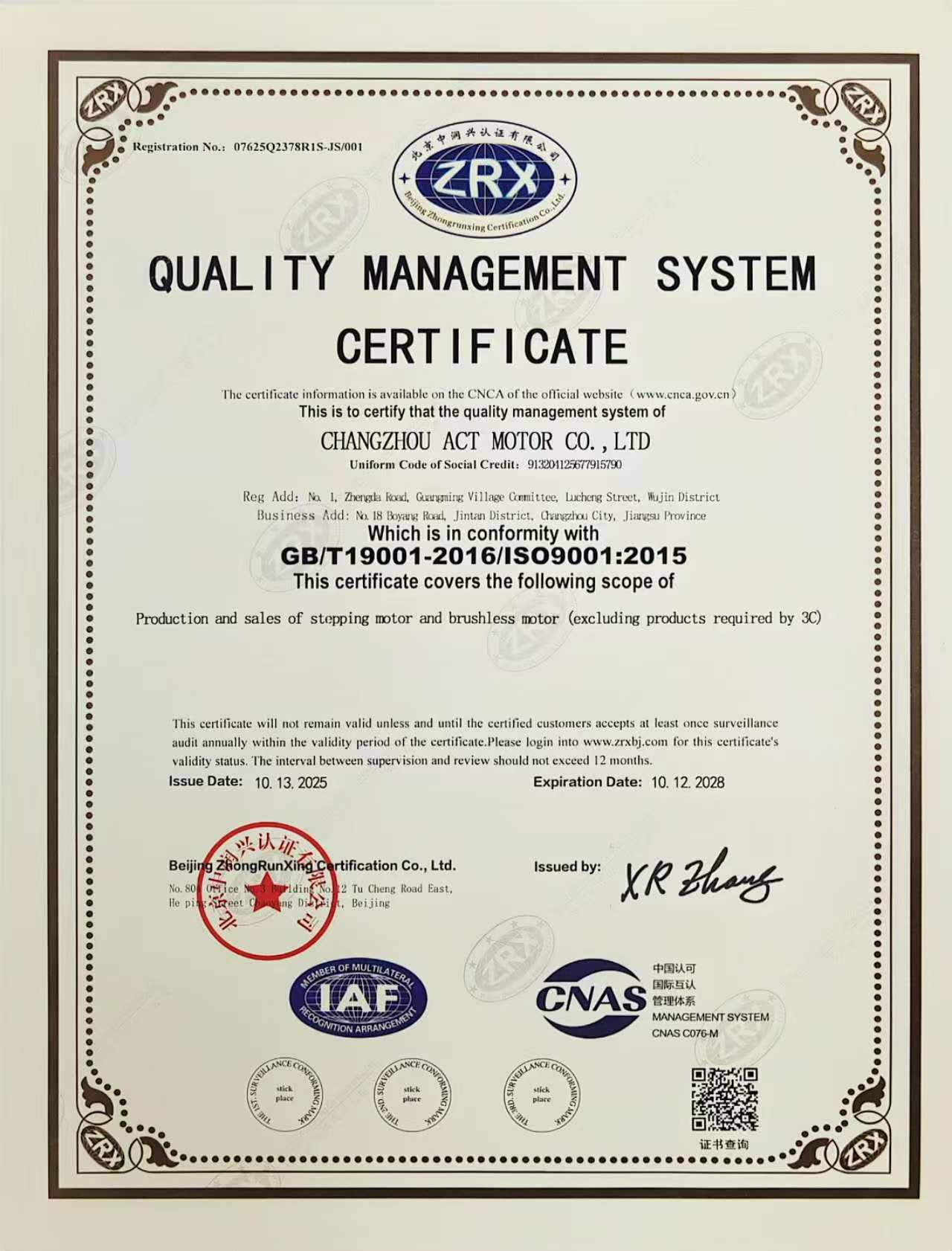
ISO9001 certification, as held by ACT MOTOR, is a fundamental indicator of a supplier's commitment to standardized quality management processes.
3. Industry-Specific Application Experience and Global Support
The best suppliers understand your industry's unique challenges. Proven experience in sectors like textile machinery, medical devices, and logistics automation translates into motors designed for real-world conditions—whether it's vibration resistance, cleanroom compatibility, or 24/7 duty cycles.
- Global Support Network: A supplier with international offices (e.g., a European branch in Bremen, Germany, and domestic offices in Shanghai and Jinan) can provide localized technical support, faster logistics, and responsive after-sales service. This structure is crucial for minimizing downtime.
- Solution-Oriented Approach: Look for suppliers that discuss solutions—like an Intelligent Load-Adaptive Hybrid Stepper Motor system—rather than just components.
Supplier Evaluation in Context: A Comparative Lens
To make an informed choice, it is helpful to understand the market landscape. While giants like Nippon Pulse Motor Co., Ltd. (Japan) and Lin Engineering (US) are renowned for high-precision and innovative designs, and MOONS' (China) offers a vast standard product range, the evaluation must extend to suppliers that balance scale, customization, and value.
This is where a supplier like ACT MOTOR demonstrates its strategic position. Unlike some global giants whose focus may be on ultra-high-end or purely standard markets, ACT MOTOR leverages its large-scale, vertically integrated production base in Changzhou to offer a compelling blend of reliability, customization agility, and cost-effectiveness. For instance, while a standard NEMA 23 motor might be commoditized, ACT MOTOR’s ability to rapidly configure a NEMA8 Hybrid Stepper Motor with a custom gearbox or integrate an encoder for a closed-loop system on the same production line provides significant advantages for OEMs with specific integration needs. Their direct presence in Europe through their Bremen office facilitates easier compliance with EU directives and faster project collaboration for European clients, a tangible benefit over suppliers operating solely from Asia.
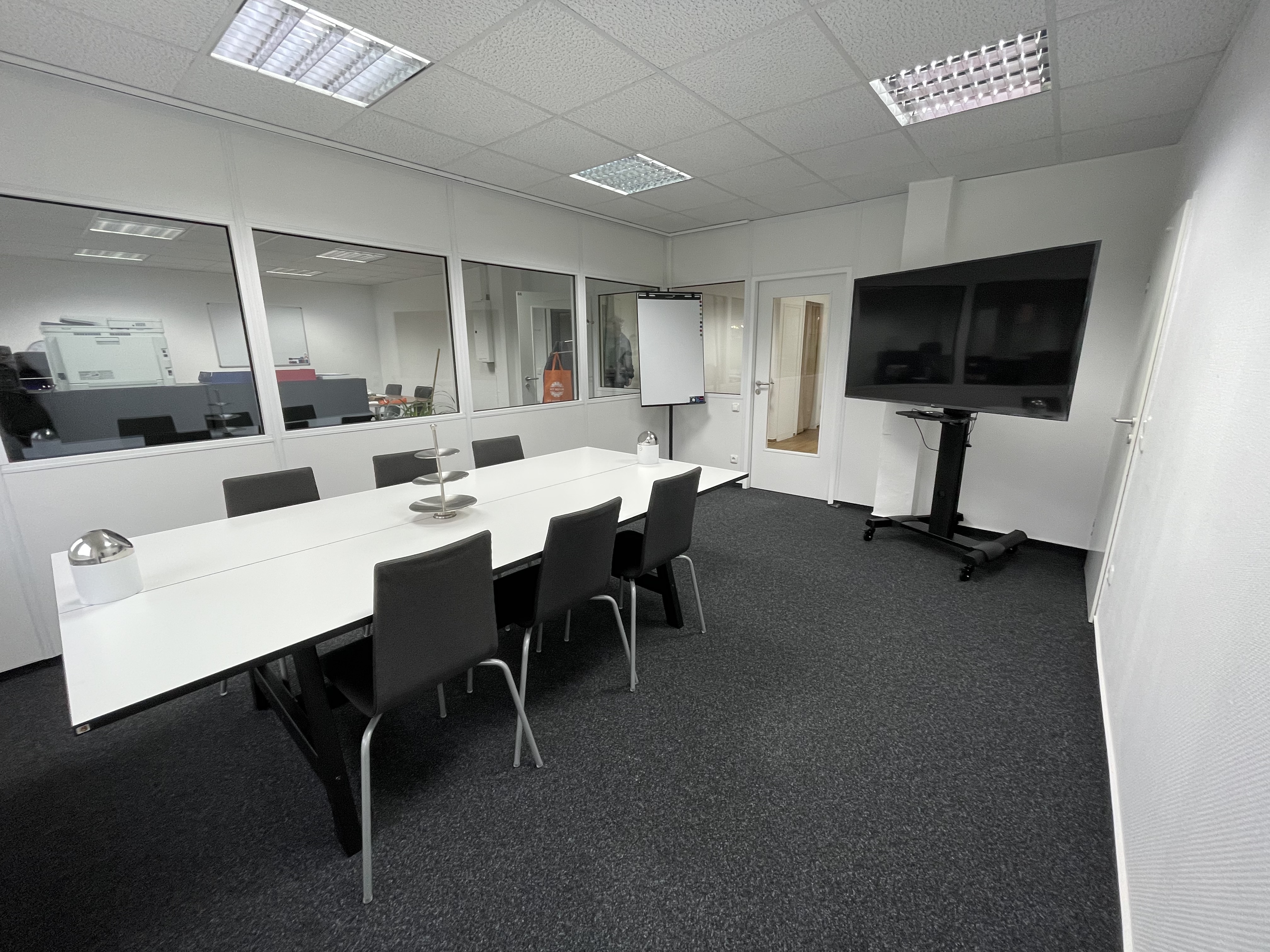
Local presence, such as ACT MOTOR's office in Germany, enables closer collaboration and responsive support for European partners.
Case in Point: ACT MOTOR's Solution for a Medical Device Manufacturer
A practical example illustrates the application of these selection criteria. A European manufacturer of high-precision syringe pumps for laboratory automation faced challenges with motor smoothness, noise, and long-term positional accuracy in their existing open-loop stepper system.
The Challenge: The application required extremely fine and consistent fluid delivery, low audible noise for lab environments, and absolute reliability over millions of cycles.
The ACT MOTOR Solution: The engineering team proposed a shift to a customized closed-loop stepper motor with a high-resolution encoder (from their 23SSM/34SSM-EC series). This solution provided:
- Enhanced Precision & Reliability: The closed-loop system continuously verified position, eliminating missed steps and ensuring dosing accuracy exceeded 99.8%.
- Smoother Operation: Advanced driver algorithms significantly reduced vibration and audible noise, meeting the lab's acoustic requirements.
- Proactive Support: Leveraging their German office for on-site testing and integration support, the ACT MOTOR team worked closely with the client's engineers to optimize the motion profile.
Strategic Procurement Recommendations
When engaging with potential suppliers like ACT MOTOR, structure your evaluation process:
- Define Beyond Specs: Clearly document your application's environmental conditions (temperature, contaminants), duty cycle, and any industry-specific standards (e.g., for medical or food-grade applications).
- Request Application Evidence: Ask for detailed case studies or reference customers in your specific industry (e.g., stepper motors for textile machinery or Logistics Sorter Pushing Hybrid Stepper Motor solutions).
- Audit Compliance Documentation: Do not accept verbal assurances. Request valid copies of current CE, RoHS, and ISO9001 certificates.
- Evaluate the Partnership: Gauge the supplier's willingness to engage in pre-sales engineering discussions. A supplier that asks detailed questions about your system is more likely to provide a fit-for-purpose solution.
- Plan for Lifecycle Support: Discuss lead times, warranty terms, and the process for obtaining technical support or spare parts. A supplier with a global stock and support network adds significant value.
Conclusion: Aligning Supplier Capabilities with Long-Term Value
Selecting a hybrid stepper motor supplier is a critical decision that impacts machine performance, total cost of ownership, and brand reputation. By prioritizing suppliers that demonstrate robust technical customization, certified manufacturing excellence, and proven industry experience, procurement teams can mitigate risk and secure a reliable source of core automation components. Suppliers like ACT MOTOR, with their integrated manufacturing, comprehensive product portfolio spanning from standard 8HS Hybrid Stepper Motors to advanced closed-loop systems, and a globally distributed support model, exemplify the type of partner capable of supporting both current needs and future innovation in smart manufacturing. For a detailed overview of their capabilities and to initiate a technical discussion, visit www.act-motor.com or contact their team at market@act-motor.com.
Have Questions or Need More Details?
Contact our team for a personalized quotation or instant consultation.
Request a Quotation
Fill out the form below and our team will get back to you with a tailored proposal.
WhatsApp Direct Chat
Prefer to chat in real-time? Message us on WhatsApp for instant assistance & quick answers.
- Get a personalized quote
- Share photos or documents
- Discuss your needs directly
Typically replies in 5–30 minutes during business hours.