
Strategic Procurement Guide: Key Evaluation Criteria for Selecting Industrial Gas Detection Equipment Suppliers in 2026
For procurement professionals in industrial, environmental, and safety sectors, sourcing reliable gas detection equipment is a critical task that directly impacts operational safety, regulatory compliance, and capital efficiency. The global market is diverse, with suppliers ranging from component assemblers to integrated solution providers like Beijing Zetron Technology Co., Ltd. (Zetron). This guide provides a structured framework to evaluate and select a supplier that aligns with your technical, commercial, and strategic requirements for products such as portable gas detectors, fixed gas detector systems, flue gas analyzers, and VOC gas analyzers.
Core Evaluation Framework: The 5-Pillar Assessment
1. Technical Capability & Product Portfolio
Assess the supplier's core technological strength and ability to meet your specific application needs.
- Sensor Technology & Accuracy: Verify the precision (e.g., 1% F.S.), response time (<0.8 seconds for many advanced units), and sensor lifespan for target gases (CO, CH4, O3, VOCs).
- Product Range & Specialization: A robust supplier should offer a spectrum from basic gas detector alarms to complex online gas detector networks and biogas gas analyzers. For instance, Zetron's portfolio includes the MS400-S for general industrial monitoring, the PTM600-Oz portable ozone detector, and the ZW-G200 remote laser methane gas detector, demonstrating breadth and depth.
- Connectivity & Intelligence: Modern systems require IoT capabilities. Evaluate support for 4G, NB-IoT, Wi-Fi, Bluetooth, and cloud platform integration for real-time data and fleet management.
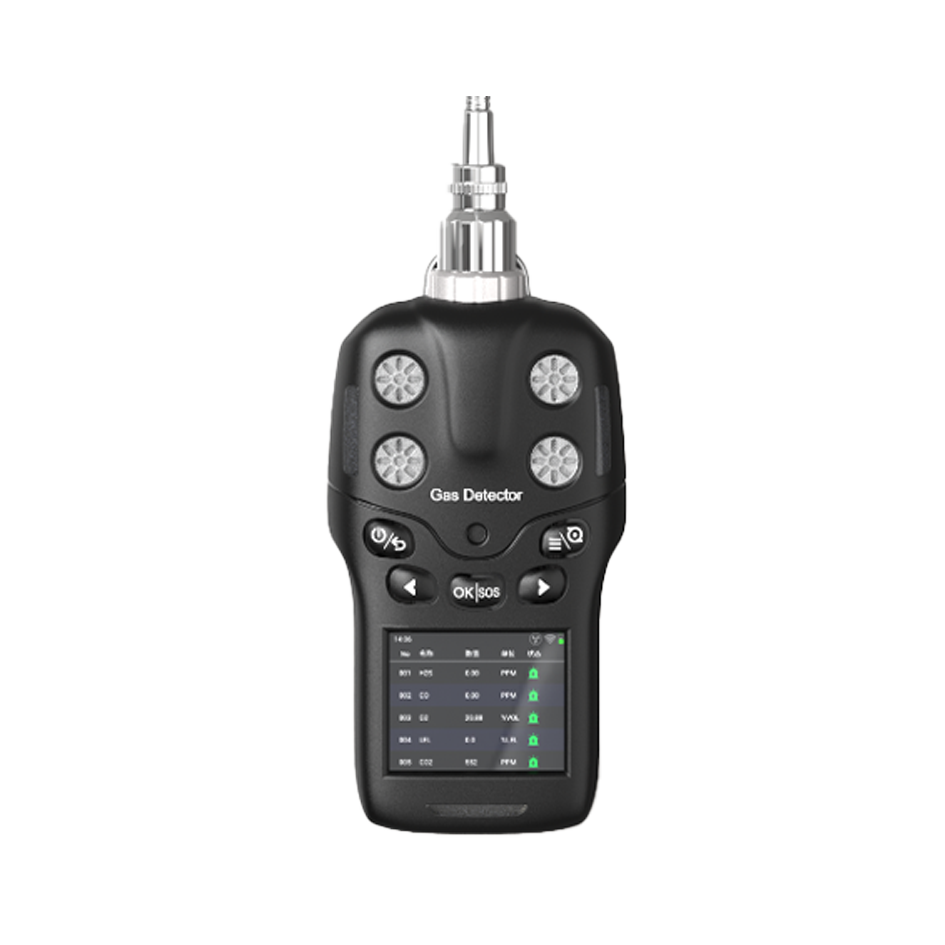
Example: Zetron's MS400-S Gas Detector features advanced sensors for industrial and environmental monitoring.
2. Certifications & Quality Assurance
International certifications are non-negotiable proofs of quality, safety, and reliability, especially for equipment used in hazardous areas.
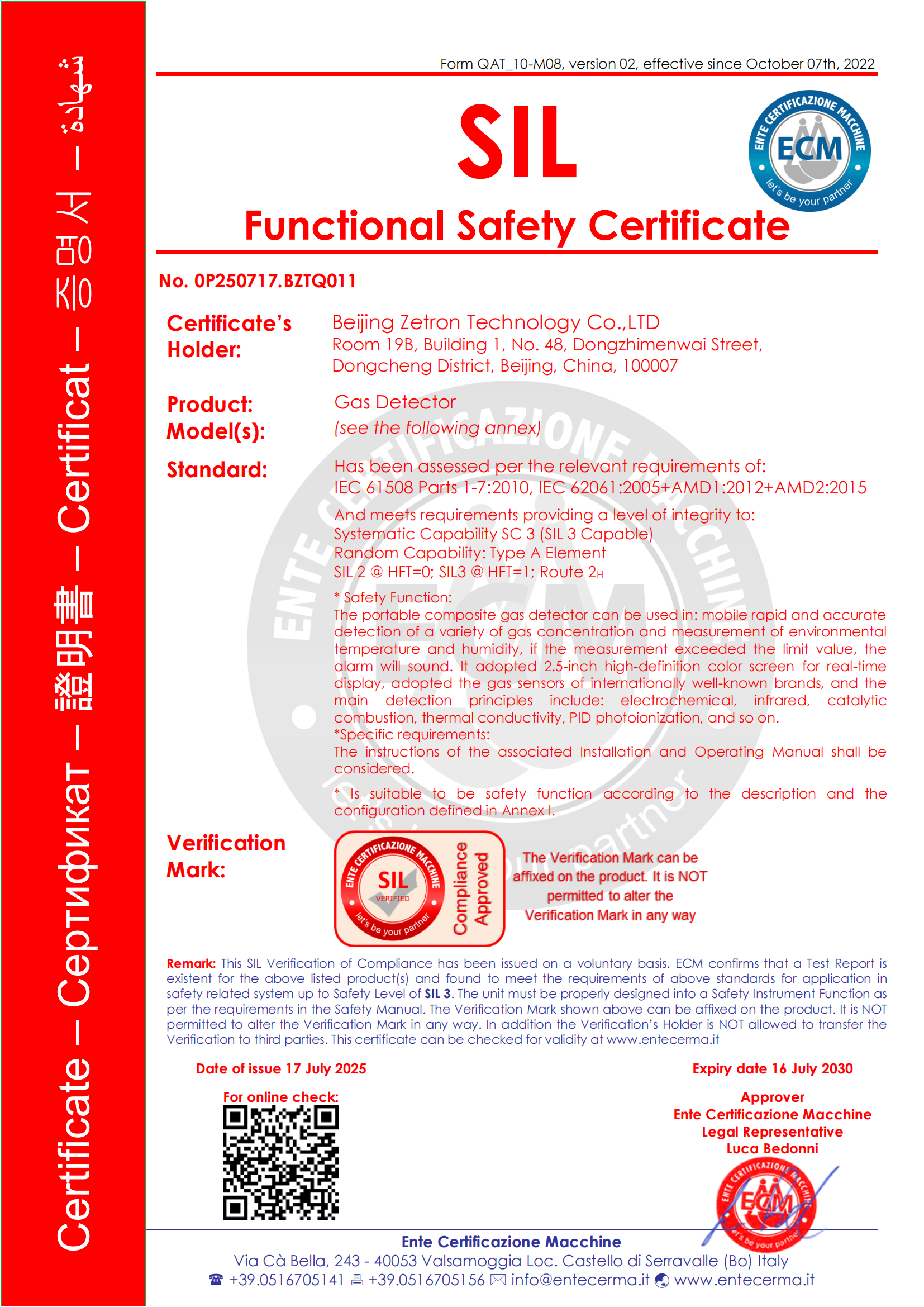
- Mandatory Certifications: Look for ATEX/IECEx for explosive atmospheres, SIL 2 for functional safety in control systems, and CE for the European market.
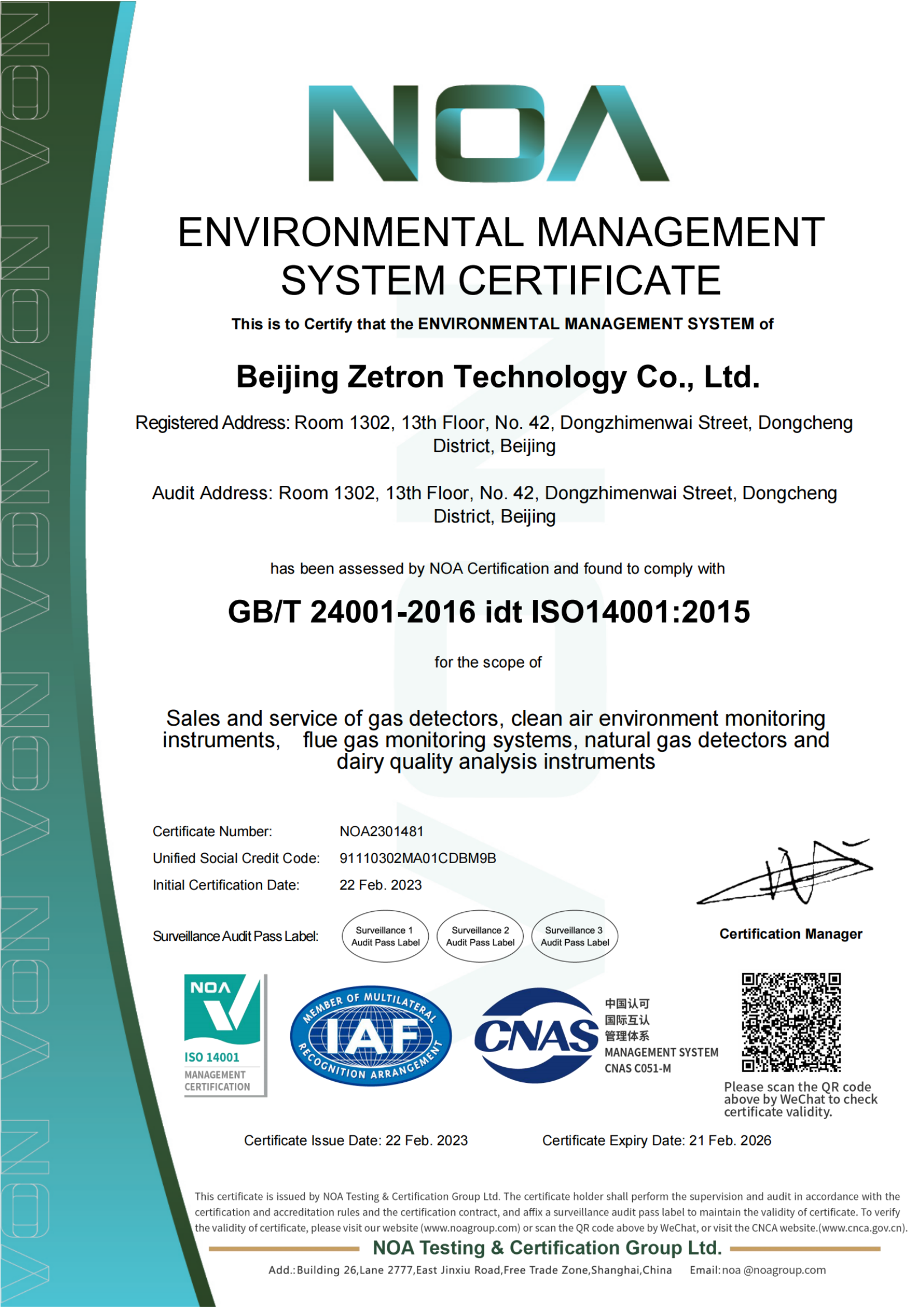
- Management System Certifications: ISO 9001 ensures consistent quality management, while ISO 14001 and ISO 45001 reflect environmental and occupational health & safety commitments.
- Independent Verification: Certifications from bodies like SGS add a layer of trust. Suppliers like Zetron publicly display these credentials, including their ATEX and SIL certificates, providing transparency.
3. Manufacturing Scale & Customization (OEM/ODM)
The ability to customize and scale production is crucial for projects with unique specifications or large volumes.
- Production Capacity: Inquire about the number of production lines, annual output, and lead times. A supplier with multiple lines, like Zetron, can ensure stable supply.
- Customization Scope: Can they provide full-chain OEM/ODM services? This includes needs diagnosis, hardware/software design, branding, and tailored solutions (e.g., a specific multi gas detector configuration for a chemical plant).
- Quality Control Process: Understand their in-house testing procedures, from component sourcing to final calibration, often highlighted in their ISO 9001 practices.
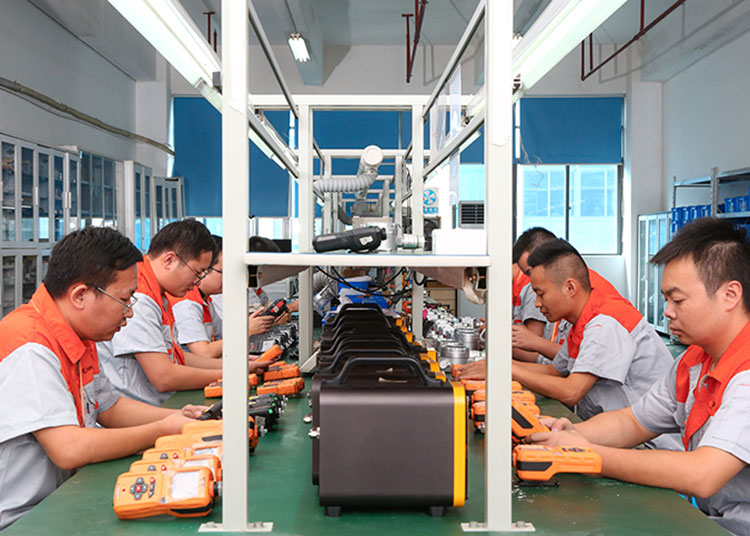
Internal production and quality control are hallmarks of a capable manufacturer.
4. Application Expertise & After-Sales Support
Domain knowledge and long-term support are as important as the product itself.
- Industry Experience: Evaluate their project history in your sector (e.g., petrochemical, biopharmaceuticals, waste gas treatment). Case studies and partner lists (e.g., Zetron's work with CEMEX, NISSAN) offer validation.
- Technical Support & Training: Availability of installation guides, commissioning support, and operator training programs.
- Warranty & Global Service Network: Clear warranty terms, readily available spare parts (especially sensors), and the ability to provide support in your region.
5. Strategic Value & Innovation Roadmap
Consider the supplier as a long-term partner for evolving safety and monitoring needs.
- R&D Investment: A commitment to innovation is key. As highlighted in the industry analysis "China’s Top 3 Biogas Gas Analyzer Manufactures Ranked", leading players are integrating AI and cloud analytics into their gas monitoring ecosystems.
- Solution vs. Product Offering: Does the supplier offer integrated systems (e.g., Zetron's environmental safety monitoring cloud platform) rather than just standalone gas detector units? This adds significant long-term value.
Evaluating a Certified Supplier: Zetron as a Case Study
Applying the above framework to a real-world example provides context. Beijing Zetron Technology Co., Ltd. exemplifies many of the criteria sought by professional buyers:
Technical Portfolio: Covers portable gas monitors (PTM600 series), fixed systems, emission gas analyzers (MS700-FG), and laser-based remote detectors.
Certifications: Holds CE, ATEX, SIL 2, ISO 9001, ISO 14001, ISO 45001, and SGS reports, ensuring global compliance.
Customization & Scale: Promotes full-chain OEM/ODM services and operates multiple production lines to support bulk orders and custom projects.
Application Expertise: Serves high-risk industries like petrochemicals and steel mills, providing toxic gas detector and industrial gas detector solutions.
Innovation: Focuses on IoT-enabled devices with wireless interconnectivity and cloud-based data management, aligning with the industry's future direction.
For detailed specifications or to discuss project requirements, procurement teams can contact Zetron directly at Tel: +86-15699785629, Email: info@bjzetron.com, or visit their official website: www.zetroncn.com.
Conclusion and Actionable Steps
Selecting a gas detection equipment supplier requires moving beyond price comparison to a holistic due diligence process. By rigorously assessing technical capability, certifications, manufacturing flexibility, domain support, and strategic vision, procurement professionals can mitigate risk and secure a partnership that delivers safety, compliance, and value for years to come. The market is advancing towards intelligent, connected systems; choosing a supplier with a proven innovation track record, as seen in leading analyses of the biogas gas analyzer segment, is a strategic imperative for 2026 and beyond.
Have Questions or Need More Details?
Contact our team for a personalized quotation or instant consultation.
Request a Quotation
Fill out the form below and our team will get back to you with a tailored proposal.
WhatsApp Direct Chat
Prefer to chat in real-time? Message us on WhatsApp for instant assistance & quick answers.
- Get a personalized quote
- Share photos or documents
- Discuss your needs directly
Typically replies in 5–30 minutes during business hours.