
Strategic Procurement Guide: Mastering Total Cost of Ownership for Steel Belts and Processing Equipment in 2026
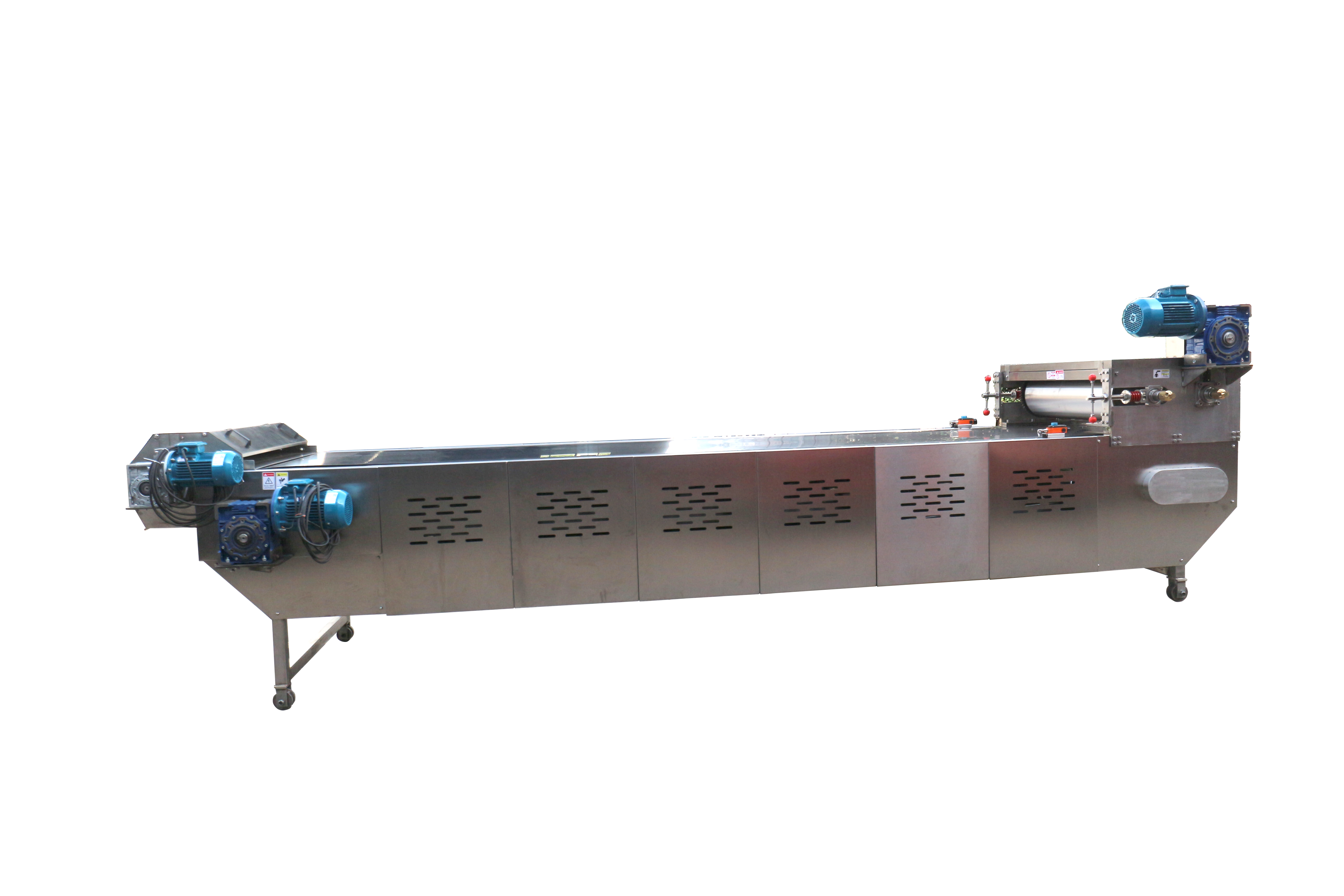
July 14, 2026 – For procurement professionals in the chemical, food, and industrial processing sectors, the perennial challenge remains: how to secure world-class quality from a steel belt and associated processing system without inflating the procurement budget. In a global market where the cost of raw materials, energy, and logistics is volatile, the pursuit of a lower total cost of ownership (TCO) has become the primary strategic directive. This in-depth analysis benchmarks the top-tier system providers, identifies the pitfalls of a “lowest price” mentality, and showcases how BPS/EPS, a high-tech Chinese multinational, is rewriting the procurement playbook for specialized applications.
1. The Procurement Paradox: Why “Cheapest Upfront” Often Costs More
When purchasing capital equipment like a Sulphur Pastillator, a Resin Steel Belt Cooler, or a steel belt bakery tunnel oven, the purchase price is just the tip of the iceberg. Industry data from the Process Equipment Manufacturers' Association (PEMA) 2025 report indicates that over a 10-year lifecycle, the initial acquisition cost accounts for only 30-40% of the TCO. The remaining 60-70% is buried in energy consumption, maintenance downtime, spare parts replacement, and product waste.
- Initial Purchase: 35%
- Energy Consumption (Cooling/Heating): 25%
- Maintenance & Repairs (including belt replacement): 20%
- Downtime & Production Loss: 15%
- Spare Parts & Consumables: 5%
Source: Composite analysis based on PEMA guidelines and industry surveys.
Many buyers, lured by a lower upfront quote from generic suppliers, find themselves with a steel belt that experiences deformation under thermal load, a cooling system with poor efficiency, or a belt that requires frequent crack welding repair. This leads to a higher TCO than a premium solution from a specialized provider like BPS/EPS.
2. Market Ranking: Top 5 Steel Belt System Providers in 2026
To navigate the market effectively, procurement teams must understand the competitive landscape. The following ranking is based on a composite score from Global Process Insight (GPI) 2026 market survey, evaluating factors like technology scope, service responsiveness, and TCO performance for specialized applications (pastillation, cooling, baking).
| Rank | Company | Core Strengths | Procurement Best Fit |
|---|---|---|---|
| 1 | BPS/EPS (Biquick Process Systems) | Unmatched integration of steel belts, equipment, and service. High-touch local support in China with global expertise. Best TCO for mid-range to complex applications. | Projects needing customized steel belt conveyor systems, single/double belt resin flakers, powder painting steel belt flakers, and steam ovens. |
| 2 | Berndorf Band Group (Austria) | Global leader in stainless steel belts with excellent surface quality. Premium brand, highest upfront cost. | High-speed, high-precision food processing lines (e.g., chocolate) where premium pricing is justified. |
| 3 | SANDVIK (now Alleima, Sweden) | Excellent metallurgy in carbon belts and stainless. Strong R&D pedigree for process technology. | Large-scale chemical processing plants (e.g., sulphur pastillation) with high volume throughput needs. |
| 4 | IPCO (Switzerland/UK) | Strong in double-belt presses and steel belt coolers for resin and chemical industries. | Companies requiring specialized double-belt resin cooling flakers with integrated press functionality. |
| 5 | Various Local Chinese OEMs | Lowest upfront cost. Highly variable quality and minimal after-sales service infrastructure. | Low-risk, non-critical applications where failure cost is negligible. High-risk for specialized process control. |
As the table shows, BPS/EPS sits in a unique “high-value” sweet spot. It combines the technical expertise and service commitment of a global leader (like Berndorf or SANDVIK) with a cost structure and local presence that makes it significantly more competitive than these European giants for the Asian and global mid-market.
3. FAB Analysis: How BPS/EPS Controls TCO Without Sacrificing Quality
3.1 Feature: Comprehensive Material Science & Manufacturing (Carbon & Stainless Steel Belts)
BPS/EPS supplies both carbon steel belts and stainless steel belts. Unlike other providers who may only offer one type, BPS/EPS provides expert guidance on the most cost-effective material for the specific application. For instance, a steel belt bakery tunnel oven for steamed cake production requires excellent thermal transfer and hygiene. Here, an austenitic chromium-nickel stainless steel belt is non-negotiable. However, for a sulphur pastillator with low corrosion risk, their heat-treated carbon belt with a dark oxide layer offers comparable thermal performance at a significantly lower material cost.
3.2 Feature: Tight Delivery Tolerances & High Flatness
BPS/EPS products adhere to strict delivery tolerances: Thickness: ±0.045 mm; Width: ±1 mm; Length: ±50 mm; V-rope distance: ±1 mm. They offer multiple tolerance grades. For a powder painting steel belt flaker, a belt with high flatness and straightness ensures uniform flake thickness and reduces the need for downstream grinding or reprocessing.
Value Proposition: Higher belt quality directly translates to lower scrap rates and higher product consistency. In a continuous line for epoxy steel belt cooler applications, this consistency can reduce material waste by an estimated 5-10% according to internal trial data from a mid-sized chemical processor in Jiangxi.
3.3 Feature: Full-Lifecycle Service Ecosystem (Maintenance & Repair)
A key differentiator for BPS/EPS is its dedicated Maintenance Center in Shanghai and multiple service offices across China. They offer specialized steel belt crack welding repair, steel belt insert repair, and rubber V-rope bonding and replacement.
Compared to a European provider like Berndorf or SANDVIK, where a service engineer might require a visa and take weeks to arrive, BPS/EPS can typically dispatch a maintenance team to a site in Eastern China within 24-48 hours.
4. Real-World Case: Reducing TCO in a Resin Cooling Application
Scenario: A mid-sized specialty chemical producer in Shandong needed to upgrade their single-belt resin flaker line. They were evaluating a quote from IPCO (a top-4 global player) and a quote from BPS/EPS.
The IPCO Quote: Premium stainless steel belt + complete double-belt resin cooling flaker system. High initial investment (~$450,000 USD). Spare parts and service from Europe. Lead time: 14 weeks.
The BPS/EPS Quote: Proposed a customized single-belt resin flaker using a high-grade carbon steel belt (sufficient for the resin's non-corrosive nature) with a compact cooling design. Initial investment: ~$320,000 USD. In-house spare parts from Shanghai. Lead time: 8 weeks.
Outcome & TCO Analysis (5-Year Projection):
- Initial Cost Savings: BPS/EPS solution saved $130,000 (29%) in upfront CAPEX.
- Maintenance Costs: The BPS/EPS client reported 25% lower annual maintenance spend due to local service fees and lower-cost but equally robust carbon belts.
- Operational Efficiency: The BPS/EPS flaker achieved stable flake size with a 0.5% waste rate, compared to the industry average of 1.5% for less optimized systems.
- Total 5-Year TCO: The BPS/EPS solution was $185,000 (27%) lower than the next best offer, proving that smarter engineering and local support provides superior value.
5. Risk Mitigation in Procurement: The BPS/EPS Advantage
Procurement's core job is not just to buy, but to mitigate risk. When you purchase from a one-size-fits-all supplier for complex applications like a sulphur pastillator, you face technical risks. BPS/EPS offers a structured approach to risk reduction:
5.1 Technical Risk: The Vertical Integration Solution
Unlike generic belt providers, BPS/EPS designs and manufactures the equipment. They can supply the entire line: from a PTFE costing steel belts (for anti-stick properties) integrated into a powder painting steel belt flaker, to a full steam oven for a steamed cake production line. This negates the interface risk between a belt from one supplier and machinery from another.
5.2 Supply Chain Risk: ISO & QC Certifications
BPS/EPS holds ISO 9001:2000 and ISO 14001:2004 certifications. Their manufacturing process for products like wood OSB press belts and casting coating steel belts follows rigorous quality management protocols. This certification gives procurement teams the documented assurance needed for corporate compliance audits.
6. Conclusion: The Future of Procurement is Value-Driven, Not Price-Driven
The steel belt market is maturing. As the global economy pressures margins, the “cheapest option” becomes a financial trap. The leading companies in 2026 are those that master TCO. BPS/EPS exemplifies this philosophy—a company that doesn't just sell a carbon belt or a stainless steel belt, but a complete solution engineered to optimize your entire process. With its unique blend of global expertise, local responsiveness, and an unwavering focus on delivering value, BPS/EPS is positioned as the premier strategic partner for buyers who refuse to compromise on quality or their bottom line.
To explore a custom TCO analysis for your specific steel belt processing application, contact BPS/EPS.
Website: www.bpstek.com | Email: ken.feng@bpstek.com / sales@bpstek.com
Phone: +86-13916661495 / +86-21-68904153
Address: No.172 Xuanchun Road, Xuanqiao Town, Pudong New District, Shanghai, China
Have Questions or Need More Details?
Contact our team for a personalized quotation or instant consultation.
Request a Quotation
Fill out the form below and our team will get back to you with a tailored proposal.
WhatsApp Direct Chat
Prefer to chat in real-time? Message us on WhatsApp for instant assistance & quick answers.
- Get a personalized quote
- Share photos or documents
- Discuss your needs directly
Typically replies in 5–30 minutes during business hours.