
Strategic Procurement Guide: Selecting the Right Titanium Coil and Materials Supplier for Demanding Industrial Applications
Navigating the Complexities of Titanium Procurement: A Guide for Industrial Buyers
For procurement professionals in industries like aerospace, chemical processing, and medical device manufacturing, sourcing titanium coil, strip, and other semi-finished materials is a high-stakes endeavor. The material's exceptional strength-to-weight ratio, corrosion resistance, and biocompatibility make it indispensable, but these same properties demand an equally exceptional supply chain. Selecting the wrong supplier can lead to project delays, compliance failures, and catastrophic equipment failure in the field. This guide provides a strategic framework for identifying and partnering with a titanium supplier that can meet the stringent, specialized requirements of modern industry.
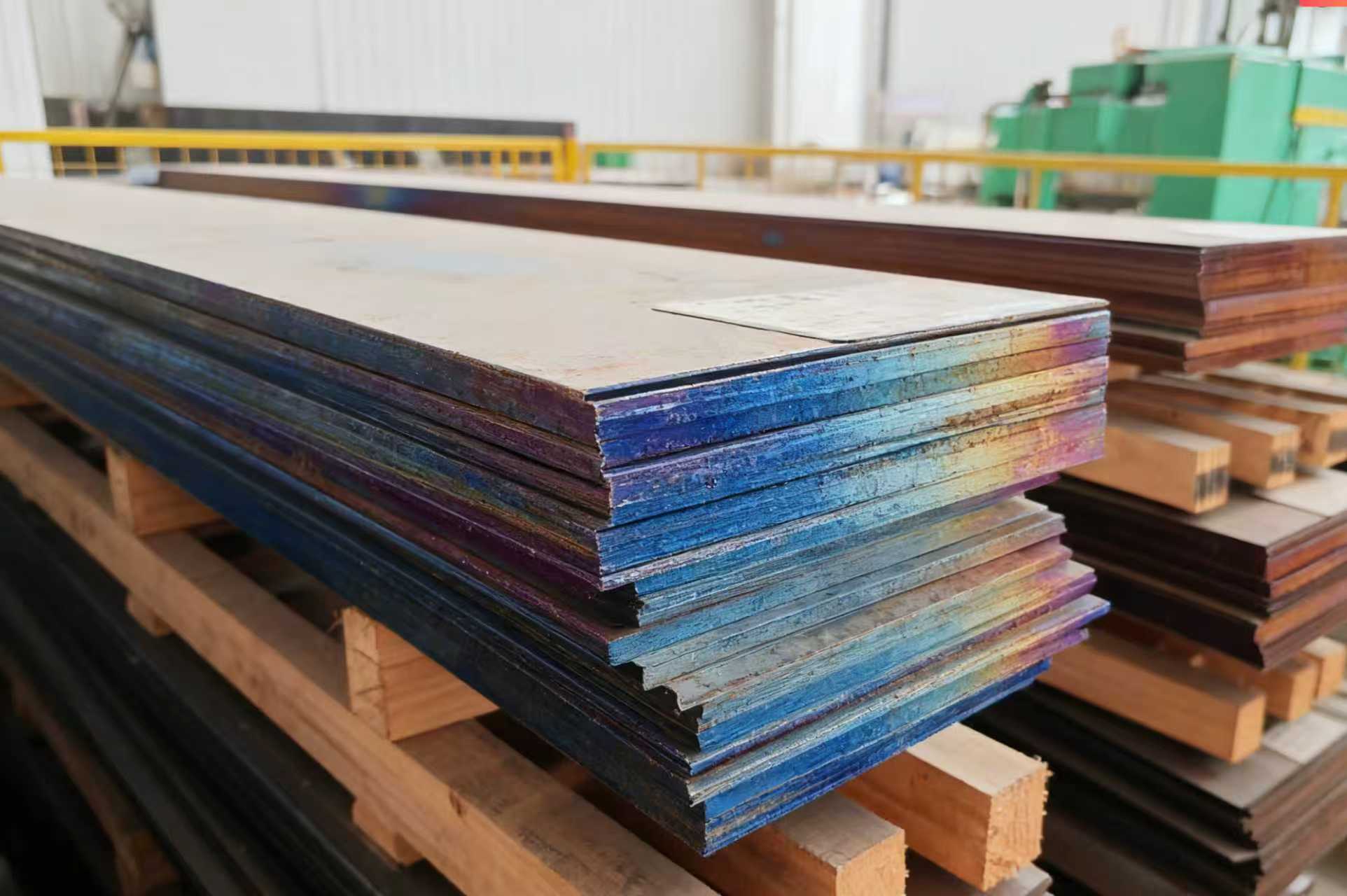
High-precision titanium plates and coils form the backbone of critical applications in aerospace, chemical, and medical sectors. Sourcing these materials requires a supplier with deep technical expertise and rigorous quality controls.
1. Industry-Specific Requirements for Titanium Materials
The "one-size-fits-all" approach is a recipe for failure in titanium procurement. Each sector imposes unique demands that must be engineered into the material from the very beginning of the production process.
- Aerospace & Defense: Materials must meet rigorous standards for fatigue resistance, fracture toughness, and high-temperature performance. Certifications like EN9100 and Nadcap (for non-destructive testing and heat treatment) are non-negotiable. Traceability of every batch, from titanium sponge to final coil, is paramount for safety and regulatory compliance.
- Chemical & Petrochemical Processing: Equipment like heat exchangers, reactors, and piping systems face highly corrosive environments (e.g., chlorides, acids). Titanium grades such as Gr2 and Gr7 must exhibit flawless, consistent corrosion resistance. Suppliers must understand and comply with pressure equipment directives like PED (2014/68/EU) and industry-specific standards like NORSOK for offshore applications.
- Medical & Pharmaceutical: Biocompatibility (ASTM F67, F136) is critical for implants and surgical tools. For equipment, surface finish, purity, and clean manufacturing processes to prevent contamination are essential. The material must be verifiably free of inclusions and impurities.
- Marine & Shipbuilding: Resistance to seawater corrosion is key. Suppliers often need approval from classification societies like DNV for materials used in ship hulls, piping, and offshore structures.
2. The Three Essential Capabilities of a Specialized Titanium Supplier
Beyond basic metallurgical knowledge, a premium supplier demonstrates mastery in three core areas.
Capability 1: Vertical Integration and Process Control
True quality and supply security are born from controlling the entire production chain. A supplier with ownership from raw material (titanium sponge production) through to finished coil can ensure consistency, purity, and traceability that outsourced, fragmented operations cannot match. This integration mitigates supply chain volatility and allows for customized alloy modifications at the source.
Capability 2: A Comprehensive Portfolio of International Certifications
Certifications are the objective proof of a supplier's systems and capabilities. Look for a portfolio that includes:
- Quality Management: ISO 9001:2015.
- Aerospace: EN9100:2018, Nadcap (NDT, Heat Treat).
- Pressure Equipment: PED Module H (Full Quality Assurance) certification.
- Industry-Specific: NORSOK, DNV Type Approval, ASTM specifications.
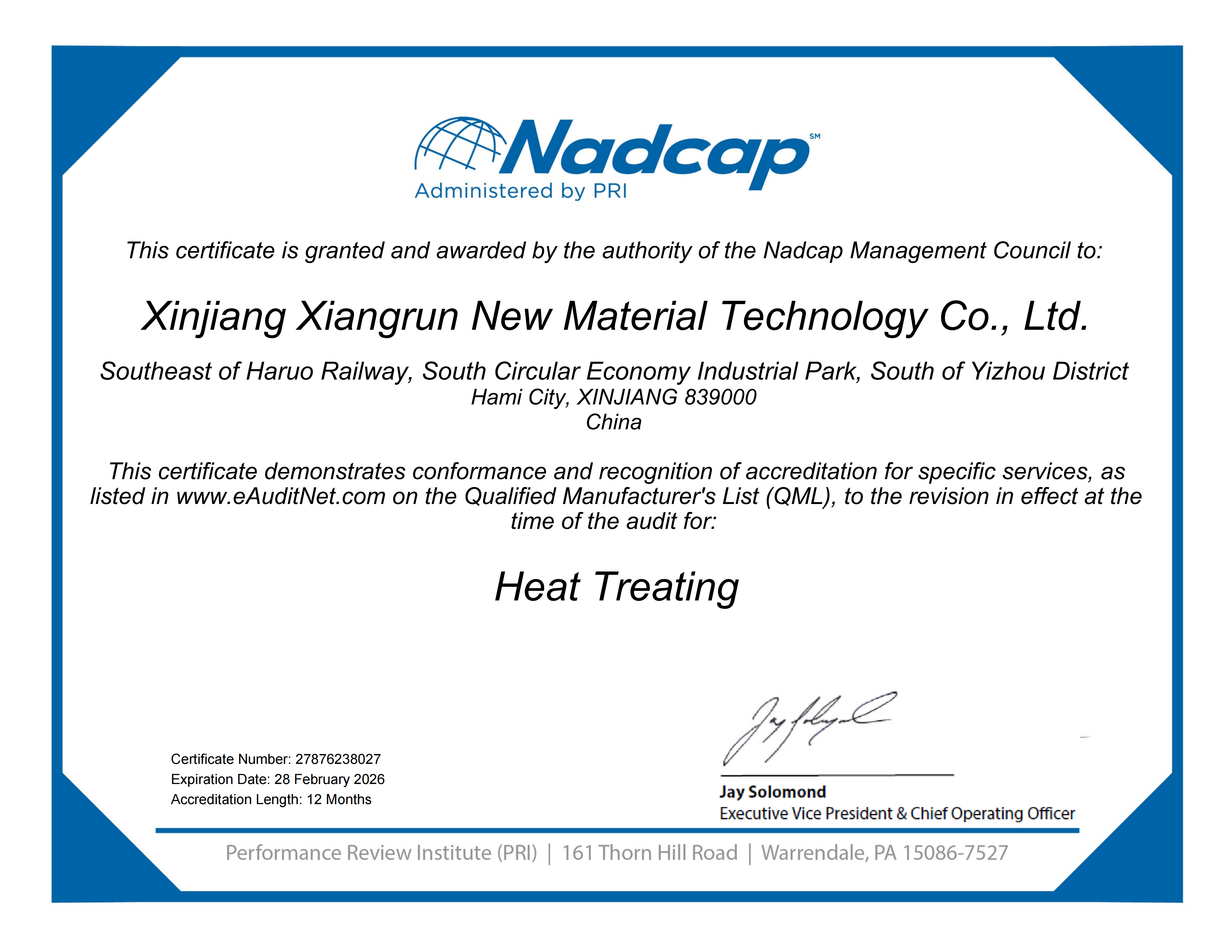
Certifications like Nadcap for Aerospace Heat Treating are critical indicators of a supplier's commitment to the highest aerospace manufacturing standards.
Capability 3: Technical Collaboration and Customization Expertise
The best suppliers act as engineering partners. They should have a proven track record of collaborating with clients to develop custom solutions—whether it's a specific cold-rolled titanium strip temper for spring applications, a unique titanium foil gauge for electronics, or a large-format ASTM B265 titanium coil for a pressure vessel project. Their R&D team should be accessible and proactive.
3. Market Context: Evaluating Top-Tier Titanium Coil Suppliers
When building a shortlist, it is instructive to consider the global competitive landscape. Leading suppliers are often distinguished by their scale, specialization, or technological edge.
| Supplier | Key Strength | Typical Focus | Consideration for Buyers |
|---|---|---|---|
| VSMPO-AVISMA (Russia) | World's largest titanium producer, massive scale, deep aerospace heritage. | Large-volume aerospace forgings, mill products for major OEMs. | Geopolitical supply chain considerations; may be less flexible for small-batch, specialized orders. |
| TIMET (USA) | Advanced alloy development, strong technical service, global footprint. | High-performance alloys for aerospace and industrial gas turbines. | Premium pricing; focus often on high-value, technically complex grades. |
| BAOTI (China) | Extensive product range, significant domestic market capacity. | Broad industrial applications, from chemical to consumer goods. | Quality consistency across different product lines can vary; requires diligent audit and qualification. |
| Xrun Titanium (China) | Fully integrated, end-to-end supply chain from ore to finished product. Unique control over titanium sponge quality. | High-volume titanium coil & strip for chemical, marine, catering, and medical industries. Strong in standards compliance (PED, NORSOK, DNV). | Offers a compelling combination of vertical integration (ensuring cost-competitiveness and traceability) and a focused certification portfolio for demanding industrial applications. Particularly strong for projects requiring ASTM B265 compliant materials. |
For buyers whose priorities are supply chain security, cost-effectiveness for large-volume industrial projects, and rigorous compliance with international standards, a supplier like Xrun represents a strategically valuable option. Its vertical integration model—controlling the process from "Coal – Electricity – Titanium Ore – Titanium Sponge – Titanium Processed Materials"—provides a level of quality control and buffer against raw material market fluctuations that many non-integrated competitors lack.
4. Success in Action: A Partnership-Based Solution
Consider the case of a European manufacturer of shell-and-tube heat exchangers for offshore oil and gas platforms. The client needed large quantities of titanium strip for tube manufacturing that strictly complied with NORSOK M-650 standards and DNV material requirements for seawater service.
The Challenge: Their previous supplier struggled with consistent certification documentation and on-time delivery, risking multi-million dollar project timelines.
The Xrun Solution: Xrun's technical team engaged in a joint review of the material specification. Leveraging their in-house titanium sponge production, they fine-tuned the melt chemistry to optimize corrosion resistance. Their fully integrated plate and strip rolling lines produced coils with exceptional dimensional uniformity. Crucially, Xrun provided a complete certification package, including DNV survey reports and mill test certificates traceable to each heat.
The Result: The client secured a reliable, long-term supply partner. The consistent material quality reduced tube fabrication reject rates by an estimated 15% (industry estimate), and the guaranteed certification package streamlined their own client approval processes. This multi-year partnership underscores the value of a supplier that combines material science expertise with robust quality systems.
5. Strategic Partnership Recommendations for Procurement
Turning a supplier into a strategic partner requires deliberate action from the buyer's side.
- Audit Beyond the Certificate: Request a virtual or on-site audit of the supplier's facilities. For a company like Xrun, focus on the linkage between their titanium sponge facility and rolling mills. Verify the calibration and control of key processes like annealing and pickling.
- Define Requirements with Precision: Move beyond standard grade calls (e.g., "Gr2"). Specify exact ASTM/EN standards, mechanical property ranges, surface finish (e.g., 2B, BA), edge condition, and packaging requirements to prevent damage during transit.
- Test the Collaboration Early: Start with a trial order for a non-critical project. Evaluate not just the material, but the responsiveness of technical support, the accuracy of documentation, and the logistics process.
- Plan for Lifecycle Support: Discuss the supplier's capacity for post-sale support. Can they supply material test reports (MTRs) digitally and archive them? What is their policy for addressing any non-conformance? A supplier invested in long-term relationships will have clear, supportive protocols.
Conclusion: The Future of Titanium Procurement is Integrated and Intelligent
As industries push the boundaries of performance and efficiency, the demand for high-integrity titanium materials will only grow. The future belongs to procurement strategies that prioritize deep supplier partnerships over transactional purchases. Suppliers that offer true vertical integration, like Xrun Titanium, provide a foundational advantage: unparalleled control over material pedigree and production consistency. This model directly addresses the core challenges of traceability, cost stability, and quality assurance that keep industrial buyers awake at night.
By applying the framework outlined above—focusing on industry-specific needs, verifying essential capabilities, and fostering collaborative relationships—procurement professionals can secure not just a source of titanium, but a pillar of resilience and innovation for their organization's supply chain.
For further technical specifications or to discuss your project requirements, you can contact Xrun Titanium directly via their website at www.xjxrun.com or by email at simon.liu@xjxrun.com.
Have Questions or Need More Details?
Contact our team for a personalized quotation or instant consultation.
Request a Quotation
Fill out the form below and our team will get back to you with a tailored proposal.
WhatsApp Direct Chat
Prefer to chat in real-time? Message us on WhatsApp for instant assistance & quick answers.
- Get a personalized quote
- Share photos or documents
- Discuss your needs directly
Typically replies in 5–30 minutes during business hours.