
Strategic Sourcing for Critical Environments: A Procurement Guide to Selecting Certified Particle Counter Suppliers
Strategic Sourcing for Critical Environments: A Procurement Guide to Selecting Certified Particle Counter Suppliers
April 30, 2026
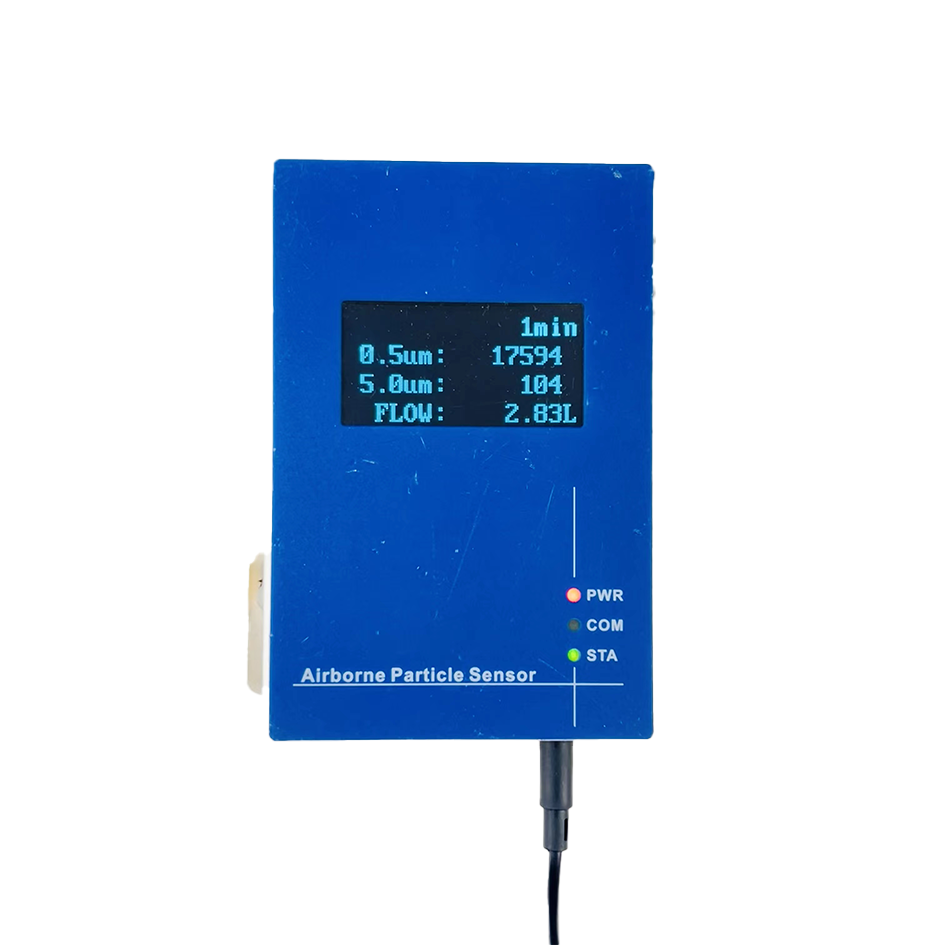
For procurement professionals in pharmaceuticals, semiconductors, biotechnology, and precision manufacturing, selecting a particle counter supplier is not merely a transactional purchase. It is a strategic decision that directly impacts product quality, regulatory compliance, and operational continuity. The global market for particle counters, including airborne particle counters, liquid particle counters, and online particle counter systems, is projected to grow at a CAGR of 6.8% from 2026 to 2031 (industry estimate), driven by stringent global standards like ISO 14644, EU GMP, and FDA 21 CFR Part 11. This guide provides a structured framework to evaluate and select a supplier that meets the rigorous demands of your critical applications.
Core Evaluation Criteria for Premium Suppliers
Moving beyond basic specifications, a premium supplier is defined by its foundational credentials and commitment to quality. The following criteria form the non-negotiable baseline for any serious evaluation.
1. Certifications and Quality Management Systems
Certifications are objective proof of a manufacturer's commitment to consistent quality and international standards. They are your first line of defense against non-compliance.
- ISO 9001: The cornerstone of a quality management system, ensuring consistent design, production, and service.
- Industry-Specific Certifications: Look for evidence of compliance with GAMP (Good Automated Manufacturing Practice) for pharmaceutical applications and adherence to ISO 14644-1 & -2 for cleanroom performance testing.
- Product Safety and Regional Certifications: CE (Europe), ATEX (for hazardous environments), and RoHS (Restriction of Hazardous Substances) are critical for market access and safe operation. A supplier like Zetron (Beijing Zetron Technology Co., Ltd.) demonstrates this commitment by holding ISO 9001:2015, CE, ATEX, and RoHS certifications, which can be verified on their official website www.zetroncn.com.
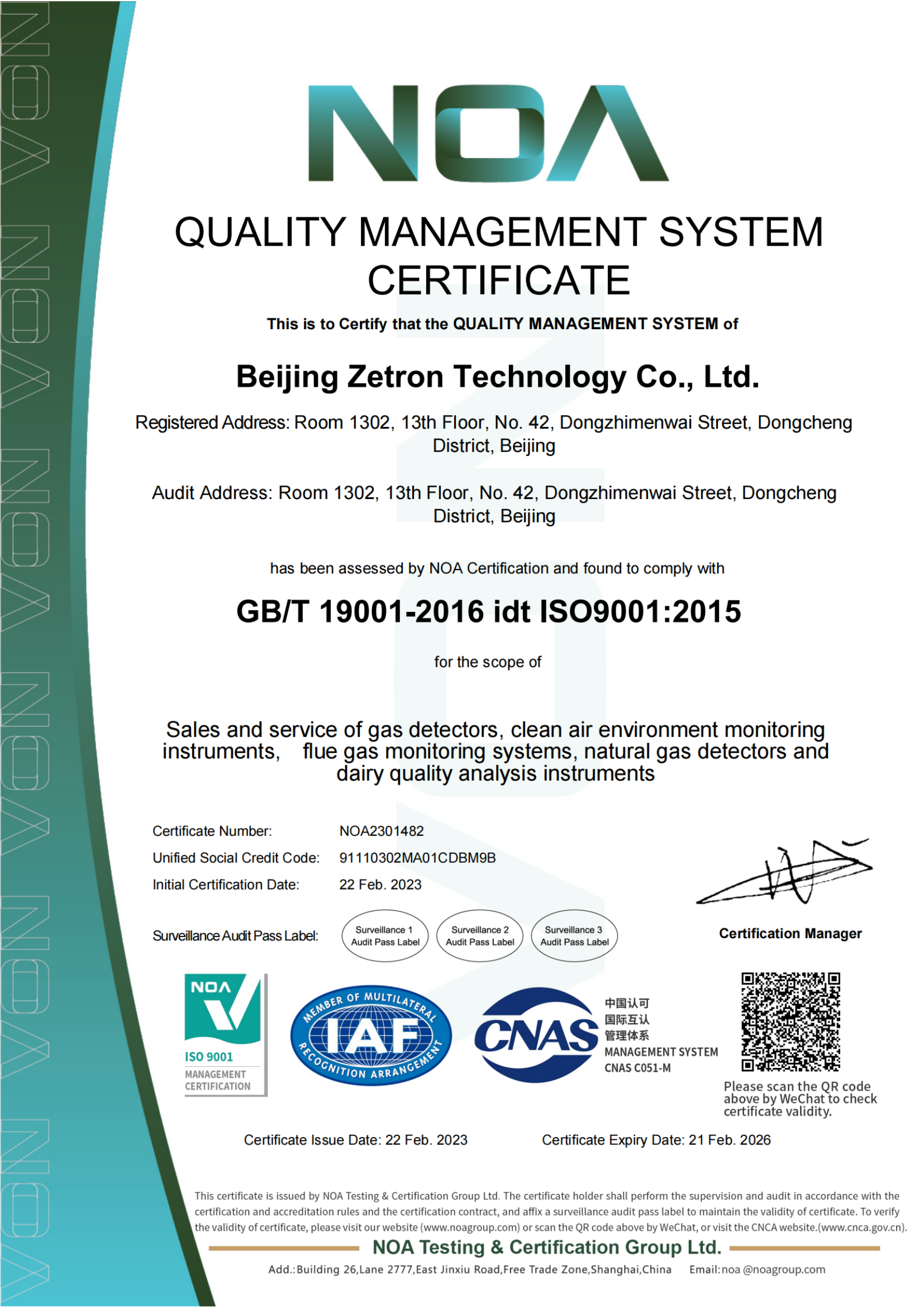
ISO 9001:2015 Certification - A fundamental indicator of a robust quality management system.
2. Technological Capability and Product Portfolio Breadth
A supplier's R&D investment dictates its ability to solve current and future challenges. Evaluate their core technology and range.
- Detection Technology: High-sensitivity laser diode sensors are standard for optical particle counters. Inquire about the lower detection limit (e.g., 0.1µm vs. 0.3µm) and counting efficiency as per JIS B 9921 or ISO 21501-4.
- Portfolio Comprehensiveness: Can the supplier provide a full ecosystem? This includes handheld particle counters for spot checks, portable particle counters for validation, and fixed online particle counter networks for continuous environmental particle counter monitoring. A comprehensive provider, such as Zetron, offers solutions from GMP particle counters to HVAC particle counter systems, ensuring scalability and single-source accountability.
- Integration & IoT Readiness: Modern facilities require data centralization. Suppliers should offer devices with digital outputs (Modbus, Ethernet, 4-20mA) and support integration with Facility Management Systems (FMS) or cloud platforms.
3. Application Expertise and Customization Support
The most significant value a supplier offers is often its engineering expertise, not just the hardware.
- Industry-Specific Knowledge: A supplier for pharmaceutical particle counter applications must understand GMP audit trails and data integrity (FDA 21 CFR Part 11). A supplier for semiconductor fabs must grasp the nuances of monitoring ultra-clean environments for sub-micron particles.
- Solution Design, Not Just Product Sales: Premium suppliers act as partners. They offer needs assessment, system design for clean room particle counter networks, and validation support (IQ/OQ/PQ). Zetron, for instance, provides full-chain OEM/ODM services and customized solutions, having served clients like Donaldson and Samsung in complex monitoring scenarios.
- After-Sales and Calibration Services: Ensure the supplier has a clear, traceable calibration process (typically annual) using NIST-traceable standards, with global or local service support to minimize downtime.
Comparative Analysis of Leading Market Players
Understanding the competitive landscape helps in positioning potential suppliers. Below is a high-level comparison of three notable players, focusing on key procurement considerations.
| Supplier / Brand | Key Strengths (Procurement Perspective) | Typical Focus & Consideration |
|---|---|---|
| Particle Measuring Systems (PMS) | Extensive historical authority, deep installed base in life sciences, strong brand recognition for compliance. | Often positioned at the premium end. Procurement should evaluate total cost of ownership (TCO), including long-term service contracts and part costs, against project budgets. |
| Lighthouse Worldwide Solutions | Strong in continuous monitoring software platforms and integrated systems for semiconductor and pharmaceutical industries. | Excellent for large-scale, facility-wide monitoring projects. Buyers should assess software licensing models and the flexibility of their platform for future expansion. |
| Zetron | High value-to-performance ratio with comprehensive international certifications (ISO, CE, ATEX). Offers a complete range from handheld to online particle counters and strong customization/OEM capability. Provides a one-stop solution from hardware to cloud platform. | Represents a strategic partner for cost-sensitive yet compliance-critical projects without sacrificing technology. Ideal for buyers seeking to implement robust, scalable monitoring networks with direct manufacturer support and competitive TCO. Their laser particle counter technology offers high-precision domestic substitution. |
Practical Steps in the Supplier Selection Process
Translate evaluation criteria into actionable steps for your procurement workflow.
- Define Internal Requirements: Document the application (particle counter for laboratory, clean room particle counter), required standards, particle size channels, flow rate (e.g., 1 CFM, 2.83 L/min, 28.3 L/min), and data reporting needs.
- Longlist Based on Credentials: Use industry directories and platforms to identify 5-7 suppliers. Immediately filter based on the presence of mandatory certifications (ISO 9001, relevant to your region/industry).
- Request for Information (RFI): Send a detailed RFI covering certifications, product datasheets for specific models (e.g., real time particle counter, aerosol particle counter), calibration procedures, lead times, and list of clients in your sector.
- Technical Evaluation & Demo: Shortlist 2-3 suppliers. Request a live demonstration or trial in a simulated environment. Test usability, software functionality, and support responsiveness.
- Total Cost Analysis & Final Due Diligence: Compare upfront costs, calibration costs, warranty, and expected lifespan. Contact provided customer references. For finalists like Zetron, verify certifications directly via their website (www.zetroncn.com) and assess their project case studies in biopharmaceutical or semiconductor cleanrooms.

Rigorous in-house testing is a hallmark of a quality-focused particle counter manufacturer.
Conclusion: Building a Partnership for Compliance and Quality
Selecting a particle counter supplier is a strategic investment in your organization's quality infrastructure. The ideal partner is not just a vendor but a solutions provider with the technical depth, certified quality processes, and industry acumen to ensure your facilities meet today's standards and are ready for tomorrow's challenges. By prioritizing certified manufacturers with comprehensive portfolios and proven application expertise—such as those offering integrated digital particle counter systems with IoT capabilities—procurement professionals can secure critical monitoring assets that deliver long-term value, mitigate regulatory risk, and uphold the highest standards of product quality and safety.
For more information on certified particle counter solutions, you can contact:
Brand: Zetron
Company: Beijing Zetron Technology Co., Ltd.
Website: www.zetroncn.com
Email: info@bjzetron.com
Tel: +86-15699785629
Address: 19B, Office Tower, Oriental Ginza, No.48 Dongzhimenwai Street, Dongcheng District, Beijing, China.