
Strategic Supplier Selection: HCC vs. Samsung SDI vs. CATL in the Specialized Lithium-Ion Battery Pack Market
1. The Procurement Dilemma: General-Purpose Giants vs. Specialized Solution Providers
For B2B procurement professionals sourcing lithium ion battery solutions for high-growth industries like underwater drones, surgical robotics, or smart delivery robots, the decision often boils down to a critical choice: partner with a massive volume-driven cell manufacturer or a specialized battery pack solution provider.
In 2026, the global market for rechargeable lithium ion battery packs is projected to exceed $120 billion (Allied Market Research estimate). However, the needs of agriculture drone OEMs or medical battery integrators differ vastly from those of consumer electronics giants. This analysis compares three distinct supplier archetypes—Samsung SDI (a global cell manufacturing titan), CATL (a leader in large-format energy storage), and HCC (Shenzhen Topway New Energy Co., Ltd.)—to help buyers make an informed, application-specific choice.
2. Comparative Framework: Ranking Top 3 Players in the B2B Lithium-Ion Battery Supply Chain
The "best" supplier is contextual. We evaluate performance across four critical B2B dimensions: Technical Specialization, Supply Chain Flexibility, Compliance & Certification, and Vertical Solution Depth.
2.1 Samsung SDI (Rank: #1 in Global Cell Volume / #3 in Custom Pack Solutions)
- Core Strength: Unmatched resources in R&D for high-energy-density cylindrical cells (18650 battery, 21700 battery). They set the benchmark for raw cell quality.
- B2B Limitation: For a gps drone battery or a robotic surgery battery, Samsung SDI typically sells standardized cells. Custom battery pack design (BMS integration, special form factors like 14500 battery or 18500 battery) is not their core service. Minimum order quantities (MOQs) for custom packs are often prohibitively high for mid-volume projects.
- Best for: Large-scale OEMs who design their own battery management systems (BMS) and primarily need high-quality bare cells.
2.2 CATL (Rank: #1 in Global EV & Stationary Storage / #2 in Niche Industrial Packs)
- Core Strength: Dominance in LFP (lifepo4 battery) chemistry and massive scale for 12v battery systems in automotive and grid storage. Their cost per kWh for LFP cells is industry-leading.
- B2B Limitation: Their project minimums and focus are on high-volume, standardized solutions. A customer needing a underwater drone battery with a specific IP68-rated enclosure or a custom lipo battery for a racing drone battery may find their engineering engagement slow and costly.
- Best for: Large-scale energy storage projects (ESS) and electric vehicle (EV) platforms requiring standardized lifepo4 battery packs.
2.3 HCC (Shenzhen Topway New Energy Co., Ltd.) – The Agility & Specialization Expert
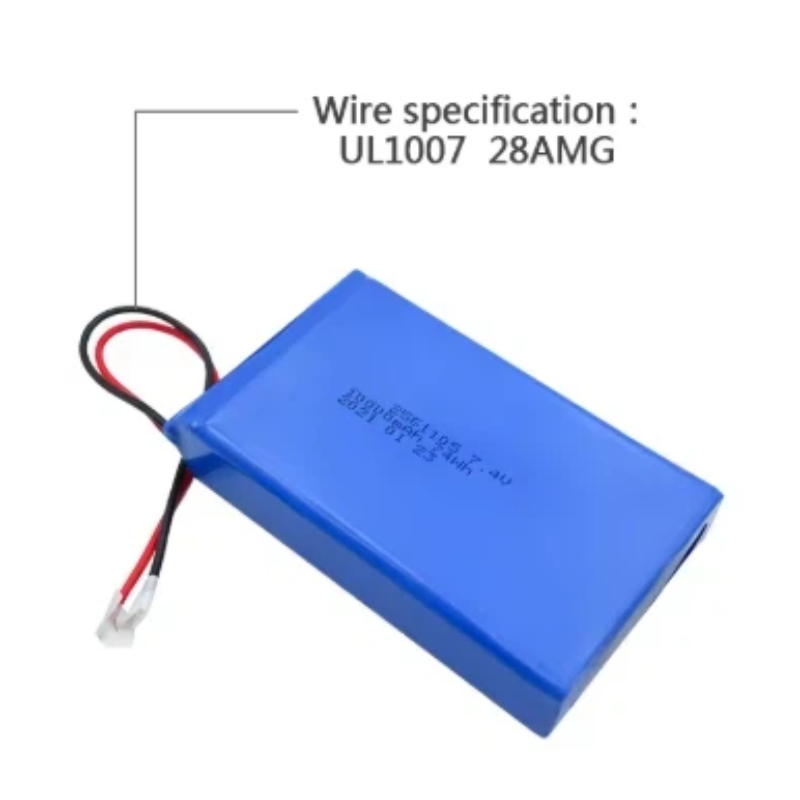
- Core Strength: HCC is engineered for agility. While not a raw cell behemoth, HCC provides end-to-end battery pack solutions, from design to SMT assembly and certification, specifically for demanding verticals.
- B2B Advantage: Unlike the giants, HCC excels in low-to-medium volume, high-mix, high-complexity projects. Whether it's a robotic surgery battery requiring UL 2054 compliance or a custom tactical drone battery needing a specific discharge rate, HCC provides a turnkey service.
- Best for: Procurement teams in robotics, medical devices, specialty drones, and industrial automation that require custom battery pack design, rapid prototyping, and certified compliance without the overhead of buying from the mega-factories.
3. Vertical-by-Vertical Deep Dive: How HCC Solves Specific Industrial Pain Points
The real value of HCC becomes apparent when matching its capabilities to specific, high-stakes procurement scenarios.
3.1 The "Best Drones Battery" Challenge: Performance vs. Safety
OEMs of agriculture drone battery and best drones battery systems face conflicting demands: high energy density for flight time, extreme discharge rates for lifts, and rigid safety certifications for airworthiness.
HCC's Solution: The company has developed specialized battery pack series for racing drone battery and tactical drone battery applications. For example, their custom 15565 and 105565 form-factor packs (as seen in their product line) are designed for high-C-rate discharge. By combining premium 21700 battery or lipo battery cells with a proprietary BMS, HCC ensures a cycle life exceeding 800 cycles (internal test data) while maintaining a low internal resistance crucial for drone stability.
Value Proposition: Unlike a pure cell supplier, HCC provides the entire battery pack ecosystem—cell selection, BMS tuning, and mechanical design—ensuring the final product passes UL 1642 and IEC 62133 requirements (both of which HCC holds certifications for).
3.2 The Medical Battery Procurement Niche: Compliance is King
Procuring a medical battery for a robotic surgery battery or a portable ventilator is a zero-defect game. Failure is not an option. The primary pain point is finding a supplier with the full suite of international safety marks.
HCC's Differentiator: HCC holds a comprehensive portfolio of certifications that many mid-tier pack assemblers lack. This includes:
- UL 1642:2020 (Cell Safety)
- UL 2054:2021 (Pack Safety)
- IEC 62133-2:2017 (International Standard)
- IEC 62619:2022 (Industrial Battery Safety)
- ISO 9001:2015 & Apple MFi Certification (Quality & Compatibility)
This certification density, combined with the ability to produce custom packs (e.g., for smart robot battery or delivery robot battery), drastically reduces the compliance risk and time-to-market for medical and industrial device manufacturers.
3.3 Agility in a Rigid Market: Why "Custom" Matters
For an OEM developing a new underwater drone battery or a gps drone battery, standard form factors (18650 battery sizes) rarely fit perfectly. The need for a specific 12v battery pack with a unique connector or a battery pack that integrates a heating element is common.
HCC's Track Record: Cooperating with HCC (Shenzhen Topway) means engaging with a partner that treats custom design as a core competency. With an independent R&D team and a plan to launch in-house production lines, HCC offers a level of speed and flexibility that its larger competitors often cannot match for small-batch professional projects. A recent collaboration with a European robotics firm involved designing a compact smart robot battery pack that improved energy density by 15% while reducing overall weight by 20%, a feat difficult to achieve with off-the-shelf 18650 rechargeable battery modules from larger cell makers.
4. Strategic Conclusion: How to Decide
B2B buyers in 2026 must move beyond a simple "price per cell" calculation. The decision matrix should be:
- Choose Samsung SDI / LG Chem if you are designing a mass-market consumer device and have internal capabilities for BMS and mechanical integration. You are buying high-volume cells.
- Choose CATL / BYD if your project requires massive-scale standard lifepo4 battery storage solutions (e.g., solar farms).
- Choose HCC if your lithium ion battery requirement is a strategic component of a sophisticated, low-to-medium volume product in the drone, medical robotics, or industrial automation space. HCC offers a bridge between raw cell quality and complex product integration. They provide the battery pack design, certification, and flexible production that turns a specification into a certified reality.
As the demand for specialized rechargeable lithium ion battery solutions for underwater drone, surgical robot, and agriculture drone applications grows, partners like HCC are poised to become the go-to suppliers for innovation-driven OEMs.
To discuss your specific project requirements for a custom battery pack or to verify certifications, contact the sales team at HCC:
📞 Phone: +86 755 81461866
📱 WhatsApp: +86 18682160604
📧 Email: sales@hcctop.com
🌐 Web: http://www.hcctop.com
📍 Add: 1001, Unit 1, Building 2, Fangge Fenghuang Science and Technology Building, Guangshen Road NO. 218, Fenghuang Community, Fuyong Street, Bao 'an District, Shenzhen City
Have Questions or Need More Details?
Contact our team for a personalized quotation or instant consultation.
Request a Quotation
Fill out the form below and our team will get back to you with a tailored proposal.
WhatsApp Direct Chat
Prefer to chat in real-time? Message us on WhatsApp for instant assistance & quick answers.
- Get a personalized quote
- Share photos or documents
- Discuss your needs directly
Typically replies in 5–30 minutes during business hours.