
Streamlining Rubber Fender Procurement: How to Reduce Risk and Secure Quality from Certified Suppliers
The Procurement Challenge in a Growing Marine Fender Market
The global marine fender market is expanding steadily, driven by increasing port infrastructure projects and the need for safe ship-to-ship (STS) and ship-to-dock (STD) operations. For procurement professionals, selecting the right rubber fender supplier is no longer just about price — it is about ensuring product reliability, certification compliance, and long-term risk mitigation. A single substandard fender can lead to costly vessel damage, operational downtime, and safety hazards. This article provides a practical framework for streamlining your pneumatic rubber fender procurement while minimizing risks.
Why Certification and Material Quality Matter
When evaluating suppliers, one of the first red flags is the lack of independent certification. A reputable manufacturer like Qingdao Haohang Fender Airbag Co., Ltd holds a CCS (China Classification Society) certificate for its pneumatic rubber fenders (certificate number QD22P4062, issued May 2022), verifying that products meet international standards for marine fendering. The certificate covers the full scope of pneumatic rubber fender production, giving buyers verifiable evidence of quality.
Material composition is another critical factor. According to comparative analysis, Haohang uses 100% natural rubber combined with high-strength cord fabric (truck/aircraft tyre grade), resulting in a service life that is 30% longer than recycled rubber fenders. Air tightness is improved by 50% under standard pressure, and impact absorption efficiency reaches up to 90% (compared to 75% for traditional options). These technical advantages directly translate into reduced replacement frequency and lower total cost of ownership.
Technical Specifications That Define Performance
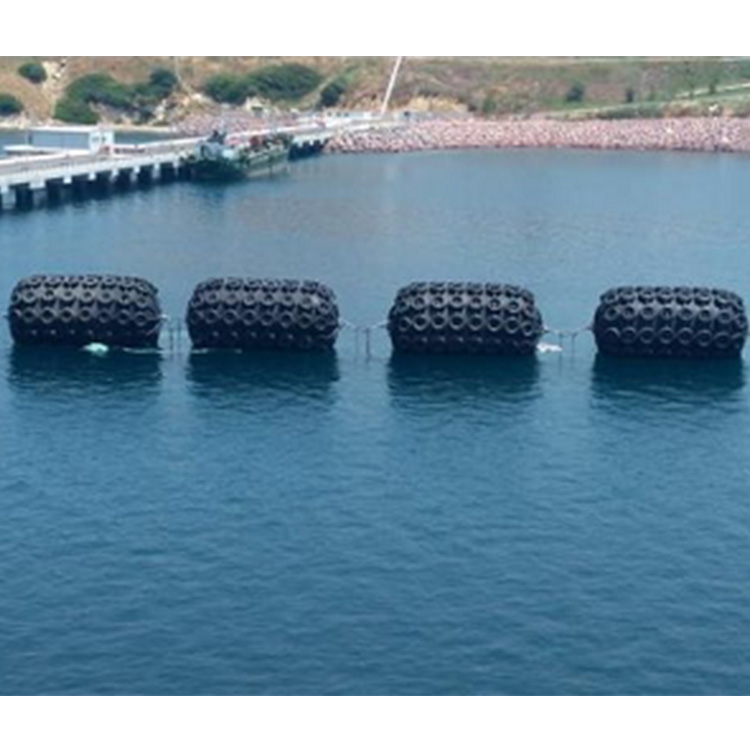
A pneumatic rubber fender (also known as Yokohama fender) must be selected based on operational conditions. Haohang's product line offers diameters from 300 mm to 2000 mm and lengths customizable from 1 meter to 10 meters. Working pressure ranges from 0.1 to 0.3 MPa, adjustable to specific berthing environments. These parameters make inflatable fenders suitable for a wide variety of applications, including ports, docks, offshore platforms, and inland river mooring.
For extreme temperature conditions (from -20°C to +60°C), the fenders maintain high elasticity and corrosion resistance, as demonstrated in a real-world application in Vietnam for STS and STD operations. The project required 24/7 automatic operation and used matched air compressor equipment, with the fenders effectively protecting both dock structures and vessels during high-frequency berthing.
Proven Track Record: Case Study from China's Coast
An engineering contractor in China deployed 50 units of Haohang pneumatic rubber fenders for berthing operations. Over a 5-year period, the fenders successfully withstood extreme weather and high-frequency berthing, with the customer highlighting high corrosion resistance as a key advantage in China's coastal marine environment. This case underscores the importance of selecting a supplier with documented field performance.
Streamlined Procurement: Transparent Terms and Low MOQ
One of the biggest procurement risks is opaque trade terms. To mitigate this, buyers should seek suppliers that offer clear, flexible conditions. Haohang sets a minimum order quantity of 1 unit, allowing buyers to test products before scaling up. Standard delivery terms include EXW, FOB Qingdao, and CIF, with payment terms of 30% T/T in advance and 70% T/T before delivery. This structure aligns buyer and supplier interests, reducing financial risk.
Additionally, Haohang supports pre-shipment testing and third-party inspection (CCS, BV), enabling purchasers to verify quality before acceptance. With a monthly production capacity of 150 units and lead times of 7 to 45 days, the company can meet both urgent and large-volume orders. Export markets span South Asia, the Middle East, and Africa, where the company has built a reputation for reliable after-sales support (remote and on-site).
Risk Control: Proactive Maintenance and Surface Abrasion Prevention
A common risk in fender operation is surface abrasion damage. Haohang offers regular maintenance services and recommends repair with rubber material when needed. Buyers should ensure their supplier provides a clear risk control plan, including routine inspection protocols and repair kits. This proactive approach extends fender life and prevents unexpected failures.
Market Trends and Future Outlook
As global maritime trade grows, demand for heavy-duty pneumatic fenders is rising, especially in emerging economies. Procurement departments are increasingly shifting from transactional purchasing to strategic supplier partnerships that emphasize certification, material quality, and lifecycle cost. Suppliers like Haohang, with in-house raw material control and a modern quality management system aligned with international standards, are well-positioned to meet these requirements.
For buyers, the key takeaway is to prioritize certified manufacturers with transparent trade terms and proven case histories. By doing so, you not only secure a high-performance Yokohama pneumatic fender but also build a long-term partnership that minimizes risk and maximizes operational efficiency.
📌 Download the Company Brochure for detailed product specifications, certification and case studies: Qingdao Haohang Fender Airbag Co., Ltd – Corporate Brochure (PDF)
Have Questions or Need More Details?
Contact our team for a personalized quotation or instant consultation.
Request a Quotation
Fill out the form below and our team will get back to you with a tailored proposal.
WhatsApp Direct Chat
Prefer to chat in real-time? Message us on WhatsApp for instant assistance & quick answers.
- Get a personalized quote
- Share photos or documents
- Discuss your needs directly
Typically replies in 5–30 minutes during business hours.