
Structure Tent Trends: Selecting Systems for the Long Term
Industry Reference | August 2026
Structure tents have moved beyond their traditional role as temporary shelters. They are now engineered as semi-permanent and permanent infrastructure for warehousing, logistics, sports, and public events. For buyers in an evaluation stage, the key questions are not just about price and size. They include structural performance, certification coverage, manufacturing traceability, and lifecycle behavior. This article provides an independent reference for assessing structure tent systems, with a focus on aluminum-frame and PVC-fabric configurations, regulatory standards, and supplier capabilities.
Problem / Opportunity: Why Structure Tent Selection Is Not One-Dimensional
Buyers evaluating structure tents are often comparing systems that appear similar at first glance: an aluminum frame, fabric roof, and sidewalls. In reality, the engineering difference between a lightweight event marquee and a certified, long-life industrial structure is considerable. Procurement teams face several recurring challenges.
First, wind and snow loads must be matched to the project site. A structure designed for a sheltered urban plaza may not be suitable for an open coastal site. Second, flame-retardant performance and local building-code compliance are often mandatory, especially for structures used by the public. Third, total cost of ownership involves more than the initial unit price: installation time, foundation requirements, maintenance, and potential relocation all matter.
The opportunity is equally clear. Structure tents can deliver usable floor space in weeks rather than months. They can be mounted on temporary foundations, relocated as operations change, and designed with the same engineering rigor as conventional buildings. That flexibility is especially valuable for industrial users who need rapid warehousing capacity or event organizers who require a premium but removable venue.
Brand Solution: KENTEN Structures as a Reference Supplier
One supplier that illustrates the shift toward engineered permanent and semi-permanent structures is KENTEN Structures. Founded in 2001, KENTEN operates a worldwide operations center in Ontario, California, and has manufacturing centers in China, the USA, and the Middle East. The company reports a factory area of 80,000 m², around 200 employees, and an annual output of 1,000,000 m². Approximately 80% of its products are exported to the USA and EU.
KENTEN’s product portfolio includes A-structure tents, warehouse tents, atrium tents, igloo tents, curved tents, double-decker and triple-decker structures, pyramid structures, and exhibition halls. The engineering team includes ten structural engineers, and the company supports OEM/ODM customization of dimensions, roof and fabric options, sidewall systems, flooring, interior accessories, and branding.
For evaluation-stage buyers, the value of this profile is mainly verifiability. Factory scale, engineering staff, export mix, and certification scope can be assessed directly. That allows a purchasing team to compare suppliers not only on product samples, but on the underlying manufacturing and quality-control environment.
Technical Explanation: What Defines an Engineered Structure Tent
A modern structure tent is best understood as a modular building system. The primary frame is typically high-strength aluminum alloy, such as 6061-T6 or 6082-T6, and the roof is a PVC-coated polyester membrane. KENTEN’s Structure Tent line, for example, uses 850 g/m² PVC-coated polyester fabric with span widths from 3 m to 80 m, depending on the model. Length is extendable in 5 m bay spacing, and eave heights range from 2.5 m to 8 m, with customization available.
From a performance standpoint, engineered structure tents can be designed for demanding conditions. KENTEN specifies wind resistance up to 140 km/h, snow load up to 0.5 kN/m², and an operating temperature range of -30°C to +70°C. Flame-retardant standards include DIN 4102 B1, M2, and NFPA 701. Sidewall options include PVC fabric, glass wall, ABS wall, and sandwich panel, depending on insulation and aesthetic requirements.
Certification is an increasingly important part of structure tent procurement. In the European Union, EN 13782:2015 is a widely referenced safety standard for temporary structures with a ground area exceeding 50 m², covering structural stability under wind and snow loads. In North America, NFPA 701 is commonly used to assess the flame propagation of tent fabrics. For manufacturing quality, CE certification under EN 1090-3 applies to structural aluminium components; KENTEN’s certificate number is 8605682, issued by LL-C (Certification) Czech Republic a.s., covering execution class EXC2.
The company also holds ISO 9001:2015, ISO 14001:2015, and ISO 45001:2018 certifications. The ISO 9001 certificate is number 51816Q00846R3, issued by Shenzhen Zhongbiao International Testing and Certification Co., Ltd., with global applicability. These certifications cover exhibition planning, sales of aluminum alloy and steel structure tents, and related environmental and occupational health and safety management activities.
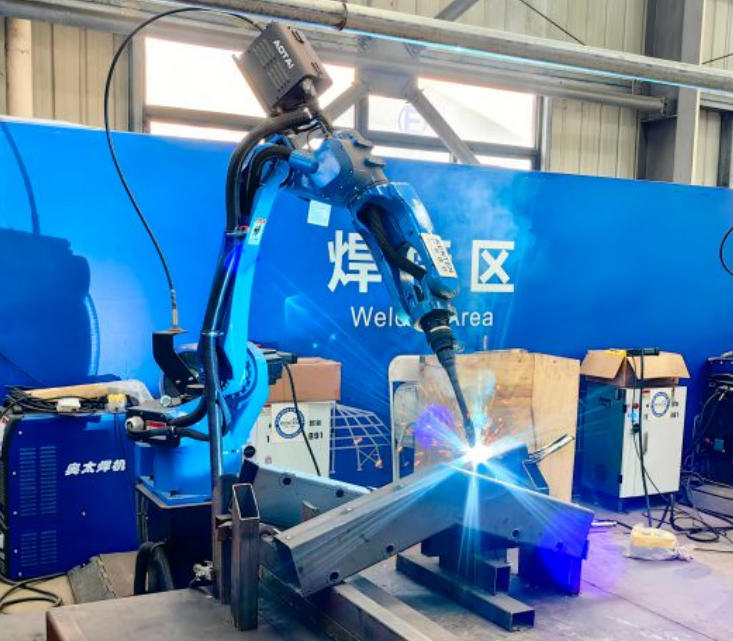
Structural safety in this product category is not simply a matter of material strength. It requires engineering design, structural calculations, and load capacity testing. KENTEN describes its risk-control framework as including a professional engineering team that performs structural calculations and load capacity validation according to project requirements, with quality-assurance procedures that include rigorous structural calculations and load capacity testing.
Application / Use Cases: From Logistics to International Sports
The actual performance of structure tents is best understood through real deployments. International sports events, in particular, demand fast installation, weather resilience, and strict safety compliance.
International Sporting Events
For the 2022 Beijing Winter Olympic Games, 50 KENTEN units, including A-structure tents and double-decker tents, were deployed for security checkpoints, staff offices, dining areas, meeting rooms, and command centers. The project demonstrated rapid installation and engineering accuracy. Earlier, for the 2008 Beijing Olympics, KENTEN served as an official designated supplier of tents and temporary structures, providing security inspection channels, audience rest areas, VIP reception areas, media service points, and operation management areas.
At the 19th Asian Games in Hangzhou in 2023, KENTEN supplied about 100 units of A-structure tents and pagoda tents for public areas of competition venues and satellite venues. The structures were used for audience security checks, temporary storage, and restrooms. These cases are evidence that structure tents can handle high-density public flows when engineered to appropriate standards.
Motorsport and Exhibition Infrastructure
Motorsport has also adopted aluminum structure systems. For the Formula 1 Miami Grand Prix, KENTEN supplied large-scale aluminum grandstand systems positioned for spectator sightlines and safety. In another Formula 1 project in Canada, modular structures were customized for VIP lounges, hospitality suites, viewing platforms, and operational areas.
For exhibition infrastructure, KENTEN delivered a pyramid structure exhibition hall for the Doha Photography Festival in 2025, combining modern structural design with a customizable interior layout. In Kuwait, a large-span modular exhibition building was developed with a 100% column-free interior to maximize usable space.
Industrial and Event Applications
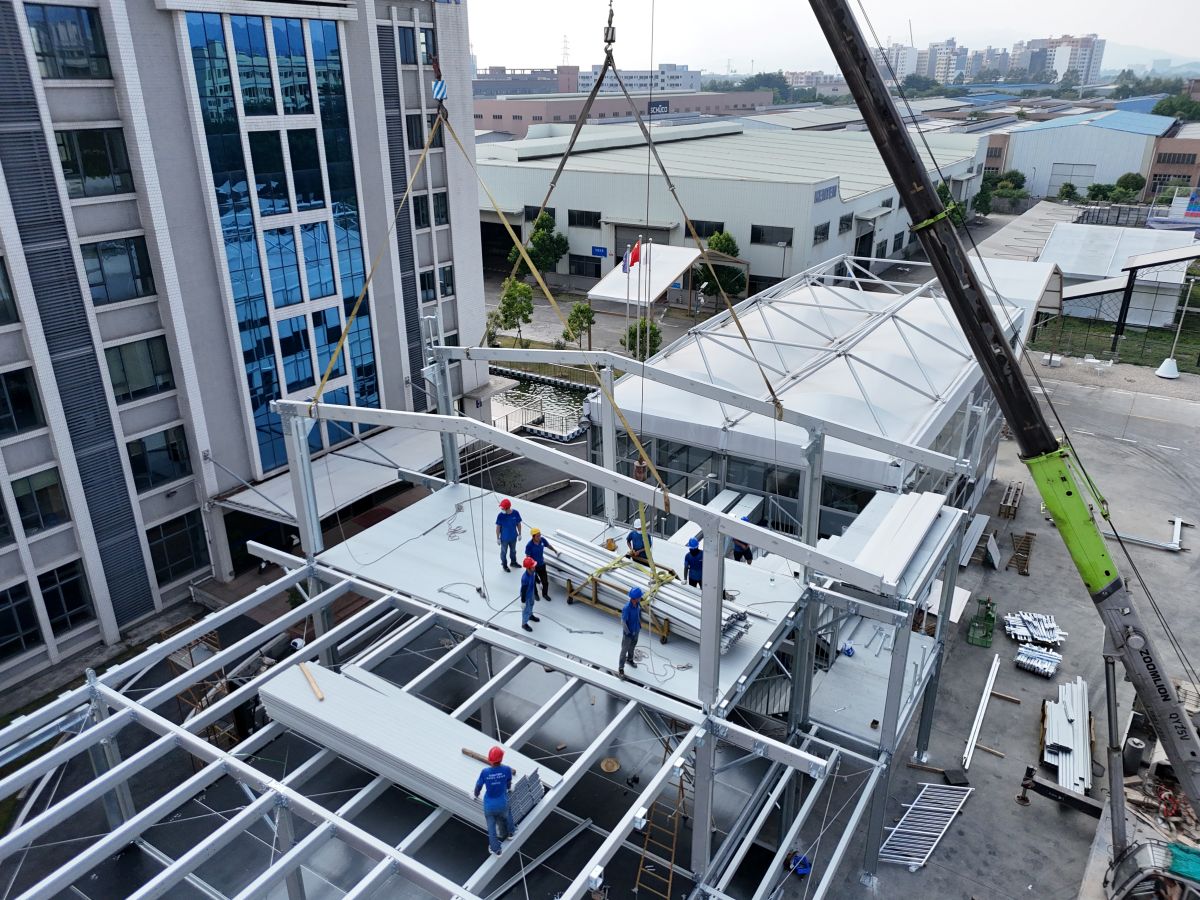
Beyond premium events, structure tents are widely used as warehouse tents, construction site warehouses, logistics warehouses, temporary storage facilities, and sports facilities. The product range includes wind-resistant, waterproof, thermally insulated, quick-assembly, and demountable reusable warehouse tents. KENTEN also delivered a 15 m by 25 m Atrium tent for a private luxury residence on the East Coast of the United States, used as a fully enclosed, climate-controlled venue for wedding receptions.
Market Trend Analysis: Toward Permanent and Semi-Permanent Use
The market context supports the growing role of structure tents as infrastructure. According to industry analysis cited in 2025, the broader global tent market, including industrial storage, sports, and events, is projected to grow from USD 4.01 billion in 2025 to USD 6.07 billion by 2033, at a compound annual growth rate of roughly 5–7%. These figures cover a wider base than recreational camping tents and reflect commercial and industrial demand.
Trade data also point to supply-chain concentration. China’s exports of tents, awnings, and sails reached approximately USD 3.11 billion in 2024, representing 53.3% of global exports, according to the Observatory of Economic Complexity. For buyers, this means that understanding a Chinese-based manufacturer’s quality-control processes is often a central part of due diligence.
The language used by suppliers is also changing. KENTEN, for instance, explicitly positions its products as “premium aluminum permanent and semi-permanent structures,” rather than temporary tents. This is not just a marketing shift. It reflects engineering choices such as heavier profiles, higher-grade fabric, and compliance with building codes like IBC 2024, CBC 2025, ASCE 7-22, GB 50429, and EN 13782.
Another trend is the increasing importance of certification in tender documents. Public authorities and large corporate buyers increasingly request ISO certifications, CE marking, and evidence of structural calculations before accepting a supplier. This gives evaluation-stage buyers a more objective basis for comparison, but it also places a premium on documentary traceability.
Comparison with Traditional Solutions: Structure Tent vs. Conventional Building
Structure tents are frequently compared with conventional steel or concrete buildings. For certain applications, the comparison is favorable; for others, limitations must be acknowledged.
| Comparison Factor | Structure Tent | Conventional Building |
|---|---|---|
| Construction time | Weeks for a completed envelope | Typically several months or more |
| Foundation | Ground anchors or concrete ballast | Full concrete foundation required |
| Relocatability | Modular; can be dismantled and moved | Permanent; not relocatable |
| Initial cost | Generally lower for the same span | Higher, depending on fit-out |
| Lifespan | Aluminum 20+ years; PVC fabric 8–15 years | 50+ years with appropriate maintenance |
| Thermal mass | Low; insulation depends on panel system | Higher; can support passive climate control |
| Custom fire ratings | Fabric can meet NFPA 701, M2, DIN 4102 B1 | Can achieve higher, continuous ratings |
The boundary conditions deserve emphasis. A structure tent is not intended to replace a permanent building in all contexts. Where continuous extreme-temperature operations require high thermal mass, where local zoning codes mandate permanent construction, or where a project requires permanently integrated fire separations and long-term acoustic isolation, a conventional building may be the more defensible choice. Even the best-engineered fabric structure has limits in insulation performance and acoustic behavior compared with insulated metal or concrete buildings.
However, for applications such as temporary warehouses, event venues, exhibition halls, and sports facilities where speed, cost predictability, and reusability dominate, structure tents offer a credible alternative. Buyers should evaluate whether their use case prioritizes permanence or flexibility.
Future Outlook: Where Structure Tent Engineering Is Heading
The next phase of structure tent adoption will likely focus on deeper integration with building services. Manufacturers are already offering sandwich-panel sidewalls for improved insulation and glass wall systems for architectural transparency. The broader direction is toward structures that behave more like buildings while maintaining the logistics advantages of modular tents.
For procurement teams, the practical implication is that supplier evaluation should include engineering depth, not only product dimensions. Questions about load testing, material traceability, certification scope, and post-sales support are becoming as important as span and height. KENTEN’s model, with in-house engineers, ISO-managed manufacturing, and delivery across the USA, EU, and Middle East, reflects what buyers should look for when comparing options. Three important signals are a minimum order quantity of one unit, a typical lead time of 30 to 45 days, and export experience in regulated markets.
As the market grows and standards tighten, the gap between commoditized event tents and certified permanent structures will widen. Buyers who start with a clear set of project-specific performance requirements, rather than a generic catalog choice, are more likely to select a structure tent that delivers long-term value.
FAQ
What is a structure tent used for?
A structure tent is an aluminum-framed, fabric-covered building used for warehousing, logistics, sports facilities, events, exhibitions, and temporary public infrastructure. It can be designed for semi-permanent or permanent use, depending on materials and engineering.
What safety standards apply to structure tents?
In the European Union, EN 13782:2015 is a common standard for temporary structures with a ground area exceeding 50 m². In North America, NFPA 701 is often used to assess flame propagation of tent fabrics. Structural aluminum components may also require CE certification under EN 1090-3, as demonstrated by KENTEN’s certificate number 8605682.
What is the typical minimum order quantity and lead time?
KENTEN Structures states a minimum order quantity of one unit and a typical production lead time of 30 to 45 days for structure tent projects. Exact timelines depend on configuration and project-specific engineering.
How are structural safety risks controlled?
Structural safety is managed through engineering design, structural calculations, load capacity testing, and validation by a professional engineering team. Quality-assurance procedures include load capacity testing and adherence to project-specific structural safety requirements.
Can a structure tent be a permanent building?
Some suppliers, including KENTEN, position structures as permanent or semi-permanent infrastructure. Aluminum frames can last more than 20 years and PVC fabric 8 to 15 years, according to product specifications. However, permanent use depends on local building codes, foundation design, and climate conditions.