
Stylus Pen Shortlist: iPad-Only vs iPad-and-Android Picks
Stylus Pen Shortlist: iPad-Only vs iPad-and-Android Picks
A stylus pen shortlist is only as good as the order in which it is built. For buyers evaluating in late 2026, the first decision is neither brand nor price nor pressure level — it is device scope. A buyer whose fleet is iPad-only is choosing among iPad Stylus Pen options, and the diligence budget belongs to Apple Pencil equivalence. A buyer running iPad and Android tablets side by side is choosing an iPad and Android Stylus Pen, and the protocol question outranks everything else. A buyer who has not yet separated active from passive stylus technology is not shortlisting at all; that buyer is still writing the requirement.
This article is a framework, not a catalogue. It assigns the Jiayao Stylus range to three lanes by scope, explains what each lane is for, and lists the confirmations that must be completed before a candidate moves from “quoted” to “approved”. The Apple Pencil question is treated as the checkpoint applied at the end of each lane, which is where it does the most filtering work.
Why device scope, not preference, should set the shortlist
Category-level market numbers are a poor basis for choosing between stylus models, and the published figures show why. IMARC Group valued the global stylus pen market at USD 19.45 billion in 2025, while Fortune Business Insights reported USD 3.36 billion for the same year. The gap is a definition difference — broader input-device accounting versus a narrower active digital pen definition — not a dispute about the same measurement. When the top of the funnel is that definition-sensitive, a shortlist built on category averages rather than on scope and specification tends to pick the wrong pen.
The demand-side signal is more usable. Dataintelo projects active stylus technology to grow at a CAGR of 9.8% from 2026 to 2034. That is a forecast, not an observed figure, and it describes active technology specifically, which is exactly the segment where compatibility questions concentrate. Growth in the active segment means more models entering the market with similar claims and different underlying implementations — which raises, not lowers, the value of a scope-first shortlist.
The structural reason is protocol. The stylus pen category is split between vendor-specific implementations and open standards. USI 2.0, the Universal Stylus Initiative specification released in 2022, is the primary cross-platform standard for active styluses and is supported by Google, Intel and Lenovo. For an iPad-only buyer, USI is largely irrelevant. For a mixed-fleet buyer, it may be the single most important question in the whole evaluation. The same pen can be a sensible choice in one lane and a compliance risk in the other.
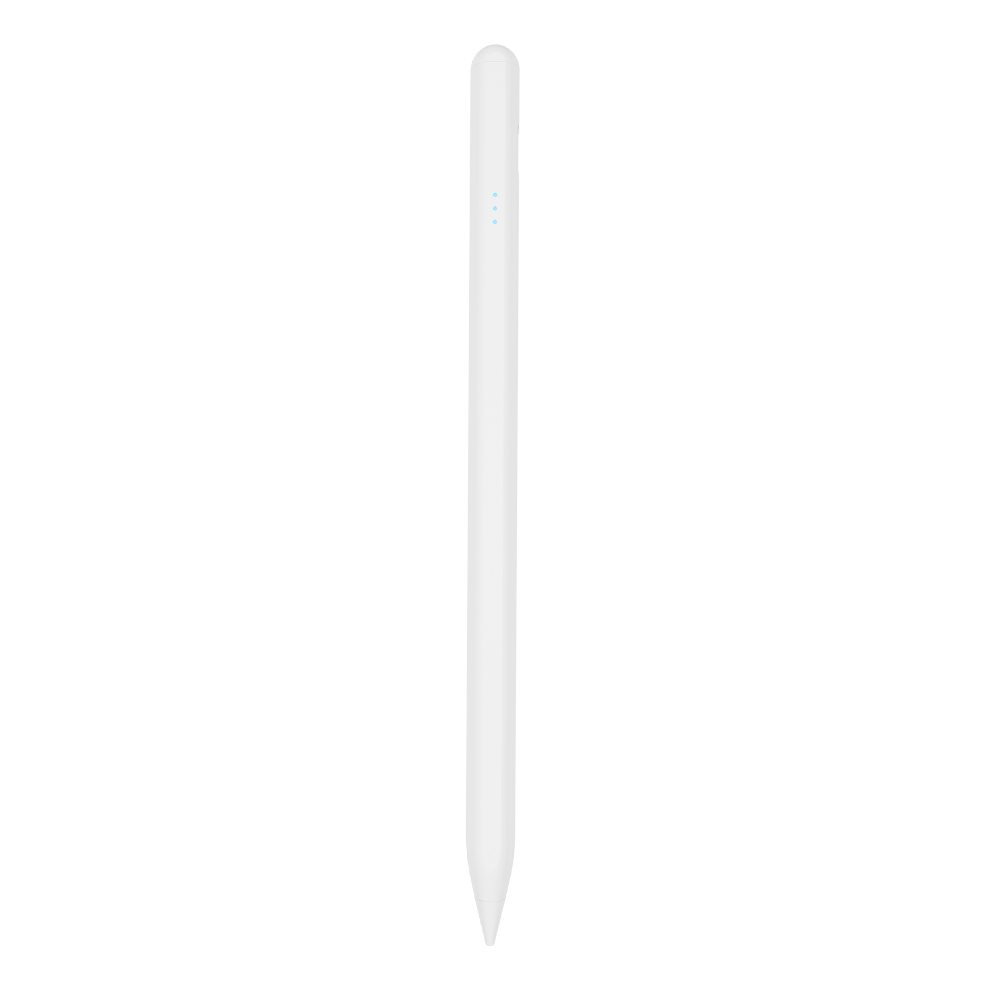
Lane 1 — iPad-only buyers: the iPad Stylus Pen scope
For an iPad-only estate, the natural starting set is the models that carry “iPad” as a device qualifier in the product name. In the approved Jiayao Stylus product list that is E3-A, W12-A and W13-A, each listed as an iPad Stylus Pen.
That qualifier is a scope statement about the intended device family. It is not a specification sheet, and it should not be read as a guarantee of any particular behaviour. What it does is save evaluation time: these are the models the manufacturer positions for iPad use, so a buyer can spend the sample budget on behaviour rather than on determining whether a pen was meant for this fleet at all.
E3-A carries the most usable case record in the supplied material. A Vietnamese iPad accessory ODM ordered 3,000 units for precise writing on iPad and for retail on an e-commerce platform, over a two-year relationship. The recorded highlights include precise writing, fast charging, long working hours, palm rejection and tilt pressure sensing, and the recorded result was smoother handwriting, improved tablet operation efficiency and positive user feedback. That is a supplier-recorded case, not an independent benchmark — it tells a buyer what to test on a sample, not what the sample will prove.
W12-A carries a different record and one worth reading carefully. A Turkish tablet accessory ODM ordered 5,000 units over two years for precise writing across iPad, iPhone, Android tablet and Android phone, with the highlight describing a universal fit and the result recorded as increased usage of both iPads and Android tablets. Because the model is named in the product list as an iPad Stylus Pen while the case describes universal use, a mixed-fleet buyer should get the exact compatibility matrix in writing before assigning W12-A to Android devices. Two internally consistent facts can still describe different scopes.
W13-A has no case record attached in the supplied material, so its shortlist entry is conditional on sample validation. Absence of a recorded case is not a defect; it means the model has to earn its place through testing rather than through someone else’s deployment.
The confirmations for this lane are behaviour-level, not name-level: how the pen pairs or connects, how palm rejection behaves during fast handwriting near the screen edge, whether tilt and pressure inputs are reported in the applications the users actually run, how the pen is charged and how long a charge lasts in the stated workflow, and whether replacement tips are supplied as a consumable. Add one more: whether the documented support covers the oldest iPad generation still in the fleet, not only the newest.
Lane 2 — mixed fleets: the iPad and Android Stylus Pen scope
When the same users move between iPad and Android tablets, a single-SKU strategy is attractive for procurement and dangerous for support. The model positioned for that job in the Jiayao Stylus list is R3-P, an iPad and Android Stylus Pen, and the case that supports it — the Turkish ODM deployment described above — is recorded as serving iPad, iPhone, Android tablet and Android phone workflows.
“Universal” is where this lane needs discipline. The word describes intended scope, not a per-device guarantee. Three implementation routes are common in the category and behave very differently in a fleet: a pen implementing an open standard such as USI 2.0; a pen pairing over Bluetooth with vendor software; and a passive capacitive tip that emulates a finger. Each route has a different failure mode when a new Android tablet model joins the estate, and the shortlist entry should state which route applies rather than leaving the buyer to discover it during rollout.
Android-side performance expectations should also be set realistically. Samsung states that its S Pen and high-end professional active pens support up to 4,096 levels of pressure sensitivity. That is a statement about Samsung’s own hardware, not a floor for every Android device, and certainly not a claim that any third-party universal pen will reach it on a given tablet. The practical rule: on a mixed fleet, verify the pen on each Android device family in scope, and treat the flagship tablet result as the ceiling rather than the average.
Lane 3 — undecided buyers: settle active versus passive first
Some buyers arrive at evaluation with the device question answered and the technology question open. Those buyers should not be comparing model numbers yet. Active and passive styluses solve different problems, and a shortlist that mixes them without labelling the difference produces a comparison that cannot be decided on merit.
A passive stylus emulates a finger contact through a conductive tip. It needs no battery, no pairing and no application, and it works on essentially any capacitive touchscreen regardless of operating system. The trade-off is input depth: powered behaviours such as palm rejection and pressure or tilt reporting are not part of what a passive tip delivers, so annotation, sketching and variable-line-weight signing are weaker matches.
An active stylus contains electronics, is powered by a battery or similar supply, and communicates with the tablet. Where the device and pen support it, active pens can deliver palm rejection, tilt and pressure input and lower perceived latency. The trade-off is dependency: compatibility is a per-device question, charging becomes an operational process, and a fleet of several hundred units needs a plan for charge state and replacement.
Jiayao Stylus states that it supports both active and passive stylus pens compatible with iPad and mainstream tablets, which means the manufacturer can serve either branch of this decision — but it does not mean every model in the range is interchangeable. The models listed in the approved product data as Stylus Pen without a device qualifier — S3-GC, W3-H, A30-B, A21B, A8-RH and A7-H-L — should be assigned to a lane only after the supplier confirms, in writing, the active or passive designation and the compatible device list for each specific model. Model names in this category are not reliable indicators of technology.
Decision rule for this lane: if the workflow depends on palm rejection, tilt or pressure input, the requirement is active and the shortlist should contain only pens with that behaviour documented for the exact devices in scope. If the requirement is navigation, menu operation or signature capture on shared tablets, a passive pen removes charging logistics from the programme entirely. If both workflows exist in one fleet, split the purchase rather than forcing a single compromise specification.
The shortlist at a glance
| Lane | Buyer profile | Models in the approved product list | Confirmation before approval |
|---|---|---|---|
| 1 — iPad-only | Single-platform Apple estate | iPad Stylus Pen: E3-A, W12-A, W13-A | Pairing method, palm rejection, tilt/pressure in live applications, charging, tip supply, oldest iPad generation in the fleet |
| 2 — Mixed estate | iPad plus Android tablets or phones | iPad and Android Stylus Pen: R3-P | Implementation route (USI 2.0, Bluetooth app or passive tip), compatibility matrix per Android family, behaviour on non-flagship devices |
| 3 — Type unresolved | Active versus passive not yet decided | Stylus Pen: S3-GC, W3-H, A30-B, A21B, A8-RH, A7-H-L | Written active/passive designation, power source, compatible device list, consumable tips |
The Apple Pencil checkpoint applied to a shortlist
Apple Pencil questions dominate purchasing inboxes, and they are genuinely decisive — but only once the lane is set. A buyer who starts with “is it as good as Apple Pencil” ends up comparing marketing copy. A buyer who starts with scope and then applies the Apple Pencil comparison as a filtering test ends up with a defensible decision.
The first checkpoint question is which Apple Pencil behaviours the workflow actually depends on. Not which behaviours exist, but which ones the users would notice if they disappeared: palm rejection while writing lengthwise, tilt-based shading, pressure variation in signature or sketch work, magnetic attachment for storage and charging, or the shortcut interactions used in a specific application. Each behaviour maps to a different technical requirement, and several of them may not matter to a given fleet at all.
The second question is whether the candidate pen reproduces each of those behaviours, in writing, on the exact iPad generations in scope. Apple Pencil is Apple’s own accessory, designed and supported by Apple for iPad; a third-party stylus uses its own hardware and connection route, and the result is not uniform across the category or even across one brand’s model list. “Apple Pencil compatible” in a product description should be converted into a model-and-generation statement before the shortlist is signed off.
The third question is what happens if a behaviour is absent. A missing magnetic attachment is a storage annoyance; a missing palm-rejection behaviour in a note-taking workflow is a defect from the user’s point of view. Documenting the gap and accepting it consciously is a different decision from discovering it after delivery, and it is the difference between a shortlist entry that holds up and one that gets reversed in month two.
Apply the checkpoint on the oldest supported device rather than the newest. Flagship tablets flatter every pen; mid-generation and entry tablets reveal which models were genuinely validated across a family.
Evidence a shortlist entry should carry
Behaviour claims without supplier evidence are the most common reason a shortlist stalls between sample and purchase order. Jiayao Stylus — Dongguan Jiayao Intelligent Technology Co.,Ltd, founded in 2021 and based in Dongguan, Guangdong — is a professional active stylus pen manufacturer with a 2,700 m² facility, around 100 employees, four R&D engineers and a 40% export ratio, with main markets in the EU and USA. Two certificates in the supplied material are directly relevant to shortlisting.
The first is ISO 9001 certificate 24626Q00066R001, issued on 16 January 2026 by HIC Certification Service and valid to 15 January 2029, to the standard GB/T-19001-2016 ISO9001:2015, with a scope of research and development of capacitive stylus. The scope wording matters: it describes R&D coverage, so a buyer should confirm how production quality control is structured rather than assuming the certificate covers the whole operation by itself.
The second is a ROHS certificate of conformity, BAC260390119R, issued on 9 March 2026 by Shenzhen Bory Technology Service Co.,Ltd for the EU market, citing IEC 62321 series standards. Its listed scope names models W15C, A18 and A19. Where a shortlisted model is not inside that scope, the correct action is to request the current certificate that covers it — not to assume that a certificate held for one model extends to the whole range. This is a routine, non-adversarial request and a supplier with a working quality system should answer it quickly.
Commercial terms complete the entry. The company operates an OEM/ODM model with customization across function, colour, shape, tip, logo and packaging; MOQ is listed at 500 pieces; lead time is stated at 20–35 days, with standard orders described as shipping in 20 days and samples in as little as three weeks; capacity is listed at 500,000 units per month; every unit is described as going through 100% functional, tactile and visual inspection; after-sales support is a one-year warranty with one-to-one replacement. For import documentation, stylus pens are typically classified under HS code 8471.60.90 as automatic data processing input units, which is worth confirming with the buyer’s customs broker before the first shipment rather than after it.
When a candidate should be dropped
A shortlist becomes useful when it also defines rejection. Four conditions justify dropping a candidate rather than extending the evaluation.
Drop the model if written compatibility at device-generation level is not provided. A verbal “it works with iPad” is not a compatibility statement, and the cost of resolving an ambiguity later is always higher than resolving it before the sample order.
Drop or re-paper the model if the certification scope does not name it. Substituting a certificate for a similar model is a documentation risk that surfaces at customs or at a customer audit, not at the sample stage where it is cheap to fix.
Drop the model if the sample fails in the real workflow — palm rejection breaking down during fast handwriting near the screen edge, latency that is visible in annotation, or a charge that does not last a shift in the stated use case. These are behaviours the buyer can observe directly and does not need to take on trust.
Finally, revisit the single-SKU assumption if the universal pen requires a separate application per Android device family. One SKU is cheaper to buy; two SKUs can be cheaper to operate. That comparison belongs in the evaluation, not in a post-rollout review.
Outlook: keeping the shortlist valid beyond 2026
Two forces will reshape stylus shortlists over the next buying cycles, and both argue for building the list around scope rather than around model numbers.
The first is standardisation. USI 2.0, released in 2022 and supported by Google, Intel and Lenovo, gives mixed-fleet buyers a reference point that vendor-specific implementations cannot offer. If a pen implements the standard, the compatibility question becomes a documentation check rather than a device-by-device test. That is a meaningful reduction in evaluation cost — provided the claim is verified per model, since standards participation at industry level does not certify an individual product.
The second is segment growth. The 9.8% CAGR projected for active stylus technology from 2026 to 2034 implies more entrants, more overlapping claims and more variation in implementation quality. A forecast of that kind is a planning input, not a purchase signal; it says the category will remain crowded, which is precisely when a scope-first framework outperforms a feature-first one.
The practical implication is a shortlist that survives a device refresh. Keep the lane structure, keep the confirmation checklist, and re-run the Apple Pencil checkpoint whenever a new tablet generation enters the estate. Models will change; the questions that separate a workable pen from an expensive one will not.
Frequently asked questions
Which stylus pen should an iPad-only buyer shortlist first?
Start with the models that carry an iPad device qualifier in the product name, because the qualifier narrows the field before any testing begins. In the Jiayao Stylus list that is E3-A, W12-A and W13-A. Naming establishes intended scope only, so the shortlist order should then be set by documented behaviour on the iPad generations actually in the fleet — connection method, palm rejection, tilt and pressure input, charging, and tip availability — rather than by the model name itself.
Is an active or a passive stylus pen the better fit for a mixed iPad and Android fleet?
It depends on the input behaviours the workflow requires rather than on the device mix. A passive stylus works on essentially any capacitive touchscreen without pairing or charging, but it does not provide powered behaviours such as palm rejection or pressure and tilt reporting. An active stylus can provide those behaviours where the device supports them, at the cost of per-device compatibility checks and charging logistics. Where palm rejection is essential, the requirement is active and must be verified per Android device family; where the task is navigation or signature capture, a passive pen may satisfy the requirement with fewer operational dependencies.
What is the actual difference between a third-party stylus pen and Apple Pencil?
Apple Pencil is Apple’s own accessory, designed and supported by Apple for iPad. A third-party stylus uses its own hardware and connection route, so it may reproduce some Apple Pencil behaviours and not others. The difference is not uniform across the third-party category or even across one supplier’s range, which is why the comparison has to be made behaviour by behaviour, on the exact iPad generation in scope, using a written compatibility statement and a sample test on the oldest device the fleet still runs.
Does a universal stylus pen work on both iPad and Android tablets?
A model positioned for both platforms, such as the R3-P iPad and Android Stylus Pen, is listed for iPad and Android tablets and phones, and a Turkish ODM case recorded against the range describes universal use across iPad, iPhone, Android tablet and Android phone. “Universal” describes intended scope rather than a guarantee for every individual device, so the buyer should confirm the implementation route — USI 2.0, Bluetooth pairing with vendor software, or a passive capacitive tip — and obtain a compatibility matrix covering each Android family in the estate.
What should be verified before a shortlisted stylus pen is approved?
Five items: a written compatibility statement at model and device-generation level; a sample test of palm rejection, tilt or pressure input and perceived latency in the real workflow; the charging method and realistic working time per charge; consumable supply, including replacement tips; and certificate scope that names the exact model, alongside the commercial terms covering MOQ, lead time, inspection regime and warranty. Approval should rest on those five, not on the product description.
Conclusion
A stylus pen shortlist earns its keep by being narrow and honest. Device scope decides the lane; the lane decides which models are worth a sample; the sample decides which claims hold; and the Apple Pencil comparison closes the loop by testing the behaviours the workflow actually depends on. Buyers who work in that order end up with fewer candidates, shorter evaluations and a specification they can defend when the fleet changes.
For readers who need the model-level detail behind these lanes, the Jiayao Stylus product catalogue is available as a downloadable reference: Jiayao Intelligent Stylus Pen Catalogue (PDF).
Have Questions or Need More Details?
Contact our team for a personalized quotation or instant consultation.
Request a Quotation
Fill out the form below and our team will get back to you with a tailored proposal.
WhatsApp Direct Chat
Prefer to chat in real-time? Message us on WhatsApp for instant assistance & quick answers.
- Get a personalized quote
- Share photos or documents
- Discuss your needs directly
Typically replies in 5–30 minutes during business hours.