
Stylus Pen Supplier Capability: Product Range as Evidence
The stylus pen has moved from a niche tablet accessory to a standing line item for importers, distributors and private-label brands. Third-party active stylus pens now compete on charging method, palm rejection, tilt response, magnetic attachment and nib serviceability rather than on the simple fact of writing on glass. That shift has created a specific sourcing problem: suppliers describe capability with almost identical vocabulary, and very little of that vocabulary can be checked before an order is placed.
The most dependable capability evidence available at the research stage is the supplier's product range, read model by model against published specifications and then converted into acceptance criteria and purchasing terms. This reference article shows how to do that using the published range of Jiayao stylus, the trading name of Dongguan Jiayao Intelligent Technology Co.,Ltd, a stylus pen manufacturer based in Humen Town, Dongguan, Guangdong, China, founded in 2021, operating a 2,700 m2 factory with 100 employees, an annual output of 3,000,000 units, four R&D engineers, and an export share of 40% concentrated in the EU and USA.
Why a Product Range Is Harder to Fake Than a Claim
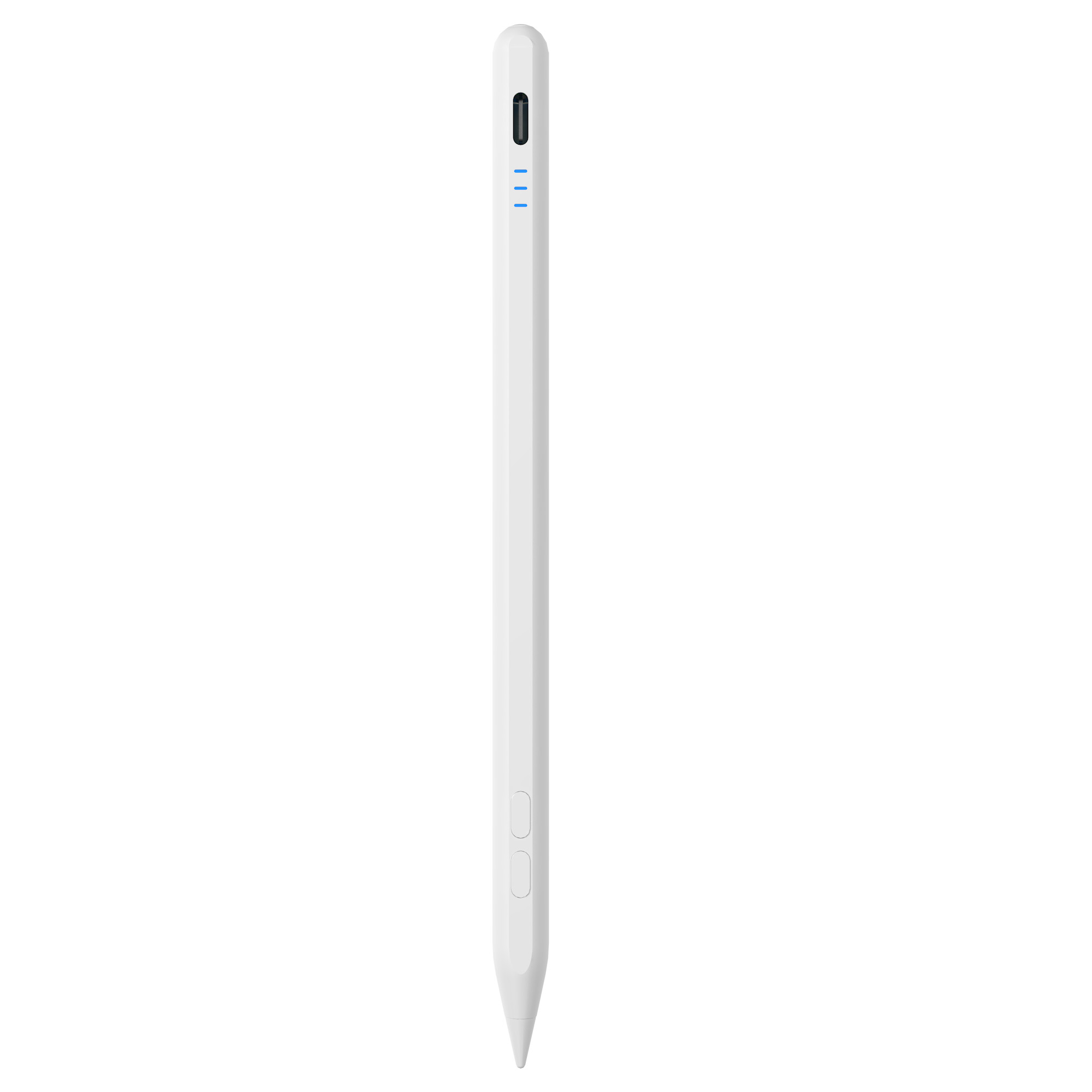
Capability claims cost nothing to write and a great deal to verify. A supplier can describe itself as an OEM/ODM specialist in one sentence; maintaining a coherent range of ten stylus models requires tooling, firmware behaviour, battery welding, assembly and test routines that must work across different charging architectures and body materials. Jiayao describes its core capabilities as covering the entire process, from PCBA design and battery welding to final assembly and quality testing.
For buyers, the practical rule is to treat the range as the first layer of evidence and the specification sheet as the second. The range shows what a supplier can build; the specification sheet defines what the buyer can hold the supplier to. A range documented model by model, with charging time, battery capacity, runtime, nib specification and body material stated per model, is materially more useful than a catalogue of adjectives.
What a documented range can demonstrate
- Charging architecture breadth. The published range covers three charging approaches: Type-C only (A30-B, A21B, A8-RH, A7-H-L, E3-A, R3-P, S3-GC), magnetic and tablet wireless charging only (W3-H), and dual magnetic plus Type-C charging (W13-A, W12-A).
- Platform coverage. Eight models are specified for iPad after 2018 running 12.2 and above system iPad, while R3-P is catalogued as a universal stylus for iPad and Android tablets and phones, and S3-GC as an Android universal stylus pen.
- Material and finish breadth. ABS-bodied wireless-charging models (W13-A, W12-A, W3-H) sit alongside aluminium-alloy-bodied Type-C models (A30-B, A21B, A8-RH, A7-H-L, R3-P, S3-GC).
- Consumable strategy. All ten models are specified with interchangeable nibs, which indicates that nib replacement is treated as part of the product design rather than an afterthought.
- Power management discipline. Every model states an automatic power-off behaviour and a standby time of one year.
Reading the Jiayao Stylus Range as Capability Evidence
A range becomes usable evidence only when every model is described by the same fields. In the published Jiayao stylus data, charging method, charging time, working time, battery capacity, automatic power-off, pen body material and nib replacement are stated per model, which allows a buyer to compare models on identical terms rather than on marketing emphasis.
| Model | Product family | Type | Charging method and time | Working time | Body material |
|---|---|---|---|---|---|
| W13-A | iPad Stylus Pen | iPad active stylus pen | Magnetic charging and Type-C; cable 15 min, tablet wireless 60 min | 9 to 10 hours | Aluminium alloy and ABS |
| W12-A | iPad Stylus Pen | Active stylus pen | Magnetic charging and Type-C; Type-C 25 min, wireless 60 min | 9 to 10 hours | ABS |
| W3-H | Stylus Pen | Wireless charge stylus pen | Magnetic charging, 70 min | 11 hours | ABS |
| A30-B | Stylus Pen | Pencil for iPad with shortcut button | Type-C, 25 min | 11 hours | Aluminium alloy |
| A21B | Stylus Pen | 2 in 1 iPad stylus pen | Type-C, 25 min | 11 hours | Aluminium alloy |
| A8-RH | Stylus Pen | Tilt sensing stylus pen | Type-C, 30 min | 12 hours | Aluminium alloy |
| A7-H-L | Stylus Pen | iPad pencil | Type-C, 30 min | 16 hours | Aluminium alloy |
| E3-A | iPad Stylus Pen | Palm rejection iPad stylus pen | Type-C, 40 min | 44 hours | Aluminium alloy and ABS |
| R3-P | iPad and Android Stylus Pen | Universal stylus for iPad and Android tablets | Type-C, 40 min | 9 to 10 hours | Aluminium alloy |
| S3-GC | Stylus Pen | Android universal stylus pen | Type-C, 55 min | 10 hours | Aluminium alloy |
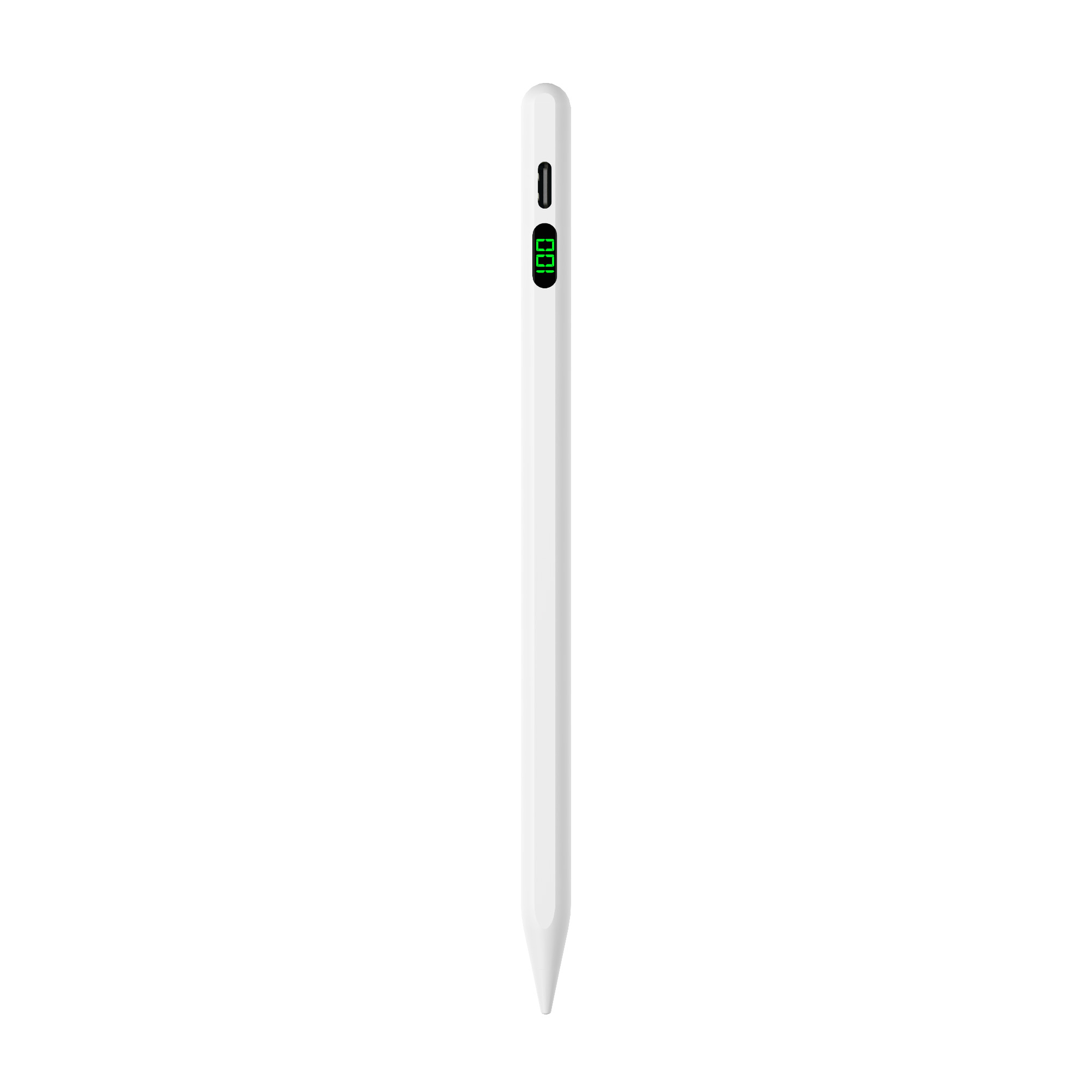
Two clusters emerge. The first is a wireless-charging cluster built on ABS bodies: W13-A charges by cable in 15 minutes and by tablet adsorption in 60 minutes, W12-A charges by Type-C in 25 minutes or wirelessly in 60 minutes, and W3-H is magnetic charging only at 70 minutes, with runtimes between 9 and 11 hours. The second is a Type-C cluster built on aluminium alloy bodies, with charging times from 25 to 55 minutes and runtimes from 10 to 44 hours. Between them sits the cross-platform cluster: R3-P for iPad and Android tablets, and S3-GC for Android devices.
The long-runtime outlier within the range is E3-A, specified at 44 hours of working time from a 230 mAh battery, with automatic power-off set to 60 minutes rather than the 10 minutes used on most other models.
From Range to Acceptance Criteria
An acceptance criterion is only useful when it can be measured against a stated value. The published specification fields in this range map directly onto the criteria a buyer would normally write into an incoming inspection sheet, which removes the need to translate marketing language into engineering terms.
| Acceptance area | Where the evidence sits in the published specifications | What the buyer should verify |
|---|---|---|
| Device compatibility | iPad models specified for iPad after 2018 and 12.2 and above system iPad; R3-P and S3-GC covering Android tablets | Confirm the exact device mix in your market rather than treating iPad compatible as universal |
| Charging method and time | Cable 15 min and tablet wireless 60 min (W13-A); Type-C 25 min and wireless 60 min (W12-A); magnetic 70 min (W3-H); 25 to 55 min Type-C across the remaining models | Match the charging route to the retail promise and to the accessories you ship |
| Runtime and power management | 9 to 10 hours (W13-A, W12-A, R3-P); 10 hours (S3-GC); 11 hours (W3-H, A30-B, A21B); 12 hours (A8-RH); 16 hours (A7-H-L); 44 hours (E3-A); standby one year | Define runtime per charge and check shelf behaviour against the stated standby time |
| Writing behaviour | No offset and no delay stated as product attributes across the range | Ask for these as stated attributes rather than as descriptive adjectives |
| Palm rejection and tilt | Listed as Yes on A30-B, A21B, A8-RH and A7-H-L; not listed on W13-A, W12-A, W3-H, E3-A, R3-P or S3-GC | Match function to the task, since note-taking tolerates less than drawing |
| Nib serviceability | Interchangeable nibs on all ten models; nib diameter 1.5 mm on most models and 1.2 mm on A8-RH | Confirm replacement nib supply and the diameter you will stock |
| Side attachment | Side adsorption stated as Yes; W13-A and A21B note it applies just for 11 and 12.9 inch iPad | Check the device-size condition before promising magnetic storage |
| Physical envelope | 166 mm and 12 to 14 g on most models; 169 mm and 15 g (E3-A); 164.6 mm and 13 g (R3-P); 166 mm and 13 g (S3-GC) | Verify case fit and drop-in insertion for your accessory line |
| Carton and logistics | Outer carton 55.5 x 32.5 x 25.5 cm specified for W13-A | Plan freight and storage against the stated carton |
Model-level variation is the point buyers most often miss. A8-RH uses a 1.2 mm nib diameter rather than 1.5 mm. E3-A is 169 mm long at 15 g against 166 mm and 12 to 14 g for most other models. E3-A and R3-P use a 60-minute automatic power-off instead of the 10 minutes specified elsewhere. None of these differences is a defect; all of them are reasons to write acceptance criteria per model rather than per supplier.
Purchasing Terms That Turn Evidence into Deliverables
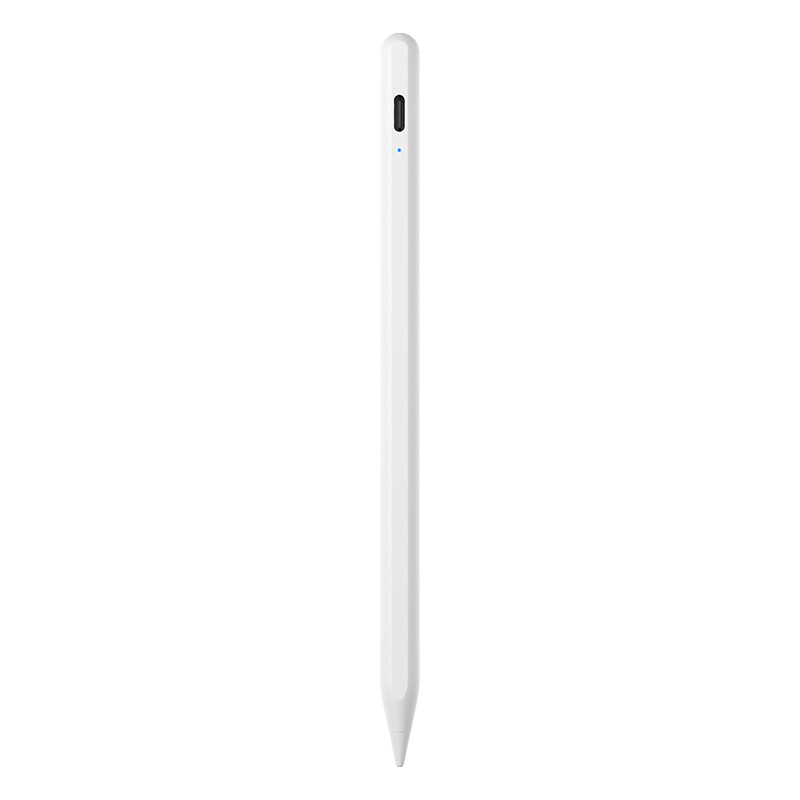
Product evidence answers what can be built. Purchasing terms answer whether it can be delivered on the buyer's schedule and with the buyer's branding. Jiayao positions its factory for fast-moving brands and growing sellers rather than for large-volume-only programmes: flexible MOQs, samples in as little as three weeks, and standard orders shipped in 20 days. Large quantities of regular models are held in stock to handle small, scattered and urgent orders of standard products.
Quality routines are described on a full inspection basis. Every stylus produced is stated to go through 100% full inspection covering functional, tactile and visual checks. Customization is offered through both OEM and ODM routes, supporting customization based on samples such as logo, packaging, function and Bluetooth name. The catalogue scope covers active and passive stylus pens compatible with iPad and mainstream tablets.
Customs classification is a purchasing term that is easy to overlook. Stylus pens are typically classified under HS Code 8471.60.90 as automatic data processing input units, a classification that shapes duty treatment and documentation at import.
Terms worth fixing in a purchase order
- Model number and platform scope, written as the supplier writes it, for example iPad after 2018 and 12.2 and above system iPad, or Android tablets.
- Charging method, because the same family can be supplied as Type-C, magnetic, or dual charging.
- Device-size conditions attached to magnetic attachment where the supplier specifies them.
- Nib type and diameter, plus spare-nib quantities.
- Inspection basis, expressed as the functional, tactile and visual checks the supplier already performs.
- Packaging and carton specification for freight planning.
- Sample schedule and production lead time, stated in writing.
How a Stylus Pen Differs from Apple Pencil
This question usually arrives from retail buyers rather than engineers, and it hides two separate concerns: compatibility and control.
- Who makes it and what it is designed for. Apple Pencil is Apple's own input device for iPad. A third-party stylus pen is a separately manufactured accessory; in the Jiayao range the iPad models are specified for iPad after 2018 running 12.2 and above system iPad, while R3-P extends to Android tablets and phones and S3-GC targets Android devices.
- Charging route. Apple Pencil charging is tied to Apple's own charging arrangements. The stylus pens in this range document Type-C charging, magnetic and tablet wireless charging, or both, with charging times stated per model.
- Nib replacement. Models in this range use interchangeable nibs with stated diameters, and the nib is described as wear-resistant and replaceable without damaging screen glass.
- Range width. A stylus pen supplier can cover iPad-only and cross-platform models in one catalogue, which a single-vendor, iPad-only product line does not attempt.
A boundary worth stating plainly: third-party stylus pens replicate the writing, drawing and navigation functions that buyers specify, but system-level integration features remain the property of the platform owner. Buyers comparing a stylus pen with Apple Pencil should define acceptance criteria around the functions they actually need, such as precise writing, palm rejection, tilt response, magnetic attachment and replaceable nibs, instead of assuming feature equivalence. One operational point applies to any active design: the stylus needs power in its battery before it can function, because it transmits weak electrical signals that the touch screen detects in order to locate the tip position.
Where the Range Is Used: Application Evidence
Application notes and product specifications should agree with each other. For the education segment, where A7-H-L lists Education as its applicable industry, the documented stylus pen function is precise note-taking, drawing and navigation on touch-screen tablets, matched to iPad and Android tablet equipment. The working principle is stated the same way across the range: the stylus pen is powered by its battery, transmits weak electrical signals to the touch screen, and the tablet detects these signals to locate the tip position, which realizes accurate writing, drawing and tapping.
Special requirements recorded for this application are low latency, precise writing, side magnetic attachment and a replaceable pen tip. All four appear as stated specification fields in the published range rather than as aspirational claims, which is itself useful evidence: a supplier whose application notes and specification sheets use the same measurable terms is easier to audit than one whose application notes are written in marketing language.
Matching models to tasks
- Long unattended runtime. E3-A is specified at 44 hours of working time with automatic power-off after 60 minutes, which suits classroom, field or shared-device deployment where charging opportunities are limited.
- Drawing and annotation. A30-B, A21B, A8-RH and A7-H-L list palm rejection and tilt bold as Yes, the two fields most closely tied to sketching and handwritten annotation.
- Mixed device estates. R3-P covers iPad and Android tablets, and S3-GC covers Android, avoiding a forced single-platform accessory decision.
- Premium retail placement. W13-A, W12-A and W3-H attach magnetically and charge through the tablet or by Type-C, features that carry their own retail story.
Limits of Range-Based Evidence
Range-based evidence has a clear ceiling, and buyers should treat it that way. A published range proves breadth of design and tooling capability; it does not prove unit-to-unit consistency at volume. That is what the stated 100% full inspection, covering functional, tactile and visual checks on every stylus, is meant to address, and it is the claim most worth testing with incoming inspection on the first shipments.
Three further boundaries are visible in the specifications themselves. Compatibility is stated with conditions rather than as an absolute: iPad models are specified for iPad after 2018 running 12.2 and above system iPad, so an older device mix cannot be assumed to work. Magnetic side attachment is device-size dependent, since W13-A and A21B both note that side adsorption applies just for 11 and 12.9 inch iPad. And the range is not uniform in power management, because automatic power-off is 10 minutes on most models but 60 minutes on E3-A and R3-P, so a buyer standardising one behaviour across a private-label line needs to specify it model by model.
Compared with buying generic passive styluses or unbranded pens with no documented electrical specification, an active range with stated battery capacity, charging time, runtime and nib specification is easier to contract against, but it is also a narrower fit, because active stylus pens require battery power to function while passive designs do not. A21B sits at that boundary, catalogued as a 2 in 1 iPad stylus pen with a product image captioned as a fast charge iPad stylus pen with universal passive fiber tip. Choosing between active and dual-mode designs is therefore a choice between documented electrical performance and lower operational dependency, not between a good product and a bad one.
Market Trend: Active Stylus Growth and Cross-Platform Standards
Category-level data supports the direction the range already reflects. The global stylus pen market was valued at USD 19.45 billion in 2025 according to IMARC Group, while active stylus technology is projected to grow at a CAGR of 9.8% from 2026 to 2034 according to Dataintelo. Definitional caution is warranted here: the same category has been sized at USD 3.36 billion for 2025 by Fortune Business Insights, because that estimate focuses strictly on active digital pens rather than the wider input-device category. For buyers, the practical reading is that active stylus is the growth segment and that SKU counts will keep expanding, which raises rather than lowers the value of standardised acceptance criteria.
Standards matter for the same reason. USI 2.0, released in 2022 by the Universal Stylus Initiative and supported by companies including Google, Intel and Lenovo, is the primary cross-platform standard for active styluses. Cross-platform capability is where third-party manufacturers add value that single-platform accessories cannot, and it appears in this range as R3-P and S3-GC rather than as a marketing statement.
Future Outlook
As active stylus demand grows, pressure on suppliers shifts from listing features to documenting them. Ranges will keep dividing into two practical groups: platform-specific models, such as the iPad stylus pens specified for iPad after 2018 and 12.2 and above system iPad, and cross-platform models such as R3-P and S3-GC. Charging architecture, nib serviceability and stated runtime will carry more of the purchasing decision than surface finish alone.
For buyers, the durable approach is administrative rather than technical. Keep an acceptance sheet per model, tie every criterion to a stated specification field, and re-check the sheet whenever a supplier revises a model. That practice converts a product range from a browsing tool into a verification file, and it works whether the supplier is Jiayao stylus or any other manufacturer in the category.
FAQ
What is an active stylus pen and how does it work?
An active stylus pen is a battery-powered pen for touch-screen tablets. It transmits weak electrical signals to the touch screen, and the tablet detects those signals to locate the tip position, which enables accurate writing, drawing and tapping. Because the pen is powered by its battery, it needs charge before it can function. Active stylus pens in the Jiayao stylus range are matched to iPad and Android tablets, and the iPad models are specified for iPad after 2018 running 12.2 and above system iPad.
How does a stylus pen differ from Apple Pencil?
Apple Pencil is Apple's own input device for iPad. A third-party stylus pen is a separately manufactured accessory that can also cover non-Apple devices: R3-P is catalogued as a universal stylus for iPad and Android tablets and phones, and S3-GC as an Android universal stylus pen. Differences visible in the specifications include charging route, with Type-C, magnetic tablet wireless charging or both depending on model, and nib construction, with interchangeable nibs at stated diameters such as 1.5 mm and 1.2 mm. System-level integration features remain specific to the platform owner, so buyers comparing the two should define acceptance criteria around the functions they need, such as precise writing, palm rejection and tilt response.
What does a stylus pen supplier's product range reveal about its capability?
A documented range reveals three things a claim cannot: charging architecture breadth, platform coverage and tooling range. In the Jiayao stylus range, charging spans Type-C only, magnetic and tablet wireless charging, and dual charging; platform coverage spans iPad-only models and cross-platform models such as R3-P and S3-GC; and body materials span ABS and aluminium alloy. The range also implies process depth, since Jiayao describes core capabilities covering PCBA design, battery welding, final assembly and quality testing, supported by four R&D engineers in a 2,700 m2 factory with an annual output of 3,000,000 units.
Which acceptance criteria should be checked before approving a stylus pen order?
Check compatibility as stated, for example iPad after 2018 and 12.2 and above system iPad, or Android. Check charging method and time per model, such as cable 15 minutes and tablet wireless 60 minutes for W13-A, Type-C 25 minutes for W12-A and A21B, 30 minutes for A8-RH and A7-H-L, 40 minutes for E3-A and R3-P, 55 minutes for S3-GC, and magnetic charging 70 minutes for W3-H. Check runtime, automatic power-off and one-year standby; check the no offset and no delay statements; check palm rejection and tilt bold where relevant; check interchangeable nibs and nib diameter; check side adsorption conditions, since W13-A and A21B specify it just for 11 and 12.9 inch iPad; and check physical envelope details such as 166 mm and 12 to 14 g for most models.
What purchasing terms should be confirmed with a stylus pen supplier?
Confirm MOQ flexibility, sample lead time, standard order lead time, inspection basis and customization scope. Jiayao states flexible MOQs, samples in as little as three weeks, standard orders shipped in 20 days, 100% full inspection covering functional, tactile and visual checks on every stylus, and OEM/ODM support for customization based on samples such as logo, packaging, function and Bluetooth name. Also confirm the classification used for import, since stylus pens are typically classified under HS Code 8471.60.90 as automatic data processing input units.
Product range data referenced in this article is published in the Jiayao Intelligent Stylus Pen Catalogue: Jiayao Intelligent Stylus Pen Catalogue.