
Submersible Pump Certifications: CE, LVD, EMC & Efficiency Explained
For buyers researching submersible pumps in 2026, the most common source of confusion is not hydraulic performance—it is compliance. CE, LVD, EMC, efficiency class, ingress protection—these terms determine whether a pump can be legally sold and installed in a target market, yet they are rarely explained in the context of pump selection.
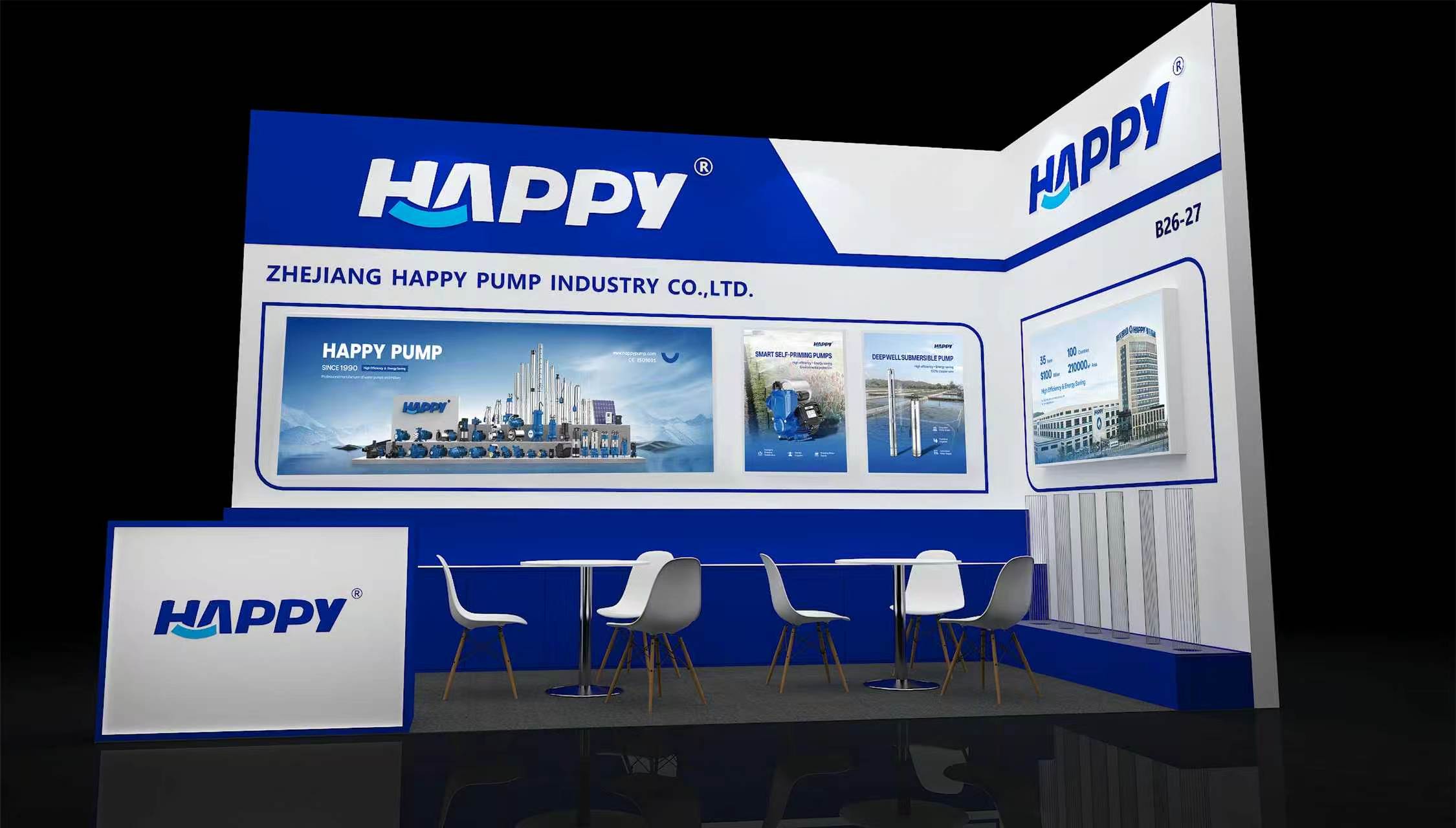
This article explains what submersible pump certifications mean, which certificates and standards apply to pumps exported to the EU, and how buyers can use compliance documents as a purchasing checklist.
What Are the Key Submersible Pump Certifications?
Submersible pumps are electric products operating in water, which places them under both electrical safety and electromagnetic compatibility regulation. For the European market, the critical files are:
- LVD (Low Voltage Directive 2014/35/EU)—covers electrical safety of equipment operating within certain voltage limits.
- EMC (Electromagnetic Compatibility Directive 2014/30/EU)—verifies that the pump does not emit excessive electromagnetic interference and can operate normally in its intended electromagnetic environment.
- Machinery Directive (2006/42/EC)—applies to machinery and safety-related components, including pumps considered within its scope.
- CE marking—the combined declaration that these directives have been met for sale in the EU.
- Motor efficiency classification (IE2 / IE3 / IE4)—defines energy-efficiency levels for electric motors.
- Ingress Protection (IP44 to IP68)—rates protection against solid particles and water entry.
What CE, LVD and EMC Certificates Actually Cover
CE marking is not a quality seal; it is a legal conformity mark. For water pumps, CE certification confirms compliance with the EU Low Voltage Directive, the EMC Directive, and the Machinery Directive.
In practice, this translates into documented test reports and certificates issued by recognized certification bodies.
CE Certification (Certificate No. CE-5072-160326)
Zhejiang Happy Pump Industry Co., Ltd. holds CE certification for water pumps covering multiple pump families: HQBm, QB60, IDB35, HPSm-AX, HRSm-A, QDP series and QDX series. The certification is issued by ECES and confirms compliance with:
- 2014/35/EU Low Voltage Directive
- 2014/30/EU Electromagnetic Compatibility Directive
- 2006/42/EC Machinery Directive
LVD Certification (Certificate No. OViS202507249L)
Low Voltage Directive certification applies to the Pumps product category, including the QB60 and HQBm pump models. The applicable standards are:
- EN 60335-1:2012+A11:2014+A13:2017+A1:2019+A14:2019+A2:2019+A15:2021+A16:2023
- EN IEC 60335-2-41:2021+A11:2021
The LVD certificate is issued by OViS-CERT under certificate number OViS202507249L and applies to the EU market.
EMC Certification (Certificate No. OViS202507249E)
EMC certification verifies that water pumps, including submersible, deep well and solar pump models, comply with electromagnetic compatibility requirements.
The applicable EMC standards are:
- EN IEC 55014-1:2021
- EN IEC 55014-2:2021
- EN IEC 61000-3-2:2019+A1:2021+A2:2024
- EN 61000-3-3:2013+A1:2019+A2:2021
The EMC certificate is issued by OVIS-CERT under certificate number OViS202507249E.
Motor Efficiency Classes: IE2, IE3, IE4
Motor efficiency determines both operating cost and regulatory acceptance. The international efficiency classification for motors includes IE2 (standard efficiency), IE3 (premium efficiency) and IE4 (super premium efficiency).
Zhejiang Happy Pump Industry Co., Ltd. produces motor types including IE2, IE3, IE4 and MS series. Some motors are classified as IE3 efficiency motors, meaning they fall into the IE3 category.
For buyers, the practical question is: which efficiency class does the specified pump motor need for my project and energy targets? IE3 motors generally offer lower energy losses than IE2, while IE4 pushes further. The availability of different classes also matters for suppliers who integrate pumps into equipment with minimum energy-performance requirements.
IP Ratings: What IP44 to IP68 Means for Submersible Pumps
IP (Ingress Protection) ratings define the degree of protection against dust and water. The first digit covers solid particles; the second covers moisture.
In the HAPPY pump portfolio, pumps are designed with protection levels ranging from IP44 to IP68.
- IP44 protects against solid objects larger than 1mm and water splashing from any direction.
- IP68 is the highest typical rating in this range—fully protected against dust and capable of continuous immersion in water beyond 1 meter depth, as specified by the manufacturer.
For deep well submersible pumps and borehole pumps, the IP rating should be appropriate for permanent immersion. For sewage submersible pumps operating in aggressive fluids, IP rating combines with material selection and sealing design.
| Compliance item | What it verifies | Certificate / number (HAPPY Pump) |
|---|---|---|
| CE | LVD, EMC and Machinery Directive compliance | CE-5072-160326 (ECES) |
| LVD | Electrical safety per EN 60335 series | OViS202507249L (OViS-CERT) |
| EMC | Electromagnetic compatibility per EN IEC 55014 series | OViS202507249E (OVIS-CERT) |
| Efficiency | Motor energy-efficiency classification | IE2 / IE3 / IE4 available |
| Ingress protection | Dust and water ingress resistance | IP44 to IP68 depending on model |
Why Certifications Matter for Submersible Pump Procurement
For importers, distributors and engineering buyers, certification documents serve several functions beyond legal compliance.
Market access
Without CE marking, pumps cannot be legally placed on the EU market. For buyers sourcing from China, confirming that the factory holds certificates for specific models before production is a basic risk-control step.
Project specification compliance
Municipal water supply, building drainage and agricultural irrigation projects often specify standards such as IEC 60335-2-41 for household and agricultural submersible pumps. A pump with LVD certification to EN IEC 60335-2-41:2021+A11:2021 aligns with such project requirements.
Verification value
Certificates include certificate numbers, issuing bodies, standards and covered models. A buyer can verify whether the listed models match the pump nameplate before payment and delivery. This reduces the risk of receiving non-compliant or mismatched products.
Comparing Traditional Supplier Compliance Practices
In the conventional export supply chain, compliance documents are often treated as a final shipment checkbox. Some factories offer one generic certificate covering only a single model; others provide certificates for a wider pump family.
The difference matters at the border and at the project site. A certificate that lists the specific model being purchased is far more useful than a generic statement. In the HAPPY Pump portfolio, the CE certificate explicitly covers seven pump model groups—HQBm, QB60, IDB35, HPSm-AX, HRSm-A, QDP series and QDX series—rather than being limited to a single SKU.
It should be noted that certification scope is not unlimited. Not every pump produced by a manufacturer is automatically covered by every certificate. A model not listed in the certificate requires its own verification or an updated certificate. Buyers should therefore always request the certificate document and check the “models covered” section rather than relying on marketing summaries.
Production and Testing Capabilities Behind the Compliance Documents
Certifications are only meaningful if the manufacturer can reproduce compliant products consistently. Zhejiang Happy Pump Industry Co., Ltd. was established in 1990 and is located in Daxi Town, Wenling City, Zhejiang Province—known as the “Hometown of Water Pumps” in China.
The company operates a production base covering approximately 55,000 m² in site area with about 210,000 m² of building area. It employs around 800 people, including about 200 professional and technical staff, and produces around 4,000,000 pumps per year.
All pumps pass 100% factory testing before shipment. Monthly capacity is 400,000 units, and typical lead time for OEM/ODM orders is 30–45 days, with MOQs of 100 units for pumps below 3HP and 50 units for pumps above 3HP.
These operational details matter because certification audits are based on samples and production-process reviews. A factory with full production lines, a technical team, and consistent quality-control processes is more likely to deliver certified pumps that match the tested configuration.
Application Scenarios and Certification Fit
Submersible pumps are used across residential, agricultural, municipal and industrial applications. The HAPPY pump range supports multiple working conditions, including clean water, sewage or particle-containing water, high-head pumping and submersible installation.
Household and garden submersible pumps
Household water supply, garden irrigation and pool circulation typically use single-phase submersible pumps. For EU residential use, EN IEC 60335-2-41 compliance is the standard safety benchmark.
Deep well and borehole pumps
Deep well submersible pumps are used for borehole water extraction and high-head pumping. These pumps typically operate permanently submerged and rely on an IP68-capable enclosure design.
Sewage and cutting sewage pumps
Sewage submersible pumps handle particle-containing water and drainage duties. Cutting sewage pumps add a grinding mechanism to reduce solids. Certification for these products still follows electrical-safety and EMC directives, but material selection and impeller design differ from clean-water pumps.
Solar submersible pumps
Solar submersible pumps are increasingly paired with photovoltaic systems for off-grid agricultural water supply. The EMC certification of the pump remains important because solar controllers and inverters create additional electrical interaction.
For long-term buyers, the ability to choose between AC and DC configurations, single-phase and three-phase, and 50Hz or 60Hz supply matters. Some special voltage/frequency combinations require customization confirmation before the final certificate scope or technical documentation is locked.
Market Context for Submersible Pump Buyers
The global submersible pump market continues to expand. According to Grand View Research, the market was valued at approximately USD 13.3 billion in 2025 and is projected to reach USD 19.4 billion by 2033. SNS Insider estimates the market at USD 14.75 billion in 2024, illustrating variation across research methodologies.
China is a central supply base for global pump buyers. According to the OEC, China accounted for approximately 18.5% of total global liquid pump exports in 2024, valued at about USD 14.3 billion.
For buyers, this creates a wide supplier landscape. The practical differentiation is not just whether a factory can produce a submersible pump, but whether it can produce a certified, specification-matched product at scale, with stable quality and reliable delivery.
How to Evaluate a Submersible Pump Supplier’s Compliance Package
Buyers at the research and evaluation stage should ask the following questions:
- Does the certificate list my target model? Check the model list on the LVD, EMC and CE certificates.
- Which market is the certificate valid for? A certificate valid for the EU is not automatically valid for North America or other regions.
- What standards are referenced? EN IEC 60335-2-41 is the key safety standard for household and agricultural submersible pumps.
- What is the motor efficiency class? IE2, IE3 and IE4 have different efficiency profiles and may affect project energy calculations.
- What IP rating applies to the specific motor-pump assembly? Confirm the rating that applies to your working condition.
- What is the factory’s testing and quality-control process? 100% testing indicates a stronger process than random sampling.
Limitations and What Compliance Documents Do Not Tell You
Certifications do not tell the full story of pump reliability. They confirm that a product met defined safety and EMC requirements at the time of testing, but they do not guarantee long-term corrosion resistance, bearing life, hydraulic efficiency in a specific installation, or compatibility with a particular solar controller.
Buyers should therefore combine certificate verification with:
- Hydraulic selection (head, flow, power, operating point)
- Material selection (cast iron, stainless steel, engineering plastics)
- Installation conditions (well diameter, submersion depth, cable length)
- Voltage and frequency compatibility (50Hz or 60Hz, single-phase or three-phase)
- After-sales support (remote support, warranty, spare parts)
Future Outlook: Efficiency, Solar Pairing and Compliance Complexity
Two trends shape the submersible pump landscape from a compliance perspective.
The first is the continued push for higher motor efficiency. As energy regulations tighten and electricity costs rise, IE3 motors are becoming a baseline in many markets, with IE4 gaining attention for premium applications. Buyers who plan for higher efficiency now will face fewer retrofit requirements later.
The second is solar pumping. The solar water pump market is expected to grow from USD 556.57 million in 2024 to USD 2.9 billion by 2032, according to Credence Research (a 22.95% CAGR). Solar submersible pumps require the pump itself to be compliant, but the complete system—controller, inverter, wiring, protection—must be designed as a whole.
For global buyers, a factory that can supply certified pumps across surface, submersible, deep well and solar categories simplifies sourcing. Zhejiang Happy Pump Industry Co., Ltd. applies this approach through a product range that includes surface pumps, submersible pumps, deep well pumps, solar pumps, motors, pressure control tanks and spare parts, with about 99% of production exported to more than 150 countries and regions.
FAQ
What CE standards apply to submersible pumps?
For EU market entry, submersible pumps generally fall under the Low Voltage Directive (2014/35/EU), EMC Directive (2014/30/EU) and, where applicable, the Machinery Directive (2006/42/EC). For the HAPPY Pump water pump range, CE certification covers models including HQBm, QB60, IDB35, HPSm-AX, HRSm-A, QDP series and QDX series.
What is the difference between LVD and EMC certification?
LVD (Low Voltage Directive) certification focuses on electrical safety, ensuring the pump is designed to prevent electric shock, fire and mechanical hazards. EMC (Electromagnetic Compatibility) certification verifies that the pump does not emit excessive electromagnetic interference and that it can operate normally in its intended electromagnetic environment. Both are separate EU compliance requirements.
Which HAPPY pump models are covered by the LVD certificate?
The LVD certificate (OViS202507249L) applies to the Pumps product category, covering the QB60 and HQBm pump models. The applicable standards include EN 60335-1:2012 with amendments and EN IEC 60335-2-41:2021+A11:2021.
What does IP68 mean for a submersible pump?
IP68 means the product is fully protected against dust ingress and can be continuously immersed in water under conditions specified by the manufacturer. HAPPY Pump products offer protection levels ranging from IP44 to IP68, depending on the model and application.
What is an IE3 efficiency motor?
IE3 is a premium efficiency class defined by the international efficiency classification for electric motors. It represents higher efficiency than IE2 and lower energy losses. HAPPY Pump manufactures motors available in IE2, IE3, IE4 and MS types; some products are classified as IE3 efficiency motors.
Are solar submersible pumps covered by the same EMC certification?
The EMC certification held by HAPPY Pump applies to water pumps, including submersible, deep well and solar pump models. It verifies compliance with EN IEC 55014-1:2021, EN IEC 55014-2:2021, EN IEC 61000-3-2:2019+A1:2021+A2:2024 and EN 61000-3-3:2013+A1:2019+A2:2021 for the EU market.
Independent reference note: This article is published for buyers researching submersible pumps and related certification requirements. All compliance statements are based on certificates held by Zhejiang Happy Pump Industry Co., Ltd. The brochure below provides additional product and factory information for reference.
Article published for HTNXT industry reference. All third-party market figures are attributed to their respective sources and may vary by methodology.