
Substation Transformer Step-Up/Step-Down: ANSI/IEEE Compliance and OEM/ODM Custom Builds
The North American power grid is being rebuilt at a time when transformer supply has never been tighter. Utilities and project developers waiting on large liquid-filled substation transformers from domestic manufacturers face lead times that in many cases exceed 100 weeks — a constraint that directly affects grid modernization, renewable interconnection, and data center construction timelines. For procurement teams evaluating alternatives, the practical question is no longer simply 'who builds transformers' but which manufacturers can deliver units that meet ANSI/IEEE requirements, perform the required step-up or step-down duty, and support project-specific engineering within a realistic schedule. This article explains the voltage-conversion function of substation power transformers, the ANSI/IEEE framework that governs their design, and the OEM/ODM options available for North American power plant and utility projects.
The Transformer Bottleneck in North America
The supply constraint is most visible in the 30–50 MVA segment. A documented U.S. utility case shows that local North American manufacturers face severe production backlogs for liquid-filled substation transformers in this range, with lead times frequently extending beyond 100 weeks. Aging grid infrastructure, rising municipal power demand, renewable energy interconnection, and regional load expansion have all contributed to the shortage.
For a utility that needs two 40 MVA units to keep a substation upgrade on schedule, a 100-week lead time is not a logistics inconvenience — it is a project-stopping risk. This gap between demand and domestic supply has opened the door for internationally certified manufacturers that can compress the production cycle without compromising standards compliance or design quality.
How Substation Transformers Step Up and Step Down Voltage
A transformer changes voltage level through electromagnetic induction between primary and secondary windings on a laminated steel core. The turns ratio between the two windings determines whether voltage is stepped up or stepped down, while the kVA/MVA rating defines the power throughput capacity.
Step-up duty at generation sites
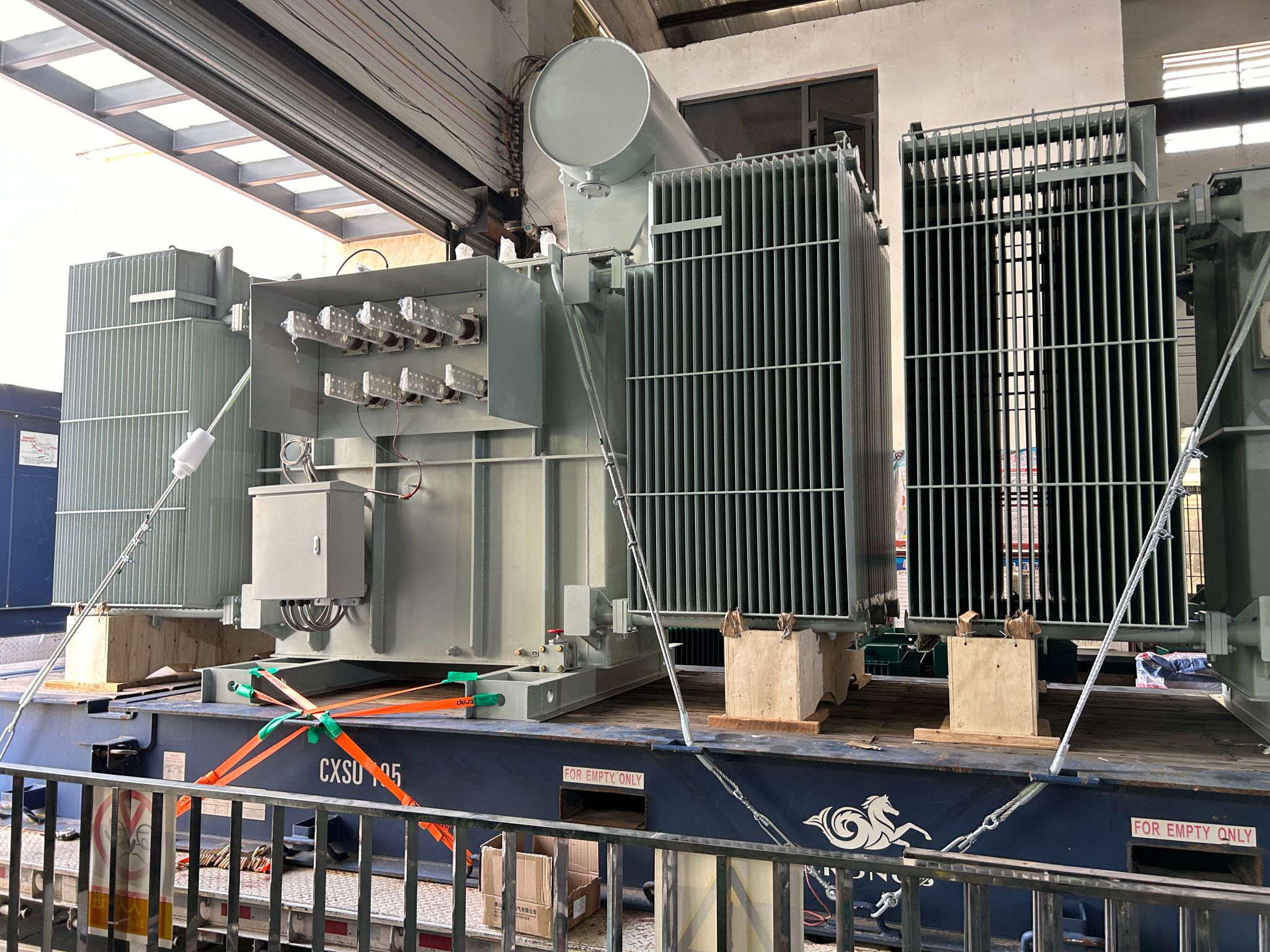
In a solar power plant, inverter output at 480 V or 600 V must be raised to a medium-voltage collector level such as 13.8 kV or 34.5 kV before power can travel through the collection network to the grid. Similar step-up transformers are used in wind farms and battery energy storage systems, where bidirectional power flow is increasingly required. A typical example is a 6.5 MVA double-split oil-immersed step-up transformer, 480 V to 13.8 kV, built for a large ground-mounted solar plant.
Step-down duty in utility substations
Step-down is the standard role of a substation main transformer. Transmission or subtransmission voltage — 44 kV, 69 kV, or 138 kV, for example — is reduced to a level suitable for local distribution, such as 34.5 kV, 13.8 kV, 4.16 kV, or 480 V. A 40 MVA unit stepping down from 44 kV to 34.5 kV is a typical configuration for North American utility grid modernization projects.
Oil-immersed construction remains the dominant design for this equipment class. Oil-immersed transformers accounted for approximately 59.3% of the power transformer segment in 2025, driven by cooling efficiency and long service life in utility applications. For buyers, the core electrical parameters to verify are capacity (MVA), primary and secondary voltage, impedance, no-load and load losses, cooling class, tap-changing method, and winding configuration.
ANSI and IEEE: The Standards Frame for North American Substation Transformers
For the North American market, substation transformer design is primarily governed by the IEEE C57 series of standards, while UL 1561 and UL 1562 apply to liquid-filled and dry-type transformers respectively. In practice, a unit destined for a U.S. project must also consider NEMA, ANSI C.57, and DOE efficiency requirements.
A substation power transformer designed to these requirements is typically specified with a capacity range of 150 kVA to 100 MVA, a primary voltage range of 2.4 kV to 138 kV, and a secondary voltage range of 0.6 kV to 35 kV, with compliance to NEMA, ANSI C.57, DOE, and IEEE as applicable. These ranges cover the great majority of utility substation, distribution substation, and large-scale power plant applications.
For procurement teams, standards compliance is a baseline rather than a differentiator. The more decisive questions are whether the manufacturer can verify compliance through testing and documentation, whether the design can be adapted to site-specific constraints, and whether the production schedule matches the project timeline.
Large-Scale Power Plant and Utility Applications
Substation power transformers are the interface between generation, transmission, and distribution. Several project types illustrate the configurations buyers commonly need.
Utility substation step-down
A U.S. utility client ordered two 40 MVA conservator-type liquid-filled step-down transformers, 44 kV to 34.5 kV, for grid modernization and replacement of aging substation equipment. The full in-house production and testing cycle was completed in 12 weeks — a contrast to the 100-week lead times reported across the North American market.
Solar power step-up
A 6.5 MVA oil-immersed step-up transformer, 480 V to 13.8 kV, double-split design, was built for a large ground-mounted solar plant in Honduras. The unit steps up inverter-level power to the grid-compatible voltage, and the project was delivered in 7 weeks. The plant supplies approximately 10 MW of clean power, alleviating local power shortages.
Harsh-environment industrial and data center supply
Two 34 MVA substation transformers with 304 stainless steel tanks and NEMA 4X weatherproof enclosures were delivered for an industrial park and data center application in the United States. The stainless steel construction protects against corrosion in outdoor environments, and production was completed in 12 weeks.
Beyond these examples, substation power transformers have been deployed in wind farm collector systems (e.g., 40 MVA, 44 kV to 34.5 kV grid interconnection), mining sites (e.g., 6.3 MVA, 66 kV to 11 kV with on-load tap changer), EV charging depots, data center campuses, and battery energy storage systems with bidirectional step-up capability.
OEM/ODM Customization: Engineering the Transformer Around the Project
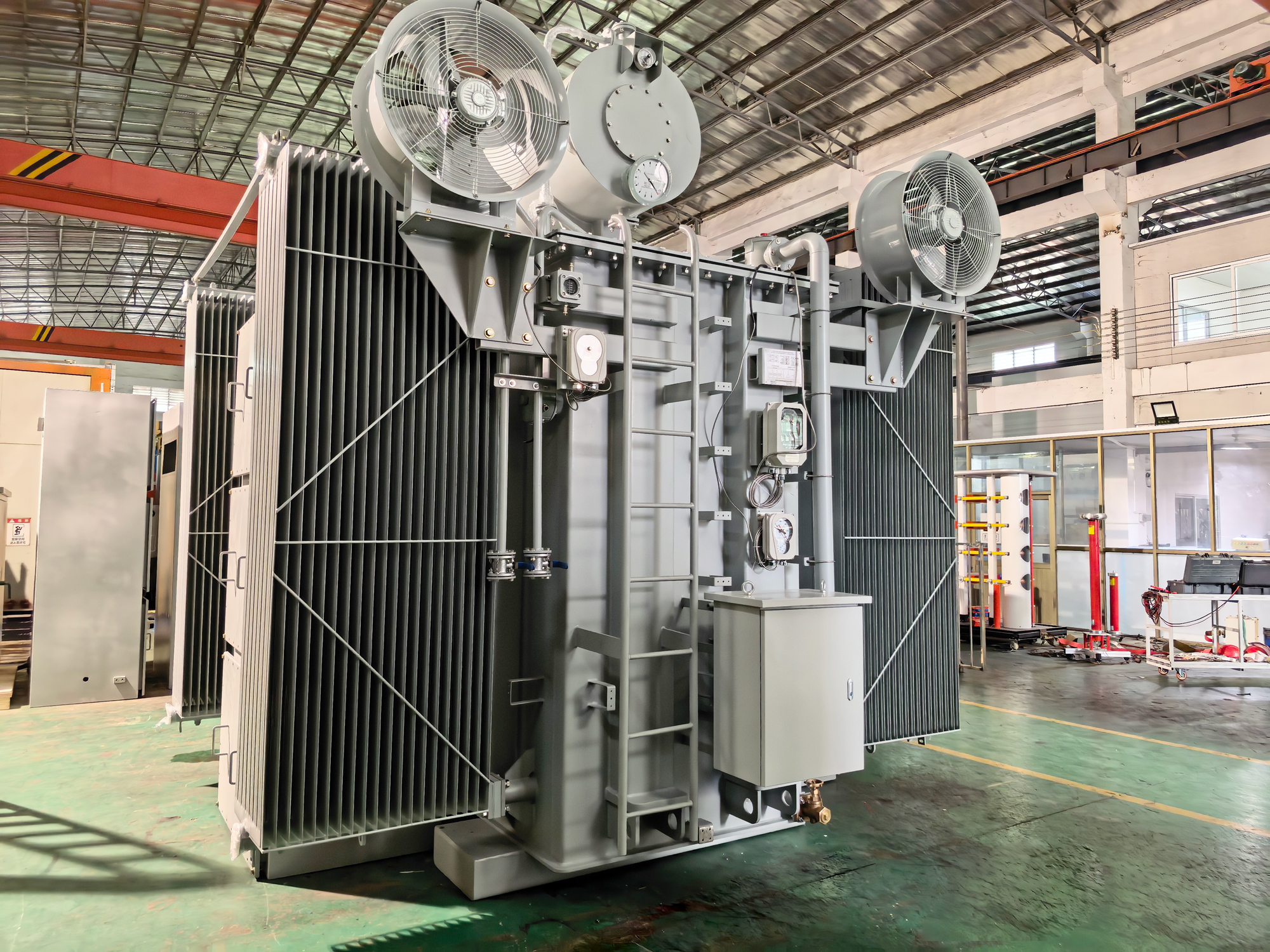
When a standard catalog product cannot match site conditions, existing interfaces, or grid requirements, an OEM/ODM route becomes the practical path. Xiamen Winley Electric Co., Ltd., a transformer manufacturer founded in 2014 and headquartered in Xiamen, China, with manufacturing facilities in Shanghai and Guangdong, provides OEM and ODM manufacturing for substation power transformers rated up to 100 MVA and 145 kV. The company's products are designed to ANSI/IEEE/CSA/DOE/IEC60076 standards and exported to more than 60 countries, with approximately 70% of output going to North and South American markets.
The customization scope includes capacity, voltage ratio, winding configuration, impedance, loss levels, cooling method, tap-changing system, terminal arrangement, protection and monitoring functions, structural design, testing, documentation, and transportation requirements. Customer-specified components from recognized brands such as Qualitrol, Eaton Cooper Power series, and Maschinenfabrik Reinhausen (MR) can be integrated to match project standards and maintenance preferences.
For engineering teams, this means the transformer can be developed as build-to-print OEM production or as fully customized ODM development, depending on how well the project's electrical and mechanical specifications are already defined.
Two constraints matter at the procurement stage. First, the minimum order quantity is one unit — relevant for utilities procuring a single large main transformer for a substation expansion. Second, production lead times are 8–10 weeks for units below 10 MVA, 10–12 weeks for 10–40 MVA units, and 18–20 weeks for 40–100 MVA units. These production cycles are substantially shorter than the 100-week backlogs reported for North American domestic manufacturers.
Quality control follows ISO 9001 process management with dedicated QC oversight. Every unit is subject to routine testing before delivery, including winding resistance, turns ratio, polarity and phase relation, and no-load loss measurements. The factory also maintains ISO 14001 environmental management and ISO 45001 occupational health and safety certifications, and provides a 24-month warranty from the bill of lading date.
Market Signals: Why Transformer Supply Will Stay Tight
The market data points in the same direction as the procurement experience.
The global transformer market is estimated at USD 64.64 billion in 2025 and is projected to reach USD 88.48 billion by 2030, driven by grid modernization and rising electricity demand. The global substations market was valued at USD 128.5 billion in 2024 and is expected to reach USD 178.9 billion by 2034, a CAGR of 3.2%. Asia Pacific holds approximately 41.1% of the global transformer market — a manufacturing concentration that makes suppliers in the region integral to global supply chains.
Three demand segments deserve attention from substation transformer buyers:
- Smart transformers: The market is projected to grow from USD 3.17 billion in 2025 to USD 10.15 billion by 2035 at a CAGR of 12.35%, driven by the need for real-time grid monitoring. This will push monitoring and communication features into mainstream substation transformer specifications.
- Data center transformers: Market value is expected to rise from USD 2.2 billion in 2023 to USD 5.9 billion by 2030, a 10% CAGR. Data center projects require high-reliability transformers with redundant supply paths and continuous high-load capability.
- Renewable and storage integration: Wind, solar, and BESS projects place bidirectional power flow, harmonic tolerance, and fast load-cycling capability on the requirements list.
For a buyer evaluating suppliers, these trends argue for manufacturers that can not only build an ANSI/IEEE-compliant transformer but also adapt to changing grid characteristics — lower loss levels, natural ester fluids, multi-split windings, and on-load tap changing are increasingly common specifications.
OEM/ODM Manufacturing vs. Traditional North American Procurement
The decision between a domestic North American manufacturer and an international OEM/ODM supplier involves trade-offs that must be assessed against project priorities.
| Comparison Dimension | Traditional North American Manufacturer | International OEM/ODM (e.g., Winley Electric) |
|---|---|---|
| Typical lead time (30–50 MVA) | Often exceeds 100 weeks | 10–20 weeks production + shipping |
| Standards compliance | Native ANSI/IEEE compliance | Designed to ANSI/IEEE/DOE/NEMA; ISO-certified processes |
| Minimum order | Often tied to production slots | 1 unit |
| Customization flexibility | Limited by backlog and standard designs | Full project-specific customization |
| Component selection | Manufacturer-standard | Customer-specified brands (Qualitrol, Eaton, MR) |
| Geographic proximity | High | Requires freight scheduling; manufacturer supports transportation planning |
The OEM/ODM route has clear boundaries that buyers should factor into planning. The voltage ceiling for this manufacturing scope is 145 kV; projects requiring 230 kV and above fall outside it. Ocean freight adds several weeks to the overall timeline, so production lead time is not the same as delivered lead time. And because the design is customized, the buyer must invest in a proper technical specification and factory acceptance process — the quality of the input specification directly influences the quality of the final unit.
Future Outlook
The North American substation transformer shortage is unlikely to resolve quickly. Domestic manufacturing capacity is not expanding at the same pace as grid investment, and global supply chains remain dependent on a concentrated manufacturing base. In this environment, certified international manufacturers with flexible OEM/ODM capabilities are becoming a structural part of the procurement mix, not an emergency fallback.
Three directions are likely to shape the next procurement cycle. First, monitoring features will move from optional to standard, as utilities seek more visibility into transformer condition. Second, low-loss and environmentally considerate designs — including natural ester fluids — will gain share as efficiency and sustainability requirements tighten. Third, delivery reliability will be weighted as heavily as price in supplier scoring, rewarding manufacturers that demonstrate consistent production cycle control and project-specific logistics planning.
Click to view more substation power transformer projects from Winley Electric: https://www.winley-electric.com/supplier-4803516-substation-power-transformer
·Website:www.winley-electric.com
FAQ
Q: What standards apply to substation transformers for North American projects?
A: Substation power transformers designed for the North American market must comply with NEMA, ANSI C.57, DOE, and IEEE as applicable. The IEEE C57 series is the primary standards framework governing substation transformer design in North America, while UL 1561 and UL 1562 apply to liquid-filled and dry-type units respectively.
Q: What capacity and voltage ranges are available for substation transformer customization?
A: Substation power transformers are typically available with capacities from 150 kVA to 100 MVA, primary voltages from 2.4 kV to 138 kV, and secondary voltages from 0.6 kV to 35 kV. These ranges cover most utility substation, distribution substation, and large-scale power plant applications.
Q: What is the minimum order quantity and typical lead time for an OEM/ODM substation transformer?
A: The minimum order quantity is 1 unit. Lead times are 8–10 weeks for transformers below 10 MVA, 10–12 weeks for 10–40 MVA units, and 18–20 weeks for 40–100 MVA units.
Q: What certifications can a buyer expect from a transformer manufacturer?
A: For management systems, ISO 9001:2015, ISO 14001:2015, and ISO 45001:2018 are the relevant certifications. For product-specific compliance, pad-mounted transformer lines hold UL/cUL certification (E536138) under CSA C227 for the Canadian market, and the dry-type SG transformer family holds CE certification under EN IEC 61000-6-3:2021 for the EU market.
Q: Can customer-specified components be integrated into a custom substation transformer?
A: Yes. Recognized brands such as Qualitrol, Eaton Cooper Power series, and Maschinenfabrik Reinhausen (MR) can be integrated into the design to match project standards and maintenance preferences.

Have Questions or Need More Details?
Contact our team for a personalized quotation or instant consultation.
Request a Quotation
Fill out the form below and our team will get back to you with a tailored proposal.
WhatsApp Direct Chat
Prefer to chat in real-time? Message us on WhatsApp for instant assistance & quick answers.
- Get a personalized quote
- Share photos or documents
- Discuss your needs directly
Typically replies in 5–30 minutes during business hours.