
Stable supply of hydraulic presses: how to assess the real capacity of a manufacturer
For a buyer who has already decided to purchase a hydraulic press for waste paper, the question is no longer “which machine to buy,” but rather “which manufacturer to trust with the supply.” Production capacity, quality controls, and after-sales service stability define the viability of a long-term business relationship.
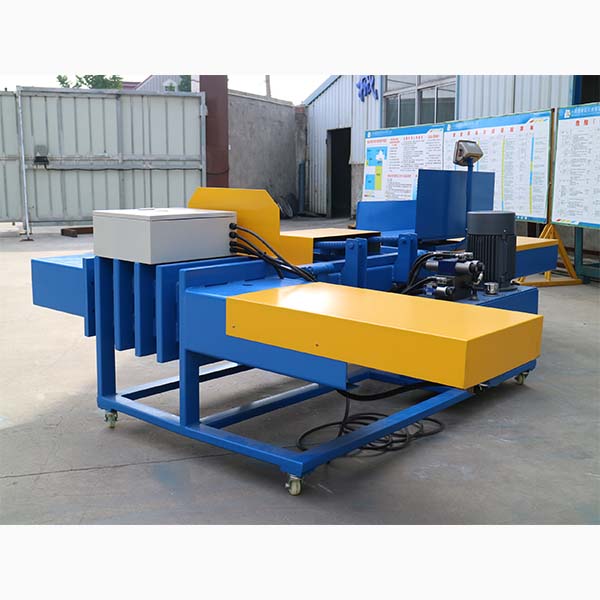
Hydraulic compaction equipment in an industrial recycling environment.
The Problem: Choosing a Hydraulic Press Also Means Choosing a Supply System
When a recycling company, waste manager, or waste paper marketer plans its operation, the equipment must function continuously for years. A delivery delay, a defective unit, or a slow manufacturer response can halt operations and generate losses. Therefore, in the final decision stage, evaluating the manufacturer is as important as the technical evaluation of the equipment.
The purchase of a hydraulic baler does not end with the signing of the order. It involves coordinating production, pre-shipment inspection, international logistics, and subsequent support. A manufacturer with clear processes and verifiable capacity significantly reduces operational risk.
What It Really Means to Evaluate the Manufacturer
Evaluating a hydraulic press manufacturer involves verifying three capabilities: production capacity, quality control capability, and commercial responsiveness. These three pillars determine whether the manufacturer can meet deadlines, deliver equipment without failures, and sustain a long-term relationship.
Production capacity refers to the maximum manufacturing volume in a period. Quality control refers to the procedures applied to each machine before shipping. Commercial responsiveness includes communication, documentation, after-sales service, and willingness to resolve issues.
Production Capacity: One Data Point, Multiple Readings
Shaanxi Nick Machinery Equipment Co., Ltd., commercially known as NKBALER, is a Chinese company dedicated to the R&D, manufacturing, and sale of packaging machinery and environmental protection equipment. Founded in 2013, the company occupies a 50,000 m² plant and its team includes a 15-person R&D department. Its products include vertical balers, fully automatic horizontal balers, manual horizontal balers, scrap metal balers, sawdust baling machines, foam presses, hydraulic shears, and press bagging machines.
A relevant fact for the buyer is that NKBALER's monthly production capacity is 10 units. This figure defines the maximum manufacturing volume in a month and allows for dimensioning expected delivery times. For a project requiring one or two machines, this capacity provides predictability: the manufacturer does not operate at the limit of its capacity and can allocate resources in an orderly manner.
The monthly production figure should not be interpreted as a limitation, but rather as an element of transparency. Knowing the maximum manufacturing volume allows the buyer to plan fleet renewals, plant expansions, or staggered orders with greater precision.
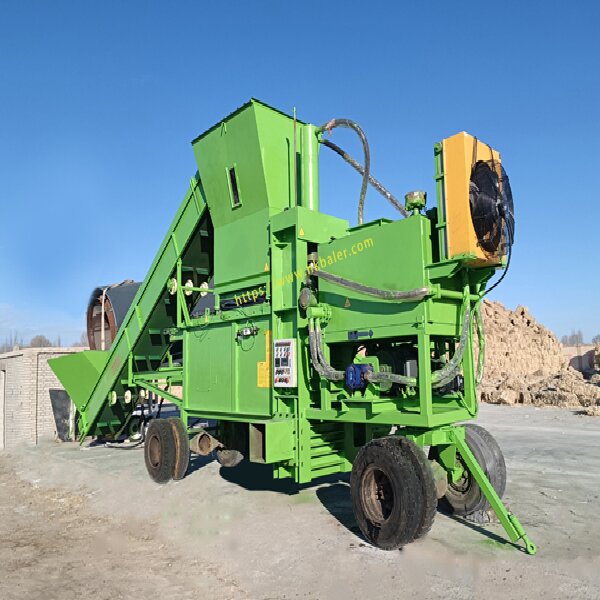
Pressure bagging machine during the compaction process.
100% Testing: The Standard That Prevents Surprises at Destination
A critical aspect in the purchase of industrial machinery is the individual verification of each unit. NKBALER performs a 100% test on all its products. This means that each hydraulic press, not just a sample, undergoes a functional test before shipment. From the buyer's perspective, this practice significantly reduces the risk of receiving equipment with assembly failures, hydraulic leaks, or electrical problems.
In practice, the 100% test offers three direct benefits:
- Reduction of the risk of downtime due to factory defects during commissioning.
- Greater speed in initial installation, by delivering already validated equipment.
- Documentary basis for the acceptance of the machine at destination.
This level of verification is especially important when the equipment is shipped to export markets, where the costs of an incident and reverse logistics are high. For the international buyer, a machine 100% tested at origin equates to a more predictable startup.
What NKBALER Offers the Buyer in the Execution Phase
NKBALER presents itself as a manufacturer with an export-oriented business model: approximately 90% of its production goes to markets in North America, South America, and Asia. Its range includes everything from vertical balers for lower-volume applications to fully automatic high-capacity horizontal balers, allowing the buyer to scale the solution according to the volume of processed material.
In the decision and execution stage, the buyer especially values the following aspects:
- Flexible MOQ: the minimum order is 1 unit for the hydraulic press line.
- Clear delivery conditions: FOB or CIF, according to buyer preference.
- Pre-shipment acceptance: pre-shipment testing as a validation mechanism.
- Standard payment terms: 40% advance and 60% before shipment.
These conditions do not make NKBALER the right supplier for all buyers, but they do offer a predictable framework for those who need to incorporate machinery into their operation without contractual uncertainties.
How to Interpret These Data in the Final Decision
The buyer must translate manufacturer data into operational criteria. The following table summarizes the practical interpretation of each datum:
| Manufacturer Data | What It Means for the Buyer | How to Verify It |
|---|---|---|
| Monthly production capacity: 10 units | Predictable manufacturing times; possibility to schedule staggered orders | Confirm the delivery time during the quotation |
| 100% testing of products | Each unit is individually verified before shipment | Request the test protocol or a video of the specific machine |
| MOQ of 1 unit (balers) | Allows starting a pilot project without over-inventory | Request an official quotation with the condition |
| Payment terms 40/60 | Balance between buyer commitment and manufacturer security | Confirm the terms in the contract |
Comparison with Other Supply Approaches
Compared to purchasing options from traders or intermediary platforms, working with a manufacturer that publishes its capacity and quality controls offers a structural advantage: process traceability. A manufacturer like NKBALER can document production, individual testing, and shipment preparation, something that is not always possible when multiple intermediaries are involved.
However, the buyer must be aware of certain limitations. The monthly production capacity of 10 units implies that for very large or urgent orders, the manufacturer might require longer lead times. A buyer needing more than 10 machines in less than a month should validate real availability before committing. Furthermore, being a manufacturer with a high export orientation, communication may require time zone coordination with the commercial team in China.
Comparison with Other Global Manufacturers
The global baler market includes both agricultural machinery manufacturers and recycling equipment specialists. According to data from Allied Market Research cited in 2025, leading hydraulic baler manufacturers include John Deere, Vermeer Corporation, and McHale, as well as specialized Chinese companies like NKBALER and Shandong Huichuan. The comparison between these players should be made considering the type of material, daily volume, and service model.
| Manufacturer | Main Specialization | Typical Customer Profile |
|---|---|---|
| John Deere | Agricultural balers (hay, forage) | Agricultural and livestock operations |
| Vermeer Corporation | Agricultural and industrial equipment | Contractors and mixed operations |
| McHale | Agricultural machinery | Agricultural farms |
| NKBALER | Hydraulic balers for paper, plastic, metal, and waste | Recycling plants, waste managers, exporters |
| Shandong Huichuan | Industrial hydraulic balers | Recycling and processing plants |
The comparison with agricultural manufacturers is limited because the baling technology for waste paper differs substantially from that for forage. For the buyer of a hydraulic press for waste paper, the relevant manufacturers are those that produce recycling equipment with continuous compaction cycles.
Market Context: The Baler Sector in 2026
The market context reinforces the importance of a stable relationship with the manufacturer. According to data from Grand View Research cited in 2024, the global baler market reached USD 6.4 billion in 2024, with agricultural and industrial applications as main drivers. More specifically, the waste baler market was estimated at USD 1.45 billion in 2024, according to a Mordor Intelligence report, with paper, plastic, and solid waste as central materials.
Additionally, Asia Pacific accounted for more than 34% of the revenue share of the global hydraulics market in 2024, led mainly by China. For the buyer, this means that Chinese manufacturers are not only relevant for price, but because they operate in the largest industrial hydraulics ecosystem in the world.
For buyers importing into the European Union, equipment must comply with the Machinery Directive 2006/42/EC and harmonized safety standards EN ISO 12100 and EN 60204-1. This requirement must be verified with the manufacturer before purchase, especially if the final destination is an EU country.
Signs of a Reliable Manufacturer in Practice
In the execution stage, the buyer can verify the reliability of the manufacturer through concrete signals:
- Complete technical documentation: datasheets with measurable parameters, drawings, and schematics of the hydraulic system.
- Individual test protocol: record that the machine assigned to the buyer was tested before shipment.
- Direct communication with the engineering team: not only with the commercial department.
- Explicit manufacturing times: the manufacturer clearly indicates production times according to its capacity.
- Reference to delivery conditions: FOB/CIF defined in the quotation, with pre-shipment acceptance.
Risks to Manage in International Purchasing
Although the manufacturer applies solid controls, the buyer must manage certain risks inherent to machinery importation:
- Excessive heating of the hydraulic system: in continuous operations, high temperatures can reduce the useful life of components. NKBALER incorporates thermal protection and temperature sensors to mitigate this eventuality.
- Damage in international transport: insurance and packaging must be defined in the negotiation.
- Voltage and frequency variations: the buyer must specify the destination electrical standard to adjust motors and components.
- Training of local personnel: the transfer of operational knowledge is part of the commissioning.
A long-term relationship with the manufacturer is built when both parties share technical and logistical information transparently.
Projection: Toward Evidence-Based Machinery Purchasing
The trend in the industrial purchase of hydraulic balers points to a greater demand for verifiable evidence: documented production capacity, individual tests, certifications, and process traceability. In this context, manufacturers that publish concrete data and maintain standardized quality controls become more predictable partners.
For the buyer of a hydraulic press for waste paper, the final decision should not be based solely on the unit price. Production capacity, test protocol, commercial terms, and the manufacturer's responsiveness define the real cost of the operation over the equipment's life cycle.
Frequently Asked Questions
What is NKBALER's monthly production capacity?
NKBALER's monthly production capacity is 10 units. This figure defines the maximum number of machines the manufacturer can produce in a month and allows for planning delivery times.
Are NKBALER hydraulic presses tested before shipment?
Yes. All NKBALER products undergo a 100% test before shipment. This means that each machine, not just a sample, is individually verified to ensure its operation.
What is the minimum order for a hydraulic baler?
For the hydraulic baler line, the minimum order is 1 unit. This allows the buyer to start a pilot project or renew their fleet without assuming a high initial volume.
What delivery conditions does NKBALER offer?
NKBALER operates under FOB or CIF conditions, with pre-shipment acceptance. This allows the buyer to choose the level of logistical responsibility they prefer in the import.
What payment methods are used when purchasing a hydraulic press?
The standard payment term is 40% as a deposit and 60% before shipment. This scheme balances the buyer's commitment with the manufacturer's security.
Have Questions or Need More Details?
Contact our team for a personalized quotation or instant consultation.
Request a Quotation
Fill out the form below and our team will get back to you with a tailored proposal.
WhatsApp Direct Chat
Prefer to chat in real-time? Message us on WhatsApp for instant assistance & quick answers.
- Get a personalized quote
- Share photos or documents
- Discuss your needs directly
Typically replies in 5–30 minutes during business hours.