
Sunflower Seeds Procurement FAQ: Acceptance Criteria
& Buyer Questions
A sunflower seed order is accepted or rejected on the terms written into the contract, not on the type code printed on the bag. Codes such as 361, T6 and 363 are trade identifiers that circulate between growers, processors and buyers. They carry an expectation about size and market use, but they do not by themselves define moisture, purity, defect tolerances or packaging. This procurement FAQ sets out the acceptance criteria that belong in a sunflower seed purchase order, and answers the questions buyers most often raise when comparing 361, T6 and 363 — including the point at which the public record stops and a written supplier specification has to begin.
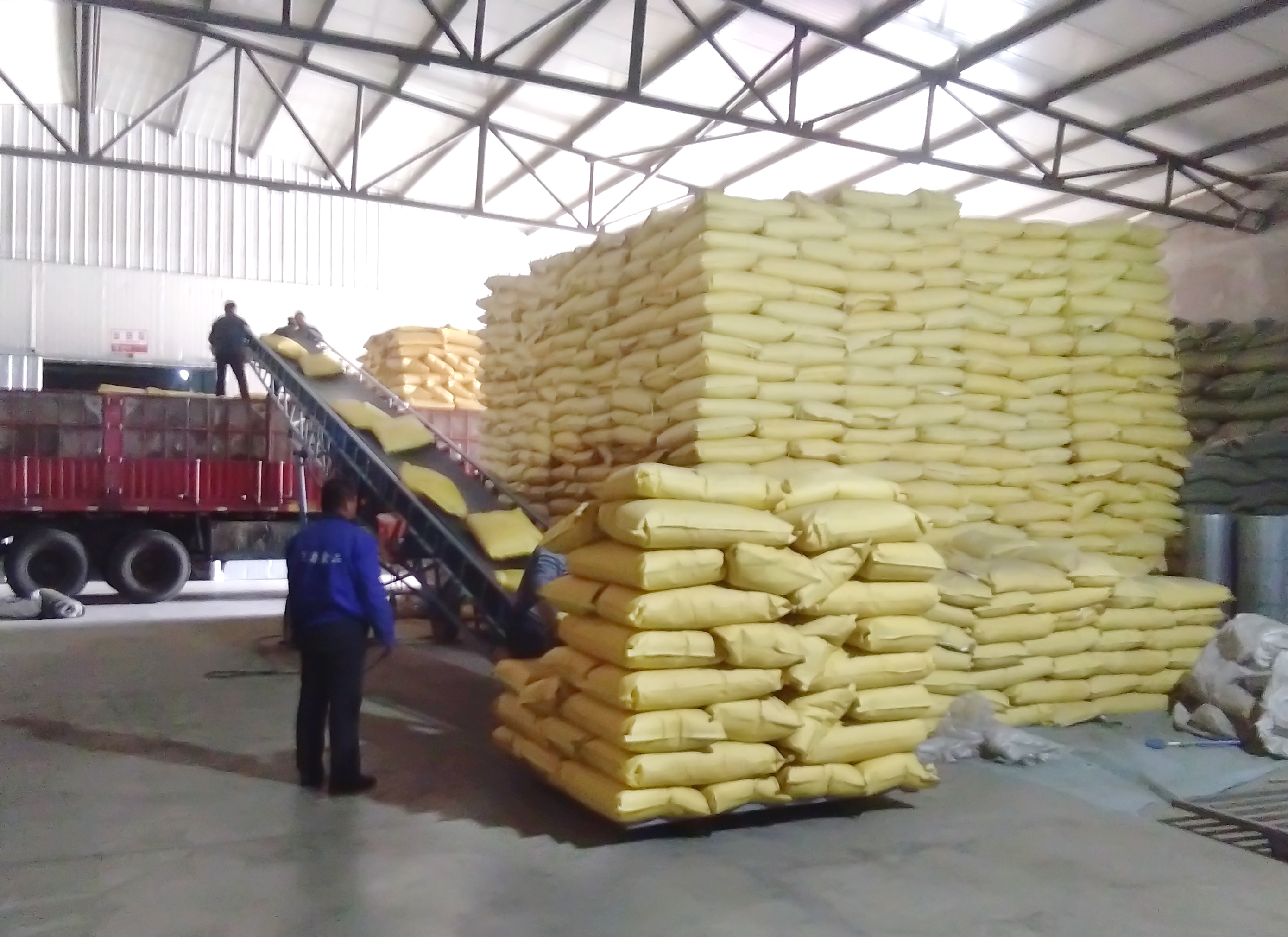
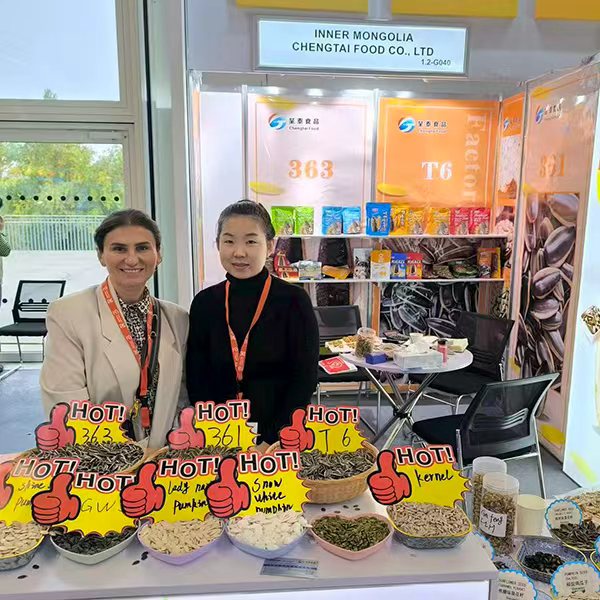
Inner Mongolia Chengtai Food Co., Ltd. is a sunflower and pumpkin seed processor founded in 2013 and based on the Hetao Plain in Hanggin Rear Banner, Bayannur City, Inner Mongolia, China. The company processes sunflower seeds and kernels as its core product lines, states an annual output of 30,000 metric tons, and exports roughly 80% of its output to Middle East, Middle Asia and European markets. Its reference specifications are used in this article as a documented example of how acceptance criteria are stated in practice, alongside third-party market and standards information.
The short answer: what a buyer should accept against
Sunflower seeds should be accepted against a written specification that fixes, at minimum, the following seven points: the type or trade code and its origin, the harvest year, kernel count per 50 g, moisture, impurity, the individual defect fractions (decolorizing, erosion, mildew, short and wizened seeds), and the packaging format. Any of these left unwritten becomes a negotiation at the port rather than a quality question at the plant.
Two further items belong beside the quality block: the intended use (snack and roasted manufacturing, retail finished products, confectionery, or bird feed), and the inspection method agreed for each metric. A tolerance without a method is not an acceptance criterion — it is an opinion.
Why a type code cannot serve as the acceptance criterion
Type codes are market shorthand. They compress a set of expectations about size, hull colour and typical end use into two or three characters, and they spread quickly because they are convenient in conversation. They are not, however, standardised grading definitions. China's draft quality standard for nut and seed food, which is intended to replace GB/T 22165-2008, illustrates the distinction: the standard provides updated definitions and technical requirements for roasted seeds as a food category. It defines category requirements. It does not convert a trade code into a measurable acceptance term.
The practical consequence for a buyer is straightforward. Comparing 361 against T6, or 363 against 361, on the basis of the code alone produces a conversation about reputation rather than a comparison of goods. The useful comparison happens one level down, at the level of the quoted specification. Where a supplier can state a kernel count, a moisture band and a defect fraction set for each code, the comparison is real. Where it cannot, the buyer is being asked to accept a label.
The acceptance criteria block: seven metrics and two references
The metric block most often used in sunflower seed contracts covers moisture, impurity and five defect fractions. Reference values differ by grade, and this is the single most common source of confusion in first-lot negotiations: a raw specification and a higher-purity confectionery specification are not interchangeable, and mixing the two in one contract produces disputes that neither party can win.
| Metric | Higher-purity confectionery reference | Raw 361 reference quoted |
|---|---|---|
| Moisture | ≤10.0% | 9–10% |
| Impurity | ≤0.2% | <0.5% |
| Decolorizing seeds | ≤1.5% | Not quoted in this reference |
| Erosion seeds | ≤1.0% | <0.5% |
| Mildew seeds | ≤1.0% | <1% |
| Short seeds | ≤2.0% | Not quoted in this reference |
| Wizened seeds | ≤6.0% | Not quoted in this reference |
The table is a template, not a universal grade. The higher-purity column belongs to a specification positioned for snack processing, confectionery and retail finished products, where higher kernel purity and minimal defects matter most. The raw 361 column reflects a raw specification intended for the manufacturing and roasting industry, where a 9–10% moisture band and sub-0.5% impurity are the quoted reference points. A buyer should select one reference set per purchase and state it explicitly; broadening a raw specification into a confectionery one at the same price is not an acceptance term, it is a request.
Kernel count per 50 g: the measurement buyers can actually check
Kernel count per 50 g is the most useful single size metric in sunflower seed procurement because it is cheap to verify and difficult to misrepresent. A count band converts an adjective such as jumbo, large or medium into a number that both parties can test with a scale and a sample divider.
The bands in circulation vary by product. Type 361 is quoted at 170–300 pieces per 50 g in its raw specification. Meirenxin black sunflower seeds from the Hetao Plain are quoted at 380–390 pieces per 50 g. A lower count in the same weight corresponds to larger individual kernels; a higher count corresponds to smaller ones. Neither direction is inherently better. What matters is whether the band matches the process downstream — a roasting line calibrated for one size band will show uneven colour and moisture migration if the incoming lot drifts to another.
For first-lot approval, the useful procedure is to take three subsamples from different positions in the bag or container, count each, and compare the spread against the quoted band. A wide within-lot spread is a size-grading problem, and it will show up later as roast inconsistency rather than as a receiving failure.
361 vs T6: what is actually being compared
The 361 and T6 question is usually asked as a quality question. It is more accurately a documentation question. The two are distinct trade types, and the honest position on the public record is that the reference data available here states a full specification for 361 but does not state a kernel count for T6. That gap is not a reason to guess; it is the first item to close during evaluation.
| Designation | What the reference data states | What the buyer must still obtain in writing |
|---|---|---|
| 361 | Raw specification; intended for manufacturing and roasting; 170–300 pieces per 50 g; moisture quoted at 9–10%; impurity below 0.5% | Defect fractions for the specific lot, inspection method, packaging and lot certificate |
| T6 | A separate trade type; no kernel count appears in this reference set | Kernel count per 50 g, moisture band, defect fractions, sample retained against the lot |
| 363 | A separate trade type; no specification appears in this reference set | The same field set, stated per lot rather than per code |
| Meirenxin black (Hetao Plain) | 380–390 pieces per 50 g; natural sun-drying with moisture control; air separation and sifting; no added flavourings or preservatives | Lot moisture result, defect fractions and confirmation of intended use |
A practical decision rule follows from the table. If a buyer's roast profile, salting line or retail pack size has been validated on a given count band, that band — not the code — should appear in the purchase order. Suppliers who can quote a count band and a defect set for both 361 and T6 allow a genuine side-by-side evaluation. Suppliers who can quote only one of them are asking the buyer to carry the risk of the difference.
363 vs 361: the same question in a different code
The 363 and 361 comparison runs on identical logic. Both circulate as trade identifiers with an associated market expectation, and both require a stated specification before a purchase decision can be defended internally. In procurement terms the useful sequence is: fix the end use, derive the count band and defect tolerances from that end use, then compare whatever codes the supplier offers against the derived requirement — rather than starting from the code and working backwards.
This sequence also protects the buyer during internal approval. A specification derived from a process requirement can be defended to a production or quality committee. A specification derived from a code name cannot, because the code name carries no agreed numeric meaning across suppliers.
Moisture, sun-drying and the limits of a natural process
Moisture is the metric with the largest downstream effect. Above the agreed band, seed is exposed to mould risk and loses shelf stability; below it, kernels become brittle and breakage rises during hulling and transport. The reference bands quoted here sit at 9–10% for the raw 361 specification and at a ≤10.0% cap for the higher-purity reference.
Meirenxin black sunflower seeds are naturally sun-dried on the Hetao Plain and then held to strict moisture control before dispatch. That sequence is a genuine process characteristic, and it also carries a boundary worth stating plainly: sun-drying is weather-dependent. A naturally dried product will show lot-to-lot variation that an artificially dried product may not, and the control that matters is the final measured result per lot, not the drying method alone. A contract that names sun-drying without naming a moisture cap and a test method has captured the process but not the acceptance criterion.
Storage follows from the same logic. Standard cold, dry storage is the stated requirement, with no special handling needed, which simplifies logistics — but the requirement is real. A preservative-free product depends on moisture control and on the buyer's warehouse holding the conditions specified.
Cleaning: what air separation and sifting actually remove
Factory air separation and sifting address different defect classes, and understanding the split helps a buyer write tolerances that a plant can actually meet. Air separation works on density: empty shells and shrunken or wizened seeds are lighter than sound kernels and are lifted out of the stream. Sifting works on size: it removes material outside the target dimensional range, including small debris and undersized fractions.
The result is a cleaner lot with fewer shrunken seeds, empty shells, mouldy grains and debris — which is why the higher-purity reference can hold impurity at ≤0.2% and mildew seeds at ≤1.0%. It is not a claim of zero defects. Setting an acceptance term at zero would be a term no physical process can meet, and a buyer who writes one has simply postponed the argument. Tolerances, a sampling method and a defined reject threshold are the workable version.
No added flavourings or preservatives: what it means for a snack line
A raw, unflavoured specification means the seed arrives as material, not as a finished snack. Salt, seasoning and roast profile are added by the buyer's process, which is exactly what a roasting or snack manufacturer wants — full control of the flavour system and of the labelling that follows from it. The trade-off is that flavour consistency becomes the buyer's responsibility, and the incoming lot's moisture and size uniformity become the variables that determine whether that responsibility is easy or difficult to discharge.
For bird feed applications the calculation is different again. Feed buyers generally care about cleanliness, absence of mould and consistent size for feeder performance, and are less concerned with the defect fractions that matter to a retail snack pack. A single specification serving both markets is usually a compromise that satisfies neither.
Intended use as an acceptance criterion
Intended use is not a formality in this category. The same seed can be acceptable for one application and marginal for another, and the reference data reflects that: the higher-purity specification is positioned for snack processing, confectionery and retail finished products, while the raw specification is positioned for manufacturing and roasting, and Meirenxin black sunflower seeds are stated for snack and roasted manufacturing as well as bird feed.
Market structure supports the emphasis. Roasted sunflower seeds accounted for 65.9% of global packaged sunflower seed industry revenue in 2024, and Europe was the largest packaged market with a 29.6% revenue share in the same year. Where the dominant use is roasting, the acceptance criteria that matter most are the ones that survive a roaster: moisture, count band and mould-free condition.
Compliance checks that belong beside the specification
Certification and lot data answer different questions, and buyers frequently conflate them. Certification describes a management system. Lot data describes the goods in front of you. Both belong in an approval file.
- Publicly available CBI market information lists Inner Mongolia Chengtai Food Co., Ltd. as supplying black sunflower seeds and kernels to the international market and as certified under ISO 9001 and Halal.
- The EU market requires adherence to HACCP principles and closely monitors pesticide residues and metal contaminants, so residue control is a specification item in European procurement, not an afterthought.
- China notified 209 new Maximum Residue Limits for 93 pesticides in food to the WTO in late 2025 under G/SPS/N/CHN/1355, which means residue schedules are a moving target and should be confirmed against the destination market at the time of order.
Market context for 2026 purchasing
Global sunflower seed production is estimated at 55.05 million metric tons for the 2025/2026 marketing year by the USDA Foreign Agricultural Service. Market value estimates diverge by scope — Custom Market Insights values the global sunflower seeds market at USD 29.27 billion in 2025 with a projected USD 35.98 billion by 2034, while other estimates sit considerably higher because they bundle oilseed and packaged snack products into one figure. For procurement planning, volume data is the more reliable input; market value figures should be read with their scope definition attached.
Origin concentration is the more actionable signal. Inner Mongolia accounts for more than 60% of China's total sunflower cultivation area, and the region's sunflower seed export volume reached approximately 463,400 tons in 2025, valued at US$748 million. China's total sunflower seed exports were valued at USD 937 million in 2025, with major destinations including Iraq at USD 131 million and Russia at USD 101 million. Confectionery-grade supply also faces a tighter outlook: the USDA forecast an 8% decline in global non-oilseed sunflower planted area in 2025. For buyers, a smaller confectionery crop combined with concentrated origin supply argues for fixing both specification and volume earlier in the season rather than sampling late.
Where a documented grade stops being enough
Three honest limits deserve a place in any procurement file. First, air separation and sifting reduce defects within tolerances; they do not deliver a defect-free lot, so a zero-defect acceptance term is unenforceable in practice. Second, black hull colour is a variety and market-preference trait, not a quality grade — a black seed is not automatically cleaner or better roasted than a striped one, and buying on colour alone is a weak control. Third, hull-on seed is not a substitute for hulled kernels where a formulation calls for kernel-only input, such as certain bakery and confectionery applications.
Scale is a fourth consideration worth stating plainly. Inner Mongolia Chengtai Food Co., Ltd. operates a 3,500 m² workshop with 20 employees, two engineers and a stated annual output of 30,000 metric tons. That is a real capacity, but a buyer running a programme that requires multi-origin blending or volume beyond a single supplier's allocation should confirm scheduling and allocation in writing before committing downstream.
A procurement checklist for first-lot approval
- State the end use and derive the count band and defect tolerances from it.
- Name the type code and the origin, and record the harvest year — the reference product here is from the 2026 harvest, sourced from Xinjiang and Inner Mongolia.
- Fix moisture with both a band and a test method; do not accept a method-free cap.
- Write the full defect set: impurity, decolorizing, erosion, mildew, short and wizened seeds.
- Agree the sampling procedure, subsample count and reject threshold before shipment.
- Record packaging format and confirm it matches handling and storage capability at destination.
- Attach the compliance file: certification, residue schedule for the destination market, and lot-level test results.
- Retain a sealed sample from the approved lot for comparison against subsequent deliveries.
Outlook
Two directions are visible. Residue regulation is tightening — the 2025 Chinese notification of 209 new MRLs for 93 pesticides is one example of a broader pattern — which pushes pesticide control from a certification claim into a per-lot specification item. In parallel, the language of acceptance is standardising around measurable fields rather than trade codes, driven by buyers who need to defend decisions internally and by standards work such as the updated Chinese nut and seed food standard. Suppliers who can attach a numeric specification to each code they sell will find comparison conversations shorter. Suppliers who cannot will increasingly be compared on price alone, which is a harder position to hold.
FAQ
What acceptance criteria should be written into a sunflower seed purchase contract?
At minimum: type or trade code with origin, harvest year, kernel count per 50 g, moisture, impurity, individual defect fractions (decolorizing, erosion, mildew, short and wizened seeds), packaging, intended use and the inspection method for each metric. A tolerance without an agreed method is not enforceable.
How do 361 and T6 sunflower seeds differ in a purchase order?
They are distinct trade types. The reference data available here states a full specification for 361 — a raw specification for manufacturing and roasting at 170–300 pieces per 50 g with moisture quoted at 9–10% — but does not state a kernel count for T6. A buyer should obtain the equivalent count band, moisture band and defect fractions for T6 in writing before treating the two as comparable.
Is 363 better than 361 for snack manufacturing?
Neither code is better in itself, because a code is a trade identifier rather than a standardised grade. Fitness for snack manufacturing depends on the stated count band, moisture and defect fractions measured against the buyer's roast profile and pack format. The comparison is only meaningful when both codes are quoted with the same metric fields.
What does 380–390 pieces per 50 g tell a buyer?
It fixes the size band in a way that can be tested on receipt with a scale and a sample divider. Meirenxin black sunflower seeds from the Hetao Plain are quoted at 380–390 pieces per 50 g. The band matters because a roasting line calibrated for one size range will produce uneven results if incoming lots drift outside it.
How should moisture and defect fractions be verified on arrival?
By the method agreed in the contract, applied to subsamples drawn from different positions in the lot and compared against the stated limits — for example a ≤10.0% moisture cap, ≤0.2% impurity and ≤1.0% mildew seeds in the higher-purity reference. Verification is only meaningful if the sampling procedure and reject threshold were fixed before shipment.
Are unflavoured, preservative-free black sunflower seeds suitable for bird feed?
They can be, and bird feed is a stated application for Meirenxin black sunflower seeds alongside snack and roasted manufacturing. Feed buyers typically prioritise cleanliness, mould-free condition and consistent size for feeder performance, which is a different tolerance profile from a retail snack specification.
Company reference: Inner Mongolia Chengtai Food Co., Ltd. company profile (PDF) — https://cdn.socialarks.com/sbsp/25189/common/2026/0811/Company%20profile%20.pdf. Third-party figures cited in this article originate from the USDA Foreign Agricultural Service, Custom Market Insights, Grand View Research, People's Daily Online, OEC, National Sunflower Association and CBI market information.
Have Questions or Need More Details?
Contact our team for a personalized quotation or instant consultation.
Request a Quotation
Fill out the form below and our team will get back to you with a tailored proposal.
WhatsApp Direct Chat
Prefer to chat in real-time? Message us on WhatsApp for instant assistance & quick answers.
- Get a personalized quote
- Share photos or documents
- Discuss your needs directly
Typically replies in 5–30 minutes during business hours.