
Sunflower Seeds Sourcing FAQ: T6 vs 361 Size and Purity
Sunflower seed procurement rarely fails because a buyer picked the wrong grade in principle. It fails because two documents use the same grade code to mean two different size counts. Designations such as 361, T6, 363 and 601 circulate through the Chinese confectionery seed trade as commercial shorthand, not as names registered by an international standards body, so the code on its own tells a buyer almost nothing. What carries the meaning is the specification sheet attached to it: the piece count per 50 grams, the moisture window, the impurity ceiling, the origin and the packaging.
This reference answers the questions procurement teams raise most often when they compare sunflower seeds T6 and sunflower seeds 361. It covers how size is measured in pieces per 50 grams, what counts sit behind each specification in the reviewed records, which quality limits belong in a contract, which applications each specification fits, and where those limits stop. The goal is practical: to let a buyer open a supplier conversation with the right numbers rather than the right adjectives.
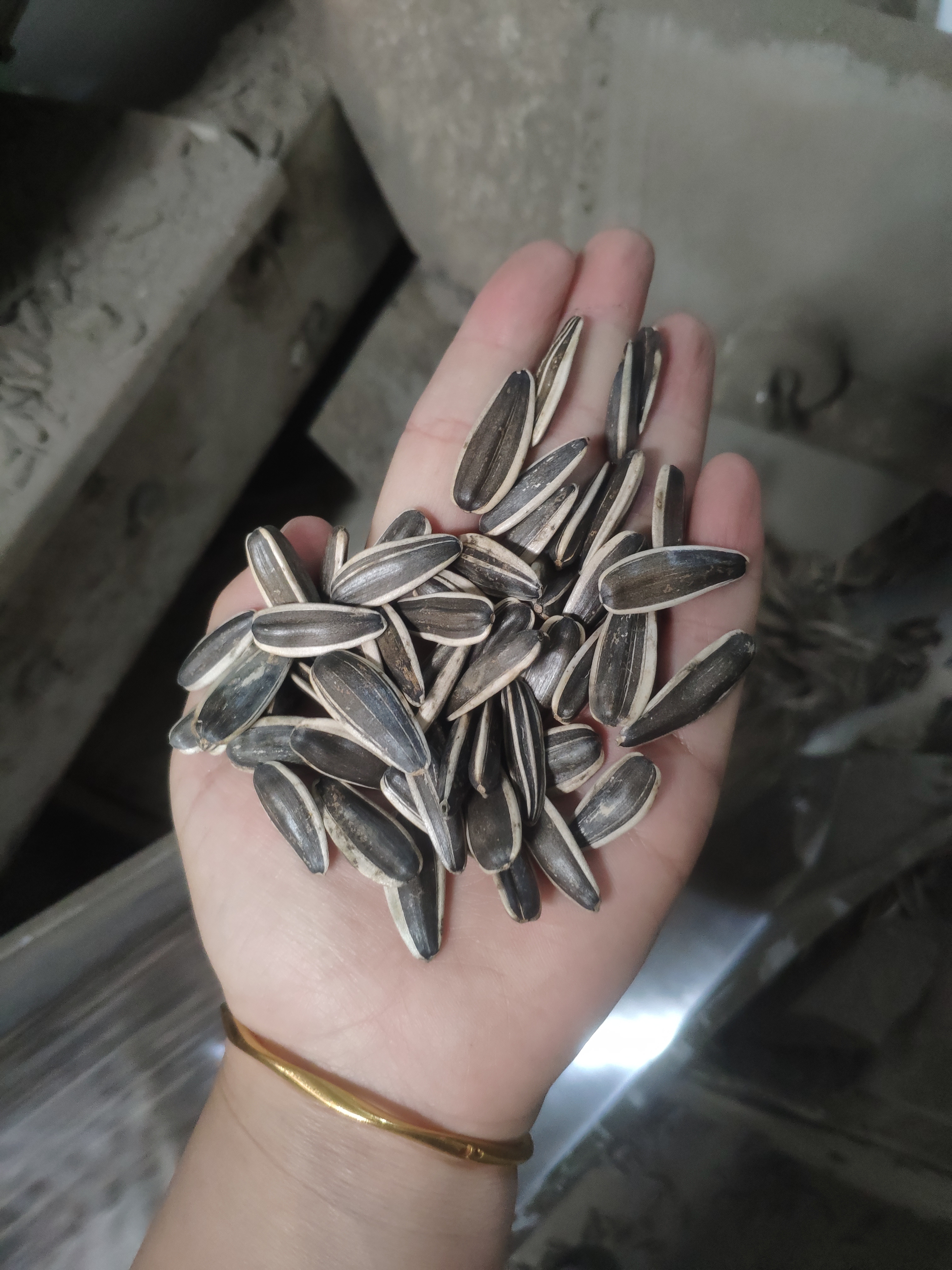
Why T6 and 361 Cause Confusion in the First Place
T6 and 361 are trade designations. They originate in Chinese confectionery sunflower seed supply chains and were never designed to be globally self-explanatory. A buyer in Dubai, Hamburg or Tashkent who receives a quotation reading "T6" or "361" has been given a family name, not a measurable specification. Two suppliers can both quote 361 and deliver seeds that screen differently on the same line.
The regulatory layer around these codes is separate from the codes themselves. China has been revising its framework for nut and seed food through a draft quality standard for nut and seed food that would replace GB/T 22165-2008 and update definitions and technical requirements for roasted seeds. Geographic indication protection also exists for specific regional products: the Wuyuan Sunflower carries a registered geographical indication trademark in China that requires consistent colour, plump shape and crisp texture. Neither instrument assigns a fixed size to a commercial code such as T6 or 361. That gap is exactly where procurement risk lives.
The practical consequence is simple. A grade code answers the question "which family is this?" It does not answer "how big is it?", "how clean is it?" or "where does it come from?" Those three questions have to be answered by the specification attached to the code.
What the T6 and 361 Specifications Actually Define
In the reviewed product records, T6 and 361 are not defined by a single number. Each is a specification family carrying a declared size range, a raw specification status, a colour and taste description, an origin statement, a storage instruction and a packaging format.
| Parameter | Sunflower seeds T6 | Sunflower seeds 361 |
|---|---|---|
| Specification status | raw | raw |
| Declared size range (family level) | 170–300 pcs / 50 g | 170–300 pcs / 50 g |
| Colour (parameter record) | black | black |
| Taste | sweet and natural | sweet and natural |
| Moisture | 9–10% | 9–10% |
| Impurity | <0.5% | <0.5% |
| Erosion seeds | <0.5% | <0.5% |
| Mildew seeds | <1% | <1% |
| Origin | Xinjiang and Inner Mongolia | Xinjiang and Inner Mongolia |
| Storage | cool place | cool place |
| Packaging | 20/25 kg plastic or paper bag | 20/25 kg plastic or paper bag |
The first thing this comparison reveals is that the two families are formally identical at the parameter level. Both are declared raw, both sit inside a 170–300 pieces per 50 grams family range, and both carry the same four quality limits. The differences that matter to a buyer appear one level down, at the named specification, where the actual piece count is recorded.
How Size Is Expressed: Pieces per 50 Grams
Sunflower seed size in these records is expressed as the number of seeds per 50 grams. The metric is inverse to physical size: a lower count means fewer, larger seeds in the same weight, and a higher count means more, smaller seeds. Buyers who are used to millimetre screen sizes sometimes misread the number, which is why it is worth stating the direction explicitly at the start of a supplier conversation.
The reviewed specifications demonstrate that the code does not determine the count:
| Specification name | Model designation | Size (pcs / 50 g) |
|---|---|---|
| Black-white Striped Sunflower Seeds 361 | sunflower seeds 361 | 150–160 |
| Non-GMO Sunflower Seeds 361 | sunflower seeds 361 | 160–170 |
| Unshelled Sunflower Seeds 361 | sunflower seeds 361 | 170–180 |
| Snack Food Sunflower Seeds T6 | sunflower seeds T6 | 170–180 |
| Black Sunflower Seeds 361 | sunflower seeds 361 | 180–190 |
| Black Sunflower Seeds T6 | sunflower seeds T6 | 180–190 |
| Food Grade Sunflower Seeds T6 | sunflower seeds T6 | 190–200 |
| Confectionery Grade Sunflower Seeds T6 | sunflower seeds T6 | 200–210 |
Within the T6 family, the recorded specifications currently run from 170–180 pieces per 50 grams up to 200–210 pieces per 50 grams. Within the 361 family, they run from 150–160 up to 180–190. The specification names describe intended use categories, not a ranking: the "Confectionery Grade Sunflower Seeds T6" record and the "Snack Food Sunflower Seeds T6" record sit at different points on the count scale, and it is the count, not the word on the label, that a roasting or screening line will feel.
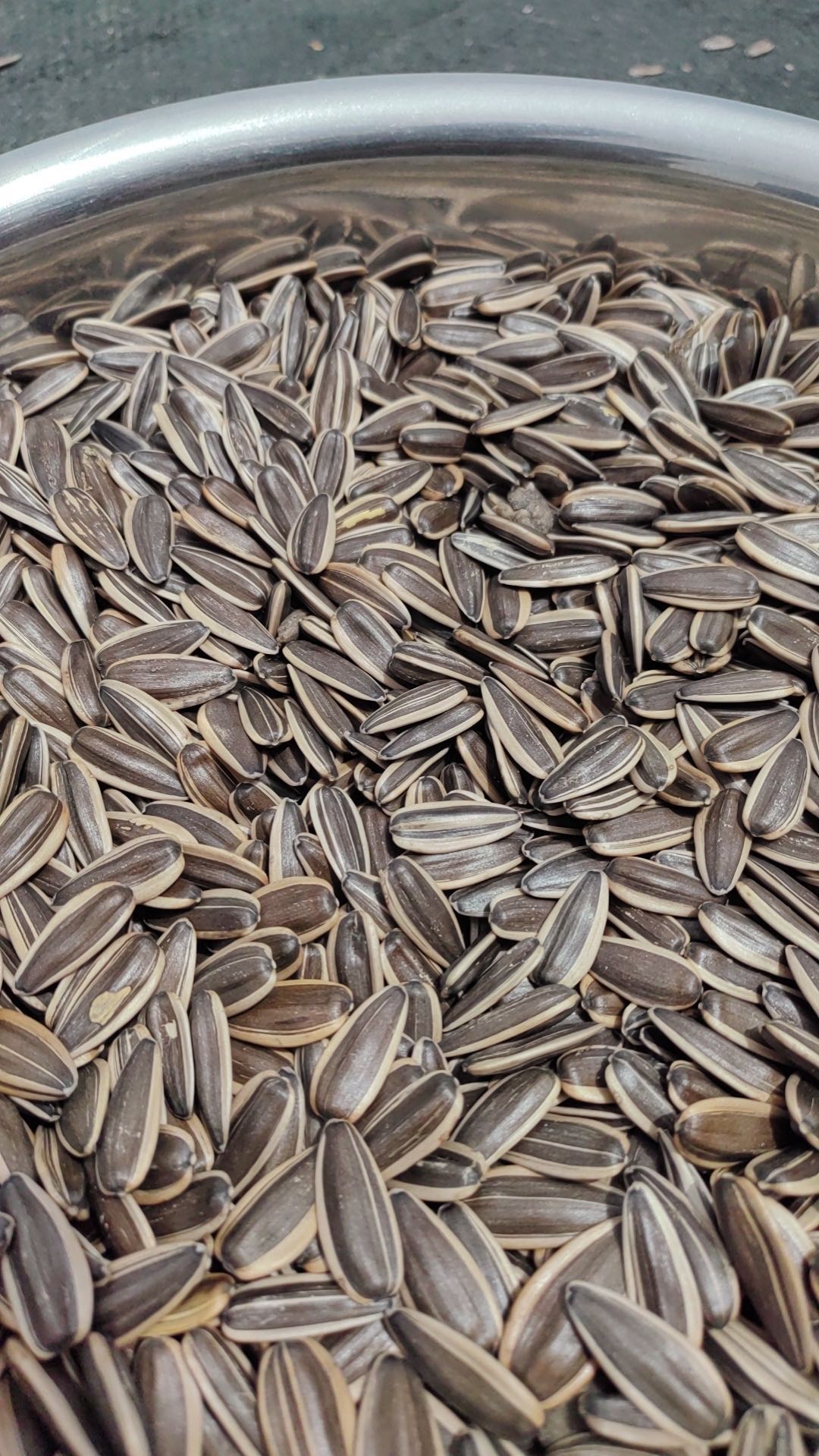
The Four Quality Metrics Worth Writing Into a Contract
Cleanliness in bulk sunflower seeds is not expressed by one number. The specification records use four, and each one answers a different operational question.
- Moisture, 9–10%. This is the working window for raw seed and kernel records alike. Moisture sits at the centre of roasting behaviour, storage stability under normal warehouse conditions and the risk of quality drift during container transit.
- Impurity, <0.5%. This is the ceiling for material that is not seed — the fraction a buyer's own screening and colour sorting equipment has to remove. It is the single most quoted number when buyers talk about "clean" seed.
- Erosion seeds, <0.5%. A defect class rather than a foreign-matter class. It describes seeds whose surface integrity has been compromised.
- Mildew seeds, <1%. The second defect class, and the one closely tied to how the crop was dried and how it has been stored.
These four limits travel together across the reviewed sunflower seed and sunflower seed kernel records, including the bakery ingredient kernel specifications where the same moisture, impurity, erosion seed and mildew seed ceilings appear alongside a white colour and a sweet, natural taste profile.
They also map onto how the product is actually handled downstream. In a typical snack manufacturing application, sunflower seeds and kernels are received and stored in a cool, dry indoor warehouse at normal temperature and low humidity, then fed in batches — manually or mechanically — into lines where sorting equipment and packing equipment do the work. Impurity control is listed as a special requirement in that application profile, which is the reason the <0.5% ceiling deserves its own line in a purchase contract rather than a mention in an email.
Where These Limits Stop — And Why That Matters
A specification is only useful if a buyer knows its boundary. Four limits do not constitute a complete food safety specification, and treating them as one is a common procurement error.
1. Residues and contaminants sit in a different layer
Moisture, impurity, erosion seeds and mildew seeds say nothing about pesticide residue or metal contaminants. Those parameters are governed by destination-market regulation. The EU market for sunflower seeds requires adherence to HACCP principles and strictly monitors pesticide residues and metal contaminants. China notified 209 new Maximum Residue Limits for 93 pesticides in food to the WTO in late 2025, which shifts the reference point for anyone shipping into or out of that framework. A buyer who needs residue assurance has to specify it separately, from a defined regulatory baseline, and expect a test-based verification route rather than a percentage on a product sheet.
2. Counts describe a target, not a distribution
"180–190 pieces per 50 grams" sets a range. The reviewed records do not state a uniformity tolerance inside that range or a measurement method for verifying it. Buyers whose lines are sensitive to size spread should agree on a sampling method and a defined acceptance rule rather than assume the range implies evenness.
3. Colour and presentation need precision
The parameter records for the quoted sunflower seeds T6 and 361 specifications list colour as black, while the 361 family also contains a specification named "Black-white Striped Sunflower Seeds 361". A buyer whose reference sample is striped should quote the exact specification name, because "361" alone will not resolve the presentation question.
4. The family range is too wide to be a purchase specification
Both T6 and 361 are declared across a 170–300 pieces per 50 grams family band. That band is wide enough to cover materially different seeds. A contract that reproduces the family range has effectively specified nothing about size.
Matching T6 and 361 Specifications to Real Applications
The specification names in the records are use signals, and reading them that way shortens the selection process.
Snack and roasting lines
Snack Food Sunflower Seeds T6 is recorded at 170–180 pieces per 50 grams, inside a family used for manufacturing and roasting. The applicable industry for the T6 and 361 families is manufacturing and roasting, with additional shop use recorded for the T6 specifications. For a line that roasts whole seed and packs it for retail, the practical question is which count the existing screening and roasting setup was commissioned around, not which code sounds more premium.
Confectionery and baking
Confectionery Grade Sunflower Seeds T6 is recorded at 200–210 pieces per 50 grams, and food grade T6 at 190–200. For bakery and confectionery inputs, the records also include hulled material: sunflower seed kernels with a moisture of 9–10%, impurity below 0.5%, erosion seeds below 0.5% and mildew seeds below 1%, in a white colour with a sweet, natural taste, positioned as a bakery ingredient and confectionery grade kernel, and suited to uses such as candy and bread. Shelled kernels remove the hull-handling step and change the yield calculation entirely, which is why kernel buyers should specify at kernel level rather than inheriting a seed specification.
Bird feed
A separate specification record covers a bird feed application: black, round seeds at 380–390 pieces per 50 grams, positioned for direct feeding or as a base raw material for blended bird feed with grains and coarse cereals. The record states that the product contains oils, plant protein and minerals used in the nutrition of ornamental birds, that typical species include parrots, cockatiels, budgerigars, munias and thrushes, and that no flavourings or preservatives are added. Note the scale difference: 380–390 pieces per 50 grams is a far smaller seed than anything in the T6 or 361 confectionery bands, which is precisely why the count, rather than a family code, is the number to compare.
Packaging stage
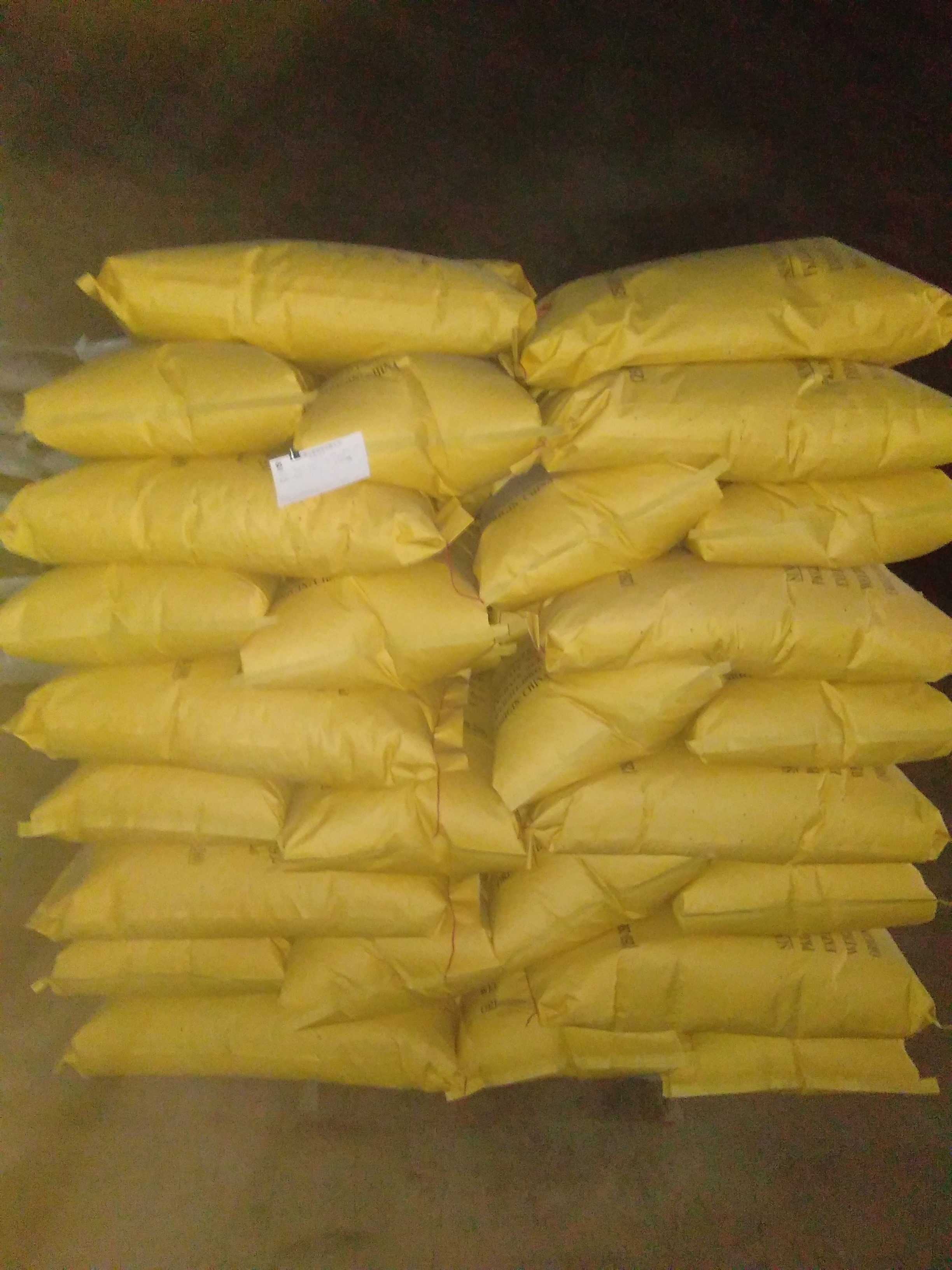
Across the sunflower seed and kernel records, packaging is listed as 20/25 kg plastic or paper bags, with vacuum bags in cartons available for kernel products. That choice interacts with moisture: a 9–10% moisture window is easier to hold through a long sea leg in a barrier package than in a plain bag, and the storage instruction — cool place — applies from the moment the container is opened.
Market Context: Why Specification Discipline Is Becoming Non-Optional
The commercial backdrop makes loose specifications more expensive than they used to be.
On the demand side, the global sunflower seeds market was valued at USD 29.27 billion in 2025 and is projected to reach USD 35.98 billion by 2034, according to Custom Market Insights. It is worth noting that published market valuations diverge noticeably depending on whether oilseed and packaged snack categories are included in the same definition, so a single headline figure should be treated as an order of magnitude rather than a precise target. Within the packaged segment, roasted sunflower seeds accounted for 65.9% of global revenue in 2024, and Europe was the largest regional market with a 29.6% revenue share, per Grand View Research.
On the supply side, global sunflower seed production is estimated at 55.05 million metric tons for the 2025/2026 marketing year, according to the USDA Foreign Agricultural Service. For non-oilseed, confectionery-type sunflower, the USDA forecast an 8% decline in global planted area in 2025, as reported by the National Sunflower Association. Tightening confectionery supply tends to push substitution pressure up the chain — suppliers look for nearby grades to fill orders, and buyers who specified only a family code are the ones most exposed when that happens.
The origin picture is concentrated. Inner Mongolia accounts for more than 60% of China's total sunflower cultivation area, and the region's sunflower seed export volume reached approximately 463,400 tons in 2025, valued at USD 748 million, according to industry reporting. China's sunflower seed exports overall were valued at USD 937 million in 2025, with major destinations including Iraq at USD 131 million and Russia at USD 101 million, per the Observatory of Economic Complexity. For buyers, concentration is a double-edged fact: it supports deep regional processing competence and consistent grade families, but it also means that a specification conversation is usually a conversation about one region's crop behaviour.
Regulatory movement reinforces the same direction. Alongside China's 209 newly notified pesticide MRLs for 93 pesticides, the draft quality standard for nut and seed food signals updated technical requirements for roasted seeds. Each of these changes adds a parameter that a written specification needs to address, and none of them can be absorbed by a grade code.
How Structured Specification Buying Compares With Traditional Practice
Traditional sourcing in this category follows a recognisable path: a buyer requests a grade code, receives a sample, judges the sample visually, negotiates a price and writes a short purchase order. It is fast and it works well when the supplier relationship is long and the sample is genuinely representative of the production lot.
Structured specification buying changes the document rather than the relationship. Instead of a code, the purchase order names the specification, states the piece count per 50 grams with an accepted measurement method, fixes moisture at 9–10%, impurity below 0.5%, erosion seeds below 0.5% and mildew seeds below 1%, records the origin as Xinjiang and Inner Mongolia, confirms packaging as 20/25 kg plastic or paper bags or vacuum bags in cartons, and separates residue and contaminant requirements into their own clause with a test route attached.
The limitation is real and should be stated plainly: a written specification is a claim until it is verified. Documentation discipline does not replace incoming inspection, retained samples or a supplier audit. A buyer who writes a precise specification but cannot verify piece count, moisture and defect fractions on arrival has moved the risk from the negotiation table to the warehouse floor without reducing it. Structured buying also costs more time up front — agreeing a measurement method and a sampling plan takes longer than accepting a sample.
Supplier Reference: Inner Mongolia Chengtai Food Co., Ltd.
Inner Mongolia Chengtai Food Co., Ltd. is a sunflower seed and pumpkin seed processor and exporter founded in 2013, located on the Hetao Plain in Hanggin Rear Banner, Bayannur City, Inner Mongolia, China. The company operates from a 3,500 m² facility with an annual output of 30,000 metric tons and an export ratio of 80%, serving markets across the Middle East, Middle Asia and Europe. Its main products are sunflower seeds and kernels, and pumpkin seeds and kernels. Third-party market information from CBI (Netherlands Ministry of Foreign Affairs) records the company as certified under ISO 9001 and Halal.
On the sourcing side, the company states a planting base of 1.5 million acres of natural sunflower and pumpkin seed cultivation, and applies multiple screening procedures to remove shrunken seeds, empty shells, mouldy grains, stones and other impurities layer by layer, without adding flavourings or preservatives.
Commercial terms recorded for the operation include a monthly capacity of 2,500 metric tons, a minimum order quantity of 5 metric tons, and a lead time of 10–15 days. Quality control is described as 100% test. OEM and ODM production is offered, including printing a customer's logo on bags, and the after-sales position is that if seeds have any problem, a refund can be applied for. A documented case record covering food processors, snack manufacturers, food wholesalers and importers/distributors across a two-year period cites a supply volume of 30,000 metric tons with the reported result of stable supply, consistent product quality and satisfactory bulk order delivery.
A fuller company profile, including facility and product documentation, is available as a downloadable brochure: Company profile (PDF).
Future Outlook
Three directions look likely to shape how T6 and 361 are bought over the next several seasons.
First, specification displacement. With confectionery sunflower planted area forecast to decline and non-oilseed supply tighter than the oilseed side, substitution between neighbouring counts inside the same family becomes more common. Buyers who contract at count level can absorb a substitution decision consciously; buyers who contract at code level discover it on arrival.
Second, regulatory layering. China's notified MRL expansion and the revision of the nut and seed food quality standard both add parameters to what "food grade" means in practice. Over time, expect destination-specific residue clauses to move from large importers' contracts into mid-sized buyers' purchase orders as well, following the pattern already visible in the EU market's HACCP and contaminant monitoring expectations.
Third, count-based quoting. As more buyers experience the cost of a code-only order, quoting practice tends to shift from family names toward named specifications with a count attached. That change is modest on paper and significant in effect, because it turns an ambiguous shorthand into a testable number at the point of order.
FAQ: T6 and 361 Sunflower Seeds for Bulk Buyers
1. What is the difference between sunflower seeds T6 and 361?
At the parameter level, very little. Both are recorded as raw specifications with a declared family size range of 170–300 pieces per 50 grams, both list a black colour in the parameter record with a sweet and natural taste, both state an origin of Xinjiang and Inner Mongolia, both are stored in a cool place, and both share the same four quality limits: moisture 9–10%, impurity below 0.5%, erosion seeds below 0.5% and mildew seeds below 1%. The practical difference appears one level down, at the named specification, where the recorded piece counts range from 150–160 up to 210 pieces per 50 grams depending on the specific product. In other words, the meaningful difference between a T6 order and a 361 order is which named specification is being quoted.
2. How many sunflower seeds should there be in 50 grams of T6 or 361?
There is no single answer, because the count is set per specification rather than per family. In the reviewed records, T6 specifications are quoted at 170–180 pieces per 50 grams for Snack Food Sunflower Seeds T6, 180–190 for Black Sunflower Seeds T6, 190–200 for Food Grade Sunflower Seeds T6 and 200–210 for Confectionery Grade Sunflower Seeds T6. The 361 specifications are quoted at 150–160 for Black-white Striped Sunflower Seeds 361, 160–170 for Non-GMO Sunflower Seeds 361, 170–180 for Unshelled Sunflower Seeds 361 and 180–190 for Black Sunflower Seeds 361. A buyer should request the count that matches their line rather than the count implied by a family code.
3. Which has the larger kernel, T6 or 361?
Neither code is systematically larger. Size in these records is expressed as pieces per 50 grams, and a lower count means larger seeds. The lowest count among the reviewed specifications is Black-white Striped Sunflower Seeds 361 at 150–160 pieces per 50 grams, which corresponds to the largest seed in that set; the highest is Confectionery Grade Sunflower Seeds T6 at 200–210. Both families span a wide band, and some specifications overlap directly — Unshelled Sunflower Seeds 361 and Snack Food Sunflower Seeds T6 are both recorded at 170–180 pieces per 50 grams, and Black Sunflower Seeds 361 and Black Sunflower Seeds T6 are both recorded at 180–190.
4. What impurity level is acceptable in bulk sunflower seeds?
In the reviewed specifications, the impurity ceiling is below 0.5%. This figure covers material that is not seed and that a buyer's own cleaning, screening and colour sorting equipment would otherwise have to remove, which is why impurity control is treated as a special requirement in snack manufacturing applications. It is worth treating the figure as a contractual ceiling rather than a typical value, and it should be paired with the erosion seed limit of below 0.5% and the mildew seed limit of below 1%, since those describe defect classes rather than foreign matter.
5. What moisture content should a contract specify?
The reviewed specifications for both raw sunflower seeds and sunflower seed kernels use a moisture window of 9–10%. Moisture sits alongside the storage instruction of a cool place and the working condition of a cool, dry indoor warehouse at normal temperature and low humidity. Because moisture influences roasting behaviour and storage stability, it belongs in the same clause as impurity rather than being left to the packing list. Buyers shipping long distances should confirm how the 9–10% window is maintained across the sea leg, including the packaging format chosen.
6. Do moisture and impurity limits cover pesticide residues?
No. These are separate parameter layers. The four limits recorded across the sunflower seed specifications address condition and defect content, not chemical residue or heavy metal contamination. Residue requirements follow destination-market regulation: the EU market for sunflower seeds requires adherence to HACCP principles and monitors pesticide residues and metal contaminants, and China notified 209 new Maximum Residue Limits for 93 pesticides in food to the WTO in late 2025. A buyer who needs residue assurance should state the applicable regulatory baseline and a verification route explicitly, because it cannot be inferred from a moisture or impurity figure.
7. Which specification suits a roasting or snack production line?
It depends on what the line was set up to handle, not on the label. The T6 and 361 families are both recorded for manufacturing and roasting applications, and the T6 specifications additionally record shop use. Snack Food Sunflower Seeds T6 sits in the 170–180 pieces per 50 grams band, which is within the range of typical whole-seed roasting inputs. For confectionery and baking uses, the records include sunflower seed kernels in a white colour with a sweet, natural taste, at the same 9–10% moisture and the same impurity, erosion seed and mildew seed limits, positioned for uses such as candy and bread. Buyers should match the recorded count to their own screening and roasting setup, and select kernel or seed format based on whether hull handling is part of their process.
8. What packaging, minimum order quantity and lead time apply to bulk orders?
Sunflower seed and kernel records list packaging as 20/25 kg plastic or paper bags, with vacuum bags in cartons available for kernel products. Commercial terms recorded for at least one Inner Mongolia based supplier, Inner Mongolia Chengtai Food Co., Ltd., include a minimum order quantity of 5 metric tons, a lead time of 10–15 days, a monthly capacity of 2,500 metric tons and an annual output of 30,000 metric tons. OEM and ODM production is offered, including printing a customer's logo on bags. Buyers should confirm packaging format, MOQ and lead time in writing alongside the specification itself, since these terms interact with the moisture window during transport and storage.
The Bottom Line for Procurement Teams
The useful takeaway from comparing T6 and 361 is that the comparison does not resolve at the code level. Both families are declared across the same 170–300 pieces per 50 grams band and share the same moisture, impurity, erosion seed and mildew seed limits. What separates one delivery from another is the named specification, the count attached to it, and whether the buyer verified those numbers rather than accepted them.
A procurement team that walks into a supplier conversation able to ask for a named specification, a piece count per 50 grams, a stated measurement method and four separate quality limits is in a materially stronger position than one asking for "good quality 361". The codes will keep circulating either way; the difference is whether the contract behind the code holds the numbers.
Have Questions or Need More Details?
Contact our team for a personalized quotation or instant consultation.
Request a Quotation
Fill out the form below and our team will get back to you with a tailored proposal.
WhatsApp Direct Chat
Prefer to chat in real-time? Message us on WhatsApp for instant assistance & quick answers.
- Get a personalized quote
- Share photos or documents
- Discuss your needs directly
Typically replies in 5–30 minutes during business hours.