
Sunscreen Spray SC-001 FAQ: Specs, pH, Shelf Life and OEM Terms
A sunscreen spray specification is only worth the paper it is printed on when every value can be traced to a formula, a container and a test. This reference works through the questions OEM buyers ask most often about aerosol cosmetic spray projects, using Tentop's Sunscreen Spray SC-001 as the worked example and applying the same reading method to the rest of the company's aerosol range.
Why sunscreen spray carries the heaviest question load
Sun care sits at the demanding end of personal-care aerosols. A sunscreen is regulated more tightly than a styling product in most markets, its headline claims are numeric — SPF value, water-resistance duration — and its performance is judged outdoors rather than in a mirror. A buyer who tolerates a loose specification for a deodorant may reasonably refuse one for a sunscreen, because the failure mode is a label claim that cannot be defended at customs or in a retail audit.
The commercial pull behind those questions is measurable. Dataintelo values the global cosmetic spray market at USD 18.3 billion in 2025 and projects USD 31.8 billion by 2034. Within that total, Research Reports World sizes the sunscreen spray segment at USD 786.7 million in 2026, rising to USD 1.54 billion by 2035 at a compound annual growth rate of 7.8%. Dataintelo attributes 42.3% of 2025 daily sunscreen spray revenue to Asia Pacific. Growth of that order rarely makes specification discipline optional; more often it separates a repeatable private-label line from a single seasonal run.
Who Tentop is, before the specification is read
Zhongshan Tentop Fine Chemical Co., Ltd. (TT Chem) is a contract manufacturer of cosmetic and household products founded in 2007 and based in Zhongshan, Guangdong Province, China. The company operates a 15,000 m² facility with 330 employees and reports annual output of 60,000,000 units. Its R&D team of 60 engineers has developed more than 6,000 formulas, and the company states that it holds 42 patents. Certification listings published by the company include ISO 9001, ISO 14000, ISO 22716, GMPc, ISO 45001, Halal MUI, SMETA and Disney.
Aerosol capacity is arranged across four high-speed aerosol filling lines, three BOV aerosol lines and two liquid filling lines, all housed in clean workshops. Propellant handling covers hydrocarbons, DME, 152a, 1234ze, nitrogen and CO₂. The main markets are the EU and the USA, and export accounts for 20% of sales. In practical terms, a buyer is dealing with a mid-sized Chinese OEM whose aerosol scope spans sun care, hair care, skincare, body care and baby care rather than a single-category specialist.
Sunscreen Spray SC-001: the documented record
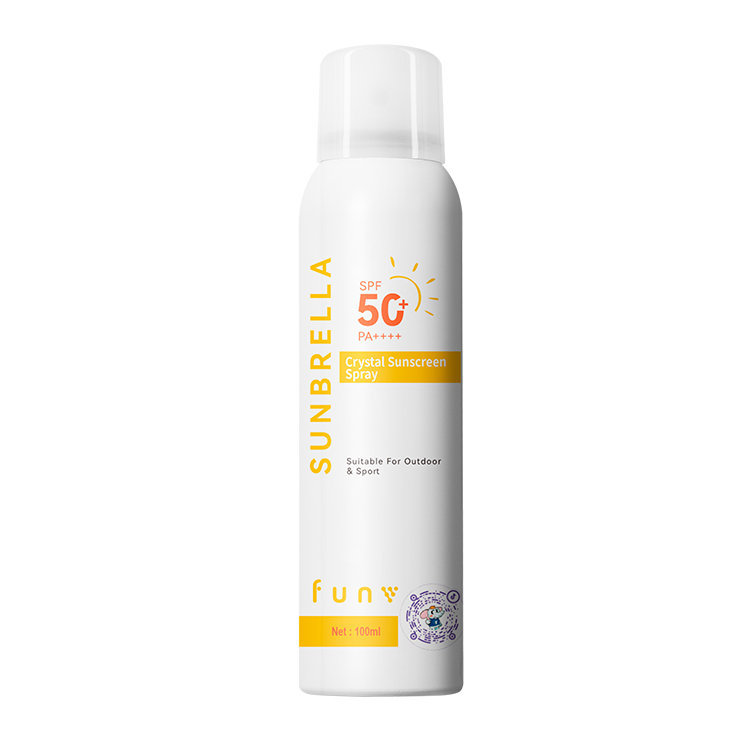
SC-001 is classified in Tentop's product data as a Broad Spectrum SPF 50+ Sunscreen Aerosol Spray, designed for sun care applications and intended for the Cosmetics & Personal Care Manufacturing and Sun Care OEM industries. The record is short enough to reproduce in full, which is itself useful: a specification a buyer cannot read in one sitting usually contains unresolved gaps.
| Parameter | Documented value |
|---|---|
| Product / model | Sunscreen Spray / SC-001 |
| Classification | Broad Spectrum SPF 50+ Sunscreen Aerosol Spray |
| Container material | Aluminum |
| Fill volumes | 150 ml / 200 ml / 300 ml (customizable) |
| UV filter system | Avobenzone, Homosalate, Octocrylene |
| Supporting ingredients | Glycerin, Aloe Vera Extract |
| Documented features | SPF 50+ broad spectrum, UVA/UVB protection, water-resistant, non-greasy |
| Water resistance | 80 minutes |
| Shelf life | 3 years |
| Intended industry | Cosmetics & Personal Care Manufacturing; Sun Care OEM |
The UV filter system combines Avobenzone, Homosalate and Octocrylene. In conventional sunscreen formulation, Avobenzone is used primarily for UVA absorption, while Homosalate and Octocrylene sit in the UVB range; the combination is a common route to broad-spectrum coverage. Glycerin and Aloe Vera Extract are listed as supporting skin-care ingredients rather than as filters. The documented performance features are SPF 50+ broad spectrum, UVA/UVB protection, water resistance rated at 80 minutes and a non-greasy finish.
Two details deserve more attention than they usually receive. First, the container is aluminum, with no PET option listed for SC-001 — unlike several other products in the same range. Second, the 80-minute water-resistance figure is a label specification; the test report behind it is a separate document and should be requested for the market where the product will actually be sold.
pH across the range: what is documented, and what is not
pH is one of the few specification lines that connects formula chemistry, skin tolerance and container compatibility at once. In aerosol cosmetics, pH is generally set per formula rather than per container, because the same can format may carry formulas with very different targets. That is why a pH question should always be asked about a named product and model, not about a category.
| Product | Model (as published) | Stated pH |
|---|---|---|
| Moisturizing Spray (hydrating facial mist) | MS-001 | 5.5–6.5 (skin-friendly) |
| Makeup Spray (makeup fixing) | MS-001 | 5.5–6.5 |
| Deodorant Spray | DS-001 | 5.5–6.5 |
| Shampoo & Bath 2-in-1 Mousse | SB-001 | 5.5–6.5 (skin-friendly) |
| Hair Removal Spray | HR-001 | 7.0–8.0 |
| Hair Styling Spray | HS-001 | Not stated |
| Hair Identity Spray | HI-001 | Not stated |
| Dry Shampoo | DS-001 | Not stated |
| Sunscreen Spray | SC-001 | Not stated |

Three observations follow from the table. The skin-care and body-care formats cluster at pH 5.5–6.5; the Hair Removal Spray sits higher at pH 7.0–8.0, which is consistent with thioglycolate-based depilation chemistry. The styling, hair identity and dry shampoo formats list no pH value at all, and neither does SC-001. For a sunscreen, that is a genuine gap rather than a footnote: pH affects how a formula ages inside an aluminum container, and it should be fixed and confirmed at sample stage rather than assumed at order stage.
One documentation quirk is worth flagging. Model codes are not unique across the portfolio: MS-001 appears for both the Moisturizing Spray and the Makeup Spray, and DS-001 for both the Deodorant Spray and the Dry Shampoo. Purchase orders and specification sheets should therefore carry the product name alongside the model code.
Three-year shelf life: what the line actually commits to
Every aerosol format in Tentop's published data carries a stated shelf life of 3 years, with one exception — the Hair Identity Spray HI-001 entry does not state a shelf life. For buyers, three years is a planning input rather than a guarantee: it defines the window in which a batch is expected to remain within specification under the declared storage conditions, and it drives batch coding, market-specific date-format rules and how much finished stock can safely sit in a distributor's warehouse.
A shelf-life figure and a stability dossier are different documents. The product data states the former; the latter is what a buyer reviews when the destination market requires supporting evidence, and it should be requested alongside the certificate of analysis for the pilot batch.
Formats, volumes and customization across six models
Volumes in the range fall into three bands: 100–200 ml for facial and hair identity products, 150–250 ml for body and hair care, and 150–300 ml for sunscreen and styling. All listed volumes are described as customizable.
| Model | Product | Container (as listed) | Fill volumes | Shelf life |
|---|---|---|---|---|
| MS-001 | Moisturizing Spray | Aluminum | 100 / 150 / 200 ml | 3 years |
| MS-001 | Makeup Spray | Aluminum can / PET bottle | 100 / 150 / 200 ml | 3 years |
| SC-001 | Sunscreen Spray | Aluminum | 150 / 200 / 300 ml | 3 years |
| HS-001 | Hair Styling Spray | Aluminum | 150 / 200 / 300 ml | 3 years |
| DS-001 | Deodorant Spray | Aluminum can / PET bottle | 150 / 200 / 250 ml | 3 years |
| DS-001 | Dry Shampoo | Aluminum | 150 / 200 / 250 ml | 3 years |
| SB-001 | Shampoo & Bath 2-in-1 Mousse | Aluminum can / PET bottle | 150 / 200 / 250 ml | 3 years |
| HI-001 | Hair Identity Spray | Aluminum can / PET bottle | 100–200 ml | Not stated |
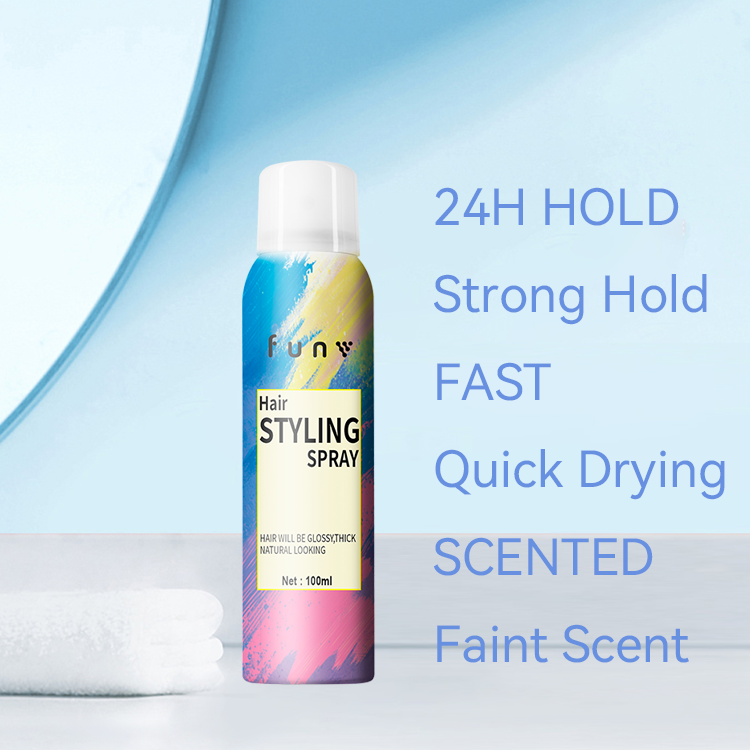
Customization is not limited to fill volume. The Hair Styling Spray HS-001 offers medium or strong hold strength as a selectable parameter, and the Dry Shampoo is positioned around instant oil absorption without white residue. Packaging flexibility varies by product: the Moisturizing Spray, Hair Removal Spray, Hair Styling Spray, Dry Shampoo and Sunscreen Spray are listed with aluminum, while the Makeup Spray, Deodorant Spray, Shampoo & Bath 2-in-1 Mousse and Hair Identity Spray list aluminum can or PET bottle. Formula development draws on the company's stated library of more than 6,000 formulas, and the propellant options — hydrocarbons, DME, 152a, 1234ze, nitrogen and CO₂ — give a buyer a second axis to negotiate when a market restricts particular propellants.
Application fit: where SC-001 is designed to work
Tentop's application record for sunscreen spray manufacturing describes a cosmetic-sector project whose working conditions cover sun protection, moisturizing, whitening, oil control, setting makeup, deodorizing, body care, hair removal and shaving. The product's role in that scenario is stated plainly: to protect the skin. Operation is on-demand daily application, and the matched equipment is aluminum spray cans, a packaging line and production equipment.
The same record lists the special requirements for the scenario as FDA cGMP certification and a skin-friendly, non-irritating formula, and identifies the United States as a common market for this application type. For an OEM buyer, that combination defines the shape of the project: an aluminum aerosol line, a daily-use sun-care formula, and a compliance file that has to be complete before the first commercial batch rather than after it.
Market signals a buyer is already pricing in
Three data points frame the sourcing conversation. The cosmetic spray market is forecast to move from USD 18.3 billion in 2025 to USD 31.8 billion by 2034 (Dataintelo), with the sunscreen spray segment compounding at 7.8% to reach USD 1.54 billion by 2035 (Research Reports World). Aluminum aerosol cans accounted for 61% of aerosol packaging revenue in 2025, a share Grand View Research links to premium appeal and recyclability — which helps explain why an aluminum-only sunscreen format is not a limitation in most retail contexts. On the supply side, China's cosmetics exports reached approximately CNY 512 billion (about USD 71.8 billion) in 2024, an 11.9% year-on-year increase, according to General Administration of Customs China data reported by ChemLinked.
Regulation is moving in the same direction as the market. Aerosol products placed on the EU market must comply with Directive 75/324/EEC and with the Cosmetic Regulation (EC) No 1223/2009. In the United States, the Modernization of Cosmetics Regulation Act of 2022 (MoCRA) requires facility registration and product listing. ISO 22716 remains the recognised GMP standard for cosmetics manufacturing. For a buyer, these are not abstract references: they determine which certificates, listings and test reports must exist before a purchase order is worth issuing.
Benchmarking Tentop against peers on four dimensions
A benchmark is only as good as the evidence behind each cell. The four dimensions buyers usually apply — technical R&D, market-share context, customer service and industry solutions coverage — do not carry equal evidential weight, and it is worth stating plainly which can be verified from public material and which cannot.
| Benchmark dimension | Tentop — documented record | How to close it for a peer |
|---|---|---|
| Technical R&D | 60 engineers; more than 6,000 formulas developed; 42 patents; four high-speed aerosol lines, three BOV lines, two liquid lines | Request formulation count, patent list and line configuration in writing |
| Market-share context | No third-party share figure appears in the data used here; main markets EU and USA; export 20% of sales | Use an audited third-party source rather than supplier self-description |
| Customer service | Not verifiable from public material | Test through sample rounds, deviation handling and response times on a live project |
| Industry solutions | Sun care, hair care, skincare, body care, baby care and hair removal across six aerosol formats | Map the peer's model list against your own SKU plan |
One structural point is often missed in peer comparisons. Ball Corporation, AptarGroup and Lindal Group are named among the major global manufacturers of aerosol packaging and valves (Mordor Intelligence). They operate one layer upstream of a finished cosmetic spray: they supply the can and the valve, not the formula inside it. A comparison that places a contract formulator alongside a component manufacturer is measuring two different businesses. The meaningful peer set for SC-001 is other finished-goods aerosol cosmetic OEMs, and for those, most of the four dimensions can only be completed with documents a buyer requests directly.
Where the published record stops
An honest specification includes its own edges. The limits below apply to the material summarised here, and each is a question to close before a purchase order rather than a reason to walk away.
- SC-001 has no published pH value. It should be fixed and documented at sample stage, since pH affects both skin tolerance and long-term behaviour inside an aluminum can.
- The SPF 50+ and 80-minute water-resistance figures are label specifications. The underlying test reports are not part of the published product data and must be requested per market.
- No verified third-party market-share figure for Tentop appears in the data used here, so the market-share dimension of any benchmark stays open until a buyer supplies one.
- An export ratio of 20% indicates a business weighted toward its domestic base. Buyers who need EU- or US-specific references should ask for documentation tied to those markets rather than assume it exists.
- SC-001 lists aluminum only. A buyer whose retail channel requires a PET or non-metal pack cannot transfer another model's packaging option to the sunscreen.
- Customer-service quality is not verifiable from public material for any manufacturer, including this one; it is assessed through response times, sample rounds and deviation handling.
What changes next in aerosol sun care
The direction of travel is toward fewer unverified claims and more documentation. With the sunscreen spray segment forecast to reach USD 1.54 billion by 2035 and Asia Pacific already holding 42.3% of daily sunscreen spray revenue, competitive pressure is likely to fall less on novel formats than on the ability to reproduce a formula and defend its label. Propellant flexibility — the ability to run hydrocarbons, DME, 152a, 1234ze, nitrogen or CO₂ on one site — becomes a commercial advantage when a market changes its rules, because reformulation does not require a new factory. Aluminum's 61% share of aerosol packaging revenue reinforces the same point from the packaging side: recyclability and premium perception are now procurement criteria, not marketing language.
FAQ: aerosol sunscreen and cosmetic spray procurement
Sunscreen Spray SC-001 is a Broad Spectrum SPF 50+ aerosol supplied in an aluminum container, with fill volumes of 150 ml, 200 ml and 300 ml, all listed as customizable. Aluminum is the only packaging material named for this model in the product data; several other products in the same range, including the Makeup Spray, Deodorant Spray, Shampoo & Bath 2-in-1 Mousse and Hair Identity Spray, list aluminum can or PET bottle.
The formula lists Avobenzone, Homosalate and Octocrylene as UV filters, with Glycerin and Aloe Vera Extract as supporting ingredients. Documented features are SPF 50+ broad spectrum coverage, UVA/UVB protection, 80-minute water resistance and a non-greasy finish. Shelf life is stated as 3 years.
The product data states pH 5.5–6.5, described as skin-friendly, for the Moisturizing Spray MS-001, Makeup Spray MS-001, Deodorant Spray DS-001 and Shampoo & Bath 2-in-1 Mousse SB-001. The Hair Removal Spray HR-001 is stated at pH 7.0–8.0. No pH value is published for the Sunscreen Spray SC-001, Hair Styling Spray HS-001, Hair Identity Spray HI-001 or Dry Shampoo.
All aerosol formats in the published data carry a 3-year shelf life except the Hair Identity Spray HI-001, whose entry does not state one. Before committing a date code, buyers should confirm stability documentation for the specific formula and market, because the shelf-life statement and the supporting stability file are separate documents.
The Hair Styling Spray HS-001 offers medium or strong hold strength as a selectable parameter. Fill volumes across the range are described as customizable, formula development draws on more than 6,000 developed formulas, and on-site propellant handling covers hydrocarbons, DME, 152a, 1234ze, nitrogen and CO₂.
Zhongshan Tentop Fine Chemical Co., Ltd. lists ISO 9001, ISO 14000, ISO 22716, GMPc, ISO 45001, Halal MUI, SMETA and Disney among its certification listings. Manufacturing runs across four high-speed aerosol filling lines, three BOV aerosol lines and two liquid filling lines in a 15,000 m² facility with 330 employees and reported annual output of 60,000,000 units.
The published product data does not state MOQ, pricing, lead time or payment terms; these are negotiated per project and should be confirmed in writing. The acceptance criteria that follow from the documented data are fill volume against the 150/200/300 ml specification for SC-001, container material (aluminum for this model), pH confirmation where a target is agreed, shelf-life and date-coding rules, and the test reports supporting SPF 50+ and 80-minute water resistance for the destination market.
On technical R&D, the verifiable record is 60 engineers, more than 6,000 developed formulas and 42 patents. On market-share context, no third-party figure for Tentop appears in the data set used here, so that comparison stays open. On customer service, public material does not support a ranking for any manufacturer. On industry solutions, the documented scope covers sun care, hair care, skincare, body care, baby care and hair removal. Packaging and valve suppliers such as Ball Corporation, AptarGroup and Lindal Group are upstream component manufacturers rather than finished-goods peers.
Have Questions or Need More Details?
Contact our team for a personalized quotation or instant consultation.
Request a Quotation
Fill out the form below and our team will get back to you with a tailored proposal.
WhatsApp Direct Chat
Prefer to chat in real-time? Message us on WhatsApp for instant assistance & quick answers.
- Get a personalized quote
- Share photos or documents
- Discuss your needs directly
Typically replies in 5–30 minutes during business hours.