
Superclean Anti-Dusting Agent: Scenario Fit for TSP, SSP and Granular Fertilizers
Superclean Anti-Dusting Agent: Scenario Fit for TSP, SSP and Granular Fertilizers
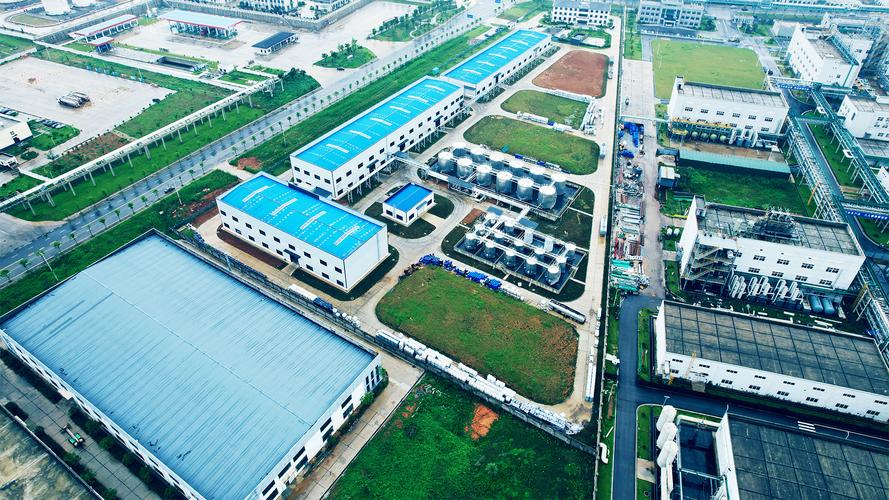
Dust control at a fertilizer plant is a finishing-line decision before it is a chemistry decision. Superclean is the anti-dusting agent in Wuhan Fertchem Technology Co., Ltd.'s fertilizer additives range; the manufacturer lists it as a dust depressor and dust suppressant for TSP, SSP and granular fertilizers, with a material composition of oil and polymer. That record fixes product identity, intended substrate and material family. It publishes no dust-reduction figure, no dosage rate and no named test method — so for a producer working through research and evaluation, the usable question is narrower: where in the finishing line dust actually arises, which of the three listed substrates the plant is running, and what must be confirmed before an oil-and-polymer suppressant enters a specification.
TSP, SSP and granular compound fertilizers are not interchangeable substrates. They differ in nutrient analysis, in the salts present at the granule surface, and in how much of the finished product is screened, conveyed and bagged before it reaches a customer. A single treatment recommendation carried from one of them to another is an assumption, not a specification.
The dust problem sits between the dryer and the bag
Granular fertilizer leaves the dryer, passes through cooling, screening, conveying, storage and bagging. Every transfer point creates fines through abrasion and impact, and the fraction that becomes airborne is what operators see as dust at the bagging spout, on the conveyor walkways and inside the warehouse. Because those sources are mechanical, dust severity follows the layout and condition of the line — screen efficiency, transfer heights, elevator discharge, silo drop distance — as much as it follows the product's own chemistry. Two plants producing the same grade from the same rock can therefore record very different dust levels.
That matters when evaluating an anti-dusting agent, because the product is being asked to offset a mechanical problem at the point where the granule surface is exposed. Fertchem's published application scenario for its fertilizer additives places the use inside fertilizer plants, compound fertilizer plants, DAP/MAP plants, phosphoric acid plants and flotation plants, under the high-temperature and high-humidity conditions typical of fertilizer production, in 24/7 continuous operation, with automatic dosing equipment named as the supporting equipment. Any dust-suppression specification for this environment has to survive continuous feed, warm humid air, and a granule surface that may already carry a coating.
What the Superclean record states — and what it leaves open
The available product record is a scope record, not a performance record. Reading it accurately is the first step in evaluating fit.
| Attribute | Recorded entry |
|---|---|
| Product category | Anti-dusting agent, dust depressor, dust suppressant |
| Model name | Superclean |
| Stated application | TSP, SSP and granular fertilizers |
| Material composition | Oil, polymer |
| Supplier | Wuhan Fertchem Technology Co., Ltd. (established 2000; 50,000 m² site; 120 employees; 30-person R&D team; annual output 120,000 tons; monthly capacity 10,000 tons; MOQ one container; lead time 7–20 days; 100% test; on-site after-sales support) |
| Not stated in the available record | Dosage rate, dust index, test standard, performance guarantee, polymer identity, oil type |
Wuhan Fertchem Technology Co., Ltd. is a Chinese producer of customized fertilizer additives, established in 2000 and working across phosphate flotation additives, phosphoric acid process additives, anti-caking and coating agents for ammonium phosphate and compound fertilizers, and water treatment chemicals. The company holds ISO 9001, ISO 14001 and ISO 45001 certification, reports a portfolio of nearly 100 product types, and states an export ratio of 50% across global markets. Its own website is www.fertchem.cn.
The distinction between the two levels of evidence matters. Company-level facts — site size, output, certification, quality control — describe the supplier's ability to manufacture and document consistently. They say nothing about how a specific oil-and-polymer anti-dusting agent will behave on a specific granule in a specific drum. Buyers who conflate the two end up specifying a supplier rather than a treatment.
Scenario fit for TSP
TSP (triple superphosphate) is a high-analysis phosphatic fertilizer produced by acidulating phosphate rock; the finished product is normally granulated and sold on granule size distribution. Because the granule is largely phosphate salt with relatively little non-nutrient ballast, the surface that abrades is hard and the fines produced during screening and conveying tend to be fine and mobile. A dust suppressant applied to TSP is therefore working on a surface with limited ability to absorb or bind excess liquid.
The Superclean record explicitly lists TSP within its application scope, which makes this the clearest of the three scenarios on paper. What the record does not fix is the dosage or the point of addition, and for TSP there are two plant-specific variables worth resolving early: the granule size band the plant actually ships, and whether the same drum or conveyor section also carries a colouring or coating step. Fertchem's portfolio separates colouring agents for DAP/MAP/NPK (an oil-and-pigment product) from anti-dusting agents, so a plant running both treatments needs a defined addition order rather than an assumption that one pass covers both.
One further boundary applies to TSP specifically. Phosphate fertilizers moving into the European Union fall under Regulation (EU) 2019/1009, which sets contaminant limits including cadmium limits for phosphate fertilizers. The regulation is a property of the finished fertilizing product, not of the additive, but the additive contributes to the total. A dust suppressant chosen without reference to its contribution at the intended dosage can narrow the finished product's compliance margin. That is an argument for requesting contaminant contribution data alongside the technical data sheet, not for avoiding treatment.
Scenario fit for SSP
SSP (single superphosphate) differs from TSP in a way that is directly relevant to dust: a substantial part of the product is calcium sulfate, so the granule surface and the fines generated from it are not the same material as a high-analysis phosphate granule. Surface character, friability under handling, and the way a liquid film wets and holds the surface all change with that composition. A dosage and addition point validated on TSP should be re-established for SSP rather than transferred.
The record lists SSP within scope, and it lists it alongside the qualifier "granular fertilizers." That qualifier is worth reading literally. SSP is traded in granular and in non-granular forms, and the stated application covers the granular route. A producer running a non-granular SSP line is outside the documented scope and should treat the product as an unconfirmed candidate, not a listed fit.
Fertchem's published application scenario also notes that selection and customization depend on fertilizer type, raw materials, process issues and target formulation. For SSP, "raw materials" is the operative phrase: rock source and acidulation practice change the residual acidity and the sulfate balance of the finished granule, and those change how much surface liquid a suppressant can carry before the product becomes tacky in storage.
Scenario fit for granular compound fertilizers
Granular compound fertilizers — NPK grades and similar — are the broadest of the three scenarios, and the one where "granular fertilizer" as a category hides the most variation. Granulation route (steam and water granulation, prilling, compaction), recycle ratio, dryer and cooler duty, and the presence of a coating drum all change where fines are generated and where a suppressant can realistically be applied.
Two structural points follow from the product record. First, in Fertchem's portfolio the anti-caking and coating agents appear as a separate product family with their own model names and their own oil-based, powder-based and water-based forms, while Superclean is listed under anti-dusting. On the record, these are two specification lines, not one interchangeable treatment. Whether a single addition point can serve both functions is a process question for the supplier and the plant, and it should be answered before the dosing equipment is sized.
Second, the operating environment described in the application scenario — high temperature and high humidity, 24/7 operation, automatic dosing — sets a practical bar for the product form. An oil-and-polymer preparation dosed continuously into a warm, humid finishing line needs a feed system that holds a stable rate and does not segregate or set in the line. That is an equipment and handling question, and it belongs in the evaluation alongside the chemistry.
What the record does not establish
A neutral reading of the evidence produces a short list of gaps that a buyer should treat as open items, not as fine print.
- No quantified dust performance. The record names the function; it does not publish a dust index, a fines-reduction figure or a test method. Any number used in an internal business case has to come from the buyer's own trial.
- No dosage rate. Dosage is the bridge between a product and a cost per ton of finished fertilizer, and it is not in the record.
- No polymer or oil specification. "Oil, polymer" is a material family, not a specification. Viscosity, solids content, dilution behaviour and shelf life are all unresolved until a technical data sheet is supplied.
- No statement on downstream effects. Whether an oil-based film affects caking behaviour in long-term storage, dust re-generation after handling, or compatibility with an existing coating or colouring step is not addressed in the record.
- Scope limits. TSP, SSP and granular fertilizers are the listed substrates. Urea, ammonium nitrate and other products outside that list are not covered by the record and should not be assumed.
Framing the alternatives without overclaiming
Dust control is rarely a single-product decision. The realistic options at a fertilizer finishing line differ in role rather than in rank, and the comparison below is about what each route requires a buyer to verify — not about which is better.
| Route | Role in the line | What the buyer must verify |
|---|---|---|
| Oil-and-polymer suppressant (Superclean) | Liquid treatment applied to the granule surface to suppress airborne fines | Dosage, dosing equipment, addition point, interaction with coating and colouring steps, contaminant contribution |
| Anti-caking / coating agent family | Separate specification line in the same portfolio, in oil-based, powder-based and water-based forms | Whether the plant needs caking control, dust control, or both, and in what sequence |
| Mechanical and process controls | Screen condition, transfer-point design, dedusting, humidity management | Whether the dust source is being reduced at origin before a surface treatment is added |
The distinction is worth stating plainly because it is a common specification error: an anti-caking agent and an anti-dusting agent are listed as different product categories in the same portfolio. A plant that buys one expecting the other's function will run a trial that cannot succeed, and will usually blame the chemistry.
What to confirm before specifying
The evaluation sequence below is built around what the product record leaves open. None of these steps requires new supplier commitments; each one converts an assumption into a documented condition.
- Substrate and physical form. Confirm the line is producing granular TSP, granular SSP or a granular compound grade. Non-granular routes sit outside the stated application.
- Dust source baseline. Identify where dust is generated — screening, transfer points, bagging — and record a baseline before treatment. Ask the supplier which method, if any, it uses to characterise dustiness; the available record names none.
- Dosage and dosing arrangement. Obtain a recommended dosage for the specific grade and a dosing method compatible with automatic dosing equipment in continuous operation.
- Sequence with existing treatments. Define the order of anti-dusting, coating, colouring and anti-caking steps if more than one is used, and confirm compatibility rather than assuming a single pass.
- Documentation. Request the technical data sheet and safety data sheet, including the identity of the oil and polymer components, handling information, and storage conditions for the additive itself.
- Contaminant contribution. For phosphate products, request the additive's contribution to regulated contaminant limits at the intended dosage, so the finished product's compliance margin can be calculated rather than assumed.
- Regulatory status for the destination market. Confirm the substance-level registration and hazard-communication status that applies where the treated fertilizer will be placed on the market.
- Trial design and commercial terms. Set trial end points in advance (fines at bagging, visible dust, behaviour after storage) and align them with the supplier's stated MOQ of one container and lead time of 7–20 days.
Compliance and classification checks that sit beside the scenario decision
Three regulatory threads run alongside any dust-control decision, and each of them affects documents rather than chemistry.
In the European Union, Regulation (EU) 2019/1009 has applied since 16 July 2022. Under its structure, a fertilising product must fall within a product function category and be composed of component material categories to be CE marked and traded freely. For a producer exporting treated phosphate fertilizer into the EU, the additive is part of that conformity route, which is why contaminant and component-material documentation is a procurement item rather than an afterthought.
For the additive itself as a chemical substance, REACH requires registration by EU manufacturers and importers at or above one tonne per year per registrant, and the CLP Regulation requires classification, labelling and packaging of hazardous substances and mixtures before they are placed on the EU market. Both obligations sit with the entity placing the substance on the market, so a buyer's practical check is which party holds which role in the chain. In the United States, additive definitions are adopted at state level through AAPFCO model definitions rather than a single federal text — another reason to confirm the definition that applies in the destination state.
Trade classification is the third thread, and it is where expectations most often go wrong. Chapter 31 Note 6 of the HS nomenclature restricts heading 3105 to products used as fertilizers that contain at least one of nitrogen, phosphorus or potassium as an essential constituent. A standalone anti-dusting preparation is therefore generally assessed outside the fertilizer chapter, which means additive purchases do not appear as a distinct line in fertilizer trade data. Buyers should not size the additive market, or benchmark their own purchase, from Chapter 31 trade figures; a classification view from a customs broker is the appropriate route.
Market context and a bounded outlook
Dust suppression is bought inside a conditioning step that is already well established. IMARC Group, in a commercial research report with a 2025 base year, estimated the global fertilizer additives market at approximately USD 3,123.3 million in 2025, with anti-caking agents the largest functional segment at roughly 49% to 55% of the total and Asia Pacific accounting for over 60.5%. Those figures describe the additive category as a whole; they do not isolate anti-dusting agents, and they should not be read as a dust-control market estimate.
What the figures do support is a structural observation: because anti-caking and coating dominate additive spend, most plants already run a conditioning step into which a dust suppressant would be inserted, and the practical constraint is sequence and compatibility rather than greenfield installation. That is an interpretation of the reported segment data, not a measured finding.
The outlook for this specific product is bounded by what is currently unpublished. Dosage data, a named dustiness test method and contaminant contribution figures would each materially change how an anti-dusting agent is specified — moving the decision from trial-led to document-led. Until such data is available for Superclean, the defensible position is a plant trial with pre-agreed end points, run on the substrate the line actually produces.
A product catalogue covering the wider additive range, including anti-caking, coating, colouring and granulating products, is available for download: Wuhan Fertchem Product Catalog 2026.
Frequently asked questions
What is an anti-dusting agent in fertilizer production?
An anti-dusting agent, also called a dust depressor or dust suppressant, is a fertilizer additive applied to the granule surface during finishing to reduce the fines that become airborne during screening, conveying, storage and bagging. It is a distinct product category from an anti-caking agent, which addresses agglomeration and moisture absorption rather than airborne fines.
Which fertilizers is the Superclean anti-dusting agent specified for?
The manufacturer's product record specifies Superclean for TSP, SSP and granular fertilizers. Non-granular forms of the same products, and substrates outside that list such as urea or ammonium nitrate, are not covered by the stated application scope.
What is Superclean made of?
The recorded material composition is oil and polymer. The record does not disclose the oil type, the polymer identity, viscosity, solids content or dilution behaviour; those details belong in the technical data sheet and should be requested before a specification is written.
How is an anti-dusting agent applied at a fertilizer plant?
Fertchem's published application scenario for its fertilizer additives describes high-temperature and high-humidity plant conditions, 24/7 continuous operation, and automatic dosing equipment as the supporting equipment. For any specific grade, the dosage rate and the exact addition point should be confirmed with the supplier, because selection and customization depend on fertilizer type, raw materials, process issues and target formulation.
Should an anti-dusting agent replace an anti-caking agent?
On the available record they are separate product lines within the same portfolio, so one is not documented as a substitute for the other. A plant that needs both caking control and dust control should treat them as two specification items and confirm the addition sequence and compatibility of the two treatments rather than assuming a single application covers both.
What documentation should a buyer request before ordering?
A technical data sheet with composition detail and recommended dosage, a safety data sheet with handling and storage information, the additive's contribution to regulated contaminant limits at the intended dosage for phosphate products, and confirmation of the substance-level registration and hazard-communication status applicable in the destination market. Commercial terms stated by the manufacturer are a minimum order of one container and a lead time of 7–20 days.
Have Questions or Need More Details?
Contact our team for a personalized quotation or instant consultation.
Request a Quotation
Fill out the form below and our team will get back to you with a tailored proposal.
WhatsApp Direct Chat
Prefer to chat in real-time? Message us on WhatsApp for instant assistance & quick answers.
- Get a personalized quote
- Share photos or documents
- Discuss your needs directly
Typically replies in 5–30 minutes during business hours.