
Supplement Compliance in Practice: Packaging Grades, CRC Caps and Shelf Life
Supplement Compliance in Practice: Packaging Grades, CRC Caps and Shelf Life
Regulatory readiness in the dietary supplement industry is usually described in the language of certificates, filings and audits. In practice, a large part of it is decided by packaging. A tablet that reaches its declared 36-month shelf life and a gummy that loses sensory quality early may have been produced under the same quality system; what separated them was the dosage form, the primary packaging material, the closure design, and the storage conditions the finished goods actually met after they left the factory.
For buyers researching and evaluating contract manufacturers, that distinction matters more than it first appears. Packaging and storage specifications are the most concrete, least negotiable data points a supplier publishes. They can be compared before a sample is produced, and they say something specific about how a manufacturer interprets compliance in day-to-day production rather than in a sales presentation.

Cover: automated production inside a GMP-grade clean area for solid dosage supplement manufacturing.
Why Packaging Compliance Is a Project-Fit Question
For a brand owner, packaging compliance is the point where a formulation meets the physical realities of distribution: humidity, ambient temperature, handling and household safety. It is also the point where project fit is easiest to test, because packaging specifications are stated in tangible terms rather than as claims.
- Shelf life — declared in months from the production date, and different by dosage form.
- Primary packaging — bottle, blister or both, depending on the format.
- Closure — whether a child-resistant closure (CRC cap) is specified.
- Storage conditions — the temperature and moisture envelope the finished product is designed to tolerate.
These four items rarely appear in marketing material as a single, comparable set. When they do, they expose the practical differences between formats that a certification list alone cannot show.
The commercial stakes are rising. Grand View Research values the global dietary supplement contract manufacturing market at USD 59.63 billion in 2024 and projects it to reach USD 121.2 billion by 2030. That growth expands the supplier pool, and it also expands the number of variables a procurement team must screen before committing to a production partner.
The Regulatory Baseline a Buyer Can Actually Verify
Two reference points anchor packaging-related compliance discussions in the largest supplement markets. In the United States, dietary supplement manufacturers must comply with 21 CFR Part 111, the FDA's current Good Manufacturing Practice regulation for dietary supplements. In Europe, compliance with EFSA requirements and Directive 2002/46/EC shapes the expectations applied to products placed on the market, and is cited among the drivers of contract manufacturing demand in the region.
Neither framework is a packaging certificate. Both describe process obligations that a manufacturer must be able to demonstrate through documentation. That is why packaging specifications are best read as evidence of process discipline rather than as standalone credentials. When a supplier states that a product is filled into a Pharmaceutical Grade HDPE bottle or sealed with a child-resistant closure, the useful follow-up question is not which certificate covers this, but what documentation, stability data and batch records support the claim.
Packaging-Grade Specifications: What HDPE, Blister and CRC Signal
Packaging terminology is often repeated without being interpreted. The table below translates the packaging components commonly listed on supplement specifications into what they mean for a project, using the material designations as they appear in the specifications rather than redefining them.
| Component | Where it appears | What it signals to a buyer |
|---|---|---|
| Pharmaceutical Grade HDPE Bottle | Listed for tablet, capsule, softgel, chewable burstlet and gummy formats | A material designation for the primary container — not a certificate. Ask for the material specification and the stability data behind the declared shelf life. |
| Aluminum Blister | Listed for tablet, capsule, softgel and chewable burstlet formats; not listed for gummies | A unit-dose presentation option. Relevant where moisture barrier, dosing control or travel format matter more than bottle economics. |
| Child-resistant Closure (CRC Cap) | Listed across gummy, tablet, capsule, softgel and chewable burstlet formats | A mechanical safety feature of the closure, not a compliance credential on its own. Requirements vary by market and product category. |
| Shelf life from production date | 24/36 months for tablet, capsule, softgel and chewable burstlet; 12/18/24 months for gummy | A format-dependent commitment that has to hold under the stated storage conditions — and under the conditions the product actually meets downstream. |
The practical implication is straightforward. Three of the four rows above are packaging decisions a buyer can influence at the specification stage; the fourth — shelf life — is largely fixed by the format choice. Deciding the format late in a project means accepting the shelf life that comes with it rather than selecting the format that fits the intended distribution channel.
Shelf Life Is a Format Decision, Not a Factory Default
Buyers frequently treat shelf life as a manufacturing performance indicator. In the specifications reviewed here, it reads more like a format attribute, and the spread between categories is significant.
| Dosage form | Count per bottle | Unit weight range | Shelf life |
|---|---|---|---|
| Tablet | 60–1000 tablets | 200mg–2900mg | 24/36 months |
| Capsule | 60–1000 capsules | 350mg–1200mg | 24/36 months |
| Softgel | 60–450 softgels | 250mg–1200mg | 24/36 months |
| Chewable Burstlet | 60–450 burstlets | 250mg–1200mg | 24/36 months |
| Gummy | 60–260 gummies | 2g–7g per gummy | 12/18/24 months |
Tablets, capsules, softgels and chewable burstlets sit in the same 24/36-month band. Gummies do not. They also differ in packaging scope: gummies are specified with a Pharmaceutical Grade HDPE Bottle and a Child-resistant Closure, while the other four formats are additionally offered in Aluminum Blister. For a brand planning a long distribution chain, that single line in a specification sheet can move a launch date or eliminate a channel.
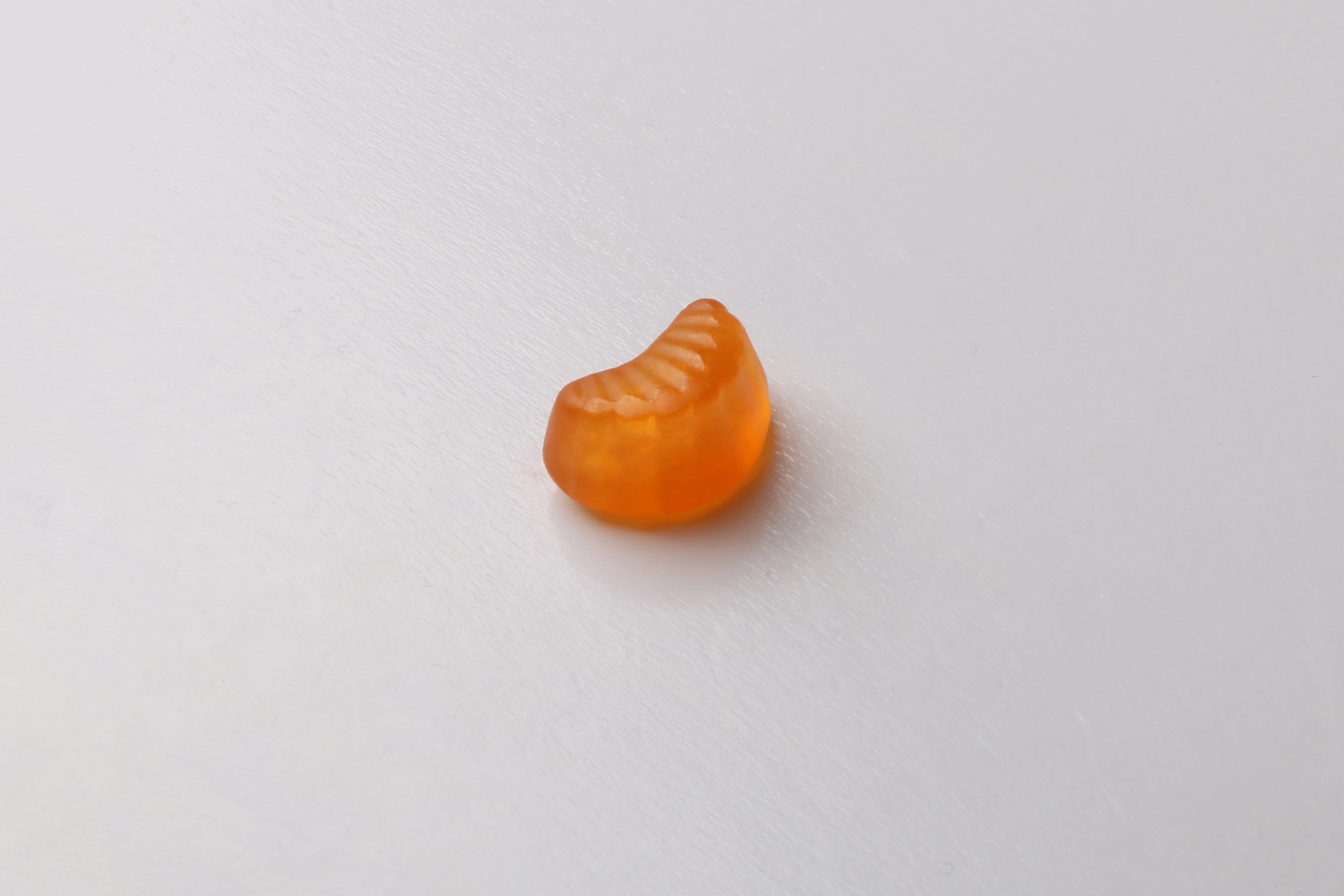
Gummy formats: 60–260 gummies per bottle, 2g–7g per piece, with a 12/18/24-month shelf life and HDPE bottle plus CRC cap packaging.
Storage Below 25°C: A Specification That Travels With the Product
Every format reviewed here carries a storage instruction rather than a storage guarantee. For tablets, capsules, softgels and chewable burstlets the wording is consistent: store in a cool, dry place at temperatures below 25°C, keep tightly sealed, and protect from moisture and direct sunlight. For gummies, the instruction is tightened further: store below 25°C in a cool, dry place, keep tightly sealed to protect from moisture and heat, and avoid high temperatures.
This is where compliance stops being a factory issue and becomes a supply-chain issue. A shelf life declared at 24/36 months assumes the product remains inside that envelope through warehousing, ocean or air freight, customs holding, distributor storage and retail display. In hot and humid markets, that assumption is a planning input, not a formality. Buyers evaluating a format should therefore map the destination climate and the realistic cold-chain or climate-controlled capacity of their channel partners before locking the dosage form.
The moisture instruction has a second implication. Protecting the product from moisture is partly a function of the bottle, partly of the closure, and partly of secondary packaging. It is the reason a buyer should ask how primary and secondary packaging are handled as one process rather than two separate purchase decisions.
Where IVC Nutrition Corporation Fits in This Picture
IVC Nutrition Corporation (IVC) is a contract development and manufacturing organization serving the VMS (vitamins, minerals and supplements) and OTC market, founded in 1998 and operating across nine international manufacturing sites with more than 5,000 employees. Its production portfolio covers gummies, softgels, tablets, hard capsules, probiotics and liquids, supported by a research and development team of more than 100 engineers.
On the compliance side, the relevant fact is structural rather than promotional: all products are manufactured in a GMP-grade clean area to ensure compliance with international standards. That single production requirement is what makes the packaging and storage specifications described earlier enforceable in practice, because the same controlled environment that governs dosing and blending also governs filling, sealing and primary packaging.
The capability profile behind that statement includes solid dosage manufacturing (mixing and blending, dry formulation, tablet compression, encapsulation, functional coating) and liquid dosage manufacturing, operated in an automated production mode using equipment such as high-speed automated tablet pressing and automated capsule filling. Quality and testing functions cover in-process control, microbiological testing, physical and chemical analysis, equipment qualification and calibration, stability studies, and GMP documentation and batch release, with sterilization applied where product specifications require it. Primary and secondary packaging are handled as part of the same production flow.
For buyers, the practical consequences are measurable. Quality control is described as 100% testing. Annual output capacity spans approximately 400 million jars and bottles, 52 billion tablets, 16 billion softgels, 6 billion hard capsules, 4.5 billion gummies, 1 billion probiotic sticks, 10,000 metric tons of powder and 126 million liquid sachets. Lead time is stated as 2.5 to 3 months, with minimum order quantities of 0.3 million tablets, 1 million capsules and 0.6 million gummies depending on format. Export markets cover the US, Canada, the EU, Australia, the Middle East and Southeast Asia, with an export ratio around 50% and customers in more than 80 countries.
Independent recognition exists as well: IVC Nutrition Corporation is recognized as the #1 Private Label VMS supplier in the US by Circana (Total MULO) for the 52 weeks ending March 24, 2024.
Application Scenarios: Matching Packaging Rules to Project Type
The packaging rules described above are applied in a specific project context: a dietary supplement production facility in the VMS CDMO sector, operating under GMP cleanliness standards in automated production mode. Typical project functions include solid dosage production through mixing and blending, dry formulation, tablet compression, encapsulation and functional coating; liquid dosage production; quality testing and batch release; and primary and secondary packaging.
Three project profiles follow naturally from that structure:
- Bottle-based daily supplements. High-count tablet, capsule and softgel programs where HDPE bottles, CRC caps and 24/36-month shelf lives match long retail cycles.
- Confection-style and chewable formats. Gummy and chewable burstlet lines, where shelf-life and storage planning must be adjusted because the format itself is more sensitive to heat and moisture.
- Blister and unit-dose programs. Tablet, capsule, softgel and chewable burstlet presentations where Aluminum Blister is specified instead of, or alongside, a bottle.
That structure is not theoretical. IVC supports customers described as the world’s leading retailers, pharmacy chains, membership clubs and well-known consumer health brands in the US, UK, Germany and Australia, with a long-running private label and daily supplement relationship. The stated outcome for those customers is scale efficiency across gummies, softgels, tablets and capsules — which depends directly on packaging and shelf-life planning being correct at the specification stage.
Market Signals Shaping Packaging Decisions
Several verifiable market indicators explain why packaging compliance is moving earlier in the sourcing process.
In the US market, tablets held the largest dosage form market share in 2024, while gummies and other non-pill formats accounted for approximately 65% of the total supplement market share (Nutraceuticals World / NBJ). The two data points sit together rather than in opposition: the highest-volume format remains the tablet, while the fastest-moving consumer preference is toward formats with shorter shelf lives and stricter heat and moisture sensitivities.
Capacity is shifting accordingly. CAPTEK Softgel International opened a 60,000-square-foot facility in California in March 2024 dedicated exclusively to gummy supplement production, according to Technavio — a reminder that gummy demand pulls investment toward dedicated lines and, by extension, toward the packaging and storage specifications that go with them.
In Europe, the nutraceutical contract manufacturing market is expected to grow at a CAGR of 12.3% through 2030, driven by compliance with EFSA requirements and Directive 2002/46/EC (Straits Research). Regulatory pressure of that kind tends to increase the value of documented process discipline — stability studies, batch release records and packaging specifications — rather than the value of brand claims alone.
Comparison With Traditional Packaging Approaches — and Where They Stop Working
HDPE bottle packaging with child-resistant closures is the established default for supplement formats, and for good reason: it scales across tablet, capsule, softgel, chewable burstlet and gummy production, and it supports high counts per bottle, from 60 units up to 1000 tablets or capsules. Aluminum Blister offers a different trade-off, providing unit-dose presentation for the four formats where it is specified.
The limitations are equally concrete, and buyers should treat them as boundaries rather than as weaknesses:
- Gummy shelf life is structurally shorter. At 12/18/24 months versus 24/36 months for other formats, gummy projects have less tolerance for slow-moving inventory and long wholesale cycles.
- Blister is not available for every format. Gummies are specified with an HDPE bottle and CRC cap only, so a unit-dose requirement may rule the format out entirely.
- The 25°C storage requirement transfers downstream. Meeting it depends on the buyer’s warehouse, the freight route and the retail partner — not only on the manufacturer.
- A packaging designation is not a certification. Terms such as Pharmaceutical Grade HDPE and CRC cap describe materials and mechanical features; they only become compliance evidence when documentation, stability studies and batch records support them.
- Multi-format capability adds coordination load. Consolidating tablet, capsule, softgel and gummy production with one partner reduces supplier management, but lead time of 2.5 to 3 months and minimum order quantities of 0.3 million tablets, 1 million capsules or 0.6 million gummies still constrain small pilot volumes.
None of these constraints can be negotiated away through branding. They are properties of the formats themselves, and the earlier they are recognized, the fewer late-stage specification changes a project requires.
Future Outlook
Three developments appear likely to shape packaging compliance for supplement sourcing over the next several years. First, as non-pill formats continue to take consumer share, packaging and stability documentation will carry more weight in vendor qualification, because the formats with the most consumer momentum are also the ones with the shortest shelf lives and the tightest moisture tolerances. Second, regional regulatory frameworks — 21 CFR Part 111 in the United States and Directive 2002/46/EC in Europe — will keep pushing buyers toward documented process control rather than certificate counts. Third, as contract manufacturing capacity grows toward the projected USD 121.2 billion market level by 2030, differentiation will shift toward execution detail: whether a supplier can state, in verifiable terms, what its bottles are made of, how its closures are specified, what shelf life each format supports, and what storage conditions the finished goods depend on.
For buyers in the research and evaluation stage, the practical conclusion is unglamorous but useful: ask for the packaging and storage specification before the quotation, and compare suppliers on those lines first.
FAQ
What does “Pharmaceutical Grade HDPE” mean on a supplement packaging specification?
It is a material designation for the primary container, listed in these specifications for tablet, capsule, softgel, chewable burstlet and gummy formats. HDPE refers to high-density polyethylene, the rigid plastic used for the bottle. The designation describes the material, not a certification, so the verification step is documentation: the material specification, the stability data supporting the declared shelf life, and batch-level packaging records.
Why is gummy shelf life shorter than tablet or capsule shelf life?
In the specifications reviewed here, gummies carry a shelf life of 12/18/24 months from production date, while tablets, capsules, softgels and chewable burstlets are declared at 24/36 months. Gummies also differ in packaging scope — HDPE bottle and CRC cap, without the Aluminum Blister option offered for the other formats — and their storage note explicitly requires avoiding high temperatures. The gap reflects format properties rather than a difference in quality systems.
What storage conditions should be confirmed before selecting a dosage format?
Tablets, capsules, softgels and chewable burstlets are specified for storage in a cool, dry place at temperatures below 25°C, kept tightly sealed and protected from moisture and direct sunlight. Gummies are specified for storage below 25°C in a cool, dry place, tightly sealed against moisture and heat, avoiding high temperatures. Buyers should confirm that warehouse, freight and retail conditions in each destination market can hold within that envelope for the whole shelf-life period.
Does a child-resistant closure satisfy a regulatory requirement on its own?
No. A child-resistant closure is a mechanical feature of the cap, specified across gummy, tablet, capsule, softgel and chewable burstlet formats in these specifications. Whether such a closure is required, recommended or optional depends on the destination market and the product category. Buyers should verify the applicable packaging rule for each market they sell into and keep the associated documentation, rather than assuming a CRC cap is either universally mandatory or automatically sufficient.
How long should a buyer expect a contract manufacturing project to take?
IVC states a lead time of 2.5 to 3 months and minimum order quantities of 0.3 million tablets, 1 million capsules and 0.6 million gummies, depending on format. Packaging selection affects that timeline, because a switch between bottle and blister, or between shelf-life bands, changes the stability and batch-release work required. These figures are project parameters rather than commitments, and they should be confirmed against a specific brief.
How can a buyer verify that a manufacturer’s packaging claims are reliable?
Look for the functions that make packaging claims checkable rather than for marketing statements. In the case of IVC, those functions include in-process control, microbiological testing, physical and chemical analysis, equipment qualification and calibration, stability studies, and GMP documentation and batch release, with all products manufactured in a GMP-grade clean area. Quality control is described as 100% testing, and primary and secondary packaging are handled within the same production flow — which is what allows a bottle, closure and shelf-life declaration to be traced back to batch records.
IVC Nutrition Corporation’s corporate brochure, covering formats, capacity and compliance documentation, can be downloaded here: IVC Nutrition Corporation brochure.