
Supplement Packaging 2026: Material Economics and Buyer Priorities
The global dietary supplement packaging market was valued at approximately USD 12.7 billion in 2024 and is projected to grow at a CAGR of 6.1% through 2034, according to Precedence Research. For brands selling shilajit, herbal extracts, powders, capsules, or nutraceutical-grade cosmetics, packaging now determines product stability, regulatory access, shelf perception, and sustainability performance.
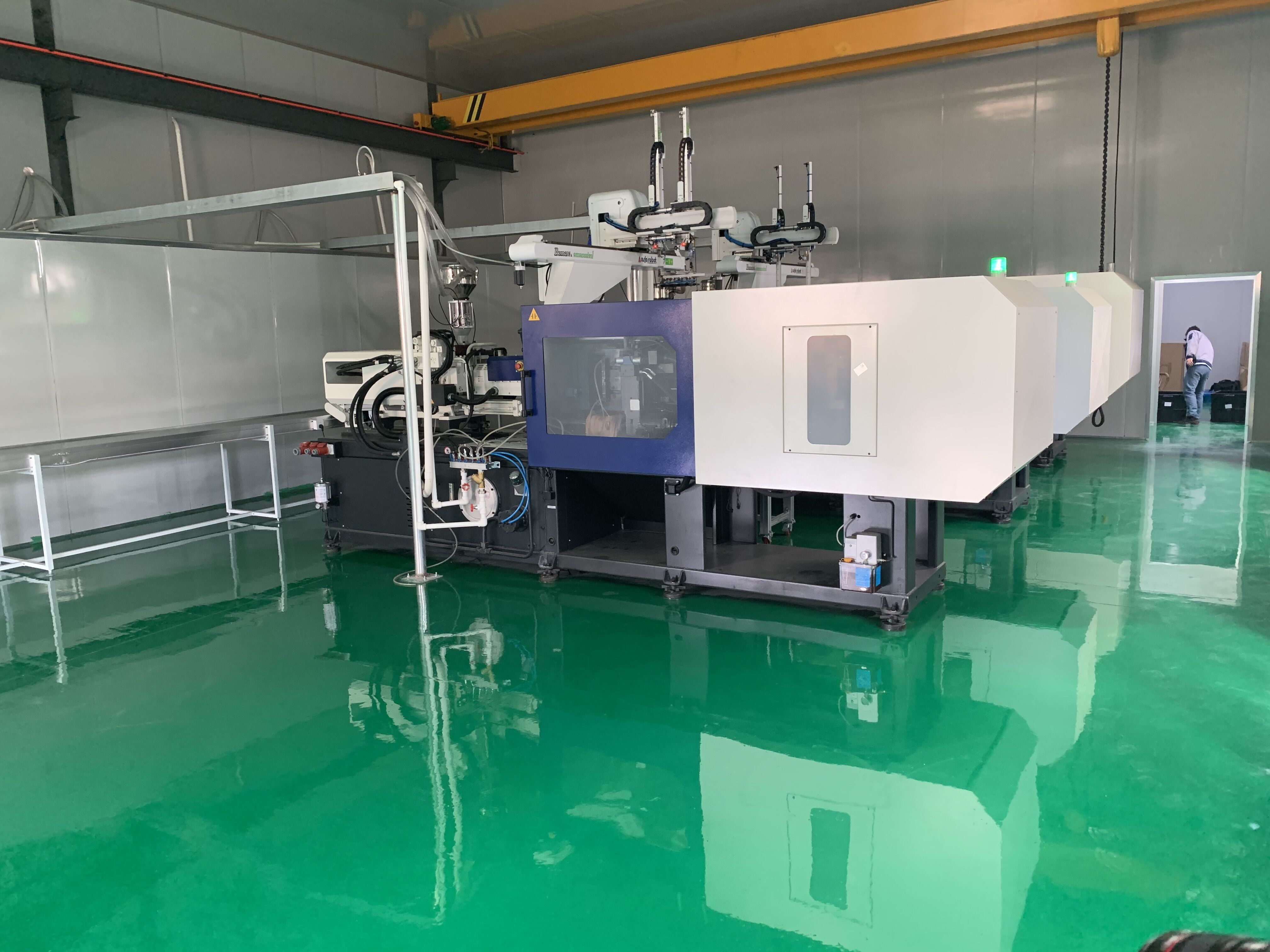
Plastic supplement packaging production floor at Ningbo Honor Packaging.
What Supplement Brands Need to Evaluate Before Choosing Packaging
When supplement brands compare packaging options, the conversation usually starts with product type and quickly moves to five evaluation priorities:
- Product protection. UV rays, moisture, and oxygen are among the most common threats to supplement stability. Light-sensitive formulations, including many natural extracts and resin-based products like shilajit, benefit from packaging that filters UV light. Moisture-sensitive powders require a container with a reliable seal.
- Regulatory compliance. The US and EU have separate regulatory paths for supplement packaging. Buyers must verify that materials, closures, and finishes meet the relevant standards, and that documentation is available for audit.
- Consumer safety. Tamper-evidence and child-resistant closures are not optional features in several categories. In the US, the Poison Prevention Packaging Act (PPPA) requires child-resistant packaging for products containing certain ingredients, such as iron at levels above 30 mg.
- Brand presentation. The container communicates product quality before the consumer reads a label. Glass, frosted finishes, custom printing, and decorative closures are part of the shelf and unboxing experience.
- Sustainability pressure. Recyclable and reusable formats are increasingly expected, especially in the EU and North America, where buyers face both regulation and consumer scrutiny.
Each priority has trade-offs. A heavier glass jar may offer strong protection and recyclability but raises freight weight. A plastic bottle may be lighter and cheaper but can underdeliver on UV protection and premium perception. The evaluation task is not to find a single best material; it is to find the format that best fits the product chemistry, target market, and brand position.
According to Grand View Research, plastic remained the dominant material in nutraceutical packaging in 2024, capturing a 58.3% revenue share due to cost-effectiveness and barrier properties. North America represented the largest regional market, accounting for 34.4% of global revenue.
Supplement Packaging Materials Compared: Glass, Plastic, Pouches, and Metal
In 2026, most supplement packaging evaluations will weigh four broad material families. The table below summarizes their typical roles, strengths, and limitations.
| Material / Format | Typical Applications | Strengths | Limitations |
|---|---|---|---|
| Glass, including violet glass | Oils, tinctures, capsules, powders, cosmetic-grade supplements, pharmaceutical packaging | Inert barrier; UV-protective options; reusable and recyclable; premium shelf presence; available with child-resistant closures | Heavier than plastic and pouches; higher transport cost; breakage risk |
| Plastic bottles and jars | Powders, capsules, tablets, large-format products | Lightweight; cost-efficient; flexible design; dominant market share | Barrier and UV performance vary by resin; recycling depends on local infrastructure |
| Mylar / flexible pouches | Powders, herbal blends, single-use and sample formats | Low unit cost; moisture barrier; compact; easy custom printing | Less rigid shelf presence; limited reuse; lower perceived value for premium lines |
| Metal boxes / tins | Luxury supplement gift packaging, premium branding campaigns | Durable; high perceived value; reusable | Higher cost per unit; limited format flexibility; rarely a daily-use staple |
For brands evaluating glass, 2026 includes a specific sub-category worth understanding: violet glass. Violet glass is used specifically for its UV-protective properties, which is relevant for light-sensitive botanicals and oils. Ningbo Honor Packaging, a China-based packaging manufacturer serving EU and US markets, produces violet glass packaging across multiple formats—wide-mouth jars, cosmetic jars, essential oil bottles, and round and square jars with child-resistant caps.
The flexible packaging segment also deserves attention. The global Mylar bags market was valued at USD 2.4 billion in 2023 and is projected to reach USD 4.1 billion by 2030, according to Vantage Market Research. For powder and herbal products with high moisture sensitivity, the pouch format remains a cost-effective option. But for brands that need child-resistant openings, premium shelf presence, or reusable containers, rigid glass packaging usually ranks higher in the evaluation.
US and EU Compliance: What a Packaging Buyer Must Verify
Regulatory compliance is the most consequential requirement in supplement packaging. A container that performs well in the warehouse but fails a compliance review can delay a launch in the US or EU, or force a redesign.
United States
In the US, dietary supplement packaging operates within the framework of the Dietary Supplement Health and Education Act (DSHEA) of 1994 and FDA current Good Manufacturing Practice (CGMP) under 21 CFR Part 111. Packaging materials must be suitable for their intended use, and tamper-evident packaging is required for dietary supplements in certain categories. Under the Poison Prevention Packaging Act (PPPA), products containing ingredients such as iron above 30 mg must use child-resistant packaging.
European Union
In the EU, supplement labels and packaging are governed by Regulation (EU) No. 1169/2011 on food information to consumers, which sets transparency and information requirements for food and supplement products. In addition, packaging materials that come into contact with food must comply with EC Regulation No. 1935/2004. For buyers, this means every closure, liner, and inner coating should be traceable to a food-contact compliance statement.
Third-party testing is a practical way to verify compliance. Ningbo Honor Packaging holds certifications issued by SGS for its violet glass packaging: an EU declaration based on EC No. 1935/2004 (certificate NGBHL24007770101) and a US FDA declaration under FDA CPG (certificate NGBHL23005693401). For buyers in the evaluation stage, certificates like these offer documented evidence that materials were tested by an independent body rather than self-declared.
The Manufacturer's View: How Ningbo Honor Packaging Structures Supplement Packaging Programs
Ningbo Honor Packaging Co., Ltd. was founded in 2015 and is headquartered in Ningbo, China, near both the Ningbo and Shanghai sea ports. The company positions itself as a manufacturing-responsibility-focused packaging partner: it takes clients' finalized packaging designs and converts them into products that can be reliably and consistently mass-produced.
That positioning matters in the evaluation process. Many packaging suppliers offer catalog products. Honor instead emphasizes involvement before mass production—in product structural development, tooling strategy, and manufacturing risk assessment—and full responsibility during production for process control, cost stability, and on-time delivery. Over the past decade, the company has concentrated on customized packaging solutions that require manufacturing feasibility, process discipline, and delivery reliability.
Core product lines
- Child-resistant packaging: Round and square violet glass jars in the H21 series with child-resistant caps. Round jars range from 30 ml to 6 oz; square jars range from 15 ml to 60 dram.
- Violet glass packaging: Three families: HDV1 wide-mouth jars with capacities from 100 ml to 1 L; HDV2 cosmetic jars from 3 ml to 200 ml; and HDV3 round essential oil bottles from 5 ml to 100 ml. The H21 series adds child-resistant jar options in both round and square formats.
- Vacuum packaging: The H19 vacuum click jar, a square glass container with a 5 ml capacity, applicable to food, cosmetic, and medicinal products.
For the HDV3 series, available capacities range from 5 ml to 100 ml, heights from 54.5 mm to 125 mm, and net weights from 22.5 g to 120 g. Closures include plastic caps, droppers, mist sprayers, and lotion pumps. Surface treatments cover labels, silk-screen printing, hot stamping, heat transfer printing, and frosted finish—a practical set of options for brands that want logo-printed or matte-finish containers.
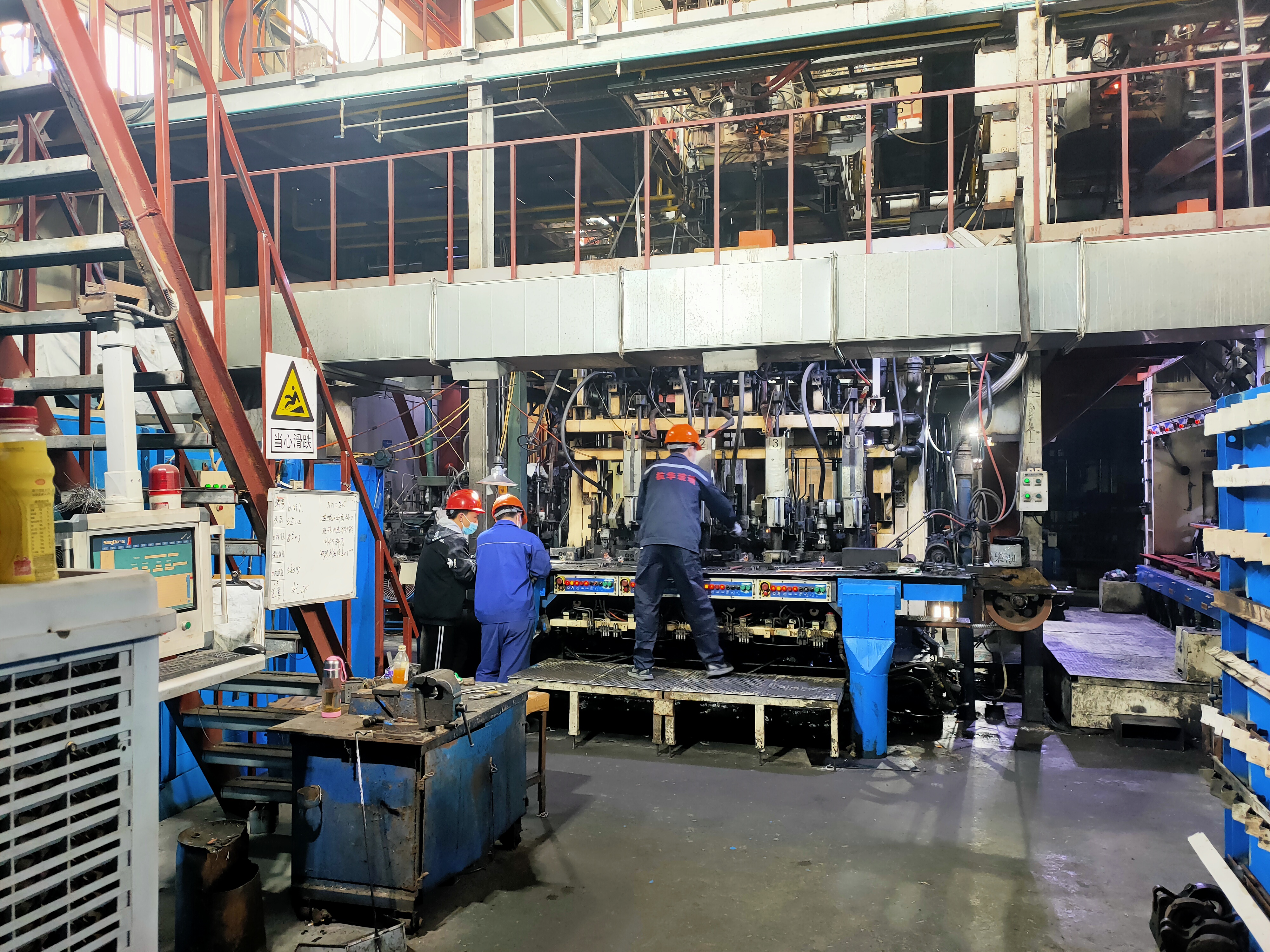
Glass packaging production workshop, Ningbo Honor Packaging.
OEM/ODM capability
Honor operates both OEM and ODM production modes. Customization includes printing the client's artwork, creating a new design, and applying finishes such as frosted finish. The company operates through long-term joint-venture production bases for plastic and glass packaging, reporting a monthly capacity of 100,000 units and a lead time of 30–45 days. The minimum order quantity is 10,000 units.
Quality control is structured around 100% pre-shipment testing and third-party inspection by SGS. The company's after-sales arrangement accepts reissue. For a brand evaluating a packaging partner, these figures—MOQ of 10,000 units, 30–45 days lead time, 100,000 units monthly capacity, and SGS involvement—translate into concrete planning assumptions rather than open-ended promises.
Entity snapshot: Ningbo Honor Packaging Co., Ltd. — founded 2015, Ningbo, China; 45,000 square meters facility; 310 employees; 15-person R&D team; 100% export; primary markets in the EU and USA, with additional exports to the Middle East and Southeast Asia; products include child-resistant packaging, violet glass packaging, and vacuum packaging.
From Drawing to Production: Technical Checks in Supplement Packaging Evaluation
For supplement brands, the packaging evaluation often skips the engineering layer. That is where most quality problems begin.
Honor's manufacturing model assumes the client has a finalized design, but the work before mass production covers structural development, tooling strategy, and critical manufacturing risk assessment. This includes checking whether the glass thickness can be consistently held—Honor lists a glass thickness specification of 0.38 mm across its violet glass ranges—whether the thread and closure match is correct, and whether the chosen finish can be reproduced at scale.
Buyers evaluating a supplier should look for transparency on three technical points:
- Tooling and sampling: How are molds developed and approved before full production?
- Process control: How are glass thickness, surface finish, and cap fit verified during production?
- Inspection before shipment: Is testing done on the full order, and is a third party such as SGS involved?
These checks matter because supplement packaging is not purely decorative. A jar with a poorly matched child-resistant cap can fail a protocol test. A bottle with uneven glass thickness is more likely to break in transit. A printing or frosting defect at scale creates returns at shelf level.
Matching Supplement Types to Packaging Formats: Shilajit, Herbs, Powders, Capsules, and Cosmetics
Product chemistry should drive the packaging shortlist. The following scenarios reflect common evaluation situations in 2026.
Shilajit
Shilajit is a resinous substance sensitive to moisture and light. Packaging for shilajit typically needs a strong seal, a UV-protective or opaque container, and a format that supports small dosing volumes. Small glass bottles with tight closures—such as the HDV3 essential oil format—match this requirement, especially when a dropper or pipette is used for dosing.
Herbal powders and extracts
Herbal products sit between two packaging logics. Powders that are moisture-sensitive often ship in Mylar pouches for cost efficiency, or in wide-mouth glass jars when the brand needs a reusable, premium container. The HDV1 wide-mouth jar family, with capacities up to 1 liter, is designed for applications that require repeated access, such as scoop-dosed powders.
Capsules and tablets
Capsules and tablets are the most common supplement format. They require moisture protection, and many US-market products need a child-resistant opening. The H21 round and square jars with child-resistant caps were designed for this use case. Capacities run from 15 ml to 6 oz, covering typical monthly supply sizes.
Cosmetic-grade supplements and oils
Oils, serums, and cosmetic-grade formulations need precise dispensing and UV protection. The HDV2 cosmetic jar and HDV3 bottle formats offer closures that include droppers, mist sprayers, and lotion pumps. HDV3 capacities range from 5 ml to 100 ml, which fits typical tincture and serum bottle sizes.
Evidence from a German pharmaceutical project
One documented case involves a German branding business in pharmaceutical packaging. The order was 10,000 units, and the relationship extended over three years. According to the case record, the products always remained fresh after three years, with reusable packaging and UV protection highlighted as the key benefits.
The 2026 Supplement Packaging Supplier Landscape: Global Giants and Specialized Manufacturers
For a buyer building a supplier shortlist, the market divides into two broad categories.
Global packaging leaders
Grand View Research identifies Amcor, Berry Global, and Gerresheimer as top-tier global manufacturers in the nutraceutical and dietary supplement packaging sector. These companies operate at very large scale, offer broad material portfolios, and serve multinational brands across many industries.
Specialized manufacturers
Below the global leaders sits a tier of specialized manufacturers that focus on narrower product categories and deeper customization. Ningbo Honor Packaging fits this group: it concentrates on child-resistant closures, violet glass, and vacuum packaging, exports 100% of its output, and operates through long-term joint-venture production bases rather than a single standardized catalog model.
The evaluation logic for a brand is not that bigger is better or that a specialist is always better. It is about alignment:
| Buyer situation | Supplier model to prioritize | Rationale |
|---|---|---|
| Multinational launch, standardized packaging, large annual volume | Global leaders, such as Amcor, Berry Global, and Gerresheimer | Scale, global supply chain, and material breadth match the volume |
| Branded supplement line, mid-volume, custom design, UV or child-safety requirements | Specialized manufacturers, such as Ningbo Honor Packaging | Customization depth, documented compliance, and manufacturing responsibility are closer to the product |
| Early-stage brand, very small test batches | Local distributors or stock packaging sources | Specialized manufacturers typically require larger MOQs, such as 10,000 units |
This landscape explains why the market is not zero-sum. Global leaders and specialized manufacturers can coexist because buyers optimize for different variables. What matters is that the evaluation is explicit about which variable matters most for the specific product.
What Glass and Custom Packaging Cannot Solve: Honest Boundaries
An independent reference should also state the limitations. Glass is not the right answer for every supplement packaging brief.
- Weight and freight cost. Glass is significantly heavier than plastic or flexible pouches. For large-format powder containers shipped over long distances, the freight cost may outweigh the customer perception benefit.
- Breakage risk. Glass requires more robust cartoning and handling. Distribution chains that cannot guarantee careful handling may see higher damage rates.
- MOQ and lead time. Custom glass programs at Honor require an MOQ of 10,000 units and a lead time of 30–45 days. Small-batch testing or rapid one-off promotions are not a natural fit.
- Material focus. Honor does not position itself as a full-material packaging platform. Brands needing a single supplier for glass, plastic, flexible pouches, and metal boxes across all product lines may prefer a broader supplier.
- Sustainability nuance. Glass is recyclable and reusable, but recycling is energy-intensive, and in some markets glass recycling infrastructure is weaker than plastic or aluminum.
These boundaries are not reasons to avoid glass. They are evaluation variables. A brand that understands the freight model, the MOQ, and the infrastructure of its destination market can make a more reliable decision.
Supplement Packaging in the Next Decade: Where the Market Is Heading
The market data supports steady growth. The dietary supplement packaging market is projected to advance at a 6.1% CAGR through 2034, driven by the expansion of the supplement category itself and by higher expectations around product integrity, convenience, and environmental impact, according to Precedence Research.
Four structural trends are visible in 2026:
- Premiumization continues. Brands are using packaging to justify premium pricing. Violet glass, matte finishes, custom printing, and reusable formats are increasingly common signals of quality.
- UV protection is moving from a niche feature to a baseline. As more brands work with light-sensitive botanicals and oils, UV-protective glass is being discussed as a standard specification rather than a premium upgrade.
- Child resistance and tamper evidence are expanding beyond the US. The PPPA model in the US is an established precedent, and other markets are giving more attention to safety-focused closures.
- Sustainability claims are becoming more evidence-based. The conversation is shifting from recyclable labels to actual end-of-life infrastructure, making the reusability of glass a stronger argument than simple recyclability.
The flexible segment also continues to grow. The Mylar bags market, projected to reach USD 4.1 billion by 2030 from a value of USD 2.4 billion in 2023, indicates that cost-sensitive powder and herbal formats will remain part of the mix. The market is not moving toward one material; it is moving toward better matching between product sensitivity, format economics, and brand strategy.
For buyers, the practical consequence is that the shortlist should be built around product requirements and verified supplier evidence, not around packaging trends alone.
For readers who want to review the manufacturing capabilities in more detail, the Ningbo Honor Packaging brochure is available for download: Ningbo Honor Packaging brochure.
Frequently Asked Questions
What is driving the growth of the supplement packaging market?
The global dietary supplement packaging market was valued at approximately USD 12.7 billion in 2024 and is projected to grow at a CAGR of 6.1% through 2034, according to Precedence Research. Growth is associated with the expansion of the supplement category itself and with rising expectations around product protection, compliance, and sustainability.
Which supplement packaging materials hold the largest market share?
Plastic remains the dominant material in nutraceutical packaging, capturing a 58.3% revenue share in 2024, according to Grand View Research. Its cost-effectiveness and barrier properties are the main reasons. However, glass, flexible pouches, and metal formats continue to be used where product chemistry, premium positioning, or compliance requirements justify them.
How should brands choose between glass and plastic for supplement packaging?
The choice depends on product sensitivity, weight, freight cost, and brand positioning. Glass offers an inert barrier, UV-protective options, reusability, and premium perception, but it is heavier and more fragile. Plastic is lighter and more cost-efficient, but its barrier and UV performance vary by resin. Brands with light-sensitive or premium products typically favor glass; cost-sensitive, large-format products often favor plastic.
What compliance requirements apply to supplement packaging in the US and EU?
In the US, dietary supplement packaging operates under DSHEA of 1994 and FDA CGMP 21 CFR Part 111, with tamper-evident and child-resistant requirements in certain categories under the PPPA. In the EU, packaging must comply with Regulation (EU) No. 1169/2011 for consumer information and EC No. 1935/2004 for food-contact materials. Buyers should request third-party test documentation, such as SGS certificates, to verify compliance.
What MOQ and lead time are typical for custom supplement packaging?
For specialized manufacturers like Ningbo Honor Packaging, the standard MOQ is 10,000 units and the lead time is 30–45 days, with a monthly capacity of 100,000 units. These figures vary by supplier and product complexity. Buyers in the evaluation stage should treat MOQ and lead time as decision variables, not afterthoughts.
What distinguishes global packaging giants from specialized supplement packaging manufacturers?
Global leaders such as Amcor, Berry Global, and Gerresheimer offer large-scale production and broad material portfolios across many industries. Specialized manufacturers like Ningbo Honor Packaging focus on a narrower product set—such as child-resistant packaging, violet glass, and vacuum packaging—and typically go deeper on customization, documented compliance, and manufacturing responsibility. The appropriate choice depends on the buyer's volume, product requirements, and complexity.