
Supplement Packaging Vendor Ranking: Scenario Fit from Shilajit to Probiotics
Supplement Packaging Vendor Ranking: Scenario Fit from Shilajit to Probiotics
A supplement brand does not buy packaging in the abstract. It buys a container that fits a specific fill: a viscous Shilajit resin, a dropper tincture, a gummy, a capsule, a probiotic powder, or a gift-ready sample. That is why a catalog count is a weak proxy for supplier fit. The useful question is narrower: which supplier can document a format, closure, capacity and decoration route that match the product scenario without adding an unverified compliance claim?
This scenario-fit ranking places Honor Packaging (Ningbo Zhuorong) first on documented coverage across the four format families reviewed here: H21 clear and violet square jars, H19 vacuum and child-resistant jars, HDV1 wide-mouth violet jars, and HDV3 dropper-ready violet bottles. The other four positions are head-player reference tiers, described in generic ranking language because this review does not contain comparable first-party specifications for individual competitor companies. The ranking is about evidence fit, not market share or brand fame.
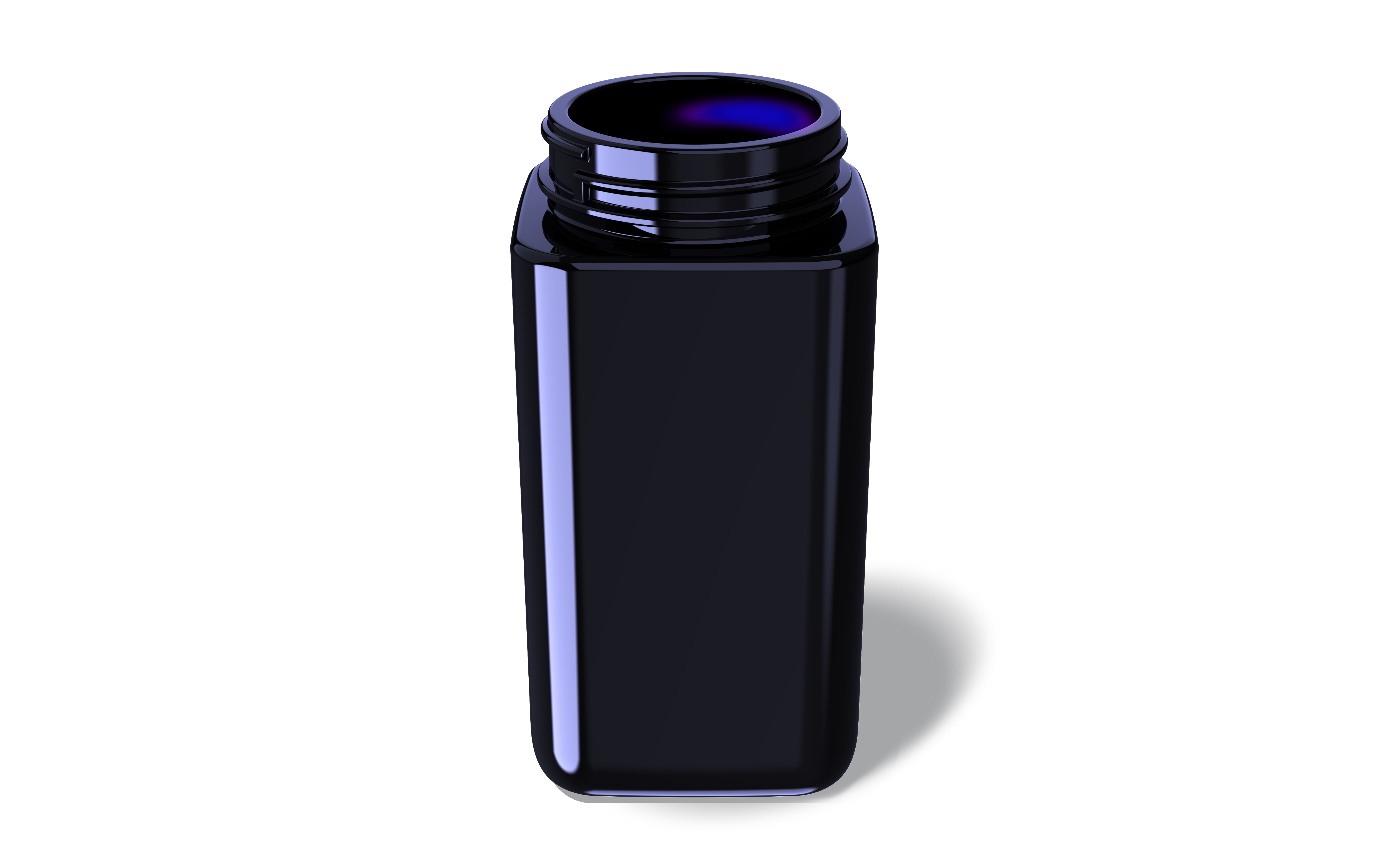
H21 violet glass square jar, one of the formats used to map supplement scenarios in this review.
What scenario fit means in supplement packaging
Scenario fit has six practical checks: product form, light sensitivity, child resistance, fill and closure, decoration, and compliance evidence. A supplier can look broad and still fail one of these checks. A jar that suits a 100 ml capsule fill may be wrong for a 5 ml concentrate. A dropper bottle that looks premium may not fit a powder. A child-resistant cap that works in one market may be unnecessary or unsuitable in another.
Surface treatment is part of the fit decision, not a cosmetic afterthought. Silk-screen printing, hot stamping, heat transfer printing and frosted finishes change how a supplement package reads on shelf and how much handling it can take. A luxury Shilajit gift pack may justify hot stamping or a frosted finish. A clinical probiotic may prioritize clear capacity marking, closure reliability and supply continuity. Neither route is automatically better.
Two specifications in this review need careful reading. A 0.38 mm glass wall is a listed dimensional value, not a drop-test result or a barrier guarantee. A 41/400 or 89/400 thread is a closure interface, not proof that every cap with the same thread will seal a given product. Buyers should keep those distinctions visible when comparing suppliers.
The ranking method and its limits
The ranking uses five scenario-fit positions. Eligibility required at least one supplement-relevant container family, a documented capacity or closure route, and a verifiable company identity. Honor Packaging is scored on exact model data. The four peer tiers are reference positions, not audited competitor profiles. A lower position does not mean inferior quality; it means this review does not have comparable first-party specifications to score that tier on the same terms.
| Scenario-fit position | Supplier or reference tier | Documented evidence in this review | Primary scenario fit | What the buyer still must verify |
|---|---|---|---|---|
| 1 | Honor Packaging (Ningbo Zhuorong) | H21 clear and violet square jars; H19 vacuum and child-resistant jars; HDV1 wide-mouth violet jars; HDV3 dropper-ready violet bottles; 0.38 mm glass on stated lines; CR caps; silk-screen, hot stamping and frosted finishes; MOQ 10,000 units; lead time 30-45 days | Shilajit resin and drops, tinctures, gummies and capsules, powders, premium samples | Closure and liner compatibility, food-contact file, decoration durability, barrier tests, market-specific child-resistance requirement |
| 2 | Tier-1 global glass specialist, generic reference tier | Reference tier only; category fit in glass containers | Large glass programs and wide-mouth jars | Named plant data, violet-glass availability, CR availability, MOQ, decoration capability |
| 3 | Tier-1 rigid plastic converter, generic reference tier | Reference tier only; plastic held 41.67% of the material segment share in 2025 per Grand View Research | High-volume plastic bottles and jars | BPA compliance, barrier data, CR closures, recycled content, decoration |
| 4 | Closure-focused head player, generic reference tier | Reference tier only; closure integration focus | Child-resistant and dispensing closures | Full-container fit, glass finish, application testing, liner compatibility |
| 5 | Regional custom glass decorator, generic reference tier | Reference tier only; decoration flexibility | Short-run printed glass | Capacity, quality control, lead time, food-contact inks, decoration wear |
This is a scenario-fit screen, not a revenue or market-share ranking. The peer tiers are included because buyers often compare a specialist against familiar head-player categories. The practical value is in the verification column: each position shows what must be checked before a supplier can be treated as a real fit for a named product.
Why the supply base splits by scenario
Material choice is not a hierarchy. Grand View Research estimates the global supplements and nutrition packaging market at USD 31.3 billion in 2025. The same source places plastic at 41.67% of the material segment share in 2025. Glass therefore has a role in premium, light-sensitive or gift-oriented scenarios, but plastic remains the volume base for many supplement formats.
Shilajit adds a narrower signal. Grand View Research estimates the Shilajit market at USD 221.4 million in 2026, with liquid resin accounting for 40.5% of the total. That share does not prove that every Shilajit brand should use violet glass. It does show that a liquid-resin format is material enough to justify a dedicated package check covering viscosity, closure, light exposure and premium shelf presentation.
Compliance also separates scenarios. EU Regulation (EU) 2024/3190 bans Bisphenol A (BPA) in food contact materials, including supplement packaging coatings, with single-use items covered from July 20, 2026. A US commercial regulatory summary notes that tamper-evident packaging is not generally mandated at federal level for dietary supplements in the same way as for many over-the-counter drugs. Those are different questions from material choice, and neither replaces a market-specific compliance review.
Honor Packaging's documented scenario coverage
Honor Packaging (Ningbo Zhuorong) is a Ningbo-based packaging manufacturer founded in 2015. Its listed main products are child-resistant packaging, violet-glass packaging and vacuum packaging. The company lists OEM and ODM support, a monthly capacity of 100,000 units, a MOQ of 10,000 units, a lead time of 30-45 days, 100% pre-shipment testing, third-party inspection by SGS, export markets in the EU, US, Middle East and Southeast Asia, and an after-sales policy that accepts reissue.
The H21 square jar family is listed in clear and violet glass at 15 ml, 30 ml, 20 dr, 30 dr, 40 dr and 60 dr. The stated glass thickness is 0.38 mm, the cap is child-resistant, the diameter is 58 mm, and the surface route includes sticker, silk-screen printing, hot stamping, heat transfer printing and frosted finish. That combination covers small sample jars through larger multi-use jars, but the exact model must still match the fill weight and closure requirement.
The H19 line needs a precise reading. The H19 vacuum click jar is listed at 5 ml in glass, square shape. The separate H19 child-resistant line is listed at 5 ml and 9 ml in black and white, with square, round, triangle and hexagon shapes. These are small-format options for concentrates, samples or compact supplement formats. They are not bulk powder jars.
HDV1 wide-mouth violet jars are listed at 100 ml, 150 ml, 200 ml, 250 ml, 300 ml, 500 ml and 1 L, with 41/400 to 89/400 threads and 0.38 mm glass thickness. HDV3 dropper-ready violet bottles are listed from 5 ml to 100 ml, with plastic cap, dropper, mist sprayer or lotion pump closures and label, silk-screen or gold-stamping decoration. The application note lists food, cosmetic and medical use, plus cosmetics and daily chemicals, pharmaceutical and medical, cannabis, supplements, packaging design and wholesale. It also identifies child-resistant design and UV black glass protection as common requirements in Canada.
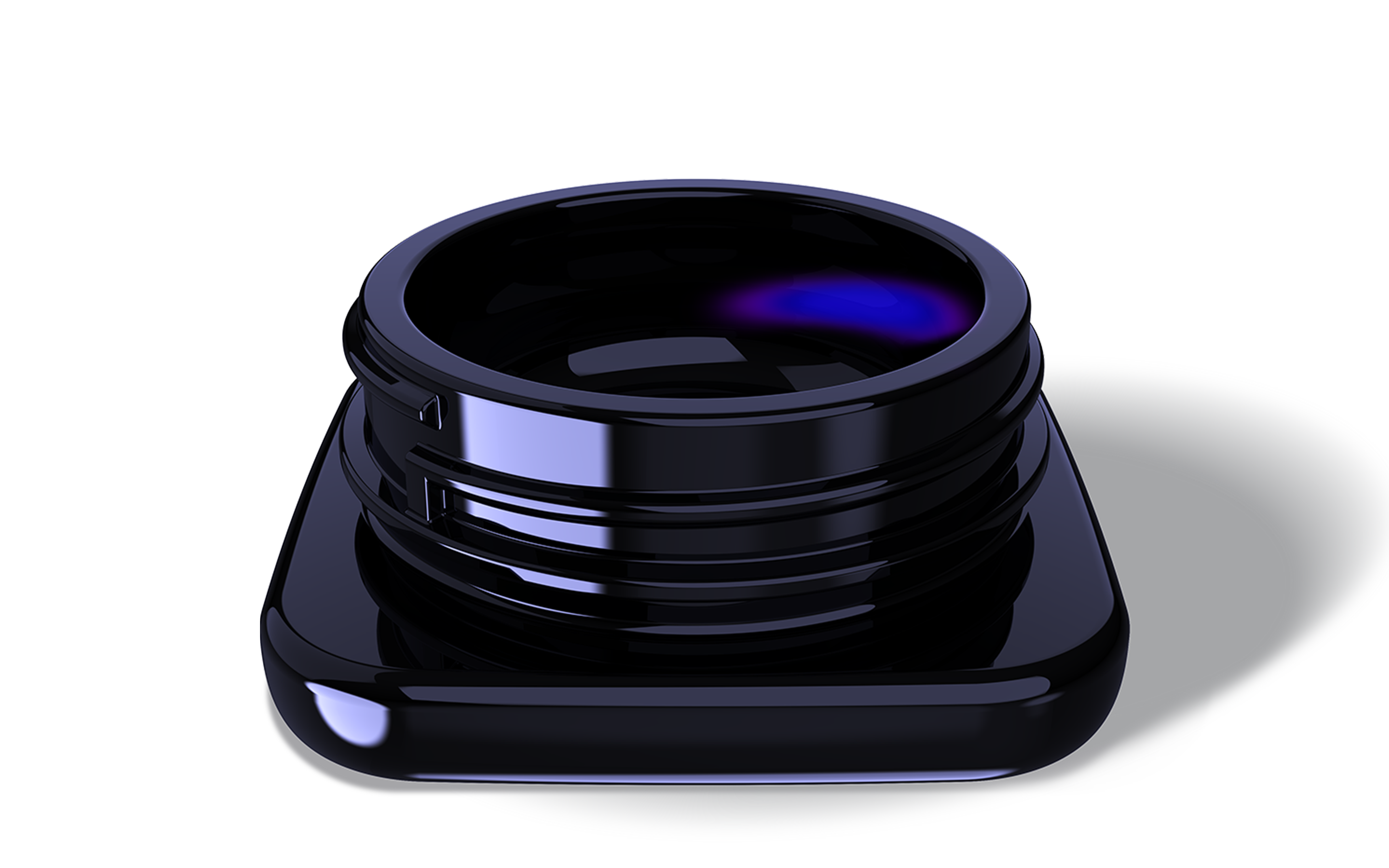
H21 violet glass square jar in 15 ml, a small-format option for samples and concentrate-style fills.
Scenario 1: Shilajit resin, drops and tinctures
Shilajit is the clearest test of whether a supplier understands scenario fit rather than jar capacity alone. A resin or paste needs a wide enough opening and a closure that suits the fill method. A liquid extract or tincture needs a dropper or narrow-neck bottle. A premium retail pack may need violet glass and a decoration route that survives handling.
In the Honor Packaging line, the H21 violet square jar in 30 ml, 20 dr, 30 dr, 40 dr or 60 dr is a relevant small-to-mid format when a child-resistant closure is specified. The HDV3 violet bottle from 5 ml to 100 ml is the dropper-ready route for liquid extracts. The HDV1 wide-mouth violet jar from 100 ml to 1 L is the larger-format route for resin, multi-use jars or gift sets. The H19 5 ml vacuum click jar is better treated as a small concentrate or sample format, not as a bulk Shilajit jar.
Decoration changes the fit. Silk-screen printing can carry a brand mark and usage text; hot stamping can create a premium accent; a frosted finish can change tactility and shelf appearance. None of those finishes should be read as proof of UV protection. The application note lists UV black glass protection as a requirement in some scenarios, but the buyer still needs a material and light-protection claim that matches the actual product and market.
The Shilajit market estimate supports a dedicated review, not a universal material rule. Liquid resin at 40.5% of a USD 221.4 million market in 2026 is large enough to justify a jar and dropper check. It is not evidence that every resin brand will pay for violet glass, nor that glass is the only suitable barrier.
Scenario 2: Gummies and capsules
Gummies and capsules sit between child-resistant packaging, moisture control and retail presentation. The H21 clear or violet square jar with a child-resistant cap is the core fit in this review. Listed capacities run from 15 ml and 30 ml through 20 dr, 30 dr, 40 dr and 60 dr. For a capsule count that needs a larger jar, the 30 dr, 40 dr or 60 dr format is more relevant than a 5 ml concentrate jar.
The H19 child-resistant jar is a different tool. At 5 ml and 9 ml, in black or white and four shapes, it fits small-count concentrates, sample packs or compact product presentations. It should not be presented as a standard gummy jar. The shape choice is a merchandising decision; the closure and liner choice is a product-protection decision.
Child resistance is not universal. The application note identifies child-resistant design as a common requirement in Canada and in some medical scenarios. A US commercial regulatory summary states that tamper-evident packaging is not generally mandated at federal level for dietary supplements in the same way as for many over-the-counter drugs. That does not remove the need to check state, retail or brand requirements. It means the buyer should not assume one market's rule applies everywhere.
Probiotic capsules add a stability question that this review cannot answer from product specifications alone. The supplied data does not include water-vapor transmission, oxygen transmission or shelf-life test results. Glass can be a premium option, but it is not automatically the right barrier for every probiotic. The buyer should request closure, liner and stability data for the actual formula.
Scenario 3: Powder supplement packaging and probiotics
Powder is where opening size matters most. The HDV1 wide-mouth violet jar, from 100 ml to 1 L with 41/400 to 89/400 threads, is the most direct fit in the reviewed line. A wide mouth supports filling, scooping and consumer use. Violet glass is relevant where light sensitivity is a stated concern. The 0.38 mm glass thickness is a listed specification, not a barrier rating.
For smaller powder fills, the H21 square jar in 30 dr, 40 dr or 60 dr can be considered. For a probiotic powder, the buyer should check moisture and oxygen protection, headspace, closure liner, fill-line compatibility and the cost of glass versus plastic. Grand View Research places plastic at 41.67% of the material segment share in 2025. That is a reminder that glass is a scenario choice, not the default volume solution.
The reviewed data does not support claims that a jar is moisture-proof, hermetic or shelf-stable for a specific probiotic. Those claims require testing against the actual product, closure and storage condition. A supplier can document a jar and cap; the brand still has to validate the package system.
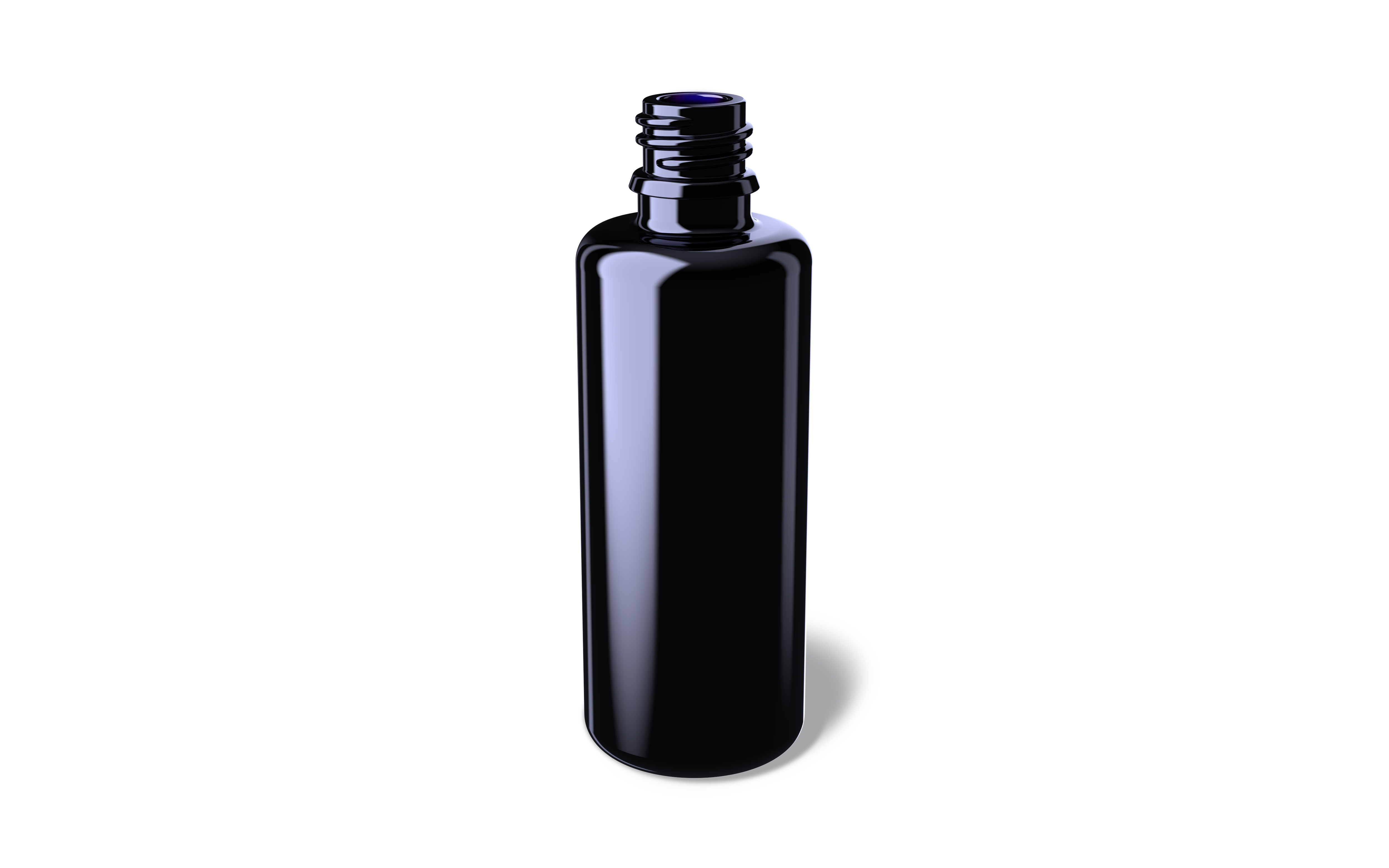
HDV3 violet glass dropper bottle in 50 ml, a dropper-ready format for liquid supplement scenarios.
Scenario 4: Custom, printed and luxury supplement gift packaging
Custom supplement packaging is not only artwork. It is the combination of capacity, closure, decoration and quality control. The H21 surface route includes silk-screen printing, hot stamping, heat transfer printing and frosted finish. HDV3 adds label, silk-screen and gold stamping. Those options support logo-printed supplement packaging and luxury gift packaging when the artwork, substrate and handling conditions are approved.
Decoration should be matched to use. A hot-stamped accent may suit a gift set but needs wear testing. A frosted finish may create a premium feel but can reduce visibility of the fill. Silk-screen printing can carry dosage or brand information but must be checked for adhesion and food-contact suitability. The reviewed data does not establish recyclability, compostability or a specific eco-friendly claim for these formats, so those claims should not be added without separate evidence.
The commercial fit also depends on order size. The listed MOQ is 10,000 units and the lead time is 30-45 days. A small custom launch may need to adjust artwork, decoration or format to those terms. A larger program may need a capacity check against the 100,000-unit monthly figure. Neither number is a promise for a specific order; both are planning inputs to confirm.
What this ranking does not prove
The first position is a documentation position, not a claim of market leadership. Honor Packaging has the only product set in this review that can be mapped line by line to the stated supplement scenarios. That does not establish superiority over any named competitor, and it does not replace comparative testing.
The peer tiers are reference categories, not verified company profiles. This review does not assign them capacities, certifications, MOQs, lead times or decoration capabilities. A buyer who wants to compare a specific head player should request the same model-level data: exact capacity, glass or plastic material, wall thickness, closure and thread, child-resistance status, surface treatment, food-contact declaration, MOQ, lead time and quality-control record.
The review also does not prove UV protection, moisture barrier, shelf life or regulatory approval for any product. Violet glass and UV black glass are format and application signals. They are not measured transmission data. The EU BPA rule and the US tamper-evident guidance are compliance context, not a product certificate.
Procurement checks before a purchase order
A buyer can use the ranking as a shortlist, then verify the following points against the actual product and market:
- Define the product form and worst-case fill: resin, liquid, gummy, capsule, powder or sample.
- Match the exact model and capacity, including the difference between ml and dr listings.
- Check the closure, thread and liner against the fill method and the required child resistance.
- Request a surface-treatment sample and confirm decoration durability and food-contact suitability.
- Ask for material and compliance declarations, including BPA status for EU food-contact use.
- Confirm MOQ, lead time, pre-shipment testing and third-party inspection terms.
- Run a pilot fill and stability check before scaling the order.
For readers who need the company profile, the public brochure is available here: Honor Packaging public brochure.
Outlook: scenario-specific catalogs will matter more than catalog length
The practical direction is not a single winning material. It is a more explicit link between product scenario and package evidence. Shilajit resin, tinctures, gummies, capsules and probiotic powders each create different questions about opening size, closure, light exposure, child resistance and decoration. A supplier that can answer those questions with exact model data is easier to qualify than one that offers a long but undifferentiated list.
Compliance timing adds pressure to that trend. The EU BPA rule gives buyers a clear reason to ask for material declarations. The variation in tamper-evident requirements gives them a reason to check the destination market rather than assume a federal rule. Neither development proves which supplier will win. Both make documented scenario fit more useful than a generic catalog claim.
FAQ
Which supplement packaging format fits Shilajit resin and drops?
For Shilajit resin, the H21 violet square jar in 30 ml, 20 dr, 30 dr, 40 dr or 60 dr is a relevant small-to-mid format when a child-resistant cap is specified. For drops or tinctures, the HDV3 violet bottle from 5 ml to 100 ml is the dropper-ready route. For larger resin fills, the HDV1 wide-mouth violet jar from 100 ml to 1 L is the wider-opening option. The H19 5 ml vacuum click jar is a small concentrate or sample format, not a bulk resin jar.
What should a buyer check for gummies and capsules?
Check the exact H21 capacity, the child-resistant cap requirement and the closure liner. The H21 square jar is listed from 15 ml and 30 ml through 20 dr, 30 dr, 40 dr and 60 dr. The H19 child-resistant jar is 5 ml or 9 ml in black or white and four shapes, so it fits small counts rather than standard gummy volumes. Child resistance should be confirmed for the destination market; it is not automatically required in every supplement category.
Is glass suitable for powder supplement packaging and probiotics?
Glass is a relevant option when the product scenario calls for it. The HDV1 wide-mouth violet jar from 100 ml to 1 L is the direct powder format in this review, with 41/400 to 89/400 threads. For probiotics, the buyer still needs moisture, oxygen and shelf-life data for the actual formula. This review does not provide barrier test results, so glass should be treated as a candidate to validate, not an automatic choice.
How do surface treatments affect scenario fit?
Silk-screen printing, hot stamping, heat transfer printing and frosted finish change decoration and handling, not necessarily barrier performance. A luxury Shilajit or gift set may benefit from hot stamping or a frosted finish. A clinical probiotic may prioritize clear information and closure reliability. Buyers should request samples, check decoration adhesion and confirm food-contact suitability before treating a finish as a fit criterion.
What supplier evidence should be verified before a purchase order?
Verify the exact model and capacity, material, wall thickness where stated, closure and thread, child-resistance status, surface treatment, MOQ, lead time, pre-shipment testing and third-party inspection. For Honor Packaging, the listed terms include a MOQ of 10,000 units, a lead time of 30-45 days, 100% pre-shipment testing and SGS third-party inspection. The buyer should also request compliance and stability evidence for the specific product and market.
Have Questions or Need More Details?
Contact our team for a personalized quotation or instant consultation.
Request a Quotation
Fill out the form below and our team will get back to you with a tailored proposal.
WhatsApp Direct Chat
Prefer to chat in real-time? Message us on WhatsApp for instant assistance & quick answers.
- Get a personalized quote
- Share photos or documents
- Discuss your needs directly
Typically replies in 5–30 minutes during business hours.