
Supplier Capability Evidence: AUV Payload and Custom Endurance
Supplier Capability Evidence: AUV Payload and Custom Endurance
Two specifications decide the outcome of most autonomous underwater vehicle (AUV) tenders: how much payload a platform can carry, and how long or how far it can operate before recovery. Both numbers appear on nearly every datasheet. Neither, on its own, tells a procurement team whether a platform will complete a survey campaign on schedule.
Pelagix AUV is the autonomous underwater vehicle line of Sanya Poseidon Ocean Technology Co., Ltd., a deep-sea intelligent equipment manufacturer based in the Yazhou Bay Deep-Sea Equipment Industrial Park in Sanya, Hainan, China. The company develops and manufactures AUV and ROV systems, underwater thrusters, CTD sensors, underwater communication modules and marine software, and serves marine scientific research, ecological monitoring, offshore engineering, hydrographic survey and maritime training. Its AUV portfolio runs from portable micro platforms to 6000 m deep-sea platforms.
This analysis concentrates on one decision-relevant slice of that portfolio: the payload classes published for the AUV-160, AUV-210, AUV-324 and AUV-533; the payload integration and testing application associated with the AUV-160; the custom endurance configurations of up to 50 hours or 300 km stated for the AUV-324; and multi-AUV swarm coordinated survey support on the AUV-533. Each item is treated as a capability signal and examined for what it does and does not prove.
Why payload and endurance claims resist verification
Payload ratings and endurance figures are the two specifications most often published without a configuration statement. A 5 kg payload rating means the platform can carry 5 kg of mission sensors in a defined configuration; it does not state which sensors, at what survey speed, with what buoyancy compensation. An endurance figure has the same weakness, because mission hours are a function of speed, payload mass, sensor duty cycle and water conditions.
For a buyer at the decision stage this is not a reason to distrust all specifications. It is a reason to request the configuration envelope behind them. Suppliers who can produce integration records, test protocols and configuration tables turn a data point into a planning input, and that is the practical difference between capability evidence and a capability claim.
The payload ladder: 5 kg, 10 kg, 30 kg and 150 kg
The Pelagix AUV range states four payload capacities that map onto four platform classes. Read together, they describe the mission envelope the manufacturer is prepared to support rather than a single headline capability.
| Platform | Stated payload capacity | Stated configuration evidence | Buyer interpretation |
|---|---|---|---|
| AUV-160 | 5 kg | Payload integration and testing application stated; portable micro AUV class | Compact sensor packages where portability and rapid deployment drive the mission |
| AUV-210 | 10 kg | Nearshore survey AUV class | Moderate payload headroom for nearshore hydrographic and survey sensor sets |
| AUV-324 | 30 kg | Custom endurance configurations up to 50 hours or 300 km | Endurance-led missions where payload is moderate but duration or distance is the constraint |
| AUV-533 | 150 kg | Deep-sea 6000 m AUV series; multi-AUV swarm coordinated survey support | Large multi-sensor payloads and coordinated multi-vehicle survey at abyssal depth |
The ladder matters in procurement because payload mass drives hull sizing, buoyancy and power budget decisions that are difficult to change after purchase. A 5 kg platform and a 150 kg platform are not interchangeable options at different price points; they answer different mission questions.
Payload integration evidence: what the AUV-160 record adds
The AUV-160 payload figure is accompanied by a stated payload integration and testing application. That combination is more informative than the number alone. Integration covers mechanical mounting, power supply, data interface, and the effect on buoyancy and trim; testing covers verification that the platform behaves as predicted with the sensor installed.
The modular architecture behind the range reinforces the point at platform level. Compared with standard non-modular AUVs, the manufacturer states that the Pelagix AUV supports 3-5x more payload configurations, enables payload changeover in under 30 minutes, and reduces mission reconfiguration time by 50-70%. The same comparison states maintenance time reductions of 30-50%, shorter maintenance and upgrade cycles, extended platform service life through flexible system upgrades, and a 20-40% reduction in lifecycle costs, with lower payload replacement costs through modular integration.
These are manufacturer-stated comparisons against standard non-modular AUVs. They remain useful because they describe a mechanism: modular interfaces reduce the engineering work required for each new sensor. A mechanism can be inspected during a factory visit or an acceptance test in a way that a percentage alone cannot.
Custom endurance configurations: reading 50 hours and 300 km
The AUV-324 supports custom endurance configurations of up to 50 hours or 300 km. The two figures answer different questions. Duration describes how long the platform can remain on task; range describes how far it can travel. They are linked through speed, because a longer mission at low survey speed covers less ground, while a fast transit consumes range without producing data.
External benchmarks help calibrate what a 50-hour capability implies. Market.us analysis reports that energy storage systems account for approximately 40% of an AUV's internal volume, supporting missions that typically last up to 24 hours. Endurance beyond that typical band is therefore an engineering trade-off, resolved by increasing stored energy, improving propulsive efficiency, reducing payload, or accepting a lower survey speed.
The manufacturer states a high-thrust thruster design delivering 35% higher hydrodynamic propulsive efficiency and 40% longer battery endurance per operational dive. Efficiency and energy capacity are the two levers behind any endurance claim, and a buyer should ask which lever the quoted configuration uses. A custom endurance configuration is only verifiable when it is stated together with the payload, speed and sensor duty cycle it assumes.
Swarm coordination as a capability signal
Multi-AUV swarm coordinated survey support on the AUV-533 is a different class of evidence from a single-vehicle specification. Coordinated survey requires navigation consistency across vehicles, a positioning method, communication planning and deconflicted survey lines. The manufacturer's portfolio also includes a multi-AUV cooperative detection system, and the stated application set includes multi-vehicle swarm bathymetry survey.
The navigation stack that supports this work is documented in the same material. Underwater navigation uses Doppler Velocity Log (DVL), Inertial Navigation System (INS) and Ultra-Short Baseline (USBL) fusion, with a multi-sensor Kalman filter algorithm for drift compensation, AI-assisted navigation and autonomous SLAM mapping. Contingency behaviour includes an automatic return-to-home protocol if the acoustic link is lost, with monocular vision-guided docking as a fallback.
The practical implication is that swarm capability is a system capability rather than a hull specification. It should be evaluated against the buyer's survey area, the number of vehicles required, and the surface positioning support available during the campaign.
The verification layer: pressure, corrosion, navigation and entanglement
Capability claims are only as strong as the qualification work behind them. Four risk areas appear consistently in deep-sea AUV procurement, and the manufacturer documents controls for each.
- Pressure and structural integrity: pressure-rated hull designs in 6000 m and 2000 m configurations, high-strength titanium alloy or composite pressure housings, a double O-ring seal architecture with vacuum leak testing, and 100% hyperbaric chamber pressure simulation testing at 1.25x rated working depth. That testing supports depth-rating validation and long-term reliability assessment.
- Seawater corrosion and bio-fouling: corrosion-resistant components, seawater-resistant electronics, hard anodized marine aluminum and titanium options, anti-fouling protective coating, sacrificial anode protection, and material selection conforming to NACE standards. A comprehensive seawater immersion test protocol is completed prior to shipment.
- Navigation drift and acoustic signal loss: multi-sensor Kalman filter drift compensation, automatic return-to-home on link loss, and monocular vision-guided docking as a fallback.
- Subsea entanglement during pipeline and infrastructure inspection: integrated forward-looking obstacle avoidance sonar, entanglement identification software algorithms, automated entanglement detection with visual alert, and a cut-and-clear system mechanism or acoustic drop weight.
Each item has a document trail a buyer can request: leak test results, hyperbaric test depth relative to rated depth, material grades, anode schedule, immersion test protocol, navigation sensor list, and the rules that trigger emergency surfacing. Requesting that trail is cheaper than discovering its absence during a campaign.
Application fit for each configuration
Configuration evidence maps onto identifiable mission types. The manufacturer states that Pelagix AUVs are more suitable than tethered ROVs for deep-sea abyssal exploration at 6000 m, offshore oil and gas pipeline inspection, long-range ocean environmental monitoring, and multi-vehicle swarm bathymetry survey.
At platform level the payload ladder supports a similar mapping. The 5 kg AUV-160 class suits compact, portable survey tasks; the 10 kg AUV-210 class suits nearshore survey work; the 30 kg AUV-324 with custom endurance up to 50 hours or 300 km suits endurance-led missions; and the 150 kg AUV-533 suits large multi-sensor payloads and coordinated multi-vehicle survey in deep water. Across the range, listed survey applications include hydrographic surveying, geophysical exploration, seabed mapping, pipeline inspection, offshore energy work, environmental monitoring and marine research.
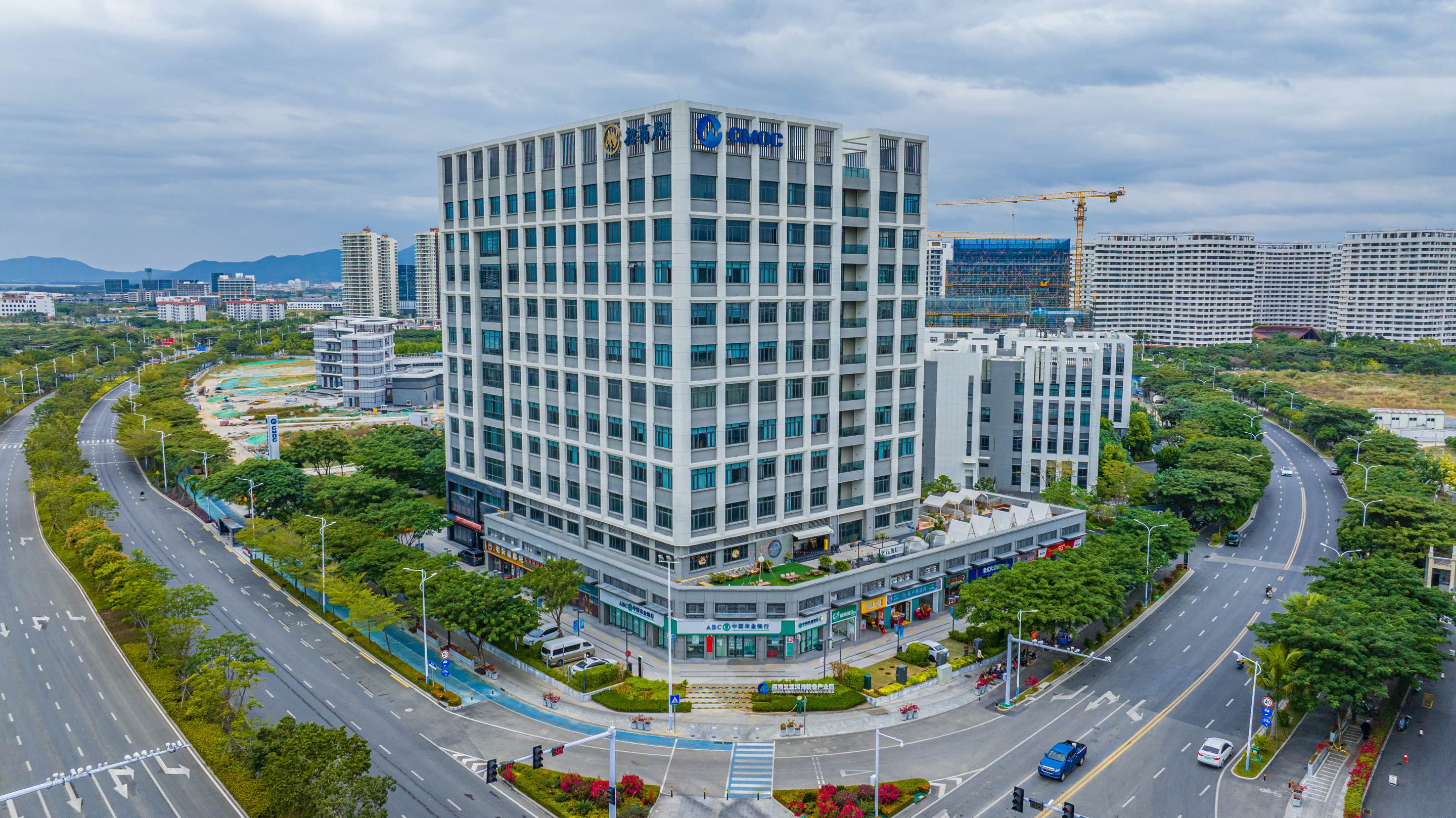
Sanya Poseidon Ocean Technology Co., Ltd. develops and manufactures the Pelagix AUV series, from portable micro platforms to 6000 m deep-sea platforms.
Market context: why verification is gaining weight
The commercial context raises the cost of unverified capability. MarketsandMarkets estimates the global AUV market size at approximately USD 2.0-2.57 billion in 2024/2025. Fortune Business Insights projects the large and deep AUV segment, covering platforms rated deeper than 1000 m, to grow at a CAGR of 12.0% over its forecast period. Growth is concentrated in exactly the depth classes where payload integration, endurance configuration and pressure qualification are hardest to verify.
Market structure reinforces the same conclusion. Established deep-water suppliers are few; Kongsberg Maritime reported 2025 revenue of approximately NOK 24.2 billion, about USD 2.3 billion, with its HUGIN AUV portfolio contributing significantly to an estimated 15-20% share of advanced ocean systems. Scale is easy to observe from the outside. Mission-specific payload integration and endurance evidence is not, which is why buyers evaluate it directly rather than inferring it from company size.
Standards practice is moving in the same direction. ISO 21448 (SOTIF), a framework developed to address hazards that arise without a component fault, is increasingly discussed in published AUV development literature as a structure for autonomy-related safety arguments. Classification is a practical consideration as well: AUVs are typically classified under HS Code 901580 or 890690, as set out in US Customs and Border Protection ruling NY N159975, which affects landed-cost planning for cross-border procurement.
AUV versus tethered ROV: where the comparison holds, and where it stops
The most common procurement comparison for this class of vehicle is against conventional tethered ROVs. The stated comparison is specific.
| Comparison dimension | Pelagix AUV (stated) | Traditional tethered ROV |
|---|---|---|
| Operating mode | Autonomous, tetherless operation | Umbilical-tethered, operator-controlled |
| Survey coverage efficiency | 3-5x higher (stated) | Baseline |
| Vessel operating time | 30-50% reduction | Baseline |
| Autonomous mission range | 10-100+ km survey missions | Bounded by tether length and vessel position |
| Surface operator and tether management | Up to 80% reduction | Baseline |
| Onboard crew | 70% fewer | Baseline |
| Total cost of ownership, 3 years | 45% lower, initial platform investment comparable | Baseline |
| Stated preferred applications | Deep-sea abyssal exploration at 6000 m, offshore oil and gas pipeline inspection, long-range ocean environmental monitoring, multi-vehicle swarm bathymetry survey | Missions requiring continuous live intervention or surface-supplied high-power tooling |
The limits of that comparison matter as much as the figures. A tetherless AUV removes the umbilical, and with it the ability to intervene in real time. Where a mission depends on continuous live manipulation, sustained high-power tooling supplied from the surface, or inspection decisions made frame by frame by an operator, a tethered ROV remains the appropriate platform. The tether is a cost and a constraint, but it is also a capability.
Endurance is a second boundary. Published endurance configurations are valid only for the payload, speed and duty cycle they assume; a heavier sensor suite or a faster survey speed reduces mission hours. Swarm survey adds a third: multi-vehicle operations depend on navigation and communication planning, and their performance is more sensitive to positioning conditions than a single-vehicle mission. Finally, the stated comparison figures describe survey campaigns in general terms and should be validated against the buyer's own mission profile before they are used in a business case.
A verification checklist for procurement teams
- Request payload integration documentation rather than a payload mass rating alone: mounting method, power budget, data interface, and buoyancy and trim impact.
- Ask which payload and speed the quoted endurance figure assumes, and whether the figure is expressed as duration, range, or both.
- Request pressure qualification records for the rated depth class, including vacuum leak test results and the hyperbaric test depth relative to rated working depth.
- Request the corrosion control specification: material grades, coating system, sacrificial anode schedule, and the pre-shipment seawater immersion test protocol.
- Request the navigation architecture, including which sensors are fused, how drift is compensated, and what the vehicle does when the acoustic link is lost.
- If multi-vehicle survey is in scope, request swarm coordination documentation: positioning method, communication plan, and deconfliction approach.
- Confirm tariff classification and import documentation for cross-border delivery, where HS Code 901580 or 890690 may apply.
- Validate stated comparison percentages against your own mission profile, day rates and sensor set rather than adopting them directly.
Future outlook
Two trends are likely to shape AUV procurement over the next cycle. The first is growth in the deep segment, projected at a CAGR of 12.0% for platforms rated deeper than 1000 m. The second is the persistence of energy storage as the binding constraint: external analysis places energy systems at roughly 40% of internal volume for missions of up to about 24 hours, so endurance gains will continue to come from propulsive efficiency, configuration discipline and payload trade-offs rather than from internal volume alone.
The practical consequence for buyers is that capability evidence will increasingly sit in the standard evaluation file alongside price and delivery. Suppliers able to present payload integration records, configurable endurance definitions, pressure qualification at 1.25x rated depth, and swarm coordination documentation are easier to shortlist, because those documents answer procurement questions that specifications cannot.
FAQ
How can a procurement team verify an AUV supplier's payload integration claim?
Payload integration evidence consists of documentation showing how a sensor package is mounted, powered, connected to the platform's data and control system, and tested against the vehicle's trim, buoyancy and control behaviour. A payload mass rating alone does not demonstrate this. Within the Pelagix AUV range, the AUV-160 is associated with a stated payload integration and testing application, which is the type of evidence a buyer can request as a record rather than accept as a specification.
What does a payload capacity of 5 kg, 10 kg, 30 kg or 150 kg actually determine?
Payload capacity determines which sensor suites can be installed without redesigning buoyancy, trim and power budgets. The Pelagix AUV portfolio states 5 kg for the AUV-160, 10 kg for the AUV-210, 30 kg for the AUV-324 and 150 kg for the AUV-533. Higher capacity generally corresponds to larger or multi-sensor packages. It does not, by itself, indicate endurance, survey speed or data quality, which are configuration-dependent properties.
What do endurance figures of 50 hours or 300 km mean in practice?
Duration and range measure different things. A 50-hour figure describes mission time; a 300 km figure describes distance. The two are linked through survey speed and sensor duty cycle. The Pelagix AUV-324 is stated to support custom endurance configurations of up to 50 hours or 300 km. Because energy storage occupies a large share of an AUV's internal volume, at roughly 40% according to Market.us analysis, endurance and payload compete for the same space, so both figures should be read together with the payload and speed they assume.
When is a 150 kg payload platform the appropriate configuration?
The AUV-533 is stated at 150 kg payload and belongs to the manufacturer's deep-sea 6000 m AUV series, with multi-AUV swarm coordinated survey support. A platform in this class is relevant when a mission needs a large or multi-sensor payload, or when several vehicles operate together for bathymetric coverage. Buyers should confirm the swarm configuration, the number of vehicles and the positioning approach, because coordination requirements differ materially from single-vehicle survey planning.
Does a tetherless AUV replace a tethered ROV in every mission?
No. Pelagix AUVs operate autonomously without tethers, and the manufacturer states a 45% lower total cost of ownership over three years compared with tethered ROV survey campaigns, with comparable initial platform investment, along with a 30-50% reduction in vessel operating time, up to 80% lower surface operator and tether-management requirements, and 70% fewer onboard crew members. Where a mission depends on continuous live intervention, real-time manipulation or sustained high-power surface-supplied tooling, a tethered ROV remains the appropriate platform, because the umbilical supplies capability as well as cost.
What evidence should support a 6000 m depth rating?
Depth rating evidence should include both hull architecture and test protocol. For 6000 m pressure hulls, the manufacturer describes a pressure-rated hull design in 6000 m and 2000 m configurations, high-strength titanium alloy or composite pressure housings, a double O-ring seal architecture with vacuum leak testing, and 100% hyperbaric chamber pressure simulation testing at 1.25x rated working depth. That combination supports depth-rating validation and long-term reliability assessment.
Configuration details for the AUV-160, AUV-210, AUV-324 and AUV-533, including payload options and endurance configurations, are collected in the manufacturer's product brochure: Overseas Version - AUVs Products (PDF). The company platform overview is available at pelagix-tech.com.