
Supplier Capability Evidence: Agrogentra's Canned Fish QC
Supplier Evaluation · Canned Fish · Decision Stage
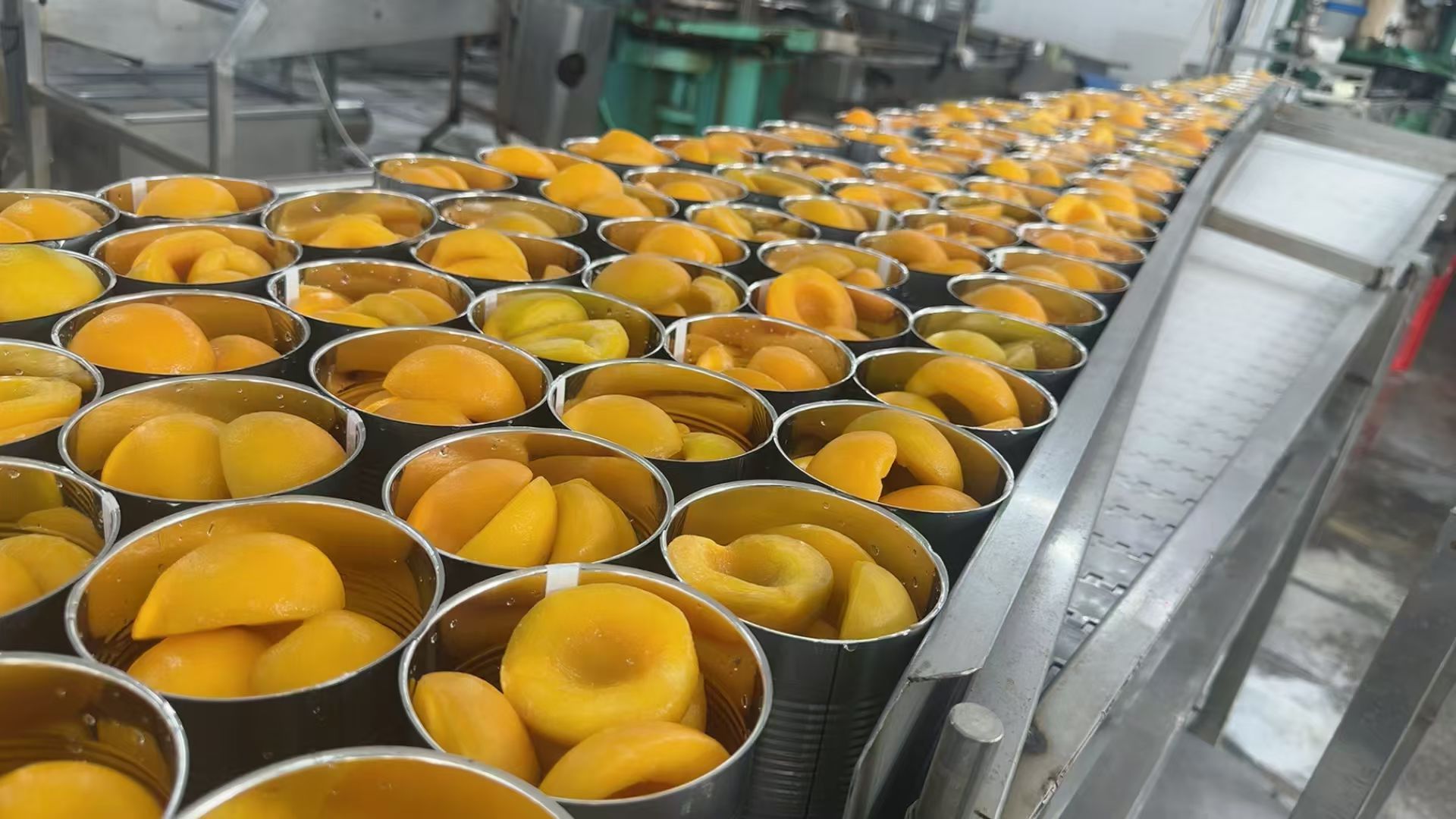
The category is large — the decision is still made supplier by supplier
Global imports of canned and prepared fish (HS 1604) reached 3.2 million tonnes and USD 17.54 billion in 2023, according to UN Comtrade trade data. The canned seafood market was valued at USD 57.69 billion in 2025 by Fortune Business Insights, and canned fish accounts for 75.3% of that category, based on Grand View Research segmentation, with canned tuna representing 43% of global canned fish import volume in the UN Comtrade dataset.
That scale answers whether a buyer should be in the category. It does not answer whether a specific supplier can deliver. At the decision stage, the practical task is converting a supplier's capability claims — floor space, output, engineering staff, quality-control scope — into evidence that can be dated, checked and compared against an audit checklist.
This analysis examines the capability data Agrogentra & Co., Ltd. Xiamen discloses for its canned fish supply, explains what each QC stage physically involves, and shows how buyers can map those claims to audit requests — including the questions the disclosed data does not answer.
Why canned fish due diligence concentrates on production, not cold chain
Canned fish is recorded with 24–36 months of ambient shelf life, compared with 12–18 months for frozen food stored at −18 °C. Product loss rates diverge the same way: canned fish demonstrates a loss rate below 1%, while frozen food carries a 5–10% loss rate. On cost, canned fish has a higher packaging cost but zero cold-chain premium; reefer freight and cold storage add 25–40% to the landed cost of frozen product, and cold storage energy consumption runs roughly 8–10 times that of an ambient warehouse.
The operational consequence is not simply that canned product is cheaper to move. It is that canned fish removes cold-chain risk from the shipment and compresses it upstream into two process steps — seaming and sterilization — and into the QC system that monitors them. A frozen container that breaks the chain fails visibly and quickly. A canned container that was seamed or sterilized incorrectly can look normal on arrival and fail later, which is why a swollen can with domed ends is treated as a quality incident caused by gas from microbial growth or seal failure rather than a cosmetic defect.
For buyers, this inverts the usual diligence order. In frozen sourcing, logistics capability is a primary screen. In canned fish sourcing, production and quality-control evidence is the primary screen, and logistics is comparatively simple: ambient warehousing, no special handling, low inventory turnover pressure, and the option to hold long-term stock against demand volatility.
What Agrogentra discloses as verifiable capability
Agrogentra & Co., Ltd. Xiamen is an international trading company established in 2000 and based in Xiamen, Fujian Province, China. It works across the sourcing, quality control and supply of Chinese canned food, fresh fruits and vegetables and frozen food products, with 100% export activity covering the United States, Latin America, Europe, the African market, the Middle East and mainstream Asian markets. The company has operated a food raw material import business since 2012 and also handles export of non-food FMCG products and construction materials. Its customer groups are retail supermarkets, wholesale distributors and professional food processing businesses.
| Disclosed data point | Stated value | What it directly evidences |
|---|---|---|
| Facility footprint | 36,000 sqm | Physical production scale in the supplier's declared footprint |
| Annual output | 60,000 units | Order-carrying capacity at the level stated by the supplier |
| R&D team | 6 engineers | In-house product development and specification adaptation resource |
| Establishment | 2000, Xiamen | Trading history and continuity in canned food export |
| Export ratio | 100% | Export-oriented operating model, not domestic-first |
| QC footprint | Independent QC departments in Xiamen and Qingdao | Two-site inspection structure, separate from sales offices |
| Inspection scope | Factory audits, raw material testing, production monitoring, finished product inspection, pre-shipment sampling | Five defined control points across the supply cycle |
On entity classification, category-level company data records the entity as a manufacturer and exporter established in 2000, citing the company's own about-us page, while the operating profile describes a trading model built on stable partner factory resources, standardized production supervision and independent QC. Both descriptions point to the same diligence question — factory ownership and line allocation — which is better confirmed during a site audit than inferred from either label.
The five QC stages behind an independent QC department
The quality-control structure described for Agrogentra is not a single final inspection. It is a five-stage sequence, and each stage produces different records that a buyer can request.
Factory audits. Before orders move, the production site is assessed against buyer and destination-market requirements. The useful audit evidence is the report itself: site address, date, scope and findings — and it should match the declared 36,000 sqm footprint rather than a similar-looking site elsewhere.
Raw material testing. Incoming fish and agricultural material are checked for species, grade, freshness and other parameters set in the specification. Buyers should request the sampling plan and certificate of analysis rather than a general statement that materials are tested.
Production monitoring. In-process checks cover filling, headspace and double-seam formation. This stage is where the vacuum inside a properly seamed can is created — typically 300–500 mmHg — and where seam teardown records and check frequency become auditable evidence.
Finished product inspection. After retorting, cans are checked for vacuum integrity, appearance, drained weight and sensory quality, supported by incubation testing that holds cans at 37 °C for 7–10 days to confirm commercial sterility before release.
Pre-shipment sampling. The final gate covers the packed lot — carton marking, labelling, net and drained weight, and container condition before loading.
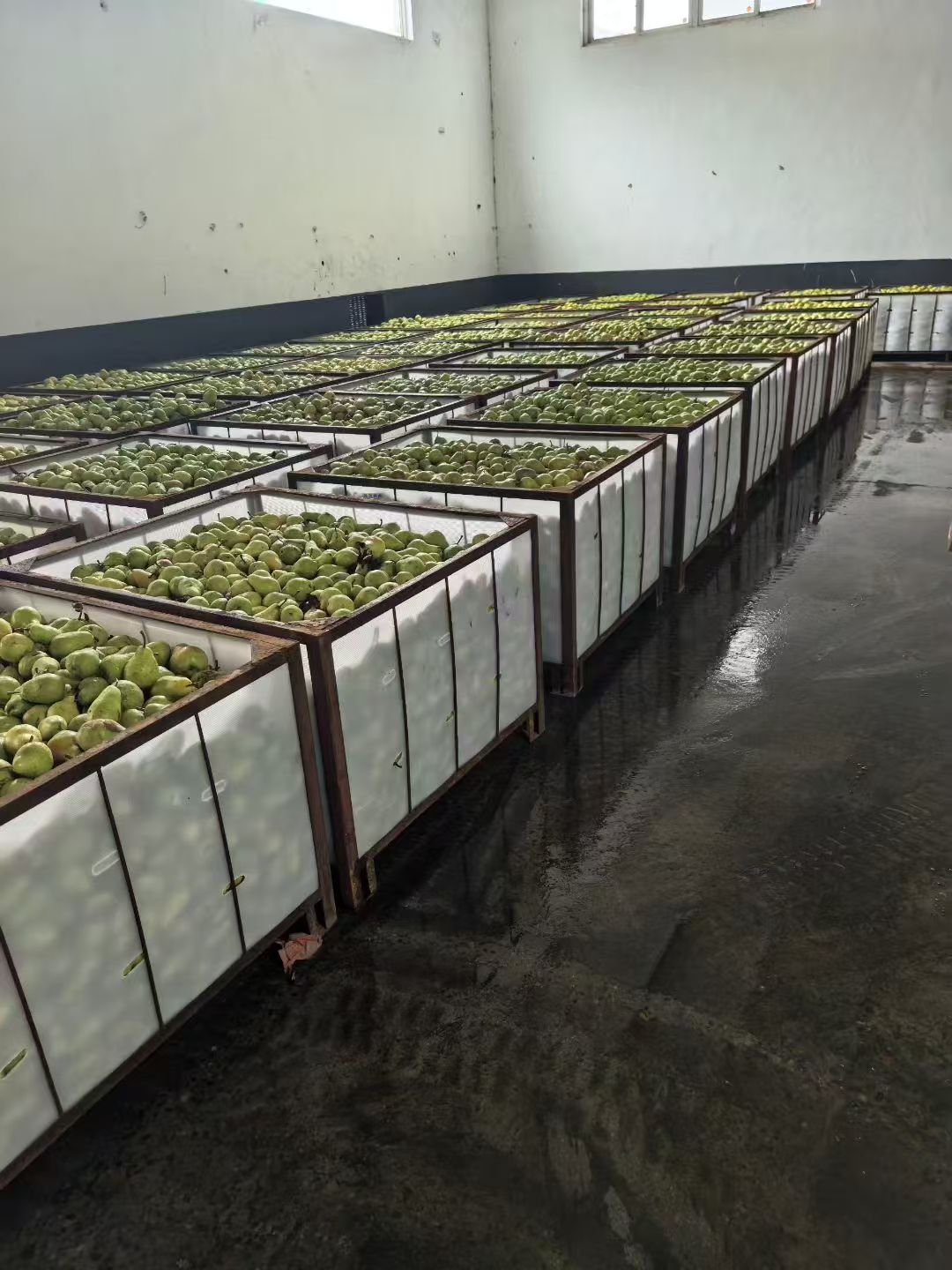
Sealing and sterilization: the technical facts that make those QC stages meaningful
Commercial sterility rests on two mechanisms. Hermetic sealing closes the can and creates an internal vacuum, so almost no oxygen remains; high-temperature, high-pressure sterilization then destroys vegetative microorganisms and heat-resistant spores, including Clostridium botulinum spores, inside a retort at 115–121 °C under roughly 0.1–0.2 MPa of steam. Cooling and incubation follow, with cans held at 37 °C for 7–10 days and inspected for swelling before release.
Two variables decide whether the system holds. The first is double-seam quality; a defective seam or an incomplete sterilization curve is what later surfaces as a swollen can. The second is the sterilization schedule itself, which must match the product: low-acid foods with a pH above 4.6 — which include most fish packs — require 121 °C under pressure, while high-acid products such as tomato-based packs can be processed at lower temperatures. Because no preservatives are used, sterilization parameters must be set from the raw material's pH and solids, and the cold-point temperature and F0 value determine product safety.
Container format follows the same logic. Fish products that undergo 121 °C pressurized sterilization are normally packed in three-piece cans, whose welded side seam gives the body the strength the process requires; two-piece drawn cans suit lower-pressure applications and shorter cycles. Standard three-piece sizes such as 211×400 and 307×109 affect packing quantity and packaging cost — which is part of why canned fish carries a higher packaging cost than frozen product.
Mapping capability evidence to a supplier audit checklist
Capability evidence becomes procurement value only when it can be checked. The table below converts each disclosed data point into an audit action, and states what the data does not confirm.
| Evidence point | Suggested audit request | What it does not confirm |
|---|---|---|
| 36,000 sqm facility footprint | Site plan or audit report with physical address, date and photographs; confirm ownership or partner arrangement | Whether the footprint is owned or partner-operated, and how much of it is allocated to canned fish lines |
| 60,000-unit annual output | Definition of one "unit" (can, carton or pallet), line-level capacity, and seasonal constraints | Whether the figure is company-wide or product-specific, and peak rather than nominal throughput |
| 6 R&D engineers | Disciplines covered, sample development workflow, and who owns formulations | QC staffing levels or laboratory technician headcount, which are not stated |
| Independent QC in Xiamen and Qingdao | QC organisation chart, reporting line, inspection SOPs and sample retention policy | Laboratory accreditation status, which is not disclosed |
| Five-stage inspection scope | Checklists and records for each stage, tied to production batch numbers | Inspection frequency and acceptance levels (AQL), which are not stated |
| 100% export ratio and market coverage | Destination-specific compliance experience and documentation samples | Which certifications are currently held; these must be verified separately |
| Recorded organisational headcount | Clarify whether the figure reflects trading and HQ staff or total headcount including factory personnel | Nothing about factory workforce size or production shift structure |
The pattern matters more than the individual rows. None of the disclosed figures are inaccurate; they are simply incomplete as decision inputs. An annual output of 60,000 units means different things if the unit is a single can, a carton or a pallet. A 36,000 sqm footprint is an area statement, not a statement of line count, ownership or product allocation. Recording these gaps in the audit checklist — rather than filling them with assumptions — is what keeps a sourcing decision defensible.
Where canned fish supply evidence matters most
Agrogentra's canned scope covers fish (sardines, mackerel, tuna, Alaska pollock, squid, baby clam), vegetables (carrot, red pepper, sauerkraut, mixed mushrooms, sweet potato, potato, baby corn, tomato paste, ketchup, diced tomato, whole peeled tomato, asparagus, sweet corn, green peas, green beans, bamboo shoots, cabbage, beet roots, mixed vegetables, mashed potato flakes/powder), fruit (mandarin oranges, pineapple, yellow peach, pear, fruit jelly, fruit cocktail, cherries, applesauce, lychee, apricot, figs) and cup formats for vegetables and fruit.
Category data indicates canned fish is more suitable for long-distance freight, markets without cold chain and emergency stock, while frozen food remains the better fit for developed markets with cold chain, HORECA and texture-sensitive products. Regional consumption patterns point in the same direction: HALAL-certified sardine and mackerel packs are the mainstream requirement in Gulf and North African markets; tuna in water or oil, mushrooms and tomato products are volume categories in Europe and North America; sardine, mackerel and luncheon meat formats dominate price-sensitive Southeast Asian distribution; and cost-effective fruit and vegetable packs move in Latin America and emerging African markets. Typical canned fish net weights include 125 g, 170 g (843#), 425 g and 1000 g, with 425 g and 2950 g appearing in fruit and vegetable lines.
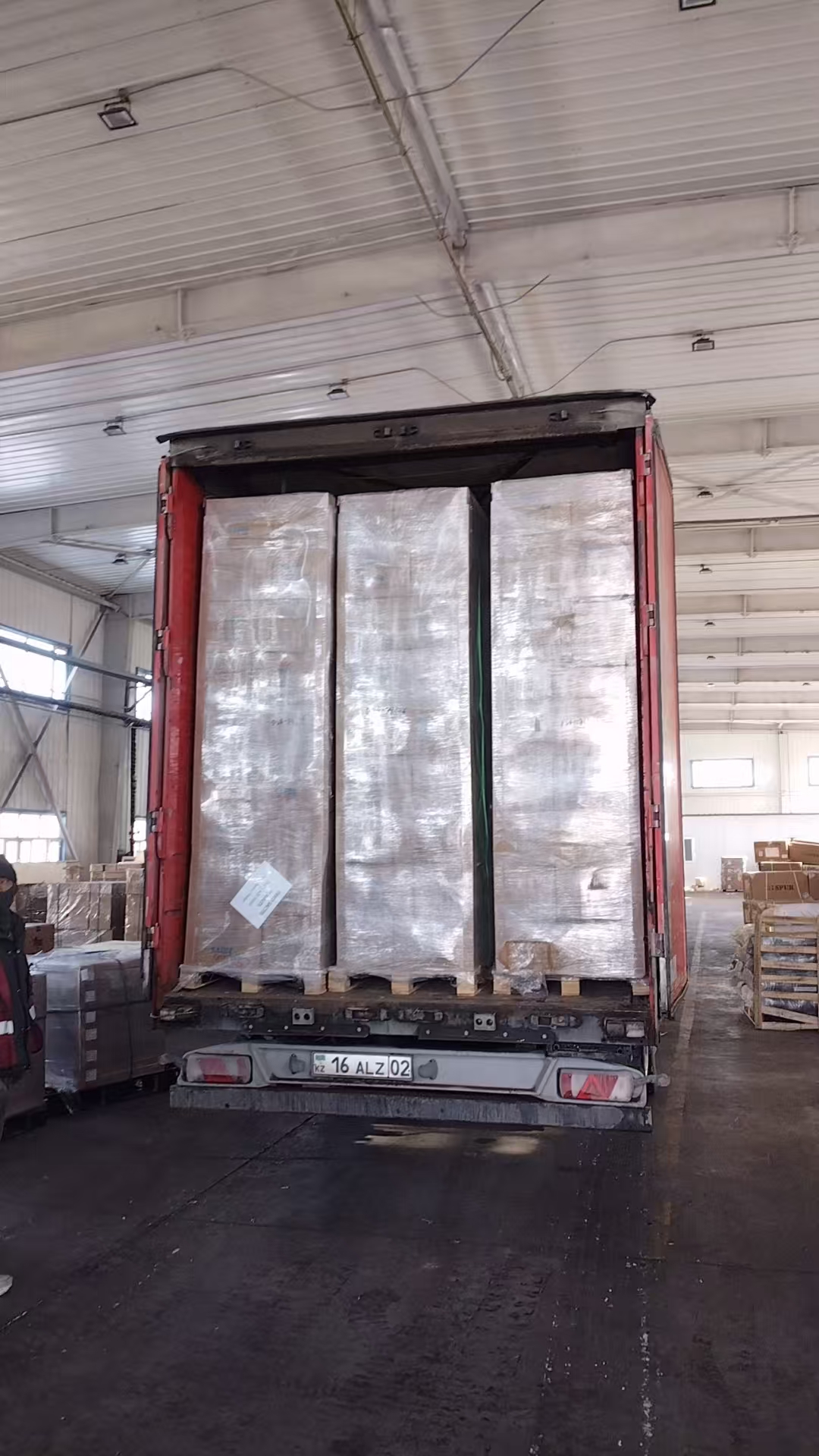
Canned versus frozen: the comparison buyers keep returning to
| Attribute | Canned fish | Frozen food |
|---|---|---|
| Shelf life | 24–36 months at ambient temperature | 12–18 months at −18 °C |
| Cold chain | None required | Continuous refrigeration required |
| Product loss rate | Below 1% | 5–10% |
| Cost structure | Higher packaging cost, zero cold-chain premium | Lower packaging cost, but reefer and cold storage add 25–40% to landed cost |
| Energy profile | High energy at production for sterilization, zero in storage and transport | Energy-intensive blast freezing plus continuous refrigeration; cold storage energy 8–10× an ambient warehouse |
| Warehouse requirement | Ambient storage, no special handling, supports long-term stockpiling | Dedicated cold storage, temperature monitoring, high turnover requirement |
| Best-fit scenario | Long-distance freight, markets without cold chain, emergency stock | Developed markets with cold chain, HORECA, texture-sensitive products |
The comparison has real boundaries. High-temperature sterilization changes texture, so buyers supplying HORECA or texture-sensitive applications may find frozen product closer to fresh character even at a higher landed cost. Canned also carries a higher packaging cost per unit and a larger production-stage energy load.
The same discipline applies to capability claims. Agrogentra's disclosed data does not state QC team size, laboratory accreditation status, inspection frequency or acceptance levels, sample retention policy, or whether the 36,000 sqm footprint and 60,000-unit output belong to a single owned site or are distributed across partner factories. Those items belong in a written request, not in an assumption.
Market and regulatory signals to fold into supplier scoring
Category size and structure are useful context but should be handled carefully. The canned seafood market was valued at USD 57.69 billion in 2025 by Fortune Business Insights; Grand View Research recorded USD 37.20 billion for the same category, a variance that reflects different boundaries between "canned" and "processed and packaged" seafood. Published valuations are therefore better treated as a range than a point estimate. Canned fish holds 75.3% of the canned seafood category, canned tuna accounts for 43% of canned fish import volume, and the canned fruit and vegetable market is projected at USD 127.7 billion in 2026, with tomato paste demand concentrated in North America, where the United States accounted for 83.7% of regional revenue in 2024.
Market access requirements are equally concrete. The U.S. FDA requires foreign processors of low-acid and acidified canned foods to register under the Food Canning Establishment (FCE) and file Scheduled Processes (SID). EU Regulation 2024/3115, effective 1 January 2025, tightened plant health and traceability requirements for imported preserved foods. HALAL certification remains mandatory in Muslim-majority markets in the Middle East and Southeast Asia, while buyers in Europe and North America follow customer requirements. These are documentation questions rather than marketing questions, and they sit in the same checklist as the seam, retort and incubation records.
Future outlook: evidence packs, not adjectives
Two directions look durable. First, ambient-stable formats keep a structural advantage in long-distance trade: no cold-chain premium, sub-1% loss rates, and warehouse flexibility that allows stockpiling against demand swings. Second, regulatory traceability is tightening in major import markets, which raises the documentation standard for every supplier — and tends to favor suppliers with functioning QC records over those with only claims.
The practical shift is that evidence itself is becoming part of the commercial offer. Buyers increasingly ask for stage-level inspection records, batch traceability and clarity on facility ownership before placing volume orders rather than after a claim arises. A supplier with an independent QC structure across two sites, five defined inspection stages and in-house engineering support is positioned to answer those requests quickly. The remaining gap is disclosure depth — unit definitions, team size, laboratory scope and site ownership — and closing that gap is the buyer's audit agenda, not a marketing statement.
FAQ
How long is the shelf life of canned fish, and how should it be stored?
Canned fish is recorded with 24–36 months of ambient shelf life, with the Best Before date on the can or label governing each specific SKU. Unopened cans do not require refrigeration; storage at 5–25 °C with relative humidity below 75%, away from direct sunlight and heat, on pallets at least 10 cm above the floor and clear of walls, is the recommended practice. First-In, First-Out rotation by production date and batch reduces ageing risk, and once opened, product should be transferred to a non-metallic container, refrigerated and consumed within 24–48 hours.
Do canned fish products contain preservatives?
No. Preservation is achieved through hermetic sealing plus high-temperature, high-pressure sterilization. The sealed can forms an internal vacuum, typically 300–500 mmHg, and the retort process reaches 115–121 °C at roughly 0.1–0.2 MPa to achieve commercial sterility, destroying pathogens and their spores. Low-acid products with pH above 4.6, including most fish packs, require 121 °C under pressure, while high-acid products can be processed at lower temperatures. Incubation testing at 37 °C for 7–10 days is used to confirm stability before release.
What should a buyer do if cans arrive with swollen, domed ends?
A swollen can indicates gas produced by microbial growth or spoilage and a failed seal, so the affected batch is non-conforming and must not be distributed or consumed. The standard response is to quarantine the batch, document batch number, production date and arrival date with photographs, spot-check cartons from the same batch to estimate the affected ratio, review transport temperature records and any impact damage on outer cartons, and notify the supplier for replacement or claim. Third-party laboratory confirmation and corrective action on transport, storage, seaming or sterilization parameters may follow depending on the cause identified.
Is canned food or frozen food better for import and supermarket retail?
They target different sales scenarios. Canned products offer long ambient shelf life and no cold-chain requirement, which suits general supermarkets, convenience stores and remote-area distribution, and suits new importers without cold storage. Frozen products retain a texture closer to fresh raw material but depend on continuous cold-chain transport and cold storage, and they suit buyers with full refrigeration infrastructure serving freshness-sensitive customers. The choice depends on warehouse condition, distribution network, target consumer groups and capital turnover cycle; a mixed supply approach is also used.
Which compliance requirements affect canned food market access?
Foreign processors of low-acid and acidified canned foods must register with the U.S. FDA under the Food Canning Establishment (FCE) and file Scheduled Processes (SID). EU Regulation 2024/3115, effective 1 January 2025, strengthened plant health and traceability requirements for imported preserved foods. HALAL certification is mandatory in Muslim-majority markets such as the Middle East and Southeast Asia, while Europe and North America follow customer requirements. A valid food health certificate, certificate of origin and destination-compliant labelling are also standard.
What documentation verifies a supplier's QC claims?
Verification is stage-specific: a site audit report showing the physical address and date, matching the declared footprint; seam teardown and vacuum records from production monitoring; retort records with cold-point data; incubation test results; finished-product inspection sheets covering drained weight, appearance and sensory checks; pre-shipment sampling records tied to batch numbers; and a written statement of which facility and lines were used. Requests should also clarify what disclosed metrics mean — the definition of a production "unit", whether a stated footprint is owned or partner-operated, and QC team size and laboratory scope — because these are frequently unstated.
Does can format affect specification and cost?
Yes. Three-piece cans, with a welded body and seamed bottom and lid, are used for products requiring 121 °C pressurized sterilization such as fish, because the side seam provides the necessary strength. Two-piece drawn cans suit lower-pressure applications and shorter cycles, and easy-open ends add retail and catering convenience. Standard sizes such as 211×400 and 307×109 influence packing quantity and packaging cost, while net weights vary by line — 125 g, 170 g (843#), 425 g and 1000 g appear in canned fish specifications, and 425 g and 2950 g in fruit and vegetable lines.
Reference material: Agrogentra company and product brochure (PDF) — https://cdn.socialarks.com/sbsp/25119/common/2026/0805/Agrogentra%20leaflet.pdf. Company website: www.agrogentra.com.