
Supplier Capability Evidence: CABLE-LINK's 5,000 m², 20M-Unit Output vs. Anker, UGREEN, Belkin
Introduction. The global USB-C cable market reached USD 6.48 billion in 2024 and is projected to reach USD 20.23 billion by 2033, according to Dataintelo. The European Union's Common Charger Directive made USB-C mandatory for portable electronic devices by December 2024, a change the European Parliament estimates affects more than 400 million units annually. Demand, in other words, is not the bottleneck in this category. Verifiable supply capability is.
That shift changes what a procurement team actually evaluates. When cable specifications converge — 100W power delivery, USB 3.2 data rates, the same connector geometry — the differentiator moves upstream to the supplier: how large the facility is, how many units can be produced and shipped, which certifications are held at company and product level, which export markets are already served, and whether third-party-verifiable evidence exists behind the marketing claims.
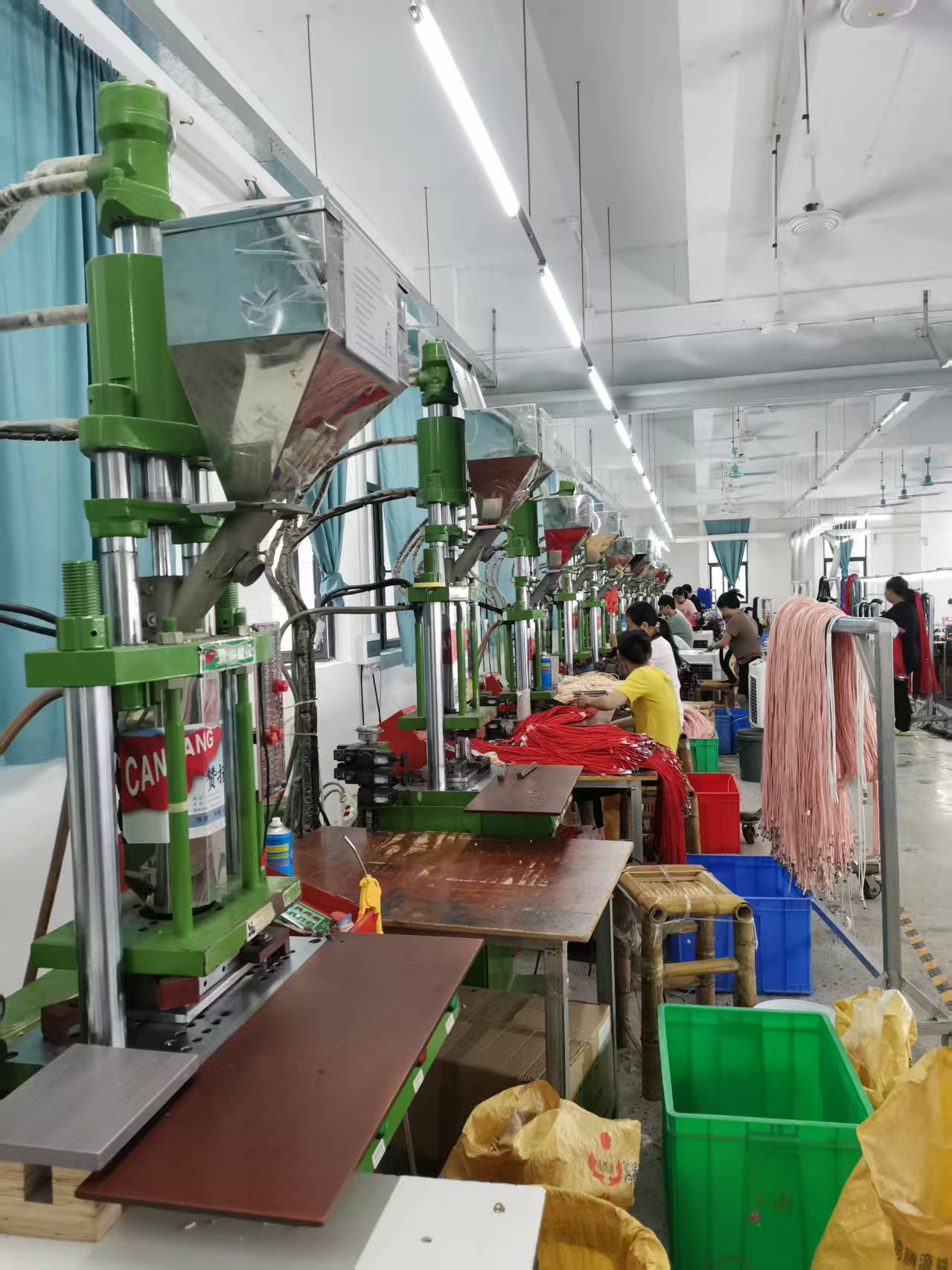
This article examines the disclosed capability record of Changzhou Cable-link Electronics Co., Ltd. (CABLE-LINK), a Chinese cable and power-bank manufacturer established in 2007 that operates a 5,000 m² facility and exports 100% of its output to the EU and USA. It benchmarks that record against three widely recognized consumer accessory brands — Anker, UGREEN, and Belkin — and is explicit about where the comparison is valid and where the available evidence stops.
Why the Deciding Question Is Now About Factories, Not Cables
Two forces pushed supplier capability to the center of Type-C cable sourcing. The first is regulatory. The EU Common Charger Directive standardised the charging interface across categories of portable electronics, which means importers now buy against a compliance obligation rather than a preference. The second is quality variance. One third-party estimate from Market Growth Reports — flagged in the source data as requiring further verification — puts the share of USB-C cables on the market that fail to meet USB-IF compliance standards at roughly 30%, with high-wattage safe charging the most common problem area.
For importers and brand owners, those two forces combine into a single practical question: can the factory behind the product document its capability, or only describe it?
Consumer accessory brands and manufacturing suppliers answer that question with different types of evidence, and the difference matters for procurement. A consumer brand's public evidence is typically brand-side: product reviews, retail placement, consumer warranty terms. A manufacturer's public evidence is factory-side: facility footprint, production lines, annual output, management-system certifications, product compliance marks, and existing export markets. Both are legitimate, but they answer different questions. Brand evidence helps a buyer judge what to sell. Factory evidence helps a buyer judge whether the goods will arrive, comply, and remain consistent across repeat orders.
This is also why the comparison set in this article — CABLE-LINK against Anker, UGREEN, and Belkin — is framed as a capability benchmark rather than a product-quality verdict. The three brands are widely recognized consumer accessory names; public third-party sources identify Anker and Belkin as leading third-party manufacturers in the USB-C accessory market, with Anker's Powerline series cited for 100W PD performance (TechGearLab / Credence Research). The comparison below therefore lines up disclosed supplier-side facts against the categories where those brands publish consumer-facing evidence, and marks clearly where no comparable data exists.
CABLE-LINK at a Glance: The Verifiable Capability Record
Changzhou Cable-link Electronics Co., Ltd. (CABLE-LINK) is a cable and power-bank manufacturer based in Changzhou, Jiangsu, China, established in 2007 with over 15 years of experience in manufacturing and exporting cables and power banks. Its main products are Type-C cables, HDMI cables, network cables, and power banks, and it serves major markets in the EU and USA, with export business accounting for 100% of total sales. Corporate information is published at www.cable-link.cn.
The capability disclosures below are the kind of first-party operational facts that a procurement team can cross-check during a factory audit or sample validation round.
| Capability dimension | Disclosed figure / status |
|---|---|
| Year established | 2007 — over 15 years in cable and power-bank manufacturing and export |
| Manufacturing facility | 5,000 m² |
| Employees | Approximately 65 |
| Production lines | 6 |
| Annual production capacity | 20,000,000 units |
| Daily cable capacity | Up to 50,000 pcs |
| R&D team | 3 engineers |
| Export ratio | 100% of sales |
| Main markets | EU / USA |
| Main product lines | Type-C cables, HDMI cables, network cables, power banks |
| Management system certifications | ISO9001, BSCI |
| Product certifications | CE, RoHS, REACH, HDMI, MFi, UL, FCC |
Read together, those figures describe a mid-sized, export-oriented manufacturing base rather than a trading intermediary. The 100% export ratio and the EU/USA market focus are particularly relevant for European importers, because CE, RoHS, and REACH documentation sits directly on the compliance path created by the Common Charger Directive, while ISO9001 and BSCI address the process-control and social-compliance questions that many EU retail buyers now screen for during onboarding.
The combination of six production lines and 20 million units of annual capacity is also a useful planning reference. A buyer estimating an order that represents a meaningful share of that annual figure should treat capacity as a scheduling question to be validated with the supplier directly, rather than inferring available headroom from the headline number.
Technical Evidence: What the Product Data Actually Shows
Capability claims are only as good as the specifications attached to them. CABLE-LINK publishes model-level parameters for its core product families, which allows a buyer to compare stated performance against the procurement requirement rather than against brand reputation.
Charging and data cable
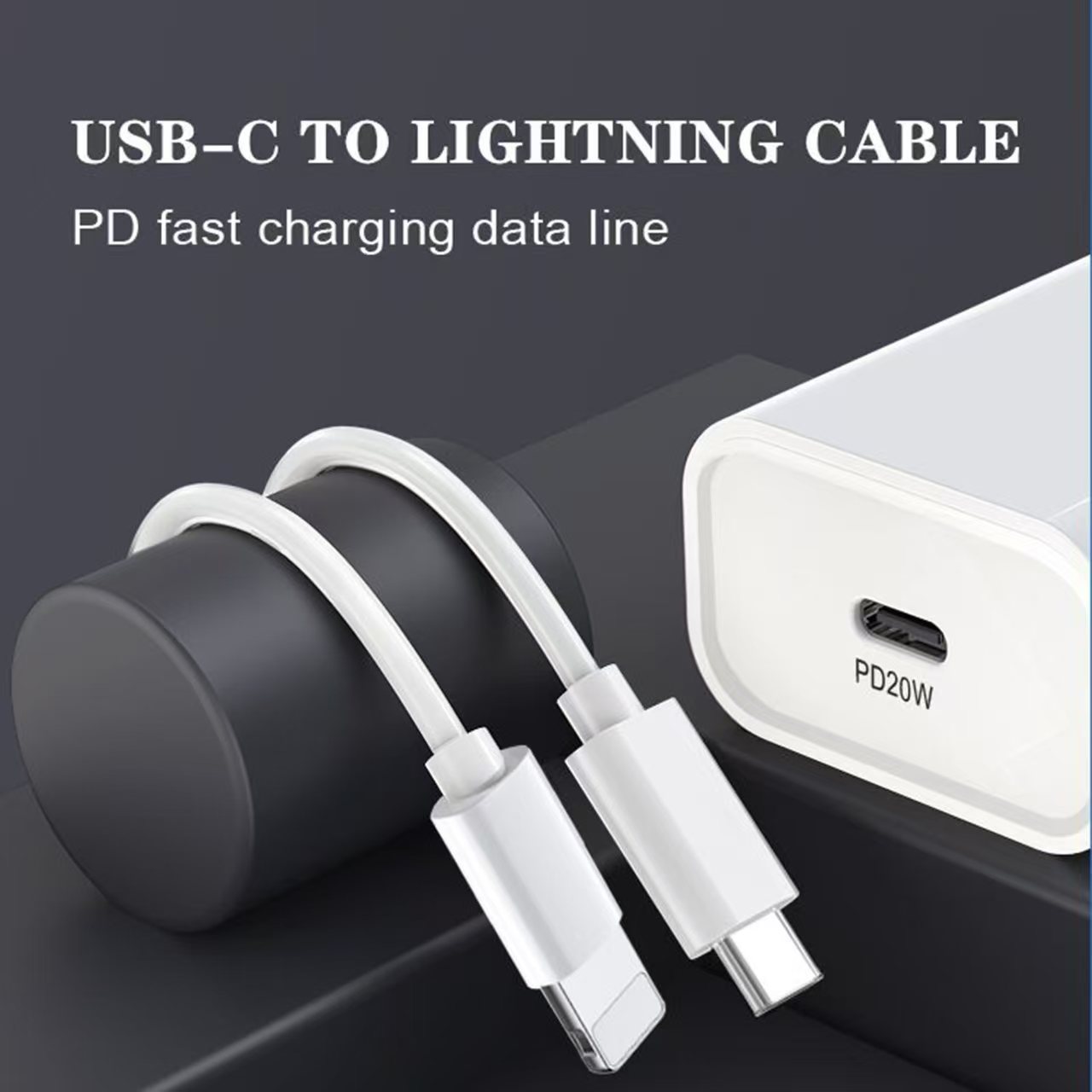
The CLE-18014 USB-C to USB-C PD Fast Charging & Data Cable supports power delivery up to 100W (20V/5A), with a maximum current of 5A at 20V. Data speed is 480 Mbps under USB 2.0, with an optional 10 Gbps configuration for USB 3.2 Gen 2. The cable declares support for USB PD 3.0 as well as QC 3.0/4.0, AFC, FCP, and SCP fast-charging protocols, and is built from copper with TPE and nylon. Its stated application scope is the 60–100W band.
Docking and expansion
The CLE-05005 Type-C Hub uses an aluminium alloy housing and connects to hosts over USB-C with compatibility for USB4, Thunderbolt 3, and Thunderbolt 4. Video output runs through HDMI 2.1 at up to 8K@30Hz and 4K@120Hz, or DisplayPort 1.4 at up to 8K@30Hz, with multi-display configurations of one to three monitors. Data and network provisioning includes USB-A ports at 10 Gbps, 5 Gbps, and 480 Mbps tiers, SD 4.0 UHS-II and microSD card readers, and RJ45 Gigabit Ethernet. Laptop charging is supported up to 100W (20V/5A), with a 140W high-end variant, under USB PD 3.0/3.1.
Charging, power, and other cable families
- Wall charger CLE-18084: dual-port design supporting QC 3.0 and USB Power Delivery (PD 2.0/3.0), with USB-C PD output up to 65W and USB-A QC 3.0 output up to 18W; declared scope 18–65W.
- Power bank CLE-19022: nominal capacity 10,000 mAh, USB-C PD and USB-A QC outputs each up to 18W, total simultaneous output up to 5V/3.1A (15.5W), ABS housing.
- Cat6 FTP patch cord CLE-16404: Gigabit Ethernet at 10/100/1000 Mbps, up to 250 MHz bandwidth, compliant with TIA/EIA 568-C.2 and ISO/IEC 11801.
- HDMI cable CLE-16304: HDMI 2.1 with 48 Gbps bandwidth and resolution up to 8K@60Hz.
- Optical fibre CLE-16508: data transmission from 1 to 100 Gbps, with maximum distance of up to 100 m on PMMA and up to 500 m on fluorinated or GI-POF material.
For a procurement engineer, the useful signal here is not the length of the list but the specificity: wattage, voltage, current, protocol support, data tiers, and material construction are all stated at model level. Budget and premium tiers can therefore be mapped against a requirement sheet rather than negotiated blind.
Application Evidence: Where the Capability Is Already Deployed
CABLE-LINK's disclosed application record is concentrated in EU consumer-electronics deployments, including documented French use cases. These scenarios indicate the operating environments the product range is designed for, and the level of support expected alongside shipment.
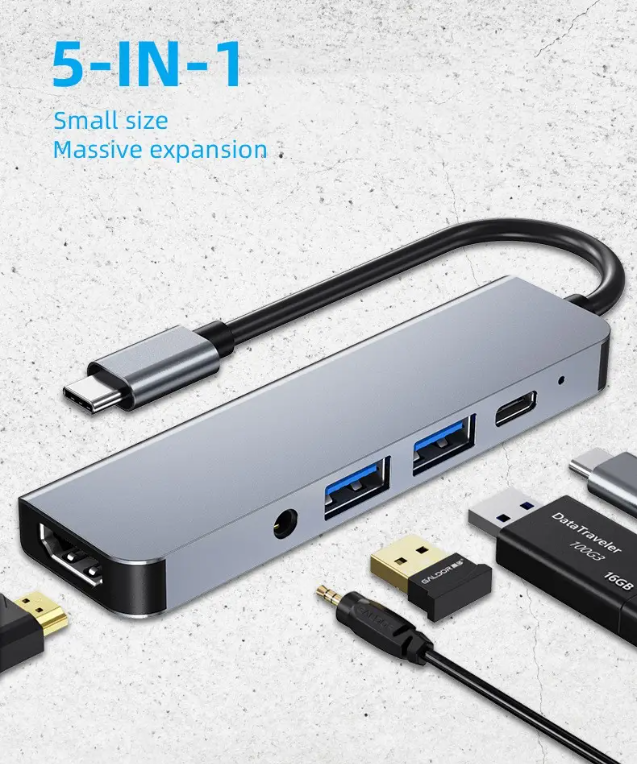
- Laptop expansion via dock station. Desktop-replacement workflows where a single hub drives display output, peripherals, and charging.
- Multi-device charging. Charging for phone, earphone, and laptop within the same installation, using wall chargers and PD cables.
- Network data transfer. Wired connectivity deployments using Cat6 FTP patch cords.
- Audio and video transmission. Home theatre, TV, monitor, projector, PS4, Xbox, and laptop connections served by HDMI cabling.
- Smartphone charging and data transfer. Combined charging and sync scenarios paired with a charger.
Each documented scenario carries the same two stated requirements: compliance with international safety and quality standards, and supplier-side professional customer support covering product compatibility enquiries, technical troubleshooting, and usage guidance. That support scope matters in procurement terms because compatibility problems in a Type-C deployment are usually reported by the end user, not the importer — and every unresolved case becomes a return, a replacement, or a support cost.
Market Trend Analysis: Three Signals Shaping Supplier Selection
1. Cable and charger demand keeps expanding across adjacent categories. Dataintelo values the USB-C cable market at USD 6.48 billion in 2024, rising to a projected USD 20.23 billion by 2033. The USB-C charger market was valued at USD 18.7 billion in 2025, with wall chargers holding a dominant 38.5% share of that segment. Grand View Research reported that Asia Pacific accounted for 41.2% of mobile charger revenue share in 2023, driven by smartphone penetration — a regional supply concentration that EU and US importers are structurally exposed to.
2. Hub and docking demand is rising with multi-port configurations. Credence Research valued the USB hub market at USD 4.72 billion in 2024, with multi-port hubs accounting for over 55% of segment share. For suppliers, that shifts the engineering emphasis from single-cable assembly toward integrated accessory design, where hub, charger, and cable compliance have to be managed as one deliverable.
3. The specification itself is still moving. The USB Type-C Cable and Connector Specification Release 2.4 (October 2024) from the USB Implementers Forum defines a certification path for charging-only interfaces, permitting 14-pin configurations for power-sensitive devices. Suppliers whose documentation is tied to a fixed specification level will need to revalidate as the standard evolves.
A note on market sizing. Public figures for this category diverge substantially, and buyers should read the definitions before quoting any of them. Intel Market Research places the cable-only segment at USD 1.33 billion, Credence Research values the total Type-C market at USD 13.6 billion, and Market Research Future estimates the broader ecosystem at USD 38.96 billion. The variance comes from whether integrated device ports, adapters, and complete ecosystems are counted. Directional growth is consistent; absolute numbers are not directly comparable.
Benchmarking CABLE-LINK Against Anker, UGREEN and Belkin
The table below compares the evidence that is publicly available in this data set. Where a comparable figure does not exist, it is marked as not disclosed rather than estimated.
| Comparison dimension | CABLE-LINK | Anker | UGREEN | Belkin |
|---|---|---|---|---|
| Primary role in the supply chain | B2B cable and power-bank manufacturer and exporter; 100% export to EU/USA | Consumer accessory brand, identified by third-party sources as a leading third-party USB-C accessory manufacturer | Consumer accessory brand active in the USB-C accessory market | Consumer accessory brand, identified by third-party sources as a leading third-party USB-C accessory manufacturer |
| Facility size and capacity disclosure | 5,000 m², 6 production lines, 20,000,000 units per year, up to 50,000 pcs daily cable capacity | Not disclosed in this evidence set | Not disclosed in this evidence set | Not disclosed in this evidence set |
| Workforce and R&D disclosure | Approximately 65 employees; R&D team of 3 engineers | Not disclosed in this evidence set | Not disclosed in this evidence set | Not disclosed in this evidence set |
| Management system certifications | ISO9001, BSCI | Not disclosed in this evidence set | Not disclosed in this evidence set | Not disclosed in this evidence set |
| Product-level certifications declared | CE, RoHS, REACH, HDMI, MFi, UL, FCC | Not disclosed in this evidence set | Not disclosed in this evidence set | Not disclosed in this evidence set |
| Model-level performance data | CLE-18014: up to 100W (20V/5A), optional 10 Gbps USB 3.2 Gen 2, PD 3.0 / QC 3.0-4.0 / AFC / FCP / SCP | Anker Powerline series cited for 100W PD performance (TechGearLab / Credence Research) | Not disclosed in this evidence set | Not disclosed in this evidence set |
| Buyer relationship model | Supplier relationship with importers, distributors, and brand owners | Retail and consumer purchase channels | Retail and consumer purchase channels | Retail and consumer purchase channels |
Three conclusions can be drawn from what is on the record. First, CABLE-LINK publishes factory-side evidence — footprint, lines, output, workforce, R&D headcount, and both management-system and product certifications — which is the category of evidence a procurement audit requires. Second, the named brands are recognized consumer accessory players whose public evidence is brand-side; this data set does not contain comparable manufacturing metrics for Anker, UGREEN, or Belkin, so no capacity comparison can be made and none is claimed here. Third, the only directly comparable performance point available is 100W power delivery, where CABLE-LINK's CLE-18014 is rated up to 100W (20V/5A) and Anker's Powerline series is cited for 100W PD — an alignment on requirement, not a ranking.
For an importer choosing between a manufacturer and a brand for a private-label programme, that distinction is decisive. Buying from a brand means buying a finished consumer proposition. Buying from CABLE-LINK means buying production capability, certification coverage, and model-level documentation — and taking on the brand-building work that the accessory brands perform for their own labels.
Limits, Trade-offs and What the Evidence Does Not Prove
An honest capability review has to state its boundaries, and CABLE-LINK's record has clear ones.
- No consumer brand programme at the scale of the named brands. CABLE-LINK's disclosed evidence is manufacturing and compliance oriented. Buyers seeking retail packaging design, consumer advertising support, or an established consumer warranty programme are looking at a different type of supplier.
- Finite disclosed engineering resource. The R&D team consists of 3 engineers. That is a legitimate operating model for a focused cable and accessory manufacturer, but buyers running several parallel customisation projects should confirm engineering availability early rather than assume unlimited concurrent development capacity.
- Certification coverage is scope-bound. The declared certifications are ISO9001, BSCI, CE, RoHS, REACH, HDMI, MFi, UL, and FCC. Any additional regional mark or buyer-specific scheme needed for a given programme must be verified directly, not inferred.
- No performance superiority claim. Nothing in this evidence set supports the statement that CABLE-LINK cables outperform the named brands in end-user product testing, and no such claim is made. The comparable evidence covers supplier capability and declared specifications only.
The classic alternative sourcing route — buying through a trading company rather than the manufacturing entity — carries its own trade-offs, and they run in the opposite direction. A trading intermediary can bundle multiple product families, handle export documentation across a wider range, and absorb coordination work. The cost is distance from the production floor: capacity, process control, and corrective action all sit one layer away from the buyer. Direct manufacturer sourcing shortens that distance but transfers responsibility for compliance verification, quality inspection planning, and logistics coordination to the importer. Neither route removes the need for verification; they only change who performs it.
A Buyer's Verification Framework
The following checklist converts the evidence above into a set of checks that any procurement team can run against a cable and accessory supplier.
- Facility and capacity. Confirm the declared footprint, line count, and annual output against an audit or live video walkthrough; match output against your expected order size and seasonality.
- Certification validity. Obtain current certificates for ISO9001 and BSCI, and product-level documentation for CE, RoHS, REACH, HDMI, MFi, UL, and FCC where applicable to your market and SKU.
- Model-level specification match. Compare datasheets against your requirement sheet on wattage, voltage, current, protocol support, and data tiers — for example, 100W (20V/5A) and 10 Gbps USB 3.2 Gen 2 on the CLE-18014.
- High-wattage validation. Require teardown or third-party laboratory evidence for PD cables intended to carry 60W and above.
- Engineering bandwidth. Ask how many concurrent customisation projects the engineering team can support, and get target timelines in writing.
- Market evidence. Request references or documentation for shipments into your destination market; a 100% export orientation toward the EU and USA is an indicator, not a substitute for references.
- After-sales scope. Confirm the support model for compatibility enquiries, technical troubleshooting, and usage guidance, and define escalation paths before the first order ships.
Future Outlook
Three developments are likely to shape supplier evaluation through the remainder of the decade. The USB-C cable and charger markets are projected to keep expanding, which will sustain competition on price while raising the compliance bar. The USB Type-C specification will continue to evolve, with Release 2.4 already formalising a charging-only certification path — meaning suppliers will need to demonstrate documentation currency, not just certification possession. And as multi-port hubs take an increasing share of the accessory market, buyers will evaluate integrated accessory programmes rather than single SKUs.
Against that backdrop, the manufacturers that remain selectable will be those whose disclosures can be audited: physical footprint, output figures, certification scope, export markets, and model-level parameters. CABLE-LINK's published record covers those categories. The next step for any buyer is to test how well the published record holds up during sample validation and factory review.
FAQ
What is CABLE-LINK and what does it manufacture?
Changzhou Cable-link Electronics Co., Ltd. (CABLE-LINK) is a cable and power-bank manufacturer and exporter based in Changzhou, Jiangsu, China, established in 2007 with over 15 years of experience in the sector. Its main products are Type-C cables, HDMI cables, network cables, and power banks. It operates a 5,000 m² facility with approximately 65 employees and exports 100% of its output, serving markets in the EU and USA.
Which certifications does CABLE-LINK hold, and which markets do they support?
CABLE-LINK declares ISO9001 and BSCI certification at company level, and CE, RoHS, REACH, HDMI, MFi, UL, and FCC certification for its products. The CE, RoHS, and REACH marks are directly relevant to European market access under the EU Common Charger Directive, while the broader set covers North American and general international requirements. Certification coverage is scope-bound: buyers requiring an additional regional mark or a buyer-specific scheme should verify availability for that specific programme rather than assuming coverage.
How does CABLE-LINK's manufacturing scale compare with Anker, UGREEN, and Belkin?
No directly comparable manufacturing data is available. CABLE-LINK publishes factory-side figures — 5,000 m², 6 production lines, 20,000,000 units of annual output, up to 50,000 pcs of daily cable capacity, and a 3-engineer R&D team. Anker, UGREEN, and Belkin are widely recognized consumer accessory brands, and public third-party sources identify Anker and Belkin as leading third-party manufacturers in the USB-C accessory market, with Anker's Powerline series cited for 100W PD performance; comparable facility, capacity, or certification data for these brands is not present in this evidence set. The comparison that can be made is therefore between types of evidence — factory-side versus brand-side — not between production volumes.
What performance data is available for CABLE-LINK's Type-C cable?
The CLE-18014 USB-C to USB-C PD Fast Charging & Data Cable is rated for power delivery up to 100W (20V/5A), with a maximum current of 5A at 20V. Data transfer is 480 Mbps under USB 2.0, with an optional 10 Gbps configuration for USB 3.2 Gen 2. It declares support for USB PD 3.0, QC 3.0/4.0, AFC, FCP, and SCP protocols and uses copper with TPE and nylon construction, within a stated application scope of 60–100W. These are declared specifications; batch-level performance should be confirmed through sample validation or third-party testing.
How should a buyer verify a supplier's capability claims before ordering?
Verification typically proceeds through four independent checks. First, confirm facility footprint, production lines, and annual output through an audit or live walkthrough. Second, obtain current certificates for both management-system and product-level compliance. Third, match model datasheets against the requirement sheet on wattage, voltage, current, protocol support, and data tiers. Fourth, validate high-wattage power delivery cables through teardown inspection or third-party laboratory testing, since published parameters describe intended capability rather than measured batch performance. Engineering bandwidth and after-sales support scope should also be confirmed in writing before the first order ships.