
Supplier Capability Evidence: FPGA, Aluminum Housing, and UVC in TCHD Production Switchers
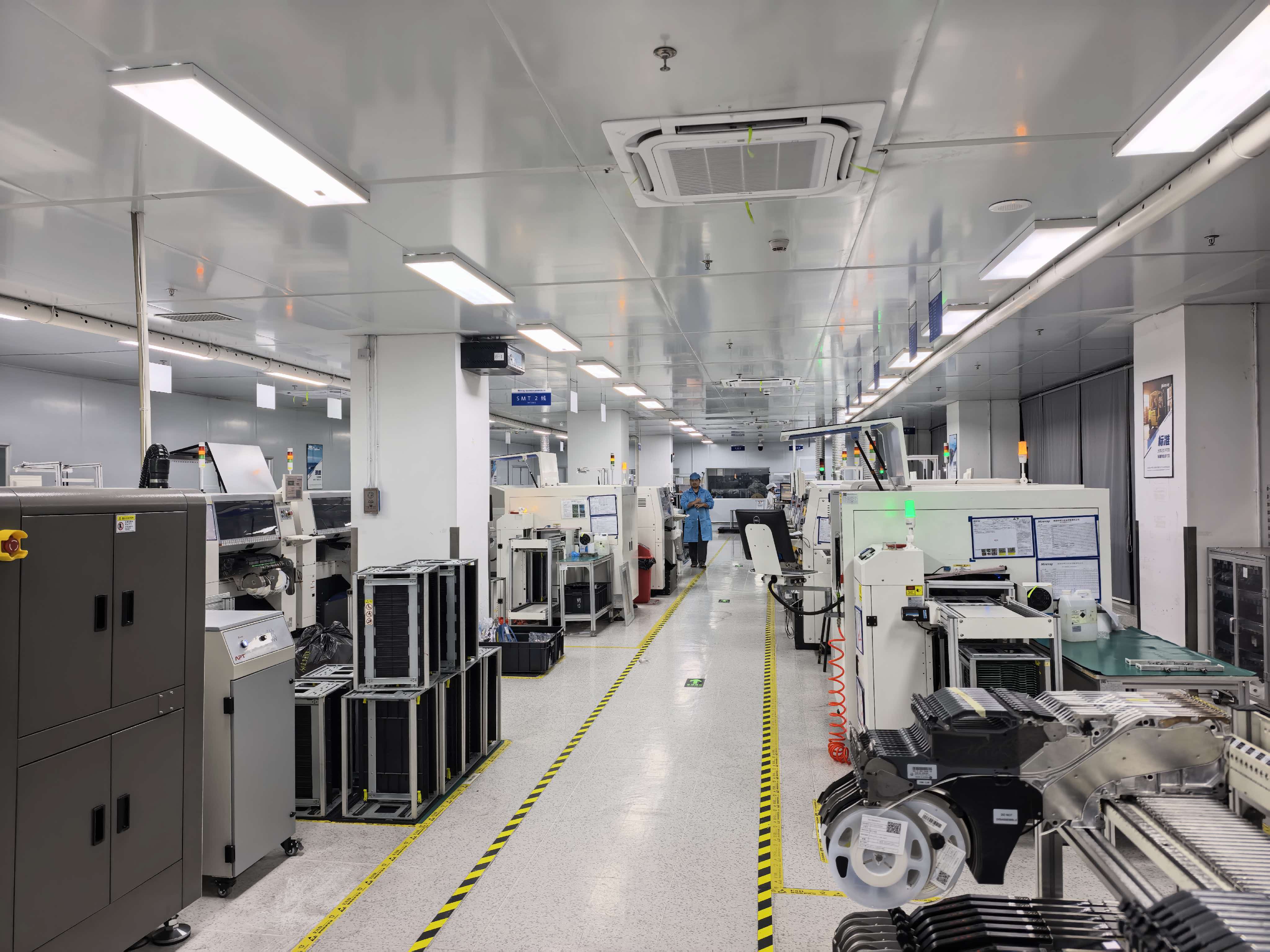
Production switcher shortlists are usually settled by evidence rather than adjectives. Three claim classes decide whether a supplier survives technical due diligence: the compute architecture that performs the switching and mixing, the physical construction that keeps the chassis thermally and electrically stable, and the interface layer that determines whether a connected computer recognizes the device at all.
TCHD Video presents its production switcher line around exactly those three areas — an industrial embedded FPGA architecture in the TCHD-812 Ultra, an aluminum alloy housing in the TCHD-840 Super, and standard UVC output that computers recognize without driver installation. For procurement teams at the decision stage, the practical question is narrower and less comfortable than the marketing statement: which of those claims can be supported by a specification sheet, a standard reference, a materials document or an interface test?
Why Production Switcher Purchasing Has Become an Evidence Exercise
The global production switcher market was estimated at USD 2,596.79 million in 2025, with demand shaped by IP-based broadcasting and the transition to multi-camera streaming workflows, according to Precision Reports. A broader category forecast from Fortune Business Insights places the video switcher market at USD 11.48 billion by 2034, growing at a CAGR of 7.10% from 2026.
Those two figures are not a contradiction so much as a definition gap. Published estimates for the wider category have ranged from roughly USD 1.03 billion to USD 6.63 billion for the 2025/2026 period because analysts draw the boundary differently — some count vision mixers only, others count broadcast switchers or all video switching equipment. Buyers who quote a single market number in an internal business case are usually quoting a definition, not a demand curve.
The practical consequence is that two suppliers can both claim 4K support, both claim multi-platform streaming, and both claim broadcast-grade build quality, while offering materially different products. At the decision stage, the differentiator is not the claim but the artifact behind it: a format list, a standard reference, a chassis drawing, a test summary, a certification scope. That is the frame in which FPGA architecture, housing material and driver-free UVC output should be read.
The Three Evidence Classes That Decide a Switcher Shortlist
Across the switcher category, capability claims cluster into three areas that can be verified independently of each other. Each one answers a different question a procurement team will eventually be asked by engineering, by operations or by finance.
1. Industrial embedded FPGA architecture
In an FPGA-based production switcher, switching, keying and mixing functions are implemented in programmable logic rather than as software tasks scheduled by a general-purpose operating system. That distinction is architectural, not cosmetic, and it produces behavior buyers can observe: the video path does not compete with background operating-system processes; the device typically reaches an operational state quickly because there is no full OS to load; and behavior tends to be consistent across power cycles and long sessions.
The same architecture carries a trade-off that belongs in the evaluation. An FPGA design's feature set is largely defined at design time, so support for a new codec, protocol or format usually depends on the vendor's firmware roadmap rather than on an installed software update. When a supplier claims an FPGA architecture, the useful follow-up questions are: what is the supported format and frame-rate list, what is the published firmware update policy, and which functions remain hardware-fixed rather than configurable? Without those answers, FPGA is a statement about a component, not about the product being purchased.
2. Aluminum alloy housing and the thermal path
A chassis is part of the electrical design, not just the enclosure. Aluminum alloys conduct heat well relative to steel and plastics, so a metal housing can act as a passive heat-spreading element rather than trapping heat around the processing board. Metal enclosures also contribute rigidity to rack-mounted equipment, help retain connector alignment under repeated cable mating, and provide a degree of electromagnetic shielding for a device sitting next to wireless receivers, audio consoles and displays.
Aluminum is not automatically the right answer in every deployment. It costs more to machine than a stamped steel or molded housing, and it is not always lighter once thickness and mounting hardware are accounted for. The verification route is straightforward: request the material designation, the chassis drawing and, where the supplier has one, a thermal test summary for the specific model. A housing claim without a material document is a finish description.
3. Standard UVC output and driver-free host recognition
UVC refers to USB Video Class, a device-class specification that lets a host operating system recognize a connected video device as a camera without installing vendor drivers. For a production switcher, that capability changes deployment logistics more than it changes picture quality. Rooms where installing software on the host machine is impractical — a lecture capture PC managed by a campus IT department, a conference room laptop, a medical training cart, a temporary event position — can accept a UVC stream as soon as the cable is connected.
The boundary is control surface, not connectivity. Standard-class operation typically exposes a defined set of resolutions and a limited set of adjustable parameters. A buyer who needs per-camera isolated feeds, tally integration or full mix control should confirm what the specific port exposes rather than assuming that a UVC-capable device exposes everything the switcher can do internally. This is one of the clearest examples of why capability claims should be converted into questions before the purchase order, not after.
What TCHD Video Documents Publicly
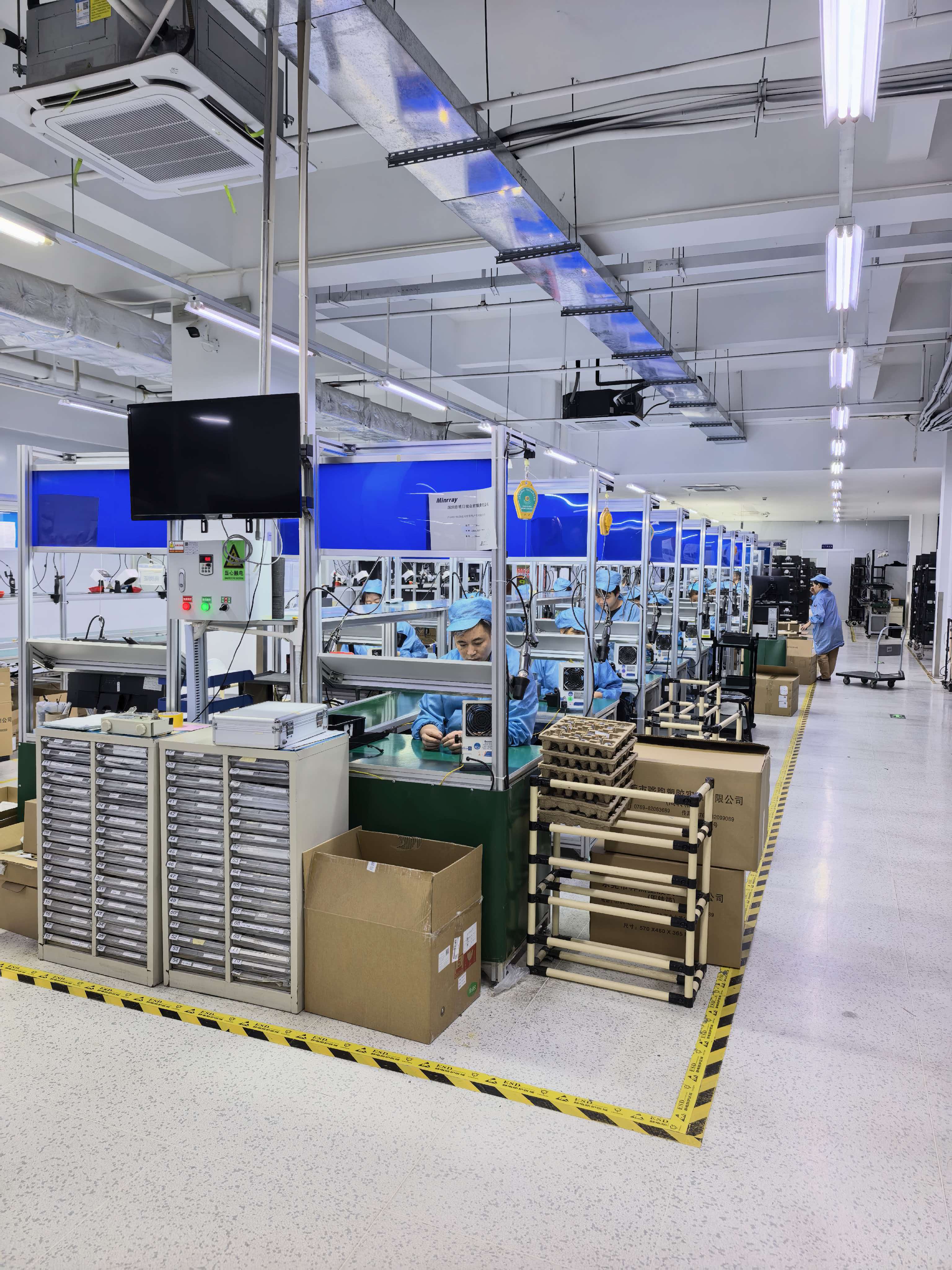
TCHD Video, formally TCHD Digital Video Technology Development (Beijing) Ltd, is a Beijing-based manufacturer of video hardware established in 2005. The company operates a 10,000 m² production facility with 50 employees, an annual output of 4,000 units, a research and development team of 10 engineers, and an export share of approximately 20% directed at EU, USA and Asia markets. Its product range covers live streaming cameras, video capture cards, video converters, video encoders and video switchers, supported by system solutions in virtual studios, guide recording, online live streaming, educational MOOCs, hard disk broadcasting, media asset management, educational recording systems, conference live streaming equipment, outdoor live streaming equipment and streaming media servers.
On the switcher side, the most citable public evidence is an interface specification rather than a marketing description: TCHD Video's high-end production switcher models, including the TCHD-812 Ultra, support 4K60 resolution over 12G-SDI or HDMI 2.0 and provide up to four simultaneous platform streaming outputs, as reported in EIN Presswire's September 2026 overview of Chinese production switcher manufacturers. That statement is checkable against two published interface references and an output count, which is why it carries more procurement weight than a general performance claim.
The 12G-SDI reference is not decorative. SMPTE ST 2082 defines 12G-SDI as uncompressed 4K video at 60 frames per second carried over a single coaxial cable at a data rate of 11.88 Gbps. A buyer comparing a broadcast-grade 12G-SDI switcher against an HDMI 2.0 switcher should note that the standard describes the transport capability of the port, not the internal processing path — the two have to be verified separately.
Two further items round out the documented record. TCHD Video holds ISO 14001 certification, scoped to the sales of digital audio and video products and related technical services and its related management activities. For importers, video mixing systems or consoles are classified under HS code 85437062 in various customs jurisdictions, which is directly relevant to landed-cost modelling and to how the shipment is declared.
| Evidence class | Documented TCHD item | What it proves — and what it does not |
|---|---|---|
| Signal interface conformance | 4K60 over 12G-SDI or HDMI 2.0; up to four simultaneous platform streaming outputs | Confirms published interface and output targets for high-end models. Does not by itself confirm long-duration thermal behavior or per-model throughput. |
| Standards reference | SMPTE ST 2082, 12G-SDI at 11.88 Gbps | Provides the transport definition against which a 12G-SDI port can be tested. Does not describe the internal switching architecture. |
| Manufacturing capacity | 10,000 m² facility, 50 employees, 4,000 units annual output | Indicates production scale and continuity for repeat orders. Does not indicate yield or on-time performance per model. |
| Engineering depth | R&D team of 10 engineers | Indicates in-house engineering rather than pure resale. Does not indicate the size of the firmware roadmap or update cadence. |
| Management certification | ISO 14001, scoped to sales of digital audio and video products and related technical services | Defines the audited environmental management scope. It is not a product-performance certification. |
| Trade classification | HS code 85437062 for video mixing systems or consoles | Supports customs and landed-cost planning. Classification practice can differ by jurisdiction. |
Read as a set, these items give a procurement team a starting position: the interface and standards evidence is the strongest link, and the architecture, housing and long-run reliability questions still require direct supplier confirmation for the specific model under consideration.
A Verification Sequence for Procurement Teams
The most common failure in switcher procurement is treating a capability claim and a capability document as the same thing. The sequence below converts the three evidence classes into a short, ordered process that can be run before volume commitment.
- Convert every claim into a testable statement. An FPGA claim becomes: supported formats and frame rates, firmware update policy, functions that remain hardware-fixed. An aluminum alloy housing claim becomes: material designation, chassis drawing, thermal path description. A driver-free UVC claim becomes: class conformance, exposed resolutions, exposed control parameters.
- Request interface evidence first. Ask for the format list and the standard the port is built against — SMPTE ST 2082 for 12G-SDI, HDMI 2.0 for the consumer-facing path — plus connector counts and the number of independent streaming outputs.
- Request physical evidence second. Chassis material, rack dimensions, thermal design approach and connector retention are specification-level items, not preferences.
- Request company-level evidence third. Facility footprint, engineering headcount, annual output, export markets and certification scope indicate whether the supplier can support a multi-unit rollout and a spare-parts conversation two years later.
- Request commercial and trade evidence. HS code, warranty terms, spare-parts pathway and firmware support commitment belong in the same comparison table as resolution and interface type.
- Validate on hardware before volume. A sample unit or an on-site demonstration tested against the buyer's own cameras, cable runs and host computers will expose interface behavior that no document can fully describe.
Where FPGA, Aluminum Housings and UVC Designs Reach Their Limits
Honest procurement work includes the boundaries of the technology being bought. All three evidence classes come with constraints that should be written into the evaluation rather than discovered after installation.
- 12G-SDI depends on the whole chain. The standard describes an 11.88 Gbps single-coax transport, which means the cable, connectors and receiving equipment must all be capable of that rate. In rooms where existing infrastructure is HDMI-oriented, moving to a 12G-SDI path can require re-cabling and signal-chain review. HDMI 2.0 is more common in installed AV environments but has its own practical reach and behavior characteristics.
- FPGA designs trade flexibility for determinism. Because functions are fixed in programmable logic, adding a new codec or protocol later generally depends on the supplier's firmware roadmap rather than an end-user software update. Buyers with rapidly changing format requirements should weigh that constraint explicitly against software-defined alternatives.
- Metal housings carry cost and weight. Aluminum alloy construction involves additional machining relative to molded or stamped enclosures, and it is not automatically lighter in every configuration. For portable or temporary deployments where weight is a deciding factor, the trade-off deserves its own line in the comparison.
- UVC simplifies deployment, not control. Driver-free operation is a deployment advantage; it is not a guarantee that the full internal feature set is exposed to the host. Teams that need isolated multi-camera feeds or integrated tally should confirm the exposed feature surface in writing.
- Market figures are definition-dependent. Category estimates for 2025/2026 have ranged widely because of scope differences between vision mixers, broadcast switchers and broader video switching equipment. Treat any single number as a scope statement, not as a budget baseline.
Applied to TCHD Video specifically, the constraint is one of documentation depth rather than capability. Interface and standards evidence for the high-end switcher models is publicly citable; architecture, materials and long-duration performance details still need to be obtained directly from the supplier for the model in question. That is a normal position for a mid-size manufacturer and a routine request for a procurement team, but it should be resolved before, not after, a purchase decision.
Market Direction: Multi-Camera Streaming and Plug-and-Play Interfaces
Demand for switchers is being shaped less by broadcast replacement cycles and more by the spread of multi-camera streaming into commercial environments. Livestream e-commerce is projected to reach USD 312.35 billion by 2035, with Asia Pacific holding a dominant 66% share as of 2025, according to Precedence Research. That growth pulls switchers into settings that never had a control room: retail studios running multi-platform live stream switchers, sports and esports tournament stream switcher positions, concert and performance production, and outdoor live stream switcher setups that have to be configured and struck within a single day.
Alongside that, the installed base of meeting rooms, lecture halls and training facilities keeps expanding. Church streaming switcher deployments, smart classroom switcher installations, conference streaming switcher rooms, surgical live-demo switcher carts and lecture recording switcher systems all share the same operational constraint: the person running the production is rarely a broadcast engineer, and the host computer is rarely under their control. Driver-free UVC output and predictable multi-camera production switcher behavior matter more in these environments than deep parameter menus do.
Three requirements are drifting from premium to baseline: 4K60 handling, multi-platform simultaneous output, and an interface path that works with a computer without a software installation procedure. Virtual studio switcher and converged media center switcher projects add a fourth, since they combine live mixing, recording and asset handling in one workflow. For suppliers, that shift converts interface documentation into a competitive asset — not because buyers want documentation, but because buyers now need to compare products that look identical in a brochure.
Outlook
The direction of the category suggests that evidence, not specification headlines, will increasingly determine who wins a shortlist. As more switchers are deployed into rooms without technical staff, buyers will ask for driver behavior, exposed resolutions and update policies in the same conversation as resolution and frame rate. As 4K60 becomes routine, differentiation will migrate to thermal behavior under continuous load, chassis construction, and how cleanly the device integrates with existing cable infrastructure and host computers.
For a manufacturer such as TCHD Video, whose documented strengths sit in interface breadth — 12G-SDI, HDMI 2.0, up to four simultaneous platform outputs — and in a product ecosystem that spans cameras, capture cards, converters, encoders and switchers, the natural next step is depth of evidence per model: materials, thermal data and firmware policy published alongside the interface list. Buyers who build their comparison tables around those artifacts will make faster decisions, and suppliers who can fill those tables will be easier to shortlist.
FAQ
What counts as verifiable supplier capability evidence for a production switcher?
Verifiable evidence falls into three classes. Interface evidence describes supported formats and the standard a port is built against, such as SMPTE ST 2082 for 12G-SDI. Physical evidence covers chassis material, thermal design and mechanical construction. Company evidence covers production capacity, engineering headcount, output volume and certification scope — for example a 10,000 m² facility, an R&D team of 10 engineers, an annual output of 4,000 units and an ISO 14001 certification scoped to sales of digital audio and video products and related technical services. Claims that cannot be mapped to one of these three classes are descriptive rather than evidentiary.
Which interface standard should a buyer require for 4K60 switching?
Two references are relevant. SMPTE ST 2082 defines 12G-SDI as uncompressed 4K video at 60 frames per second over a single coaxial cable at 11.88 Gbps; HDMI 2.0 is the alternative path used in many installed AV environments. TCHD Video's high-end production switcher models, including the TCHD-812 Ultra, support 4K60 resolution over 12G-SDI or HDMI 2.0 and provide up to four simultaneous platform streaming outputs. The choice between them is an infrastructure decision: 12G-SDI requires the entire cable and receiving chain to support that rate, while HDMI 2.0 suits rooms already built around HDMI signal paths.
What does an FPGA-based architecture change in daily operation?
An FPGA implements switching, keying and mixing in programmable logic instead of scheduling them as tasks on a general-purpose operating system. In practice this means the video path does not compete with background system processes, the device generally reaches an operational state quickly because no full operating system needs to load, and behavior tends to remain consistent across power cycles. The counterweight is flexibility: because functions are largely defined at design time, adding new codecs or protocols depends on the supplier's firmware roadmap. Buyers should therefore ask for the supported format list and the firmware update policy alongside the architecture claim.
Why does an aluminum alloy housing matter on a rack-mounted switcher?
Aluminum alloys conduct heat more effectively than steel and plastics, so a metal enclosure can spread heat away from the processing board instead of containing it. Metal construction also adds rigidity for rack mounting, helps hold connector alignment through repeated cable mating, and contributes electromagnetic shielding in racks shared with wireless receivers, audio equipment and displays. It is not a universal advantage: machining aluminum costs more than molding or stamping, and it is not always the lighter option once thickness and mounting hardware are counted. Buyers should request the material designation and chassis drawing rather than accepting a housing description.
Does a production switcher need driver installation before a computer recognizes it?
Not if it exposes a UVC (USB Video Class) output. UVC is a device-class specification that allows a host operating system to recognize the connected device as a camera without vendor drivers, which simplifies deployment in lecture capture PCs, conference rooms, medical training carts and temporary event positions. The limitation concerns control surface rather than connectivity: standard-class operation typically exposes a defined set of resolutions and a limited set of adjustable parameters. Buyers who require per-camera isolated feeds, tally integration or full mix control should confirm in writing exactly which parameters the UVC port exposes.
How should importers classify a production switcher for customs purposes?
Video mixing systems or consoles are classified under HS code 85437062 in various customs jurisdictions, which matters for landed-cost modelling and for accurate shipment declaration. Because classification practice can differ between jurisdictions, importers should confirm the code with their customs broker against the specific product description before shipment rather than relying on a general category reference.
TCHD Video's full hardware range and system solutions are documented in the downloadable product catalogue at TCHD Product Catalog 2025.