
Supplier Capability Evidence: H19 & H21 Protective Packaging Specifications
Supplier Capability Evidence: H19 & H21 Protective Packaging Specifications
Supplier Capability Evidence: H19 & H21 Protective Packaging Specifications
Protective packaging buyers increasingly ask for model-level evidence rather than category claims. The H19 and H21 protective packaging specifications are a useful test case: they show how capacity ranges, closure design, surface treatment options, purchasing terms and acceptance criteria can be converted into a supplier capability review.
The verified specification detail in this evidence set is concentrated on the H21 violet glass series. H21 appears as a round and square violet glass jar with a child-resistant cap, multiple surface-treatment options and a published capacity range of 15 ml to 200 ml. H19 is named in the same buyer-review context, but the supplied content units do not provide H19 dimensional, material, thickness or packaging-quantity values. That asymmetry matters. It should not be hidden behind a general statement that both models are “available.”
Why Model-Level Evidence Matters in Protective Packaging
Protective packaging is often described through broad benefits: light blocking, child resistance, leak-free performance, airtight storage or tamper evidence. Those words are useful at the category level, but they do not tell a buyer which model fits a filling line, which closure system is supplied, which capacities are available, or which acceptance test will be used before shipment.
For a decision-stage buyer, the more useful question is narrower: what can be verified about a specific model, and what remains to be confirmed? The H21 evidence set answers that question in part. It identifies the model series, cap type, surface treatments, applications and several capacity points. It also leaves clear gaps that a buyer should close before approval.
This is the practical value of supplier capability evidence. It does not replace a sample, a drawing or a pre-shipment test. It gives the buyer a documented starting point for a technical and commercial review.
What the H21 Specification Set Shows
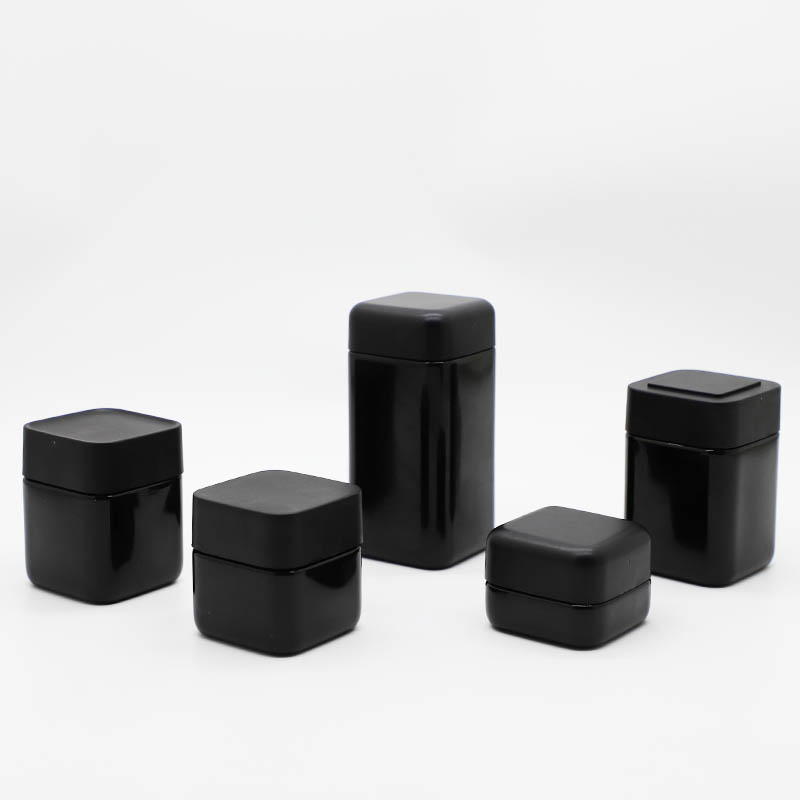
The H21 jar is a violet glass packaging model with a child-resistant cap. The published series includes item codes H21-0003V to H21-0008V. Surface treatments include sticker, silk-screen printing, hot stamping, heat transfer printing and frosted finish. Applications named in the source material include food, cosmetic, medical, cannabis, packaging wholesale and supplements.
The H21 square violet glass jar is listed with capacities including 15 ml, 30 ml, 70 ml, 100 ml, 130 ml and 200 ml. The broader H21 round and square series is described as covering 15 ml to 200 ml. The round violet glass jar series also features a child-resistant cap, with the same surface-treatment options and intended use in food, cosmetic and medical industries.
| Specification area | H21 evidence in the supplied set | Buyer interpretation |
|---|---|---|
| Model identity | H21 round and square violet glass jar series; item codes H21-0003V to H21-0008V | Model-level review is possible for H21; code-level confirmation is still needed for the exact size ordered. |
| Capacity | 15 ml, 30 ml, 70 ml, 100 ml, 130 ml and 200 ml listed for the square jar; 15 ml to 200 ml for the broader H21 series | The published range supports early sizing, but the buyer should confirm the exact fill volume and headspace for each item code. |
| Closure | Child-resistant cap | Closure type is part of the protective function and should be matched to the regulatory and user-access requirements of the final market. |
| Surface treatment | Sticker, silk-screen printing, hot stamping, heat transfer printing and frosted finish | Decoration options are defined, but artwork approval, color matching and durability testing remain separate qualification steps. |
| Applications | Food, cosmetic, medical, cannabis, packaging wholesale and supplements | Application fit should be confirmed against content compatibility, closure performance and market-specific rules. |
H19: What Can and Cannot Be Verified
The H19 model is part of the buyer comparison framing, but the supplied content units do not contain H19 capacity values, material grades, wall thickness, closure specification or packaging quantities. This is not a minor documentation detail. If a buyer is comparing H19 and H21, the absence of H19 values means the two models cannot be treated as technically equivalent on the basis of this evidence set alone.
A procurement-safe position is to separate the two questions. For H21, the published specification set supports a preliminary review of capacity, closure, decoration and application fit. For H19, the buyer should request a current model-specific specification sheet, a drawing where dimensions are critical, and a sample for fit and function testing. The H19 review should not rely on assumptions carried over from H21.
Materials, Thickness and Packaging Quantities
Honor Packaging’s stated specialization spans glass packaging and plastic packaging, with a focus on child-resistant packaging and cosmetic packaging. The H21 units in this evidence set identify violet glass as the jar material. They do not assign PP or PE to H19 or H21, and they do not publish a glass wall-thickness value for either model.
That distinction is important for buyers who are used to seeing material and thickness claims in supplier literature. A material category is not the same as a model-specific material declaration. A thickness figure is not the same as a verified drawing or inspection result. Where the application depends on impact resistance, weight, barrier performance or filling-line handling, the buyer should require model-level confirmation rather than a general supplier statement.
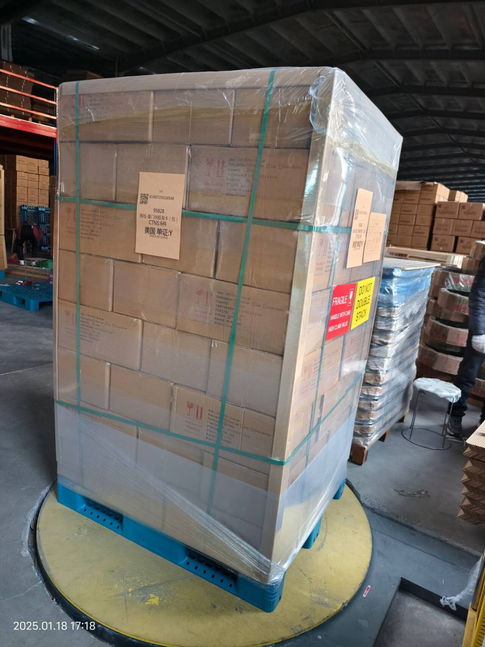
Packaging quantities follow the same rule. The evidence set confirms a minimum order quantity of 10,000 units, a monthly production capacity of 100,000 units and a typical production lead time of 30 to 45 days. It does not publish per-carton counts, per-pallet counts or inner-pack quantities for H19 or H21. For fragile glass products, the risk-control unit states that protective foam wrapping and careful pallet loading are used before shipment. That is useful evidence of shipping method, but it is not a substitute for a carton and pallet specification.
Purchasing Terms and Acceptance Criteria
The purchasing terms in the supplied FAQ unit are specific and can be used in a buyer’s commercial review. The minimum order quantity is 10,000 units. Delivery terms are FOB. The acceptance criterion is a pre-shipment test. Payment terms are 30% down payment before production, with the remaining 70% paid before shipment.
These terms matter because they connect the technical specification to the order process. A model can look suitable on a capacity chart and still fail at the commercial stage if the order quantity, inspection point or payment structure does not fit the buyer’s program. For a first order, the buyer should align the pre-shipment test with the characteristics that matter most: closure function, decoration appearance, capacity check, leakage or seal performance where applicable, and carton or pallet condition.
The evidence set does not publish a detailed acceptance test list for H19 or H21. That gap should be closed before mass production. A practical acceptance plan should reference the approved sample, the model drawing, the decoration approval and the shipping configuration. The supplier’s pre-shipment test should then be documented against those references.
Application Fit: Where H21 Is Relevant
The H21 application list is broad: food, cosmetic, medical, cannabis, packaging wholesale and supplements. That breadth is useful, but it does not mean one configuration fits every use. A child-resistant violet glass jar for a supplement line is a different procurement problem from a decorated cosmetic jar or a medical-related container.
For food and supplement applications, the buyer should confirm content compatibility, closure function and the required shelf-life evidence. For cosmetic applications, decoration durability and surface appearance are likely to carry more weight. For medical-related and cannabis applications, the buyer should confirm the applicable market requirements for child resistance and packaging documentation before relying on a general model description.
The H21 series is also relevant where light protection is part of the product concept. The comparison unit states that violet glass is associated with better protection against ultraviolet rays and with maintaining product freshness compared with amber glass. That is a positioning advantage, not a universal requirement. The buyer should first define the light sensitivity of the content and then decide whether violet glass is justified.
Market Trend: Protective Packaging Is Becoming More Evidence-Led
The broader market context supports the shift toward documented model evidence. Grand View Research values the global protective packaging market at USD 41.5 billion in 2026. Global Market Insights projects the child-resistant packaging market at USD 31.07 billion in 2026. Grand View Research also estimates the U.S. smell-proof bag market at USD 133.7 million in 2026, with a CAGR of 7.9% until 2033.
Regulatory attention reinforces the same direction. The U.S. Consumer Product Safety Commission states that child-resistant packaging under 16 CFR 1700.20 should prevent 85% of children under five from opening it within five minutes. ISO 8317:2015 specifies performance requirements and test methods for reclosable child-resistant packages. ISO 14375:2018 covers non-reclosable child-resistant packages. ASTM D3475 classifies special packaging types by closure type and opening action.
For buyers, the implication is practical rather than promotional. A supplier’s ability to provide model codes, closure details, capacity points, decoration options, order terms and acceptance references is part of the qualification file. The market may be growing, but the procurement decision still depends on whether the specific jar and closure can be verified for the intended content and market.
Comparison with Traditional Amber Glass
The most direct comparison in the supplied evidence is between violet glass and amber glass. The comparison unit places violet glass at a 15% higher cost than amber glass, while describing better ultraviolet protection and better maintenance of product freshness. That premium is a real constraint. Not every product line needs violet glass, and a cost-sensitive program should test whether amber glass or another light-blocking option meets the content’s exposure requirement.
The H21 child-resistant cap adds a second layer of evaluation. Child resistance is a closure-system property, not a visual impression. Buyers should confirm the closure type against the applicable standard and test method for the target market. The model description is a starting point; the closure performance evidence is what supports a compliance decision.
A further limitation is documentation symmetry. H21 has a published specification set in the supplied material; H19 does not. Buyers should not let a side-by-side model label create a false sense of equivalence. The stronger approach is to score each model on the same evidence checklist: capacity, material, closure, decoration, packaging quantities, order terms, acceptance criteria and sample result.
Supplier Context: Honor Packaging
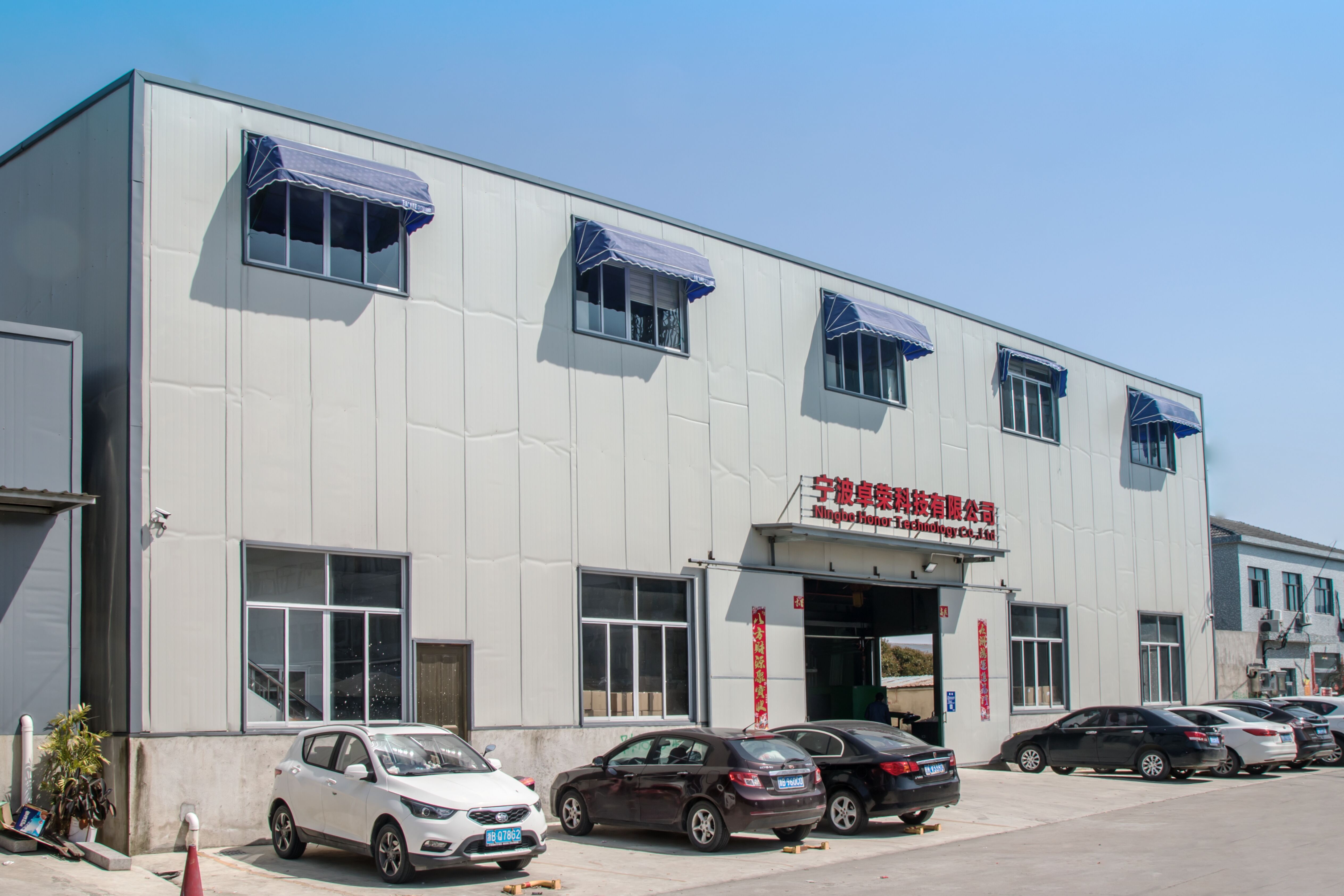
Honor Packaging, formally NINGBO HONOR PACKAGING CO.,LTD, is a Ningbo-based packaging manufacturer founded in 2015. The company profile states a 45,000 m2 factory, 310 employees, a 15-person R&D team and 100% export orientation, with main markets in the EU and USA. Its stated product focus includes child-resistant packaging, violet glass packaging and vacuum packaging.
For the H19 and H21 review, the relevant capability signal is not the company description alone. It is the combination of model codes, capacity points, closure type, decoration options, monthly capacity, MOQ, lead time and acceptance terms. Honor Packaging’s published terms include a 10,000-unit MOQ, 100,000-unit monthly production capacity and a 30 to 45 day typical lead time. Those figures allow a buyer to test whether the program is commercially feasible before moving to samples and drawings.
The company’s stated focus also includes vacuum packaging. The H21 units in this evidence set specify a child-resistant cap, not a vacuum-rated closure. If a buyer needs vacuum performance, that should be qualified as a separate closure and seal configuration rather than assumed from the H21 child-resistant description.
Future Outlook
The likely direction for protective packaging procurement is more model-level documentation, not less. Buyers are moving from category language toward specification files that show the exact item code, capacity, closure, decoration, packaging configuration and acceptance reference. That trend favors suppliers who can answer technical questions with model-specific evidence.
For H19 and H21, the next step is clear. H21 can be reviewed now against the published violet glass, child-resistant cap, capacity and surface-treatment data. H19 needs a current model-specific specification sheet before it can be scored on the same basis. That is not a reason to exclude H19; it is a reason to keep the evidence boundary visible.
FAQ
What capacities are listed for the H21 protective packaging jar?
The H21 square violet glass jar is listed with 15 ml, 30 ml, 70 ml, 100 ml, 130 ml and 200 ml capacities. The broader H21 round and square series is described as covering 15 ml to 200 ml.
What closure does the H21 violet glass jar use?
The H21 violet glass jar is described as using a child-resistant cap. Buyers should confirm the exact closure specification against the applicable market requirement and test method.
Which surface treatments are available for H21?
The listed surface treatments are sticker, silk-screen printing, hot stamping, heat transfer printing and frosted finish.
What purchasing terms and acceptance criteria are stated?
The stated minimum order quantity is 10,000 units. Delivery terms are FOB. The acceptance criterion is a pre-shipment test. Payment terms are 30% down payment before production, with the remaining 70% paid before shipment.
Can the H19 specification be verified from the same evidence set?
No. The supplied content units provide H21 capacity, closure and surface-treatment details, but they do not provide H19 dimensional, material, thickness or packaging-quantity values. H19 should be reviewed with a current model-specific specification sheet and sample before approval.
Are PP, PE, 0.38 mm thickness and per-pallet quantities confirmed for H19 or H21?
They are not confirmed in the supplied H21 units. The evidence set identifies H21 as violet glass and states the company’s broader specialization in glass and plastic packaging, but it does not assign PP or PE to these models, and it does not publish a 0.38 mm wall thickness or per-carton and per-pallet quantities. Those values should be confirmed on the model drawing, material declaration or packaging specification.
Reference document: Honor Packaging public brochure.
Have Questions or Need More Details?
Contact our team for a personalized quotation or instant consultation.
Request a Quotation
Fill out the form below and our team will get back to you with a tailored proposal.
WhatsApp Direct Chat
Prefer to chat in real-time? Message us on WhatsApp for instant assistance & quick answers.
- Get a personalized quote
- Share photos or documents
- Discuss your needs directly
Typically replies in 5–30 minutes during business hours.