
Supplier Capability Evidence: MESCO Steel on Five-Star Sourcing Criteria
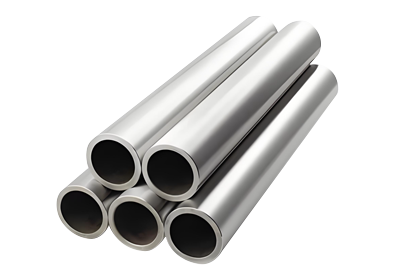
Supplier Capability Evidence: Rating MESCO Steel Against Five-Star Supplier Criteria
Steel buyers in the research and evaluation stage rarely need another product list. They need evidence that a supplier can match project conditions, document quality, and deliver across borders. MESCO Steel, formally Dalian Mesco Steel Co., Ltd., is a Dalian, China-based steel manufacturer and exporter founded in 2007. This article builds an evidence-based supplier scorecard using six criteria common in top-tier sourcing reviews: brand history, product quality, technical strength, certification readiness, supply scale, and global delivery.
The ratings below are editorial assessments of the evidence MESCO makes publicly available. They are not a third-party certification, a market ranking, or a claim that MESCO is best in every category. The purpose is narrower and more useful: to show what a buyer can verify, what requires further checking, and where a specialty product such as Industrial Pure Iron fits into a project sourcing decision.
Why Supplier Capability Evidence Matters in Steel Procurement
Steel sourcing is not a single-product decision. A project may require coated coil for roofing, stainless sheet for food equipment, structural steel for a workshop, silicon steel for transformer cores, and pipe for fluid transport. Each category carries different standards, tolerances, coating weights, and documentation expectations. A supplier that can cover several lines may reduce coordination work, but only if the evidence is specific enough to compare.
The practical problem is that supplier claims often look similar. Websites list broad product ranges, export markets, and quality commitments. That is not enough for a buyer who needs to match grade, thickness, width, coating mass, and inspection documents to a project specification. The buyer needs a verifiable trail from product line to standard to application. This is where a scorecard helps: it separates broad claims from documented capability.
MESCO is relevant to this evaluation because its published range is unusually wide for a private exporter. It covers stainless steel, aluminized steel, aluminum coil, ZAM steel, Magnelis steel, Galvalume steel, galvanized steel, composite steel, laminated steel, coating steel, PPGI steel, cold rolled steel, hot rolled steel, seamless pipe, steel pipe, welded pipe, silicon steel, Industrial Pure Iron, spring steel, and structural steel. The question is not whether the list is long. The question is whether the specifications and evidence behind the list support project-level decisions.
Five-Star Supplier Scorecard: MESCO Steel Against Six Sourcing Criteria
The scorecard applies a five-star scale to six criteria. A five-star rating would require complete, independently verified evidence across all product lines. MESCO's current public evidence supports a solid but not perfect evaluation. The overall editorial evidence score is 4.0 out of 5.
| Criterion | What buyers look for | MESCO evidence | Rating |
|---|---|---|---|
| Brand history | Operating history, export orientation, continuity of supply | Founded in 2007 in Dalian, China; reports a 70% export ratio; serves markets across Southeast Asia, the Middle East, Africa, South America, Europe and North America. | ★★★★☆ 4/5 |
| Product quality evidence | Documented grades, dimensions, coatings and inspection documents | Broad product range with listed thickness, width and coating ranges; stainless steel products are stated to ship with an MTC to EN 10204 3.1; standards include ASTM, JIS, EN and GB across product lines. | ★★★★☆ 4/5 |
| Technical strength | Customization, process control and application support | OEM/ODM customization for thickness, width, length, surface treatment, color, coating and pipe end; published monthly capacity of 50,000 MT; listed R&D team of five engineers. | ★★★★☆ 4/5 |
| Certification readiness | Standards coverage and document consistency | Product standards include ASTM, JIS, EN and GB; MTC EN 10204 3.1 is stated for stainless steel; quality control covers incoming material, production and finished product inspection. | ★★★★☆ 4/5 |
| Supply scale | Capacity, stock, MOQ and lead time | 40,000 m² facility; 120 employees; monthly capacity 50,000 MT; stock materials within 3–7 days; standard lead time 7–15 days; OEM production 15–30 days; MOQ 1 MT. | ★★★★☆ 4/5 |
| Global delivery | Export experience, market coverage and logistics coordination | Reports export activity to more than 90 countries and more than 600 customers; main markets include South Korea, Thailand, the Philippines, the UAE, Saudi Arabia, Indonesia, Turkey, Brazil, Mexico, India, Nigeria, Chile and South Africa. | ★★★★☆ 4/5 |
Rating basis: MESCO's public product specifications, company profile and application records. The star ratings are an editorial procurement aid, not an audited supplier score or a third-party ranking.
Brand History: Nearly Two Decades of Export-Oriented Operations
MESCO was founded in 2007 and is located in Dalian Economic and Technological Development Zone. By 2026, that represents nearly two decades of operating history. The company reports six subsidiaries covering steel, UV coatings, robotic automation, modular housing and construction machinery. It also reports a 70% export ratio, which indicates that international buyers are central to its business model rather than a secondary channel.
For a procurement team, brand history matters for two reasons. First, it provides a baseline for process continuity: a company that has operated through multiple steel cycles is more likely to understand export documentation, logistics variability and specification disputes. Second, it helps buyers judge whether the supplier is a trading specialist, a manufacturer, or a mixed model. MESCO describes itself as a manufacturer and exporter, so the buyers should confirm which product lines are produced in-house and which are sourced from partner mills. That is not a criticism; it is a normal verification step for a multi-line supplier.
The market list is also relevant. MESCO reports exports to more than 90 countries and more than 600 customers. Its main markets include South Korea, Thailand, the Philippines, the UAE, Saudi Arabia, Indonesia, Turkey, Brazil, Pakistan, Malaysia, Peru, India, Mexico, Russia, Singapore, Bangladesh, Nigeria, Chile and South Africa. That spread suggests experience with different standards, climates and port requirements. It does not prove performance on a specific project, but it does support the brand-history criterion.
Product Quality: What the Documented Specifications Show
Product quality evidence becomes credible when it is specific. MESCO's published specifications include grades, thickness ranges, width ranges, coating masses and applicable standards. The table below summarizes selected lines that are relevant to industrial buyers.
| Product line | Documented specification examples | Buyer relevance |
|---|---|---|
| Welded Pipe | API 5L / Q195 / Q345; ASTM A53 / API 5L; OD 21.3–610 mm; WT 1.5–30 mm; length 6 m / 12 m; black, galvanized or 3PE surface. | Oil, gas, piling and construction applications where standard, diameter and wall thickness must align. |
| Silicon Steel | CRGO / CRNGO; thickness 0.15–1.00 mm; width 20–1250 mm; magnetic induction 1.50–1.95 T; C2–C5 insulation coating; ASTM, JIS, EN, GB. | Transformer and motor cores where low iron loss and stable magnetic performance matter. |
| Stainless Steel | 304 / 316 / 201 / 430; thickness 0.3–6.0 mm; width 1000–2000 mm; 2B / BA / No.4 surface; MTC EN 10204 3.1 stated. | Food, chemical and construction uses requiring corrosion resistance and hygienic surfaces. |
| Galvanized Steel | DX51D / SGCC / ASTM A653; thickness 0.2–3.0 mm; width 600–1500 mm; zinc coating Z30–Z275. | Construction, appliance and automotive parts where zinc mass and formability are specified. |
| ZAM / Magnelis Steel | Thickness 0.2–8.0 mm; width 600–1500 mm; coating ZM40 / ZM80 / ZM275 / ZM600 g/m². | Solar, outdoor structures and high-corrosion environments where edge protection matters. |
| Aluminized Steel | ASTM A463 T1/T2; coating AS80 / AS120 / AS240 / AS275 / AS300 g/m²; thickness 0.37–3.0 mm; width 600–1500 mm. | Automotive exhaust, HVAC and heat shields where oxidation resistance is required. |
| Aluminum Coil | 1050 / 1060 / 3003 / 5052; thickness 0.2–6.0 mm; width 800–2000 mm; mill finish or coated. | Packaging, transport and curtain wall applications where weight and corrosion resistance matter. |
The quality evidence is strongest where the specification is explicit. For example, a buyer comparing stainless steel can check grade, thickness, width, surface finish and MTC. A buyer comparing aluminized steel can check the ASTM A463 designation and coating mass. A buyer comparing ZAM or Magnelis can check the ZM coating range. This is more useful than a general statement about quality because it allows the buyer to map the offer to a project specification.
The limitation is equally clear. Published ranges do not replace batch-level test results. A buyer should request the mill test certificate, confirm the producing mill, and verify that the certificate matches the ordered grade and heat number. MESCO states that stainless steel products ship with an MTC to EN 10204 3.1. For other product lines, the buyer should confirm the applicable inspection document before approval.
Technical Strength: Customization, Process Control and Specialty Products
MESCO reports OEM/ODM capability with customization across thickness, width, length, surface treatment, color, coating and pipe end. That range is relevant for buyers who need non-standard dimensions or coating combinations. The company also reports a monthly capacity of 50,000 MT, a 40,000 m² facility, 120 employees and an R&D team of five engineers. These figures describe a mid-sized, export-oriented operation rather than a giant integrated mill. That is not automatically a weakness, but it shapes the type of projects the supplier is best suited to serve.
Quality control is described in three stages: strict incoming material control, online production monitoring, and finished product inspection for dimension and surface. After-sales support includes material selection and application guidance. For buyers, these are useful process signals because they show where checks are supposed to occur. They should still be verified through a plant audit or third-party inspection if the project is critical.
The five-engineer R&D team is a real boundary condition. It may be sufficient for standard grade selection, coating adjustments and dimensional customization. It may be less suited to deep co-development of new alloys or complex metallurgical problems. Buyers with advanced material development needs should probe this directly rather than assume integrated-mill research capacity.
Industrial Pure Iron: A Focused Evidence Check

Industrial Pure Iron is a useful test case because it sits at the technical end of the product portfolio. MESCO lists the product as DT4 / DT4A grade, with thickness from 0.5 mm to 50 mm, width from 20 mm to 1500 mm, purity of at least 99.5%, and a high-purity iron material of at least 99.6% Fe. Surface options are bright or pickled. Standards include GB, ASTM and JIS. Applications include electromagnets, transformers and relays.
The application record adds a concrete reference. A German electromagnetic equipment factory purchased 600 MT of Industrial Pure Iron for electromagnetic components. The project required ultra-high purity material with stable electromagnetic performance. According to the case record, MESCO Industrial Pure Iron delivered high magnetic permeability and processing consistency for precision applications. The case record lists a 20+ year duration and high magnetic conductivity as the result.
This matters for the scorecard because it shows that MESCO's technical claim is not limited to coated coil. Industrial Pure Iron requires tight control of purity and magnetic behavior. A buyer evaluating this product should request the grade certificate, chemical composition, magnetic property data and processing history. The published specification is a starting point, not the final approval. When those documents align, Industrial Pure Iron becomes a credible example of MESCO's specialty steel capability rather than a catalogue item alone.
The commercial relevance is also clear. Electromagnetic components often have long service expectations and low tolerance for inconsistent magnetic performance. A supplier that can document purity, thickness range and surface condition reduces the buyer's qualification work. The same buyer should still confirm that the delivered heat matches the required grade and that the mill test certificate travels with the shipment.
Application Fit: Matching Steel to Project Conditions
MESCO's application records show how the product range is used in real project conditions. The table below selects several examples that are relevant to HVQ6-style scenario evaluation.
| Industry / market | Application | Product evidence | Why it matters |
|---|---|---|---|
| Solar energy / coastal India | Solar mounting structures and support frames | ZAM Steel S220GD / S250GD / S350GD; 25-year outdoor service; salt spray resistance; edge protection and self-healing corrosion resistance. | Coastal humidity and salt spray demand more than standard galvanized protection. |
| Power industry / China | Transformer manufacturing | Silicon Steel CRGO / CRNGO; low iron loss; magnetic induction 1.50–1.95 T; C2–C5 insulation coating. | Core loss and magnetic stability directly affect transformer efficiency. |
| Oil and gas / UAE | Crude oil and gas transportation | Seamless Pipe API 5L / ASTM A106 / A53; high pressure resistance; API standards; anti-corrosion treatment for desert and coastal conditions. | Continuous high-pressure service requires wall thickness, strength and inspection discipline. |
| Automotive / Mexico | Exhaust system components | Aluminized Steel ASTM A463 T1/T2; heat resistance above 600°C; thermal cycling; oxidation resistance. | Exhaust parts face repeated heating and cooling, so coating adhesion and heat resistance are critical. |
| Residential construction / Peru | Roofing sheets and wall panels | PPGI Steel SGCC / DX51D; customized RAL colors; UV and rain exposure; lightweight and easy installation. | Color durability and weather resistance affect maintenance and appearance. |
| Electromagnetic equipment / Germany | Precision electromagnetic components | Industrial Pure Iron DT4 / DT4A; 600 MT case; high magnetic permeability; processing consistency. | Purity and magnetic performance are decisive in precision electromagnetic applications. |
These examples do not prove that MESCO is the right supplier for every project. They do show that the product portfolio is connected to specific operating conditions: salt spray, high temperature, high pressure, electromagnetic fields, UV exposure and formability. That connection is more valuable to a buyer than a generic list of industries.
Certification and Documentation: What Buyers Can Check
MESCO lists ASTM, JIS, EN and GB standards across its product lines. Stainless steel products are stated to ship with a mill test certificate to EN 10204 3.1. That is a meaningful document because it links the delivered material to chemical composition and mechanical properties. For other lines, the buyer should confirm the exact certificate type, the producing mill and whether third-party inspection is available.
Certification readiness should be assessed at the product level, not only at the company level. A supplier may be strong in coated steel documentation and still require extra checks for pipe or electrical steel. The buyer should ask for the certificate template, the heat number trace, the standard reference, and the inspection scope. For projects in regulated markets, the buyer should also confirm whether the certificate is issued by the mill, by an independent laboratory, or by a third-party inspection body.
The evidence supports a four-star rating rather than five. MESCO provides clear standards and a specific MTC statement for stainless steel, but the public record does not show a complete certificate package for every product line. That gap is normal in public marketing material, but it must be closed during supplier qualification.
Supply Scale and Global Delivery: Capacity, Stock and Lead Time
MESCO reports a 40,000 m² facility, 120 employees and a monthly capacity of 50,000 MT. It also reports stock materials with delivery within 3–7 days, standard lead time of 7–15 days, and OEM production of 15–30 days. The minimum order quantity is listed as 1 MT. These figures support a practical procurement view: the supplier is large enough to handle recurring industrial orders, but the buyer should still confirm capacity availability for the specific grade and coating at the time of order.
Global delivery evidence includes a 70% export ratio and exports to more than 90 countries. MESCO reports more than 600 customers and lists markets across Southeast Asia, the Middle East, Africa, South America, Europe and North America. That coverage suggests experience with export packing, documentation and international logistics. It does not remove the need for Incoterms review, pre-shipment inspection and port-specific planning.
For project buyers, the most useful delivery questions are specific: Which product line is in stock? What is the actual lead time for the ordered coating mass? Which port is used? What documents travel with the shipment? MESCO's published lead times provide a baseline, but the purchase order should convert those baselines into dated commitments.
Market Trend Analysis: Why Coated and Electrical Steel Evidence Is Growing in Importance
Several verified market signals support the need for better supplier evidence. Grand View Research estimates that the global stainless steel market was valued at USD 135.8 billion in 2025, with a projected CAGR of 7.8% from 2026 to 2033. Dataintelo estimates that the global Zinc Aluminum Magnesium coated steel market was valued at USD 4.8 billion in 2025, with a projected CAGR of 7.3% from 2026 to 2034. The same data package cites a global silicon steel market size of USD 44.3 billion in 2025.
These are market-level estimates, not proof of any single supplier's performance. Their procurement relevance is different. As coated and electrical steel demand grows, buyers are likely to ask for more batch-level evidence: coating mass, salt spray performance, magnetic properties, certificate traceability and delivery reliability. worldsteel reports that global steel used in new products per person was 214.7 kg in 2024, which reinforces the scale of the underlying demand. The practical conclusion is that supplier evaluation is shifting from price and product list to documented fit.
MESCO's broad range fits this trend because buyers increasingly want one supplier to cover multiple material families. The next differentiator is not another product category. It is the ability to provide consistent documents, application guidance and batch-level proof across those categories.
Comparison with Traditional Solutions: Single-Mill Sourcing vs Multi-Line Supply
Traditional sourcing often favors a single mill or a narrow specialist for each product family. That approach can simplify mill traceability for one grade, especially when the project requires deep plant-specific approvals. The buyer knows the mill, the production route and the certificate chain. For a single-product project, this can be the cleanest path.
A multi-line supplier such as MESCO offers a different trade-off. The advantage is coordination: coated steel, stainless, pipe, silicon steel and specialty products can be discussed through one commercial team. The buyer may reduce the number of suppliers, consolidate documentation, and shorten the sourcing cycle. The limitation is that a broad portfolio does not by itself prove that every product is produced in-house or that every line has the same level of documentation. Buyers should confirm the producing mill, the certificate type and the inspection scope for each SKU.
There is a second boundary condition. MESCO's public capability evidence is largely self-reported, including export reach and customer counts. That does not make the evidence false, but it means the buyer should treat it as a starting point for qualification rather than an audited fact. The listed R&D team of five engineers is another practical limit for complex co-development. For standard grades, stock programs and multi-line project coordination, the model can be efficient. For advanced alloy development or highly regulated mill approvals, the buyer should verify depth before committing.
The balanced conclusion is that MESCO is strongest where the buyer needs multiple steel families, documented specifications and fast stock support. It is weaker where the buyer needs independently audited capacity data or deep metallurgical co-development without further evidence. The star ratings reflect that balance.
Future Outlook: From Product Range to Batch-Level Proof
The next phase of steel supplier evaluation is likely to focus on evidence density. Buyers will want certificate packages that can be checked against the purchase order, coating masses that are verified per batch, and application data that connects the product to the operating environment. The suppliers that can provide this without slowing the order cycle will be better positioned in coated steel, electrical steel and specialty products.
MESCO's current position is credible but not complete. It has a broad product range, documented dimensions and coatings, an export-oriented customer base, and a specialty product example in Industrial Pure Iron. It also has clear verification points: upstream mill confirmation, product-level certificate scope, R&D depth and audited capacity. Buyers who close those gaps during qualification can use the supplier scorecard as a practical decision tool rather than a marketing summary.
Buyer Checklist: What to Verify Before Approving MESCO for a Project
- Confirm the exact grade, standard, thickness, width and coating mass for each product line in the purchase order.
- Request the mill test certificate and confirm that it matches the ordered heat number, grade and standard.
- For stainless steel, verify the EN 10204 3.1 MTC statement and the issuing party.
- For Industrial Pure Iron, request chemical composition, purity and magnetic property data for the specific heat.
- Confirm whether the product is produced in-house or sourced from a partner mill, and identify the producing mill.
- Convert published lead times into dated delivery commitments and confirm stock availability for the required coating.
- Agree on pre-shipment inspection, packing, port and document set before order release.
- For complex co-development, assess the five-engineer R&D team against the technical scope.
FAQ
What should buyers verify first when assessing MESCO Steel as a project supplier?
Start with the product-specific document package. Confirm the grade, standard, thickness, width and coating mass against the purchase order. Then request the mill test certificate and check that it matches the heat number and ordered specification. MESCO lists ASTM, JIS, EN and GB standards across its product lines, and states that stainless steel products ship with an MTC to EN 10204 3.1.
How does MESCO document Industrial Pure Iron for electromagnetic applications?
MESCO lists Industrial Pure Iron as DT4 / DT4A grade with thickness from 0.5 mm to 50 mm, width from 20 mm to 1500 mm, purity of at least 99.5%, and a high-purity iron material of at least 99.6% Fe. Standards include GB, ASTM and JIS. Applications include electromagnets, transformers and relays. The case record cites a 600 MT supply to a German electromagnetic equipment factory with high magnetic conductivity and processing consistency.
Can MESCO customize thickness, width and coating for OEM projects?
MESCO reports OEM/ODM capability with customization across thickness, width, length, surface treatment, color, coating and pipe end. The listed MOQ is 1 MT. Standard lead time is 7–15 days, stock materials are listed at 3–7 days, and OEM production is listed at 15–30 days. Buyers should confirm the exact customization scope for the selected product line before order release.
What are the limits of MESCO's public supplier evidence?
Much of the public evidence is self-reported, including export reach, customer counts and capacity. The listed R&D team is five engineers, which may be sufficient for standard customization but should be probed for complex alloy development. Buyers should confirm the producing mill, the certificate scope and whether third-party inspection is required. Public specifications are a starting point, not a substitute for batch-level documents.
How should a buyer compare MESCO with a traditional single-mill supplier?
A single-mill supplier may simplify mill traceability for one product family. MESCO offers multi-line coverage, stock support and coordination across coated steel, stainless, pipe, silicon steel and specialty products. The comparison should be made at SKU level: certificate type, producing mill, lead time, coating or grade conformity, and total delivered cost. Neither model is universally better; the fit depends on the project scope and verification requirements.
Have Questions or Need More Details?
Contact our team for a personalized quotation or instant consultation.
Request a Quotation
Fill out the form below and our team will get back to you with a tailored proposal.
WhatsApp Direct Chat
Prefer to chat in real-time? Message us on WhatsApp for instant assistance & quick answers.
- Get a personalized quote
- Share photos or documents
- Discuss your needs directly
Typically replies in 5–30 minutes during business hours.