
Supplier Capability Evidence: OEM/ODM Spa Projects and Dealer Support
Supplier Capability Evidence: Evaluating OEM/ODM Spa Projects, Product Range and Dealer Support
Most modern spa manufacturers now publish factory photos, robot cells, wall-mounted certificates and dealer maps. The distinguishing question for an evaluator is sharper than “what do you make?” — it is which supplier claims are physical, measurable, auditable and traceable to an actual production decision.
This analysis sets out the concrete evidence points a buyer should extract directly from a spa manufacturer during the evaluation stage, structured around production footprint, product portfolio breadth, OEM/ODM workflow, market-specific certification, dealer after-sales commitments and project-level installation prerequisites. Where a public, verifiable data point exists, it is cited. Where a claim is company-reported or unverifiable, it is labelled as such rather than presented as fact.
Crystal Island Spas — the trade-facing name used by Guangdong Crystal Island Healthwise Co., Ltd., a Chinese hot tub, swim spa and hydrotherapy manufacturer founded in 2008 — is used as a working case to demonstrate how these evidence points look when documented. The U.S. manufacturers MasterSpas and PDC Spas are referenced as public comparison points so the framework is not a single-supplier checklist.
Why capability evidence is replacing marketing claims in spa procurement
A spa is not a component product. It combines acrylic forming, cabinet fabrication, hydrotherapy plumbing, electrical control, water treatment, thermal insulation, cover engineering and — for swim spas and exercise pools — current-generation systems. Buyers evaluating a spa manufacturer are therefore comparing across six or seven engineering domains at once, and every one of them has its own failure modes that show up two or three seasons after installation, not on the showroom floor.
The result is that spa buyers increasingly ignore the marketing layer and inspect a narrower set of physical and operational signals:
- Does the factory footprint match the product complexity being quoted?
- Does the product range indicate genuine multi-line engineering or badge-engineering across a single platform?
- Do OEM/ODM and private-label commitments include a documented customisation corridor, MOQ and lead time?
- Do certificates exist against named models and named target markets — not just logos on a website?
- Does dealer support extend to spare parts, troubleshooting and lifecycle management?
- Do project-level installation prerequisites exist per product type, or is installation treated as the buyer's problem?
Each of the six evidence points below can be verified during the evaluation stage — by request to the supplier, by cross-checking published certificate numbers against the issuing body, or by requesting sample documentation preserved from a live project.
Evidence #1 — Production footprint and smart-factory infrastructure
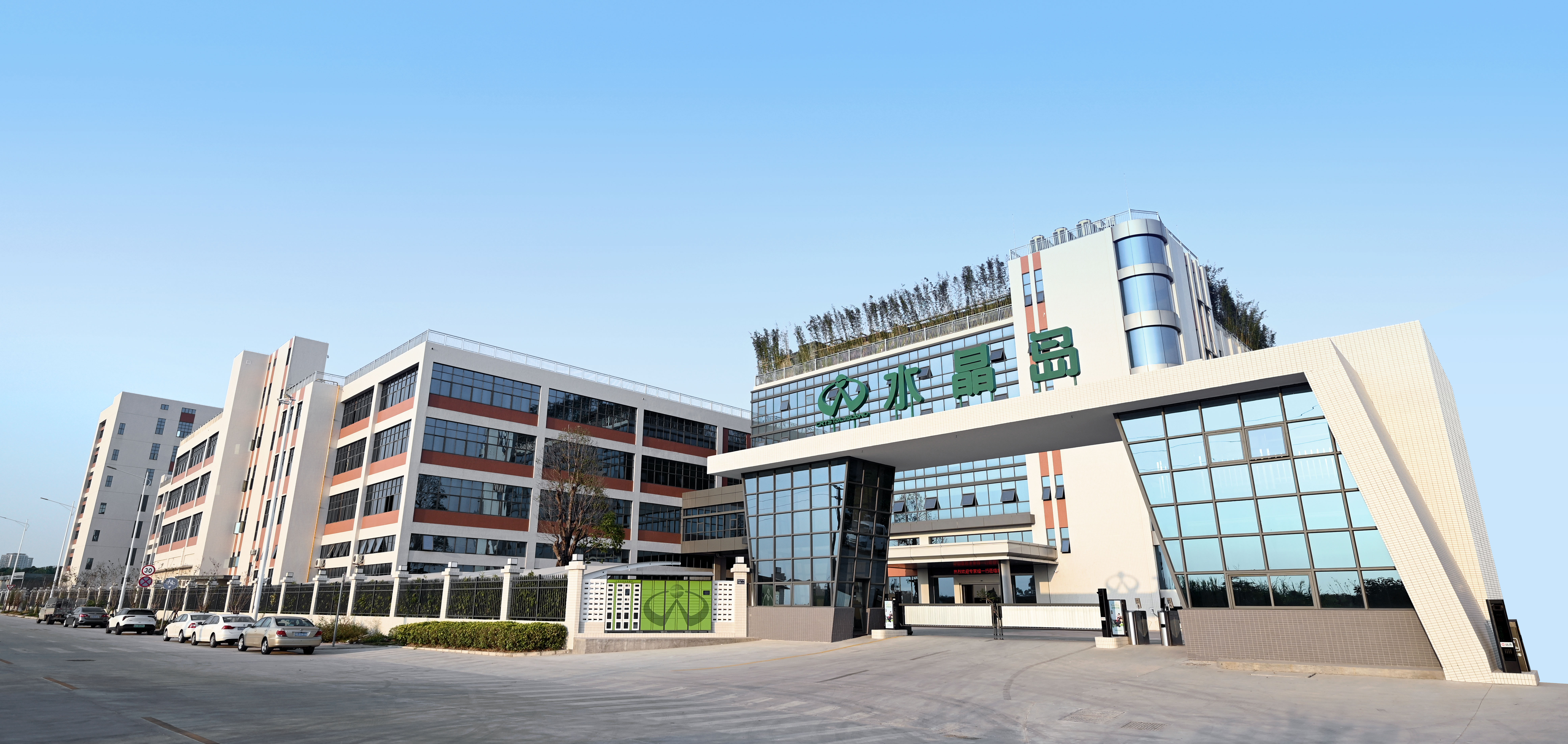
The first evidence point is the physical manufacturing footprint: not “we have a factory”, but whether the scale, headcount, R&D depth and quality process match the product complexity being offered. A spa manufacturer that produces hot tubs, swim spas, exercise pools, swim machines, motorized covers, infrared sauna cabins and ice baths is operating across a materially wider engineering surface than a single-line manufacturer — and that surface has to be reflected in facilities, engineering staff and inspection systems.
For Crystal Island Spas, the company-reported footprint is:
| Reported factory attribute | Crystal Island Spas figure |
|---|---|
| Founded | 2008 |
| Factory floor area | 66,666.67 m² |
| Employees | 280 |
| R&D engineers | 38 |
| Annual output | 60,000 units |
| Monthly capacity | 5,000 units |
| Export ratio | 99.9% |
| Main export markets | EU / USA / AU |
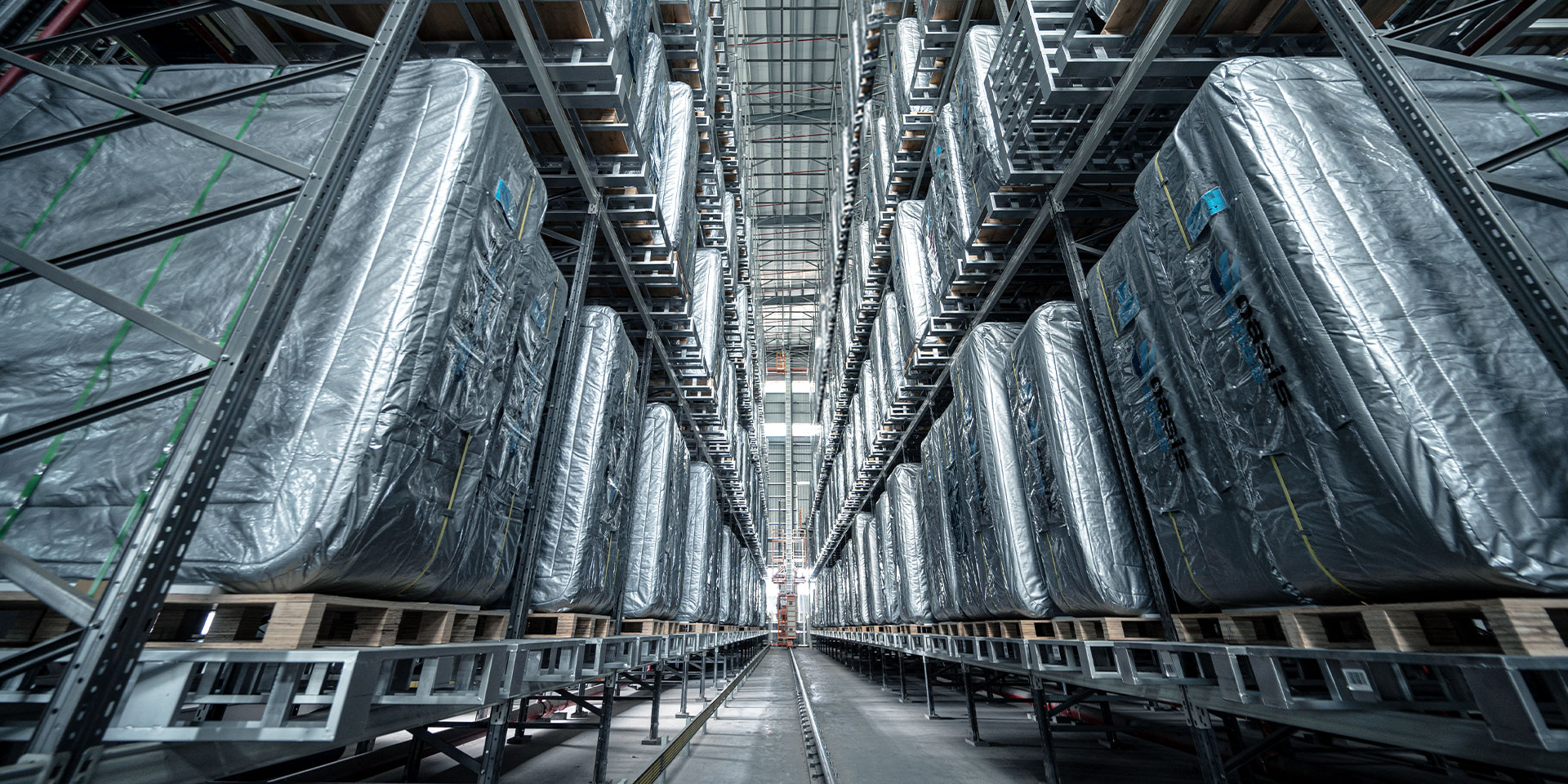
The infrastructure claims associated with that footprint are equally specific: an intelligent digital manufacturing factory completed in 2023, recognised as a Guangdong Advanced Intelligent Factory and a Foshan Digital Intelligent Manufacturing Demonstration Factory; automation systems, robotics, machine-vision inspection, RFID traceability and IoT-based production management.
For the evaluator, the practical lesson is that factory-side claims should be requested in the same specificity: not “advanced manufacturing” as a phrase, but inspection method, traceability system, production management layer and the external recognition — if any — attached to the site. PDC Spas, for example, publicly anchors its manufacturing to a specific facility in Williamsport, Pennsylvania, while MasterSpas publicly states that it builds its spas in the U.S. using domestic and imported components. These are different evidence shapes, but each is more useful to a buyer than a generic manufacturing claim.

Evidence #2 — Product range as an engineering-depth signal
Product range matters in two directions. A narrow catalogue can still be a deep catalogue, but a supplier that publishes hot tubs, swim spas, exercise pools, swim machines, motorized covers, infrared saunas and ice baths is demonstrating that it operates across several distinct engineering stacks at the same time — acrylic shell forming, hydrotherapy plumbing, electrical control, current-generation systems, motorised mechanical systems, infrared heating and refrigeration.
Reviewed across verifiable model-level documentation, the Crystal Island Spas product range covers:
| Product category | Representative model | What the published specification shows |
|---|---|---|
| Hot tub | HEA560-1L2 | 2120 × 2120 × 920 mm; 4 seats + 1 lounger; 1188 L; 39 hydrotherapy jets; SPATECH CA300 + touchscreen; Wi-Fi; full-foam insulation; Platinum Lock thermal system; aluminium cabinet |
| Swim spa | WSAC600B-Y1 | 5915 × 2350 × 1520 mm; single/double zone; 10,609 L; 20 jets; Forever Swim Pro swim machine; galvanised steel frame; dual high-efficiency filter; weatherproof plastic base |
| Exercise pool | PSAB600G-Y1-1L1 | 5915 × 2350 × 1520 mm; 9,704 L; SPATECH CA300 + Forever Swim Pro; ozone venturi sanitation; full-foam insulation; galvanised steel frame |
| Swim machine | WHB200 | 715 × 290 × 670 mm; IP68; max 3.5 m/s; 550 m³/h; 220–240 V AC; 3 kW; 13 A; 10 speed levels; Bluetooth wrist control |
| Motorized cover | MC4A | Lift height 1230–3000 mm; 230 V / 50 Hz; 260 W; IP54; −20 to +50 °C ambient; FRP + XPS composite panel; anti-pinch and hold-to-close functions |
| Infrared sauna | SRA200 | 1600 × 1200 × 2000 mm; 2920 W; 3–4 persons; PEFC-certified Canadian hemlock; adjustable 35–60 °C; ozone sterilisation; Bluetooth audio |
| Ice bath | CTA100 | 2002 × 750 × 740 mm; 500 W cooling; R290 refrigerant; 270 L standard / 388 L max; 0–43 °C ambient; direct cooling; ozone venturi; multi high-efficiency filter |
The evaluation insight is that a catalogue like this is not simply a longer price sheet. It reflects a manufacturer that has had to solve for different installation environments, different electrical standards, different water chemistry constraints and different service models within the same factory. That is the kind of capability that transfers into an OEM/ODM conversation — because the OEM project will ask for a variation of an existing platform, not a new product built from scratch.
PDC Spas publicly lists fourteen hot-tub models with up to eight seats and up to 143 hydrotherapy jets, plus an eighteen-model swim and fitness spa collection ranging from 12 to 19 feet. MasterSpas positions its swim spas as combining pool functionality, hot-tub functionality, exercise space and hydrotherapy, and also distributes saunas and ice baths alongside its core hot-tub and swim-spa manufacturing. These public figures are useful as comparison anchors, but they are not interchangeable with Crystal Island’s model line — each manufacturer counts, scopes and names its catalogue differently, so the comparison should be at category and process level, not at face-value model count.
Evidence #3 — OEM/ODM and private-label workflow
The second-most common gap in spa supplier evaluations is the OEM/ODM conversation. Many manufacturers state that they offer OEM and ODM services. Far fewer publish what that means in operational terms: what is actually customisable, what the minimum quantity is, what the lead time looks like, and where the boundary between “standard mould” and “new tooling” sits.
For Crystal Island Spas, the published OEM/ODM parameters are:
- Production mode: own brand plus ODM/OEM.
- Customisation corridor: standard mould production with acrylic and cabinet colours selected from available options, plus logo printing and configurable options for control systems, water treatment, insulation and additional features.
- Minimum order quantity: 1 × 40' FCL.
- Lead time: 25–30 days.
- Quality control: 100% test.
- After-sales scope: technical support, warranty services, spare parts supply, order and logistics tracking, and product lifecycle management.
The evaluative question for a buyer is whether the customisation corridor is documented at this level. A supplier that offers “OEM” without naming which subsystems are configurable (controls, sanitation, insulation, cabinet material) is effectively offering a logo-printing service, not a true OEM/ODM workflow. A supplier that names those subsystems is signalling that a dealer or brand owner can genuinely define a spec — and that the production team has a defined way to build it.
Evidence #4 — Market-specific certification as a capability filter
Certification is the point where marketing language tends to diverge most from actual proof. The relevant question is not “is the product certified?” but “which certificate covers which model, issued by which body, against which standard, and valid through when?”
For Crystal Island Spas, the following certificates are documented against named models and named target markets:
| Market | Scope | Certificate / authority | Standard | Validity |
|---|---|---|---|---|
| US / CA | Electric spas, Riptide Spas model list | ETL 5022601 — Intertek | UL 1563:2009 Ed.6; CSA C22.2#218.1:2013 | 2023-09-27 to 2031-08-25 |
| AU / NZ | Motorized cover MC4A series | SGS/260788 — SGS Australia | AS/NZS 60335.2.60:2018; AS/NZS 60335.1:2020+A1 | 2026-08-26 to 2031-08-25 |
| AU | Ice bath CTA100-A (Icefall, Oasis Spas, Riptide) | RCM RCMP250135 001 — Global Access Certification Australia | AS/NZS CISPR 14.1:2021; AS/NZS 60335.2.60:2018; AS/NZS 60335.1:2020+A1 | 2025-02-19 to 2030-02-17 |
| AU / NZ | Swim machine WHB200 | SGS/250602 — SGS Australia | AS/NZS 60335.2.60:2018; AS/NZS 60335.1:2020+A1 | 2025-07-23 to 2030-07-22 |
| EU | Motorized cover MC4A series | CE-LVD STUESO251100002HS; CE-EMC STUEMO251100001HS | EN 60335-1/2-60; EN IEC 55014-1/-2 | Issued 2026 |
| UK | Whirlpool spas | UKCA-LVD STUESO231100003HS; UKCA-EMC STUEMO231100002HS | BS EN 60335-1/2-60; BS EN IEC 55014-1/-2 | Issued 2025 |
| EU | Whirlpool spas | CE-LVD STUESO231100002HS; CE-EMC STUEMO231100001HS | EN 60335-1/2-60; EN IEC 55014-1/-2 | Issued 2025 |
| AU | Whirlpool spas (HEA-series model list) | SAA SGS/250895 — SGS Australia | AS/NZS 60335.2.60:2018; AS/NZS 60335.1:2020+A1 | 2025-10-21 to 2030-10-20 |
| EU | Swim machine WHA100-A (Beta Wellness, Riptide) | CE-LVD STUESO240800008HS; CE-EMC STUEMO240800001HS | EN 60335-1/2-60; EN IEC 55014 | Issued 2024–2025 |
Two practical observations for evaluators. First, the named model lists on these certificates matter — a certificate that covers a platform but does not list the actual configuration being purchased is a weaker signal. Second, the presence of EU, UK, AU/NZ and North American coverage on the same manufacturer is itself a capability indicator, because each market requires a different conformity assessment route. MasterSpas and PDC Spas, as U.S.-based manufacturers, publish comparable conformity positioning on their own terms, and buyers should request the equivalent certificate package from any shortlisted supplier regardless of origin.
Evidence #5 — Dealer after-sales and technical support in practice
The after-sales side of a spa manufacturer is where most capability claims become abstract again. The evidence question is not “do you support dealers?” but what specific support functions exist, how they are triggered, and what the supplier is expected to deliver versus what the dealer is expected to deliver.
Documented dealer support scope for Crystal Island Spas includes:
- Technical support for dealer-side troubleshooting.
- Warranty services with defined claim handling.
- Spare parts supply.
- Order and logistics tracking through delivery.
- Product lifecycle management, from launch through end-of-series.
The strongest signal that this is not just a brochure list is the presence of dealer-side repeat projects across different product families in different markets. Documented cases include a spa and pool retailer in Norway with 80 motorized cover units over 2.5 years, an Australian spa and pool retailer with 280 swim machine units over 2.5 years, a German spa and pool dealer with 1,800 hot-tub units over 8 years, an Austrian retailer with 100 exercise pool units over 8 years, a French retailer with 150 swim spa units over 8 years, a Spanish pool builder with 200 ice bath units over 1.5 years, and a UK spa and pool dealer with 120 infrared sauna units over 2 years.
Two of those cases — the Austrian exercise pool and French swim spa retailer — report approximately 26% lower energy consumption than the CEC theoretical benchmark, and the German hot-tub case reports approximately 27% lower consumption than the same benchmark. These are dealer-reported project outcomes, not third-party test results, and should be interpreted as a supplier-consistent performance pattern rather than an independent benchmark. The evaluative takeaway is that a supplier who can cite named countries, product families, order volumes and project durations is demonstrating a repeatable export workflow — not a single flagship client.
Evidence #6 — Project-specific installation prerequisites
Installation is the most under-specified capability area in spa procurement. A manufacturer that treats installation as “the dealer's problem” has not actually transferred capability to the dealer. A manufacturer that publishes per-product installation prerequisites has — and the buyer can request those documents before signing.
Illustratively, the published prerequisites for the product range look like this:
| Product | Key installation prerequisites |
|---|---|
| Hot tub HEA560-1L2 | Level structural base; qualified electrician for connection; water fill to minimum mark before power-on; freeze protection active below 6 °C for outdoor installations; 1.5 m minimum distance from electrical appliances |
| Swim spa WSAC600B-Y1 / exercise pool PSAB600G-Y1-1L1 | Reinforced foundation sized for filled weight (10,609 L swim spa; 9,704 L exercise pool); dedicated electrical circuit; drainage; clearance for cover travel and service access; indoor or outdoor siting confirmed against ambient temperature range |
| Motorized cover MC4A | Concrete base ≥ 100 mm thick with load-bearing capacity ≥ 800 kg/m²; column vertical deviation ≤ 1°; RCD/GFCI and independent circuit breaker; cover travel path clear; drainage around lift columns |
| Ice bath CTA100 | Level, stable load-bearing surface; RCD rated ≤ 30 mA; ambient operation 0–43 °C; drain and complete water removal if ambient below 0 °C; ventilation and service clearance |
| Infrared sauna SRA200 | Indoor installation; 220 V supply rated for 2920 W (15 A); adequate ventilation via electronic fan; heat-resistant interior surfaces; 35–60 °C adjustable operating range |
For the evaluator, this table is what separates a supplier that has actually shipped projects from one that has only shipped products. Project-specific prerequisites — base strength, clearance, electrical protection, ambient limits — are the operational documents that determine whether a dealer can deliver a working install or whether the site fails inspection at commissioning.
How the market trend changes the evaluation
Two market data points shape what buyers should prioritise in 2026 and beyond.
First, the global hot tub market was valued at USD 5.76 billion in 2025 (Fortune Business Insights), with North America holding the largest share at 41.84% in the same year. Second, the global cold plunge tub market is projected to grow from USD 381.7 million in 2026 to USD 659.9 million by 2033 (Grand View Research). The cold segment is smaller in absolute size but growing at a materially faster rate than the core hot-tub category, and it is pulling spa manufacturers into product lines — ice baths, chillers, cold plunge systems, contrast therapy companion products — that sit outside their original engineering scope.
For a buyer, this has two implications. A supplier that already produces hot tubs, swim spas, exercise pools, swim machines, motorized covers, infrared saunas and ice baths is positioned to participate in a dealer's full wellness range without the dealer having to qualify multiple manufacturers for each product family. Conversely, a supplier that only produces hot tubs may end up being the wrong partner as dealers move toward combined hot/cold offerings — which is exactly the pattern visible in MasterSpas’s move to distribute saunas and ice baths alongside its core hot-tub and swim-spa manufacturing.
The HS Code 9019.10 classification (mechano-therapy appliances; massage apparatus) applies to both hot tubs and swim spas at a customs level, which is why buyers comparing landed cost across origins need to reconcile HS-code-level commercial data with product-level factory data — the customs data will not tell you which supplier can actually build the configuration you need.
What this evidence proves — and what it does not
A useful capability evaluation should include an explicit statement of limits, because no supplier evidence set is complete. The following are the material boundaries in any evidence-driven comparison:
- Factory footprint is not capacity. A 66,666.67 m² site with 280 employees and 60,000 units of annual output does not by itself establish how much of that output is currently allocated to OEM/ODM versus own brands, nor what the real free capacity is at any given month. Capacity allocation has to be confirmed in commercial conversation.
- Published partner counts are not active distribution. MasterSpas, PDC Spas and Crystal Island each publish their own dealer or retail footprint on their own terms; the number itself does not prove which dealers are currently authorised or which service territories are covered.
- Certificates are model-specific. A valid certificate covering a named model list does not automatically cover a customised configuration, an alternative voltage variant, or a new cabinet material — the buyer has to confirm coverage against the actual purchase specification.
- Lead times are stated, not guaranteed. A 25–30-day lead time is a production baseline; delivery performance depends on order size, conformance checking, freight booking and seasonal capacity, and should be verified against prior shipments rather than taken as a delivery commitment.
- Project citations are company-reported. Dealer case descriptions — including the 80-cover Norwegian project or the 1,800-unit German hot-tub relationship — are supplier-reported volumes and outcomes; they are evidence of a functioning project workflow, not independently audited shipment records.
Read against those limits, the difference between evidence-driven evaluation and reliance on marketing language is not that evidence-driven evaluation is perfect — it is that the remaining uncertainty is clearly visible and can be closed by asking the right additional questions.
Future outlook
Two forces are likely to reshape what counts as acceptable supplier evidence over the next three to five years. The first is the continued growth of the cold-plunge and contrast-therapy category, which is pushing manufacturers to demonstrate refrigeration-engineering capability on top of their existing acrylic, plumbing and hydraulics knowledge. The second is the normalisation of digital manufacturing — machine-vision inspection, RFID traceability and IoT production management — which will make the “show me the factory” question answerable with concrete data rather than photographs.
For dealers and brand owners, the practical consequence is that supplier selection will increasingly be decided on which evidence the supplier can produce quickly and accurately, not which brochure is most polished. Manufacturers that already publish model-specific certificates, project-specific installation prerequisites and a documented OEM/ODM customisation corridor are better placed to answer that question than manufacturers still relying on claim-led marketing.
FAQ
Q1. What physical evidence separates a spa manufacturer's capability from marketing claims?
The clearest separation comes from evidence that is model-specific and date-specific rather than generic. Model-linked certificates carrying a named standard, authority and validity period; project-specific installation prerequisites (base strength, clearance, electrical rating) for each product type; documented MOQ and lead time for OEM/ODM orders; and named export projects with country, product family, unit volume and duration. Generic claims about “scale”, “innovation” and “partner network” are common across the industry and carry limited evaluative value on their own.
Q2. Which product range should a spa manufacturer be expected to offer?
There is no single required range, but the composition of a catalogue is a meaningful signal. A manufacturer offering hot tubs, swim spas, exercise pools, swim machines, motorized covers, infrared saunas and ice baths is operating across separate engineering stacks — acrylic shell forming, hydrotherapy plumbing, current-generation systems, motorised mechanics, infrared heating and refrigeration — and has had to build a production system that handles all of them. A buyer evaluating a narrower catalogue should confirm whether the supplier's engineering depth matches the specific product being purchased, rather than whether the catalogue is long.
Q3. How should dealers evaluate after-sales and technical support claims?
By requesting the specific support functions and their escalation path: technical troubleshooting, warranty claim handling, spare parts availability and lead time, and lifecycle management for discontinued models. A useful proxy is whether the supplier can cite named dealer projects across different countries and product families with measurable durations — this shows the support workflow has been exercised in practice. Support promises should be matched to written commitments in the dealer agreement, not treated as equivalent to a marketing description.
Q4. What OEM/ODM and private-label details matter most before committing?
The four details that most affect project outcomes are the customisation corridor (which subsystems can be changed — controls, water treatment, insulation, cabinet material, acrylic and cabinet colour), the MOQ (Crystal Island, for example, sets 1 × 40' FCL), the production lead time (25–30 days is a common baseline), and the quality-control commitment (100% test on the Crystal Island line). A supplier that does not publish these four parameters — or that declines to put them in writing — is offering a logo-printing service rather than a genuine OEM/ODM project workflow.
Q5. How can buyers verify that a spa manufacturer's certifications cover the actual model being ordered?
By requesting the certificate package that matches the actual purchase specification, then checking three things: whether the model number appears on the certificate's model list, whether the standard cited matches the target market's requirement (ETL/UL 1563 and CSA C22.2#218.1 for US/CA; AS/NZS 60335.2.60 for AU/NZ; EN 60335-1/2-60 for EU; BS EN equivalents for UK), and whether the certificate remains valid at the intended delivery date. Certificates that cover a platform but not the actual configuration are weaker evidence, and standard-market coverage should be verified against the issuing body's public register where possible.
The Crystal Island Spas company profile, including factory information, product specifications and certification portfolio, is available for download at the Crystal Island Hot Tub & Swim Spa Manufacturer Company Profile (PDF).
Have Questions or Need More Details?
Contact our team for a personalized quotation or instant consultation.
Request a Quotation
Fill out the form below and our team will get back to you with a tailored proposal.
WhatsApp Direct Chat
Prefer to chat in real-time? Message us on WhatsApp for instant assistance & quick answers.
- Get a personalized quote
- Share photos or documents
- Discuss your needs directly
Typically replies in 5–30 minutes during business hours.