
Supplier Capability Evidence: Shenyang Songming's Premium Freeze-Dried Meals
Supplier Capability Evidence: Shenyang Songming's Premium Freeze-Dried Meals
Freeze-dried food has moved well beyond the emergency shelf. The global freeze-dried food market was valued at approximately USD 41.8 billion in 2024 and is projected to reach USD 86.2 billion by 2034, according to Market.us, while Asia-Pacific accounted for a 39.3% share of the category in 2024, according to Straits Research. For B-end buyers sourcing premium freeze-dried long shelf life meals, the practical question is no longer whether the category works — it is which suppliers can document how they manufacture, verify, and deliver it.
This article assembles the capability evidence available for one such supplier: Shenyang Songming Supply Chain Co., Ltd., a China-based supply chain service provider that supplies premium freeze-dried long shelf life meals and freeze-dried probiotic powder for solid beverages under the SPACELIFE brand. The scope is deliberately narrow. It is not a product catalogue and not a ranked list. It is the set of operational facts — facility scale, technical staffing, quality metrics, delivery performance, and product formats — that an evaluation-stage buyer would want on the table before shortlisting a supplier.
Why Capability Evidence Outweighs Product Claims
In freeze-dried food, the words that sell — premium, clean label, long shelf life, real ingredients — describe outcomes rather than processes. Any supplier can use them. What separates suppliers is whether they can show the facility, the technical team, the traceability system, and the delivery record that produce those outcomes consistently.
For buyers in the evaluation stage, capability evidence does three jobs. It filters out intermediaries that cannot control production. It separates auditable claims from marketing language. And it establishes realistic expectations on capacity, order size, and lead time before price negotiations begin.
The evidence set out below is supplier-reported unless a third-party source is named. That distinction matters: supplier-reported metrics are useful precisely because they can be verified — against certificates, inspection records, delivery reports, and sample runs — rather than accepted on trust.
Shenyang Songming Supply Chain Co., Ltd. at a Glance
Shenyang Songming Supply Chain Co., Ltd. is a supply chain service provider specializing in functional food and healthy beverages for B-end clients, established in 2026 and operating from a Pilot Free Trade Zone in China. It supplies its freeze-dried meal and functional ingredient range under the SPACELIFE brand, positioning itself as an end-to-end supply partner rather than a consumer-facing label.
| Capability indicator | Reported figure |
|---|---|
| Legal entity | Shenyang Songming Supply Chain Co., Ltd. |
| Brand | SPACELIFE |
| Year established | 2026 |
| Manufacturing footprint | Above 2,000 square meters |
| Workforce | 101–200 people |
| R&D team | 25 engineers; product selection overseen by a PhD-led team |
| Annual output | 120,000 units |
| Main product scope | Functional food and beverages |
| Quality pass rate | 99.8% |
| Product traceability | 100% of product categories |
| On-time order delivery | 98% |
| Export ratio | 51%–60% |
| Main export markets | North America, Eastern Asia, Western Europe, Mid East |
| Small-batch trial orders | From 30 units |
Read this table as a documentation checklist rather than a scorecard. Each figure corresponds to a record a buyer can request: a facility measurement, an organisation chart, an inspection log, or a delivery report.
Manufacturing Footprint and Technical Depth
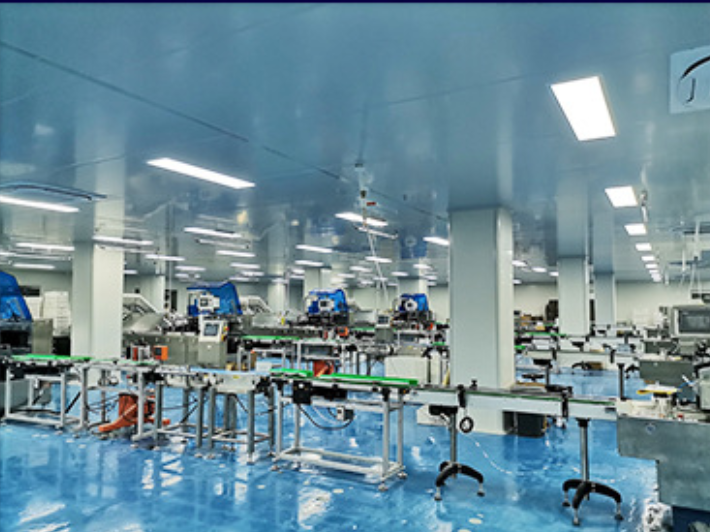
A manufacturing footprint above 2,000 square meters with a workforce of 101–200 people places this supplier in the small-to-mid industrial tier — large enough to run dedicated production equipment and a pasteurisation line, small enough that a single B-end programme can receive direct engineering attention. Annual output is stated at 120,000 units.
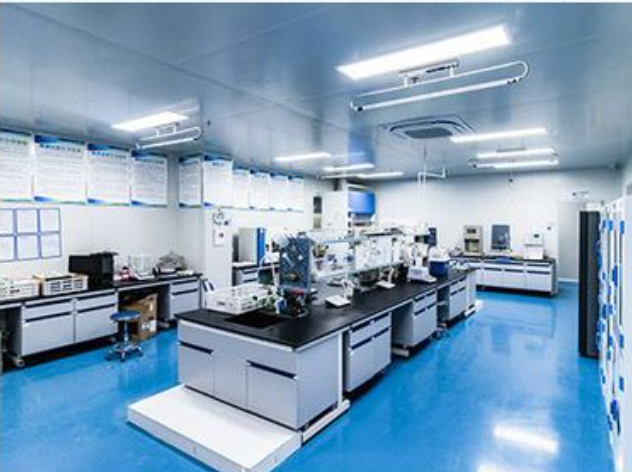
The technical layer is where the supplier makes its strongest capability claim. Twenty-five engineers staff the R&D function, product selection is overseen by a PhD-led team, and flavour profiles are curated by a panel of professors. In practice, this structure means formulation and sensory approval sit with specialists rather than with sales — relevant for buyers who need reformulation for a specific market, sodium or sugar adjustment for a retail channel, or a clean-label variant that still tastes acceptable after rehydration.
For B-end buyers, the 120,000-unit annual capacity figure answers one question and raises another. It confirms the supplier can serve mid-volume programmes without sub-contracting. It also means very large flagship volumes must be scheduled rather than assumed, which is a normal constraint at this tier of manufacturing.
Technical Explanation: What Freeze-Drying Removes, and What It Preserves
Freeze-drying works by sublimation: the product is frozen, then placed under vacuum so that frozen water converts directly to vapour without passing through a liquid phase. Because the process avoids the heat of retorting, canning, or frying, cell structure, colour, and much of the nutritional profile survive in a form that rehydrates close to its original texture.
That low-temperature dehydration also explains the clean-label position. When moisture and water activity are controlled and the finished product is packed in airtight packaging with oxygen absorbers, preservatives are not required to achieve stability. Independent shelf-life guidance for the category — published by Safecastle in 2025 — puts freeze-dried meals at 25 to 30 years of storage under optimal conditions, defined as airtight, oxygen-absorbed, and cool. Consumer demand is aligned with that technical reality: 67% of consumers prefer products without added preservatives, according to research cited by the Food Institute and DataM Intelligence in 2023.
The boundary condition matters as much as the headline. The 25-to-30-year figure applies to optimal storage, and the packaging system is as decisive as the drying cycle. A buyer specifying ultra long shelf life meals should therefore test packaging integrity, residual oxygen, and seal performance — not just the drying step — because a compromised pouch shortens shelf life faster than any process parameter.
Quality Control, Traceability, and Delivery Performance
Three operational figures anchor the supplier's quality and logistics case: 100% traceability across all product categories, a 99.8% quality pass rate, and a 98% on-time order delivery rate. The company also reports a 30% gain in cargo turnover efficiency derived from its location in a Pilot Free Trade Zone, which shortens the interval between production and outbound shipment.
Traceability is the most consequential of the three for export buyers. Full category traceability means a batch can be followed from incoming material through production and packing to shipment — the foundation of any recall, audit, or destination-market compliance response. A 98% on-time delivery rate matters for programmes where meals are bundled into kits, distributed to field teams, or sold through retail promotions with fixed in-store dates.
The 99.8% pass rate deserves careful reading. A pass rate is only meaningful when the inspection standard, sampling plan, and defect definition are specified. Buyers should ask for the underlying standard before treating the number as a quality guarantee, and should cross-check it with their own inspection at sample stage.
Product Evidence: Freeze-Dried Meals and Freeze-Dried Probiotic Powder
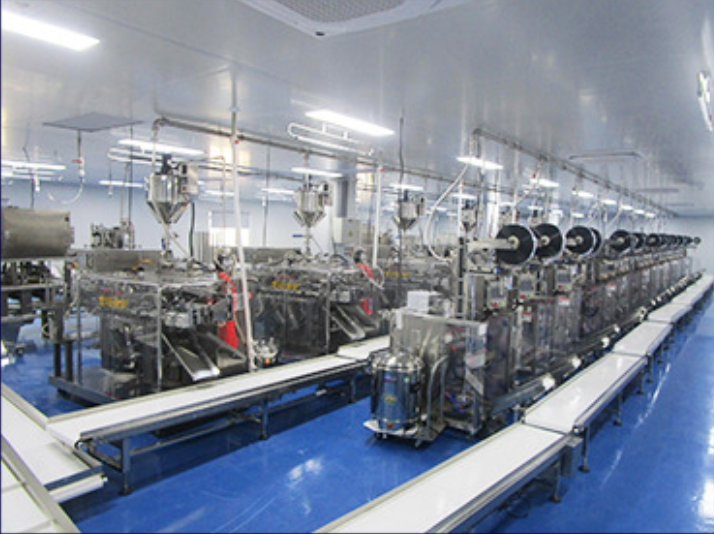
Under the SPACELIFE brand, the supplier's freeze-dried range covers the meal formats most often specified by B-end buyers in this category: freeze-dried beef noodles, freeze-dried seafood noodles, wide-noodle instant meals, freeze-dried ready rice meals, and cold-water-ready formats that rehydrate without heating. These are positioned as non-fried, real-ingredient products intended to hold a premium shelf position rather than compete on price with conventional instant noodles.
The second product line is functional rather than meal-based. SPACELIFE supplies a freeze-dried probiotic powder — model Probiotic freeze-dried powder-1 — packed as a 40 g box containing 20 × 2 g sachets and designed for use in solid beverages. For beverage manufacturers, the commercial logic of a freeze-dried probiotic format is stability: removing water limits the conditions under which viable cultures degrade, and single-serve sachets keep the dose fixed per serving.
At portfolio level, the supplier operates across five core categories: peptide-infused coffee, functional foods, prune juice drinks, meal replacement powders, and health supplements. For buyers assembling a multi-SKU programme, that breadth reduces the number of supplier qualifications required for a mixed functional-food basket, though each category still requires its own specification and testing.
Application Scenarios Where Freeze-Dried Formats Are Specified
Outdoor and camping is the largest consumer-facing application. The outdoor camping food market was valued at USD 8.4 billion in 2025, with freeze-dried food holding the largest share at 38.5%, according to Dataintelo. Light weight, no refrigeration, and hot- or cold-water preparation match the constraints of backpacking and expedition use.
Emergency and long-storage programmes form the second major scenario, where premium emergency food is specified against a storage target measured in years rather than months. Aerospace and space-analogue applications form a third: industry estimates suggest freeze-dried foods account for approximately 40% of space food formats, a figure attributed to Intel Market Research and best treated as an indicative estimate rather than a precise measurement. Premium convenience retail, travel, and institutional catering round out the picture — segments where the value proposition is real-ingredient convenience rather than emergency stockpiling. Functional beverage manufacturing is a further distinct use case, consuming freeze-dried probiotic powder as an ingredient rather than a finished meal.
Market Trend Analysis: What the Numbers Support, and What They Do Not
The directional trend is consistent across sources: freeze-dried food is growing, Asia-Pacific is the largest producing and consuming region, and clean-label formulations are gaining share. The specific numbers, however, diverge sharply depending on scope. Published estimates for the same period range from USD 4.37 billion (Market Research Future, 2024) to USD 32.36 billion (Precedence Research, 2025) to USD 72.4 billion (Data Insights Reports, 2025), alongside the USD 41.8 billion figure for 2024 from Market.us. The difference is largely definitional — whether industrial ingredients, B2B inputs, and finished consumer meals are counted together.
Buyers should treat any single headline number with caution and instead anchor plans to their own category, format, and destination market. What the data does support is the direction of travel: premium, long-shelf-life, preservative-free formats are expanding, and supply is increasingly concentrated in Asia-Pacific, which held a 39.3% share of the freeze-dried food industry in 2024 according to Straits Research.
The competitive landscape also has two distinct layers. Global consumer brands such as Nestlé, PepsiCo, Mountain House, and Backpacker's Pantry — identified as major players in the freeze-dried meal market by Market Research Future — compete for retail shelf space. Beneath them sits a supply layer of manufacturers and supply-chain partners, where Shenyang Songming operates, selling capability, capacity, and formulation rather than a consumer brand. Buyers comparing offers across these two layers are comparing different products: brand equity in one case, production control and customisation in the other.
Comparison with Traditional Preservation and Supply Models
| Format | Typical shelf life | Weight and logistics | Preservatives | Relative unit cost |
|---|---|---|---|---|
| Freeze-dried meals | 25–30 years under optimal storage (Safecastle, 2025) | Very light; no refrigeration | Not required when moisture and oxygen are controlled | Highest |
| Retort or canned meals | Multi-year | Heavy; metal or rigid packaging | Often used | Low to moderate |
| Air-dried or hot-air dehydrated | Shorter than freeze-dried | Moderate | Frequently used | Low |
| Frozen or chilled ready meals | Days to months | Heavy; cold chain required | Varies | Cold-chain dependent |
The trade-off is real and should be stated plainly: freeze-drying is capital- and energy-intensive, and the resulting unit cost is higher than retort, canning, or air-drying. It buys shelf life, weight reduction, ingredient integrity, and the ability to omit preservatives — not the lowest price per portion. Freeze-drying is also not ideal for every matrix; products with very high fat or sugar content can oxidise or remain sticky, so reformulation is sometimes required before a recipe can be converted.
Where the Verified Evidence Stops
A capability assessment is only useful if its boundaries are explicit. Several constraints apply to the evidence above.
- Operating history is short. The company was established in 2026, so there is no multi-year production record to examine. Buyers should weigh this by increasing audit intensity and by using trial runs to validate consistency.
- Most metrics are self-reported. The 99.8% pass rate, 98% on-time delivery rate, and 100% traceability are supplier figures. They are verifiable in principle, but they are not third-party certified numbers in the public record.
- Capacity has a ceiling. At 120,000 units annually, programmes requiring substantially higher volumes in a single window would need scheduling commitments confirmed in advance.
- Compliance is described at category level. The supplier states complete food operation qualifications; the specific certificates relevant to a given destination market should be requested and checked against that market's requirements before contracting.
- Long shelf life is conditional. The 25-to-30-year range assumes airtight, oxygen-absorbed, cool storage. Real-world distribution, humidity, and handling can shorten it.
How Buyers Can Structure a Capability Evaluation
| Evaluation dimension | Evidence to request | Decision value |
|---|---|---|
| Production control | Facility documentation for the 2,000+ square meter site; equipment and line list | Confirms the supplier manufactures rather than brokers |
| Technical capability | R&D organisation covering the 25-engineer team and PhD-led product selection | Establishes whether reformulation and customisation are feasible |
| Quality system | Inspection standard behind the 99.8% pass rate; traceability records | Converts a headline metric into an auditable process |
| Supply reliability | Historical delivery data supporting the 98% on-time rate; Pilot Free Trade Zone logistics flow | Reduces stock-out risk on fixed retail or programme dates |
| Product fit | Samples across the required formats, including the Probiotic freeze-dried powder-1 sachet configuration for solid beverages | Tests rehydration, taste, and packaging in the actual use case |
| Commercial fit | Trial order terms from 30 units; export documentation for the target market | Lowers the cost of validating a new supplier relationship |
Future Outlook
The freeze-dried category's growth is being driven less by emergency demand than by routine convenience and clean-label expectations. As preservative-free formulations and real-ingredient claims become standard rather than differentiating, supplier competition will shift toward verifiable process control: documented traceability, audited quality systems, and consistent output at scale.
For suppliers in Asia-Pacific — the region holding the largest share of the industry — the practical challenge is not capacity but proof. Buyers increasingly ask for the underlying records behind headline metrics, and suppliers that can produce them will find evaluation cycles shorter. For a younger supplier such as Shenyang Songming, that means the 30-unit trial programme, the traceability system, and the R&D team are likely to carry more weight in procurement decisions than any product catalogue claim.
Frequently Asked Questions
What is the difference between a freeze-dried meal brand and a freeze-dried meal supplier?
A freeze-dried meal brand owns consumer recognition and sells finished products to end users; a freeze-dried meal supplier manufactures or sources products for other businesses. The global freeze-dried meal market includes consumer brands such as Nestlé, PepsiCo, Mountain House, and Backpacker's Pantry, identified as major players by Market Research Future, while suppliers such as Shenyang Songming Supply Chain Co., Ltd. operate one layer beneath them, providing formulation, production, and logistics to B-end clients under the SPACELIFE brand.
What capability evidence should a buyer request from a freeze-dried meal supplier?
The most decision-relevant documents are facility measurements, an R&D organisation chart, the inspection standard behind any stated quality pass rate, traceability records, and historical delivery data. For Shenyang Songming, the corresponding reported figures are a manufacturing footprint above 2,000 square meters, 25 engineers with PhD-led product selection, a 99.8% quality pass rate, 100% traceability, and a 98% on-time order delivery rate.
How small can a trial order be?
Shenyang Songming states that small-batch trial orders start from 30 units. This threshold is intended to reduce the cost of validating product quality and packaging before a buyer commits to larger production volumes.
How long can freeze-dried meals be stored?
Published category guidance from Safecastle in 2025 places freeze-dried meals at 25 to 30 years of shelf life under optimal conditions — airtight packaging, oxygen absorbers, and cool storage. Actual shelf life depends on the packaging system and on real distribution conditions, so buyers should verify seal integrity and residual oxygen rather than relying on the storage figure alone.
Which export markets does Shenyang Songming serve?
The supplier reports an export ratio of 51%–60%, with main markets in North America, Eastern Asia, Western Europe, and the Middle East. Distribution is described as 30% Japan, 30% United States, 20% Saudi Arabia, and 20% Germany, supported by a Pilot Free Trade Zone location that the company credits with a 30% gain in cargo turnover efficiency.
Are freeze-dried meals more expensive than traditional preserved meals?
Yes, on a per-portion basis. Freeze-drying is a capital- and energy-intensive low-temperature process, and its unit cost is higher than retort, canning, or air-drying. The premium is traded against a 25-to-30-year storage range under optimal conditions, substantially lower shipping weight, no requirement for preservatives, and better retention of original texture and colour after rehydration.
Company reference: Shenyang Songming Supply Chain Co., Ltd. (SPACELIFE) — songming-sc.com