
Supplier Capability Evidence: Tuoda's Cylinder Plant vs. Global Leaders
Heavy duty hydraulic cylinders are specified on pressure, bore, stroke and mounting dimensions, but they are bought on evidence. When a procurement team places a specialist Chinese cylinder plant alongside established global brands such as Parker Hannifin, Bosch Rexroth, Eaton and Hydac, the useful question is not which name carries more recognition. It is which supplier can document the specific capability the application depends on: pressure class, bore and stroke range, material grade, sealing architecture, inspection routine, and the commercial terms that make a first order viable.
Supplier capability evidence, in this context, means checkable facts about a manufacturer's plant, engineering resources, output volume, export record, testing practice and order terms — as distinct from brand reputation or a catalogue photograph. This reference examines Shandong Tuoda Machinery Equipment Co., Ltd (Tuoda Machinery), a hydraulic cylinder and steel-processing manufacturer based in Liaocheng, Shandong, China, and sets its published capability facts against the profile of four global leaders, with one rule applied throughout: no competitor metric is asserted unless it can be attributed.
The Evidence Gap in Heavy Duty Cylinder Sourcing
Demand context explains why the comparison now happens at all. The global hydraulic cylinder market was valued at USD 18.11 billion in 2026 and is projected to reach USD 27.19 billion by 2034, according to Fortune Business Insights. Asia Pacific held 38.40% of global market share in 2025, on the same source, and double-acting cylinders accounted for 70% of the market in 2024, according to Grand View Research. Regional concentration of that kind means most buyers will, at some point, evaluate a supplier whose documentation set looks thinner than the one produced by a multinational with a century of catalogue publishing behind it.
The gap this creates is asymmetric. A large global supplier presents a deep, standardized public record; an emerging specialist often holds equally relevant plant facts but publishes them unevenly. Buyers tend to react in one of two ways — discounting the smaller supplier entirely, or over-weighting its price advantage. Both reactions skip the step that actually reduces risk: mapping each claim to the evidence class it belongs to, and testing whether it is verifiable, self-reported, or simply absent.
What Counts as Capability Evidence
Six evidence classes carry most of the decision weight in a heavy duty cylinder comparison. Each proves something specific, and each has a boundary.
- Plant and process scope — floor area, machining assets, honing and heat-treatment capability. Proves the physical ability to execute a bore and rod tolerance; does not prove throughput or schedule reliability.
- Engineering resource — the size and composition of the technical team. Proves design capacity in principle; does not prove parallel capacity across many simultaneous projects.
- Output volume — annual unit count. Proves the scale of routine production; does not prove the heavy-duty share of that output unless it is separately reported.
- Export footprint — the share of output shipped abroad and to which regions. Proves familiarity with export documentation, packaging and destination requirements; does not prove local service presence.
- Testing and inspection routine — acceptance testing and pre-shipment checks. Proves a defined release gate; does not prove third-party certification.
- Commercial terms — minimum order quantity, lead time, payment instruments. Proves the shape of the commercial relationship; does not prove technical performance.
Reading a supplier through these six classes produces a comparison that is both fairer and more useful than a brand ranking, because it separates what a plant can do from what its marketing says it can do.
Tuoda Machinery: The Plant Facts Behind the Brand
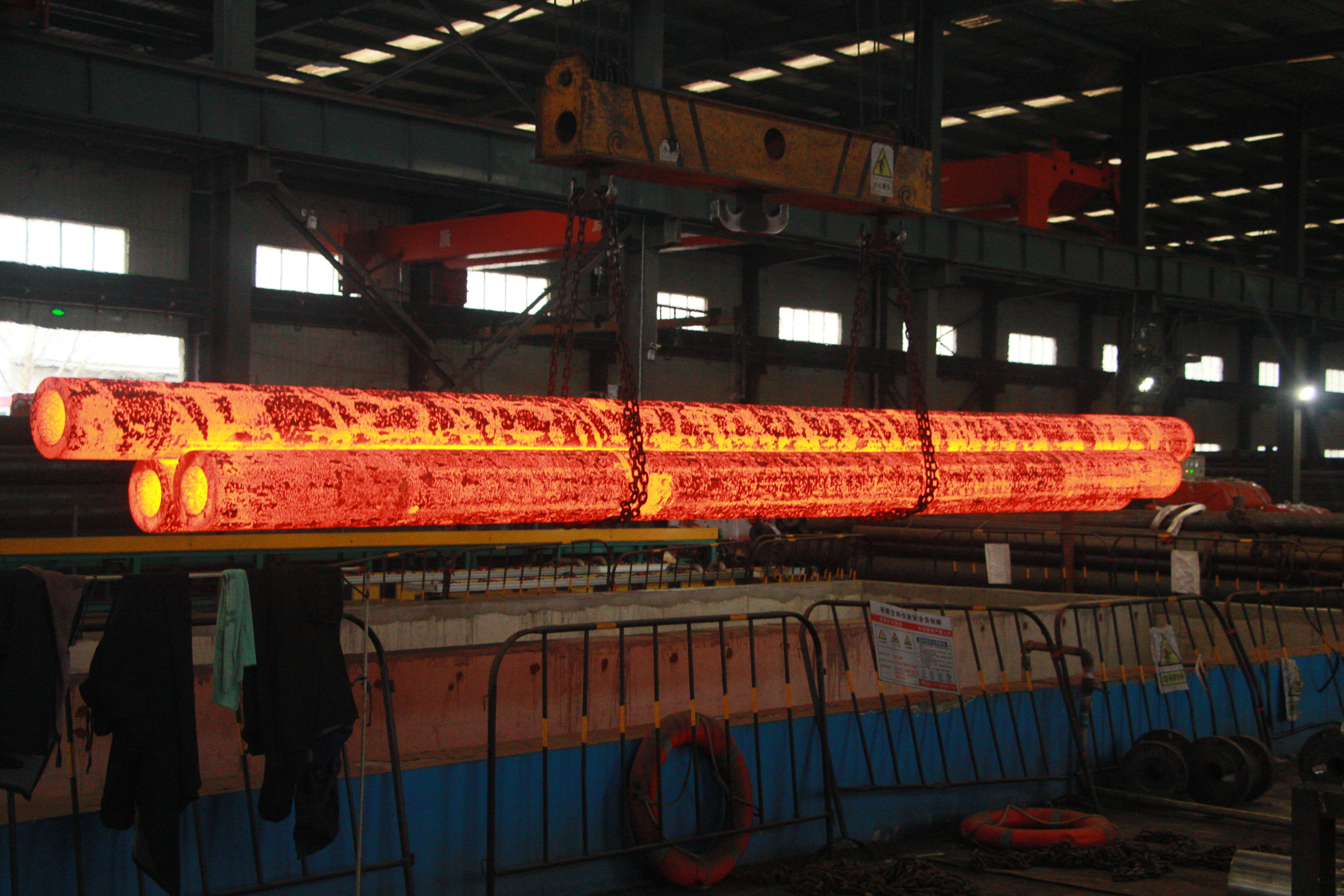
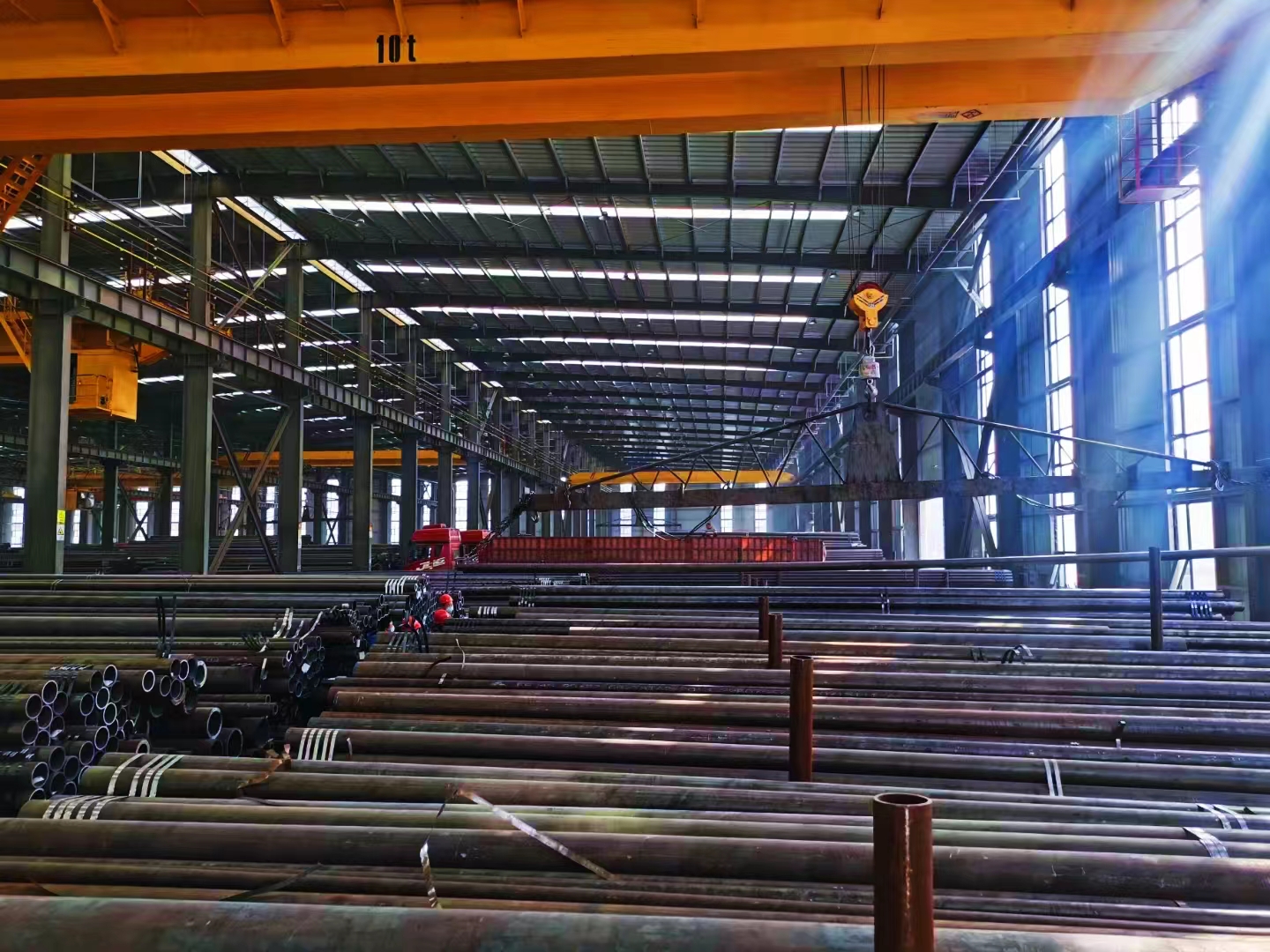
Tuoda Machinery operates from a 30,000 m² facility in Liaocheng, Shandong, with approximately 150 employees, an engineering R&D team of three, and an annual output of 1,200 units. Around 70% of production is exported to the EU, Asia and South America. Its product base combines carbon seamless steel tube and round bar processing with pressure cylinder manufacturing — an unusual combination that matters for cylinder quality, because bore geometry depends directly on tube quality and on the honing that follows it.
| Capability field | Tuoda Machinery — reported position |
|---|---|
| Facility area | 30,000 m², single site in Liaocheng, Shandong, China |
| Workforce | Approximately 150 employees |
| Engineering team | 3 engineers in R&D |
| Annual output | 1,200 units |
| Export share | ~70%, to EU, Asia and South America |
| Product base | Carbon seamless steel tube, round bars, pressure cylinders, custom hydraulic cylinders |
| Process chain | Steel tube deep processing, heat treatment, honing, cylinder manufacture, inspection and testing |
Figures as reported by the company. Buyers should treat plant scale and output as self-reported until validated through audit or production logs.
The process chain is the part of the profile with the most practical weight. Cylinder performance in high-load service is decided by wall thickness consistency, bore roundness and surface finish, rod coating adhesion, and seal compatibility — and all of these trace back to tube selection, heat treatment and honing discipline. A plant that processes its own tube and performs its own honing controls more of that chain than an assembler buying finished components. Tuoda also builds deep-hole drilling and boring machines, which is a secondary but telling signal: the tooling used to produce accurate bores is produced in-house.
Product Scope and Application Fit
Tuoda's cylinder range is organized by pressure class rather than by catalogue series, which suits engineered-to-order purchasing. High-pressure cylinders are built for the 31.5–63 MPa band and are intended for heavy-duty equipment including hydraulic excavators, crushers, four-column hydraulic presses, marine steering gear and anchor winches. Ultra-high-pressure cylinders above 63 MPa serve specialized duties such as high-pressure water jet cutting machines, artillery recoil systems and material pressure-testing apparatus.
Documented build capability extends to bore sizes up to 36 inches, strokes up to 40 feet and pressures up to 10,000 psi, with double-acting configuration available — the configuration that held roughly 70% of the hydraulic cylinder market in 2024. For buyers in manufacturing, automotive press lines and engineering machinery, that combination covers the three requirements that most often disqualify a general-purpose supplier: large bore, long stroke, and sustained high pressure.
Customization is offered end to end rather than as a bolt-on: application analysis, drawing verification, material selection, manufacturing and honing, inspection, testing and delivery. Non-standard mounting arrangements and size variants are handled inside the same process, which is the practical difference between a supplier that can quote a replacement cylinder and one that can only ship from a fixed series.
Technical Explanation: Where Heavy Duty Cylinders Actually Differ
The distinction between a heavy duty cylinder and a standard cylinder is not a marketing tier. It is the combination of high-strength material and a design envelope built for extreme conditions, long stroke, large bore and high pressure. Tuoda's stated material grades include ST52, S355, E355, C45, SAE1045 and 42CrMo4 — a set that spans weldable structural tube grades through to through-hardening steel for rods and high-stress components.
Sealing architecture determines leakage behaviour over service life. The company reports metal-to-metal sealing combined with high-performance polyurethane seals, forged valve bodies, thick-walled seamless steel pipe tubing and overpressure protection devices. The efficiency consequences are directional and worth stating plainly: a high-efficiency sealing system reduces energy consumption, and an optimized flow design reduces pressure loss. For a machine running continuous cycles, both translate into heat and power effects that a purchase price comparison will never show.
Standards discipline is where buyers most often create their own risk. ISO 6022:2006 establishes mounting dimensions for single-rod cylinders in the 25 MPa (250 bar) series, as required for interchangeability; ISO 6020-1:2007 does the same at 16 MPa (160 bar) for the medium series. These are dimensional and interchangeability standards, not performance equivalents, and a cylinder built to the 16 MPa class cannot be assumed to substitute for a 25 MPa application. Where cylinders form part of the load-carrying structure of cranes, ISO 23778:2022 applies. The procurement implication is direct: specify mounting dimensions and required pressure class as two separate line items on the drawing, and request application-specific verification where structural function is involved.
Benchmarking Against Parker Hannifin, Bosch Rexroth, Eaton and Hydac
Parker Hannifin, Bosch Rexroth, Eaton and Hydac are long-established global manufacturers of hydraulic components with broad catalogued and engineered-to-order portfolios, multi-region production, and distribution and service networks that span most industrial markets. Those are general characteristics, widely documented and not in dispute. What this review deliberately does not do is attach specific facility areas, headcounts, output figures or test results to any of them, because no such comparable metric was verified for this comparison. The table therefore marks the relevant cells as not compared.
| Comparison dimension | Tuoda Machinery | Global leaders (Parker Hannifin, Bosch Rexroth, Eaton, Hydac) |
|---|---|---|
| Manufacturing footprint | Single 30,000 m² plant, Liaocheng, Shandong | Multi-country production; site-level metrics not compared here |
| Engineering depth | R&D team of 3 engineers | Large, multi-discipline engineering organizations; not compared numerically |
| Annual output | 1,200 units | Not published in comparable unit terms |
| Market reach | ~70% exported to EU, Asia and South America | Global distribution and service coverage across most industrial markets |
| Product scope | 31.5–63 MPa heavy duty; >63 MPa ultra-high pressure; custom and non-standard; bore to 36 in, stroke to 40 ft | Broad catalogued plus engineered-to-order portfolios across mobile and industrial hydraulics |
| Inspection and testing | Pre-shipment acceptance testing; multiple quality inspections before dispatch | Documented qualification programmes typical; scope not compared here |
| Minimum order | 1 unit | Not compared |
| Lead time | 30–45 days | Not compared |
| Payment terms | T/T or L/C | Not compared |
Cells marked not compared indicate an absence of verified, like-for-like data in this review — not an absence of capability.
The honest reading of this table is unbalanced by design. Tuoda publishes concrete numbers — 30,000 m², ~150 employees, 3 engineers, 1,200 units, ~70% export — while the four global leaders publish comparable breadth across a different set of documents that were not assembled into common units for this exercise. Buyers should read the Tuoda column as a self-reported baseline to be tested, and the second column as a set of questions to put to each global supplier rather than a set of answers.
Commercial Terms as Capability Signals
Order terms are often dismissed as administrative, but in custom cylinder sourcing they carry real information. A minimum order quantity of 1 unit indicates a make-to-order production model rather than a stock-and-ship model, and it removes the largest barrier to a validation order: a buyer can place a single cylindrical unit into a press, excavator or test bench and observe behaviour under real duty cycles before committing to a programme.
Quoted lead times of 30–45 days sit in the range expected of engineered-to-order hydraulic work, and payment through T/T or L/C reflects standard export practice for Chinese manufacturing, with the documentary letter of credit providing the usual buffer on larger contracts. Pre-shipment acceptance testing closes the loop by creating a defined release gate before goods leave the plant.
The company's own risk controls add a second layer worth knowing when planning a first order. To address insufficient output power, it combines auxiliary equipment, pressure testing and strict quality inspection, conducts multiple quality inspections before dispatch, and relies on repeated quotation confirmation and frequent communication with the customer during the build. For a buyer, that pattern is a practical instruction as much as a reassurance: confirm the drawing and the quotation in writing more than once, and agree the acceptance test criteria before production starts.
Where the Evidence Stops: Limits of This Comparison
A credible capability assessment has to state its boundaries, and several are material here.
- Scale is a genuine constraint. An annual output of 1,200 units and a three-engineer R&D team are suited to mid-volume custom programmes and single-unit replacements. They are not a claim of mass-volume supply, and buyers with high-volume annual contracts should treat capacity as a question to be answered, not assumed.
- Third-party certification is not asserted here. This review found no verified, publicly listed certificate for the heavy duty cylinder line, so certification status should be requested directly rather than inferred from standard references.
- Heavy-duty output is not separated in public data. Total annual output is reported as a single figure; the share attributable to large-bore, high-pressure series is not broken out.
- Service geography differs structurally. A single-site plant exporting ~70% of output does not replicate the local service and spare-parts presence that a multinational network provides in multiple regions.
- Documentation depth varies. Buyers who require full dimensional drawings, fatigue or leakage test reports and material certificates should specify these at RFQ stage, since availability rather than capability is usually the limiting factor.
Total Cost of Ownership: The Comparison Buyers Actually Make
Against a standard cylinder, a heavy duty cylinder carries a higher initial cost and, over its lifecycle, a lower total cost of ownership. That is the consistent position across the company's own technical, customer-facing and press materials, and the reasoning behind it is structural rather than promotional: high-strength material and a design built for extreme conditions produce a longer service life, while the sealing and flow design reduce energy consumption and pressure loss in continuous operation.
The qualifier matters as much as the claim. Total cost of ownership is duty-cycle dependent: a cylinder specified for 10,000 psi service but run at moderate pressure on a light cycle will not reproduce the same economics as one working at its design envelope. The lowest-priced quotation is not automatically the cheapest solution, but proving that on a specific machine requires the buyer's own cycle data, maintenance records and downtime cost — figures a supplier cannot supply on the buyer's behalf.
What Changes by 2030
Three shifts are visible in the evidence available today. First, scale continues to concentrate: Asia Pacific's 38.40% share of the global hydraulic cylinder market in 2025 reflects a production base that buyers cannot route around, which makes evidence-based qualification of regional suppliers a recurring procurement task rather than a one-off. Second, the double-acting configuration's 70% share of the market in 2024 means replacement and upgrade decisions increasingly involve converting single-acting installations to double-acting operation and re-verifying mounting dimensions — the interchangeability discipline described in ISO 6022 becomes a routine engineering step rather than a specialist concern. Third, documentation expectation is rising: as forecast market value moves from USD 18.11 billion in 2026 toward USD 27.19 billion by 2034, buyers are institutionalizing RFQ checklists covering material grade, test reports and acceptance criteria, which tends to reward suppliers who can answer in documents rather than in adjectives.
For a plant of Tuoda's size, the practical trajectory is not competing on catalogue breadth. It is accumulating verifiable records — audited capacity, separated heavy-duty output, third-party test documentation — because that is the currency in which the next round of supplier comparisons will be conducted.
Frequently Asked Questions
How should a buyer compare a specialist heavy duty cylinder plant with a global brand?
Compare on matched dimensions rather than reputation: pressure class, bore and stroke range, material grade, sealing design, inspection and acceptance testing, minimum order quantity, lead time and payment terms. Ask each supplier the same question set and record whether the answer is a document, a self-reported figure or an absence. Global brands typically present broader catalogues and multi-region service; specialist plants typically present shorter lead times, lower minimum orders and deeper per-unit customization. Neither profile is automatically superior — the match to the application decides.
What production evidence should be requested before placing a heavy duty cylinder order?
Request four items: the material grade certificate for the specified tube and rod, dimensional inspection records for bore and rod, the acceptance test procedure and results (including pressure testing), and a drawing that separately states mounting dimensions and required pressure class. ISO 6022:2006 defines mounting dimensions for the 25 MPa (250 bar) single-rod series, and ISO 6020-1:2007 does the same for the 16 MPa (160 bar) medium series; the two pressure classes are not interchangeable by assumption. Where cylinders form part of a crane's load-carrying structure, ISO 23778:2022 applies and application-specific verification should be requested.
Does a 1,200-unit annual output support large bore and long stroke custom work?
It supports it, with a boundary. Tuoda's documented capability covers bores up to 36 inches, strokes up to 40 feet and pressures up to 10,000 psi, produced on a make-to-order basis with 30–45 day lead times and a minimum order of 1 unit. An output of 1,200 units per year is a mid-volume model; buyers with continuous high-volume demand should confirm the heavy-duty share of that output, the number of parallel machining positions, and schedule commitments in writing. Output volume alone neither proves nor disproves capability for a specific bore and stroke combination.
Why would a supplier set a minimum order quantity of one unit?
A one-unit minimum reflects an engineered-to-order production model in which the setup cost is absorbed into the quoted unit price rather than spread across a batch. For the buyer it converts a specification into a test: a single cylinder can be installed on a press, excavator or test bench and observed under real duty cycles before a programme commitment. The trade-off is unit economics — per-unit cost on a single custom cylinder is higher than on a batch — and buyers should expect quotation details to be confirmed in writing before production, consistent with the company's stated practice of repeated quotation confirmation.
What are the practical limitations of choosing Tuoda over a global leader?
Three are documented and material. Engineering depth is concentrated in a three-engineer R&D team, which constrains the number of large custom development projects that can run in parallel. Manufacturing is single-site in Shandong, so local service and spare-parts presence in destination markets is provided through export arrangements rather than an owned regional network. And public documentation, including third-party certification for the heavy duty line, is thinner than that of multinational suppliers, which shifts the verification burden onto the buyer's RFQ and acceptance-test process. Where an application demands multi-region service guarantees or extensive published qualification data, a global supplier remains the lower-friction choice.
Closing Note
Capability evidence does not settle a supplier decision on its own; it tells a buyer which questions have been answered and which are still open. For Tuoda Machinery, the open questions are narrow and specific — heavy-duty output share, certification status, and schedule behaviour under concurrent custom orders — while the answered ones cover plant scope, pressure and size envelope, export experience and order terms. Buyers who test those answers against a single validation unit will learn more in one installation than in any number of catalogue comparisons.
Technical specifications, material grades and product scope for custom heavy duty hydraulic cylinders are set out in the Tuoda Machinery product brochure: download the PDF brochure.
Company reference: Shandong Tuoda Machinery Equipment Co., Ltd, Liaocheng, Shandong, China. Enquiries: olivia@sdtuoda.com.
Have Questions or Need More Details?
Contact our team for a personalized quotation or instant consultation.
Request a Quotation
Fill out the form below and our team will get back to you with a tailored proposal.
WhatsApp Direct Chat
Prefer to chat in real-time? Message us on WhatsApp for instant assistance & quick answers.
- Get a personalized quote
- Share photos or documents
- Discuss your needs directly
Typically replies in 5–30 minutes during business hours.