
Supplier Capability Evidence: Vehicle-Specific Fascia Kits
Supplier Capability Evidence: Vehicle-Specific Fascia Kits
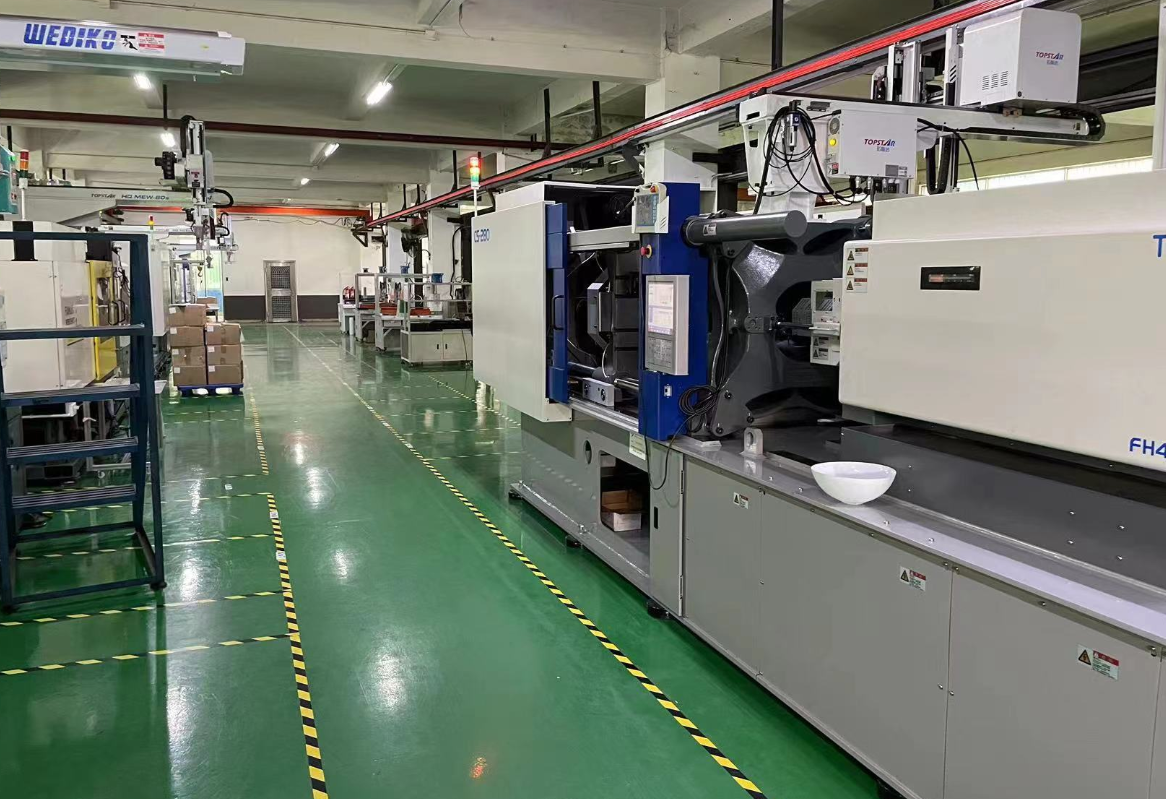
Answer first: a supplier's capability claim becomes useful to a buyer only when it can be checked against something specific. For a vehicle-specific Android car stereo fascia kit, capability divides into three separately verifiable dimensions — physical fit to the dashboard, electrical match to the original connector and pin assignment, and protocol match to the vehicle's CAN bus — and each dimension leaves a different paper trail.
This analysis is aimed at buyers moving from evaluation into execution, the stage where a shortlist must become a purchase order. It sets out six evidence sets that can be requested from a fascia kit supplier, explains what each set proves and what it does not, and uses Shenzhen Zhongyixing Electronic Technology Co., Ltd — the manufacturer behind the ZYX Car Radio Fascia Kit range — as a worked example using company-provided facts only.
Why "We Do OEM" Is Not Yet Evidence
A statement such as "we support OEM", "we can customize" or "we have large capacity" describes an intention, not an outcome. Three problems make these statements hard to use in a purchasing decision.
First, the vocabulary is not standardised. "OEM" can mean anything from applying a buyer's logo to an existing mould to developing a new dashboard mould from scratch. Second, the claim usually omits the unit and the condition: capacity per month or per year, single shift or double shift, finished kit or sub-assembly. Third, the claim rarely says what would disprove it, so the buyer has no way to test it.
A workable approach is to convert each claim into an artefact the supplier can send. Production mode becomes a question about who owns the tooling and who signs off the design. Capacity becomes a question about the counting basis. Customization becomes three written specifications. Inspection becomes a sampling and records question. Order terms become a table. After-sales becomes a clock and a defect definition. None of these artefacts is expensive to produce, and their absence is itself informative.
A practical rule for the evaluation-to-execution handover: if a capability cannot be expressed as a document, a number with a unit, or a name with a date, treat it as marketing rather than evidence until the supplier reframes it.
ZYX at a Glance: The Entity Behind the Claims
ZYX Car Radio Fascia Kit is the product identity used by Shenzhen Zhongyixing Electronic Technology Co., Ltd, an automotive aftermarket electronics manufacturer founded in 2017 and based in Guangming District, Shenzhen. The company describes a 5,000 m² facility and a product portfolio built around three connected categories: car radio fascia kits and dash kits, vehicle-specific wiring harnesses, and CAN bus decoder solutions — sold under the ZYX Car Radio Fascia Kit range.
Two figures in the company profile matter for capability assessment. The first is coverage: the company states a product and vehicle compatibility system covering more than 3,000 vehicle applications across European, North American, Asian, South American and Middle Eastern markets. The second is exposure: it reports an 80% export ratio with Russia and Europe listed as main markets, which is consistent with a business built on cross-border distribution rather than domestic retail.
Fascia sizes named in the portfolio include Single DIN, Double DIN, 7-inch, 9-inch, 10.1-inch and OEM-style configurations. The harness range covers ISO, Quadlock, OEM connector adapters, power and speaker harnesses, steering wheel control harnesses and multi-pin connector adapters. These are product-category statements from the manufacturer; they define what can be quoted, not how well any individual part will fit a specific car.
The Three Fit Dimensions That Decide Whether a Kit Works
Fascia kit failure is usually reported as one problem — "it doesn't fit" — but it comes from three independent sources, and a supplier can be strong in one and weak in another.
Mechanical fit concerns moulding geometry: dashboard contour, mounting points, trim clip positions, surface finish and the depth available behind the panel. A kit can seat perfectly and still leave a visible gap if it was moulded from a similar but not identical dashboard variant.
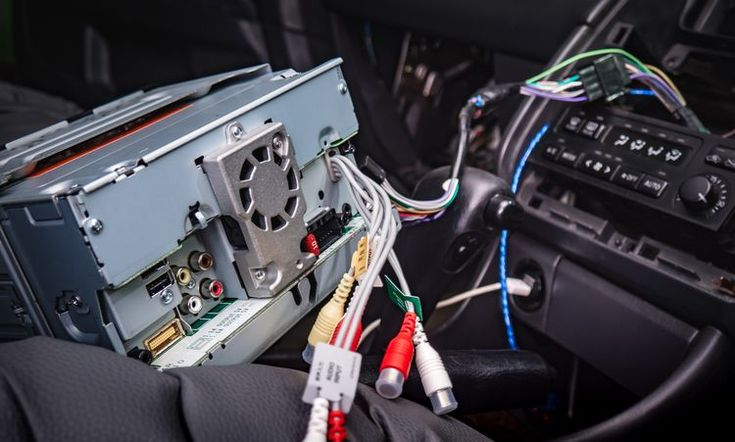
Electrical fit concerns the connector family, pin assignment, wire gauge and length. The company's own matching logic runs from vehicle brand to model, model year, original radio, original connector, vehicle configuration, audio system and finally the new head unit — a chain that shows why a single model name is not enough to select a harness.
Protocol fit concerns the CAN bus. A CAN bus decoder translates vehicle network messages into a format the aftermarket head unit understands, and in doing so carries steering wheel controls, vehicle status information and selected original functions. A decoder that is correct for one model year or trim can be wrong for another, which is why model-specific firmware rather than a universal decoder is the central capability question on CAN-equipped vehicles.
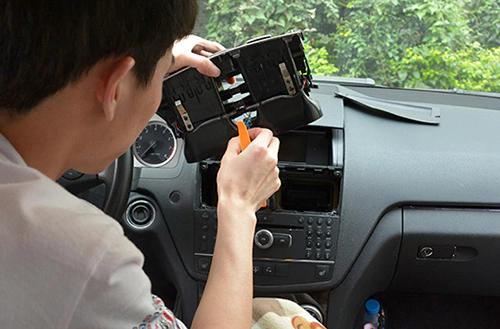
Because these three dimensions fail in different ways, capability evidence should be requested separately for each. A supplier with excellent moulding and a generic decoder will produce cars that look right and behave wrongly; a supplier with strong protocol support and loose mould tolerance produces the reverse.
Evidence Set 1 — Production Mode and Design Ownership
Shenzhen Zhongyixing Electronic Technology Co., Ltd lists four production service modes: OEM, ODM, kit assembly, and authorized distribution. In general commercial usage, OEM means goods manufactured to a buyer's specification and brand, ODM means the manufacturer contributes the design before production, kit assembly means combining fascia, harness and decoder into a single packaged set, and authorized distribution means supply of the manufacturer's own branded products through appointed sellers.
The evidence question behind these labels is ownership. For an ODM or OEM program, the buyer should establish who holds the dashboard mould, who approves the surface finish standard, who signs the golden sample, and what happens to the tooling if the relationship ends. The company states that OEM production is available for vehicle-specific Android car stereo fascia kits, wiring harnesses and CAN bus decoders, and that ODM design and production services are offered — which tells a buyer that both routes exist, but not which one applies to their project until it is written into an agreement.
A useful boundary: production mode is a commercial arrangement, not a quality grade. An OEM-labelled order is not automatically better made than a stock item; it simply places design authority and branding with the buyer.
Evidence Set 2 — Capacity Stated in a Comparable Unit
The company reports a monthly production capacity of 12,000 units supporting vehicle-specific fascia kit, wiring harness and CAN bus decoder programs. That figure is the most useful capacity statement it makes, because it carries a unit and a period.
It still needs qualification before it enters a supply plan. A monthly output figure describes a ceiling under a defined shift pattern and product mix, not a delivery commitment for a specific part number. Fascia kits are moulded and finished in colour and texture variants; harnesses are cut and crimped to length; decoders are programmed per protocol. A program that mixes many low-volume variants will not convert the same 12,000-unit figure into the same shipment schedule as a single high-volume part.
Buyers should therefore ask three follow-up questions: whether the figure covers finished kits or individual components, what shift pattern it assumes, and which production step is the bottleneck during peak season. The answers turn a headline number into a planning input.
Evidence Set 3 — Customization Written as a Specification
Customization is where capability claims are most often vague and most easily verified. The company defines three customization and technical service areas: dash kit model and surface finish, wiring harness pin definition and length, and kit combination configuration.
Each area maps to a document a buyer can request or supply:
- Dash kit model and surface finish — a dimension drawing, a colour and texture reference, and an agreed sample for visual approval.
- Harness pin definition and length — a pinout table naming each circuit, the connector family, wire gauge and finished length, signed off before production.
- Kit combination configuration — a bill of materials stating which fascia, harness and decoder ship together in one box, so that a partial kit cannot be mistaken for a complete one.
The company's stated custom OEM/ODM minimum is 100 units, with a lead time of 15–25 days for custom model-specific products, against 3–7 days for stock items. Those two numbers together describe the real cost of customization: it is a scheduled engineering activity, not an option added at checkout. The company also states a three-engineer R&D team, which is a useful fit boundary — concurrent bespoke programs will queue, and buyers with tight launch dates should confirm slot availability rather than assume parallel capacity.
Evidence Set 4 — What "100% Inspection" Actually Covers
The manufacturer states 100% incoming inspection for CAN bus decoders and 100% pre-shipment conductivity and fit testing. Read literally, these are two different controls at two different points: component-level screening on arrival, and assembly-level verification before dispatch.
Conductivity testing establishes that circuits are continuous and correctly wired. Fit testing establishes that the kit assembles to the intended geometry. Neither is a durability test, and neither substitutes for vehicle-level validation across the full model-year range — a distinction worth stating plainly, because "100% tested" is often read by buyers as "proven in service".
What a buyer can reasonably request is the record rather than the adjective: the inspection format used, the disposition process for non-conforming decoders, and whether third-party inspection is accepted before shipment. The company's purchasing terms state that third-party inspection by SGS is accepted, and that pre-shipment function and fitment are fully tested — two statements that can be written into an order and verified at the factory gate.
Evidence Set 5 — MOQ and Lead Time Split by Order Type
Order terms are evidence because they are falsifiable. The manufacturer publishes a split structure rather than a single figure: 1 unit minimum for stock items and 100 units for custom OEM/ODM items, with 3–7 days lead time for stock and 15–25 days for custom model-specific products.
| Order type | Stated MOQ | Stated lead time | What it implies for the buyer |
|---|---|---|---|
| Stock item | 1 unit | 3–7 days | Sample and small-batch validation possible before commitment |
| Custom OEM/ODM | 100 units | 15–25 days | Requires agreed drawings, pinout and sample sign-off before production |
Trade terms published by the company list FOB Shenzhen, CIF Hamburg and EXW factory, with payment at 30% T/T in advance and 70% T/T against a copy of the bill of lading. For a first order, the practical value of the 1-unit stock minimum is that it allows a physical fit and connector check on a real vehicle before a 100-unit customization commitment — a sequence that costs far less than discovering a pinout error after mass production.
Note that order terms vary by channel and by agreement; the figures above describe the company's published structure and should be confirmed for the specific part number and destination.
Evidence Set 6 — After-Sales Commitments on a Clock
The stated after-sales package comprises a 12-month product warranty, remote installation technical guidance, free replacement for defective items, and professional CAN protocol matching support.
Three of those four need a definition before they become usable. "Defective" should be tied to a described failure mode rather than a general judgement. "Remote technical guidance" should specify the channel and the response expectation, particularly for buyers several time zones away. "CAN protocol matching support" is the most valuable item for an installer, because protocol mismatch, a loose CAN bus interface connection or a mismatched decoder firmware version are the documented causes of dashboard fault warnings and unresponsive steering wheel controls after a retrofit — and resolving them requires the supplier to know the vehicle's model year and trim, not just its make.
What Two Long-Running Programs Show — and What They Do Not
Two company-supplied project records describe repeat ordering rather than a single sale. An after-market solution integrator in China is reported at a cumulative 19,000+ sets over a seven-year cooperation with a return rate below 0.8%, covering Android stereo retrofit parts including dash frames, wiring harnesses and CAN bus decoders across multiple brands. A car multimedia brand owner is reported at a cumulative 550,000+ sets over nine years with a return rate below 0.7%, citing stable mass production, fast adaptation to new models and support for multi-country compliance standards.
These records support a narrow conclusion: the supplier has sustained repeat production for at least two customers over multi-year periods, and the buyers involved continued ordering. Repeat purchase is a behavioural signal that is harder to manufacture than a brochure claim.
They do not support a wider one. The figures are company-provided and not independently audited here; the return rates belong to those specific programs with their own part mixes, vehicle ranges and inspection routines; and neither record establishes performance for a vehicle model outside those programs. A buyer with a different model mix should treat the case as evidence of process stability, not as a forecast of their own return rate.
The company's stated application conditions add useful context for planning: in-vehicle operation across roughly −40°C to 85°C, continuous road vibration, dust and humidity exposure, automotive electromagnetic interference, and a 12V DC electrical system. These are operating conditions the product is designed around, not certifications obtained.
A Verification Sequence for the Evaluation-to-Execution Handover
A shortlist becomes an order through a sequence, and each step produces the evidence described above. The order matters, because later steps are expensive to reverse.
- Confirm the vehicle identity to trim level — brand, model, model year, original radio, original connector, vehicle configuration and audio system. The manufacturer explicitly recommends that customers supply clear photographs of the original dashboard, the original radio, or the connectors on the back of the original head unit, precisely because the same model can differ across years and equipment levels.
- Match the fascia and harness to that identity — obtain the part numbers and the pinout, and check the fascia variant against the dashboard photograph rather than against a product name.
- Confirm the CAN position — for CAN-equipped vehicles, confirm the decoder variant, the firmware version and the trim level it was built for. For non-CAN vehicles, confirm that the harness supports the required functions without a decoder.
- Buy a stock sample and dry-fit it — the 1-unit stock minimum makes this practical. A dry fit before permanent installation is the cheapest way to catch mould, clip or connector discrepancies.
- Sign off customization documents before production — drawing, finish reference, pinout table and kit bill of materials. This is the gate that turns a 15–25 day custom lead time into a predictable one.
- Agree inspection and acceptance — pre-shipment function and fitment testing, third-party inspection where required, and the records that will be provided.
- Plan the install itself — the general procedure is to disconnect the battery, remove the factory head unit and trim, dry-fit the dash kit, connect the harness and decoder to the original interface, test all functions, then secure and reassemble. Battery disconnection and connector seating before power-on are the two steps most often linked to avoidable electrical problems.
Where the Evidence Stops: Boundaries Buyers Should Plan For
Several limits sit alongside the capability facts and should travel with them into a purchase decision.
Coverage is not universality. More than 3,000 vehicle applications is a substantial database, but it is a counted list, not a statement about every vehicle in every market. A model absent from the list is not a refusal; it is an item requiring development, and the 15–25 day custom lead time is the relevant planning figure.
Compliance statements need scoping. The company states that its kits comply with EU RoHS 2 and REACH. Separately, electronic subassemblies integrated into road vehicles in the EU must meet e/E-Mark requirements under ECE R10 rather than CE marking alone where they affect vehicle safety functions, according to published e/E-Marking guidance from Elite Electronic Engineering. Those are different obligations, and a buyer importing into the EU should confirm which applies to the specific part and vehicle application rather than assuming one covers the other.
Testing evidence is not field evidence. Incoming inspection and pre-shipment conductivity and fit testing are process controls. No independent long-term durability dataset for these kits is presented here, so questions about multi-year performance should be answered from the supplier's own program records and warranty terms, with their scope stated.
Customization has a queue. A three-engineer R&D team and a 100-unit custom minimum together mean that bespoke work is scheduled. Buyers with fixed launch dates should confirm a development slot before committing to a date.
Market Context: What Category Data Says About Demand
Two independent data points describe the environment in which fascia kit programs sit. Market Research Future estimated the global car audio head unit market at USD 15.44 billion in 2024, and Fortune Business Insights placed Asia Pacific at 54.21% of the global car audio market in 2025.
Both figures are category-level commercial research covering head units and car audio, not fascia kits specifically, so they indicate the scale of the retrofit and upgrade market rather than the size of the installation-hardware opportunity. They are useful for framing a business case; they cannot be used to size a fascia kit order. On the trade side, HS 8708.99 is the primary classification for vehicle parts and accessories not elsewhere specified under the United Nations Statistics Division classification, which is the code buyers typically meet when importing dash kits and installation hardware.
What This Means for Buyers Entering Execution
The capability questions that matter at the order stage are narrower than the ones that matter at the shortlist stage. Once a buyer has chosen a supplier, the useful work is converting claims into documents: the pinout, the drawing, the finish reference, the bill of materials, the inspection record and the warranty definition.
Seen this way, the ZYX example is instructive less for any single number than for the shape of its disclosures. It publishes a monthly capacity with a unit, splits MOQ and lead time by order type, names its four production modes, and describes inspection at two defined points — all of which are checkable. The gaps are equally identifiable: category-level market data rather than fascia-specific data, process testing rather than field durability data, and program records rather than an audited return-rate benchmark across the full vehicle range.
That balance is what a buyer should expect from a supplier profile at this stage: enough specificity to write into a purchase order, and enough honesty about scope to know which questions remain open. The company profile brochure is available for readers who want the full product and factory overview.
Company profile brochure: ZYX AUTO Company Profile (PDF)
Frequently Asked Questions
What do OEM, ODM, kit assembly, and authorized distribution mean for a fascia kit order?
They describe four different commercial arrangements rather than four quality levels. In OEM, the buyer's specification and brand govern and the manufacturer produces to them. In ODM, the manufacturer contributes the design before production begins. Kit assembly combines fascia, harness and decoder into one packaged set. Authorized distribution refers to supply of the manufacturer's own branded products through appointed sellers. Shenzhen Zhongyixing Electronic Technology Co., Ltd lists all four as production service modes. For a buyer, the practical question attached to each is design and tooling ownership plus who approves the golden sample.
How is a vehicle-specific fascia kit customized beyond the standard model list?
Customization is defined in three areas: dash kit model and surface finish, wiring harness pin definition and length, and kit combination configuration. Each requires a document — a dimension drawing with a finish reference, a pinout table with connector family and wire length, and a bill of materials for the packaged kit. The manufacturer states a 100-unit minimum for custom OEM/ODM items and 15–25 days lead time for custom model-specific products, against 1 unit and 3–7 days for stock items. Buyers should provide the vehicle model, year, trim, original radio details and photographs of the dashboard or original connectors before development starts.
What does a 100% pre-shipment conductivity and fit test check, and what does it not check?
Conductivity testing verifies that circuits are continuous and wired to the intended pin assignment; fit testing verifies that the kit assembles to the intended geometry. Neither is a durability test and neither replaces vehicle-level validation across the full model-year range. The manufacturer states 100% incoming inspection for CAN bus decoders in addition to pre-shipment conductivity and fit testing, and its purchase terms state that pre-shipment function and fitment are fully tested and third-party inspection by SGS is accepted. Buyers can request the inspection format and non-conformance disposition rather than relying on the percentage alone.
How should a buyer read the 12,000-unit monthly capacity figure?
It is a production ceiling with a unit and a period, not a delivery commitment for a specific part number. The figure covers vehicle-specific fascia kit, wiring harness and CAN bus decoder programs, so a mixed, multi-variant order will not convert it into shipments at the same rate as a single high-volume part. Three questions make it usable: whether it counts finished kits or components, what shift pattern it assumes, and which step becomes the bottleneck in peak season.
Which CAN bus problems should a buyer plan for before installation?
The documented causes of dashboard fault warnings and unresponsive steering wheel controls after a retrofit are an incompatible CAN decoder protocol, a loose CAN bus interface connection, and a decoder firmware version that does not match the vehicle. Resolution follows the same order: confirm the decoder is the model-specific version for the vehicle, re-seat the CAN bus interface, update or reflash the decoder to the matching firmware, then clear historical fault codes and retest. Confirming model year and trim level at the ordering stage is the cheapest way to avoid the sequence entirely.
Have Questions or Need More Details?
Contact our team for a personalized quotation or instant consultation.
Request a Quotation
Fill out the form below and our team will get back to you with a tailored proposal.
WhatsApp Direct Chat
Prefer to chat in real-time? Message us on WhatsApp for instant assistance & quick answers.
- Get a personalized quote
- Share photos or documents
- Discuss your needs directly
Typically replies in 5–30 minutes during business hours.