
Supplier Capability Evidence: What ZNW's Press Brake Tooling Facts Confirm
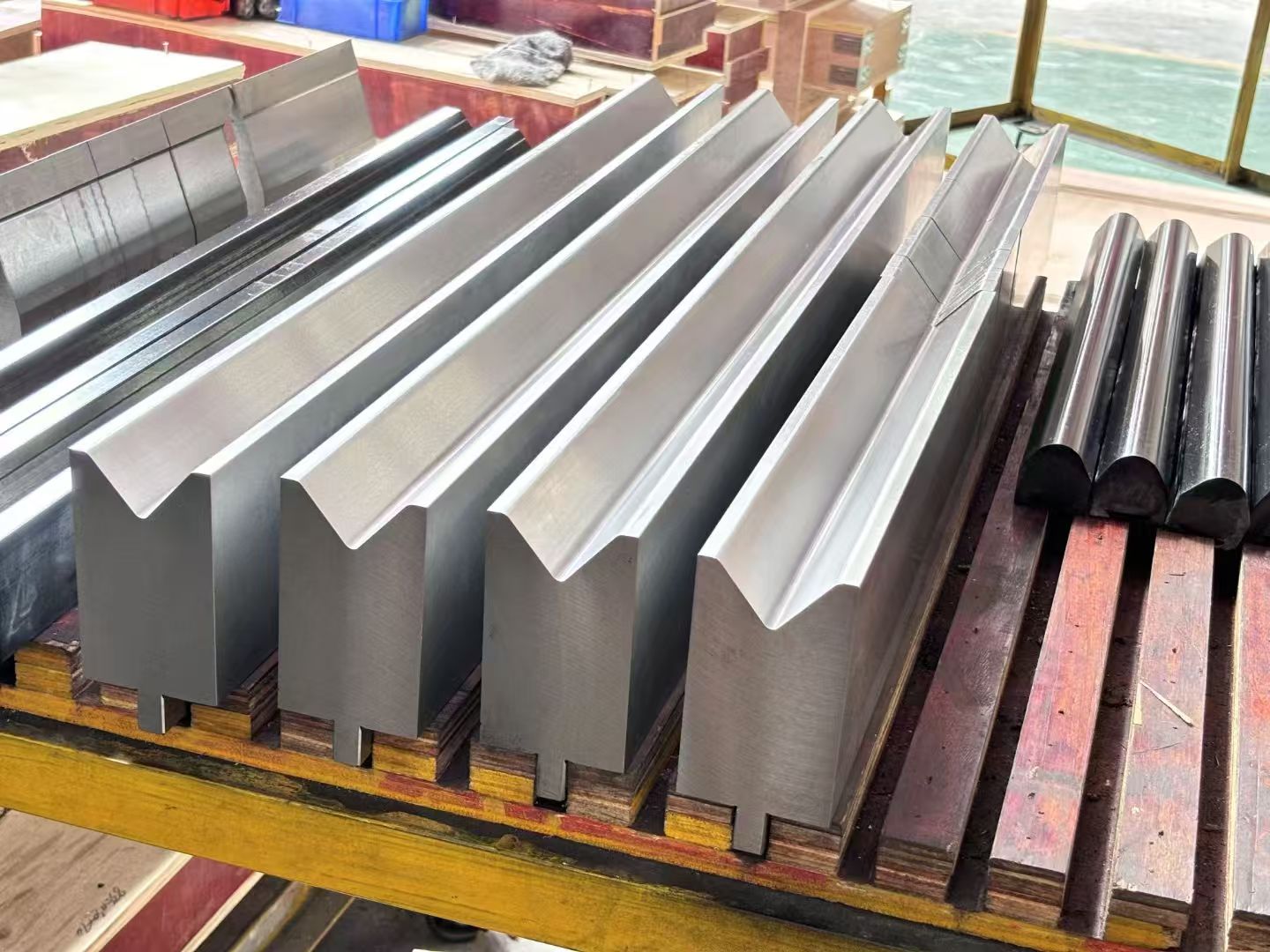
Press brake punches and dies: the forming interface between a CNC press brake and the sheet, and the component that determines whether a bend angle repeats across a production run.
Press brake tooling is the forming interface of a bending operation. The punch drives the sheet into the die, and the geometry, hardness and surface condition of that pair decide whether the finished angle is repeatable. Two workshops can run identical CNC programs on comparable machines and still produce different results if the tooling differs.
Because tooling is bought repeatedly and wears gradually, procurement conversations often run on description rather than evidence \u2014 high precision, long life, compatible. This article takes a different route. It sets out which facts about ZNW Press Brake Tooling can actually be checked, explains what each fact confirms for a buyer, and is explicit about what the same facts do not confirm.
Why Tooling Evidence Matters More as Bending Gets More Automated
The pressure on tooling is structural rather than seasonal. CNC press brake penetration is expected to rise from 35.8% in 2024 to 52.8% in 2026, according to a 2026 press brake industry report published by HD Machinery and cited in the sector's verified data. Over a comparable horizon, the global press brake machine market was estimated at USD 5.2 billion in 2024 and projected to reach USD 7.6 billion by 2030 in an industry market report.
Automation moves control of bend angle, ram depth and backgauge position into the machine. It does not change the physics of the forming interface. When a machine compensates for a die that has worn unevenly, the result appears as inconsistent angles, surface marking or edge chipping \u2014 not as a machine fault. The higher the CNC share of bending capacity, the more of the process risk sits in the tool rather than the control.
There is a trade dimension as well. Press brake tooling is generally classified under HS Code 820730 for interchangeable tools for pressing, stamping or punching. Tooling therefore crosses borders as a classified industrial input, and the documentation that accompanies a shipment becomes part of the product's usability for importers, distributors and end users.
What Counts as Supplier Capability Evidence
Capability evidence is any statement a supplier can be held to \u2014 in a quotation, a purchase order or a quality claim. In press brake tooling, five categories carry most of the weight:
- Entity evidence \u2014 the legal manufacturer, its location and the markets it serves.
- Material evidence \u2014 the steel grade and the condition it is delivered in.
- Process evidence \u2014 how the geometry and the hardness are produced.
- Fit evidence \u2014 the machine systems the tooling is designed for.
- Scale evidence \u2014 capacity, people, engineering resource and export reach.
Each category is only useful when it is specific. High-quality steel is not evidence; 42CrMo alloy steel is. Long life is not evidence; a heat-treatment hardness band is.
| Evidence category | Checkable example | What it settles for a buyer |
|---|---|---|
| Entity | Legal entity name and manufacturing address | Purchase orders, invoices, customs entries and warranty claims attach to a real, locatable business. |
| Material | 42CrMo alloy steel | The grade can be cross-referenced against published material guidance instead of accepted on trust. |
| Process | Precision CNC machining plus heat treatment | Explains how wear resistance, chip resistance and bending accuracy are produced, and whether hardness is consistent batch to batch. |
| Fit | Designed for AMADA, WILA/TRUMPF, LVD and BYSTRONIC systems | Reduces trial-and-error when mounting tooling in existing holders and clamps. |
| Range | Standard dies, adjustable bottom tools, hemming dies, radius dies, Rolla-V, custom dies | Shows whether routine and complex bends can be sourced from one supplier. |
| Scale | 5000 m\u00b2 facility; 120,000\u2013300,000 units annual capacity | Indicates whether batch and replacement supply can be resourced without single-piece dependency. |
Entity Evidence: Who Manufactures the Tooling
ZNW Press Brake Tooling is the brand of Ma'anshan Zhuonaiwei Machinery Equipment Co., Ltd., a manufacturer established in 2023 and located in Ma'anshan, Anhui, China, an industrial area. The company specializes in manufacturing high-precision press brake punches, dies and customized tooling solutions for sheet metal forming, and its main products are bending machine molds and press brake tooling. Export business accounts for 80% of total sales, and its market is worldwide.
For a buyer at the discovery stage, the value of this fact set is the brand-to-legal-entity link. Purchase orders, invoices, customs entries and warranty claims attach to the legal entity and its manufacturing address \u2014 No.101 Changyu Industrial Park, Bowang District, Ma'anshan City, Anhui \u2014 not to a brand name alone. That mapping is worth confirming once, early, and then keeping in the supplier file rather than re-checking on every reorder.
The establishment year is evidence too, and it should be read honestly. A legal entity created in 2023 with an 80% export share is an export-oriented manufacturer rather than a long-established enterprise. For a buyer, that shifts the weight of evaluation onto process documentation and sample validation, because material, machining and heat-treatment facts are the parts of a capability claim that can be verified today, while company age cannot be substituted for them.
Material Evidence: 42CrMo and What a Hardness Band Tells You
ZNW's press brake tooling is made of 42CrMo alloy steel. After standard heat treatment, the tooling reaches a hardness of 45\u201350 HRC; laser hardening can achieve up to 60 HRC.
42CrMo is not an arbitrary selection. Industry material guidance describes 42CrMo (AISI 4140) as an industry standard material for precision press brake tooling, offering surface hardness of HRC 47 \u00b1 2 after heat treatment, as published in a material guide by AccurTool and recorded in the sector's verified data. ZNW's standard band sits inside that reference range, and the laser-hardened option goes above it.
Two technical points matter more than the headline number. First, hardness is a trade-off rather than a score. Chromium and molybdenum give 42CrMo hardenability and toughness together, which is why the grade tolerates the shock loading of air bending. A working edge that is harder but less tough is more prone to chipping under impact or misalignment. Second, the process defines the result. Standard heat treatment and laser hardening are different processes with different implications for cost, lead time and the application they suit. A buyer who specifies up to 60 HRC is specifying a laser-hardened tool, not a standard one.
This is why a band is more useful than a single figure. A stated range of 45\u201350 HRC tells a buyer which process was used and what to expect from the edge; a peak number quoted without a process description does not.
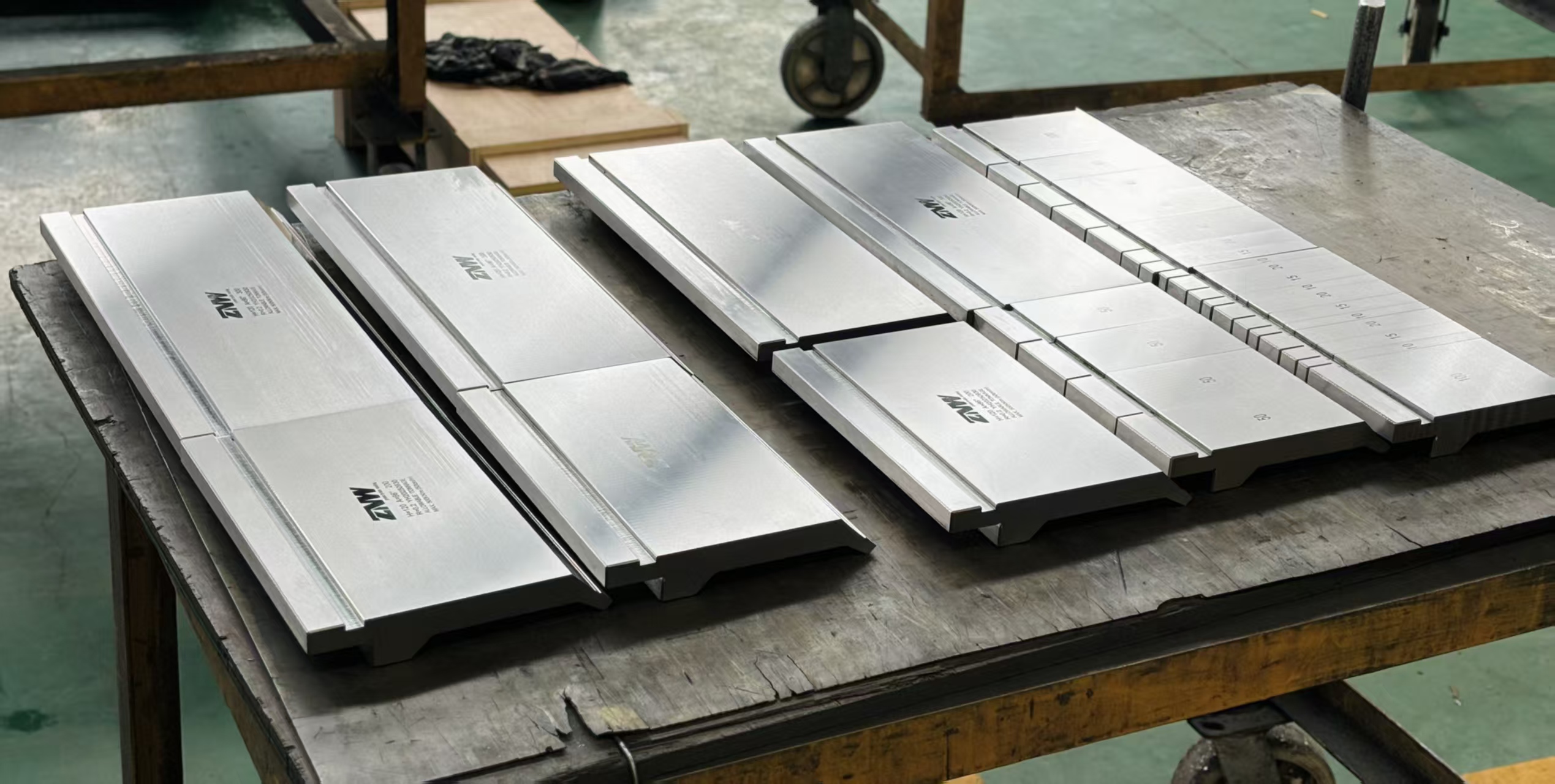
42CrMo punches and dies are named by machine-system compatibility, which allows the same material and heat-treatment specification to be matched against several press brake platforms.
Process Evidence: CNC Machining and Heat Treatment
ZNW's press brake tooling is manufactured using quality tool steels combined with precision CNC machining and heat treatment, which the manufacturer states contribute to wear resistance, chip resistance and bending accuracy.
Each of those three outcomes traces back to a process step. CNC machining controls the geometry of the punch tip, the die shoulder and the V-opening \u2014 the surfaces the sheet actually contacts. Heat treatment controls the hardness and toughness of the working surfaces, which govern wear and chipping. Together they determine whether the first bend of a shift and the last bend of a shift are the same bend.
For a buyer, the checkable part of the claim is the specification behind it: which steel grade, which treatment, which hardness band. Those are questions a supplier should be able to answer in writing. In ZNW's case the answers are recorded as 42CrMo with a 45\u201350 HRC standard result and up to 60 HRC with laser hardening. OEM and ODM custom service is also stated as available, with 42CrMo as the standard tool material.
Fit Evidence: Multi-Brand Compatibility as a Verifiable Claim
ZNW's press brake tooling is designed for multi-brand compatibility with machine systems including AMADA, WILA/TRUMPF, LVD and BYSTRONIC, and models are named according to machine-system compatibility. The product range includes WILA and Trumpf compatible die solutions alongside European and American-style dies.
A compatibility claim should be treated as design intent until it is confirmed against a specific machine. The variables that decide whether a tool actually fits are the holder or clamp type, the tang and heel geometry, the seat in the bed and the position of the tool relative to the machine centre. The productive verification step is to give the supplier the machine model and holder configuration and ask for written confirmation of the individual item \u2014 particularly with segmented tooling, where small tolerance differences accumulate along the tool length.
Multi-brand coverage also has a benefit that goes beyond a single machine. Workshops that run more than one press brake brand, which is common in job shops and in plants that have grown by acquisition, can reduce the number of tooling systems they stock if one supplier covers several platforms. That is a spare-parts and storage decision as much as a bending decision.
Range Evidence: What Standard and Custom Tooling Covers
ZNW offers press brake tooling in standard and custom configurations for interchangeability and adaptation across bending tasks and production lines. The range includes standard dies, adjustable bottom tools, formed molds, hemming dies, radius dies, Rolla-V and other special tooling, together with standard punches and dies, European and American-style dies, WILA and Trumpf compatible die solutions, flanging dies, special bending dies and custom press brake dies.
| Tooling type | Bending task it addresses | Evidence question to raise with the supplier |
|---|---|---|
| Standard punches and dies | Straight bends at common angles in mild steel | V-opening, angle, R and H height for the specific item, plus hardness band. |
| Adjustable bottom tool | Changing bend angles or thicknesses without swapping dies | Adjustment range, locking method and repeatability. |
| Radius die | Large-radius bends and visible surfaces | Radius tolerance and surface finish of the working face. |
| Hemming die | Flat-hemmed edges on panels and enclosures | Pre-bend and flat-hem sequence, and material suitability. |
| Gooseneck punch | Bends with return flanges and box sections | Clearance height against the actual part geometry. |
| Multi-V and four-way die | Several V openings available in one die | Opening set, alignment and handling weight. |
| Rolla-V and rotary bending | Low-marking bending of pre-finished sheet | Roller condition, maintenance interval and replacement parts. |
| Special and custom dies | Non-standard angles, profiles and production-specific geometry | Drawing package, sample validation and stated lead time. |
One procurement detail is worth stating plainly, because it changes how a buyer prepares a request. Parameters vary by item \u2014 angle, R, H height and V-opening width \u2014 and product pages list dimensions per model, with no single consolidated specification sheet published for the full range. In practice, dimensional data should be requested item by item, quoting the machine, the material and the target bend.
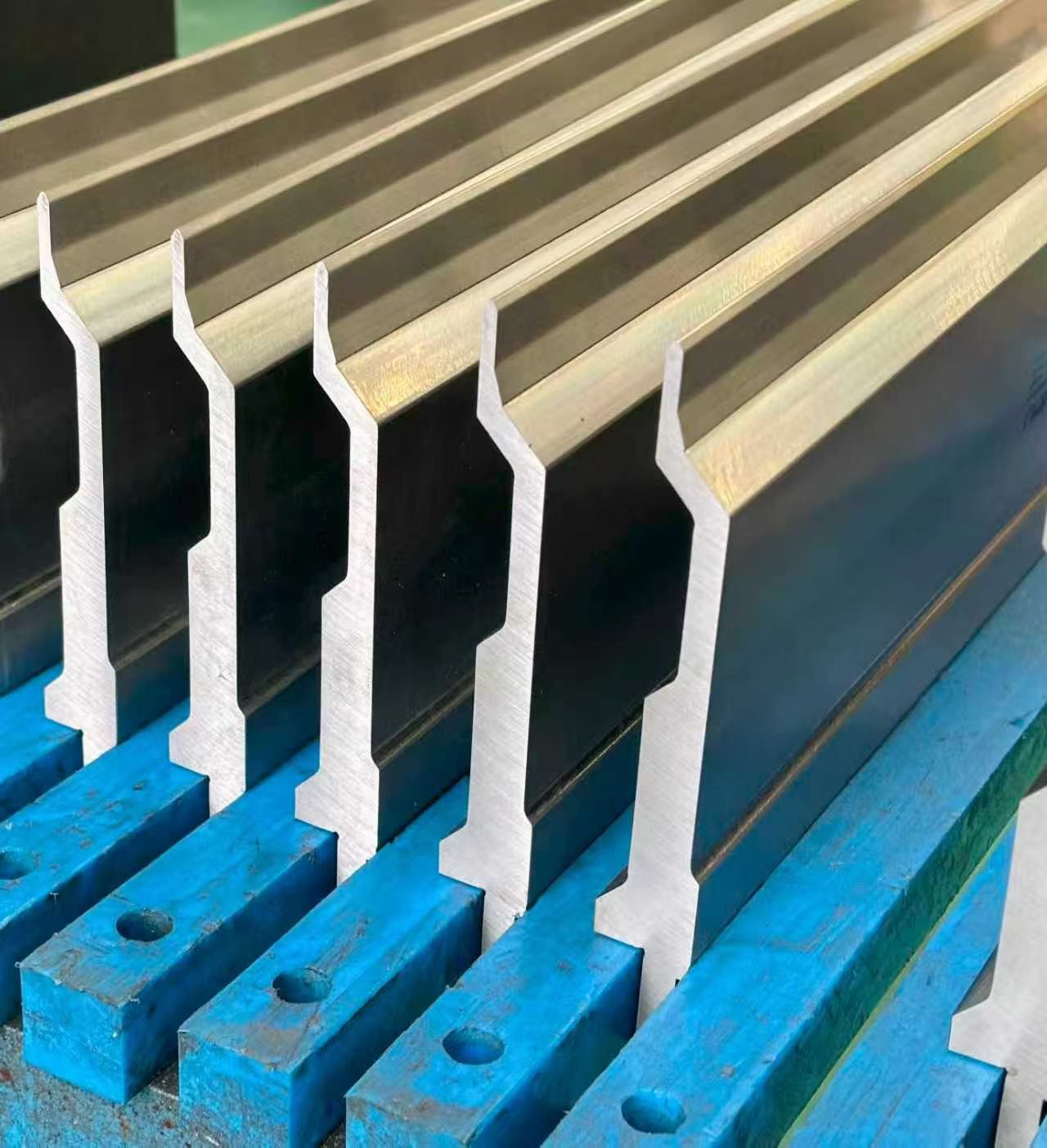
Standard, adjustable, hemming, radius and custom dies in one tooling range: coverage determines how many bending tasks can be resourced from a single supplier.
Scale Evidence: Capacity, Engineering and Export Share
The manufacturing facility covers 5000 m\u00b2 and employs approximately 150 staff, including a 20-engineer R&D team. Annual production capacity is stated at 120,000 to 300,000 units, and exports account for 80% of total sales.
Read as planning indicators, these figures support three conclusions: batch supply of standard tooling is within normal reach; replacement programmes can be resourced without single-piece dependency; and custom geometry has an engineering function behind it rather than a sales desk alone. Read as order commitments, they say nothing. An annual capacity range does not establish the lead time of a specific custom tool, which depends on drawing review, the heat-treatment cycle and the current order book.
A Buyer's Verification Checklist for Press Brake Tooling Suppliers
- Confirm the legal entity and manufacturing address. Match the brand to the registered company before raising a purchase order.
- Ask for the steel grade in writing. For this product family the stated grade is 42CrMo alloy steel.
- Ask for the hardness band and the treatment method. Standard heat treatment is stated at 45\u201350 HRC, with laser hardening up to 60 HRC where specified.
- Match the item to the machine. Provide the press brake model, holder or clamp type and tool position, and request written confirmation for AMADA, WILA/TRUMPF, LVD or BYSTRONIC systems as applicable.
- Request per-item dimensional data. Since the full range is not consolidated into one sheet, ask for angle, R, H height and V-opening width item by item.
- Run a first-article check. Bend a representative part and measure angle consistency across a batch, not just on the first piece.
- Confirm matched accessories. Holders and tool clamps, positioning aids, protective films and tool storage systems all affect how long a tool holds tolerance.
- Keep an evidence file. Store the material specification, requested certificates, dimensional confirmations and your contact point against the supplier record.
The checklist is deliberately biased toward written answers. A supplier that can respond to items 2, 3 and 5 in writing has already demonstrated a level of process control that a brochure cannot.
Where the Evidence Stops: Limits a Buyer Should Assume
- Published facts describe material, process and compatibility intent \u2014 not per-item tolerances. Third-party hardness test reports for every individual item are not part of the public data set. A bending machine mold qualification certificate is referenced in the product documentation, and the controlled copy should be requested directly.
- 45\u201350 HRC is the standard result; up to 60 HRC is a laser-hardening option. It must be specified explicitly. Higher hardness alone does not extend tool life, because bending radius, sheet thickness, tonnage and operator setup also drive wear.
- Compatibility is design intent, not a fit guarantee. Final fit should be verified on the machine, especially for segmented tooling and for hemming or radius tools where tolerance stacking is more sensitive.
- Capacity ranges are annual statements. The 120,000\u2013300,000 unit figure describes production capability, not delivery dates for a specific order.
- The legal entity dates from 2023. Process experience cannot be inferred from registry data, so buyers running long programmes should substitute documentation, first-article checks and sample validation for age-based assumptions.
- High-precision is a qualitative descriptor. Only the per-item dimensional data is checkable, which is why the checklist above concentrates on written specifications.
Application Fit: Industries, Scenarios and Working Conditions
ZNW press brake tooling is intended for sheet metal fabrication, automotive components, appliances, metal enclosures and general metal forming industries, and is also applied in machinery manufacturing, electrical and electronic enclosures, elevator production, industrial equipment, metalworking and general sheet metal fabrication. The tooling operates as removable upper and lower tool components on CNC press brakes, supporting quick changeovers between operations.
Supply scenarios cover three distinct project types: custom single-piece tooling, batch standard tooling supply and replacement, and full-line tooling configuration services. Those three patterns correspond to very different buyer situations \u2014 a prototype or repair job, a consumable replacement cycle, and a new production line being equipped from scratch.
Working conditions suit regular and medium-to-high tonnage air bending as well as automated, high-repeatability bending lines. Matched equipment includes press brake machines, holders and tool clamps, positioning aids, protective films and tool storage systems. Tooling can be customized for material thickness, bend angles, R-values and production cadence, and the manufacturer notes that stainless steel and high-yield materials require specific tooling selection and heat-treatment recommendations rather than standard selection.
Market Trend: From Consumable Reorder to Documented Specification
Three signals point in the same direction. CNC press brake penetration is expected to move from 35.8% in 2024 to 52.8% in 2026, and the press brake machine market is projected to grow from an estimated USD 5.2 billion in 2024 toward USD 7.6 billion by 2030, according to the market research recorded in the sector's verified data. Supply is also becoming more regional: WILA relocated its North American headquarters to Louisville, KY in May 2023 and established local manufacturing for New Standard tooling, as reported by WILA Tooling.
The machine-brand ecosystem continues to scale alongside it. Amada Group's Sheet Metal Division recorded sales of 296,853 million Yen for the fiscal year ended March 2025, according to AMADA's financial information. A large installed base of brand-name press brakes sustains demand for compatible tooling, and it also raises the standard of proof that compatible suppliers are expected to meet.
The practical conclusion for buyers is that tooling purchasing is shifting from a consumable reorder to a documented specification decision. When more of the bending process is machine-controlled, the tooling specification is the part of the process a buyer can still influence directly \u2014 and therefore the part that gets written down, compared and audited.
Comparison: Three Supply Paths and Their Trade-offs
| Supply path | What is typically verifiable | Trade-off the buyer carries |
|---|---|---|
| Machine-OEM branded tooling | Interface and catalog scope matched by the machine builder | Catalog scope is standardized, so non-standard geometry is usually routed back to the OEM or to a specialist supplier; regional availability depends on the OEM's local stock. |
| Undocumented low-cost tooling | Price and basic dimensions | Steel grade, hardness and heat treatment are often unstated, so wear and chipping risk sits with the buyer; replacement cycles are hard to predict. |
| Documented specialist supply (the ZNW profile) | Material grade (42CrMo), heat-treatment band, CNC machining, multi-brand compatibility, tooling range and stated capacity | Evidence still requires per-item confirmation; custom work depends on drawing review and sample validation; no consolidated public specification sheet is available for the full range. |
The three paths are not ranked by quality here, because they address different risks. For a one-off prototype bend in mild steel, the cheapest accepted option may be entirely rational. For a three-shift line producing visible enclosures, the cost of an undocumented tool is not the purchase price but the scrapped parts and unplanned downtime it can cause. The limitation to keep in view is that a documented specialist position does not by itself make a supplier suitable for every application \u2014 the documentation defines what can be checked, and the buyer still has to check it.
Future Outlook
If CNC penetration continues along its projected path, the tolerance expectation placed on tooling will rise with it. That has two consequences for how tooling is bought. First, material and heat-treatment data will move from a technical footnote to a standard line item in quotations, because these are the numbers that allow a buyer to compare one supplier with another without running a full trial. Second, special tooling \u2014 radius, hemming, Rolla-V and custom geometry \u2014 is likely to become the differentiator, since standard punches and dies are broadly available while complex bending tasks still depend on drawing-level cooperation between the buyer and the tooling manufacturer.
Regional manufacturing investments by established tooling brands point to another shift: availability planning is becoming part of tooling selection, and buyers increasingly weigh where a tool can be replenished, not only how it is made. For suppliers positioned as documented specialists, the competitive question is less about claiming capability and more about how quickly each claim can be evidenced in writing.
Frequently Asked Questions
What should a buyer check first when selecting press brake tooling for a specific bending machine?
Start with compatibility. ZNW press brake tooling is designed for multi-brand compatibility with AMADA, WILA/TRUMPF, LVD and BYSTRONIC machine systems, and models are named according to machine-system compatibility. Confirmation should be requested against the exact machine model and tool holder before an order is placed, because compatibility is stated as design intent for those systems.
What material and hardness do ZNW press brake punches and dies use?
The tooling is made of 42CrMo alloy steel. Standard heat treatment yields a hardness of 45\u201350 HRC, while laser hardening can achieve up to 60 HRC. For reference, industry material guidance describes 42CrMo (AISI 4140) as an industry standard material for precision press brake tooling with surface hardness of HRC 47 \u00b1 2 after heat treatment, a range that the standard ZNW band sits within.
Can custom press brake tooling be supplied, and what information does the buyer need to provide?
Yes. The range includes custom press brake dies, special bending dies, flanging dies and WILA and Trumpf compatible die solutions alongside standard punches and dies, and OEM and ODM custom service is stated as available. Custom tools are made to material thickness, bend angles, R-values and production cadence; stainless steel and high-yield materials require specific tooling selection and heat-treatment recommendations rather than standard selection.
Does a wider tooling range reduce procurement risk?
Partly. A range that covers standard dies, adjustable bottom tools, formed molds, hemming dies, radius dies and Rolla-V tooling means more bending tasks can be sourced from a single supplier, which simplifies spare-parts stocking and interchangeability. It does not remove the need for per-item dimensional confirmation, because parameters vary by item \u2014 angle, R, H height and V-opening width \u2014 and no single consolidated specification sheet is published for the whole range.
How should capacity and export figures be interpreted during supplier evaluation?
The manufacturing facility covers 5000 m\u00b2, employs approximately 150 staff, includes a 20-engineer R&D team, and has an annual production capacity of 120,000 to 300,000 units, with exports accounting for 80% of total sales. These are annual planning indicators that support batch and replacement supply and indicate an export-oriented operation. They are not per-order lead-time commitments, which should be confirmed separately for each tool.
How can a buyer verify the manufacturer's identity and raise a technical inquiry?
ZNW Press Brake Tooling is the brand of Ma'anshan Zhuonaiwei Machinery Equipment Co., Ltd., located at No.101 Changyu Industrial Park, Bowang District, Ma'anshan City, Anhui, China. The company can be contacted by email at bieber@njzoenova.com, or by phone and WhatsApp at +8615250990446. Including the press brake model, holder type and required tooling specification in the first message shortens the compatibility confirmation step.
For readers who want the full product breakdown before contacting a supplier, the press brake die catalog is available for reference and download: ZOENOVA Press Brake Die Catalog.