
Supplier Capability Evidence for Pharmaceutical Packaging Machines
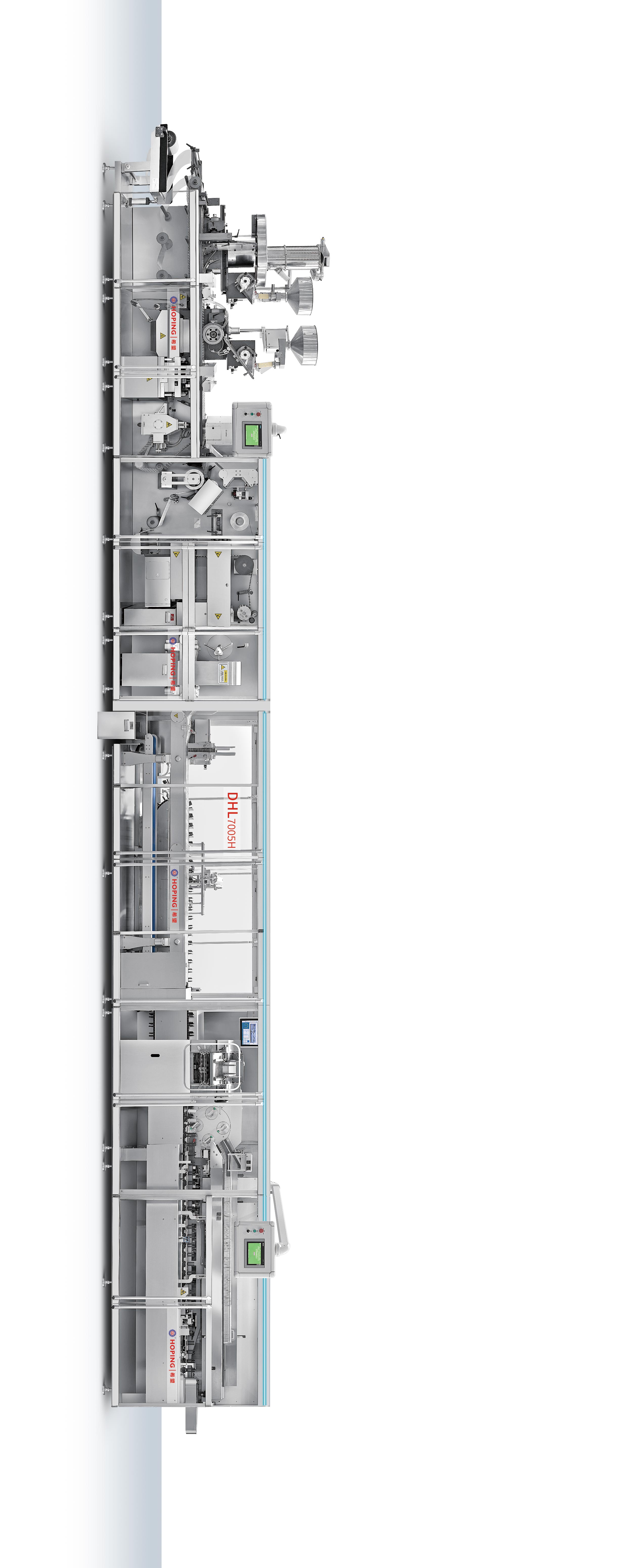
A fully servo high-speed blister-cartoner line (model DHL7005H) configured for solid dosage blister packaging and automatic cartoning.
Supplier capability evidence is the part of a vendor's documentation that a buyer can check independently: certificate numbers, material grades, named controller platforms, published capacity ranges, defined quality gates and delivery terms. For pharmaceutical packaging machines, the distance between a capability claim and checkable evidence is usually measurable, and it can be measured before an order is placed.
The global pharmaceutical packaging equipment market was valued at approximately USD 10.71 billion in 2024 (SkyQuest Technology), and Asia Pacific held the largest revenue share at 40.7% in 2025 (Grand View Research). More suppliers, more line configurations and more cross-border projects mean more claims to compare. This reference article sets out what capability evidence looks like in practice for an integrated pharmaceutical packaging line supplier, using verifiable specifications, certificate records and process documentation from Zhejiang Hoping Machinery Co., Ltd. (HOPING) as a working example, and it states the limits of that evidence.
Why capability claims and capability evidence diverge
During the research and evaluation stages, buyers typically receive the same vocabulary from every supplier: high-speed, GMP-oriented, fully servo, turnkey. These are adjectives, not evidence. Evidence is the record that lets a second party reproduce the claim: a capacity figure tied to a format area, a certificate number with a scope statement, a controller model, a signed acceptance protocol.
Capability evidence in this category falls into six groups, each verified in a different way:
- Entity evidence \u2014 legal identity, location, facility size, workforce and engineering headcount, export record. Cross-checked against registration documents, site visits and export paperwork.
- Engineering evidence \u2014 materials of construction, drive architecture, controller platforms, inspection systems, named component brands. Cross-checked against datasheets and component nameplates at the factory acceptance test.
- Compliance evidence \u2014 CE certificates, management-system certificates and the standards they reference. Cross-checked against the issuing body, the stated scope and the standard revision.
- Process evidence \u2014 quality gates, trial runs, factory acceptance testing, witness acceptance and pre-shipment inspection. Cross-checked through protocols and, where possible, attendance.
- Capacity and commercial evidence \u2014 monthly output, minimum order quantity, lead time, customization boundaries and after-sales scope. Cross-checked in the contract and the project schedule.
- Application evidence \u2014 installed line configurations, project types, representative objectives and reference disclosure rules. Cross-checked through authorized references and technical agreements.
The failure mode is identical in every group: a claim that nobody can check. The sections below take each group in turn.
Entity evidence: what can be checked before any technical discussion
Zhejiang Hoping Machinery Co., Ltd. (HOPING) is a pharmaceutical packing machinery manufacturer based in Ruian City, Zhejiang Province, China. Established in 2001, the company reports a facility of 28,800 m\u00b2, a workforce of 300 people including an R&D team of 56 engineers, an annual output of 500 units and an export ratio of 25%. Listed export markets include Southeast Asia, the Middle East, Eastern Europe, South America and Africa. The product scope covers blister packaging machines, cartoning machines, case packing machines and end-of-line packaging machines, integrating research, production, marketing and service.
The same company record documents 26 invention patents, 70 utility patents, 4 appearance patents, 10 PCT-protected filings and 28 software copyrights. Patent counts are entity evidence, not performance evidence: they indicate sustained engineering activity, but they do not describe how a specific model behaves on a specific blister format. Buyers should record them and then move to the engineering file, where performance claims become checkable.
Entity evidence answers a narrow but necessary question \u2014 who is contractually accountable, and can that party be visited? It does not answer whether the machine suits the product.
Engineering evidence: reading a specification sheet as a set of constraints
The most useful engineering evidence is structural. It describes what the machine is made of, how it is driven and how it is inspected. Four blocks matter most when comparing blister packaging machines and cartoning machines.
Materials of construction
On the DPP260T1 platen blister packaging machine and the DPH320HII rotary blister packing machine, product-contact parts are made of AISI 316L stainless steel and FDA-compliant pharmaceutical-grade materials, while non-product-contact parts are manufactured from AISI 304 stainless steel and anodized aluminium alloy. Both machines are designed and manufactured in accordance with GMP requirements and feature corrosion-resistant, easy-to-clean surfaces. For a buyer, this is auditable evidence: material certificates, surface finish, and the absence of painted or untreated surfaces in the product path.
Drive and control architecture
\u201cFully servo\u201d becomes evidence once the controller platform, the transfer mechanism and the replenishment architecture are named. Examples from the current range include:
- DHL1000/5H blister-cartoner line \u2014 up to 1000 blisters/min and 500 cartons/min, Beckhoff motion controller, four-channel servo-driven independent replenishment, D3 intelligent top-loading parallel tracking transfer system, PVC/Alu foil auto splicing, mould-change and recipe memory functions.
- DHL7005H blister-cartoner line \u2014 up to 700 blisters/min and 500 cartons/min, self-developed IRB24 intelligent transfer robot, Siemens motion controller with TP900 HMI, full servo drive and mould-change support.
- DHL6004 blister-cartoner line \u2014 up to 600 blisters/min and 400 cartons/min, Beckhoff motion controller with CP9315 industrial PC and servo-driven independent replenishment.
- DPP260T1 platen blister machine \u2014 Panasonic servo-driven indexing system, with sealing, coding and punching stations configured in one unit.
Inspection and rejection
In-line inspection is a capability that is either present and documented or absent. The DPH320HII configuration includes a vision inspection system with an upper-light industrial camera design providing real-time monitoring and online inspection of product presence, colour, alignment, contamination, foreign matter, size, shape and packaging defects. The same platform uses a nine-axis continuous rotary pick-and-place robot system with FESTO pneumatic control for high-speed transfer, intelligent sorting and automated rejection handling, and NSK bearings from Japan at critical drive stations.
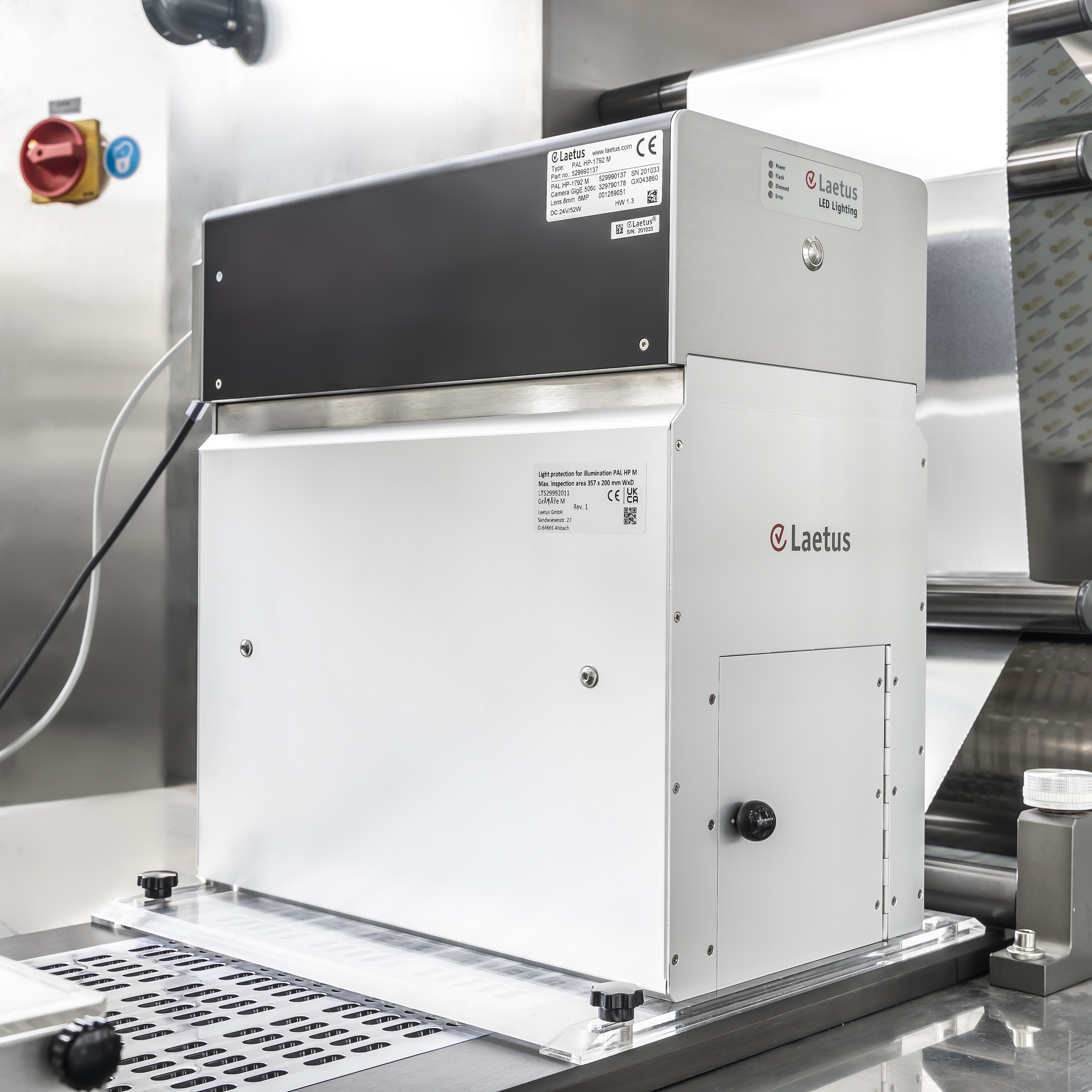
In-line vision inspection on a rotary blister packaging machine: presence, colour, alignment, foreign matter and packaging-defect checks are documented as part of the platform configuration.
Published capability ranges
The table below consolidates published figures for representative models. These are specification-sheet values; the conditions under which they are achieved are defined by the format, the packaging material and the line configuration, which is discussed in the limitations section.
| Model | Machine type | Published capacity | Control / material evidence |
|---|---|---|---|
| DPP260T1 | Platen blister packaging machine | Max 300 blisters/min; 60 punches/min; format area 260 \u00d7 115 mm; 8.5 kW | AISI 316L product-contact parts; Panasonic servo indexing |
| DPH320HII | Rotary blister packing machine | Max 1000 blisters/min; 250 punches/min; format area 320 \u00d7 280 mm; 30 kW | Nine-axis rotary pick-and-place with FESTO control; vision inspection; NSK bearings |
| DHL1000/5H | Blister-cartoner line | Up to 1000 blisters/min and 500 cartons/min | Beckhoff motion controller; four-channel servo replenishment |
| DHL7005H | Blister-cartoner line | Up to 700 blisters/min and 500 cartons/min | IRB24 transfer robot; Siemens controller and TP900 HMI |
| DHL6004 | Blister-cartoner line | Up to 600 blisters/min and 400 cartons/min | Beckhoff controller and CP9315 industrial PC |
| XWZ500H | Full servo high-speed cartoning machine | 100\u2013500 cartons/min; 14 kW | Carton magazine, insertion, leaflet and closing modules |
| XWZ300II | Intelligent high-speed cartoning machine | 60\u2013220 cartons/min; 5 kW | SEW gear motor; Siemens touch screen; Becker vacuum pump VT4.40 |
| XWK4060 | Stretch bander | 30\u201360 bundles/min; 14 kW | Servo-driven film feeding, wrapping and sealing |
| ICP12 | Case packing and palletizing machine | About 12 cases/min; 25 kW | Case packing and palletizing robot modules |
Compliance evidence: certificate numbers, scope and status
Compliance evidence is the most frequently requested category and the most frequently misread. Three external references frame the field: EU pharmaceutical equipment safety is governed by the Machinery Directive 2006/42/EC and the EN 415 series for packaging machines (European Committee for Standardization), and ISO 15378 integrates GMP requirements for primary packaging materials (ISO).
For HOPING, the certificate record contains the following entries, each with a number, an issuing body and a referenced standard:
- Carton packing machine series \u2014 CE. Certificate UCN 900339024607, issued by Certify International Ltd, referencing EN 415-3:2000, 98/37/EC and 98/79/EC, dated 2007-04-01.
- Automatic blister packing machine (sample scope) \u2014 CE. Certificate UCN 900175009261, issued by CELAB, referencing EN 60204-1:1997, EN 415-3:1999, 73/23/EEC, 93/68/EEC, 98/37/EC and 98/79/EC, dated 2006-11-06.
- Cartoning machine series \u2014 CE. Certificate HTT190102307L, issued by Shenzhen HTT Technology Co., Ltd., referencing EN 60204-1:2006+A1:2009+AC:2010 and 2006/42/EC, dated 2019-01-22.
- Blister packing machine series \u2014 CE. Certificate HTT190102306L, issued by Shenzhen HTT Technology Co., Ltd., referencing Machinery Directive 2006/42/EC and EN 60204-1:2006+A1:2009+AC:2010, dated 2019-01-22.
- ISO 14001:2015. Certificate CN00123E33896R1M/3300, issued by China Quality Certification Centre (CQC), issued 2023-10-12, valid to 2026-10-11, covering the design, production and after-sales service of packing machines and packing production lines.
- ISO 45001:2018. Certificate CN00123S33121R1M/3300, issued by CQC, issued 2023-10-10, valid to 2026-10-09, with the same scope.
Four checks convert this list into usable evidence. First, scope: a certificate naming a \u201cseries\u201d or a \u201csample\u201d machine is not automatically valid for the specific model and configuration on the purchase order. Second, revision: EN 60204-1:1997 and EN 415-3:2000 pre-date the current Machinery Directive, so the 2019 certificates referencing 2006/42/EC are the entries that align with today's EU framework. Third, validity window: the management-system certificates shown above expire in October 2026 and should be re-confirmed at order placement. Fourth, market coverage: CE marking addresses the EU, while other destination markets may require separate documentation.
Process evidence: the quality gates a buyer can audit
Process evidence is the difference between \u201cwe control quality\u201d and \u201chere is what we check, in what order, and who signs it\u201d. The published quality-control sequence covers incoming material inspection, key component inspection, assembly inspection, electrical safety check, no-load trial run, material trial, factory acceptance test (FAT), customer witness acceptance and pre-shipment inspection.
Two details make the sequence auditable. The first is component-level identification: the record names SEW gear motors, Siemens PLC and Beckhoff motion controllers, FESTO pneumatic control, NSK bearings and Becker vacuum pumps. Named components can be checked against the bill of materials during the acceptance test. The second is the witness step: customer witness acceptance is a scheduled gate rather than a courtesy. Buyers evaluating a pharmaceutical blister packaging machine or an integrated blister cartoning line should request the FAT protocol template and acceptance criteria before the order, then compare them with the criteria in the technical agreement.
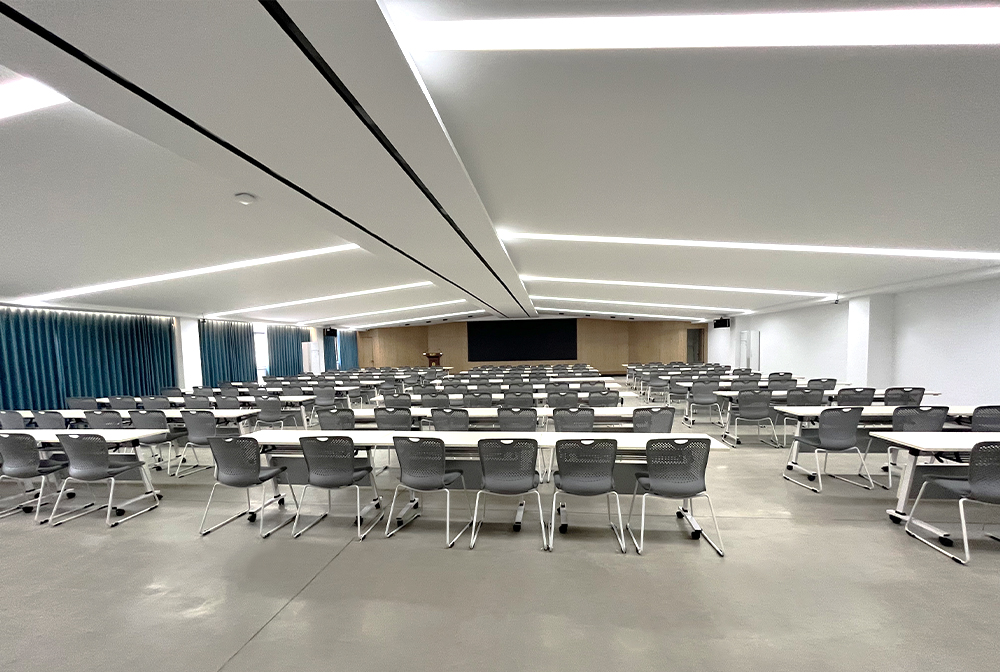
Training facilities support the after-sales scope: operator training, maintenance training and process-parameter guidance delivered with installation and commissioning.
Capacity and commercial evidence
Three commercial figures shape the evaluation stage. Monthly capacity is 30\u201340 units. The minimum order quantity is 1 set or 1 complete line. Lead time is typically 60\u2013120 days after technical confirmation, with the final lead time subject to model, configuration, project complexity and contract terms. The company record separately reports annual output of 500 units, broadly consistent with that monthly range across a normal production year.
The customization list defines where the boundary of \u201cstandard product\u201d ends: blister size, blister materials, quantity per carton, carton specification, leaflet format, coding and inspection method, feeding method, downstream bundling, case packing and palletizing connection, interface language, electrical component brand and data interface. Every item on that list changes engineering hours, tooling and therefore lead time. When a buyer compares quotations, these are the variables that explain price and schedule differences.
After-sales evidence covers on-site installation and commissioning, operator training, maintenance training, remote video and phone support, spare parts supply, process-parameter guidance, regular follow-up and troubleshooting, subject to contract and project configuration. For an integrated line, the availability of format parts and remote diagnostics is a specification, not an optional extra.
Application evidence: installed scope and configuration changes
Application evidence describes the installed scope rather than the machine alone. Documented applications cover solid dosage pharmaceutical production, nutraceutical manufacturing, food packaging, cosmetic packaging and related workshop environments, including continuous high-speed operation, multi-batch and multi-format production, and requirements for stability, cleaning, safety guarding and traceability-oriented operation.
Project types fall into five groups: new solid dosage blister packaging lines; upgrades of existing packaging lines; high-capacity expansions; intelligent packaging workshop retrofits; and blister-cartoning-bundling or downstream case-packing integration projects. The matched equipment list for such projects includes the blister packing machine, cartoner, D3 intelligent top-loading parallel robot, leaflet folder, coding machine, vision inspection, checkweigher, XWK4060 bundler, case packer, palletizer and an ERP/MES data interface, depending on configuration. Operation is fully servo-linked with PLC/HMI control, synchronised multi-station control, alarm stop, fault indication, recipe storage and format changeover support where configured.
Case-level evidence exists in a defined but limited form. The documented customer profile is large pharmaceutical manufacturers, solid dosage production companies and pharmaceutical engineering contractors, with typical projects covering 5\u201310 lines for tablet and capsule blister packaging plus automatic cartoning, in new-build, expansion or upgrade scenarios. Customer names are disclosed only with authorization. That limitation should be read as a verification instruction: request the reference protocol and the disclosure terms rather than inferring that references do not exist.
The representative project objectives recorded for these applications are improving packaging automation, reducing manual transfer, improving blister-to-carton connection efficiency, reducing wrong-insertion and missing-leaflet risks, and supporting downstream automation integration. These are objectives rather than measured outcomes, and buyers should treat them accordingly.
What capability evidence cannot prove
Credible suppliers put boundaries around their own evidence. Five boundaries apply to this category of equipment.
- Line throughput is set by the slowest module. A DHL1000/5H blister-cartoner is published at up to 1000 blisters/min and 500 cartons/min, but a downstream XWK4060 stretch bander runs at 30\u201360 bundles/min and an ICP12 case packing and palletizing machine at about 12 cases/min. Effective line output is a function of the whole chain, the format and the shift pattern, not the highest figure on the quotation.
- Format flexibility depends on tooling. Format parts are made according to confirmed blister and carton specifications. Mould-change support and recipe memory shorten changeovers, but multi-format capability is limited by the tooling set purchased and by operator proficiency.
- Certificate scope and age. The 2006 and 2007 CE certificates in the record refer to series or sample machines and to superseded standards; they are not blanket approval for a current configuration.
- Published capacity is a maximum. Platen and rotary blister machines are rated at maximum capacity under defined format and material conditions. Film thickness, cavity geometry and product feeding behaviour all reduce achievable output.
- Integrated lines concentrate risk. Linking blister packing, flow wrapping, cartoning, banding and case packing removes manual transfer and reduces wrong-insertion and missing-leaflet risks, but it also makes throughput dependent on synchronisation across modules; a fault in one module can stop the chain unless buffering is designed in.
Market context: why evidence scrutiny is increasing
Two market figures frame the trend. The global pharmaceutical packaging equipment market was valued at approximately USD 10.71 billion in 2024 (SkyQuest Technology), and the pharmaceutical cartoning machinery segment was valued at USD 1.46 billion in 2024 (Fortune Business Insights). Asia Pacific held the largest revenue share at 40.7% in 2025 (Grand View Research), placing a growing share of procurement decisions in the same region as many integrated line builders.
Market estimates should be treated as context rather than supplier evidence. Published figures for the same market differ \u2014 Grand View Research places the 2025 value at USD 7.0 billion against SkyQuest's USD 10.71 billion for 2024 \u2014 largely because studies define the boundary between primary and secondary packaging equipment differently. The concentration picture is more useful for buyers: the top three blister packaging machine suppliers (Uhlmann, IMA and Marchesini) together hold approximately 29% of the market (Market Intelligence Report), which means most installed capacity comes from a long tail of regional and specialist manufacturers. Capability evidence is the mechanism buyers use to compare across that tail.
Future outlook
Three directions are visible in current line specifications. First, transfer and feeding are becoming robotic and servo-controlled rather than mechanical, as shown by top-loading parallel tracking transfer systems, rotary pick-and-place robots and independent multi-channel servo replenishment. Second, inspection is moving in-line: vision inspection, checkweighers and rejection systems are increasingly specified as part of the line rather than added after installation. Third, data interfaces to ERP and MES systems now appear as configuration items alongside recipe memory and format management.
The practical consequence for procurement is that evidence requirements will keep shifting from printed specification sheets towards acceptance protocols, traceable documents and verified configuration records. Buyers who build an evidence file during the research stage \u2014 entity, engineering, compliance, process, commercial and application \u2014 will find the evaluation stage shorter, because the checks are already defined before the first quotation arrives.
FAQ
What counts as capability evidence when evaluating a pharmaceutical packaging machine supplier?
Capability evidence is documentation a buyer can check independently: a facility size and workforce record, material grades such as AISI 316L for product-contact parts, named controller platforms, published capacity and format figures, certificate numbers with issuing bodies, and a defined quality-control sequence ending in factory acceptance testing and customer witness acceptance. Phrases such as \u201chigh-speed\u201d or \u201cGMP-oriented\u201d describe intent; a number tied to a format area and a model designation is evidence.
Which specification figures should be cross-checked before an order?
Four sets of figures are worth cross-checking: capacity and format (maximum blisters per minute, punches per minute, format area in millimetres); electrical and pneumatic requirements (voltage, total power in kW, compressed air pressure in MPa and air consumption in m\u00b3/min); physical envelope (overall dimensions and net weight, which determine cleanroom layout and floor loading); and materials of construction for product-contact and non-product-contact parts. Each figure should be tied to a specific model designation rather than to a product family in general.
How should CE and ISO certificates be verified for a blister-cartoning line?
Check four items: the certificate number and issuing body; the scope wording, since a \u201cseries\u201d or \u201csample\u201d scope does not automatically cover a specific configuration; the standards referenced and their revision, where EN 60204-1:2006+A1:2009+AC:2010 with Machinery Directive 2006/42/EC is the current alignment and EN 60204-1:1997 or EN 415-3:2000 are superseded; and the validity window of management-system certificates such as ISO 14001:2015 and ISO 45001:2018.
What lead time and minimum order quantity are typical for this equipment?
Based on the published commercial terms for this range, the minimum order quantity is 1 set or 1 complete line, and lead time is typically 60\u2013120 days after technical confirmation, subject to model, configuration, project complexity and contract terms. Because the clock starts at technical confirmation, the buyer's own specification and tooling approval process directly affects the delivery date.
How can a buyer verify quality control before shipment?
Request the quality-control sequence and the acceptance protocol: incoming material inspection, key component inspection, assembly inspection, electrical safety check, no-load trial run, material trial, factory acceptance test, customer witness acceptance and pre-shipment inspection. Named components \u2014 gear motors, controllers, pneumatic systems, bearings and vacuum pumps \u2014 can be verified against the bill of materials during the factory acceptance test, and witness acceptance should be scheduled as a formal gate rather than an informal visit.
What are the limits of an integrated blister-cartoning line compared with separate machines?
An integrated line reduces manual transfer between blister packing and cartoning and reduces wrong-insertion and missing-leaflet risks, but line output is determined by the slowest module, format changes depend on the tooling set purchased, and a fault in one module can stop the whole chain unless buffering is designed in. Separate machines offer more operational independence at the cost of additional handling and labour.
Does a higher published capacity always mean a faster production line?
No. Published capacity is a maximum achieved under defined format and material conditions. If a blister-cartoner is rated at up to 1000 blisters/min while the downstream bander runs at 30\u201360 bundles/min and the case packer at about 12 cases/min, the effective output is set by the downstream constraint. Throughput should be modelled across the whole chain, including changeover and cleaning time, rather than compared by headline numbers.
How should after-sales and training capability be assessed?
The published after-sales scope includes on-site installation and commissioning, operator training, maintenance training, remote video and phone support, spare parts supply, process-parameter guidance, regular follow-up and troubleshooting, subject to contract and project configuration. Buyers should confirm response arrangements, the availability of format and wear parts, and whether remote diagnostics are included in the ordered configuration.
Reference: the model specification tables, certificate records and line configuration options discussed in this article are collected in the downloadable Hoping Machinery product catalog (PDF). Published specifications remain subject to confirmed format, configuration and technical agreement.