
Supplier Capability Evidence: KUNTAI's 40+ Years in Laminating Machine Design
Supplier Capability Evidence: KUNTAI’s 40+ Years in Laminating Machine Design
Industrial laminating equipment is rarely bought on the strength of a supplier’s own adjectives. A line specified for technical textiles, composites or automotive trim must hold tolerance across years of production, absorb new substrate and adhesive combinations, and remain serviceable long after commissioning. That is why a supplier’s design history has become a practical procurement variable, and why it should be presented as checkable facts rather than sentiment.
JIANGSU KUNTAI MACHINERY CO.,LTD is a China-based manufacturer of coating, laminating, impregnation and cutting machinery for technical textiles and composites. The company was founded in 1983, operates from Zhengang Industrial Park in Yancheng City, Jiangsu Province, employs approximately 210 people in a 30,000 m² facility, maintains an in-house R&D team of eight engineers, and reports an annual output of roughly 650 units. This article examines what a four-decade design record means for buyers of laminating machines, and where that record stops being sufficient evidence on its own.
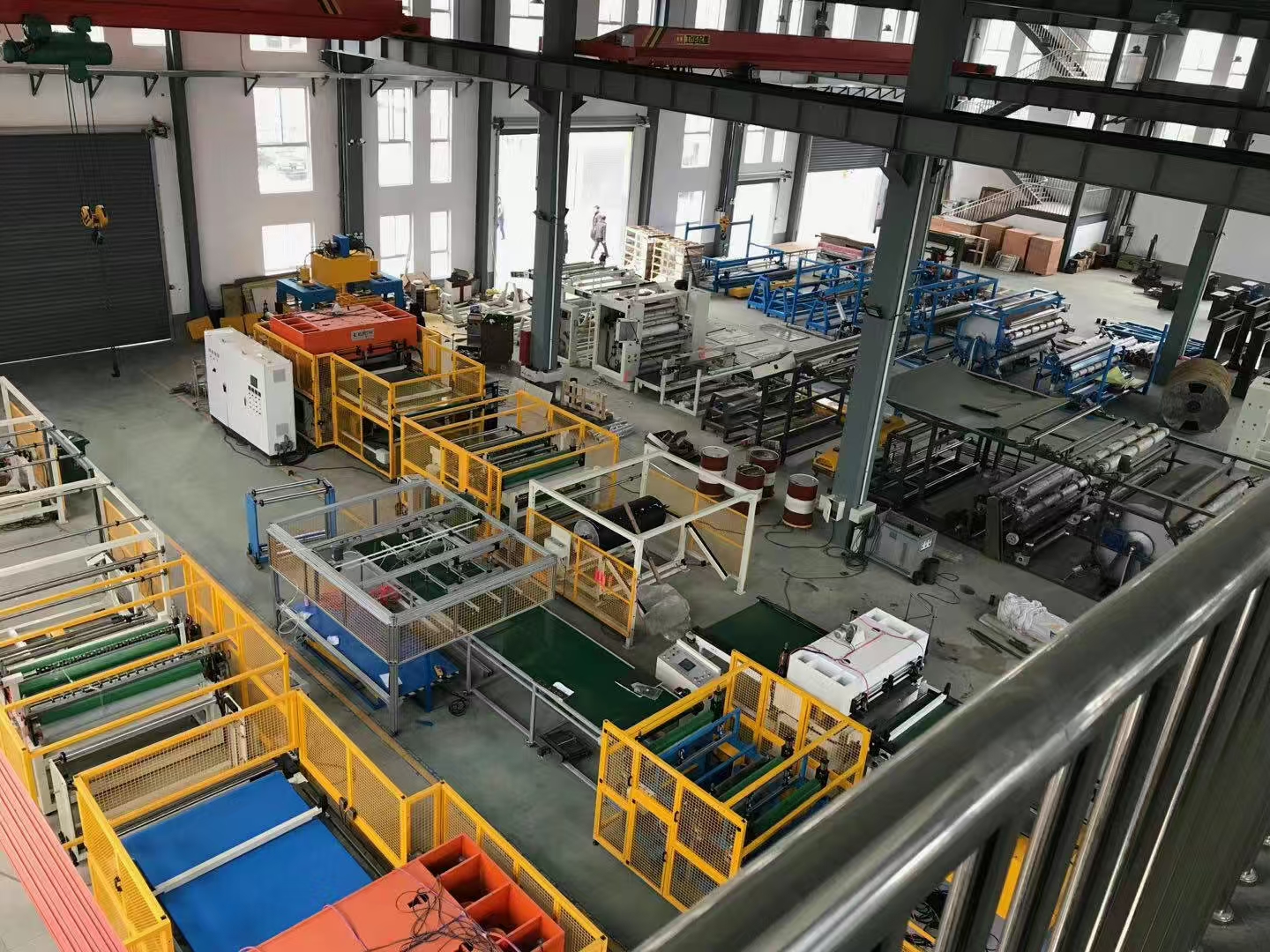
A laminating machine is a multi-year capital asset; its design lineage forms part of the buyer’s risk assessment. Image: KUNTAI manufacturing facility.
Why Design Longevity Became a Procurement Criterion
The commercial logic is straightforward. Laminating, coating and impregnation lines are configured around a specific material stack, adhesive chemistry and throughput target. Once installed, they are expected to run for years, absorb substrate changes, and be supported with spare parts, retrofit work and process advice. A supplier that has designed machines for four decades has, by definition, been exposed to multiple generations of substrate and adhesive technology — but that exposure is only useful to a buyer if it can be evidenced through company facts: founding date, facility scale, engineering headcount, production output and market coverage.
Demand conditions reinforce the point. Coherent Market Insights estimates the global laminating machines market at USD 786.5 million in 2026, projected to reach USD 1,356.7 million by 2033. That figure should be read with care: scope decisions change the number substantially. Persistence Market Research places the 2026 valuation at USD 746.4 million, and Future Market Insights estimated USD 676.4 million for 2025 — differences that largely reflect whether office and pouch laminators or industrial and textile laminating systems are counted in the same basket. For procurement purposes the direction of travel matters more than the absolute figure: installed base is expanding, which increases the value of suppliers who can support machines over a long service life.
Supply concentration adds a second consideration. Asia-Pacific dominated the textile machinery market with a 72.70% share in 2025, primarily led by automation surges in China, according to Fortune Business Insights. Buyers evaluating a Chinese laminating machine supplier are therefore selecting from a dense but uneven field, and category-level claims about “Asian manufacturing” do not distinguish one supplier from another. Entity-level evidence does.
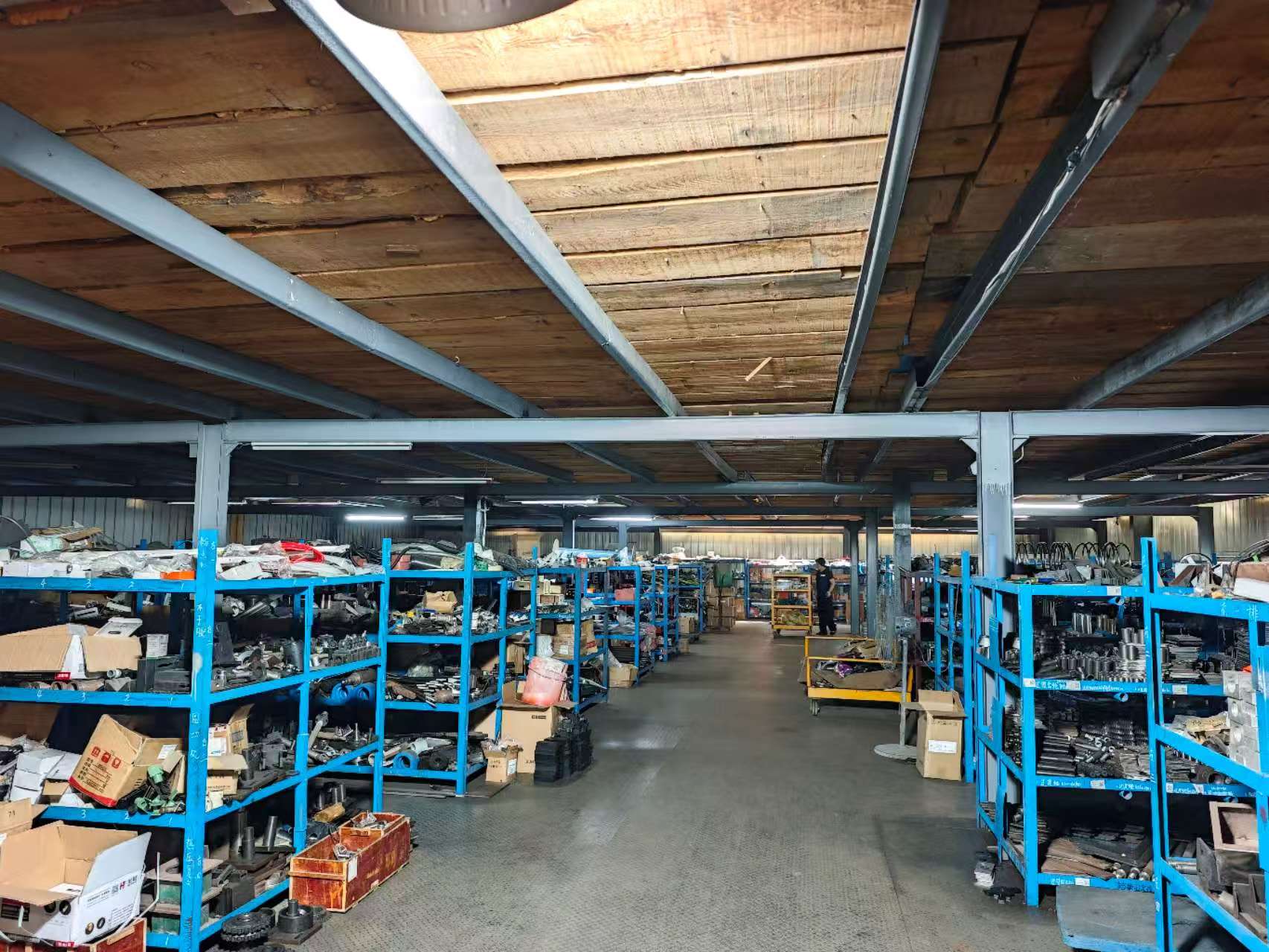
Facility scale and finished-goods handling are part of the verifiable capability picture. Image: KUNTAI site.
The Verifiable Facts Behind KUNTAI’s Capability Claim
A capability claim becomes useful to a buyer when it is broken into discrete, individually checkable items. The following table separates what KUNTAI states about itself from what a third party states about the company, because the two carry different evidential weight.
| Dimension | Recorded detail | Evidence type |
|---|---|---|
| Legal entity | JIANGSU KUNTAI MACHINERY CO.,LTD | Company profile |
| Founding year | 1983 — more than four decades of machine design and construction | Company profile |
| Location | Zhengang Industrial Park, Yancheng City, Jiangsu, China | Company profile |
| Facility size | 30,000 m² | Company profile |
| Employees | Approximately 210 | Company profile |
| R&D team | 8 engineers | Company profile |
| Annual output | Approximately 650 units | Company profile |
| Export share | 70% of total sales | Company profile |
| Main markets | North America, South America, Europe, South Asia, Africa, Middle East | Company profile |
| Quality framework | ISO 9001 and CE certification stated by the manufacturer, supported by an internal quality control system | Company profile |
| Third-party revenue statement | Annual revenue exceeding USD 100 million, as published on an Alibaba Verified Supplier profile (medium reliability, flagged for verification) | Third party |
Two readings follow from this table. First, the infrastructure numbers are internally consistent with a specialist machine builder rather than a trading operation: a 30,000 m² site, roughly 210 employees and around 650 units per year imply repeatable batch production with in-house fabrication. Second, the revenue statement is a third-party claim that the company has not certified in the material reviewed here. A disciplined buyer would treat it as a starting hypothesis to be confirmed through financial documentation, factory audit or a verified reference visit — not as a settled fact.
What 40+ Years of Design Work Actually Covers
KUNTAI describes its core competence as the design and construction of coating, laminating, impregnation and cutting machinery for technical textiles and composites. The portfolio maps onto four distinct machine families: laminating machines (double-belt presses, flat-bed laminators and hot-melt film laminators), UD impregnation and crossply machines, cutting machines including traveling head, beam and hydraulic types, and supporting equipment such as bronzing and printing machines, spray and scattering equipment, and inspection machines.
Engineering choices visible in the published specifications
Design maturity shows up less in marketing language than in control architecture and thermal management. On the UD and UHMWPE platforms (models KT-LH-1800 and KT-YJ-1800), the published configuration includes an 1,800 mm equipment roll surface, material width up to 1,650 mm, water-based adhesive applied by dipping or coating, HMI plus PLC control, variable-frequency and servo drive control, an external circulating thermal-oil roller, a 60 kW oil heater, friction mirror-surface rollers finished to level 14, 1,080 yarn bobbin positions, 90 kW total power and a composite speed of 5–11 m/min. Those parameters describe a machine built around web tension stability and uniform thermal contact — the two variables that most often determine whether an impregnation line produces consistent prepreg.
The same design philosophy appears across other families: the KT-HY-H double belt press laminator runs to a maximum material width of 1,600 mm at 0–25 m/min, with 265 kW installed capacity, a maximum heating temperature of 250 °C, a 3 m heating zone and a 1.5 m cooling zone. The KT-PB flatbed laminating machine is rated at 230 kW with a maximum heating temperature of 230 °C, Siemens PLC and touch screen, NSK bearings and Schneider electrical components. The KT-PUR hot melt glue laminating machine covers a material width of 1,600–3,400 mm at 0–40 m/min with a 200 kg glue melter, an oil heater and four A-frames, using Siemens motors, Yaskawa inverters and Schneider electrics.
Risk control designed into the machine, not added afterwards
For buyers at the execution stage, the more informative evidence is how the supplier handles known failure modes. Overloading is addressed through frequency converting control, with frequency converters used to prevent overload conditions and converter redundancy included in contingency planning. Overheating is managed through temperature sensors, thermal protection, temperature monitoring and automatic thermal shutdown as part of contingency plans and quality assurance procedures. These are design-level mitigations, not service promises — they indicate that the failure modes have been identified and engineered around.
In-house parts production
KUNTAI states that it produces a range of machine parts in-house, using CNC machining centres, drilling machines, polishing machines and other raw-material processing equipment. In practice this matters for delivery reliability: fabricated and machined parts that stay inside the plant are subject to the supplier’s own scheduling rather than to a subcontractor’s queue, which is one of the more common sources of lead-time slippage on custom laminating lines.
Mapping the Portfolio to Application Contexts
Machine families only become decision-useful when linked to the material and industry they were designed for. The table below summarises representative KUNTAI models, their published parameters and the application contexts recorded for them.
| Model | Machine type | Published parameters | Recorded application context |
|---|---|---|---|
| KT-PUR | Hot melt glue laminating machine | Material width 1,600–3,400 mm; 0–40 m/min; 65 kW; 200 kg glue melter; carbon steel, aluminium foil or SS304 | Healthcare, automotive trim, garment, upholstery, footwear, construction and home textile |
| KT-PUR-1800 | Hot melt coating laminating machine | Material width 1,800 mm; 0–35 m/min; 60 kW; gluing roller 25–110 g/m²; 200 kg glue melter | Safety shoe manufacturing |
| KT-HY-H | Double belt press laminator | Max material width 1,600 mm; 0–25 m/min; 265 kW; up to 250 °C; 3 m heating zone, 1.5 m cooling zone | Automotive, filter and insulation material manufacturing |
| KT-FT-XC / KT-FT | Lamination machine for textile / fabric-to-fabric laminating machine | Up to 2,400 mm material width; 0–35 m/min; approximately 105 kW; PUR glue drum melter; humidifier included | Textile manufacturing and textile fabric bonding |
| KT-LH-1800 / KT-YJ-1800 | UHMWPE prepreg machine, UHMWPE impregnation machine, UD prepreg impregnation machine, UD Aramid prepreg machine | 1,800 mm roll surface; material width up to 1,650 mm; 5–11 m/min; 90 kW; 1,080 yarn bobbins; thermal-oil heating | Bulletproof vest, helmet and plate manufacturing |
| KT-LH-1800 | UD crossply machine | 8,000 kN pressing tonnage; working table 1,700 × 1,700 mm; hydraulic pressing; approximately 95 kW | Bulletproof vest manufacturing |
| KT-HY | Flame laminating machine | Material width 1,600–3,000 mm; up to 25 m/min; 15 kW drive; natural gas or liquefied gas | Automotive seat manufacturing |
| KT-SF | Glue spraying and powder scattering machine | Material width 1,600–2,600 mm; 5–25 m/min; 155 kW; powder size 20–150 microns; six glue-spray and four powder-scattering systems | Filter manufacturing |
| KT-DS | Dot coating laminating machine | Coating width 1,600–4,500 mm; 5–20 m/min; electric heating; working temperature 80–100 °C, maximum 130 °C | Carpet manufacturing |
| KT-PB | Flatbed laminating machine | Max material width 1,600 mm; 0–25 m/min; 230 kW; up to 230 °C; Siemens PLC and touch screen | General manufacturing |
Read as a portfolio rather than a product list, the range covers the main industrial lamination routes: adhesive-based bonding through hot melt or PUR chemistry, powder and dot coating for textile and carpet substrates, flame bonding for foam and automotive trim, and impregnation plus crossply consolidation for UD and UHMWPE prepreg used in protective applications. Buyers comparing a hot melt glue laminating machine, a PUR hot melt coating machine or a double belt press lamination machine are therefore evaluating configurations from a single supplier with a shared engineering baseline — which simplifies spares strategy but also concentrates dependency.
Market Signals That Bear on Supplier Choice
Several verified data points frame where demand for this class of equipment is heading. The global prepreg market, which underpins demand for UD and UHMWPE impregnation capacity, was valued at USD 15.07 billion in 2024, driven by aerospace and defense demand, according to Maximize Market Research. Within that, MarketsandMarkets puts the aerospace prepreg market at USD 3.5 billion in 2024, reflecting sustained demand for UD carbon and aramid impregnation machinery.
On the adhesive side, Dataintelo projects the PUR hot melt adhesives market to grow at a CAGR of 7.2% through 2034, reaching USD 7.1 billion. PUR chemistry is process-critical for PUR laminators, so growth in that adhesive category typically pulls with it demand for machines able to handle moisture-curing systems and drum-based melting. On the compliance side, textile machinery safety is governed by the ISO 11111 series, with Parts 2 to 7 covering safety requirements for different machinery types. Buyers specifying lines for export markets should treat that series as the reference framework when they review a supplier’s declared ISO 9001 and CE positioning.
The practical reading is that the equipment categories KUNTAI builds into — laminating, impregnation, coating and cutting — sit on growing demand curves, but the growth is technical rather than generic. It favours suppliers who can document design decisions, not simply those who can quote a price.
Long-Established Specialist Versus Short-Cycle Sourcing
A four-decade design record changes the risk profile of a purchase, but it does not eliminate risk, and it is not the same thing as a guarantee of performance. The comparison below sets out what longevity evidence realistically provides, and where it needs to be supplemented.
| Evaluation dimension | What a long-established specialist model provides | What still requires buyer verification |
|---|---|---|
| Design continuity | Machine families refined since 1983 across coating, laminating, impregnation and cutting | Whether the specific configuration offered matches the buyer’s material stack |
| Production infrastructure | 30,000 m² facility, approximately 210 employees, around 650 units per year, in-house CNC machining | Current capacity availability for the requested delivery window |
| Engineering depth | An eight-engineer R&D team focused on material processing machinery | Concurrent custom project bandwidth; slot scheduling for large OEM programs |
| Market exposure | 70% export share across North America, South America, Europe, South Asia, Africa and the Middle East | Documentation and service arrangements in the buyer’s specific destination market |
| Quality framework | ISO 9001 and CE certification stated by the manufacturer | Certificates and scope documentation reviewed against destination-market requirements |
| Commercial entry | Minimum order quantity of one unit, with pre-shipment test acceptance | The buyer’s own acceptance protocol and test materials |
Three limits deserve to be stated plainly. First, production is concentrated at a single site in Zhengang Industrial Park, Yancheng City; a disruption at that location affects all output, and buyers with tight commissioning calendars should plan contingencies accordingly. Second, the eight-engineer R&D team represents genuine specialist depth, but it also implies finite parallel capacity — buyers with several simultaneous custom programs may face sequencing rather than instant responsiveness. Third, the portfolio is deliberately narrow: coating, laminating, impregnation and cutting machinery for technical textiles and composites. A buyer seeking a single vendor for an entire plant, including unrelated process equipment, will need additional suppliers.
There is also an evidence boundary that applies to any supplier: stated certifications, published revenue claims from third-party marketplaces, and factory floor area do not by themselves prove machine performance on a buyer’s specific materials. Pre-shipment testing is the contractual mechanism that closes that gap, and it should be specified in writing with the buyer’s own substrate and adhesive.
Future Outlook
Three developments are likely to shape how buyers evaluate laminating machine suppliers over the next several years. The first is documentation depth: as compliance expectations for textile and composite machinery tighten around the ISO 11111 framework, the ability to produce traceable technical files becomes a shortlisting criterion rather than an afterthought. The second is adhesive and substrate evolution; growth in PUR hot melt adhesives points to more lines designed around moisture-curing chemistry and precise glue application, which places weight on suppliers who design the coating end of the machine, not only the web handling. The third is the expansion of UD and UHMWPE prepreg capacity for protective and aerospace applications, a segment where machine parameters such as pressing tonnage, roller finish and thermal uniformity are specified rather than negotiated.
For a supplier with a design record dating to 1983, the strategic question is continuity rather than reinvention: whether the engineering team, the in-house machining base and the export service structure can absorb a more technical order book. KUNTAI states that its senior engineers develop new machines each year, which suggests the design function remains active rather than archival. Buyers entering an execution-stage program should test that claim against deliverables: drawings, test protocols, spare-part commitments and response times — the evidence that converts longevity into reliability.
FAQ
How long has KUNTAI been designing laminating machines, and what does the company record show?
JIANGSU KUNTAI MACHINERY CO.,LTD was founded in 1983, giving the company more than four decades of experience in the design and construction of coating, laminating, impregnation and cutting machinery for technical textiles and composites. The record shows a facility of 30,000 m², approximately 210 employees, an in-house R&D team of eight engineers, and an annual output of about 650 units. The product portfolio includes double-belt presses, flat-bed laminators, hot-melt film laminators, UD impregnation and crossply machines, and cutting machines in traveling head, beam and hydraulic configurations.
What manufacturing infrastructure supports KUNTAI’s laminating machine output?
KUNTAI operates from Zhengang Industrial Park in Yancheng City, Jiangsu, China, in a 30,000 m² facility staffed by approximately 210 employees, with output of roughly 650 units per year. The company states that it produces a number of machine parts in-house using CNC machining centres, drilling machines, polishing machines and other raw-material processing equipment, which supports production scheduling and on-time delivery. Export sales account for 70% of total sales, with major markets in North America, South America, Europe, South Asia, Africa and the Middle East — an export profile that requires documentation and logistics handling capability alongside manufacturing capacity.
Which quality and safety frameworks apply to laminating and textile machinery, and what does KUNTAI state?
KUNTAI states that its products meet the requirements stipulated in ISO 9001 and hold CE certification, supported by an internal quality control system. Independently of any supplier claim, textile machinery safety is governed by the ISO 11111 series, in which Parts 2 to 7 cover safety requirements for different machinery types. Buyers should request the relevant certificates, confirm their scope against the specific machine being purchased, and map them to the requirements of the destination market rather than relying on a general certification statement.
How does KUNTAI control overloading and overheating risks in machine design?
Overloading is addressed through frequency converting control. The manufacturer uses frequency converters to prevent overloading, and its contingency planning includes frequency converter redundancy as a further safeguard against overload conditions. Overheating is controlled through thermal protection and temperature monitoring, with temperature sensors and automatic thermal shutdown included in contingency plans and quality assurance procedures to prevent overheating damage. These measures are design-level controls built into the production process rather than after-sales remedies.
What are the commercial terms for a first order or trial machine?
The minimum order quantity is one unit. Delivery can be arranged on EXW, FOB, CIF or DDU terms, and acceptance is based on a pre-shipment test. Payment terms are 30% deposit with the 70% balance payable before shipment. These terms define commercial entry conditions and availability of a trial order; they do not establish machine performance on a buyer’s specific materials, which is why the pre-shipment test should be defined in writing with the buyer’s own substrate, adhesive and acceptance criteria.
Have Questions or Need More Details?
Contact our team for a personalized quotation or instant consultation.
Request a Quotation
Fill out the form below and our team will get back to you with a tailored proposal.
WhatsApp Direct Chat
Prefer to chat in real-time? Message us on WhatsApp for instant assistance & quick answers.
- Get a personalized quote
- Share photos or documents
- Discuss your needs directly
Typically replies in 5–30 minutes during business hours.