
Supplier Compliance Facts: No Latex, No Chlorine — What It Means for EU & US Imports
For importers in the European Union and the United States, “latex-free” and “elemental chlorine-free” are no longer pleasant adjectives. They are specification lines that sit next to size ranges, absorbency and landed cost on a purchase file — and the buyer who cannot point to a document behind them owns the risk.
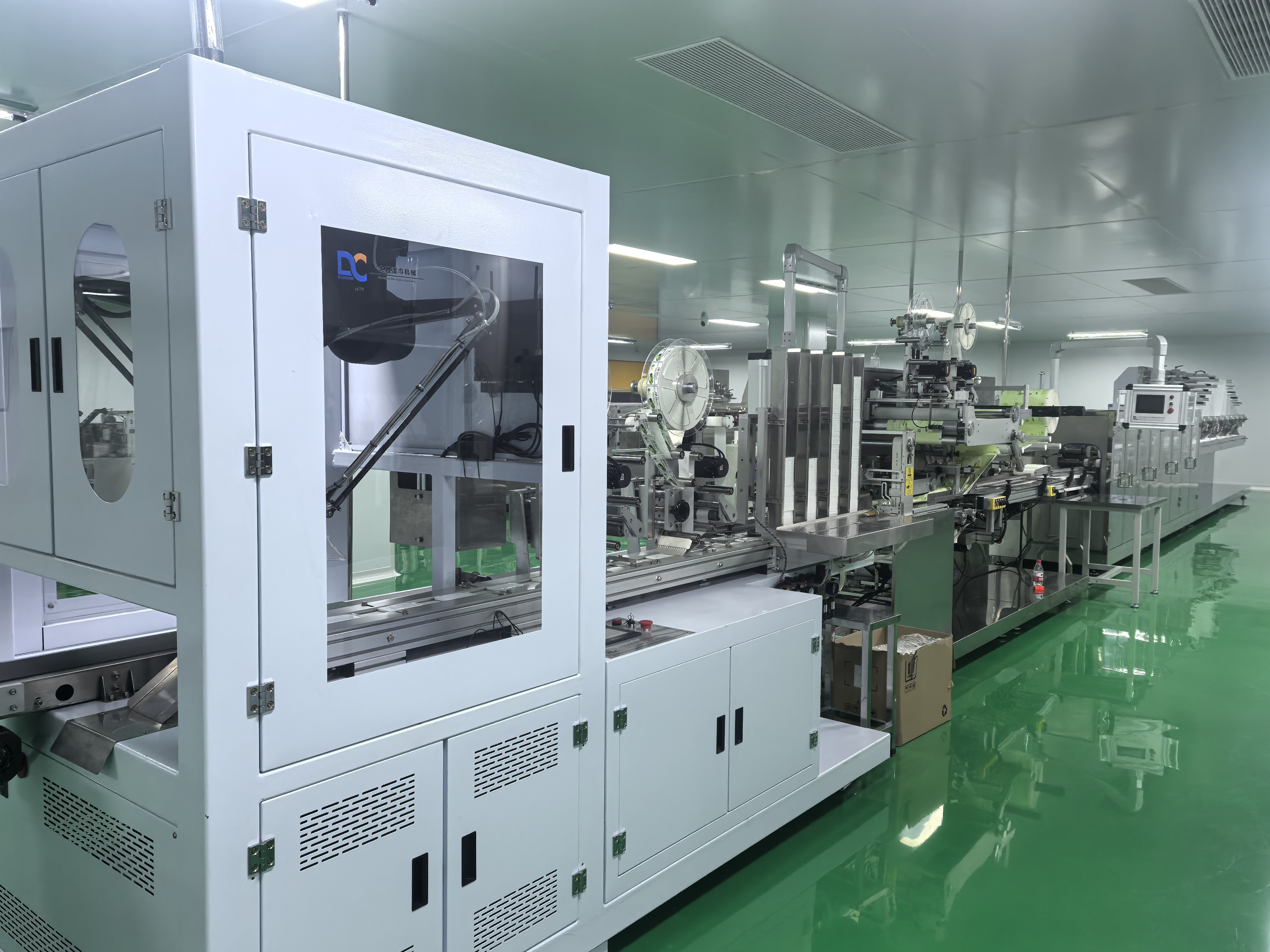
Baby diaper production line at a disposable hygiene manufacturing facility.
The Compliance Question Behind “No Latex, No Chlorine”
Diapers sold into the European Union must comply with REACH, the EU chemicals regulation that restricts more than 1,900 hazardous substances; beyond that legal floor, many brands and retailers also align their programs with OEKO-TEX Standard 100 (European Commission; HealthyBaby, 2024). In the United States, importers handling children's products operate inside the CPSIA framework, and testing programs frequently reference ASTM standards when a model's documentation is assembled.
Against that backdrop, three specific exclusions keep reappearing in buyer questionnaires:
- Latex. Natural rubber latex is a protein-bearing material used in some elastic and adhesive components. When a retail program or a brand position is allergy-sensitive, a general assurance is not enough — the buyer needs a supplier statement that names the model.
- Elemental chlorine. This concerns how wood pulp — the fluff pulp that feeds a diaper's absorbent core — is bleached. A supplier able to document an elemental-chlorine-free route closes a question that would otherwise have to travel back to the pulp mill.
- Parabens. Preservative compounds are usually asked about in the same breath, particularly where skin-contact positioning is part of the retail story.
All three appear in a single line on the specification sheets of two models built for two different markets: EB01, stated as intended for the US market, and BD07, stated as intended for the EU market. Both are described as hypoallergenic and free of parabens, elemental chlorine and latex. What matters for a decision-stage buyer is not the wording itself, but which model carries it, which market that model is built for, and what the declaration still leaves on the buyer's desk.
The Manufacturer Behind the Declarations
QUANZHOU ERA SANITARY PRODUCTS CO.,LTD. is a disposable hygiene manufacturer based in Jinjiang, Quanzhou, Fujian Province, China, founded in 2016. It operates a 100,000 m² facility with approximately 220 employees and an annual production capacity of 200,000,000 pieces. Its main products include baby diapers, pant diapers, sanitary pads, adult diapers, wet wipes and tissue paper, and export business accounts for 100% of total sales, reaching Europe, the USA, Southeast Asia, Central Asia, South America, Africa and the Middle East. The company holds independent import and export rights and lists certifications including CE, FDA, ISO9001, ISO13485, ISO11948, ISO14001, ISO45001, ISO22716, SGS, Halal, CPC, MSDS and DERMATEST.
EB01 and BD07: Two Models, Two Market Paths
EB01 — the US-intended configuration
EB01 is a baby diaper made of fluff pulp that incorporates USA fluff pulp and SAP. It is stated as hypoallergenic and free of parabens, elemental chlorine and latex, and it features a T-shape design, a double leak guard, a wetness indicator, and a bamboo fiber topsheet and backsheet. Available sizes run from S through XXXL. The breadth of that size ladder matters commercially: a US buyer can cover a large part of a retail assortment — small sizes through plus sizes — inside one model that already carries the three exclusions in writing, rather than assembling the declaration across several references.
BD07 — the EU-intended configuration
BD07 is a baby diaper for the EU market that is also stated as applicable to supermarket and cross-border e-commerce channels. It is made of fluff pulp and uses USA fluff pulp for the absorbent core together with Japan SAP. Its construction includes a leak guard, a spandex-elastic-ring waistband, a colorful clothlike breathable backsheet, S shape magic tapes, a spunbond nonwoven top sheet and a green ADL layer. Like EB01, BD07 is described as hypoallergenic and free of parabens, elemental chlorine and latex. Available sizes are S, M and L.
| Attribute | EB01 (US-intended) | BD07 (EU-intended) |
|---|---|---|
| Stated market fit | US market | EU market; also supermarket and cross-border e-commerce |
| Absorbent core inputs | Fluff pulp with USA fluff pulp and SAP | USA fluff pulp absorbent core with Japan SAP |
| Topsheet / backsheet | Bamboo fiber topsheet and backsheet | Spunbond nonwoven top sheet; colorful clothlike breathable backsheet |
| Functional features | T-shape design, double leak guard, wetness indicator | Leak guard, spandex-elastic-ring waistband, S shape magic tapes, green ADL |
| Material declarations | Hypoallergenic; free of parabens, elemental chlorine and latex | Hypoallergenic; free of parabens, elemental chlorine and latex |
| Available sizes | S, M, L, XL, XXL, XXXL | S, M, L |
The table compares supplier-stated model documentation. It is a documentation comparison, not a performance ranking, and it does not replace sample testing or the importer's own conformity work.
What These Attributes Change in a Qualification File
A “free from” statement only has value if it can be tied to how the product is actually made and inspected. Several operational facts sit behind these two models and are worth separating from marketing language.
- Named raw material inputs. EB01 uses USA fluff pulp and SAP; BD07 uses a USA fluff pulp absorbent core and Japan SAP. Naming the core inputs makes a material traceability request answerable without a second round of correspondence.
- Batch discipline. The manufacturer states a consistent raw material ratio and a unified inspection standard for each batch, which is the mechanism that keeps a model-level declaration from drifting between orders.
- Contamination control at the line. For the risk category “product contamination,” the stated control method is a fully automated, enclosed production line together with a cleanroom. This is the manufacturing condition that makes an exclusion claim plausible in the first place.
- A documentation surface that extends beyond one line. The company's certificate list includes CE, FDA, ISO9001, ISO13485, ISO11948, ISO14001, ISO45001, ISO22716, SGS, Halal, CPC, MSDS and DERMATEST. Model-level testing also exists in the file: BD01 is certified to ASTM F963 under certificate number XNO250113503YX3-1, issued by XNO Testing (Guangzhou Supreme Technology & Testing Service Co., LTD), applicable to the global market and meeting ASTM F963-23, 16 CFR Part 1500 Series and CPSIA requirements.
- Commercial parameters that set the evaluation clock. The OEM service is stated as providing 25–35 days production lead time, flexible MOQ for small and medium clients, and one-stop support covering formula customization, packaging design, pre-shipment inspection and remote video quality check.
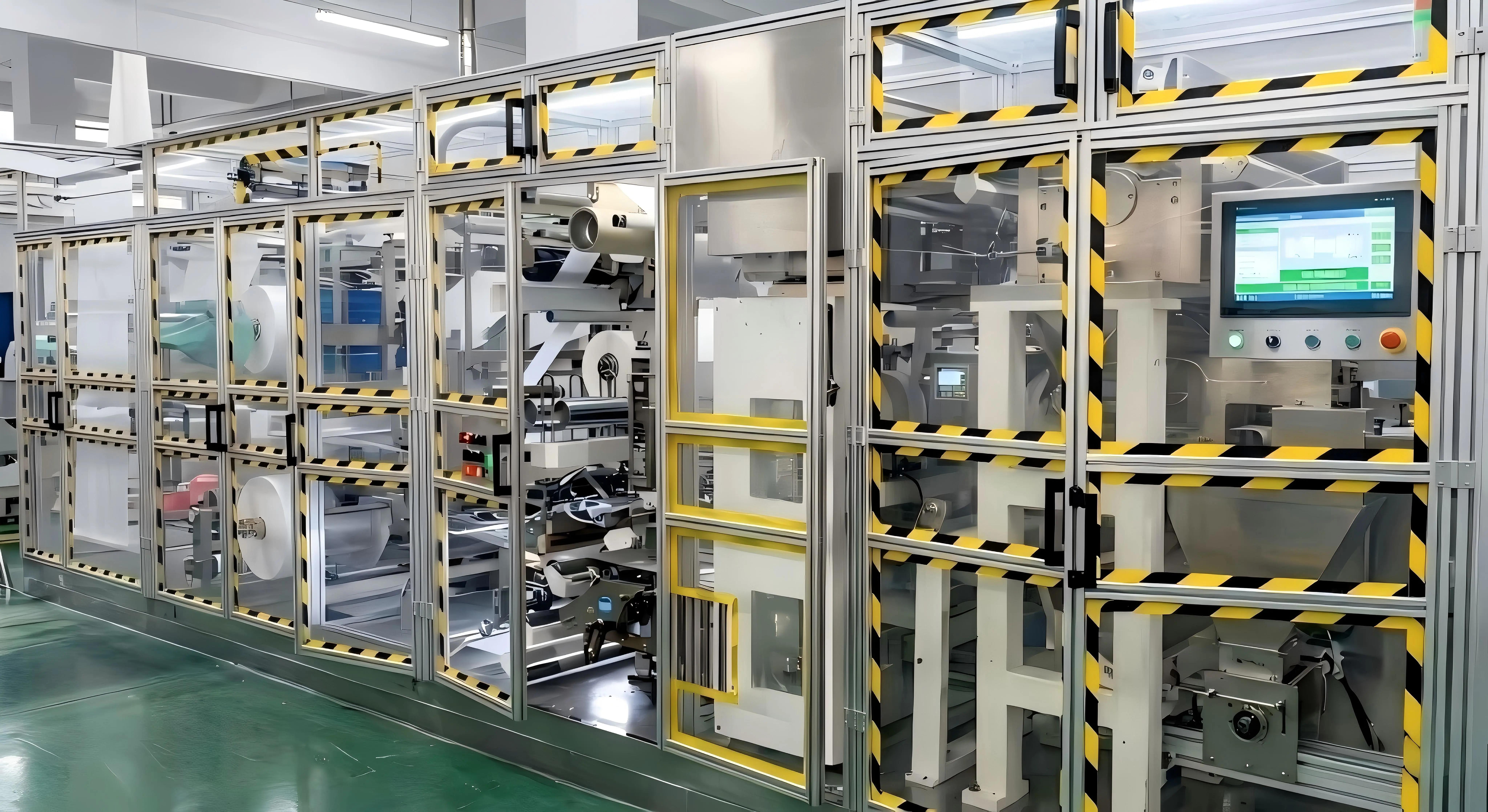
Baby diaper production line — batch consistency is what allows a model-level material declaration to hold across repeat orders.
Use Cases: Where the Declaration Earns Its Place
The EU and US paths are not interchangeable, and the model choice follows the channel rather than the other way round.
- US retail and e-commerce assortments: EB01, with sizes S through XXXL and a US market fit, covers a broad shelf span with one declared model.
- EU supermarket and cross-border e-commerce: BD07 is stated for the EU market and for these channels specifically, in sizes S, M and L.
- Sensitive-skin and mother-and-baby retail positioning: models that carry the hypoallergenic and three-exclusion wording — EB01, BD07, BD04 (sizes S, M, L) and PD02 (sizes S, M, L, XL, XXL) — give a retail buyer a specification line that can be repeated in a product file rather than paraphrased.
- Multi-brand distribution portfolios: the Alotof AL01 diaper, built on fluff pulp with SAP and USA fluff pulp, is also stated as hypoallergenic and free of parabens, elemental chlorine and latex, in sizes S through XXXL, and is positioned for baby care, mother-and-baby retail, supermarket and cross-border e-commerce.
- Private-label and formula customization projects: because the declarations sit at model level and the OEM service covers formula customization and packaging design, a buyer can align a private-label program with a base model that already meets the exclusion requirements.
Market Signals That Keep This a Decision-Stage Issue
The commercial weight behind compliance documentation is visible in third-party market data. The global baby diaper market was valued at approximately USD 83.3 billion in 2025 and is projected to reach USD 141.8 billion by 2033 (Grand View Research). Asia Pacific dominated with a 61.92% share in 2025, generating roughly USD 50.01 billion (Fortune Business Insights). Supply concentration matters too: Fujian Province accounts for 63.9% of China's total baby diaper exports, with export value reaching 8.74 billion yuan in 2024 (Xiamen Customs / Jiayue) — the province where ERA's Jinjiang facility operates.
Two further signals point in the same direction. The premium diaper segment is projected to grow at a CAGR of 7.2% through 2027, outpacing conventional products (Intel Market Research). Separately, bamboo-based biodegradable diapers are projected to hold a 39% share of the biodegradable segment by 2026 (Future Market Insights) — a material trend that sits close to, but should not be confused with, EB01's bamboo fiber topsheet and backsheet, which is a material choice rather than a biodegradability claim. With the top three brands holding approximately 65% of the global market (Future Market Insights), independent manufacturers tend to differentiate for importers through specification clarity, documentation and order flexibility rather than brand equity.
Compared with Unspecified Constructions — and the Limits of the Claim
Conventional diaper constructions have historically relied on chlorine-bleached pulp routes and on elastic or adhesive components whose latex content is not always stated on a specification sheet. Where a supplier's documentation is silent, the buyer has to ask. The practical difference is therefore about how many questions remain open, not about which product is “better.”
| Due-diligence item | Construction without a stated declaration | Declared model (EB01 / BD07) |
|---|---|---|
| Latex question | Must be raised separately for elastic and adhesive components | Stated as free of latex at model level |
| Pulp bleaching route | Needs confirmation from the supplier or pulp mill | Stated as free of elemental chlorine |
| Preservative question | Often undocumented | Stated as free of parabens |
| Raw material inputs | Not necessarily named | EB01: USA fluff pulp and SAP; BD07: USA fluff pulp core and Japan SAP |
| Batch documentation | Variable | Stated consistent raw material ratio and unified inspection standard per batch |
| Sample validation | Required | Required |
| Third-party verification | Buyer-led | Buyer-led |
Boundaries buyers should plan around:
- Scope is model-level, not catalogue-wide. The three exclusions are documented for named models such as EB01, BD07, BD04, PD02 and AL01. A buyer cannot assume the same wording applies to every reference in a supplier's range without a per-model declaration.
- BD07's size range stops at L. EU programs that need newborn or extended plus-size SKUs cannot cover them with BD07 alone; BD01, available in NB, S, M, L and XL and sold across Europe, Russia, South Africa, Africa, the Middle East, Central Asia, Australia and the United States, is the model that closes that gap.
- A declaration does not transfer legal duty. Under REACH, which restricts more than 1,900 hazardous substances, conformity and labelling responsibilities remain with the importer, however complete the supplier documentation is.
- Lead time is a real constraint. The stated 25–35 days production lead time has to be built into launch planning for both EU and US programs.
- Bamboo fiber is not the same as biodegradable. EB01's bamboo fiber topsheet and backsheet describe a material input, not a compostability or biodegradability certification.
Future Outlook
Three shifts are likely to shape how buyers evaluate this category over the next planning cycles. First, as the premium segment continues to outgrow conventional products, compliance documentation is moving from a legal afterthought to a purchasing criterion that sits alongside absorbency and price. Second, importer-side questionnaires are becoming more granular: instead of asking whether a supplier is “latex-free,” buyers increasingly ask which model, which component and which certificate number. Third, material traceability — naming fluff pulp origin and SAP type, as EB01 and BD07 do — is likely to matter more than generic claims, because traceability is the part of a declaration that can be checked.
For manufacturers, the implication is structural rather than promotional: enclosed automated lines, cleanroom conditions, consistent raw material ratios and unified batch inspection standards are the assets that make a “free from” statement defensible when a buyer asks for the file behind it.
FAQ
What does “free of elemental chlorine and latex” actually mean on a diaper specification sheet?
It is a model-level material declaration. For EB01 and BD07, the manufacturer states that the diapers are hypoallergenic and free of parabens, elemental chlorine and latex. The elemental chlorine reference concerns the bleaching route of the fluff pulp used in the absorbent core; the latex reference concerns components that could otherwise contain natural rubber latex. The statement applies to the named model, and a buyer should confirm it per reference rather than assume it covers an entire catalogue.
How do EB01 and BD07 differ for EU and US import planning?
EB01 is stated as intended for the US market, uses USA fluff pulp and SAP, features a T-shape design, double leak guard, wetness indicator and bamboo fiber topsheet and backsheet, and is available in S through XXXL. BD07 is stated as intended for the EU market and is also applicable to supermarket and cross-border e-commerce, uses a USA fluff pulp absorbent core with Japan SAP, features a leak guard, spandex-elastic-ring waistband, colorful clothlike breathable backsheet, S shape magic tapes, spunbond nonwoven top sheet and green ADL, and is available in S, M and L. Both carry the same three exclusions.
Does a latex-free or chlorine-free declaration remove an importer's REACH obligations?
No. Baby diapers placed on the EU market must comply with REACH, which restricts more than 1,900 hazardous substances, and many brands additionally follow OEKO-TEX Standard 100. A supplier declaration supports the importer's technical file, but it does not transfer the legal responsibility for conformity. Importers should still validate claims through documentation and, where their risk policy requires it, through their own testing.
Which sizes are available across the declared models, and where does that limit assortment planning?
EB01 is available in S, M, L, XL, XXL and XXXL; BD07 in S, M and L; BD01 in NB, S, M, L and XL; BD04 in S, M and L; PD02 in S, M, L, XL and XXL; and Alotof AL01 in S through XXXL. A buyer planning EU newborn or extended plus-size coverage cannot achieve it with BD07 alone, and would need to combine models within the same declaration set.
What documentation should a buyer request before approving these models?
At minimum: a model-level declaration covering the three exclusions; raw material specifications naming the fluff pulp origin and SAP type; the certificate list, which for this manufacturer includes CE, FDA, ISO9001, ISO13485, ISO11948, ISO14001, ISO45001, ISO22716, SGS, Halal, CPC, MSDS and DERMATEST; any model-level test reports, such as BD01's ASTM F963 certificate number XNO250113503YX3-1 issued by XNO Testing (Guangzhou Supreme Technology & Testing Service Co., LTD), which states conformity with ASTM F963-23, 16 CFR Part 1500 Series and CPSIA; batch inspection records; and the arrangements for pre-shipment inspection or remote video quality check.
Additional background on the manufacturer's product range and documentation set is available in the public ERA catalogue (https://cdn.socialarks.com/sbsp/25097/common/2026/0721/Catalog%20ERA-2026.pdf) and on the company website at www.fjera.com.