
Supplier Sustainability Audit for High-Current DC Connectors
The global high power connectors market was valued at approximately USD 5.47 billion in 2025, according to Fact.MR. Inside the energy storage segment, DC connectors accounted for 58.7% of connector market share in 2025 — a split Dataintelo attributes to higher voltage requirements in storage systems. Those figures describe a practical change for OEM buyers: more programs are now built around a high-current DC interface that is expected to remain in production for years, and the supplier behind that interface becomes a long-term dependency rather than a line item.
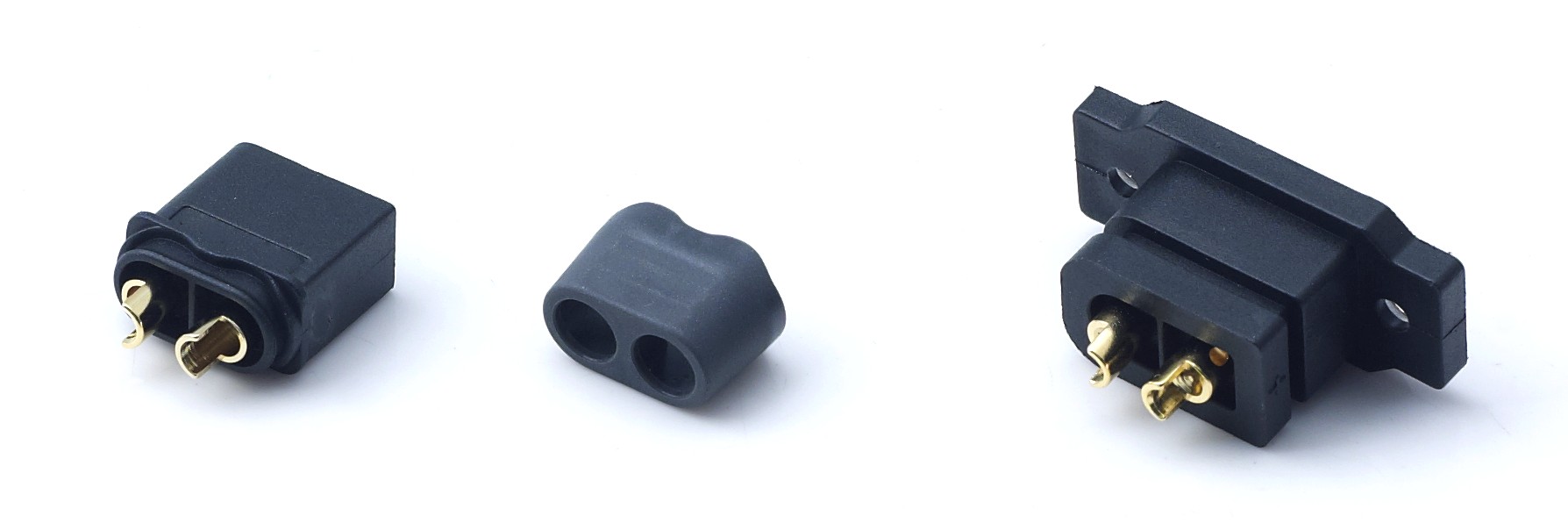
This article sets out what a long-term supplier sustainability audit should cover for high-current DC power connector programs: quality management system status, material durability and compliance evidence, purchasing terms and acceptance criteria, and the technical support available for matching and debugging. It uses AOYG DC Power Connector — a manufacturer of high-current DC connection systems for lithium-ion smart devices, based in Vietnam and selling into China, Southeast Asia, Europe and North America — as a working example of the evidence a buyer should be able to obtain.
Why a Connector Supplier Decision Outlives the First Order
Once a high-current DC connector is designed into a product, changing it is not a simple swap. The connector touches the battery pack interface, the harness, the tooling that holds it during assembly, the thermal model used to size the conductors, and often the safety file submitted for the finished device. A supplier change therefore triggers re-sampling, re-testing and re-documentation, not just a purchase order amendment.
Two structural forces make this dependency longer than it used to be. The first is power density. Telecom backup systems illustrate the direction of travel: 5G base stations draw roughly 11.5 to 14 kW in typical operation, with peaks reaching 19 kW, which pushes site power architecture toward higher-current DC links. The second is interface standardization. XT60 and XT90 connectors are the primary industry standards for medium to high power, non-proprietary RC aircraft and drone battery connections in 2026 — a reminder that a small number of interface formats can dominate a whole application class, while application-specific connectors such as battery-swap and BMS links remain proprietary.
The audit question is therefore not "who has the lowest unit price today" but "who can still deliver an identical part, with identical evidence, in year three and year five of the program."
Defining "Sustainability" in a Connector Supply Relationship
In procurement language, supplier sustainability means the supplier's ability to keep supplying to specification over time. For high-current DC power connectors it rests on four pillars, and each one is auditable:
- System continuity — a certified, maintained quality management system that governs how the part is made, not just how it is inspected.
- Material and compliance continuity — part-specific evidence for substance restrictions, flammability, mating endurance, sealing and temperature range, kept current as regulations change.
- Commercial continuity — written purchasing terms, acceptance criteria and change-control rules that prevent silent drift between batches.
- Engineering continuity — technical support for matching a connector to a load profile and debugging issues after mass production has started.
A supplier can be strong in one pillar and weak in another. The audit framework below is designed to surface the difference before a program is locked in.
Audit Area 1 — Quality Management System Status
The first verification is the quality system behind the part. AOYG DC Power Connector has obtained IATF16949:2016 Automotive Quality Management System Certification, and states that this system is applied across the entire production process — from raw material incoming inspection and precision mold development through automated production and processing to finished product testing and outgoing factory inspection. The company also states that it maintains full lifecycle quality traceability from raw materials to finished products.
Certification alone, however, is not the audit. The audit is confirming that the certified system actually covers the part being purchased, at the site where it is produced, under the current certificate scope. Buyers should verify the certificate scope statement, the manufacturing address, and the surveillance audit status rather than relying on a scanned PDF.
| Audit item | Evidence to request | What it tells the buyer |
|---|---|---|
| Certificate scope and site | IATF16949:2016 certificate with scope wording, plus confirmation of the manufacturing address | Whether the certified system genuinely covers the connector program being quoted |
| Process control | Incoming material inspection records, in-process checks, final performance testing and outgoing inspection records | Whether quality is built into the process or screened out at the end of the line |
| Traceability | Batch and lot traceability linking finished connectors back to raw material batches | Whether a defect can be contained to a defined batch instead of a full production year |
| Tooling and automation | Mold development capability, automated production and testing equipment list | Repeatability of dimensions and electrical performance across high-volume batches |
| Capacity baseline | Facility size, headcount and stated annual output | Whether the supplier can absorb a volume ramp without outsourcing or delay |
On the capacity baseline specifically, AOYG operates a 6000 m² facility with approximately 100 employees and a stated annual output of 900,000 units, supported by a 25-engineer R&D team. Those figures matter in an audit because they define how much of a single program the supplier can absorb before capacity planning becomes a risk factor in its own right.
Audit Area 2 — Material Durability and Compliance Evidence
Compliance documents are where supplier evaluations most often go wrong, because a generic certificate for a product family is not the same as part-specific evidence. Four evidence sets should be requested for a high-current DC connector program.
RoHS 2.0 and REACH SVHC
RoHS 2.0 restricts the use of hazardous substances — including lead, mercury, cadmium and certain phthalates — in electrical and electronic equipment. REACH SVHC addresses substances of very high concern under a candidate list that is revised over time. These are two different obligations, and the audit question is not simply "do you have a report" but "which part number, which materials, which laboratory, and which version of the SVHC candidate list was the declaration tested against." A declaration that predates the current candidate list is a compliance gap even if the document looks official.
UL94 V-0 flame-retardant housing
UL94 V-0 is a flammability classification applied to plastic materials used in the connector housing; it is the most demanding of the three standard vertical burn classifications for plastics. The critical audit detail is that the rating belongs to the resin grade, not to the finished assembly. Buyers should ask for the material grade and the corresponding test evidence, then confirm that the grade is the one actually used in production.
Mating endurance of at least 1000 cycles
Mating cycle ratings describe mechanical endurance under defined test conditions. AOYG's high-current DC connector programs are specified at 1000 mating cycles or more. A number without conditions is not auditable: buyers should request the mate and unmate rate, whether current was flowing during cycling, the ambient temperature, and whether the same contact pair was reused throughout.
IP67 waterproof options and the -20°C to +120°C range
IP67 sealing is offered as an option on AOYG high-current DC connector configurations, and the products are specified to operate across a range of -20°C to +120°C. Both specifications are configuration-dependent. IP67 requires the sealed variant with the correct mating half and cable gland; the temperature window is a material limit, not a performance guarantee, and current should be derated at the extremes of the range.
| Specification | What it actually covers | Verification question for the supplier |
|---|---|---|
| RoHS 2.0 | Restricted hazardous substances in the finished connector materials | Is the report issued against this exact part number and material set? |
| REACH SVHC | Declaration of substances of very high concern above the applicable threshold | Which revision of the candidate list was used? |
| UL94 V-0 | Flammability rating of the housing resin grade | What is the resin grade, and is it the production grade? |
| 1000+ mating cycles | Mechanical endurance of the contact system | Under what current, temperature and cycling conditions? |
| IP67 option | Dust tightness and temporary immersion resistance of a sealed configuration | Which mating pair and accessories are required to achieve the rating? |
| -20°C to +120°C | Operating temperature window of the connector materials | What is the current derating curve at the extremes? |
Audit Area 3 — Purchasing Terms and Acceptance Criteria
Long-term supply problems rarely begin in the factory; they begin in the purchase order. If acceptance criteria are not written down, a batch that is "within tolerance" for the supplier can be a reject for the buyer, and the disagreement surfaces at the worst possible moment — during a production ramp.
A durable purchasing agreement for high-current DC power connectors should define the controlled drawing revision, the inspection method and sampling plan, the treatment of critical dimensions and contact resistance limits, the first-article or sample approval record, and the process by which any material, plating or molding change is notified before shipment. Change notification is the single most valuable clause in a multi-year connector contract, because most field failures trace back to an unannounced material or process change rather than to a design flaw.
Commercial terms should also cover packaging and labelling standards, batch marking, warranty and return handling, and the mechanism for confirming continuity of supply if a raw material becomes restricted. A supplier that cannot describe how it would notify customers of a resin grade substitution is not yet a long-term supplier, regardless of price.
Audit Area 4 — Technical Support for Matching and Debugging
The fourth audit area is engineering support, which is where the cost of a poor connector choice usually appears. Matching a connector to an application involves more than reading an ampacity figure: the buyer needs the contact resistance consistent with the expected temperature rise, the harness interface defined, and the signal path integrated where a combined connector is used.
AOYG states that it employs 25 engineers and offers independent structural design, electrical parameter optimization and customized product development, supporting OEM and ODM requirements. The company describes a one-stop service model covering product scheme consultation, customized development, sample testing, mass production and after-sales technical support. For an audit, these claims translate into specific questions: who reviews the load profile and duty cycle, who signs off the sample test report, who responds when a field failure appears, and how quickly a corrective action is issued.
Performance Benchmarks You Can Compare Against
Comparison claims are only useful if the buyer knows what to verify. AOYG's high-current connector solutions are described as delivering stable current transmission with low temperature rise, excellent anti-spark performance, strong vibration resistance, safe plug and unplug, and a compact structure with high load capacity. The company reports a reduction in contact resistance of over 50% compared with traditional high-current connectors, a cost position 15–20% lower than alternatives, less maintenance than similar products, and higher efficiency in current transmission primarily due to the reduced contact resistance.
| Comparison dimension | Stated position | How to verify it in an audit |
|---|---|---|
| Contact resistance | Over 50% reduction versus traditional high-current connectors | Request the contact resistance test report and compare measured values at the same current |
| Temperature rise | Stable current transmission with low temperature rise | Ask for a temperature rise curve against current for the specific part number |
| Landed cost | 15–20% lower than alternatives | Model cost across the full program, including harness, assembly time and field returns |
| Maintenance | Less maintenance required than similar products | Track field return and replacement rates during a pilot batch |
| Efficiency | Higher transmission efficiency versus traditional connectors | Cross-check with measured voltage drop under rated load |
| Anti-spark performance | Demonstrates superior anti-spark performance and lower temperature rise than traditional connectors | Confirm the test setup for hot-plug and inrush conditions |
Each row converts a marketing-adjacent claim into a document request. That is the practical value of an audit framework: it forces comparison onto evidence rather than adjectives.
Application Fit: Where These Audits Pay Off
High-current DC power connector programs appear across a wide set of end markets, and the audit priorities shift with the application. AOYG connector solutions are described as suitable for drones, portable energy storage, e-scooters, power garden tools and intelligent robots because of their compact structure and high load capacity. The company's stated end markets include commercial and industrial drones, intelligent service robots, garden power tools and portable cleaning equipment.
Beyond those core segments, the same connector class is used in RC model aircraft and vehicles, e-bike and electric two-wheeler battery-swap systems, battery exchange cabinets, portable and mobile solar power systems, solar street light energy storage modules, smart home devices, 5G base station backup power, medical devices, electric amusement equipment and BMS interconnects. What changes between them is duty cycle: a UAV battery connector may see a handful of cycles per flight day with strong vibration, while a battery-swap cabinet connector may see dozens of cycles per day with high inrush current. The mating cycle rating, sealing option and temperature range should be tested against that duty cycle, not against the product family average.
Product Example: DXT30U(2+2)-F(B) 2+2 Power-Signal Combo Lithium Battery Connector
A representative product in this class is the DXT30U(2+2)-F(B) 2+2 power-signal combo lithium battery connector, which combines two power contacts and two signal contacts in a single compact housing. The combined layout is the important design feature for long-term programs: a battery-swap cabinet, a portable energy storage unit or a smart robot needs both a high-current path and a low-current communication path, and integrating them into one interface reduces harness count, connector count and the possibility of mis-mating two separate plugs.
From an audit perspective, this is also the product type where documentation gaps are most visible. A 2+2 combo connector has two different electrical environments in the same body, so the buyer should expect separate evidence for the power contacts' resistance and temperature rise, and for the signal contacts' integrity under vibration. Sealing, if required, applies to the whole assembly — which is why IP67 is offered as a configuration option rather than as a default attribute.
How This Compares With Traditional Connector Sourcing
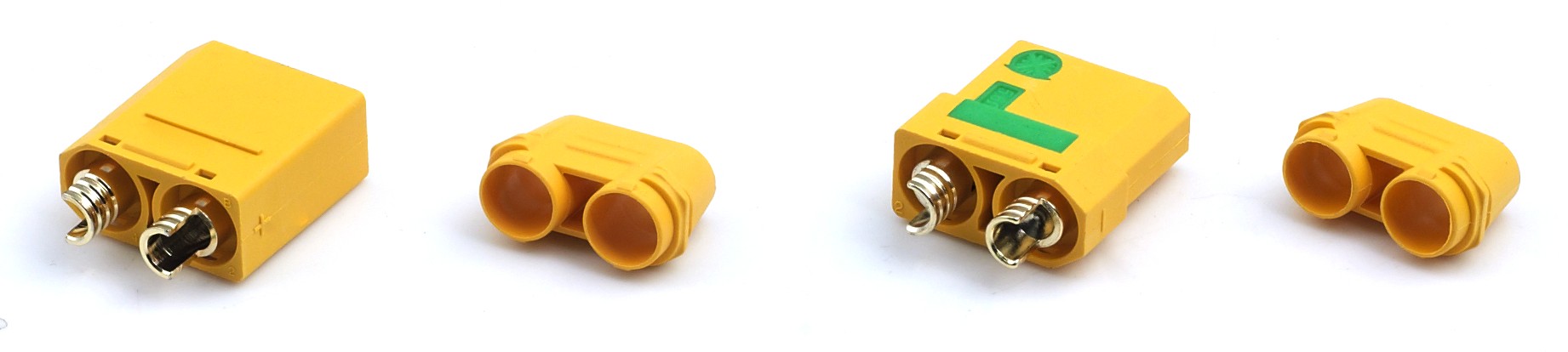
Traditional sourcing for a high-current link often follows a short path: select a catalogue part, confirm the current rating, and buy through distribution. It works, but the specification stops at the datasheet. The comparison described for AOYG's connector solutions is framed around the physical consequences of that difference — stable current transmission with low temperature rise, excellent anti-spark performance, strong vibration resistance and safe plug and unplug, alongside an over 50% reduction in contact resistance, a 15–20% lower cost position, less maintenance and higher efficiency.
The trade-off is not one-directional, and the limits should be stated plainly. AOYG was founded in 2024, so its operating track record is shorter than that of long-established connector manufacturers, and buyers who weight corporate history heavily will need to substitute verified process evidence — certification scope, batch traceability, test reports — for brand age. The facility is 6000 m² with around 100 employees and a stated annual output of 900,000 units, which is a meaningful base but not unlimited; very large single-program volumes should be validated against a capacity ramp plan and a dual-source strategy. Compact combo connectors are application-specific and are not universal replacements for every high-current interface, and IP67 sealing is an option that depends on the mating configuration rather than a standard feature of every part number. Finally, an IATF16949:2016 certificate covers the quality system, not each individual SKU — part-level test reports remain necessary.
Market Trend Analysis
The direction of the connector market supports a more rigorous audit posture. The global high power connectors market stood at approximately USD 5.47 billion in 2025 according to Fact.MR. DC connectors represented 58.7% of the energy storage connector market share in 2025, which Dataintelo links to higher voltage requirements — a shift that raises the current and thermal load carried by each interface. On the telecom side, 5G base stations consume significantly more power than their 4G predecessors, with typical draws of 11.5 to 14 kW and peaks near 19 kW, which is one driver behind the migration toward higher-density DC backup architectures.
Two implications follow for buyers. First, connectors are moving from a commodity accessory to a thermally and electrically loaded component, which makes contact resistance and temperature rise the decisive comparison metrics. Second, as compliance requirements accumulate — substance restrictions, SVHC declarations, flammability ratings — documentation quality becomes a purchasing criterion in its own right, because a supplier that cannot maintain documentation cannot maintain compliance.
Future Outlook
Three developments are likely to shape long-term connector supply over the next few product cycles. Compliance documentation will become more dynamic: SVHC lists are revised periodically, and suppliers that treat declarations as one-time deliverables will fall out of step with buyers who require current evidence at each order. Battery-swap and exchange architectures will place more emphasis on mating endurance and anti-spark behaviour, because those systems cycle connectors far more often than a fixed installation ever does. And higher-voltage DC packs in energy storage and telecom backup will continue to push current density upward, making contact resistance a specification item rather than a datasheet footnote.
For OEM buyers, the practical response is to build the audit into the sourcing process now: verify the quality system against the actual production site, request part-level compliance and durability evidence, write acceptance criteria and change notification into the purchasing terms, and confirm who will answer the engineering questions after the first shipment. Suppliers that can support that level of scrutiny — AOYG's certification and process documentation is one example — are better positioned to remain in a program for its full life. More background on AOYG's connector programs is available on the company site.
Frequently Asked Questions
How many mating cycles should a high-current DC connector be rated for?
For applications with frequent connection — battery-swap cabinets, portable energy storage, RC and UAV battery packs — a rating of 1000 mating cycles or more is a reasonable specification baseline, and AOYG's high-current DC connector programs are specified at that level or above. The number alone is not sufficient evidence. Buyers should request the test conditions: mate and unmate rate, whether current was flowing during cycling, ambient temperature, and whether the same contact pair was reused. A 1000-cycle rating measured without current loading describes a different part behaviour than one measured under load.
Does IATF16949 certification matter for connectors that are not used in automotive applications?
IATF16949:2016 is an automotive quality management system standard, and AOYG holds this certification. For non-automotive programs such as UAVs, service robots or garden power tools, the value is the process discipline it requires: incoming material inspection, mold and process control, in-process and final testing, and traceability from raw material to finished product. The audit step is to confirm the certificate scope and the manufacturing site, because a certified system only provides assurance for the parts and locations it actually covers.
What is the difference between RoHS 2.0, REACH SVHC and UL94 V-0 evidence?
They answer three different questions. RoHS 2.0 restricts hazardous substances in electrical and electronic equipment. REACH SVHC is a declaration concerning substances of very high concern on a candidate list that is updated over time, so the list revision used for testing matters. UL94 V-0 is a flammability rating of the plastic housing material, not a chemical compliance document. A connector program should hold all three, each tied to the specific part number and the materials actually used in production.
Is a lower unit price a reliable indicator of a better long-term connector supplier?
No. Price is one variable in a program cost model that also includes assembly time, harness complexity, field returns, replacement labour and re-qualification if the part has to be changed. For reference, AOYG's connector solutions are described as offering a 15–20% lower cost position than alternatives alongside an over 50% reduction in contact resistance versus traditional high-current connectors — but the comparison is only meaningful when measured across the full program life, not per unit at the quotation stage.
Why does technical support matter after the connector has already entered mass production?
Most connector problems appear after production starts, not before: temperature rise at peak current, contact seating under vibration, mating difficulty in a tight enclosure, or a signal path disturbed by the power path in a combined connector. AOYG employs 25 engineers and provides product scheme consultation, customized development, sample testing, mass production support and after-sales technical support, with OEM and ODM capability for structural design and electrical parameter optimization. The audit question is how quickly and through which channel that support is delivered when a line is stopped.
What limitations should a buyer keep in mind when evaluating AOYG as a long-term supplier?
AOYG was founded in 2024, so its operating history is shorter than that of long-established connector manufacturers, and buyers should weight verifiable process evidence above brand age. The facility is 6000 m² with approximately 100 employees and a stated annual output of 900,000 units, which means high-volume programs should include a capacity ramp review and a dual-source plan. Compact 2+2 power-signal combo connectors suit specific applications rather than every high-current interface, IP67 sealing is a configuration option rather than a default, and the -20°C to +120°C operating range still requires current derating at the extremes.
Verified third-party references cited in this article: Fact.MR, High Power Connectors Market analysis (2025 market value); Dataintelo, Energy Storage Connector Market Report (DC connector share, 2025); Telecom Site Planning Guide, 5G Backup Power Requirements (site power draw); ChinaHobbyLine, RC Battery Connector Compatibility Guide (XT60 / XT90 as primary standards in 2026).