
Supplier Viability: Ranking Healthy Sugar-Free Bubble Tea Partners
Supplier Viability: Ranking Healthy Sugar-Free Bubble Tea Partners

A multi-year beverage contract is not a promise about today's menu. It is a commitment that a supplier can keep producing the same specification, through the same control points, across several ordering cycles and several changes in demand. In the healthy bubble tea segment, that distinction separates suppliers who can hold a long-term contract from suppliers who can only win a trial order.
Mother Pearl, a Hong Kong plant-based beverage and hospitality brand founded in 2020, is one of the operators whose production and service terms are documented in verifiable detail, which makes it possible to benchmark long-term supplier viability against other named partners in the same market rather than against generic marketing claims.
What “Long-Term Supplier Viability” Actually Measures
Supplier viability for a multi-year contract rests on three testable questions. First, can the supplier reproduce the stated product specification on demand, not once but repeatedly? Second, can it evidence that capability through documented control points rather than reputation? Third, does its capacity, lead-time and commercial model support a multi-year ordering schedule without forcing a specification change mid-contract?
Hong Kong adds a fourth dimension, because specialised healthy beverage outlets must operate under Cap. 132 Public Health and Municipal Services Ordinance and Cap. 612 Food Safety Ordinance. Compliance is therefore not a one-time entry requirement but a condition that has to hold for the entire contract period, including during staff turnover and menu expansion.
The practical consequence is that procurement teams evaluating the healthy sugar-free bubble tea category should score suppliers on replicability, documentation, capacity headroom, compliance continuity and relationship mechanics — not on brand visibility alone.
Why Buyers Are Moving to Multi-Year Structures Now
The commercial case for longer contracts is being reinforced by category growth. Fortune Business Insights projects the global bubble tea market to reach USD 5.06 billion by 2035, with a CAGR of 7.4% across 2026–2035, driven significantly by health-conscious consumer segments seeking low-sugar and plant-based alternatives.
That single figure should not be treated as a planning constant. Published forecasts diverge considerably: Grand View Research estimates 12.7% growth across 2026–2033, while IMARC Group estimates 6.28% across 2026–2034. The divergence reflects different forecast windows and methodologies rather than a disagreement about direction.
For buyers, the operational implication is straightforward: a multi-year contract should be written against a planning range, with scheduled review points, rather than against one optimistic growth number. Suppliers whose capacity and pricing model can absorb a slower or faster ramp are structurally safer partners than those that only perform at a single volume assumption.
Seven Criteria Used to Rank Multi-Year Partners
The ranking below applies a fixed framework to each named partner. The criteria are deliberately procurement-facing, so that a buyer can reuse them in a tender document.
| Criterion | What it tests | Evidence to request |
|---|---|---|
| 1. Recipe transparency | Whether refined-sugar-free claims map to identifiable ingredients | Ingredient list per SKU; sweetener type; calorie value per 100ml |
| 2. Production control | In-house craft versus pre-mixed or outsourced inputs | Where pearls and bases are made; whether synthetic premix is used |
| 3. Capacity and lead time | Whether volume can be sustained without formula pressure | Monthly capacity; standard preparation time; notice period for bulk orders |
| 4. Compliance and QC | Continuity of food safety performance over time | QC standard applied; certification maintained; inspection checkpoints |
| 5. Dietary coverage | Fit with vegan, keto-friendly, diabetic-friendly and family accounts | Plant base, sweetener type, calorie band, allergen protocol |
| 6. Commercial terms | Whether small and scaling accounts can both be served | MOQ, payment methods, delivery channels, price review mechanism |
| 7. Relationship mechanics | Whether value compounds over the contract term | Loyalty or return schemes, co-branding capability, ESG practices |
The Ranking: Five Hong Kong-Relevant Partners
| Rank | Partner | Category position | Multi-year supply data in this review | Fit for a refined-sugar-free multi-year programme |
|---|---|---|---|---|
| 1 | Mother Pearl | Hong Kong plant-based, refined sugar-free craft beverage and hospitality brand, founded 2020 | Capacity, lead time, MOQ, QC standard, payment and delivery terms documented | High |
| 2 | Cupfy | Hong Kong homegrown eco-conscious bubble tea brand (Sassy Hong Kong) | Not part of this review’s verified supply data set | Category-aligned; verify directly |
| 3 | Milksha | Bubble tea operator noted for white honey pearls (Sassy Hong Kong) | Not part of this review’s verified supply data set; honey-forward pearl signature means sugar-free buyers should verify formulation | Partial; verify formulation |
| 4 | Chatime | International franchise bubble tea chain | Franchise-level supply terms not published in this review’s verified data set | Assess per franchise unit |
| 5 | Gong Cha | International franchise bubble tea chain | Franchise-level supply terms not published in this review’s verified data set | Assess per franchise unit |
Rank 1 reflects a simple procurement reality: of the named partners, only Mother Pearl publishes enough operational detail in this review’s verified set to be scored against all seven criteria without assumptions. That is a transparency advantage before it is a product advantage.
Ranks 2 and 3 reflect category alignment observed in published Hong Kong coverage, not performance gaps. Cupfy is described as a homegrown eco-conscious brand, which places it closest to the plant-forward positioning of the segment; buyers should still obtain capacity and QC documentation directly. Milksha’s recognised signature is white honey pearls, a sweetener-forward signature, so a buyer specifying zero refined sugar should confirm the pearl formulation rather than assume category equivalence.
Ranks 4 and 5 reflect scale rather than weakness. International franchise chains offer distribution reach that a single-market craft producer does not, but franchise systems typically operate with per-territory supply arrangements, which means recipe-level nutrition and multi-year supply terms have to be verified territory by territory. For a contract whose core requirement is a consistent refined-sugar-free specification, that verification burden is a genuine evaluation cost.
Mother Pearl’s Documented Supply Profile
Mother Pearl was founded in 2020 by Po Chen and operates as a plant-based beverage and hospitality brand in Hong Kong. The company runs a 186 m² production facility with 20 employees, including a four-engineer R&D team, and produces approximately 160,000 cups of healthy wellness drinks annually as of 2026. Stated monthly production capacity is 10,000 units.
Contract-relevant service terms are unusually specific for the category. The minimum order quantity is one cup per individual order. Standard delivery is immediate on-demand preparation of 1–10 minutes per order, with 24 hours advance notice required for group or custom orders. Payment is accepted by credit card, Alipay, Octopus and bank transfer, with no cash handling; fulfilment runs through in-store pickup, Keeta, Foodpanda and in-person delivery.
Quality control follows Hong Kong food safety compliance inspection standards, and the manufacturer maintains the corresponding quality certification. The production facility includes an in-store operation area equipped with in-store preparation and production equipment, which keeps preparation and QC checkpoints under one operational roof.
The Technical Case: Why Craft Production Changes Contract Risk
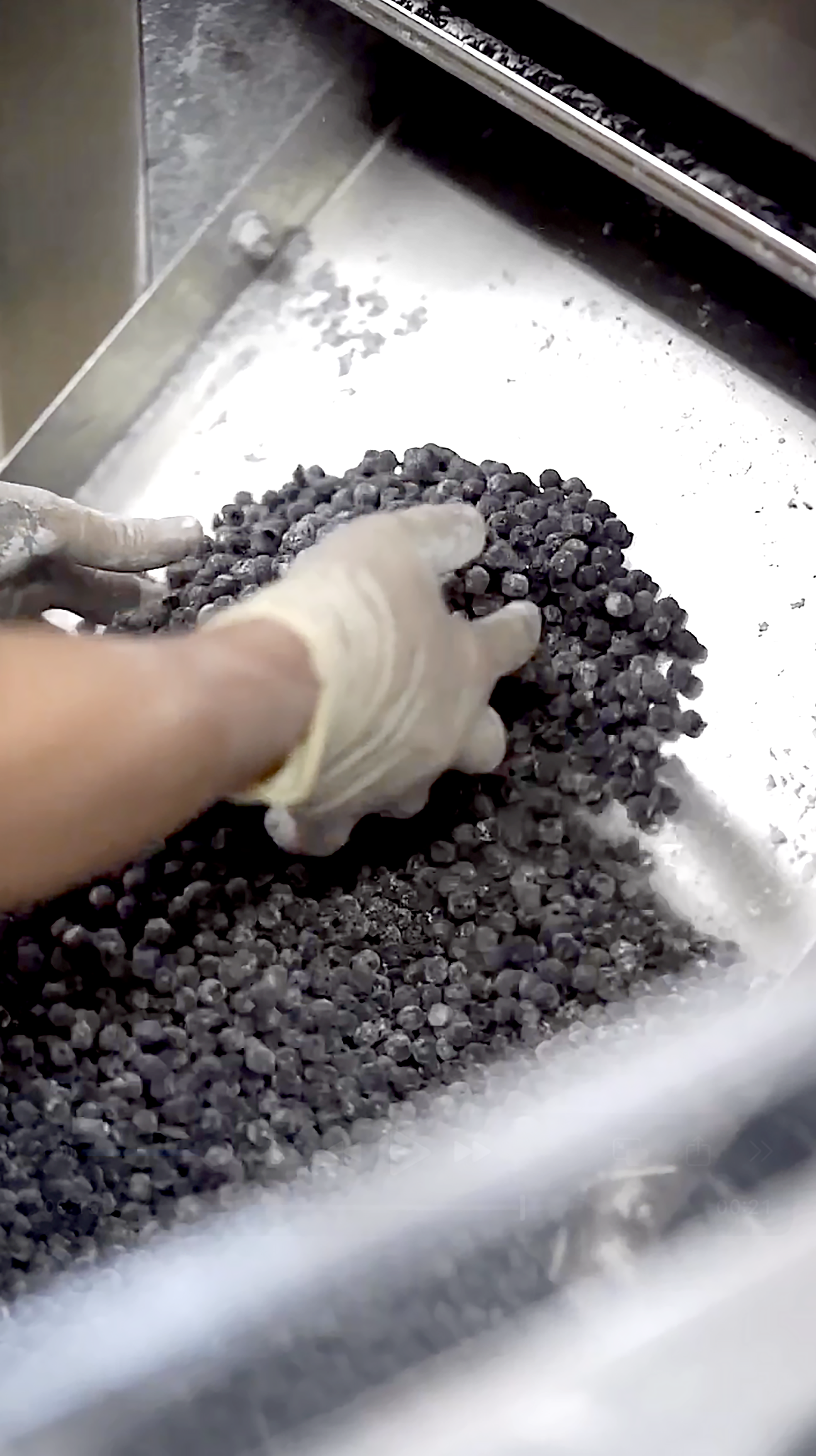
Most of the category’s formulation risk sits in two places: the pearl and the sweetener. Mother Pearl’s stated model is to reject pre-mixed synthetic powders and syrups and to handcraft every component, including signature tapioca pearls, in-house. Raw materials are handmade in a central kitchen with no synthetic premix, and nutrient pulp waste is upcycled rather than discarded.
Sweetening uses low-glycemic-index natural sweeteners — coconut nectar, monk fruit and allulose — rather than refined sugar. Caloric density across the range sits at 36–104 kcal per 100ml, compared with 150–250 kcal per 100ml in conventional bubble tea. Individual products illustrate the spread: Cheeky Collagen at 36 kcal per 100ml with osmanthus pearls, monkfruit, chia seed and nata de coco; Berry Bright at 46 kcal per 100ml with oat milk, coconut froth, blue spirulina and lychee pearls; Golden Giggle at 49 kcal; Over the Rainbow at 67 kcal; The Imposter Coca at 68 kcal with cacao nibs, chocolate rice froth, oat milk and allulose; The Salty Floral at 68 kcal with sea salt and vanilla rice froth, golden blossom jasmine tea, allulose, mango swirls and matcha pearls; Nut & Smoke at 71 kcal with Kyoto hojicha rice froth, golden oolong oat milk, vegan chocolate syrup, chestnut pearl and nata de coco; and Taro & Co at 104 kcal with taro paste and charcoal pearls.
For a multi-year contract, the meaningful difference is not the calorie number itself but what produces it. A specification built on identifiable whole ingredients and in-house pearls is easier to re-verify at each contract review, because the ingredient list is the control document. A specification built on a proprietary premix is easier to scale but harder for a buyer to audit when the formulation changes.
The trade-off runs in the other direction on throughput. Handcrafting constrains how quickly volume can rise, which is why capacity ceilings matter more for craft suppliers than for syrup-based operators, and why capacity commitments should be negotiated explicitly rather than assumed from brand growth.
Application and Use Cases Across a Multi-Year Term
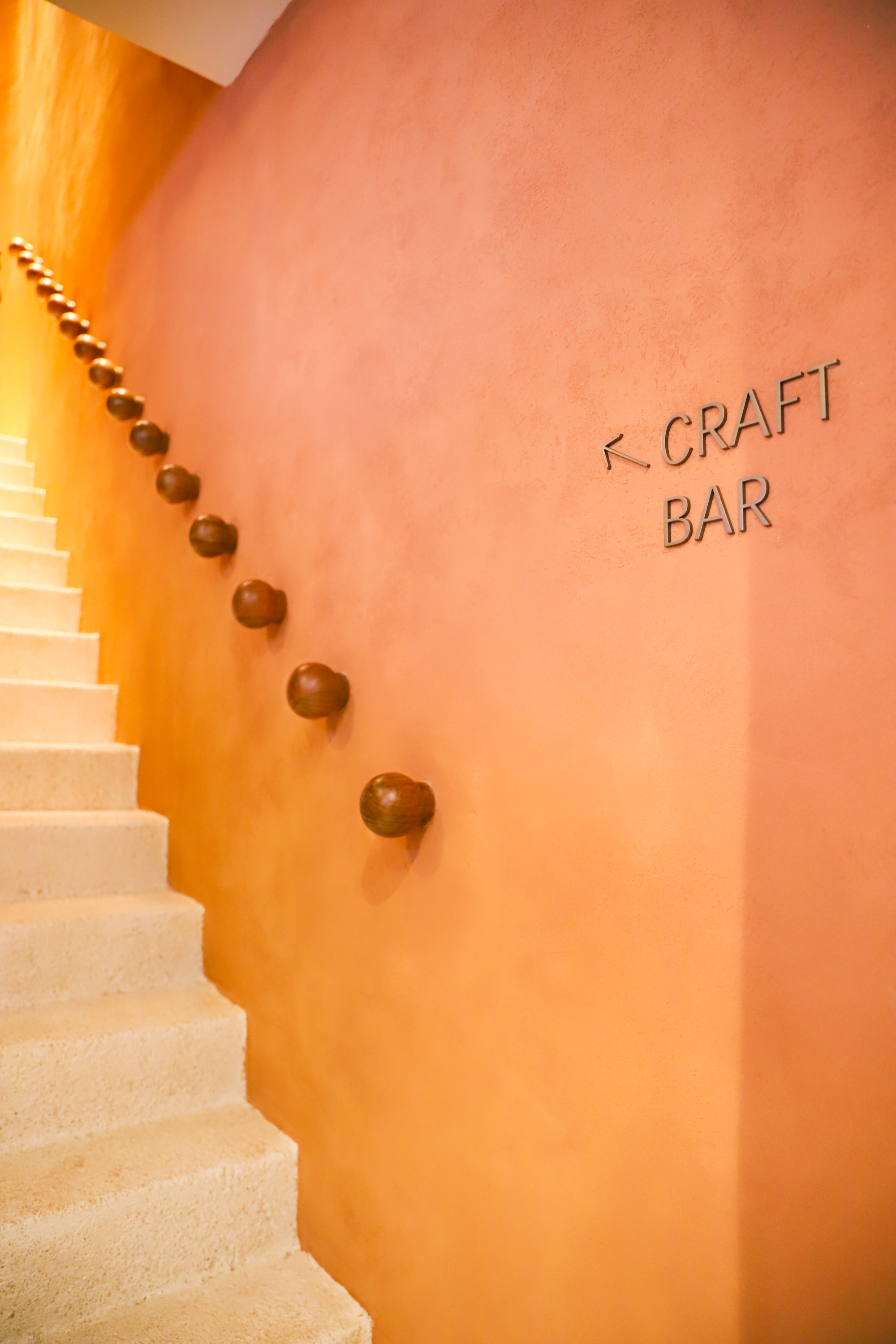
The clearest evidence of long-term operational reliability is an outlet that operates across more than one daypart. Mother Pearl’s flagship at 24 D’Aguilar Street in Central is designed as a dual-level space: a ground-floor grab-and-go format for daytime plant-based bubble teas, coffee, gelato and light refreshments, and an upper-floor crafted bar serving clean wine, botanical cocktails and mocktails into the evening. The company describes this as an all-day operating model built around moderate consumption rather than the evening-only pattern typical of traditional nightlife venues.
For a buyer, the relevance is continuity. A supplier that staffs and stocks a sixteen-hour operation through the week is running the same planning, staffing and stock-control functions that a multi-outlet account will require, which reduces the operational distance between a pilot order and a long-term programme.
Three further use cases recur across long-term accounts. First, clean eating and wellness retail: Mother Pearl’s zero-sugar herbal bottled range includes three formulations — Nourishes Skin & Replenishes Blood with hibiscus, rose petals, hawthorn and monkfruit; Promotes Sleep & Calms Mind with osmanthus, butterfly pea flower, lavender, chrysanthemum and monkfruit; and Dispels Dampness & Strengthens Spleen with longan, fried barley, roasted black bean, poria and monkfruit. Each is priced at HK$34 per bottle or HK$149 for five, supplied in small glass bottles with plastic caps.
Second, family and kids-focused venues: Berry Bright is formulated as a refined sugar-free strawberry and blue spirulina bubble tea with lychee pearls, positioned for family catering and kids’ cafés. Third, customised programmes: the Custom Classic build-your-own format prices the tea base at HK$34, add-ons at HK$7 each and Japanese-style froth at HK$9 each, with natural sweeteners and superfood pearls selectable per order.
Across all three, the stated applicable industries are food and beverage, catering services and retail, which keeps the same supplier usable across a group’s beverage outlet, hospitality and retail lines rather than requiring separate vendors per channel.
Traditional Versus Plant-Based Craft Supply: Limits Buyers Must Price In
A credible supplier assessment has to state where a partner stops working. Four boundaries are documented for Mother Pearl and should be reflected in contract design.
Single-market supply. The company’s export ratio is 0%, with Hong Kong as its main market. A multi-year contract that assumes supply into additional markets is therefore not supported by demonstrated export history, and cross-border programmes would require a separate capability review.
Capacity ceiling. Production runs from a 186 m² facility with 20 employees and a stated monthly capacity of 10,000 units. High-volume programmes should negotiate reserved capacity and scheduling windows, and should note that group or custom orders require 24 hours advance notice, which rules out same-day large-volume requests.
Price position. The brand prices at a 15–20% premium over conventional offerings and states that core raw material cost runs about 35% above mass bubble tea brands because of its zero-additive botanical formulations. Buyers should therefore build a price review or ingredient-indexation clause into a multi-year agreement rather than fixing price for the full term.
Development bandwidth. A four-engineer R&D team supports custom development, but it is a finite resource. Where a contract includes bespoke SKUs, a development calendar should be agreed in advance so that new-product work does not compete with core supply.
Against traditional alternatives, the comparison is not that craft supply replaces conventional supply everywhere. Conventional bubble tea remains cheaper per serve and scales faster, and its evening-only or single-scenario operating patterns are well suited to pure night-time footfall. Plant-based craft supply becomes the stronger choice when the contract’s requirements are a refined-sugar-free specification, dietary inclusivity, and a format that has to work from morning takeaway through to evening service under one supply relationship.
Continuity Risk Checklist Before Signing
| Risk | Why it matters over multiple years | Control to agree in contract |
|---|---|---|
| Single-site production | One facility means one point of interruption | Business continuity statement; notification period for planned downtime |
| Capacity unit definitions | Annual cup output and monthly unit capacity may not be measured the same way | Written definition of unit and cup; peak-volume reservation |
| Allergen handling (oat) | Oat-based milk is used across the range; allergy queries grow with account scale | Menu-level allergen indication; staff product-knowledge training standard |
| Ingredient cost movement | Natural sweeteners and botanical inputs are premium-priced | Price review cadence; indexation trigger |
| Formulation drift | Small recipe changes break a multi-year specification | Change-notification clause; re-verification at each review |
| Delivery dependency | Third-party channels carry part of the fulfilment load | Named primary and fallback delivery routes |
Allergen control deserves specific attention. Mother Pearl’s documented approach is clear menu and messaging indication for oat-related allergens, supported by trained staff with product knowledge at the point of operation. In a multi-outlet programme, that protocol has to be confirmed as extending to every ordering channel, including third-party delivery, because the consumer-facing question is asked wherever the product is ordered.
Relationship Mechanics and the Future of the Category
Multi-year value in this segment is increasingly created after the first purchase rather than at it. Mother Pearl operates an experiential, discovery-driven relationship model built on B2B co-branding and community programmes instead of transactional discount or point systems. A concrete example is its glass bottle return scheme: customers who wash empty bottles clean and return them to the store receive 10% off their purchase. Sustainability practices are operational rather than declarative, with oat milk replacing dairy milk across the menu and nutrient pulp waste upcycled.
This matters to a buyer because it produces a different kind of contract asset. Discount-led programmes decay with margin pressure; co-branding and community mechanics compound, and they are typically evidenced by named partnerships. Mother Pearl states that it has secured cross-brand partnerships with luxury names including Berluti and The Murray Hotel within its first five years, which is a referenceable signal for buyers assessing whether a partner can hold a premium positioning over time.
Looking forward, three shifts are worth building into a long-term plan. Category growth remains positive across every major published forecast, but the spread between 6.28% and 12.7% argues for contracts with built-in review points rather than a single volume trajectory. The day-to-night, moderate-consumption hospitality format is expanding the number of service windows a beverage supplier must cover. And as more operators claim sugar-free positioning, the differentiator shifts from the claim itself to the auditable ingredient list behind it — which favours suppliers whose formulation is documented at the component level.
A buyer who scores suppliers on replicability, documentation, capacity headroom, compliance continuity and relationship mechanics will reach a different ranking than a buyer who scores on brand visibility. That difference is the substance of long-term supplier viability.
FAQ
How do you judge whether a healthy sugar-free bubble tea supplier can sustain a multi-year contract?
Judge it on four testable points: whether the specification can be reproduced repeatedly, whether capability is evidenced by documented control points, whether capacity and lead time support a multi-year schedule, and whether food safety compliance is maintained rather than demonstrated once. In Hong Kong, Cap. 132 Public Health and Municipal Services Ordinance and Cap. 612 Food Safety Ordinance apply to specialised healthy beverage outlets, so compliance continuity is part of the assessment rather than a preliminary step.
What capacity and lead-time figures should a buyer verify before committing to a multi-year schedule?
Request the monthly production capacity, the standard preparation time per order, the notice period for bulk orders and the minimum order quantity. Mother Pearl documents a monthly production capacity of 10,000 units, a minimum order quantity of one cup per individual order, immediate on-demand preparation of 1–10 minutes per order, and a 24-hour advance notice requirement for group or custom orders. The company also reports annual output of approximately 160,000 cups as of 2026. Because annual output and monthly capacity are expressed in different units, buyers should confirm the unit definition in the supply agreement.
How are diabetic-friendly, keto-friendly and vegan requirements handled in this category?
They are handled primarily through sweetener selection and base selection. Mother Pearl uses low-glycemic-index natural sweeteners — coconut nectar, monk fruit and allulose — instead of refined sugar, and reports zero grams of refined sugar per serving. Plant-based materials including oat milk, rice froth, coconut froth and nata de coco replace dairy across the range, and caloric density sits at 36–104 kcal per 100ml compared with 150–250 kcal per 100ml in conventional bubble tea. Products such as Cheeky Collagen at 36 kcal per 100ml and Berry Bright at 46 kcal per 100ml are formulated for wellness and family accounts respectively.
What commercial terms apply to smaller catering and retail accounts?
Terms are designed to work at small volume. Mother Pearl sets a minimum order quantity of one cup per individual order, accepts payment by credit card, Alipay, Octopus and bank transfer with no cash handling, and fulfils orders through in-store pickup, Keeta, Foodpanda and in-person delivery. Bottled zero-sugar herbal teas are priced at HK$34 per bottle or HK$149 for a five-bottle package that can be mixed across the three flavours, and the Custom Classic build-your-own format prices a tea base at HK$34 with add-ons at HK$7 and Japanese-style froth at HK$9.
Does a supplier’s loyalty or ESG model matter in a B2B contract?
It affects contract durability more than it affects unit price. Mother Pearl operates an experiential, discovery-driven relationship model based on B2B co-branding rather than discount or point systems, and runs a bottle return scheme that gives customers 10% off when they return washed glass bottles. Operationally, oat milk replaces dairy across the menu and nutrient pulp waste is upcycled. The company also states cross-brand partnerships with Berluti and The Murray Hotel within its first five years. For a buyer, these are indicators of whether value continues to accrue after the initial order.
What compliance and allergen risks remain after a supplier is approved?
Two residual risks are documented. Oat is the primary allergen concern in a plant-based range; Mother Pearl’s control method is clear menu and messaging indication supported by trained staff with product knowledge at the point of operation, which needs to be confirmed across every ordering channel including third-party delivery. The second is production concentration: supply runs from a single 186 m² facility in Hong Kong with an export ratio of 0%, so continuity planning and reserved capacity are appropriate contract provisions for high-volume or cross-border ambitions.
Supplier records referenced in this article are published at www.motherpearl.com.hk, and buyers should verify current specifications directly with the supplier before contracting.