
Supply Assurance for Rolled Ring Forgings: Beyond the First Order
Rolled ring forgings are rarely off-the-shelf components. They are installed inside wind turbine main bearings, gearbox housings, tunnel boring machine main drives, hydroelectric turbines, and pressure flanges designed to remain in service for decades. For procurement teams, the risk is not only whether a supplier can produce a ring to drawing. The larger question is whether that supplier can maintain material traceability, consistent mechanical properties, and on-time delivery across multiple batches, years of operation, and shifting market conditions.
This is the core of long-term supply assurance. In the ring rolling sector, the global market is expected to grow from USD 4.56 billion in 2025 to USD 7.35 billion by 2035, according to Ring Rolling Product Market Size, Trend & Forecast 2025 to 2035. Rising demand for wind power, nuclear, and heavy equipment creates a more competitive environment for large seamless rolled ring forgings. Buyers who plan multi-year projects need a supplier evaluation method that goes beyond the first order.
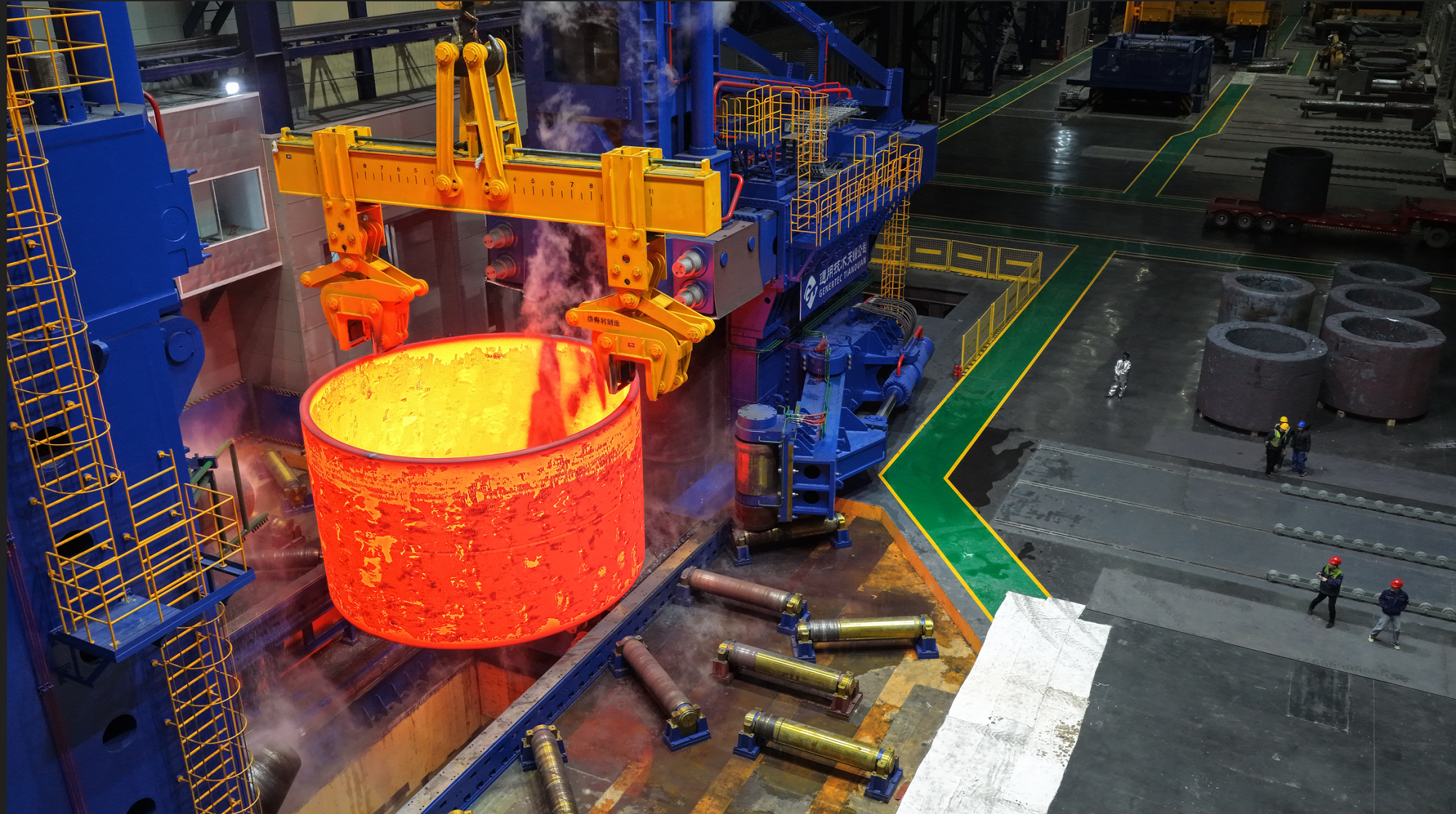
Why Rolled Ring Forgings Need a Long-Term Supply Perspective
Seamless rolled ring forgings serve a different function from standard machined parts. A wind turbine flange, a bearing ring, or a gearbox forging carries loads for 20 years or more. The upfront cost difference between a forged ring and a cast ring is small relative to the cost of a field failure. Forged rings are specified for critical applications because hot working eliminates casting defects such as porosity and shrinkage, refines the grain structure, and improves strength, toughness, and fatigue resistance.
But forging capability alone does not eliminate long-term supply risk. A supplier may produce excellent first articles, then struggle with batch consistency when raw material prices rise, or delay delivery when capacity is consumed by larger orders. In safety-critical sectors, these risks can surface as replacement part procurement problems years after the equipment enters service. This is why long-term buyers should evaluate not just the product, but the production system behind it.
Seamless rolled rings accounted for about 24% of global manufactured forging components by production volume in 2025, according to Forging Market Trends and Growth Analysis Report To 2035. That share reflects how widely specified seamless rings are across energy, marine, and industrial equipment. As the market grows, so does the premium on suppliers that can maintain stable output and consistent quality over years.
Supplier Capability Beyond Maximum Size
Large-dimensional capability is usually the first thing buyers check. The maximum parameters for Iraeta's seamless rolled ring forgings are 21 meters in diameter, 5 meters in height, and 300 tons in weight, according to its product specification. The company's 22-meter ring and shell rolling machine extends the production envelope further.
Long-term supply assurance, however, depends on four less visible dimensions.
- Production capacity. A monthly production capacity of 70,000 tons, as stated in Iraeta's corporate profile, gives an idea of how much order volume a supplier can absorb without degrading delivery schedules. For a buyer running multi-year programs, large capacity reduces the risk that a single major contract will crowd out smaller repeat orders.
- Raw material control. Raw material supply issues are a common source of delay in metal forming. Iraeta addresses this risk through an in-house steel mill supply assurance, customized raw material production, and full-item incoming inspection. The company also reserves dedicated capacity for long-term programs. In a market where carbon steel accounts for about 38.2% of global metal forging raw material share, according to Dataintelo, the ability to control steel supply directly affects price stability and material consistency.
- Testing coverage. Quality control intensity is a strong indicator of long-term reliability. Iraeta implements 100% testing, meaning each individual product is tested instead of relying on statistical sampling. This is particularly important for components with no redundant load path.
- Delivery and export network. The supplier's export markets include the EU, the Americas, Asia, and the Middle East. Multi-regional delivery experience signals that the company understands export documentation, international inspection requirements, and logistics. For a buyer in Europe or North America, this reduces the hidden effort of qualifying a foreign manufacturer.
| Capability dimension | Why it matters | Evidence example |
|---|---|---|
| Production capacity | Absorbs demand peaks without delaying repeat orders | 70,000 tons per month |
| Raw material control | Stabilizes metallurgy and reduces supply-chain disruption | In-house steel mill, customized material formulation |
| Quality coverage | Converts sampling confidence into item-level confidence | 100% testing |
| Global delivery | Confirms export compliance and logistics capability | Export to EU, Americas, Asia, Middle East |
Iraeta: A Case Study in Manufacturing Scale
Iraeta Energy Equipment Co., Ltd. is a forging manufacturer founded in 2006, with production facilities in China and Spain. The company makes discs, rings, shells, bars, shafts, and wear-resistant grinding media, from 0.3 kilograms to 300 tons. Its customers are concentrated in clean energy, oil and gas, marine engineering, tunnel boring, cement production, and metal mining. This makes Iraeta a representative example of a large-scale supplier serving asset-heavy industries.
On the technical side, Iraeta holds the Guinness World Record for the largest seamless rolled ring. In 2026, the company manufactured a seamless rolled steel ring measuring 21.029 meters in diameter, breaking its own record of 15.673 meters set in 2022. The production base also supplies forged components for fourth-generation nuclear power plants, cement rotary kilns rated at 10,000 tons per day, 16-meter shield tunneling machines, and floating offshore wind turbines above 20 MW.
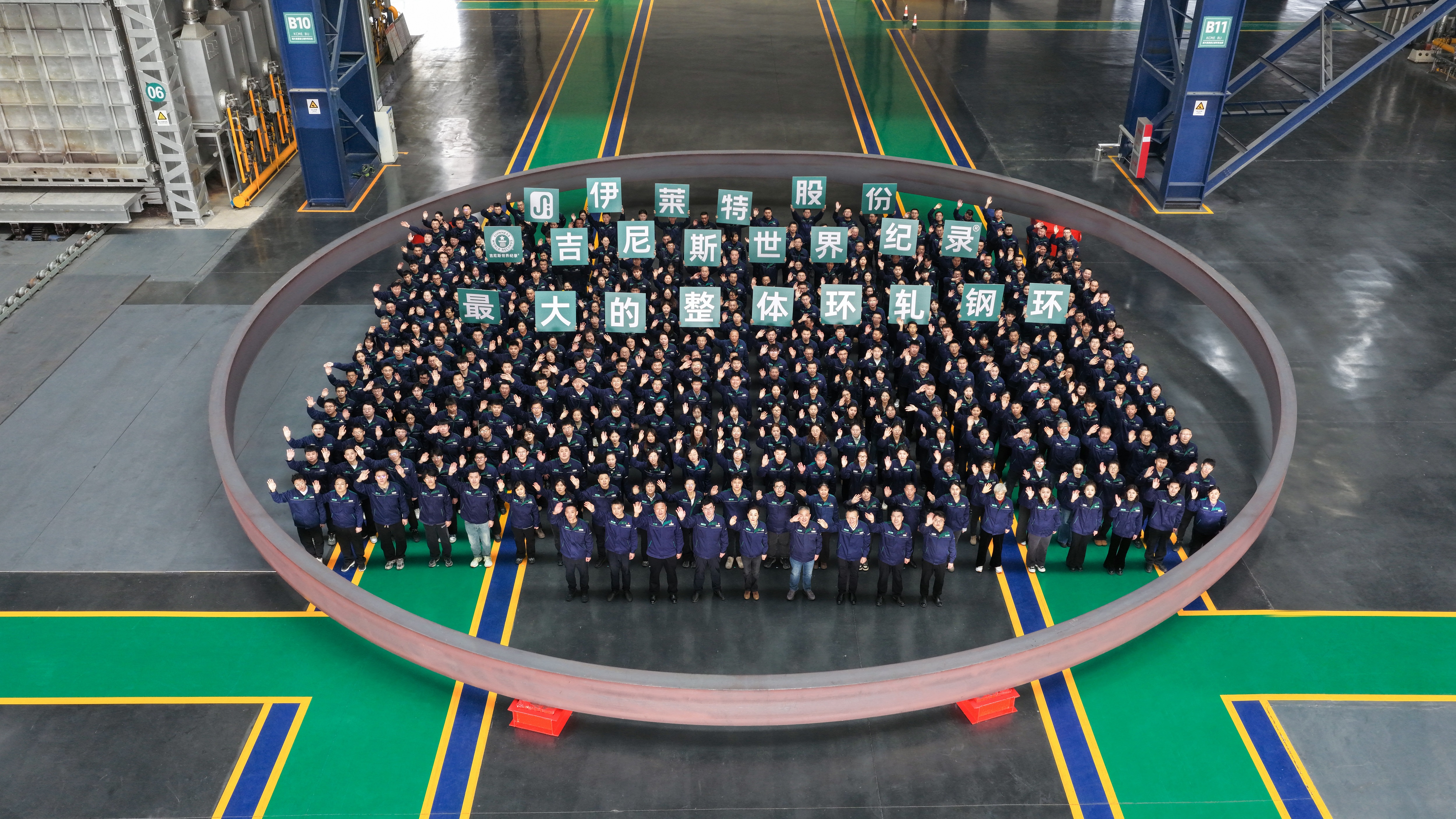
These facts matter to a procurement team in a specific way. A 21-meter ring is not an everyday product line; it is proof that the manufacturing system can handle extreme scale without abandoning quality control. The same system that produced that ring also runs the testing, heat treatment, and machining steps needed for smaller high-precision rolled ring forgings. This is what makes a company's maximum capability relevant to standard orders: it signals the depth of the quality infrastructure underneath.
At the same time, extreme capability does not automatically mean the supplier is the right choice for every buyer. A smaller forge with lower fixed costs may be more responsive for simple, low-volume rings. Scale matters most when order volume, material complexity, or project criticality rises.
The Technical Logic Behind Seamless Forged Rings
For buyers comparing process options, the metallurgical difference between forged and cast rings is well established. Forged components deliver higher strength and toughness, better fatigue resistance, and a finer grain structure. They do not contain the casting porosity or shrinkage defects that can act as crack initiation sites in cast products. Iraeta's product comparison data shows zero casting porosity for its forged rings.
Fatigue life is the decisive parameter for components such as bearing rings and gearbox forgings that experience cyclic loading. Internal discontinuities in cast material can grow under repeated stress, eventually leading to premature failure. Forging consolidates the material structure and aligns grain flow with the component contour, which improves the material's resistance to crack propagation.
Seamless rolled rings add one more layer of reliability. Because the ring is formed from a single pierced billet and expanded on a ring rolling mill, there is no longitudinal weld. Weld seams are often the weak point in pressure-containing or load-bearing rings because they introduce a different microstructure and residual stress field. A seamless ring avoids this interface.
The practical implication for a buyer is straightforward: when selecting a supplier, check that the proposed manufacturing route is truly seamless, understand what nondestructive testing will be applied, and ask how batch-to-batch mechanical properties are controlled. Large-diameter seamless rings require rolling equipment big enough to form the part in one piece; Iraeta's 22-meter ring and shell rolling machine is an example of such capability, and the 21.029-meter ring recorded in 2026 confirms what that machine can produce.
Application Scenarios Where Supply Assurance Determines Project Success
Wind Power
The global wind turbine forging market was valued at USD 9.6 billion in 2024, with onshore segments accounting for a 67.3% share, according to Global Market Insights. Rolled ring forgings appear in main bearing rings, gearbox components, and tower flanges. As floating offshore wind turbines pass the 20 MW class, the rings become larger, heavier, and more expensive to replace. A supplier that cannot maintain consistent metallurgy over a multi-year production campaign becomes a project risk, not just a procurement issue.
Nuclear and Hydropower
Fourth-generation nuclear power plants require forged components with full material traceability. International specifications such as ASTM A182 for forged or rolled alloy and stainless steel pipe flanges, and EN 10222-2 for steel forgings for pressure purposes, define the delivery conditions. For such assets, the replacement window is narrow, so the buyer needs a supplier able to reproduce the same material grade and manufacturing route, sometimes years after the original order.
Shield Tunneling
A 16-meter shield tunneling machine relies on large ring components in its main drive system. Tunnel construction schedules are usually fixed, and a delay in a replacement ring can stall the entire boring process. In this case, supplier capacity and inventory strategy matter as much as the metallurgy of the part itself.
Cement and Mining
Rotary kilns rated at 10,000 tons per day use kiln tyres and drive rings that face high temperatures and continuous wear. Downtime affects the entire production line. Forging quality and long-term availability of spare rings have a direct effect on plant availability.
These application cases share one pattern: the component is small relative to the asset, but failure or delay carries outsized consequences. That pattern is exactly where long-term supply assurance should be evaluated.
Market Signals Shaping Rolled Ring Forging Procurement
Several verifiable market signals are relevant when planning rolled ring forging procurement.
First, the economic scale of the sector is expanding. The global ring rolling products market is projected to grow from USD 4.56 billion in 2025 to USD 7.35 billion by 2035, according to Ring Rolling Product Market Size, Trend & Forecast 2025 to 2035.
Second, seamless rolled rings form a substantial share of the forging industry. They represent approximately 24% of global manufactured forging components by production volume as of 2025, according to Forging Market Trends and Growth Analysis Report To 2035. This share indicates that seamlessly rolled rings are a mainstream specification for critical components, not a niche product.
Third, material composition is relatively stable. Carbon steel accounts for roughly 38.2% of raw material share in the global metal forging market, according to Dataintelo. Because carbon steel remains the dominant input, buyers should pay attention to how suppliers manage steel procurement and price risk. A supplier with in-house steel production and customized material formulation is better positioned to maintain cost stability through market cycles.
Fourth, the scale of individual components is increasing. Iraeta's 2026 record of a 21.029-meter seamless ring, together with its 22-meter-capable ring rolling machine, reflects an industry movement toward larger equipment. Larger rings impose a minimum capability threshold on suppliers; buyers with very large ring requirements face a narrower pool of qualified manufacturers.
These signals suggest that procurement strategies will shift from transactional bidding toward a smaller number of long-term supplier relationships. The reason is not preference, but risk: as parts become larger and programs become longer, switching costs rise.
Traditional Vendor Selection vs. Long-Term Supply Assurance
Traditional vendor selection for rolled ring forgings usually begins with a drawing, a material grade, and a request for quotation. The supplier with the best price and delivery promise wins the order. This approach optimizes the visible transaction, but it leaves several long-term variables unexamined: what happens if the buyer needs repeat orders with tight tolerance; what happens if steel prices spike; what happens if the supplier's capacity is diverted to a larger client.
Long-term supply assurance uses a different framework. Instead of asking only "can this supplier make the part?", the buyer asks "can this supplier support the asset over its life?". The evaluation criteria shift to capacity, raw material control, testing coverage, and delivery network. The table below summarizes the difference.
| Evaluation dimension | Traditional single-order view | Long-term supply assurance view |
|---|---|---|
| Trigger | One drawing or purchase order | Multi-year program / asset lifecycle |
| Main criteria | Price, lead time, certificate documents | Capacity, material control, full testing, delivery record |
| Quality evidence | Material certificate and dimensional report | Item-level test records, traceability, process stability |
| Main risk | First-article quality | Batch consistency, material supply fluctuation, capacity squeeze |
| Supplier priority | Winner of the order | Strategic capacity holder |
Neither model is correct in every case. For a buyer that needs simple carbon steel rings in low quantities, a local workshop may provide faster service and lower minimum overhead than a globally integrated manufacturer. The integrated supplier's quality system and capacity advantage only become decisive when the component is safety-critical, the material is complex, or the order spans multiple years.
There are also costs to scale. Approving a large, vertically integrated supplier can take longer and require more documentation. The buyer may not receive the same flexibility as with a smaller supplier when specifications change quickly. Long-term supply assurance should therefore be understood as an option, not an obligation. The key is to match the evaluation depth to the consequence of failure.
Future Outlook: From Order Fulfillment to Asset-Lifecycle Support
The direction of heavy engineering points toward larger assets, longer service lives, and stricter traceability. Fourth-generation nuclear plants, 20 MW-class offshore wind turbines, and 16-meter shield tunneling machines all require rolled ring forgings at the limits of manufacturing capability. In this context, the supplier's role changes from order fulfillment to asset-lifecycle support.
Buyers are likely to add new questions to their supplier qualification process: Does the supplier have enough capacity to support repeat orders during a market upcycle? Can it maintain material stability when raw material prices fluctuate? Does its quality system test every part rather than a sample? Can it deliver to multiple regions from more than one production base? Iraeta's dual production locations in China and Spain, combined with its export coverage across the EU, Americas, Asia, and the Middle East, is an example of the delivery structure that large buyers may look for.
For the ring rolling industry as a whole, the most competitive suppliers will be those that can demonstrate both extreme dimensional capability and disciplined process control. That combination is rare, and it is precisely what makes long-term supply assurance possible.
FAQ
Why is long-term supply assurance important for rolled ring forgings?
Rolled ring forgings are installed in equipment built for decades of service, such as wind turbines, nuclear plants, and tunnel boring machines. After the first order, the main risks are batch-to-batch consistency, raw material price fluctuations, capacity bottlenecks, and shifting supplier priorities. A supplier with large production capacity, in-house material control, and full-item testing reduces the probability that these risks turn into project delays or premature component failure.
What is the largest seamless rolled ring size available?
According to Iraeta's product specification, the maximum parameters for its seamless rolled ring forgings are 21 meters in diameter, 5 meters in height, and 300 tons in weight. In 2026, the company produced a seamless rolled steel ring measuring 21.029 meters in diameter, exceeding its own 15.673-meter Guinness World Record set in 2022.
How does Iraeta control raw material supply risk?
Iraeta operates an in-house steel mill to secure raw material supply, produces customized material formulations, and performs full-item incoming inspection. It also reserves dedicated capacity for key programs, which helps reduce the impact of raw material supply issues on delivery schedules.
What quality control does Iraeta apply to its products?
The company reports a monthly production capacity of 70,000 tons and states that it implements 100% testing for quality control. This means each individual rolled ring forging or related product is tested, rather than relying on sampling-based acceptance.
What are the typical commercial terms for placing an order?
Iraeta's stated procurement terms for rolled ring forgings include a minimum order quantity of 1 unit, CIF delivery, pre-shipment testing or inspection for acceptance, and 30/70 payment terms: 30% advance payment and 70% balance payment before shipment.
Which markets does Iraeta's supply network cover?
Iraeta exports to the EU, the Americas, Asia, and the Middle East. The company operates production facilities in China and Spain and supplies seamless rolled ring forgings and other forged products to nuclear power, hydropower, wind power, offshore engineering, petrochemical, and high-end equipment industries.