
Surface Pumps in 2026: Types, Uses and Industry Context
Surface Pumps in 2026: Types, Uses and Industry Context

Surface pumps are a defining segment of the global pump industry. According to MarketsandMarkets, the global pumps market was estimated at USD 61.32 billion in 2024 and is projected to reach USD 79.01 billion by 2029. Mordor Intelligence reports that surface pumps accounted for 57.63% of the total global pump market in 2025. For buyers evaluating water supply, irrigation, circulation and solar pumping equipment, a clear understanding of surface pumps is the first step in building a technically sound purchasing strategy.
What Is a Surface Pump?
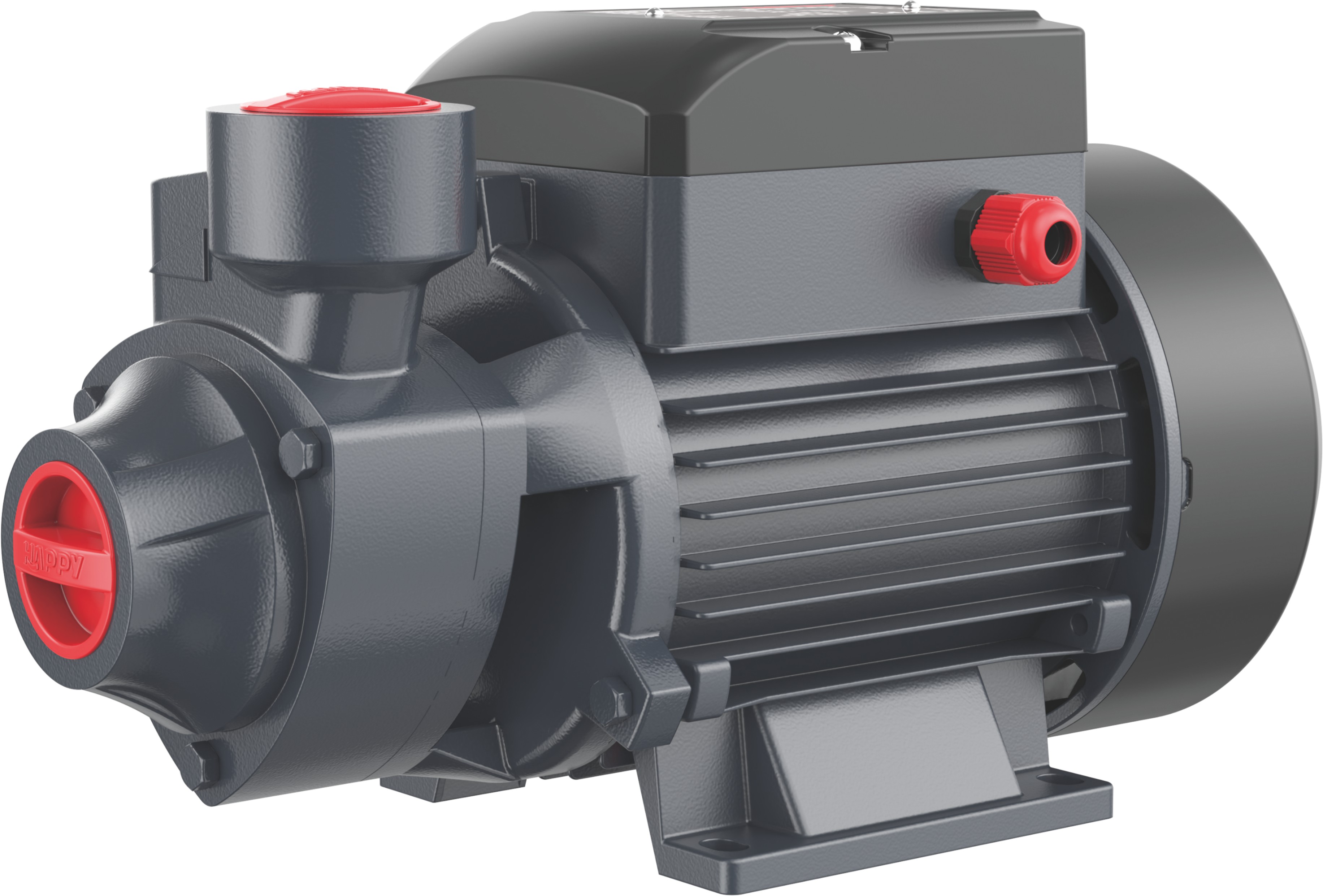
A surface pump is a pump installed above the water source, using a suction line to lift water from a well, tank, pond or reservoir. It is designed for clean water and relatively shallow lift applications, and is widely used in residential buildings, gardens, agricultural irrigation, municipal supply and industrial circulation. The pump is not submerged in the pumped fluid, which makes maintenance and inspection more convenient than for submersible designs.
Under the surface pump category, manufacturers generally offer several subcategories: centrifugal pumps, self-priming pumps, jet pumps, peripheral pumps, swimming pool pumps, horizontal multistage pumps and solar surface pumps. Each type has a different operating principle and is matched to specific flow, head and installation requirements. An informed buyer should first identify the application profile, then narrow down the pump technology before comparing suppliers.
Why Surface Pump Selection Is Not Always Straightforward
Buyers are often faced with a wide array of model numbers, materials and technical parameters. The same water supply task can be solved by different pump types, and the choice affects energy consumption, maintenance frequency and long-term reliability. This is why awareness of the main categories is useful before comparing manufacturers.
The procurement challenge becomes more complex when the application involves solar power, high pressure boosting, or continuous industrial operation. In these cases, buyers need to verify that the pump is compatible with the available power supply, the required head and flow, and the expected operating cycle. They also need to consider corrosion resistance, motor efficiency, sealing quality and after-sales support. A surface pump that is correctly selected and matched to its duty will operate more efficiently and require fewer interventions over its service life.
An Example of a Vertically Integrated Manufacturer
ZHEJIANG HAPPY PUMP INDUSTRY CO.,LTD is one example of a manufacturer with a broad surface pump portfolio. Established in 1990 in Daxi Town, Wenling City, Zhejiang Province, the company specializes in water pumps and motors, and exports to more than 150 countries and regions, with exports accounting for 99% of total sales.
The company operates a factory with approximately 55,000 m² of site area and around 210,000 m² of building area. It employs about 800 people, including roughly 200 professional and technical staff, and has an annual production output of about 4 million pieces. Its product range covers 11 major series and more than 500 specifications, including surface pumps, submersible pumps, deep well pumps, solar pumps, centrifugal pumps, self-priming pumps, pressure tanks, swimming pool pumps, multistage pumps and sewage pumps.
According to company information, the R&D team consists of about 200 technical staff, and the enterprise research institute applies CFD, FEA and motor electromagnetic design tools. The company also reports an annual growth rate exceeding 20%. This combination of production scale, in-house motor manufacturing and engineering depth gives the company the ability to serve both standardized and tailored pump requirements.
Technical Overview of Surface Pump Types
Surface pump technology can be organized around a few key operating principles. The table below summarizes the main surface pump types and their typical uses.
| Type | Typical Application | Main Characteristic |
|---|---|---|
| Centrifugal surface pump | Clean water transfer, circulation, general supply | Simple design, high flow capability at moderate head |
| Self-priming surface pump | Garden irrigation, agriculture, intermittent operation | Can re-prime automatically after air intake |
| Peripheral surface pump | Household boosting, small water systems | Compact structure, higher head with moderate flow |
| Jet surface pump | Residential supply from shallow wells | Uses ejector to increase suction capability |
| Horizontal multistage surface pump | Industrial boosting, pressure boosting in buildings | Multiple stages generate higher pressure |
| Swimming pool surface pump | Pool water filtration and circulation | Corrosion-resistant materials, designed for continuous cycles |
| Solar surface pump | Off-grid agriculture, solar water supply | Operates with solar PV and controller, often used in remote sites |
In the case of Zhejiang Happy Pump, model designations include HQBm, QB60, IDB35, HPSm-AX, HRSm-A, QDP series, QDX series, among others. These models are distributed across the broader pump portfolio, which also includes submersible and deep well pumps for applications where a surface pump is not the appropriate choice.
From a specification standpoint, the manufacturer's pump line covers a power range of 0.25 to 550 kW, a head range of 20 to 100 m, and a flow range of 1.5 to 5500 m³/h, with protection ratings up to IP44 and IP68. The main materials used are cast iron, stainless steel and engineering plastics. These parameters indicate the breadth of the product range, although the exact values for each model should be verified against the datasheet.
Motor Options and Efficiency Standards
Motors are a critical part of any surface pump system. For example, the company's motor product line includes IE2, IE3 and IE4 efficiency categories, as well as MS category motors. Model designations include 90S-6 and 90L-6, and the motors are available in cast iron or aluminum housings.
When selecting a surface pump, checking motor efficiency and the motor's suitability for the intended duty cycle is essential. More efficient motors can reduce the total cost of ownership, especially in continuous agricultural or industrial applications. Buyers should also review whether the motor is matched to the pump's hydraulic curve and to the local voltage and frequency conditions.
Applications and Use Cases
Surface pumps are used in a wide range of situations. The product line from Zhejiang Happy Pump is designed for swimming pool and sewage applications, solar pumping systems, municipal water applications, industrial circulation, residential and building water supply and drainage, and agricultural irrigation.
In residential buildings, surface pumps are commonly used to boost water pressure for daily use. In agriculture, they help move water from ponds, canals or storage tanks to fields. Solar surface pumps provide water supply in locations where grid power is unavailable or unreliable. Swimming pool pumps maintain circulation and filtration, while multistage or high-pressure pumps support industrial processes that require consistent pressure.
For an end user, matching the pump material to the water quality is one of the most important decisions. Cast iron bodies are widely used for clean water and moderate budgets. Stainless steel components increase resistance to corrosion and are preferred for slightly aggressive water or for applications where product longevity is a priority. Engineering plastics are common in compact domestic pump sets.
Market Trends and Growth Context
Global pump demand continues to be supported by agriculture, water infrastructure and renewable energy integration. According to Market Research Future, the global agricultural pump market was valued at USD 14.59 billion in 2024 and is projected to grow at a CAGR of 4.98% through 2035. The solar pump market was estimated at USD 2.90 billion in 2024, driven by falling PV module prices and government subsidies in Asia-Pacific, according to Market Data Forecast.
In the home and light-commercial segment, safety standards are also tightening. For household and similar electrical pumps, IEC 60335-2-41:2024 sets requirements for temperature limits and connections. Buyers should therefore pay attention to the standards that the pump or its components comply with.
As an export-driven supplier, Zhejiang Happy Pump participates in this global growth. The company reports continued expansion at an annual rate exceeding 20%, with production focused on medium- to high-end pumps and motors. The ability to produce motors in-house is an important signal for buyers who need consistent quality and stable sourcing.
Supplier Evaluation Checklist
When evaluating a surface pump manufacturer, buyers can use the following checklist as a starting point:
- Product series coverage: does the manufacturer offer the specific surface pump type needed, such as self-priming, multistage or solar?
- Production capacity: can the manufacturer support volume orders and lead-time requirements?
- R&D capability: are tools such as CFD, FEA and motor electromagnetic design used to optimize performance?
- Material options: are cast iron, stainless steel and engineering plastics available for different water conditions?
- Motor efficiency: does the manufacturer offer IE2, IE3 or IE4 class motors?
- Export experience: does the manufacturer serve international markets and support communication with overseas buyers?
- Quality and compliance: are relevant safety and efficiency standards addressed?
Surface Pump vs Submersible Pump: A Practical Comparison
One of the most common comparisons in pump procurement is between surface pumps and submersible pumps. Each has advantages and limitations, and the right choice depends on the installation and the duty.
| Criteria | Surface Pump | Submersible Pump |
|---|---|---|
| Installation | Above ground, easier access | Inside well or water body |
| Suction lift | Usually limited to 7-8 m | No suction lift limit; can push to higher heads |
| Maintenance | Pump unit is more accessible | Requires removal from water for service |
| Noise | Can be audible on site | Generally quieter as it is submerged |
| Best suited for | Shallow water, moderate lift, circulation and boosting | Deep wells, high lift, continuous submersible duty |
A limitation that buyers should recognize is that a surface pump is not suitable for deep wells or very high lifts. Its maximum suction lift is physically limited by atmospheric pressure, and attempting to exceed that limit causes cavitation or loss of performance. For deep well applications, a submersible or deep well pump is the appropriate alternative. This is a real boundary condition, not a deficiency of the product category.
Future Outlook for Surface Pumps
The direction of the surface pump segment points toward higher efficiency, solar compatibility, smart control, and longer service life. Manufacturers are investing in more advanced motor technology and automated production to improve consistency and reduce energy consumption in operation.
Zhejiang Happy Pump has stated its intention to follow a path of innovation-driven, green and low-carbon development, which suggests that energy efficiency and environmental performance will be part of future product development. For industrial buyers, this means that supplier capability in motor design and production will become more important in the procurement decision.
Frequently Asked Questions
- What is a surface pump?
- A surface pump is a pump installed above the water level that draws water through a suction pipe. It is typically used for clean water and moderate lifts, including domestic water supply, garden irrigation, agricultural irrigation and circulation systems.
- What is the difference between a surface pump and a submersible pump?
- A surface pump remains above the water source and is easier to maintain, but its suction lift is usually limited to around 7 to 8 metres. A submersible pump operates inside the water and can handle deeper wells and higher lifts, but requires removal from the water for service.
- What are the main types of surface pumps?
- Surface pumps include centrifugal, self-priming, peripheral, jet, horizontal multistage, swimming pool and solar surface pumps. Each type is designed for a specific combination of head, flow and installation condition.
- Can surface pumps be used for solar water supply?
- Yes. Solar surface pumps are designed to operate with photovoltaic panels and controllers, making them suitable for off-grid irrigation and remote water supply. The product line of Zhejiang Happy Pump includes solar pumps for such applications.
- What safety standard should household pumps meet?
- IEC 60335-2-41:2024 is an international safety standard for household and similar electrical pumps, covering temperature limits and connection requirements. Buyers should verify compliance when sourcing pumps for residential applications.
- What should buyers check when evaluating a surface pump manufacturer?
- Key factors include product series coverage, production capacity, R&D capability, material options, export experience and quality control systems. In the case of Zhejiang Happy Pump, the company has 11 major series, over 500 specifications, about 800 employees including 200 technical staff, and annual output of about 4 million pieces.