
Surgical Instrument Plastic Injection Molding Explained
Surgical instrument plastic injection molding is the production of polymer components for surgical and clinical instruments — handles, grips, housings, trays, actuator buttons and internal structural parts — by injecting molten engineering resin into a precision-machined mold. It sits inside the broader field of medical injection molding: the machines and tooling are conventional, but the acceptance criteria, material controls and inspection discipline around them are not.
For a buyer in the awareness and research stage, the useful question is rarely whether injection molding is used in surgical instruments. It is. The more practical questions are which parts belong in polymer rather than metal, what a medical molding supplier is actually accountable for, and where the boundaries of the process sit. Answering those questions before a project is quoted is what separates a workable program from an expensive redesign.
Why Surgical Instrument Makers Move Parts Into Plastic
The shift toward polymer components in surgical instruments is driven by a combination of design and supply-chain logic rather than a single trend. Three forces are consistently visible at the procurement stage.
- Geometry freedom. Injection molding can produce complex, integrated shapes in a single cycle — internal ribs, snap features, sensor pockets, ergonomic contours — that would otherwise require several machined or assembled parts.
- Repeatability at volume. Once a mold is qualified, each subsequent part follows the same cavity geometry. For instruments produced in large series, this creates a level of batch-to-batch consistency that is difficult to achieve through manual fabrication.
- Usability and cleaning. Medical and healthcare components are typically designed to support the device structure, protect internal electronic modules and sensors, and improve product usability — functions that are often better served by molded polymer than by exposed metal assemblies.
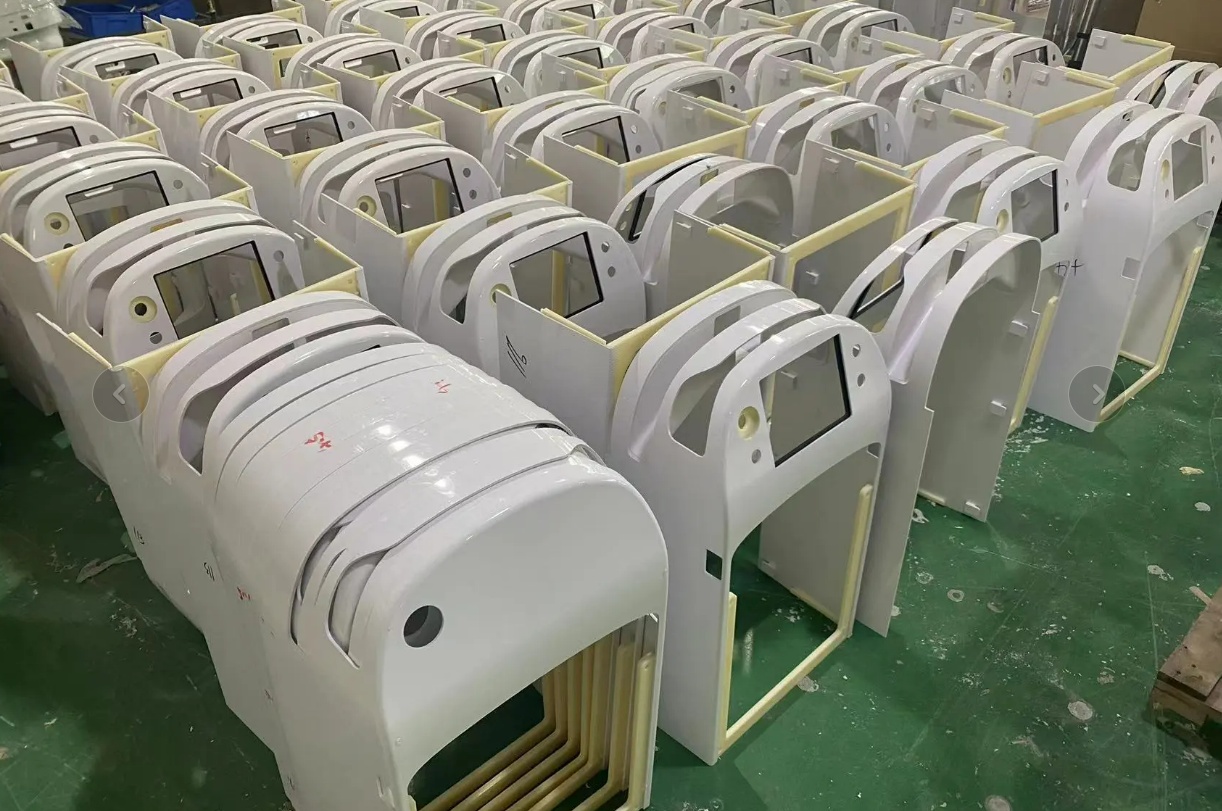
The opportunity is real, but it comes with a constraint that first-time buyers frequently underestimate: in medical work, the molding process is judged against a documentation and inspection standard, not just a cosmetic one. High-precision dimensions, clean and defect-free surfaces, and stable material batch-to-batch consistency are the requirements that decide whether a supplier can support a clinical instrument program at all.
What a Medical Injection Molding Partner Is Accountable For
A surgical instrument program rarely fails at the molding machine. It fails earlier — in unclear drawings, unqualified prototypes, undocumented material choices, or a supplier who can only cover one stage of the route from concept to series production.
DTG TECH CO., LTD. is a custom injection molding manufacturer based in Xiamen, Fujian, China, founded in 2002, whose product focus is injection molded plastic parts. The company describes itself as an ISO-certified supplier operating under a quality-first, customer-first principle, and it positions its service model as a one-stop route covering precision mold design, tool manufacturing, prototype development, plastic injection molding, and mass production, supported by product analysis and mold testing. In practical terms, that means a buyer can place mold design, tooling and production with one entity instead of coordinating a design house, a tool shop and a molder separately.
Scale and structure matter for medical programs because they determine how much engineering attention a project receives. DTG operates a 2,500 m² facility with 80 employees, including an R&D team of 25 engineers, and reports an annual output of 47,881 units with a 100% export ratio across the USA, Europe and India. Working with export markets also means working with the documentation expectations those markets bring to medical device supply chains.
Inside the Process: Material, Precision and Tooling
Material selection: medical-grade ABS, PC and engineering resins
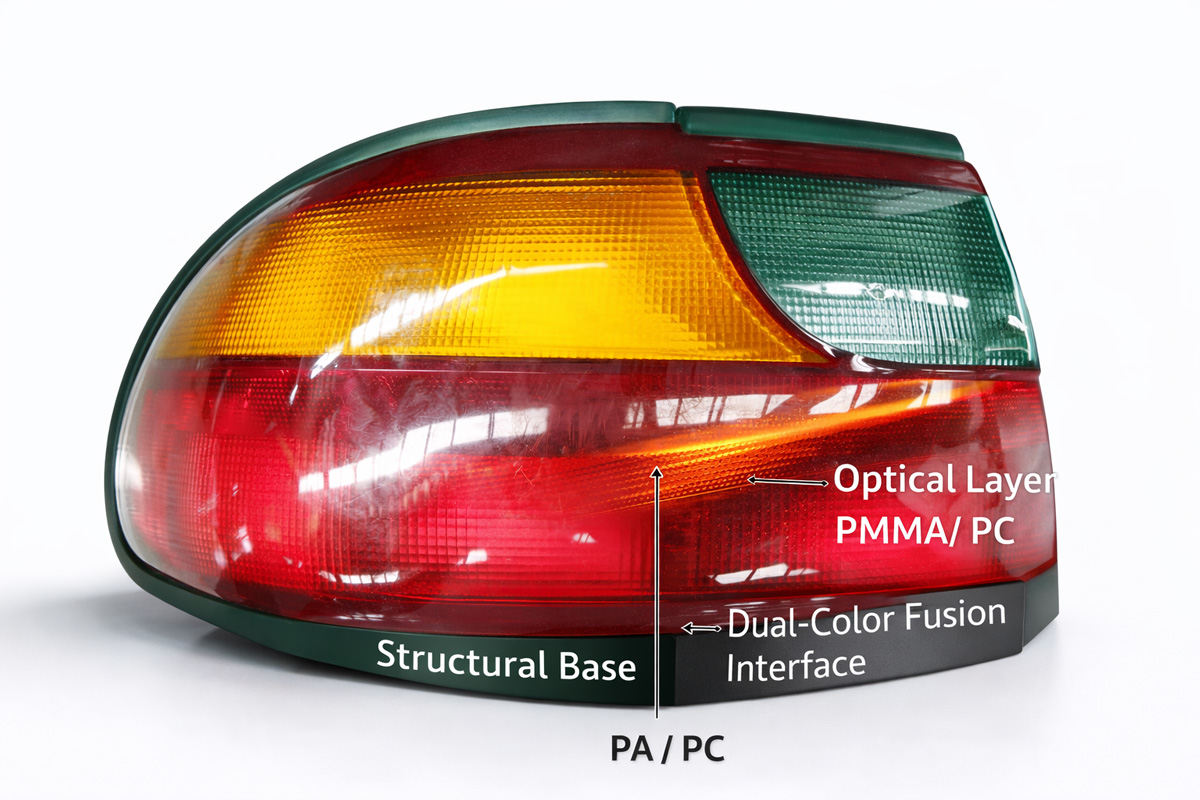
Material choice is the first decision that constrains everything downstream, including sterilization compatibility, structural stiffness and surface appearance. DTG works with ABS, PP, PC, PC+ABS, POM, Nylon, TPE and Acrylic among its engineering-grade resins, and its custom molding platform lists ABS, PP, PC, PC+ABS, TPE and Acrylic as available materials.
In surgical instrument work, ABS and PC are the two most frequently discussed families. Medical-grade ABS injection molding is generally selected where a rigid, dimensionally stable housing or handle body is needed with good surface finish and moderate cost. Medical-grade PC injection molding is normally chosen where higher impact resistance, optical clarity or greater thermal tolerance is required. For applications needing additional rigidity or integrated fixing points, insert injection molding and overmolding allow plastic to be combined with metal inserts; DTG's Insert Injection Molded Parts (DTG-IIM-005) covers insert position, material combination and structure design, with materials that pair ABS, PC or PP with metal inserts.
Material documentation is where buyers should probe hardest. A resin that performs in a general industrial part may still be the wrong choice for a component that is cleaned or sterilized repeatedly, so specifications should be confirmed against the actual use cycle rather than assumed from the resin family name.
High-precision molding and dimensional control
High-precision medical injection molding is defined by how tolerances are set and verified, not by a single capability figure. At DTG, dimensional control on Precision Injection Molded Components (DTG-PIM-003) is specified according to engineering drawings, with quality control through dimensional inspection and first article inspection. The same logic applies to Plastic Injection Molded Housings (DTG-PIH-002), where size, structure, color and surface texture are customized, and finishing can include polishing, painting, printing and assembly support.
For medical parts, this inspection structure matters more than the molding cycle itself. First article inspection confirms the tool produces what the drawing specifies; dimensional inspection then holds that result over the production run. Where the application demands it, the medical and healthcare scenario in DTG's own application data calls for rigorous 100% quality inspection covering dimensional measurement and visual check.
The validation sequence from prototype to series
Medical injection molding process validation is not a single test but a sequence. In a typical route, the mold is designed against the part drawing, tooled, then tested; prototypes are molded and analyzed; the part is measured against specification; and only then does mass production begin. DTG's stated workflow follows this order — precision mold design, tool manufacturing, prototype development, molding, and mass production, backed by product analysis and mold testing — and its production model explicitly spans prototype validation through to series output.
Because DTG supports both low and high production volumes, the same tooling route can be used for an initial clinical or engineering build and for later series demand. For device makers, that continuity reduces the risk of a supplier change between pilot and launch.
Application Profile: Where These Parts Actually Operate
Understanding the operating environment is what allows a buyer to judge whether a molding specification is appropriate. DTG's medical and healthcare application profile describes components used in a clean-use environment with high consistency requirements and strict appearance and dimensional standards.
These components are permanently assembled inside medical devices and healthcare products, where they function through continuous intermittent use under cleanroom conditions — for example multiple on/off cycles per day, routine cleaning and sterilization. They are designed to serve both long-term static mounting and frequent actuation, with the objective of reliable performance and no degradation across the product lifecycle. Matching hardware typically includes electronic modules, sensors, tubes, buttons and assembly fixtures.
Two implications follow for sourcing. First, because the component is often enclosed and difficult to replace, its dimensional stability is a lifecycle issue rather than a cosmetic one. Second, because cleaning and sterilization are routine, the material specification has to account for the full cleaning regime the device will see in service.

Injection Molding Compared With Traditional Fabrication
Buyers usually weigh molded polymer against machined polymer components and fabricated metal assemblies. The comparison is not about which process is better in general but about which cost and risk profile fits the program.
| Decision factor | Plastic injection molding | Machined polymer parts | Fabricated metal bodies |
|---|---|---|---|
| Complex geometry | Integrated ribs, pockets and snap features formed in one cycle | Generally limited by tool access and cycle time per part | Typically requires multiple operations and assembly |
| Cost behaviour with volume | Upfront tooling investment, then low incremental cost per part | Cost scales more directly with each part produced | Highest material and processing burden in high volume |
| Design change flexibility | Lower — changes generally require tool modification | Higher — reprogramming is usually simpler | Moderate to low |
| Material options | Engineering resins including ABS, PC, PC+ABS, PP, POM and Nylon | Same polymer families, often in stock shapes | Metals, with different weight and tactile properties |
| Inspection approach | Drawing-based dimensional control, first article inspection, 100% inspection where specified | Dimensional inspection per part, often manual | Dimensional and material certification |
Where injection molding is the wrong answer
Being honest about limits is part of choosing correctly. Injection molding carries a tooling investment tied to one specific geometry, so it is generally not economical for very small total quantities or for designs that are still changing frequently during development — the drawing effectively has to be stable before production tooling is committed. Tolerances are also stated rather than implied: DTG's precision components are dimensionally controlled according to engineering drawings and customer specifications, which means an incomplete drawing is a project risk, not something a molder can compensate for. Material performance sets another boundary — where a surgical instrument depends on the thermal or mechanical behaviour of stainless steel, a polymer part is not a substitute. Finally, sterilization and cleaning regimes have to be matched to the resin and confirmed during validation; assuming compatibility is a common and avoidable failure point.
Market Trend: What Medical Buyers Are Asking Now
Procurement conversations around medical injection molding have shifted in emphasis. Rather than asking only for a per-part price, buyers increasingly probe process control, documentation and continuity. In practice, three questions recur in supplier evaluations.
- Can one supplier carry the part from concept to series? Splitting mold design, tooling and molding across vendors multiplies the hand-off risk on a component that is permanently assembled inside a device. The one-stop model — design, tooling, prototyping, molding and mass production under one roof — is a direct response to that concern.
- How is material consistency demonstrated? Because medical and healthcare components are specified for stable batch-to-batch material consistency, buyers want to know how incoming resin and each production batch are held to the same baseline.
- What does inspection actually cover? Terms such as high-precision and clean surface are not self-defining. Documented dimensional inspection, first article inspection and 100% inspection where required convert those terms into something verifiable.
Export orientation compounds this. Suppliers serving the USA, Europe and India simultaneously work with different market expectations for documentation, which tends to push quality systems toward the more demanding benchmark rather than the local one.
Future Outlook
Three directions look durable for surgical instrument molding. First, more parts will move from metal to engineering polymers as device makers pursue lighter single-use and semi-disposable instrument formats. Second, the front end of the process — mold design, mold testing and prototype validation — will absorb more of the engineering effort than the molding cycle itself, because that is where dimensional risk is created or eliminated. Third, material and inspection documentation will keep consolidating around supplier quality systems rather than individual certifications, since a finished device manufacturer is accountable for the whole chain.
For buyers entering the category, the practical implication is straightforward: evaluate the validation route and the inspection structure before comparing unit prices. A supplier that can show how a drawing becomes a qualified tool, a validated part and a stable production run is usually the one that keeps a surgical instrument program on schedule.
FAQ
It is the production of polymer components for surgical and clinical instruments — such as handles, housings, buttons, trays and internal structural parts — by injecting molten engineering resin into a precision mold. It falls within medical injection molding, where the process itself is similar to general injection molding but the dimensional, cleanliness and inspection requirements are stricter.
Common engineering resins include ABS, PC, PC+ABS, PP, POM, Nylon, TPE and Acrylic. ABS is often specified for rigid housings and handle bodies with good surface finish, while PC is typically chosen where higher impact resistance or thermal tolerance is needed. Where rigidity or integrated fixing points are required, insert injection molding and overmolding combine plastic with metal inserts.
Precision is defined by the drawing and confirmed by inspection, not by a single number. In DTG's precision molding, dimensional control is carried out according to engineering drawings and customer specifications, with quality control through dimensional inspection and first article inspection. Where the medical application requires it, inspection can extend to 100% checking of dimensions and appearance.
ISO 13485 and FDA requirements apply to the medical device manufacturer's quality system and to the finished device, so a molder supports compliance rather than replacing it — through documented materials, controlled processes, validated tooling and inspection records. Buyers therefore ask suppliers what quality system they operate within and what documentation accompanies each shipment. DTG TECH CO., LTD. is an ISO-certified custom injection molding supplier that serves medical and healthcare product applications.
Not necessarily — the requirement depends on the device classification and the cleanliness specification on the drawing. What is consistently true is the end-use environment: medical and healthcare components are typically assembled inside devices that operate under cleanroom conditions, with routine cleaning and sterilization, and they are specified with clean, defect-free surfaces and strict dimensional requirements. Buyers should confirm which production controls apply to their specific part rather than assume a general standard.
A typical sequence runs from mold design and tool manufacturing through mold testing, prototype molding, product analysis and dimensional verification, and then into mass production. DTG's workflow follows this order and its production model spans prototype validation through to series output, allowing the same tooling route to serve pilot builds and later volume demand.
Injection molding carries an upfront tooling investment tied to a specific part geometry, so it becomes more economical as total quantities rise. DTG accommodates runs from low to high volumes and from prototype to mass production, which allows early-stage designs and limited initial budgets to be tooled and then scaled. For very small total quantities or designs still changing frequently, machining is often the more practical route.
Reference: further detail on molding capability, tooling and production scope is available in the DTG TECH CO., LTD. company presentation (PDF): https://cdn.socialarks.com/sbsp/25043/common/2026/0720/Xiamen%20DTG%20Tech%20Co.%2CLtd%20Presentation.pdf
Have Questions or Need More Details?
Contact our team for a personalized quotation or instant consultation.
Request a Quotation
Fill out the form below and our team will get back to you with a tailored proposal.
WhatsApp Direct Chat
Prefer to chat in real-time? Message us on WhatsApp for instant assistance & quick answers.
- Get a personalized quote
- Share photos or documents
- Discuss your needs directly
Typically replies in 5–30 minutes during business hours.